
Yes - thousands do every year
Poon Hill (4-5 days, 3,210m max)
12-16 weeks for complete beginners
None - just walking
Mandatory (legally required since 2023)
98%+ for prepared beginners
Mental stamina, not physical ability
Choosing too difficult first trek
You've never done a multi-day hike. Maybe you've never hiked at all. You've certainly never been at serious altitude, and you might never have traveled to a developing country. Yet something about the Himalayas calls to you, and you're wondering: is Nepal trekking actually possible for someone like me?
The answer is yes. Emphatically, enthusiastically, honestly: yes.
Every year, thousands of people with zero hiking experience complete their first Nepal trek. Teachers, accountants, retirees, students, office workers who've never owned hiking boots. They return transformed, not because they were exceptional athletes, but because they chose the right trek, prepared properly, and showed up willing to be uncomfortable for a few days.
This guide is written specifically for you, the complete beginner. Not the "beginner" who's done a few day hikes, but the true zero-experience person who's never walked more than a few miles at once, never slept in a sleeping bag, never been above 2,000 meters. We'll cover exactly what you need to know, what you need to do, and what you can realistically expect.
Yes, You CAN Trek Nepal Without Experience
Let's address the elephant in the room immediately: the Himalayas are famous for extreme mountaineering, deadly storms, and elite athletes pushing human limits. That's not what trekking is.
Trekking in Nepal is walking. That's it. Walking on trails, stopping at lodges, eating hot meals, sleeping in beds. You don't need ropes, ice axes, or climbing skills. You don't need to summit anything. You just need to walk, one foot in front of the other, for several consecutive days.
What Makes Nepal Beginner-Accessible
1. Incredible Infrastructure
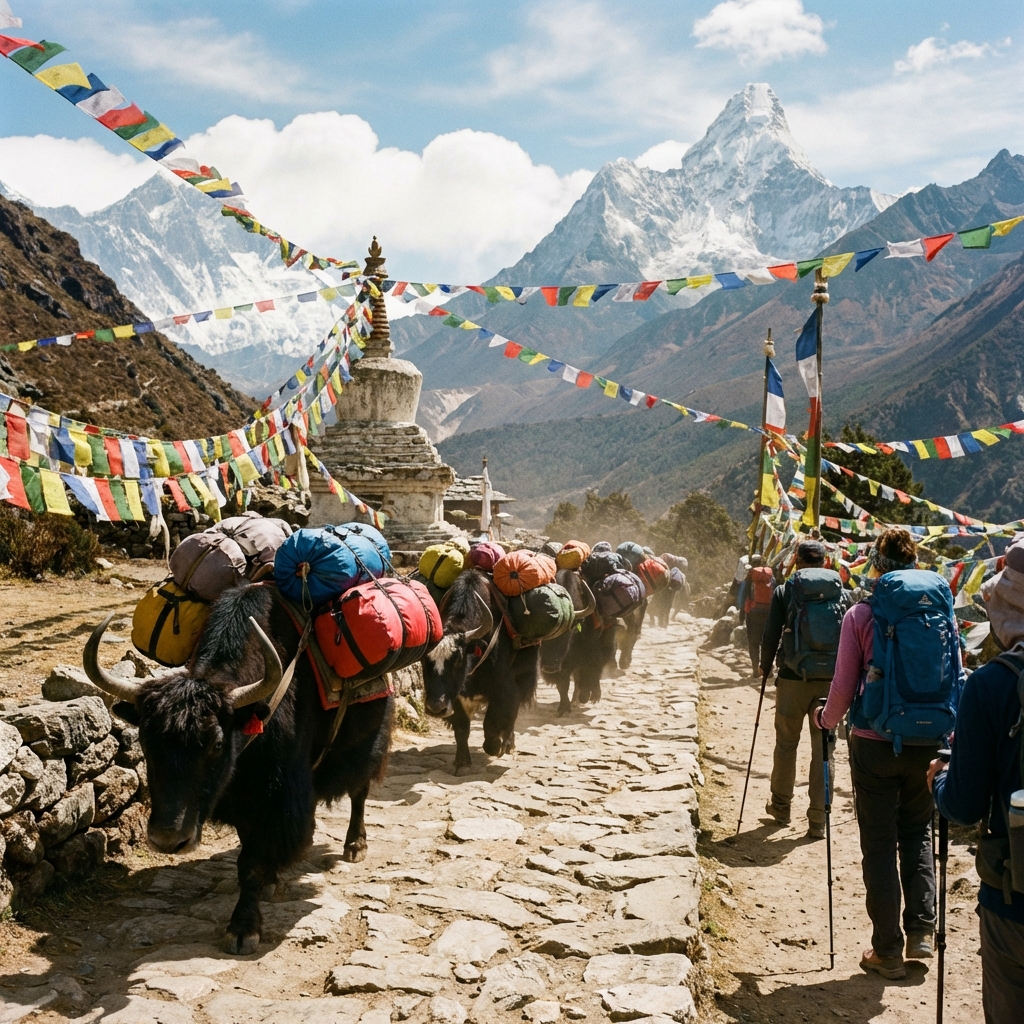
Nepal has been welcoming trekkers for over 50 years. Popular routes have well-established tea houses (mountain lodges) every few hours, providing:
- Beds with mattresses and blankets
- Hot meals prepared daily
- Basic bathroom facilities
- Fellow trekkers for company and support
- Mobile phone coverage on many trails
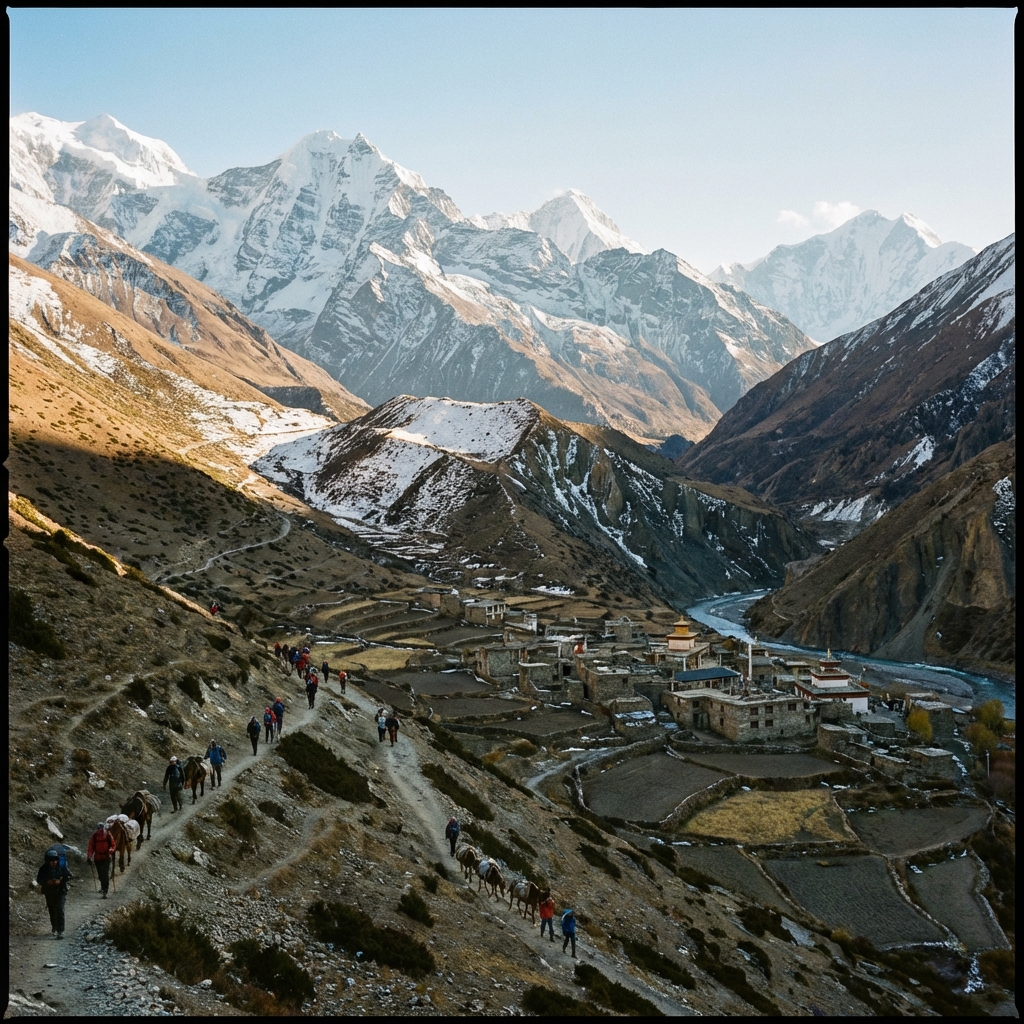
You're not camping in the wilderness. You're walking between villages along established paths used by locals for centuries.
2. No Technical Skills Required
Easy and moderate Nepal treks require zero technical skills:
- No rock climbing
- No glacier crossings
- No rope work
- No navigation beyond following obvious trails
- No survival skills
- No tent setup or camping knowledge
The trails are walked daily by villagers, children, and livestock. If they can navigate it, so can you.
3. Mandatory Guide Support
Since April 2023, all foreign trekkers must hire licensed guides. While some see this as restriction, for beginners it's a gift:
- Someone else handles navigation
- Professional altitude sickness monitoring
- Cultural translation and local knowledge
- Emergency coordination if anything goes wrong
- Someone to set appropriate pace
- Built-in companion and support system
You're never alone, never lost, never without help.
4. Graduated Difficulty Options
Nepal offers treks ranging from 3-day walks at 3,000 meters to month-long expeditions at 5,500+ meters. You can choose routes perfectly matched to your capabilities, building experience gradually.
The Only Requirements
To trek in Nepal, you need only:
- Ability to walk 4-6 hours on varied terrain (can be trained)
- Willingness to be uncomfortable for a few days
- Basic physical health (no serious cardiac or respiratory conditions)
- The courage to try something new
That's genuinely it. Everything else is preparation and mindset.
Real Statistics on Beginner Success
From trekking agency data and guide interviews:
| Trek | Beginner Success Rate | Typical Completion Time | Main Challenge |
|---|---|---|---|
| Poon Hill | 98%+ | 4-5 days | Stone staircase day |
| Ghorepani-Ghandruk | 98%+ | 5-6 days | Cumulative fatigue |
| Helambu | 97%+ | 5-7 days | Heat at lower sections |
| Mardi Himal | 90% | 5-7 days | Altitude at base camp |
| Annapurna Base Camp | 95% | 10-14 days | Duration and altitude |
The few who don't complete treks typically:
- Chose too difficult a trek for their first time
- Didn't prepare physically
- Ignored altitude sickness symptoms
- Had pre-existing health conditions they didn't disclose
With proper preparation and appropriate trek selection, completion rates approach 100%.
What "No Experience" Really Means
"No experience" can mean different things to different people. Understanding your specific starting point helps you prepare appropriately.
Category 1: Never Done Multi-Day Hiking
Your situation: You've perhaps done day hikes or long walks, but never consecutive days of hiking. You've never carried overnight gear or dealt with the accumulating fatigue of multi-day physical effort.
Your advantages:
- You understand basic hiking mechanics
- You likely own some outdoor clothing
- You know what tired legs feel like
- You've experienced walking on uneven terrain
Your preparation focus:
- Back-to-back training hikes (weekend double sessions)
- Practice carrying a daypack for extended periods
- Mental preparation for cumulative fatigue
- Understanding multi-day food and hydration needs
Realistic expectations: The transition from day hiking to multi-day trekking is significant but manageable. Your first two days will feel similar to day hikes, but days 3-4 introduce cumulative fatigue that's unlike anything you've experienced. This passes by day 5-6 as your body adapts.
Category 2: Never Been at Altitude
Your situation: You live at or near sea level and have never experienced significant altitude. The highest you've been is perhaps an airplane cabin (pressurized to ~8,000 feet).
Your advantages:
- You're physically adapted to abundant oxygen
- No bad altitude habits to unlearn
- Fresh perspective on acclimatization requirements
Your preparation focus:
- Understanding altitude physiology (what happens to your body)
- Learning altitude sickness symptoms
- Mental preparation for feeling differently than normal
- Conservative trek selection (under 4,500m for first trek)
Realistic expectations: You cannot train for altitude at sea level. There's no simulation, no preparation that eliminates the effects. What you can do is choose appropriate treks (staying below 4,000m for first trek), follow acclimatization protocols, and accept that you'll feel different at altitude.
Pro Tip
At altitude, you'll feel:
- Breathless during exertion (like exercising while breathing through a straw)
- Occasional mild headaches
- Increased urination (especially at night)
- Disrupted sleep patterns
- Reduced appetite (food less appealing)
These are NORMAL effects, not illness. Learning to distinguish normal altitude effects from actual altitude sickness is part of the experience.
Category 3: Never Traveled to Developing Countries
Your situation: You're accustomed to Western infrastructure, reliable plumbing, consistent electricity, and familiar food. The logistics of traveling in Nepal seem overwhelming.
Your advantages:
- Fresh eyes for cultural experiences
- No jadedness about developing world travel
- Genuine appreciation for simple things
Your preparation focus:
- Research Nepal logistics (visas, money, transportation)
- Mental preparation for different standards (toilets, showers, cleanliness)
- Understanding food safety basics
- Packing appropriate medications and supplies
Realistic expectations: Nepal is not dangerous or extremely difficult to navigate, but it is different. Toilets may be squat-style, electricity may be intermittent, roads may be rough, and schedules may be approximate. This is part of the adventure, not an obstacle to overcome.
Category 4: Never Worn Hiking Boots
Your situation: You're a genuine zero. Never hiked, never camped, never done any outdoor activity beyond walking in a park. The outdoor world is entirely unfamiliar.
Your advantages:
- No bad habits to unlearn
- Completely open to learning
- Every experience will be novel and exciting
Your preparation focus:
- Start from absolute basics (walking distance, cardio fitness)
- Learn gear essentials (what boots are, how layers work)
- Extended training timeline (16 weeks minimum)
- Consider guided day hikes in your area before Nepal
Realistic expectations: You're starting further back, but you're absolutely not excluded. The Poon Hill trek has been completed by 70-year-olds who were sedentary office workers until they decided to prepare. You just need more preparation time and humility about starting with easier options.
Everyone Starts Somewhere
Every experienced trekker was once a complete beginner. The guides leading Everest Base Camp expeditions did their first trek knowing nothing. The key is not natural ability but willingness to prepare, choose appropriate challenges, and persist through discomfort.
Which Treks Are Best for Zero Experience
Trek selection is the most important decision you'll make. Choosing appropriately dramatically increases your success probability and enjoyment.
The Recommended First Trek: Poon Hill (4-5 Days)
4-5 days (standard is 4 days)
3,210m (10,531 ft)
4-6 hours
Easy to Moderate
Very Low
98%+
$400-$900 all-inclusive
Why Poon Hill is perfect for complete beginners:
-
Low altitude ceiling: At 3,210m, you're well below serious altitude sickness territory. Most people notice only minor breathlessness.
-
Short duration: Four days is long enough to feel accomplished, short enough that cumulative fatigue doesn't break you.
-
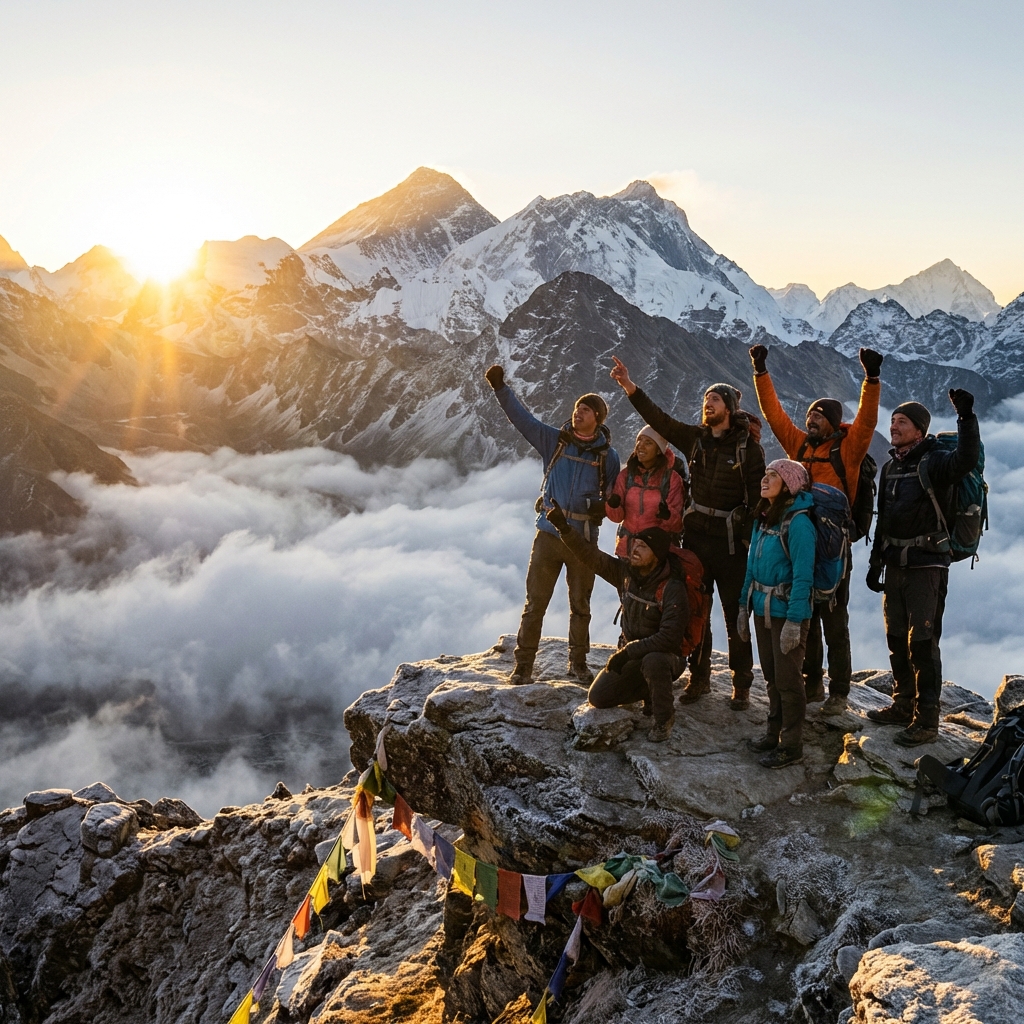
Incredible reward: The Poon Hill sunrise viewpoint offers panoramic views of Annapurna I (8,091m), Dhaulagiri (8,167m), and Machapuchare. You get world-class mountain scenery without extreme challenge.
-
Excellent infrastructure: This is Nepal's most popular short trek. Tea houses are plentiful, well-maintained, and accustomed to beginners.
-
One challenging day: Day 2's stone staircase from Tikhedhunga to Ghorepani (3,300+ steps) is demanding but achievable at any pace. It tests you but doesn't destroy you.
-
Confidence builder: Completing Poon Hill proves you can trek. It provides the experience and confidence to attempt longer routes.
Typical itinerary:
- Day 1: Drive to Nayapul, trek to Tikhedhunga (gentle warm-up)
- Day 2: Trek to Ghorepani (the challenge day, 3,300+ stone steps)
- Day 3: Pre-dawn climb to Poon Hill for sunrise, then trek to Tadapani
- Day 4: Descend through Ghandruk to Nayapul, drive to Pokhara
Read our complete Poon Hill Trek guide
Second Option: Ghorepani-Ghandruk Loop (4-6 Days)
This is essentially an extended Poon Hill trek with extra time in the beautiful Gurung village of Ghandruk. Choose this if you have 5-6 days and want a more relaxed pace with deeper cultural immersion.
Advantages over standard Poon Hill:
- Extra rest/acclimatization time
- Extended cultural experience in Ghandruk
- Less rushed overall pace
- Same maximum altitude, lower daily intensity
Best for: Slightly nervous beginners who want extra buffer time, cultural enthusiasts, families with older children.
Third Option: Helambu Trek (5-7 Days)
5-7 days
3,650m
Easy to Moderate
Cultural immersion over mountain views
$500-$900
Why Helambu works for beginners:
Helambu emphasizes cultural experiences over dramatic mountain scenery. If you're drawn more to villages, monasteries, and people than to towering peaks, this is your trek.
Key features:
- Close to Kathmandu (shorter travel day)
- Lower altitude than many alternatives
- Rich Hyolmo (Sherpa) culture
- Beautiful rhododendron forests
- Less crowded than Annapurna routes
- Gentle, rolling terrain rather than steep staircases
Best for: Culture-focused travelers, those with more time (5-7 days), trekkers who want gentler terrain than Poon Hill's stairs.
Read our complete Helambu Trek guide
Why NOT to Start with EBC or Annapurna Circuit
Every year, beginners attempt Everest Base Camp or the Annapurna Circuit as their first trek. Some succeed. Many struggle unnecessarily. Here's why these aren't recommended for true beginners:
Everest Base Camp (12-16 days):
- Maximum altitude: 5,364m (significant altitude sickness risk)
- Duration: 12-16 days of consecutive trekking
- Physical demands: 6-8 hours daily at altitude
- Remoteness: Fewer escape options if problems occur
- Cost: $2,000-$4,000+
Annapurna Circuit (14-21 days):
- Maximum altitude: 5,416m (Thorong La Pass)
- Duration: 14-21 days of consecutive trekking
- Technical challenge: High pass crossing requires good fitness
- Weather exposure: More vulnerable to weather-related failures
- Acclimatization critical: Must be managed perfectly
The problem with attempting these first:
-
No baseline: You don't know how your body handles altitude, multi-day hiking, or Nepal conditions. EBC or the Circuit is not where you want to discover problems.
-
No skill development: You learn crucial skills on easier treks (hydration discipline, layer management, pace regulation, blister prevention) that make harder treks possible.
-
No confidence foundation: When day 8 gets hard on EBC, you need to remember completing day 4 on Poon Hill. That psychological foundation matters.
-
Higher consequences: At 5,000m, altitude sickness is serious. Evacuation is expensive and not always available. Stakes are higher with less experience to handle problems.
The First Trek Principle
Your first trek should build confidence, not test limits. Choose something you're confident you can complete, then use that experience to pursue greater challenges. Attempting too much too soon turns many potential lifelong trekkers into one-and-done stories.
The progression path most experienced trekkers recommend:
- First trek: Poon Hill or Ghorepani-Ghandruk (3,200m max)
- Second trek: Langtang Valley, Mardi Himal, or ABC (4,100-4,500m max)
- Third trek: Everest Base Camp or Annapurna Circuit
- Beyond: Three Passes, Manaslu Circuit, climbing peaks
Beginner Trek Comparison Table
| Trek | Duration | Max Altitude | Difficulty | Best For | Cost |
|---|---|---|---|---|---|
| Poon Hill | 4-5 days | 3,210m | Easy-Moderate | True first-timers | |
| Ghorepani-Ghandruk | 5-6 days | 3,210m | Easy-Moderate | Relaxed pace, cultural focus | |
| Helambu | 5-7 days | 3,650m | Easy-Moderate | Culture over peaks | |
| Mardi Himal | 5-7 days | 4,500m | Moderate | Fit beginners, fewer crowds | |
| Annapurna Base Camp | 10-14 days | 4,130m | Moderate | Experienced beginners, iconic destination |
Physical Preparation When Starting from Zero
If you're genuinely starting from zero fitness, you need 12-16 weeks of structured preparation. This isn't optional if you want to enjoy your trek rather than merely survive it.
The 16-Week Training Program for Complete Beginners
This program assumes you currently do minimal physical activity. Adjust based on your actual starting point.
Weeks 1-4: Foundation Building
Goal: Establish basic cardiovascular fitness and walking endurance
Week 1-2:
- Walk 20-30 minutes, 4x per week
- Flat terrain is fine
- Pace: comfortable conversation possible
- Add 5 minutes per week
Week 3-4:
- Walk 35-45 minutes, 4x per week
- Introduce gentle hills if available
- One longer walk on weekend: 60-75 minutes
- Start basic leg exercises (see below)
Basic leg exercises (2x per week, start Week 3):
- Bodyweight squats: 2 sets of 10
- Lunges: 2 sets of 8 per leg
- Step-ups (stairs or sturdy box): 2 sets of 10
- Calf raises: 2 sets of 15
Pro Tip
The goal in Weeks 1-4 is consistency, not intensity. Walking 30 minutes four times beats walking 90 minutes once. You're building habits and base fitness, not training for performance.
Weeks 5-8: Endurance Development
Goal: Build walking stamina and introduce elevation
Weekday sessions (4x per week):
- Walk 45-60 minutes with hills
- If no hills available, use treadmill incline (5-10%)
- Maintain conversational pace
Weekend long walk (both days for at least one weekend):
- Saturday: 2-2.5 hours with mixed terrain
- Sunday: 1.5-2 hours (test back-to-back walking)
Strength training (2x per week):
- Squats: 3 sets of 12
- Lunges: 3 sets of 10 per leg
- Step-ups: 3 sets of 12
- Calf raises: 3 sets of 20
- Plank: 3 sets of 30 seconds
Week 6 addition:
- Introduce daypack with 5kg (11 lbs) for one walk per week
- This simulates carrying your water, snacks, and layers
Weeks 9-12: Trek Simulation
Goal: Simulate trekking conditions as closely as possible
Weekday sessions (3-4x per week):
- Walk 45-60 minutes with hills
- At least one session with daypack (8kg)
- Include stair sessions if possible
Weekend simulation hikes:
- Saturday: 3-4 hour hike with 8-10kg pack, maximum available elevation
- Sunday: 2-3 hour hike with same pack (back-to-back simulation)
What to include:
- Wear your actual trekking boots (break them in)
- Practice with trekking poles if you'll use them
- Carry your actual daypack with realistic weight
- Include uphill and downhill sections
Stair training (1x per week minimum):
- Find stadium stairs, tall building, or hiking stairs
- Climb continuously for 20-30 minutes
- This specifically prepares for Nepal's stone staircases
Strength training (2x per week):
- All previous exercises, increase reps by 20%
- Add single-leg exercises (single-leg squats, step-ups)
- Core work: planks, mountain climbers
The Stair Test
If you can climb stairs continuously for 30 minutes without stopping, you're ready for Poon Hill's staircase day. If you can't, that's your priority training focus.
Weeks 13-16: Peak and Taper
Weeks 13-14 (Peak):
- Maximum training volume
- Weekend hikes: 4-5 hours with full pack weight
- Include your longest continuous uphill effort
- Test all gear during these hikes
- Identify any gear problems now, not in Nepal
Weeks 15-16 (Taper):
- Reduce volume by 40-50%
- Maintain intensity but shorten duration
- Focus on rest and recovery
- No new exercises or gear
- Avoid injury (no heroics)
- Mental preparation and logistics finalization
Training Without a Gym
You do NOT need a gym. Here's a complete no-equipment approach:
Cardio options:
- Walking/hiking (primary)
- Stair climbing (essential)
- Cycling (good cross-training)
- Swimming (low-impact alternative)
- Dancing (surprisingly effective)
Strength with no equipment:
- Bodyweight squats
- Lunges (forward, backward, walking)
- Step-ups on stairs
- Calf raises on steps
- Wall sits
- Planks
- Push-ups (if able)
The simplest effective program: Walk 45-60 minutes with hills, 5x per week. Do 30 minutes of stairs 2x per week. Strength exercises 2x per week. Long hike on weekends. That's it.
Realistic Fitness Expectations
What training achieves:
- Stronger legs for uphill climbing
- Better cardiovascular endurance
- Familiarity with prolonged walking
- Tested and broken-in gear
- Mental confidence from preparation
What training cannot achieve:
- Altitude adaptation (only happens at altitude)
- Guarantee against altitude sickness (fitness doesn't predict this)
- Elimination of all discomfort (trekking is inherently challenging)
- Perfect preparation (some learning only happens on the trail)
Minimum acceptable fitness:
For Poon Hill or similar easy treks, you should be able to:
- Walk 3 hours continuously on varied terrain
- Climb stairs for 20 minutes without stopping
- Carry 8kg pack for 2 hours
- Complete back-to-back 2-hour walks without excessive soreness
If you can do the above, you're physically ready for an easy trek. Everything beyond is making the experience more enjoyable rather than merely survivable.
What You'll Learn On Your First Trek
One reason to start with easier treks is the learning that naturally occurs. Skills that seem mysterious before your first trek become intuitive after.
Skills That Develop Naturally
Pace regulation:
- You learn YOUR pace, not the pace someone told you to use
- You discover when to push and when to rest
- You feel the difference between "challenging" and "unsustainable"
- This knowledge is essential for harder treks
Hydration discipline:
- You learn how much you personally need
- You notice the signs of dehydration before they become problems
- You develop drinking habits that become automatic
- You understand water sources and purification
Layer management:
- You figure out your personal temperature regulation
- You learn when to add and remove layers
- You discover which clothes work for you
- You understand the morning-cold to midday-hot transition
Foot care:
- You learn your blister-prone spots
- You discover what sock combinations work
- You develop pre-emptive blister prevention habits
- You learn to address problems early
Sleep at altitude:
- You experience disrupted sleep patterns
- You learn strategies that help you rest
- You understand night bathroom logistics
- You develop evening routines that aid sleep
Trail nutrition:
- You discover what foods you tolerate while walking
- You learn how much and how often to eat
- You develop preferences for trail snacks
- You understand your hunger signals at altitude
Pro Tip
After your first trek, you'll understand things no guide or article could adequately explain. The second trek is dramatically easier because you know yourself, not just the theory.
Things That Seem Scary But Aren't
Before first trek fears:
"I'll get lost." Reality: Trails are obvious, guides are mandatory, other trekkers are everywhere on popular routes. Getting genuinely lost on Poon Hill is nearly impossible.
"I won't be able to keep up." Reality: There is no required pace. You walk at your speed. Your guide adjusts to you, not the other way around. Slow is fine; everyone arrives eventually.
"The altitude will make me sick." Reality: On treks under 4,000m, serious altitude sickness is rare. You'll feel different but likely not sick. The fear is usually worse than the reality.
"I'm not fit enough." Reality: If you've done basic preparation, you're fit enough for easy treks. Trekking is not a race. Persistent effort beats athletic talent.
"The toilets will be unbearable." Reality: Toilets are basic but functional. You adapt faster than you'd believe. By day 3, squat toilets feel normal.
"I'll be the slowest/worst one." Reality: There's always a range of abilities. Others are just as worried about being the slowest. Pace variation is normal and expected.
Things That Are Harder Than Expected
Mental stamina: The physical challenges are manageable. The mental challenge of day after day, the cumulative fatigue, the monotony of routine, the discomfort that doesn't end for days, this is harder than expected. Mental preparation matters more than physical.
Cumulative fatigue: Day 1 feels like a hard day hike. Day 2 feels the same. Day 3, you start tired. Day 4, everything hurts. This accumulated exhaustion surprises first-timers who've only done day activities.
Temperature extremes: Morning cold (needing all layers) transitioning to midday heat (stripping to base layer) back to evening cold (all layers again) in a single day. The constant adjustment is more annoying than expected.
Sleep quality: You're exhausted, but you sleep poorly. Thin mattresses, cold rooms, altitude effects, bathroom trips, neighbors' noises. Quality sleep is elusive, making fatigue worse.
Meal monotony: The fourth dal bhat in two days. The menu that looks exactly like yesterday's menu. The limited snack options. Food becomes fuel, not pleasure.
Limited privacy: Shared rooms, thin walls, communal dining, busy trails. Introverts especially find the constant proximity to others exhausting. Brief solitude is rare.
The Day 4 Wall
Almost every first-time trekker hits a wall around day 4-5. Excitement has faded, fatigue has accumulated, and completion seems impossibly far. This is normal. It passes. Experienced trekkers know to push through this phase, after which trekking becomes meditative rather than merely exhausting.
The Unexpected Rewards
Physical capability discovery: You realize your body is capable of far more than you believed. This realization extends beyond trekking into everyday life.
Mental resilience building: Pushing through discomfort builds genuine confidence. You prove to yourself that you can handle hard things.
Presence and simplicity: When walking is your only task, when there are no screens or notifications, when your world shrinks to one foot after another, a profound simplicity emerges.
Community connection: The strangers at dinner become friends by morning. Shared challenge creates connection that transcends normal social barriers.
Perspective shift: Seeing how people live with less, watching life continue in remote villages, experiencing genuine hospitality from people with minimal possessions, this changes how you view your own life.
Beauty accumulation: Not just the peak moments (the sunrise, the summit views) but the accumulating beauty of a hundred small moments: light through rhododendron forests, a village child's smile, the sound of prayer flags in wind.
Building Confidence Before You Go
Mental preparation is as important as physical preparation. Here's how to build confidence before departure.
Practice Hikes at Home
Even if you live somewhere flat:
- Find the longest available trail and walk it repeatedly
- Use parking garages or office building stairs for vertical training
- Drive to the nearest hills or mountains for weekend training hikes
- Walk in varying weather conditions (you'll trek regardless of weather)
Purpose of practice hikes:
- Test gear before you're dependent on it
- Develop realistic self-assessment of fitness
- Build experience with extended walking
- Identify problems (blisters, chafing, pack discomfort) while solutions are accessible
Recommended practice progression:
- 2 hours with daypack
- 3 hours with weighted pack (5kg)
- 4 hours with weighted pack (8kg)
- Back-to-back 2-3 hour hikes (weekend simulation)
- 5-6 hour "big day" with full weight
Each practice hike should include:
- Realistic gear (your actual boots, pack, layers)
- Full hydration and snack systems
- Hill or stair components
- Variable terrain if possible
Day Hikes to Test Gear
Gear testing priorities:
Boots:
- Walk at least 50km in your boots before Nepal
- Test on varied terrain, uphills and downhills
- Identify hotspots before they become blisters
- Adjust lacing techniques for different conditions
Pack:
- Carry it weighted for multiple hours
- Adjust straps until comfortable
- Verify you can access water without stopping
- Practice rain cover deployment
Clothing:
- Test your layering system in cold, hot, and variable conditions
- Verify nothing chafes under extended wear
- Confirm base layers dry quickly when sweaty
- Test rain gear in actual rain
Footwear:
- Test sock combinations
- Verify gaiters fit with boots if using
- Confirm you can walk on varied terrain confidently
Pro Tip
Anything that bothers you slightly on a 3-hour practice hike will become unbearable on a 6-hour trek day. Address all minor annoyances before departure.
Mental Preparation Strategies
Visualization:
- Imagine yourself completing the trek
- Picture handling difficult moments successfully
- Visualize the sunrise at your destination
- See yourself walking through challenging sections
Expectation calibration:
- Watch realistic trek videos (not just highlight reels)
- Read honest trek accounts (including complaints)
- Accept that discomfort is part of the experience
- Understand that struggle is normal, not failure
Mantras and coping statements: Prepare phrases to use when times get hard:
- "One step at a time"
- "This is temporary"
- "I've prepared for this"
- "Slow is fine"
- "Everyone struggles here"
- "This is what I signed up for"
Fear acknowledgment:
- Write down your specific fears
- Research each one (most fears are based on misinformation)
- Prepare responses for each fear
- Accept that fear is normal; courage is acting despite fear
Contingency acceptance:
- Understand that not completing the trek is okay
- Prepare mentally for turning back if necessary
- Know that weather, health, or other factors might intervene
- Embrace the journey regardless of destination
Building a Pre-Trek Confidence Routine
Daily (during training period):
- 10 minutes of trek visualization
- Review one aspect of your preparation
- Log training activities
- Read one first-timer success story
Weekly:
- Complete planned training activities
- Test or research one piece of gear
- Review and update packing list
- Connect with your agency/guide if questions arise
Final week:
- Complete final gear check
- Review first aid knowledge
- Finalize logistics (insurance, contacts, copies of documents)
- Transition from training to rest and recovery
The Support System That Makes It Possible
You're not attempting this alone. Nepal has developed extensive support systems that make inexperience manageable.
Why Guides Make Inexperience Manageable
Navigation: Your guide knows every trail junction, every shortcut, every alternative if weather changes. You follow; they lead. This alone eliminates one of the biggest beginner fears.
Pace setting: Experienced guides assess your fitness on day 1 and set appropriate pace. They slow down when you need to, push gently when you can, and adjust daily based on your condition.
Altitude monitoring: Guides are trained to recognize altitude sickness symptoms, often before you notice them yourself. They make decisions about ascent rates, rest days, and potential descent based on professional assessment.
Cultural bridge: Your guide translates not just language but context. They explain customs, facilitate interactions with locals, and help you navigate cultural nuances that would otherwise be confusing.
Problem solving: When things go wrong, tea house is full, weather changes, stomach goes bad, guides have solutions. They've seen every problem many times and know what to do.
Emergency coordination: If serious problems occur, guides coordinate evacuation, communicate with rescue services, provide first aid, and manage logistics you couldn't handle alone.
Emotional support: On hard days, when you want to quit, your guide provides encouragement, perspective, and the push to continue. They've seen countless people overcome the same struggles.
Guide Investment
A good guide transforms your trek from "surviving an ordeal" to "having an experience." The $25-35/day investment is the single best money you'll spend on your trek. Don't cut corners here.
Porter Support
What porters do:
- Carry your main backpack (15-20kg each, often carrying for two trekkers)
- Allow you to walk with just a light daypack
- Dramatically reduce physical strain
- Make the experience enjoyable rather than merely endurable
For beginners, porters are especially valuable:
- Removes weight concern from your preparation
- Reduces daily physical load significantly
- Allows you to focus on experience, not suffering
- Makes photography, observation, and interaction easier
Porter logistics:
- Cost: $20-25/day (you pay for food and accommodation, or total ~$40-50/day)
- They walk at their own pace, meet you at tea houses
- Your main bag is not accessible during walking (carry essentials in daypack)
- Tip expected at trek's end ($8-12/day of service)
Guide-porter combination:
Most agencies offer "guide + porter" packages. For beginners, this is ideal:
- Guide walks with you, provides support
- Porter carries bags, ensures you're not burdened
- You carry only water, snacks, camera, layers (3-5kg)
- Maximum enjoyment, minimum suffering
Tea House Infrastructure
What tea houses provide:
Accommodation:
- Private or shared rooms with beds
- Mattresses and blankets (bring sleeping bag liner)
- Protection from weather
- Social space with other trekkers
Food:
- Breakfast, lunch, and dinner options
- Hot beverages throughout the day
- Similar menus across most tea houses
- Vegetarian options always available
Basic facilities:
- Toilet facilities (quality varies)
- Washing facilities (limited at higher altitudes)
- Charging stations (for fee)
- WiFi (slow, for fee)
This means you don't need:
- Tent or camping equipment
- Cooking gear or food supplies
- Navigation equipment (GPS, detailed maps)
- Extensive outdoor survival skills
The infrastructure transforms Himalayan trekking from expedition to accessible adventure.
Fellow Trekkers
The community factor:
Popular trails mean you're surrounded by others sharing your experience:
- Conversation partners during breaks and meals
- Shared problem-solving and advice
- Motivation from seeing others persist
- Friendships that form through shared challenge
- Reference points for your own performance
- Safety in numbers
For beginners specifically:
- Others are often just as nervous as you
- Experienced trekkers share tips freely
- Guides often connect solo trekkers with groups
- Evening dining room becomes support community
- You realize everyone struggles, not just you
Pro Tip
Some of the best friendships form on the trail. The person you have dal bhat with on day 2 may become a lifelong friend. Shared challenge creates bonds that transcend normal social barriers.
Realistic Expectations: What the Experience Actually Feels Like
Honest expectations reduce disappointment and increase actual enjoyment.
What the First Days Feel Like
Day 1:
- Excitement and nervous energy
- Everything is new and interesting
- Physical effort feels manageable
- "This is great! I can definitely do this!"
- Legs tired but not exhausted at day's end
- Sleep disruption from new environment
Day 2:
- Still excited, now familiar with routine
- Physical effort similar to day 1
- First serious challenge (depending on trek)
- Some muscle soreness from day 1
- "Okay, this is real work"
- Better sleep, but still adjusting
Day 3:
- Excitement fading, reality setting in
- Cumulative fatigue becoming noticeable
- Same routine feels less novel
- "How many more days of this?"
- Some people hit first major struggle
- Wishing for variety or escape
Day 4:
- The classic "wall" for many
- Fatigue accumulated over days
- Novelty gone, routine feels monotonous
- Physical discomfort more prominent
- "Why did I do this?"
- Mental challenge peaks here
Day 5 and beyond:
- Transition begins
- Body adapts, rhythm establishes
- Mental resistance decreases
- "I can do this" returns
- Appreciation for surroundings increases
- Experience becomes meditative
The Learning Curve
Week 1 realization: This is harder than I expected Week 1 reality: This is harder than you expected because you didn't know what to expect
Adjustment timeline:
- Days 1-2: Learning systems (pace, hydration, layers)
- Days 3-4: Testing limits, hitting walls
- Days 5-7: Finding rhythm, systems automatic
- Days 7+: Experience becomes enjoyable, not just endurable
What accelerates adjustment:
- Prior preparation (physical and mental)
- Good guide support
- Appropriate trek selection
- Positive attitude and flexibility
- Good nutrition and hydration
What slows adjustment:
- Inadequate preparation
- Wrong trek selection (too difficult)
- Resistance to discomfort (wanting it to be different)
- Poor nutrition or hydration
- Health issues or illness
Normal Struggles vs. Warning Signs
Normal struggles (push through):
- Tired legs, sore muscles
- Breathlessness on uphills at altitude
- Mild headache that responds to hydration and rest
- Sleep disruption
- Appetite reduction at altitude
- General fatigue and low energy
- Mental resistance ("I want to stop")
- Blisters, minor aches and pains
- Frustration with conditions or routine
Warning signs (take seriously):
- Severe headache not relieved by medication and rest
- Vomiting or persistent nausea
- Confusion or altered mental state
- Difficulty walking straight (ataxia)
- Severe shortness of breath at rest
- Chest pain or pressure
- Fever or signs of infection
- Symptoms that worsen with rest
When to Act
If you experience warning signs, especially at altitude, tell your guide immediately and descend if advised. Altitude sickness can progress rapidly from mild to life-threatening. It's always better to descend unnecessarily than to risk serious illness.
What's "normal hard" vs. "problem hard":
| Normal Hard | Problem Hard |
|---|---|
| Tired but functional | Unable to continue |
| Mild headache | Severe persistent headache |
| Slow but steady progress | Cannot keep any pace |
| Reduced appetite | Vomiting |
| Slightly breathless on exertion | Breathless at rest |
| Uncomfortable but coping | Overwhelmed and deteriorating |
Success Stories: Beginners Who Made It
These are representative examples based on common first-time trekker experiences:
The Office Worker: Sarah, 42
Background: Desk job, minimal exercise for years, never hiked, "couldn't walk a mile without getting winded."
Preparation: 16 weeks following a beginner program. Started walking 20 minutes/day, built to 2-hour weekend hikes.
Trek: Poon Hill, 4 days
Experience: "Day 2's stairs nearly broke me. I stopped every 50 steps. I watched elderly Nepali women pass me carrying huge loads. I felt humiliated. But I kept going. Sunrise at Poon Hill made everything worth it. I cried when I saw the mountains. Actual tears."
Aftermath: "I've done three more treks since. Poon Hill changed my relationship with my body and what I thought I was capable of."
The Retiree: David, 67
Background: Former engineer, active golfer, no hiking experience, some concern about age and altitude.
Preparation: Medical clearance from doctor. 12 weeks of walking plus strength exercises. Tested boots extensively.
Trek: Ghorepani-Ghandruk, 6 days (extended itinerary for slower pace)
Experience: "I was the oldest in our group and definitely the slowest. My guide, Pemba, walked at my pace without complaint. We talked for hours about Nepal, his family, life in the mountains. By day 4, I wasn't worried about keeping up anymore. I was enjoying the journey."
Aftermath: "Completed Annapurna Base Camp the following year at 68. Planning Everest Base Camp for 70."
The Anxious Traveler: Maria, 29
Background: Experienced day hiker but severe anxiety about altitude, developing world travel, and being far from modern medicine.
Preparation: Therapy sessions to address anxiety. Extensive research on every aspect. Over-prepared with medications and contingency plans.
Trek: Poon Hill, 5 days (extra day for buffer)
Experience: "My anxiety was worse than the actual trek. I'd convinced myself I'd get sick, get lost, or need evacuation. None of that happened. The tea houses were simple but safe. My guide was professional. Other trekkers were friendly. Day by day, my anxiety decreased. By day 4, I was actually enjoying myself."
Aftermath: "The trek was less about the mountains and more about proving my anxious mind wrong. I can handle more than my fears suggest."
The Unfit Beginner: James, 35
Background: Overweight (95kg at 175cm), sedentary lifestyle, motivated by friend's Nepal photos.
Preparation: 20 weeks of preparation including diet modification. Lost 10kg during training. Walked 5x per week building to long weekend hikes.
Trek: Poon Hill, 4 days
Experience: "I was still the biggest person on the trail. The stairs were brutal. But I'd prepared. I knew what to expect. I took my time, used my poles, and kept moving. The views at Ghorepani felt like personal validation. I'd earned them."
Aftermath: "Trekking became my fitness motivation. I've lost another 15kg and completed three more treks. The Himalayas saved my health."
Common Thread
Notice what unites these stories: appropriate trek selection, adequate preparation, mental resilience, and willingness to persist through discomfort. None of them were exceptional athletes. All of them succeeded.
Frequently Asked Questions for Complete Beginners
Basic Feasibility
Q: I've literally never hiked. Can I really do this?
A: Yes, with the right trek and preparation. Poon Hill has been completed by people who'd never worn hiking boots before training began. You need 12-16 weeks of preparation, appropriate trek selection (not EBC or Annapurna Circuit), and mental willingness to be uncomfortable. The physical demands of easy treks are walking, which is something every able-bodied person can train for.
Q: What if I can't finish?
A: You can turn back at any point. Guides will arrange appropriate exit if needed. There's no shame in this, it's responsible decision-making. That said, with proper preparation and appropriate trek selection, the vast majority of beginners complete their treks. The key is choosing correctly, not completing at all costs.
Q: Am I too old for this?
A: Age matters less than current fitness. Healthy, active adults in their 60s and 70s regularly complete beginner treks. The oldest person to summit Everest was 80 (though we recommend starting smaller). Consult your doctor if you have health concerns, but don't let age alone stop you.
Q: Am I too out of shape?
A: Almost certainly not, with proper preparation time. The question is not your current shape but your willingness to train for 12-16 weeks before departure. Very overweight or very unfit individuals should add extra preparation time and choose the easiest options first.
Q: Do I need to know how to use a map and compass?
A: No. Guides handle all navigation. Trails on popular routes are obvious. GPS is unnecessary. You're following someone who knows the way, not finding it yourself.
Physical Concerns
Q: What if I get altitude sickness?
A: On treks under 4,000m, serious altitude sickness is uncommon. You may feel mild symptoms (headache, breathlessness) which are normal. Your guide monitors for serious symptoms. If they occur, you descend, this reliably resolves the problem. Proper hydration, gradual ascent, and communication reduce risk further.
Q: I have bad knees. Can I trek?
A: Possibly, with precautions. Trekking poles help significantly. Downhill is harder on knees than uphill. Consult a doctor or physical therapist. Some people with knee issues do fine; others struggle. Consider shorter, flatter options like Helambu rather than staircase-heavy Poon Hill.
Q: What about my asthma/diabetes/heart condition?
A: Medical conditions require doctor consultation before trekking. Many people with controlled chronic conditions trek successfully. You need medical clearance, appropriate medication supplies, guide awareness of your condition, and conservative trek selection. Uncontrolled conditions or recent cardiac events are disqualifying.
Q: How do I deal with periods while trekking?
A: Bring adequate supplies from home (availability on trail is limited). Tampons are easier to dispose of than pads. Pack zip-lock bags for used products. Menstrual cups work well for multi-day trekking. Pain medication available if needed. Altitude can affect cycle timing.
Logistics
Q: How much does it cost for a complete beginner?
A: For a 4-5 day Poon Hill trek including guide and porter:
- Trek package: $400-$700
- Tips: $60-$100
- Gear (if buying new): $300-$800
- Flights to Nepal: $500-$1,500 (varies by origin)
- Nepal costs (visa, food, accommodation, transport): $300-$500
- Travel insurance: $50-$100
Total rough budget: $1,700-$3,700 depending on origin and choices.
Q: When should I go?
A: October-November (post-monsoon) or March-May (pre-monsoon) offer best weather. October is peak season with best weather but also most crowds. Late November and March offer good conditions with fewer trekkers. Avoid June-September (monsoon) and January-February (very cold) for first treks.
Q: How far in advance should I book?
A: Book 6-8 weeks ahead for October peak season. 3-4 weeks for other months is adequate. Last-minute is possible but limits guide and agency selection.
Q: Do I need a visa?
A: Most nationalities get visa on arrival at Kathmandu airport. 15-day visa: $30, 30-day visa: $50, 90-day visa: $125. Bring passport photos and cash (USD). Check current requirements for your nationality before travel.
Gear and Preparation
Q: Do I need expensive gear?
A: You need functional gear, not necessarily expensive gear. Critical items (boots, rain jacket) should be quality. Other items can be budget options or rentals. Boots and rain jacket: invest. Sleeping bag and down jacket: rent in Kathmandu/Pokhara. Total new gear budget can range from $300 (budget) to $1,000+ (quality).
Q: Should I buy gear at home or in Nepal?
A: Buy boots, rain jacket, and base layers at home (fit is critical, quality matters). Rent or buy sleeping bag, down jacket, and trekking poles in Nepal (widely available, cheaper, reduces luggage). Bring specialty items like prescription medications, specific foods, and personal items from home.
Q: How do I break in hiking boots?
A: Walk at least 50km in your boots before Nepal. Start with short walks, gradually increase distance and terrain difficulty. Address any hotspots or discomfort before departure. If boots cause persistent problems, buy different boots, you have time if you start early.
Q: What training equipment do I need?
A: A pair of walking shoes and access to stairs is sufficient. Daypack with weight (books, water bottles) simulates trekking load. No gym membership required. Hills or stair access is valuable. Treadmill with incline works if no hills available.
On-Trek Concerns
Q: What if I'm the slowest person?
A: Someone is always slowest; it might be you. This is fine. Guides adjust to your pace. You're not in a race. Other trekkers will be understanding, they've been slow too. Focus on your experience, not comparison.
Q: What if I need to use the bathroom on the trail?
A: Tea houses every few hours have toilets. Between villages, use "nature's bathroom" following Leave No Trace principles (200m from water, bury waste, pack out paper). Your guide will indicate appropriate spots. This is normal and nothing to stress about.
Q: What if I don't like the food?
A: You'll eat it anyway because you're hungry. Dal bhat, the default meal, is nutritious and reliably prepared. Tastes adapt quickly at altitude. Bring familiar snacks (nuts, chocolate, energy bars) for comfort. Food becomes fuel; this is temporary.
Q: Will I be alone?
A: On popular treks like Poon Hill, never. You'll have your guide, encounter other trekkers throughout the day, and share tea houses with fellow travelers. Loneliness is rarely an issue on popular routes.
Q: What about communication with home?
A: Mobile coverage exists in most villages on popular routes. WiFi is available (slow, paid) at most tea houses. Expect intermittent connectivity, not constant. Inform family of realistic communication schedule before departure.
Related Resources
For complete beginners:
- Best Beginner Treks in Nepal - Detailed comparison of all beginner options
- What to Expect on Your First Nepal Trek - Reality check for first-timers
- Nepal Trekking Packing List - Complete gear guide
Trek-specific guides:
- Poon Hill Trek Complete Guide - Your recommended first trek
- Ghorepani-Ghandruk Loop Guide - Extended beginner option
- Helambu Trek Guide - Cultural alternative
Essential planning:
- Nepal Trekking Permits Explained - What permits you need
- Best Time to Trek Nepal - Seasonal planning guide
- Altitude Sickness Guide - Critical safety information
Decision support:
- Compare Nepal Treks - Side-by-side comparison tool
- Trek Finder Quiz - Personalized recommendations
Final Thoughts: You Can Do This
If you've read this far, you're already more prepared than many first-time trekkers. You understand what you're undertaking, you know what preparation is needed, and you have realistic expectations.
Here's the truth nobody who sells treks will tell you: it will be hard. There will be moments when you want to quit. Your legs will burn. You'll be uncomfortable. You'll question your decisions.
And here's the other truth: you will very likely succeed. Not because you're exceptional, but because the treks recommended for beginners are designed for people exactly like you. Thousands of complete novices complete Poon Hill every year. They're not superhuman. They just prepared, showed up, and kept walking.
The gap between dreaming and doing is simply the decision to begin. Book the trek. Start the training. Buy the boots. Tell people you're going so you can't back out.
When you're standing at Poon Hill watching sunrise over the Annapurnas, or descending through rhododendron forests with mountains behind you, or sharing dal bhat with strangers who've become friends, you won't remember that you were nervous. You'll remember that you did it.
The mountains have been there for millions of years. They'll be there when you're ready.
Start preparing today. The trails are waiting.
This guide is maintained by the Nepal Trekking Team with input from licensed guides and thousands of first-time trekkers. Last updated February 2026. Questions or corrections? Contact our editorial team.