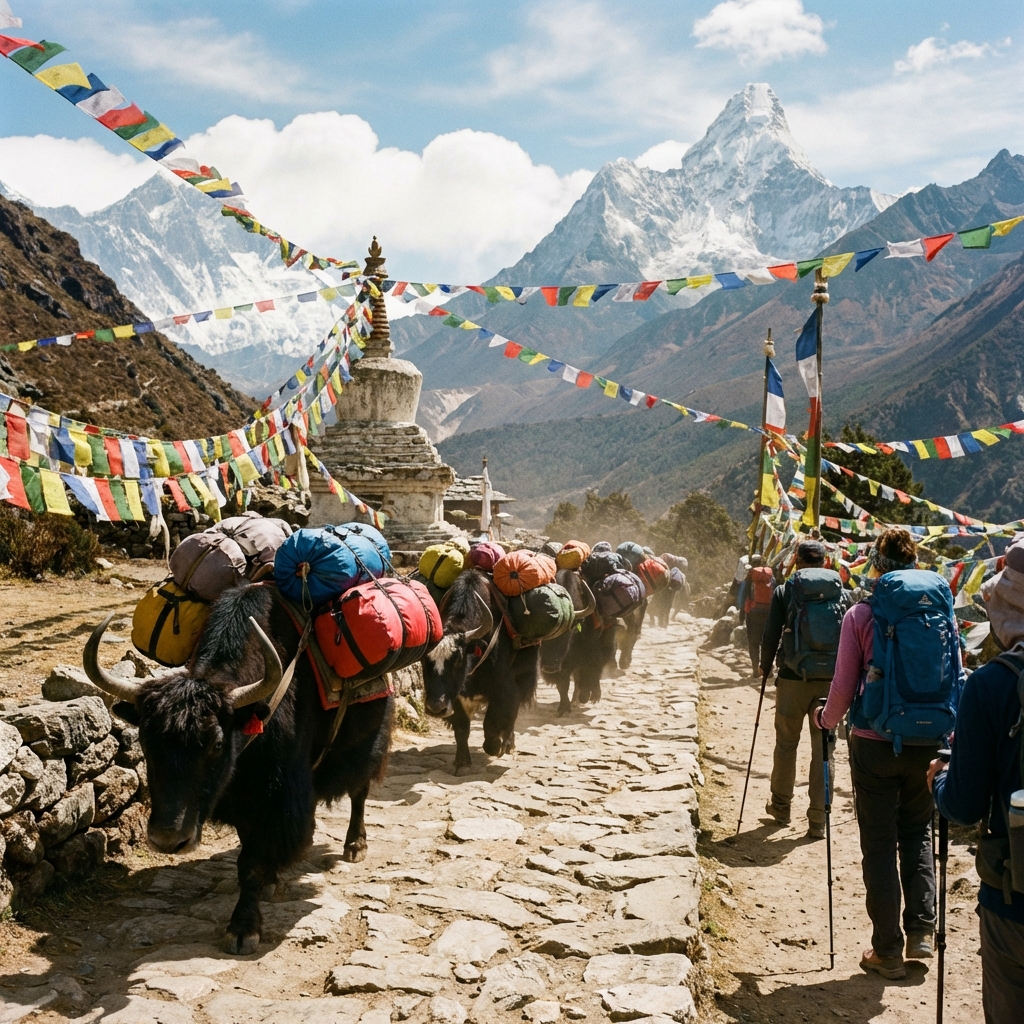
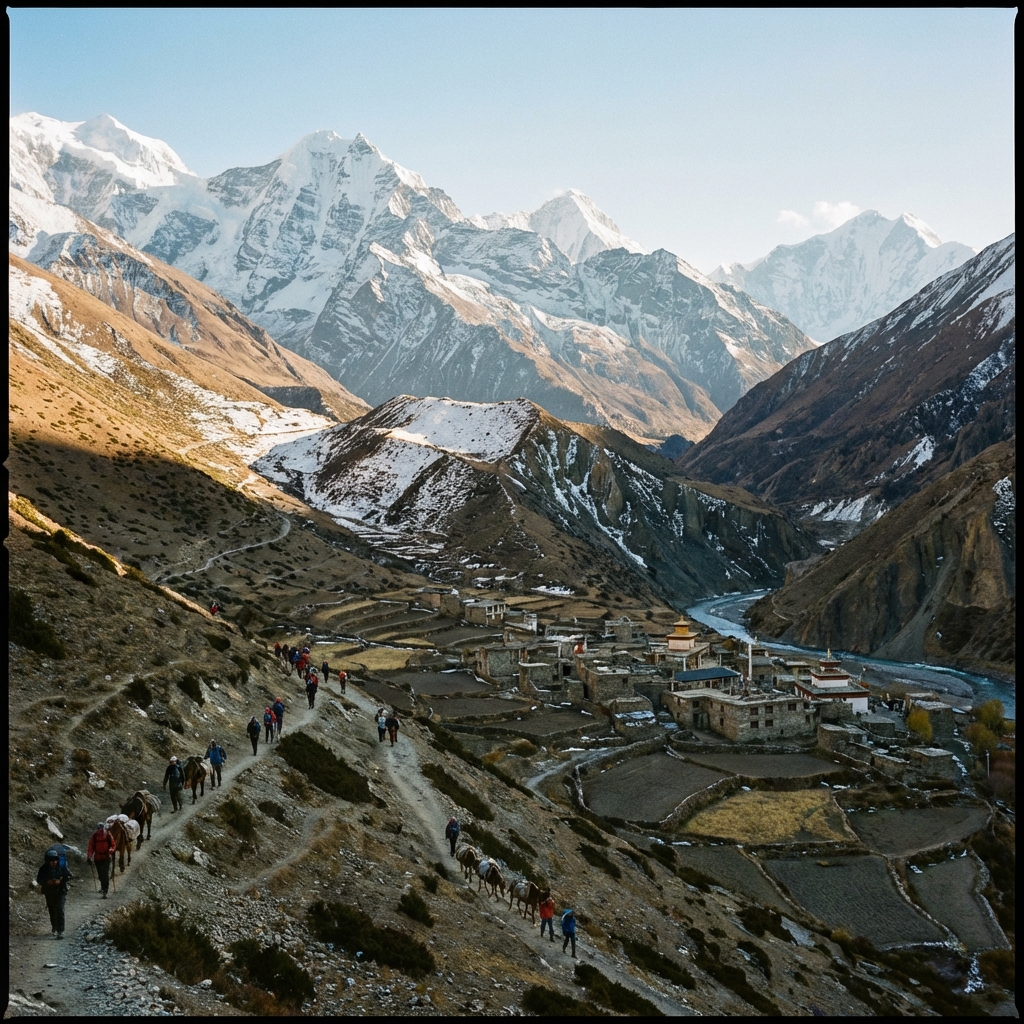
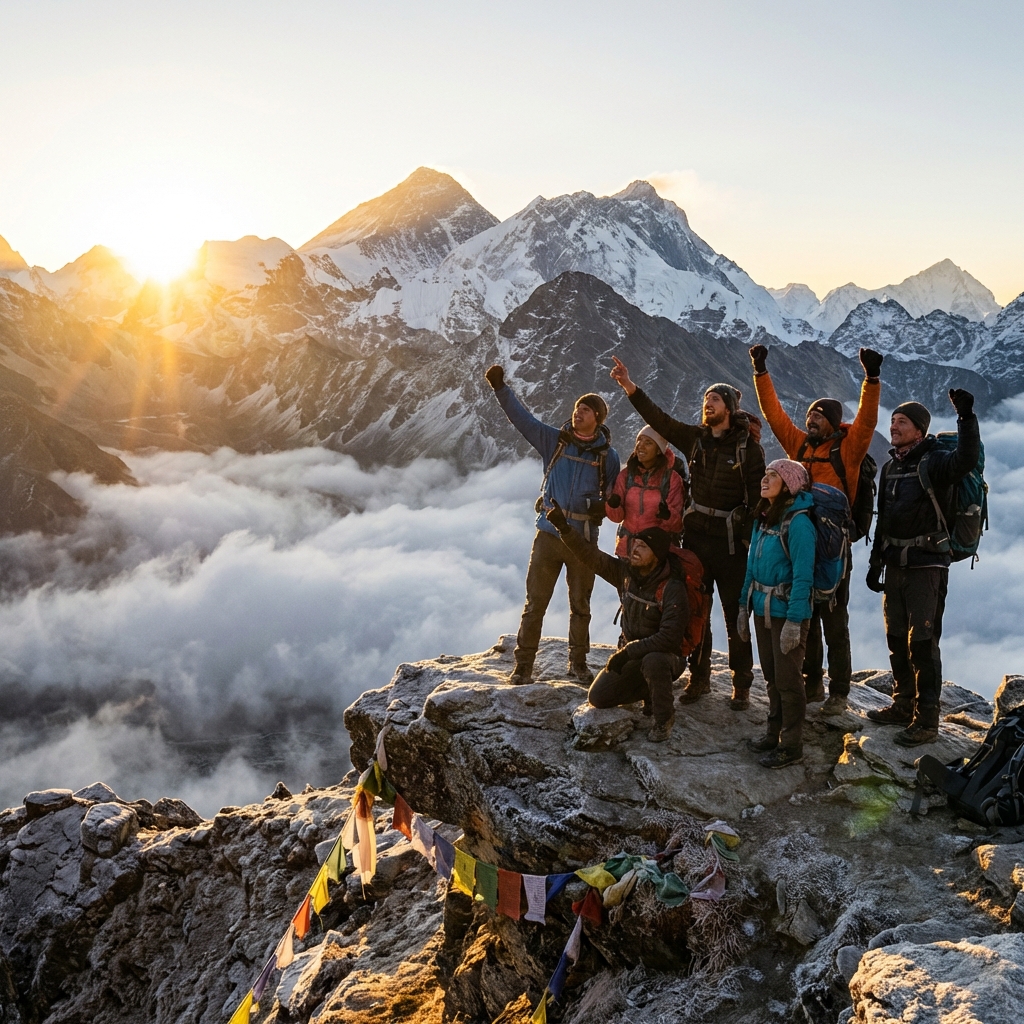
Can you trek to Everest Base Camp with a mandatory licensed guide? The answer has become complicated since April 2023, when Nepal introduced a mandatory guide rule for trekking in national parks. However, the reality on the ground differs significantly from official policy—and thousands of trekkers continue to complete EBC with varying levels of independence.
This comprehensive guide cuts through the confusion around the "mandatory guide" regulation, explains what actually happens in practice, breaks down the cost differences between truly independent and guided treks, and provides a complete DIY blueprint for those who want maximum flexibility and minimum group tour structure.
The short answer: Officially, you need a licensed guide. Practically, the Khumbu region (where EBC is located) opted out of enforcement, creating a gray area. Most "independent" trekkers now hire just a porter or book through an agency that provides paperwork without requiring you to walk with a group. True solo hiking (zero support staff) remains possible but requires navigating permit bureaucracy carefully.
Quick Facts: EBC with a mandatory licensed guide Reality Check
Guide mandatory for all trekking
Local municipality opted out
$800-1,000 for entire trek
$1,000-1,200 (most common)
$1,400-1,800 (paperwork only)
Easy - well-marked trail, hard to get lost
70-80% trek without groups
Porter only (no guide) $15-20/day
Sagarmatha ($30) + Khumbu Municipality ($20)
Low-Moderate (altitude main risk)
Can You Actually Trek EBC with a mandatory licensed guide in 2026?
Let's address the confusion head-on. There are three different answers depending on who you ask.
What the Nepal Government Says
In April 2023, the Nepal Tourism Board implemented a regulation requiring all foreign trekkers to hire a licensed guide when trekking in Nepal's national parks and conservation areas, including Sagarmatha National Park (where EBC is located). According to official regulations, permit application forms now require guide information—solo applicants with a mandatory licensed guide details will be denied.
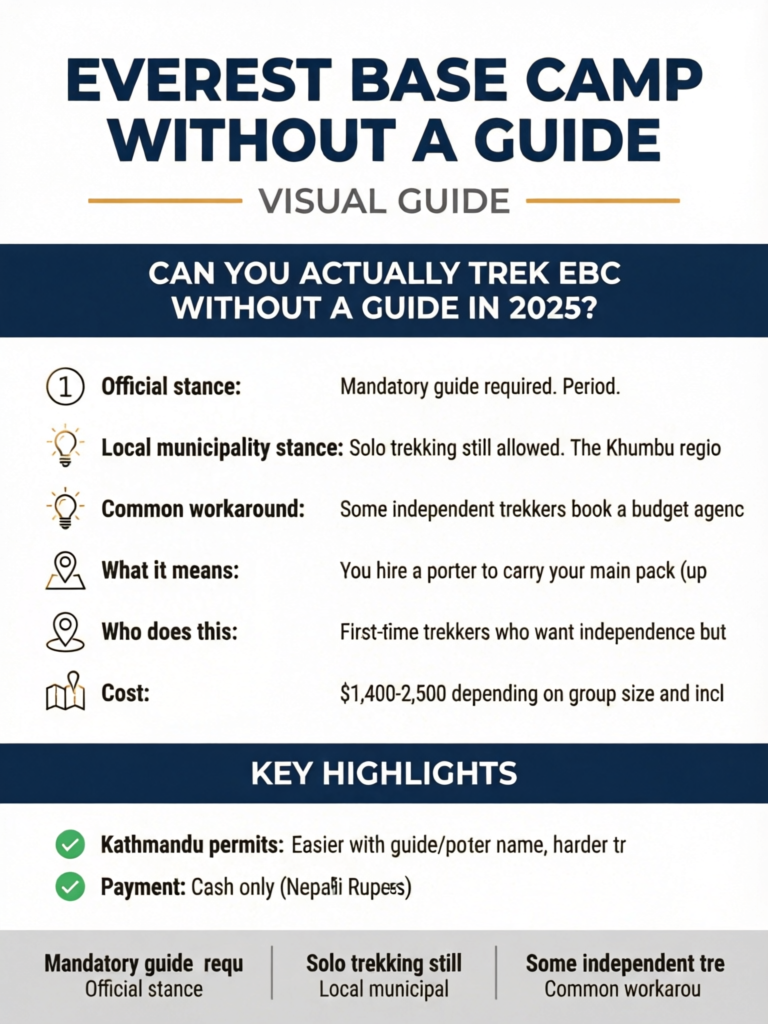
Official stance: Mandatory guide required. Period.
Official Government Policy
Since April 1, 2023, Nepal Tourism Board regulations technically require all foreign trekkers to hire a registered guide for treks in national parks. Permit forms ask for guide license numbers. This is the official policy as written.
What the Khumbu Municipality Says
Here's where it gets interesting. The Khumbu Pasang Lhamu Rural Municipality—the local government authority that actually controls the Everest region—made a decision that contradicts the national policy: they opted out of enforcing the mandatory guide rule.
Why? The Khumbu economy depends heavily on independent trekkers who spend money at local teahouses, bakeries, and shops along the trail. Requiring guides would shift that spending to Kathmandu-based agencies.
Local municipality stance: Solo trekking still allowed. The Khumbu region remains open for independent trekkers with a mandatory licensed guides.
What Actually Happens on the Ground
Reality sits somewhere between these two positions. According to current trek reports, approximately 70-80% of trekkers on the EBC trail are traveling solo or without organized groups—though many have hired porters or carry "proof" of guide booking (sometimes real, sometimes just paperwork).
Practical reality: Enforcement is minimal to non-existent in the Everest region. Thousands continue trekking independently, especially during peak seasons when the trail resembles a highway of trekkers. Permit checkpoints focus on checking you have the correct permits, not whether you're walking with your registered guide.
Understanding "Independent" vs "Solo" vs "with a mandatory licensed guide"
The terminology matters because different levels of independence have different implications for permits, costs, and logistics.
True Solo/Independent (Zero Support Staff)
What it means: You carry your own pack, book your own accommodations, navigate yourself, handle all logistics personally, and walk alone (or with other independent trekkers you meet).
Permit reality: Difficult to obtain permits this way in Kathmandu. The official permit application asks for guide license numbers.
Common workaround: Some independent trekkers book a budget agency package that provides permit paperwork and a "guide on paper" who never actually walks with you. Cost: $400-600 just for permits and paperwork.
Who does this: Experienced trekkers with previous Himalayan experience, those with tight budgets, people who strongly prefer solo hiking.
Independent with Porter Only
What it means: You hire a porter to carry your main pack (up to 15kg), but you handle all navigation, accommodation booking, and decisions. The porter is not a guide and won't provide route information or cultural context.
Permit reality: Easier than true solo. Porter's name can go on permit forms, satisfying bureaucratic requirements even though porters aren't licensed guides.
Cost: Porter wages run $15-25 per day, adding roughly $200-350 to your total trek cost.
Who does this: The most common "independent" option. You get the physical relief of a lighter pack plus some permit bureaucracy help, while maintaining complete control over your schedule and route decisions.
Porter vs Guide Distinction
Porters carry your belongings—that's it. They're not trained in navigation, first aid, or cultural interpretation. Don't expect route advice or help if you get lost. Many porters speak limited English. Think of them as luggage carriers, not trip companions. If you want advice and cultural knowledge, you need a guide, not a porter.
Independent Booking with "Paper Guide"
What it means: You book through a budget trekking agency that provides permits, airport pickup, maybe one night accommodation in Kathmandu, and technically assigns you a guide—but that guide doesn't actually walk with you on the trail. You trek at your own pace and the agency just handles permit paperwork.
Permit reality: Cleanest solution bureaucratically. All your paperwork shows a registered guide, satisfying government requirements.
Cost: Typically $1,200-1,600 depending on what's included. Budget agencies offer these "independent trek packages."
Who does this: First-time trekkers who want independence but don't want to deal with permit hassles, people with limited time in Kathmandu before flying to Lukla.
Small Group with Guide (Not Independent)
What it means: You join a small organized group (usually 2-8 people) with a licensed guide who walks with you, makes decisions about daily schedule, handles all logistics.
Cost: $1,400-2,500 depending on group size and included services.
This is NOT independent trekking: You're on someone else's schedule, eating where they choose, walking at group pace. We mention it only for cost comparison purposes.
The 2026 Regulation Update: What Changed and What Didn't
Understanding the regulatory timeline helps explain the current confusion.
Before April 2023: Complete Freedom
Prior to April 2023, truly independent trekking was completely legal and straightforward. You could:
- Obtain permits in Kathmandu without showing guide information
- Trek entirely alone if desired
- Hire porters optionally but not required for permits
- Book teahouses day-of-arrival without advance reservations
Thousands of budget backpackers completed EBC this way annually, spending as little as $600-800 for the entire trek.
April 2023: New Rule Announced
The Nepal Tourism Board announced all trekkers must hire licensed guides when trekking in restricted areas, national parks, and conservation areas. The stated reasons:
- Safety: Reduce deaths from altitude sickness and getting lost
- Economic: Ensure trekking revenue benefits local guides and agencies
- Environmental: Guides can enforce conservation practices
- Search and rescue: Easier tracking if trekkers go missing
The rule technically applied to all of Nepal's popular trekking regions: Everest, Annapurna, Langtang, Manaslu, etc.
Reality Check: Uneven Enforcement
What happened next surprised many. Enforcement varied dramatically by region:
Manaslu Circuit: Strictly enforced. Very difficult to trek with a mandatory licensed guide now.
Annapurna Circuit/ABC: Moderately enforced. Many trekkers still go independent, but permit checkpoints sometimes question solo trekkers.
Everest/Khumbu: Minimal enforcement. The local Khumbu Pasang Lhamu Rural Municipality publicly stated they would not enforce the rule, keeping the region open to independent trekkers.
Current Status (2026): Gray Area Continues
As of early 2025, the situation remains:
- Official policy: Guide required
- Khumbu reality: Not enforced
- Kathmandu permits: Easier with guide/porter name, harder true solo
Most trekkers navigate this by hiring at least a porter (cheapest option) or booking through an agency that provides "paperwork guides" without requiring you to actually walk with them.
Why Khumbu Resisted the Rule
The Khumbu region's economy is uniquely dependent on independent trekkers staying at family-run teahouses, eating at local restaurants, and shopping in Sherpa villages. When trekkers book full-service guided packages, most money goes to Kathmandu agencies, with only accommodation fees reaching local communities. The Khumbu municipality chose local economic interests over the national policy, creating the current situation where Everest remains the most "independent-friendly" major trek in Nepal.
Cost Comparison: Independent vs Guided (Real Numbers)
One of the main motivations for going independent is cost savings. But how much do you actually save? The answer depends on your definition of "independent."
Option 1: True Solo (If You Can Get Permits)
Total estimated cost: $800-1,000
| Item | Cost |
|---|---|
| Kathmandu-Lukla flight (round-trip) | $215-380 |
| Sagarmatha National Park permit | NPR 3,000 (~$22) |
| Khumbu Municipality permit | NPR 2,000 (~$15) |
| Accommodation (12 nights) | $60-120 ($5-10/night) |
| Food (12 days) | $180-300 ($15-25/day) |
| Hot showers, charging, WiFi | $50-80 |
| Emergency/contingency | $100-150 |
| TOTAL | $800-1,047 |
Realistic? Experienced budget trekkers report spending as little as $950 for truly Spartan solo treks, but this requires:
- Successfully obtaining permits with a mandatory licensed guide (increasingly difficult in Kathmandu)
- Skipping all hot showers
- Eating basic dal bhat for every meal
- No beer/coffee/snacks
- Sharing rooms when possible
- Carrying your own pack the entire way
Option 2: Independent with Porter Only
Total estimated cost: $1,000-1,250
Same as above, plus:
| Additional Item | Cost |
|---|---|
| Porter wages (12 days @ $20/day) | $240 |
| Porter food/accommodation | Included in teahouse fees |
| Porter tip (10-15%) | $35-50 |
| Porter insurance | Usually included in wage |
| ADDITIONAL COST | $275-290 |
This is the most common "independent" option. The porter satisfies permit paperwork requirements (their name goes where "guide" would go), you get physical relief from carrying a heavy pack at altitude, but you maintain complete schedule control.
According to recent cost analyses, independent trekkers with porters typically spend $1,000-1,300 total for the entire trek including everything.
Option 3: Budget Agency "Paper Guide" Package
Total estimated cost: $1,200-1,600
Typical budget agency packages include:
- All permits processed
- Kathmandu airport pickup
- 1-2 nights Kathmandu hotel
- Kathmandu-Lukla flights
- Guide "on paper" (doesn't walk with you)
- Sometimes includes accommodation only (you pay for food separately)
Budget agency prices range $1,200-1,600 for these minimal packages where you still trek independently but paperwork is handled.
Advantage: Zero permit hassles, legitimate guide registration satisfies all regulations, usually includes trip insurance, and agency provides support if emergencies arise.
Disadvantage: More expensive than doing everything yourself, you're still technically "booking a package" even if you're trekking alone.
Option 4: Standard Guided Group Trek
Total estimated cost: $1,400-2,500
Full-service guided packages typically include:
- All permits
- Kathmandu airport transfers
- 2-3 nights Kathmandu accommodation
- Kathmandu-Lukla flights round trip
- Licensed guide who walks with you
- Porter (1 porter per 2 trekkers standard)
- All accommodation in teahouses
- 3 meals daily (breakfast, lunch, dinner)
- Guide/porter wages, food, accommodation, insurance
Mid-range guided trek packages from reputable agencies cost $1,350-1,800 for the standard 14-day itinerary.
What you get: Professional guide with first aid training, cultural knowledge, navigation expertise, pre-booked accommodations, rescue support network, and complete logistics handled.
Trade-off: Less flexibility on daily schedule, walking at group pace, eating where guide chooses.
True Cost Difference: Independent vs Guided
Purely independent (with porter): $1,000-1,250 Budget guided package: $1,400-1,800 Real savings: $350-550 ($25-40/day over 14 days)
Is that savings worth losing professional guidance, cultural interpretation, first aid expertise, and logistical support? For experienced trekkers who value independence, yes. For first-timers or those prioritizing safety, the small price difference makes guided options attractive. The cost gap is smaller than most people assume.
Cost Comparison Summary Table
| Trek Style | Total Cost | Permits | Flights | Guide/Porter | Flexibility | Difficulty Level |
|---|---|---|---|---|---|---|
| True solo | $800-1,000 | DIY hard | DIY | None | Maximum | Expert only |
| Solo + porter | $1,000-1,250 | Easier | DIY | Porter only | High | Moderate experience |
| Paper guide agency | $1,200-1,600 | Handled | Included | Paperwork only | High | Beginner friendly |
| Budget guided | $1,400-1,800 | Handled | Included | Full guide | Medium | Beginner friendly |
| Standard guided | $1,800-2,500 | Handled | Included | Guide + porter | Low | All levels |
DIY Independent Trek: Complete Logistics Guide
If you've decided to trek independently (with or without porter), here's exactly how to handle all logistics yourself.
Step 1: Obtaining Permits
You need two permits for EBC. TIMS cards are no longer required as of 2026.
Sagarmatha National Park Entry Permit
Cost: NPR 3,000 (~$22 USD) for foreign nationals; NPR 1,500 for SAARC nationals
Where to get it:
- In Kathmandu: Nepal Tourism Board office on Pradarshani Marg (near Bhrikutimandap)
- Hours: Sunday-Friday 10am-4pm (closed Saturday)
- Payment: Cash only (Nepali Rupees)
- Processing: Immediate, takes 10-15 minutes
- In Monjo: Sagarmatha National Park Entry Gate (on trail after Phakding)
- Open daily
- Same price as Kathmandu
- More convenient if you forget or can't get it in Kathmandu
Documents required:
- Passport (original)
- 2 passport photos
- Completed application form (provided at office)
Important: The Kathmandu permit office will ask for guide information. If trekking truly independently:
- Leave guide fields blank and explain you're trekking in Khumbu (where it's allowed)
- Provide porter name if you have one
- Some reports suggest saying you'll "hire a guide in Lukla" satisfies requirements
- Worst case: Some independent trekkers report paying a small "documentation fee" to agencies ($50-100) to get permits issued without actually hiring them for the trek
Khumbu Pasang Lhamu Rural Municipality Permit
Cost: NPR 2,000 (~$15 USD) for all nationalities
Where to get it:
- Only available in Lukla at the municipality office near the airport
- Open daily
- Payment: Cash only (Nepali Rupees)
When to get it: After landing in Lukla, before starting trek. The office is a short walk from Lukla airport. Many trekkers get this permit while having lunch in Lukla before hiking to Phakding.
Documents required:
- Passport
- 1 passport photo (sometimes)
This permit is easier—no questions about guides. It's a straightforward local municipality entry fee.
Permit Pro Tips
-
Get Sagarmatha permit in Kathmandu if possible: Lines are shorter than Monjo in peak season, and you can deal with any guide-information questions without time pressure.
-
Bring extra passport photos: Budget 4-6 photos for permits and potential trek card replacements.
-
Carry plenty of small Nepali rupee notes: Permits require cash, and change can be hard to get for large bills.
-
Keep permits accessible: You'll show them at checkpoints in Monjo, Namche, and sometimes higher up. Many trekkers keep them in jacket pocket for quick access.
Step 2: Booking Lukla Flights
The Kathmandu-Lukla flight is notoriously unreliable but unavoidable for most trekkers. Here's how to book independently.
Airlines Flying Kathmandu-Lukla
Primary carriers:
- Tara Air (most flights)
- Summit Air
- Sita Air
Cost: $350-380 USD round-trip for foreign nationals; around $180-200 for Nepali nationals (yes, there's a dual pricing system)
How to Book
Option 1: Direct with airline
- Visit airline offices in Kathmandu (Tara Air office in Lazimpat)
- Phone booking: Possible but often requires Kathmandu phone number
- Email booking: Hit or miss response times
Advantage: Potentially lowest price
Disadvantage: Difficult for foreigners without local contact, language barriers, payment can be tricky
Option 2: Through booking agent
- Numerous agents near Thamel in Kathmandu
- Add $20-40 markup but handle all communication
- Can book online before arrival
Advantage: Easier communication, can arrange before arriving Nepal
Disadvantage: Slightly higher cost
Option 3: Hotel/guesthouse help
- Most Kathmandu guesthouses will book flights for guests
- Small commission added
Advantage: Convenient, trustworthy (usually)
Disadvantage: May not get best price
Lukla Flight Reality Check
Build in buffer days. The Lukla flight has a 30-40% delay/cancellation rate due to weather. Most commonly:
- Morning flights cancel due to Lukla fog/clouds
- Afternoon flights cancel due to Kathmandu-Lukla wind
- Multi-day delays happen 5-10% of the time
Buffer strategy: Book international departure from Nepal at least 2-3 days after planned Lukla return. Budget 1-2 extra hotel nights in Kathmandu for delays. Helicopter rescue/evacuation if you're on tight timeline costs $3,000-5,000.
Alternative: Road to Lukla
A new road now reaches Salleri/Phaplu, cutting out the Lukla flight entirely. From Kathmandu:
Option A: Kathmandu to Salleri by bus (~10-12 hours, $15-20)
- Then trek 2-3 days to join main EBC trail at Phakding/Namche
- Adds 4-5 days to trek but eliminates flight delays
- See our guide to Jiri to Everest Base Camp for details
Option B: Kathmandu to Phaplu by flight ($120-150), then 1-2 day trek to join main trail
Step 3: Booking Accommodation (Teahouses)
One of the biggest questions independent trekkers have: "Do I need to book teahouses in advance?"
The Short Answer
Low season (June-August, December-February): No advance booking needed. Arrive, pick any teahouse, ask if room available. Success rate: 95%+
Shoulder season (March, May, early September, November): Advance booking recommended for main stops (Namche, Dingboche, Lobuche, Gorak Shep). Other villages fine to walk-up. Success rate without booking: 70-80%
Peak season (mid-September to October, April): Advance booking strongly recommended, especially for:
- Gorak Shep (smallest village, highest demand)
- Lobuche
- Dingboche
- Namche
Even with booking, having backup teahouse names helps if your first choice is full.
How to Book Teahouses
Option 1: Book through trekking agency
- Agency books entire route for you
- Removes accommodation stress
- Cost: Usually $300-500 for full trek booking service
Option 2: Book directly via phone/WhatsApp
- Many teahouses now have cell numbers/WhatsApp
- See teahouse contact list below
- Book 2-4 weeks before peak season trek
- Book 3-7 days before shoulder season
Option 3: Book day-of or one-day-ahead
- Most common method for independent trekkers
- Works well in low season
- Risky in peak season for high-altitude stops
Option 4: Send porter ahead
- If you hire a porter, they can run ahead to next village to book room
- Traditional method still used widely
- Porter saves best room for you while you're still trekking
Teahouse Costs
Accommodation is remarkably cheap—because teahouses make money from food, not beds:
| Altitude Range | Room Cost per Night |
|---|---|
| Lukla to Namche (2,800-3,440m) | $5-8 |
| Namche to Tengboche (3,440-3,860m) | $5-10 |
| Dingboche to Lobuche (4,410-4,940m) | $8-12 |
| Gorak Shep/EBC (5,140-5,364m) | $10-15 |
What you get:
- Twin bed room (2 single beds)
- Pillow, sheets, blanket (bring sleeping bag liner for hygiene)
- Shared bathroom (usually squat toilet below Namche, mix of squat/western above)
What costs extra:
- Hot shower: $3-5 (solar heated, only available afternoon if sunny)
- Charging electronics: $2-$7 per charge
- WiFi: $3-5 per day (slow, unreliable above 4,000m)
- Heated dining room: Sometimes included, sometimes $2-3 charge
The Teahouse Business Model
Teahouses charge minimal room fees because they expect you to eat all meals there. The unwritten rule: if you stay at a guesthouse, you eat breakfast and dinner there. Lunch can be anywhere since you're trekking during the day.
Don't try this: Sleeping at one teahouse but eating at another. This violates local norms and you may be asked to leave or charged much higher room rates. The system works because rooms are cheap but everyone eats where they sleep.
Step 4: Food and Water
Daily food budget: $15-25 depending on appetite and how much Western food vs dal bhat you eat.
Typical Meal Costs
Breakfast:
- Porridge: $3-4
- Eggs (fried, boiled, omelette): $3-5
- Tibetan bread with jam: $3-4
- Pancakes: $4-5
- Coffee/tea: $1.50-3
Lunch/Dinner:
- Dal bhat (unlimited refills): $5-7 (lower altitude) to $8-12 (above 4,500m)
- Fried rice/chow mein: $6-8
- Pasta dishes: $6-9
- Pizza (yes, really—popular in Namche): $10-15
- Soups: $4-6
- Snickers bar: $2-3 (yes, this is a legitimate food category at altitude)
Drinks:
- Bottled water (1L): $1 (Lukla) to $4 (Gorak Shep)—or buy filter bottles to save money
- Tea: $1-2
- Hot lemon: $1.50-2.50
- Beer: $4-5 (Namche) to $8-10 (Gorak Shep)
Money-saving food strategy:
- Order dal bhat for lunch and dinner: Unlimited refills, nutritious, cheap ($6-10), and helps acclimatization (carb-heavy)
- Bring snacks from Kathmandu: Energy bars, nuts, chocolate for trail munching (available in Namche too but 2-3x price)
- Refill water bottles: Use purification tablets or filter instead of buying bottled water ($25 savings over trek)
- Skip beer: Alcohol hinders acclimatization anyway
Step 5: Navigation and Trail Finding
Good news: the EBC trail is one of the easiest to navigate in the Himalayas.
Why You Won't Get Lost
-
Heavy traffic: During peak season, you're almost never alone on the trail. Hundreds of trekkers daily means you can see other groups ahead and behind.
-
Well-marked path: The main EBC trail is stone-paved or clearly worn for 90% of the route.
-
Regular checkpoints: Permit checkpoints at Monjo, Namche entrance, and sometimes above mean you're on the right track.
-
Villages every 2-4 hours: You're never more than a half-day from the next settlement. If you haven't seen a village in 4+ hours, something's wrong.
-
Single main route: Unlike some treks with multiple trail variations, the EBC route is mostly a straight shot: Lukla → Phakding → Namche → Tengboche → Dingboche → Lobuche → Gorak Shep → EBC.
Where Navigation Requires Attention
Namche to Khumjung/Khunde side trip:
- If taking acclimatization hikes around Namche, trails to Khumjung/Khunde/Everest View Hotel split off
- Well-marked but easy to accidentally take wrong path if not paying attention
Dingboche vs Pheriche route:
- After Pangboche, trail splits to either Dingboche or Pheriche (both viable, both rejoin before Lobuche)
- Most trekkers go to Dingboche (better acclimatization day hikes)
- Make sure you know which way you're going
Lobuche to Gorak Shep in bad weather:
- This high-altitude section can become disorienting in snow/fog
- Stay on main trail (obvious in good weather, tough in whiteout)
Gorak Shep to EBC:
- The trail from Gorak Shep to actual Everest Base Camp is less defined than lower sections
- Stone cairns mark the route but can be hard to see in poor visibility
- Consider going with other trekkers for this section
Navigation Tools
Essential:
- Offline maps: Download Maps.me, OsmAnd, or Gaia GPS with Nepal maps before departure
- Trail map: Physical map as backup (available in Kathmandu bookshops)
Highly recommended:
- GPS device or phone GPS: Works without cell signal for location tracking
- Compass: Basic orienteering backup
Optional:
- Guidebook: Lonely Planet or Cicerone guide with trail descriptions
- Local SIM card: Ncell or Nepal Telecom for cell coverage (intermittent but helpful in villages)
When Trail Conditions Become Dangerous
Independent trekkers need to recognize when weather makes solo navigation genuinely risky:
Turn back or wait if:
- Heavy snowfall reducing visibility to <50 meters
- Whiteout conditions above Lobuche
- Ice covering trail sections (common early morning at high altitude)
- You haven't seen another trekker or local in 2+ hours and you're unsure of route
In these situations: Wait at the last teahouse for weather to clear, or buddy up with other trekkers/guided groups for that section. Solo stubborn pushing in bad conditions is how accidents happen.
Step 6: Packing for Independent Trek
See our comprehensive EBC packing list guide for complete details, but key items for independent trekkers:
Critical for independent:
- First aid kit (guides carry this for groups)
- Water purification (tablets or filter)
- Headlamp with extra batteries
- Offline maps downloaded
- Emergency contact info/embassy numbers
- Extra cash (ATM only in Namche, often broken)
Can skip if with guide:
- Extensive first aid (basic only needed)
- Satellite communicator (guides have them)
- Trail guidebook (guides know route)
Safety Considerations: The Risks of Going Solo
Let's be honest about the actual risks independent trekkers face—and which are overblown.
Real Risk 1: Altitude Sickness (AMS)
Severity: HIGH
This is the primary safety concern for solo trekkers. Acute Mountain Sickness (AMS) affects 30-50% of EBC trekkers at some point.
Why it's riskier solo:
- Guides recognize early symptoms you might ignore
- Guides enforce rest days when you might push on
- Guides make descent decisions when your altitude-impaired judgment fails
- Guides have oxygen and medications
Mitigation for independent trekkers:
- Know symptoms: Headache, nausea, dizziness, fatigue, loss of appetite
- Follow ascent rules: Never ascend more than 500m per day above 3,000m; include rest days
- Buddy up: Even informal partnerships with other trekkers you meet provide symptom checking
- Descend if symptoms worsen: This is non-negotiable but harder to enforce on yourself
- Consider Diamox: Discuss with doctor (helps acclimatization but has side effects)
- Get travel insurance with helicopter evacuation: Costs $3,000-5,000 without insurance
When to Descend Immediately
Descend at least 500m to last lower village if you experience:
- Severe persistent headache not relieved by ibuprofen
- Vomiting
- Confusion or difficulty walking straight
- Extreme fatigue that prevents you from getting out of sleeping bag
These are signs of HACE (cerebral edema) or HAPE (pulmonary edema), both life-threatening. Solo trekkers have died by ignoring these symptoms and not descending. Your guide would force you to descend—you must make that decision yourself.
Real Risk 2: Getting Lost/Injured in Remote Sections
Severity: MODERATE
While the main trail is well-marked, bad weather, side trails, and high-altitude confusion can lead to navigation errors.
Actual statistics: Very few trekkers get seriously lost on the main EBC trail during trekking season. Most "lost" incidents involve:
- Taking wrong turn to different village (minor issue, just backtrack)
- Getting disoriented on EBC-to-Gorak Shep section in snow
- Wandering off trail for toilet/photos and struggling to relocate path
More concerning: Slips, falls, or injuries when you're alone. A twisted ankle becomes a major problem if you're solo and hours from the next village.
Mitigation:
- Trek during main season when trail traffic is high
- Use trekking poles (reduce fall risk by 30-40%)
- Stay on main trail—resist urges to "shortcut"
- In bad weather, wait or buddy up with other trekkers
- Carry emergency whistle and reflective gear
Real Risk 3: Medical Emergencies
Severity: MODERATE to HIGH depending on emergency type
Scenarios guides help with:
- Food poisoning/diarrhea: Guides know safe food choices, carry medications
- Sprained ankles: Guides can help/carry you to next village
- Frostbite: Guides recognize early signs
- Heart issues at altitude: Guides coordinate evacuation
Independent trekker challenges:
- Limited first aid supplies
- No immediate expert help
- Helicopter evacuation coordination falls on you (language barriers)
- Insurance claims more complicated with a mandatory licensed guide documentation
Mitigation:
- Comprehensive first aid kit
- Travel insurance with air evacuation (mandatory)
- Basic first aid knowledge before departure
- Emergency contact numbers saved (Himalayan Rescue Association: +977-1-4444292)
Overblown Risk: Crime/Theft
Severity: VERY LOW
The Khumbu region has remarkably low crime. Theft is extremely rare. The local Sherpa Buddhist culture values honesty, and tourist industry depends on good reputation.
Reality: You're more likely to accidentally leave something at a teahouse (locals will chase you down to return it) than have anything stolen.
Basic precautions still wise:
- Don't flash cash/expensive electronics unnecessarily
- Use room locks (simple latches)
- Keep passport/permits on body in money belt
Overblown Risk: Wildlife
Severity: NEGLIGIBLE
Despite being in Sagarmatha National Park, you'll encounter minimal wildlife. Occasional:
- Yaks (give them trail right-of-way, stay uphill side)
- Mules (same, stay uphill)
- Birds
- Maybe a Himalayan tahr (mountain goat) if lucky
No dangerous predators. No concerns about camping safety from animals.
What You Miss with a mandatory licensed guide
Being honest about trade-offs helps you make an informed decision.
Cultural Knowledge and Context
What guides provide:
- Explanation of Buddhist prayer flags, mani stones, monasteries
- Sherpa cultural practices and history
- Stories about specific mountains and Khumbu region
- Introduction to monastery monks, local families
- Proper etiquette for religious sites
What independent trekkers miss:
- Much of this context, unless you do extensive pre-trip reading
- Deeper cultural connections
- Random fascinating details (that mountain was first climbed by...)
Partial mitigation:
- Read guidebooks thoroughly
- Strike up conversations with guided groups at teahouses
- Many monasteries have information plaques in English
- Chat with teahouse owners (some speak excellent English and love sharing stories)
Safety Net and Decision-Making
What guides provide:
- Expert evaluation of your physical condition daily
- Decisions about when to take rest days
- Recognition of altitude sickness early symptoms
- Weather assessment and route adjustment
- Immediate first aid and medication
- Evacuation coordination if needed
What independent trekkers miss:
- An expert second opinion on "should I keep going?"
- Professional medical evaluation
- Weather expertise (is this passing shower or dangerous storm?)
Partial mitigation:
- Conservative approach to altitude gain
- Trust other trekkers' observations ("you don't look well")
- When in doubt, rest another day
- Follow guidebook acclimatization recommendations religiously
Pre-Arranged Logistics
What guides provide:
- Pre-booked teahouses (no accommodation stress)
- Tables saved at mealtimes
- Bags transferred between teahouses
- Permit checkpoints handled smoothly
- Problem-solving when issues arise
What independent trekkers miss:
- Convenience and stress reduction
- Time saved on logistics
- Guaranteed room availability
Partial mitigation:
- Book key teahouses yourself if peak season
- Arrive at villages early afternoon for room choice
- Build flexible schedule to handle logistics time
Social Experience
What guides provide:
- Built-in trekking companion
- Connection to local Sherpa culture
- Group camaraderie if joined guided group
- Shared meals with guides/porters
What independent trekkers get instead:
- Freedom to trek at own pace
- Opportunity to meet other independent trekkers
- More interaction with locals at teahouses (guides often handle these interactions for groups)
- Different social dynamic—not better or worse, just different
The Guide Knowledge Trade-Off
A good guide is essentially a walking encyclopedia of Khumbu knowledge plus safety expert. You'll learn 10x more about Sherpa culture, mountain history, and local ecology with a guide than without.
But independent trekkers often report forming stronger connections with other independent trekkers they meet, more authentic interactions with teahouse families (since you're handling everything yourself), and a sense of personal accomplishment that feels different from being in a guided group.
Neither experience is better—they're different. Choose based on what you value most.
What You Gain Going Independent
Now the flip side: the advantages of independent trekking that make it appealing despite the trade-offs.
Complete Schedule Control
Biggest benefit for most independent trekkers:
- Start hiking when you want (sleep in if exhausted)
- Stop at any village that appeals to you
- Take unscheduled rest days if feeling off
- Spend extra days in favorite spots (many love Namche)
- Acclimatization hikes at your chosen pace
- Cut days short or push longer as you feel
Why this matters: Every body acclimatizes differently. Guided groups run on fixed schedules—you might feel great when the group takes a rest day, or need rest when the group pushes on. Independent trekkers adjust daily based on how they feel.
Personal Challenge and Accomplishment
Many independent trekkers report the "I did this myself" feeling as the highlight:
- Navigated the route yourself
- Made all decisions
- Solved problems independently
- Relied on your own judgment and preparation
This is subjective: Some people find this empowering and memorable. Others find it stressful and would prefer expert help. Know yourself.
Freedom to Modify Route
Popular modifications independent trekkers make:
- Add Gokyo Lakes side trip
- Include Chukhung Ri summit
- Extra acclimatization hike to Ama Dablam base camp
- Extend to Three Passes trek partway
- Cut short if time runs out or you're not enjoying it
Guided groups follow set itineraries. Independent trekkers can pivot based on conditions, interests, or how they feel.
Budget Savings (Sometimes)
As shown in cost comparison earlier, independent trekking can save $300-600 compared to guided options—but only if you:
- Successfully navigate permit bureaucracy
- Do DIY flight booking
- Handle all logistics yourself
- Skip comforts like hot showers, tea, snacks
For many trekkers, the time and stress savings of a budget guided package are worth $300. But for budget travelers or those who enjoy the DIY logistics challenge, the savings matter.
Meeting Other Travelers
Counter-intuitive but true: independent trekkers often report more social interaction than guided groups.
Why: Guided groups become insular—you eat with your group, trek with your group, socialize with your group. Independent trekkers mix constantly:
- Chat with different people at each teahouse
- Form temporary trekking partnerships for a day or two
- Interact more with local teahouse families
- Join other solo trekkers for sections
The EBC trail has so many independent trekkers that 70-80% trek solo or in pairs, making it easy to find companions when desired while maintaining independence.
Authentic Teahouse Experience
When guides handle accommodation, you often end up at larger, more tourist-oriented lodges with group booking arrangements. Independent trekkers can choose:
- Small family-run teahouses
- Quieter lodges off the main strip
- Places with character over convenience
- Lodges locals recommend
Example: In Namche Bazaar, guided groups typically stay at 3-4 large lodges. Independent trekkers have 20+ options, including tiny 4-room guesthouses run by Sherpa families where you'll eat dinner with the hosts.
Best of Both Worlds: Hire a Guide Partway
You're not locked into one choice for the entire trek. Some independent trekkers hire guides only for specific sections:
- Hire guide for final push (Lobuche to EBC and back): Get expertise for the riskiest high-altitude section while trekking independently below
- Hire guide for acclimatization hikes: Independent for main trail, guided for side hikes to Gokyo, Chukhung Ri, etc.
- Hire guide if problems develop: Feeling AMS symptoms? Hire a guide in Namche or Dingboche to help you continue safely or descend
This flexible approach gives you independence plus safety where needed.
The Porter-Only Compromise (Most Popular Option)
For most independent trekkers, hiring just a porter (not a guide) is the sweet spot.
What Porters Do
Primary role: Carry your duffel bag (up to 15kg) from teahouse to teahouse each day.
What's included:
- Carrying your main bag
- Sometimes arriving early to secure room
- Walking roughly same route/schedule as you
What's NOT included:
- Navigation guidance
- Route decision-making
- Cultural interpretation
- First aid
- Weather assessment
- Altitude sickness monitoring
Porter vs Guide: Porters are not trained guides. They carry bags. That's it. Many speak limited English. Don't expect them to act as guides even informally.
Porter Costs (2026)
Daily wage: $20-$30 per day depending on:
- Season (higher in peak)
- Experience
- Whether they're also providing some informal guidance
- Negotiation
Typical costs for 14-day EBC trek:
- 12 days porter wages @ $20/day = $240
- Tip (10-15% customary) = $35-50
- Porter's food/accommodation = included in teahouse fees (they eat/sleep at same lodges)
Total porter cost: $275-300 for entire trek
Porter vs Guide Cost Comparison
| Option | Daily Cost | 12-Day Total |
|---|---|---|
| Porter | $15-25 | $240-300 + tip |
| Guide | $25-35 | $380-450 + tip |
| Guide + Porter | $40-55 | $620-700 + tips |
Cost difference porter vs guide: About $100-150 for the trek. That difference buys you:
- Navigation expertise
- Cultural knowledge
- First aid capability
- Altitude sickness monitoring
- Rescue coordination
Is the upgrade worth it? Depends on your experience level and priorities. First-time Himalayan trekkers: probably yes. Experienced trekkers comfortable at altitude: probably no.
How to Hire a Porter
Option 1: Through agency in Kathmandu
- Agencies can arrange porter to meet you in Lukla
- Cost: Usually same daily rate but agency adds 10-15% commission
- Advantage: Vetted porter, insurance handled, backup if porter gets sick
Option 2: Directly in Lukla
- Many porters wait at Lukla airport looking for clients
- Negotiate rate, check they have proper gear (warm clothes, boots)
- Advantage: No commission, see porter before hiring
- Disadvantage: No vetting, need to assess yourself
Option 3: Through teahouse in Lukla/Phakding
- Teahouse owners know local porters
- Can make introductions
- Often more trustworthy than airport touts
What to verify before hiring:
- Porter has warm clothing and proper boots (you're responsible for their safety too)
- Porter has insurance (required by law, many don't—you're liable if they're injured)
- Clear agreement on wage, tip expectation, rest days
- What happens if porter gets sick (backup plan?)
Porter Welfare Matters
Ethical considerations when hiring porters:
Ensure your porter has:
- Warm jacket and pants for high-altitude sections
- Proper boots (not sandals or sneakers)
- Sunglasses
- Insurance coverage
Your responsibilities:
- Don't overload beyond 15kg
- Provide lunch/tea during trek day
- If porter shows altitude sickness symptoms, let them descend (hire replacement if needed)
- Tip fairly (10-15% minimum)
Porter exploitation is a real issue in Nepal. Make sure you're hiring ethically. Reputable agencies ensure proper gear and insurance; direct hiring puts this responsibility on you.
Porter Personal Experiences (What to Expect)
Communication: Most porters speak basic English ("go now," "stop here," "eat?"). Don't expect conversations or cultural information.
Walking pace: Porters typically walk slowly and steadily, often stopping to rest. They may arrive at destination after you (they're carrying 15kg at altitude).
Social interaction: Porters usually eat separately from clients (often in kitchen with teahouse staff). They sleep in basic porter rooms (shared, cheaper than guest rooms). This is normal—don't feel obligated to eat together, but being friendly is appreciated.
Rest days: If you take acclimatization rest day, porter also rests (you still pay daily wage—this is expected).
Meeting Other Trekkers: The Social Side of "Solo" Trekking
One of the most common concerns: "Will I be lonely trekking alone?"
Reality: It's almost impossible to be lonely on the EBC trail, especially in trekking season.
The EBC Social Scene
By the numbers:
- 70-80% of EBC trekkers are solo travelers or pairs, not large groups
- Peak season daily traffic: 200-400 trekkers on trail
- Shoulder season: 50-150 daily
- Even low season: 20-50 daily
What this means: At teahouses each night, you'll find:
- 10-30 other trekkers in small lodges
- 30-50+ in larger lodges (Namche, Dingboche)
- Mix of independent solo trekkers, pairs, and small guided groups
- Communal dining rooms where everyone eats
Social dynamics: Mealtimes become social hours. Solo trekkers naturally gravitate together. Common conversation starters:
- "Where did you start this morning?"
- "How are you feeling at this altitude?"
- "Did you do the acclimatization hike?"
- "What's your plan tomorrow?"
Finding Trek Buddies
Many independent trekkers form informal partnerships:
Same-day trekking buddies:
- Meet someone at breakfast
- Realize you're going to same destination
- Walk together for that day
- Maybe continue next day or split up
Multi-day partnerships:
- Find someone with similar pace/schedule
- Trek together for 3-5 days
- Provides safety buddy for altitude monitoring
- Split room costs sometimes
- Often dissolves naturally when schedules diverge
Full-trek companions:
- Rare but happens
- Met in Kathmandu or Lukla
- Similar fitness/schedule/goals
- Trek entire route together
No pressure: The beauty of independent trekking is you can be social when you want, alone when you don't. Some days you might hike solo and enjoy solitude. Other days you might chat with 5 different groups.
Pre-Trip Partner Finding
Facebook groups for trek partners:
- Backpackers Nepal
- Trekking Partners Nepal
- Everest Base Camp Trekkers 2026/2027
- Nepal Hiking/Trekking Buddies
How it works:
- Post your dates, fitness level, budget, interests
- Other solo trekkers respond
- Video chat to assess compatibility
- Meet in Kathmandu and trek together
Pros: Built-in companion, can split porter cost, safety buddy
Cons: Committed before meeting in person, personality mismatches, different fitness levels become apparent on trail
Solo Female Trekker Considerations
The EBC trail is generally considered very safe for solo female trekkers:
Safety factors:
- Heavy foot traffic during trekking seasons
- Local Sherpa culture is respectful and protective of tourists
- Teahouses have family atmosphere
- Many solo female trekkers on trail (easy to connect)
Practical tips:
- Join female trekker Facebook groups (active community)
- Room sharing possible (reduces costs, adds safety)
- Tampons/pads available in Namche (bring from Kathmandu to be safe)
- Bathroom facilities improve every year but squat toilets still common
Harassment: Extremely rare. The biggest "issues" reported are:
- Overly helpful guides trying to upsell services
- Other trekkers being overly chatty when you want solitude
Neither unique to female trekkers nor safety concerns.
The Teahouse Community Vibe
Teahouse dining rooms create natural social environments. After a day of trekking, everyone gathers in the heated common room (using yak-dung stove), orders dinner, and hangs out for 2-3 hours.
You'll hear stories from all over the world, compare altitude sickness symptoms, share photos, and often end up trekking with someone you met the night before. Even the most introverted solo trekkers report enjoying these evening social sessions.
The EBC trek might be solo in planning, but it's rarely solo in execution.
Step-by-Step DIY Guide: Independent Trek Execution
You've decided to go independent. Here's exactly how to execute it from arrival in Nepal to returning to Kathmandu.
Phase 1: Kathmandu Preparation (2-3 Days)
Day 1: Arrival and orientation
- Arrive Kathmandu (Tribhuvan International Airport)
- Visa on arrival ($50 USD for 30 days, cash/card accepted)
- Exchange money: Get NPR 30,000-40,000 cash (ATM in Namche but often broken)
- Check into Thamel guesthouse ($10-25/night)
- Buy local SIM card: Ncell or Nepal Telecom ($3-5, bring passport photo)
- Rest and recover from flight
Day 2: Permits and gear
Morning:
- Nepal Tourism Board office (Pradarshani Marg, open 10am-4pm, closed Saturday)
- Get Sagarmatha National Park permit (NPR 3,000, bring passport + 2 photos)
- If hiring porter/guide through agency, arrange this now
Afternoon:
- Rent/buy any missing gear in Thamel
- Final gear check
- Book Lukla flight if not already done (or confirm booking)
Evening:
- Pack duffel bag (if using porter) vs backpack (if not)
- Repack items in waterproof bags
- Sleep early (Lukla flight departure 6-7am usually)
Day 3: Buffer day
Keep one flexible day in Kathmandu for:
- Lukla flight delays (very common)
- Last-minute gear purchases
- Permit issues if you encountered problems
- Sightseeing if everything went smoothly
Phase 2: The Trek (Days 1-12)
Day 1: Fly Kathmandu to Lukla, trek to Phakding
- 5am: Wake up, hotel breakfast
- 6am: Airport transfer (domestic terminal)
- Flight: 25-40 minutes (spectacular views, turbulent landing)
- Lukla arrival: Get Khumbu Municipality permit at office near airport (NPR 2,000)
- Hire porter here if you didn't pre-arrange
- Lunch in Lukla
- 3-4 hour easy trek to Phakding (2,610m)
- Check into teahouse (~$5-7)
- Dinner at same teahouse
Day 2: Phakding to Namche Bazaar
- Breakfast at teahouse
- 6-8 hour trek with 800m elevation gain
- Cross famous suspension bridges
- Pass Monjo (show permits at checkpoint)
- Enter Sagarmatha National Park
- Steep climb to Namche (3,440m)
- Arrive afternoon, find teahouse (~$5-8)
- First altitude symptoms may appear (mild headache normal)
Day 3: Namche acclimatization day
- Wake up, assess how you feel
- Acclimatization hike (4-5 hours): Everest View Hotel OR Khumjung village
- Return to Namche, same teahouse
- Explore Namche: bakeries, shops, wifi cafes
- Withdraw cash from ATM (if working—don't rely on this)
Day 4: Namche to Tengboche
- 5-6 hour trek through rhododendron forest
- Pass through Phunki Tenga (lunch spot)
- Climb to Tengboche monastery (3,860m)
- Afternoon monastery visit (3:30pm prayer ceremony)
- Find teahouse (~$6-8)
Day 5: Tengboche to Dingboche
- 5-6 hour trek
- Through Pangboche village
- Trail splits: Pheriche (left) or Dingboche (right)—most take Dingboche
- Arrive Dingboche (4,410m)—significant altitude
- Secure teahouse early (~$8-10)
- Mild AMS symptoms common (headache, slight nausea)
Day 6: Dingboche acclimatization day
- Critical acclimatization day
- Morning: Assess altitude symptoms
- Daytime: Acclimatization hike to Nagarjun Hill OR Chhukung
- Return to Dingboche, same teahouse
- Drink lots of water, take it easy
- Sleep early
Day 7: Dingboche to Lobuche
- 5-6 hour trek
- Pass Dughla/Thukla (memorial stupas for climbers)
- Steep climb after Dughla
- Arrive Lobuche (4,940m)
- Limited teahouses, secure room early (~$215-12)
- Altitude quite noticeable now
Day 8: Lobuche to Gorak Shep, visit EBC
Option A (ambitious):
- Early start to Gorak Shep (5,140m)—2-3 hours
- Drop bags at teahouse (~$12-15, most expensive on trail)
- Immediate hike to Everest Base Camp (5,364m)—3-4 hours round trip
- Return to Gorak Shep for night
Option B (recommended):
- Trek to Gorak Shep, arrive by noon
- Lunch and rest
- Afternoon hike to EBC
- Return, early dinner, sleep (poorly—altitude makes sleep difficult)
Day 9: Gorak Shep to Kala Patthar, descend to Pheriche
- 3-4am wake up (most do sunrise Kala Patthar)
- Hike in darkness with headlamp to Kala Patthar summit (5,545m)
- Sunrise on Everest—spectacular
- Return to Gorak Shep for breakfast
- Descend all the way to Pheriche (4,240m) for good sleep at lower altitude
- 6-7 hour total day
Days 10-12: Fast descent to Lukla
- Day 10: Pheriche to Namche (could combine villages if feeling good)
- Day 11: Namche to Phakding or Lukla
- Day 12: If stopped in Phakding, finish to Lukla; otherwise buffer day
Pacing note: Descent can be done in 2-3 days vs 7-8 days ascending. Most trekkers feel great at lower altitude and move fast.
Phase 3: Return to Kathmandu (Day 13+)
Day 13: Lukla to Kathmandu flight
- Flight scheduled (but may be delayed)
- If delayed: Extra day in Lukla (have buffer)
- Upon arrival Kathmandu: Return to Thamel
- Celebration dinner
- Hot shower (first real shower in 2 weeks)
Day 14: Buffer day in Kathmandu
- Rest
- Final souvenir shopping
- Prepare for international departure
- Extra buffer for Lukla flight delays
Daily Rhythm Pro Tips
Optimal daily schedule:
- Wake 6-7am
- Breakfast 7-7:30am
- Start trekking 7:30-8am (beat afternoon clouds, secure good teahouse rooms)
- Lunch 11:30am-1pm at midpoint village
- Arrive destination 2-4pm
- Secure room, hot shower if available
- Afternoon rest/exploration
- Dinner 6-7pm
- Social time in dining room 7-9pm
- Sleep 9-10pm
Why early starts matter: Mountain weather typically worsens afternoon. Teahouses fill up by 3-4pm in peak season. Morning is coldest but clearest views.
When NOT to Go Independent (Red Flags)
Independent trekking isn't for everyone or every situation. Here are clear indicators you should book a guided trek instead.
Medical/Physical Red Flags
Book a guide if you:
-
Have never been above 3,000m altitude
- First-time altitude exposure is unpredictable
- Guides recognize AMS symptoms you won't
- Worth having expert supervision for your first time
-
Have pre-existing health conditions:
- Heart conditions
- Asthma or respiratory issues
- Previous history of altitude sickness
- Any condition requiring regular medication
Guides carry oxygen and advanced first aid, coordinate evacuations faster
-
Low fitness level or new to trekking
- If you don't regularly hike 4-6 hours
- Haven't tested yourself on multi-day hikes
- Unsure of your physical limits
Guides adjust pace, carry extra supplies if you struggle
-
Over 60 years old (unless very fit with altitude experience)
- Age increases AMS susceptibility
- Recovery from exertion takes longer
- Professional support valuable
Experience Red Flags
Book a guide if you:
-
Have never done multi-day trekking
- Don't know how to pace yourself
- Unfamiliar with blister prevention, layering, etc.
- First time managing your energy over consecutive hard days
-
Have no navigation experience
- Never used GPS/maps
- Uncomfortable with route-finding even on marked trails
- Get anxious without clear directions
-
Limited travel experience in developing countries
- Culture shock from Nepal conditions might overwhelm
- Guides handle cultural interface
- Buffer between you and very different culture
Logistical Red Flags
Book a guide if you:
-
Very limited time in Nepal
- Tight schedule can't accommodate delays
- Need guaranteed completion timeline
- Can't add buffer days for weather/logistics
-
High anxiety about planning/unknowns
- The uncertainties of independent trekking (will I get rooms? am I on the right path?) will stress you out rather than excite you
- You prefer structured, pre-arranged experiences
-
Language concerns
- Not comfortable with limited English communication
- Need translation help
- Want detailed explanations of everything
Seasonal Red Flags
Book a guide if trekking:
-
Monsoon season (June-August)
- Trail conditions unpredictable
- Landslide risks
- Weather navigation requires local knowledge
-
Deep winter (January-February)
- Heavy snow possible
- Some teahouses closed
- Route-finding harder in snow
- Locals know which passes are safe
-
Shoulder season (early March, late November)
- More variable conditions
- Fewer other trekkers to buddy up with
- Guide provides security when trail is quieter
The Honest Self-Assessment
Ask yourself:
"If I develop moderate altitude sickness symptoms at Lobuche (4,940m), will I have the discipline to descend immediately even though EBC is one day away?"
If the honest answer is "probably not—I came this far," you need a guide. Guides make the hard decisions your summit-fever brain won't make. This one decision could save your life.
Independent trekking requires not just physical capability but mental discipline and honest self-assessment. If you tend toward pushing through problems, invincibility thinking, or "I'll be fine" optimism, a guide provides crucial external judgment.
Frequently Asked Questions (30+)
Regulations and Permits
Q: Can I legally trek EBC with a mandatory licensed guide in 2026?
A: Officially, Nepal requires guides for national park treks since April 2023. Practically, the Khumbu municipality opted out of enforcement. The gray area continues: you must trek with a licensed guide (mandatory since April 2023) in the Everest region, but getting permits in Kathmandu may require showing a porter or guide name. See [full regulation explanation](# can-you-actually-trek-ebc-without-a-guide-in-2026).
Q: What permits do I need and how much do they cost?
A: Two permits: (1) Sagarmatha National Park Entry Permit (NPR 3,000/$22) obtained in Kathmandu or Monjo, and (2) Khumbu Pasang Lhamu Municipality Permit (NPR 2,000/$15) obtained in Lukla. Total: ~$37 USD. TIMS cards no longer required.
Q: Can I get permits with a mandatory licensed guide?
A: Difficult in Kathmandu (application asks for guide info), easier in Monjo checkpoint on the trail. Workarounds: provide porter name, book "paper guide" through agency, or explain you're trekking in Khumbu where it's allowed. Success varies by official you encounter.
Q: Do I need to book permits in advance?
A: No. Permits are issued on-arrival at Nepal Tourism Board office in Kathmandu or at Monjo checkpoint. Cannot be obtained before arriving in Nepal.
Costs and Budget
Q: How much does independent EBC trek cost total?
A: $800-1,000 truly solo with own pack; $1,000-1,250 with porter; $1,200-1,600 through budget agency. See detailed cost breakdown.
Q: How much money should I bring in cash?
A: NPR 30,000-40,000 ($225-300). There's an ATM in Namche but it's often broken—don't rely on it. Budget $25-35 per day on trail for food, accommodation, and extras.
Q: Do teahouses accept credit cards?
A: No. Cash only (Nepali Rupees). Some places in Namche accept dollars but at poor exchange rates.
Q: Is independent really cheaper than guided?
A: Yes, but not dramatically. You save $350-550 compared to budget guided packages. That's $25-40/day over 14 days—significant for budget travelers, minimal for others considering the trade-offs.
Safety and Health
Q: Is it safe to trek EBC alone?
A: Reasonably safe for experienced trekkers during main season. Primary risk is altitude sickness, not crime/wildlife. Trail is well-traveled, villages frequent, crime negligible. The question is whether you're comfortable managing altitude risks yourself. See safety considerations section.
Q: What if I get altitude sickness while alone?
A: Descend immediately if symptoms are severe (severe headache, vomiting, confusion). Mild symptoms: rest, hydrate, take ibuprofen, don't ascend. Other trekkers and teahouse owners will help. Worst case: helicopter evacuation ($3,000-5,000 without insurance).
Q: Do I need travel insurance?
A: Absolutely mandatory. Must cover helicopter evacuation up to 6,000m. Recommended: World Nomads, IMG, or True Traveler. Cost: $80-150 for 2-week Nepal trip.
Q: What if I get injured on the trail?
A: Teahouse owners will help coordinate porter assistance to next village or helicopter if needed. Having insurance with 24/7 emergency line is critical. This is why buddying up with other trekkers helps—immediate assistance available.
Q: Can I trek alone as a woman?
A: Yes. EBC is considered very safe for solo female trekkers. Heavy foot traffic, respectful local culture, many other solo female trekkers on trail. See solo female trekker section.
Logistics
Q: How do I book Lukla flights independently?
A: Directly through airline offices in Kathmandu (Tara Air, Summit Air, Sita Air), through booking agents in Thamel, or ask your hotel to arrange. Cost $350-380 round-trip. Book 2-4 weeks ahead in peak season. See Lukla flight guide.
Q: Do I need to book teahouses in advance?
A: Not in low season. Recommended in shoulder season for main stops (Namche, Dingboche, Gorak Shep). Strongly recommended in peak season (October, April) especially for Gorak Shep. See accommodation booking guide.
Q: What happens if all teahouses are full?
A: Very rare, but if it happens: (1) Teahouse owners help find you a spot somewhere (community looks out for trekkers), (2) You can sleep in dining room floor in emergency, (3) You can continue to next village. This is why starting early and arriving 2-4pm helps.
Q: Can I charge my phone/camera on the trail?
A: Yes, for $2-4 per device per charge at teahouses. Power becomes less reliable above 4,000m. Bring backup battery packs fully charged from Kathmandu.
Q: Is WiFi available?
A: Yes at most teahouses, cost $3-5 per day. Speed decreases with altitude (basically unusable above Dingboche). Good enough for messaging, not for video calls or uploads.
Navigation and Trail
Q: How hard is navigation on the EBC trail?
A: Easy. Well-marked, well-traveled trail that's hard to get lost on in good weather. Challenging sections: Lobuche to Gorak Shep in snow/fog, Gorak Shep to EBC itself. Bring offline maps as backup. See navigation section.
Q: What maps/apps should I download?
A: Maps.me (free), OsmAnd (free), or Gaia GPS (paid) with Nepal offline maps. Download before departure.
Q: Can I get cell phone signal?
A: Intermittent with Ncell or Nepal Telecom SIM cards. Good in villages (Namche, Tengboche, Dingboche), poor between villages, unusable high altitude. Don't rely on phone for emergencies.
Q: What if I get lost?
A: Stop, check GPS position against map. If unsure, wait for other trekkers (won't be long in main season) and follow them. If seriously lost, return to last known landmark (village). Trail is well-traveled enough this is unlikely.
Guides and Porters
Q: What's the difference between a porter and a guide?
A: Porter carries your bag ($20/day). Guide provides navigation, cultural knowledge, safety monitoring, first aid, decisions ($30/day). Porters are NOT guides—don't expect route help.
Q: Can I hire just a porter instead of a guide?
A: Yes, most common compromise. Porter carries your pack and their name satisfies permit paperwork, but you handle all navigation and decisions. See porter-only option section.
Q: Where can I hire a porter?
A: In Lukla after landing (many porters wait at airport), through agencies in Kathmandu (arranged in advance), or through teahouses in Lukla/Phakding. Cost: $15-25/day plus tip.
Q: How much should I tip my porter?
A: 10-15% of total wages is standard. For 12 days at $20/day ($240), tip $35-50.
Q: Can I hire a guide for just part of the trek?
A: Yes. Some independent trekkers hire guides only for high-altitude section (Lobuche to EBC) or for acclimatization side trips. Daily rate same as full-trek, but you're not committed for entire route.
Preparation
Q: Do I need previous trekking experience?
A: Highly recommended but not absolutely required if you're fit and do research. First-time trekkers strongly advised to go guided. If independent, at minimum do training hikes with loaded pack before departure.
Q: How fit do I need to be?
A: Able to hike 5-7 hours per day with 300-500m elevation gain while carrying daypack (or full pack if no porter). If you can hike 4-6 hours in your home environment, you can probably manage EBC pace. See fitness requirements guide.
Q: What training should I do?
A: 3-4 months of hiking with gradually increasing distances and elevation gain. Stair climbing with weighted pack. Cardio fitness (cycling, running). See EBC training plan.
Q: What gear do I absolutely need?
A: Good trekking boots, warm sleeping bag (-10°C rated), down jacket, layering system, trekking poles, headlamp, water purification, sunglasses. See complete EBC packing list.
Q: Can I rent gear in Kathmandu?
A: Yes. Thamel has dozens of rental shops. Sleeping bags ($1-2/day), down jackets ($1-2/day), trekking poles ($0.50/day). Buy boots before arrival—fit is too critical to rent.
Timing and Seasons
Q: What's the best time to trek EBC independently?
A: September-November or March-May. Peak months: October and April (clearest weather but most crowded). See best time to trek Everest region.
Q: How crowded is the trail?
A: Very crowded in October/April (200-400 trekkers per day). Moderate in September/November/March/May (50-150/day). Quiet in off-season (20-50/day). Independent trekkers may prefer shoulder season for fewer crowds.
Q: Can I trek in monsoon (June-August)?
A: Possible but not recommended for independent trekkers. Heavy rain, leeches, landslide risk, clouds obscure views, trail mud. Better with guide if trekking this season.
Q: How long does the trek take?
A: Standard itinerary is 12-14 days on trail (plus Kathmandu days). Minimum 10-11 days (risky acclimatization). Leisurely 16-18 days. See 14-day EBC itinerary.
Altitude and Acclimatization
Q: What's the highest I'll go?
A: Kala Patthar viewpoint (5,545m/18,192ft) is typically the highest point. EBC itself is 5,364m.
Q: Will I definitely get altitude sickness?
A: Not necessarily. 30-50% of trekkers experience some mild symptoms (headache, nausea). 5-10% experience moderate-severe symptoms requiring descent. Proper acclimatization schedule reduces risk significantly.
Q: Should I take Diamox?
A: Discuss with your doctor. Diamox (acetazolamide) helps acclimatization but has side effects (tingling, frequent urination, altered taste). Many trekkers use it preventatively; many don't and do fine. Personal choice with medical guidance.
Q: How do I know if my symptoms are dangerous?
A: Severe persistent headache not relieved by ibuprofen + any of: vomiting, confusion, difficulty walking straight, extreme fatigue = descend immediately. See altitude sickness guide.
Food and Water
Q: What food is available on the trail?
A: Surprisingly diverse: dal bhat (Nepali lentil curry with rice), pasta, pizza, fried rice, soups, eggs, pancakes, Tibetan bread. Quality and variety decrease above 4,500m. Dal bhat available everywhere.
Q: Is the food safe to eat?
A: Generally yes. Teahouses cook fresh meals. Risks: uncooked vegetables, tap water. Stick to cooked foods, bottled or purified water. Food poisoning is rare but happens occasionally.
Q: Can I drink the water?
A: No. Bottled water ($1-4 depending on altitude) or purify with tablets/filter. Many trekkers use SteriPEN or filter bottles. Bring purification method from home—saves money and plastic.
Q: Are there vegetarian/vegan options?
A: Excellent vegetarian options (dal bhat, pasta, pizza, soups, eggs). Vegan harder but doable—many dishes can be made without cheese/dairy. Sherpa diet is partly Buddhist vegetarian.
Miscellaneous
Q: What's the WiFi password joke?
A: Every teahouse WiFi password is "namaste123" or "himalaya1"—trekker running joke.
Q: Do I need to tip at teahouses?
A: Not required if you're eating meals there (that's their income). Small tip appreciated if service exceptional. Save tipping budget for porters/guides.
Q: Can I get beer on the trail?
A: Yes. Available at most teahouses. Cost: $4-5 (lower altitude) to $8-10 (Gorak Shep). Alcohol hinders acclimatization—limit consumption or skip above 4,000m.
Q: Are there showers?
A: Yes, but hot shower costs $2-$10 depending on altitude, are solar-heated (only warm afternoon if sunny), and become scarce above 4,500m. Most trekkers shower every 2-3 days, use wet wipes between.
Q: What about toilets?
A: Mix of squat and western toilets. Higher altitude = more squat toilets. All are outside rooms (walk outside to bathroom building). Bring your own toilet paper.
Q: Can I do the trek with kids?
A: Yes, but strongly recommended with guide if kids under 12. Youngest successful trekkers are 6-8 years old, but altitude risks increase with young children. Consider shorter Everest View Hotel trek for families.
Related Resources and Guides
Planning and Preparation
- Everest Base Camp 14-Day Itinerary - Detailed day-by-day standard route
- EBC Training Plan - 12-week fitness preparation program
- EBC Cost Breakdown - Complete financial planning guide
- Best Time to Trek Everest Region - Seasonal guide
Logistics
- Hiring Guides and Porters in Nepal - How to find and vet support staff
- Lukla Flight Guide - Everything about the infamous mountain flight
- Independent vs Guided Trekking - Comprehensive comparison
Routes and Alternatives
- Everest Base Camp Route Overview - Official route description
- Everest Three Passes Trek - Extended challenging alternative
- Jiri to Everest Base Camp - Classic route avoiding Lukla flight
Regional Information
- Everest/Khumbu Region Guide - Complete regional overview
- Everest vs Annapurna Region - Regional comparison
Final Thoughts: Is Independent Right for You?
After 9,000+ words, here's the bottom line:
Independent EBC trekking in 2026 exists in a gray area: officially restricted but practically available, especially in the Khumbu region. The "mandatory guide" rule created bureaucratic hurdles but didn't eliminate independent trekking—it just added a porter hiring step for most people.
The math: True independent saves $350-550 compared to budget guided packages. That's about $25-40 per day. For budget travelers or those who highly value independence, this matters. For others, the small premium for professional guidance, cultural knowledge, and safety expertise is worthwhile.
The experience trade-off: Independent trekking offers freedom, flexibility, and personal accomplishment. Guided trekking offers cultural depth, safety nets, and logistical convenience. Neither is better—they're different experiences.
Who should trek independently:
- Experienced multi-day trekkers
- Those comfortable with navigation uncertainty
- Budget-conscious travelers
- People who value schedule flexibility
- Those who've done altitude before (or are conservative about acclimatization)
Who should book guided treks:
- First-time Himalayan trekkers
- Anyone with health conditions or over 60 (unless very fit)
- Those who want cultural immersion and local knowledge
- People with tight schedules who need guaranteed timelines
- Anyone anxious about logistics/planning
The compromise most choose: Hire a porter only. You get 80% of the independence at 70% of the cost, plus permit bureaucracy becomes easier and you don't carry a heavy pack at altitude.
The Everest Base Camp trek is achievable independently for prepared trekkers who do their research, respect the altitude, and maintain honest self-assessment about their capabilities. This guide has provided the research—now assess honestly whether independent trekking aligns with your experience, fitness, and travel style.
Whatever you choose—independent, porter-only, or fully guided—the journey to the foot of the world's highest mountain is an unforgettable adventure. The trail to EBC has been walked by hundreds of thousands before you, and thousands more will follow. You don't need a guide to reach base camp, but you do need preparation, respect for altitude, and honest assessment of your limits.
Walk safely, trek responsibly, and enjoy one of the world's great adventures—however you choose to experience it.
Sources
Research for this guide was compiled from multiple expert sources on Everest Base Camp trekking regulations, costs, and independent trekking logistics:
- Is a Guide Mandatory for EBC Trek - Rules & Costs [2025]
- Solo Trekking Everest Region 2025: Legal or Not?
- Is a Solo Trek to Everest Base Camp with a mandatory licensed guide Still Permitted?
- Solo Everest Base Camp Trek | Cost, Guide, and Tips 2025 &2026
- The Real Cost of Trekking to Everest Base Camp with a mandatory licensed guide
- Everest Base Camp Trek Cost Breakdown
- Everest Base Camp Trek Cost: Complete Price breakdown
- How much does Everest Base Camp Trek Cost? Total EBC Price
- Everest Base Camp Trek Cost Guide | The Longest Way Home
- Everest Base Camp Trek Cost - 2026 Budget Breakdown - STINGY NOMADS
- Teahouses On Everest Base Camp Trek | Where To Stay?
- Accommodation on Everest Base Camp Trek | Lodges | Teahouses
- How to Hike to Everest Base Camp → Cost, Difficulty & Map
- Can I do the Everest Base Camp Trek with a mandatory licensed guide? | Glorious Himalaya
- Everest Base Camp Without a Porter – Trekking Guide 2025
- Everest Base camp Trek Cost : Guide, Porter, Meals, Permit Cost
- Everest Base Camp Trek for Solo Travelers – Complete Guide 2026
- Everest Base Camp Trek Permit & Regulations: Cost & E-Guide
- Everest Base Camp Trek Permit: 2026 Guide