
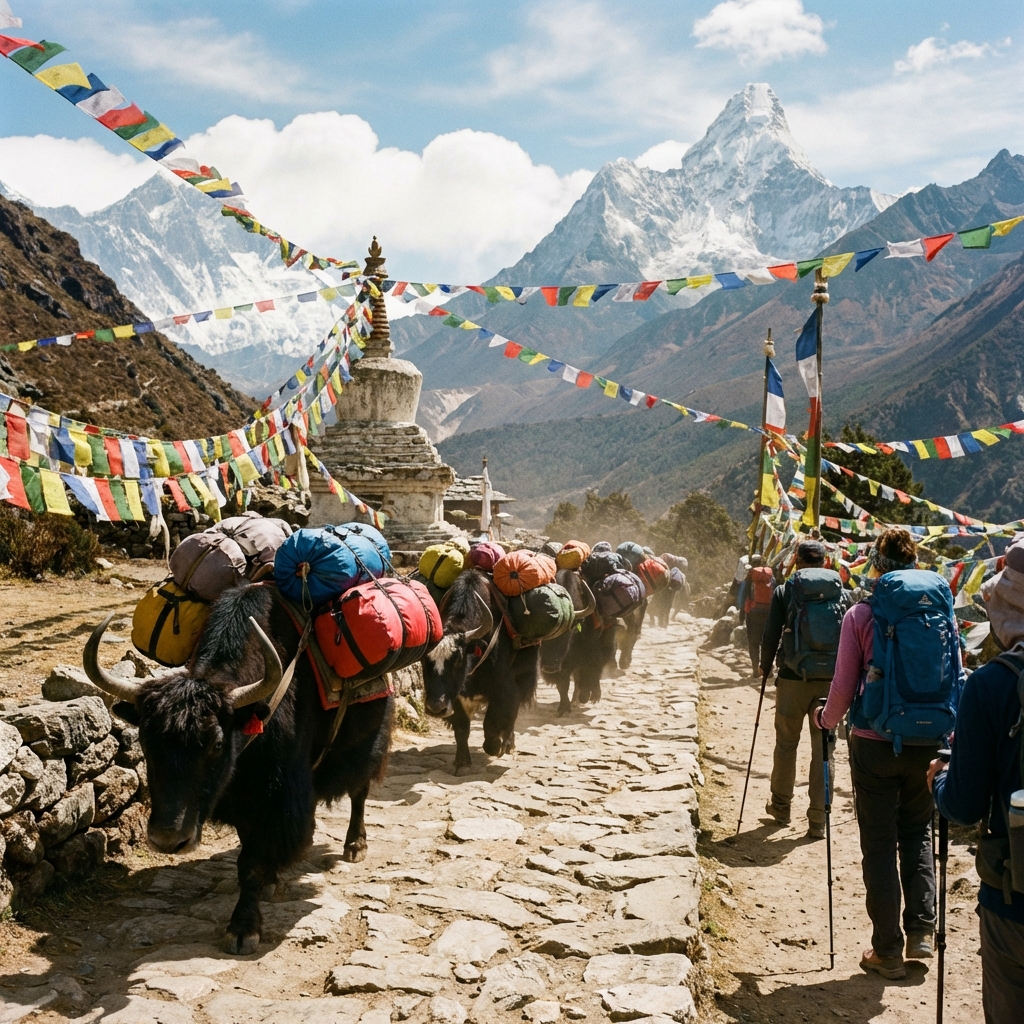
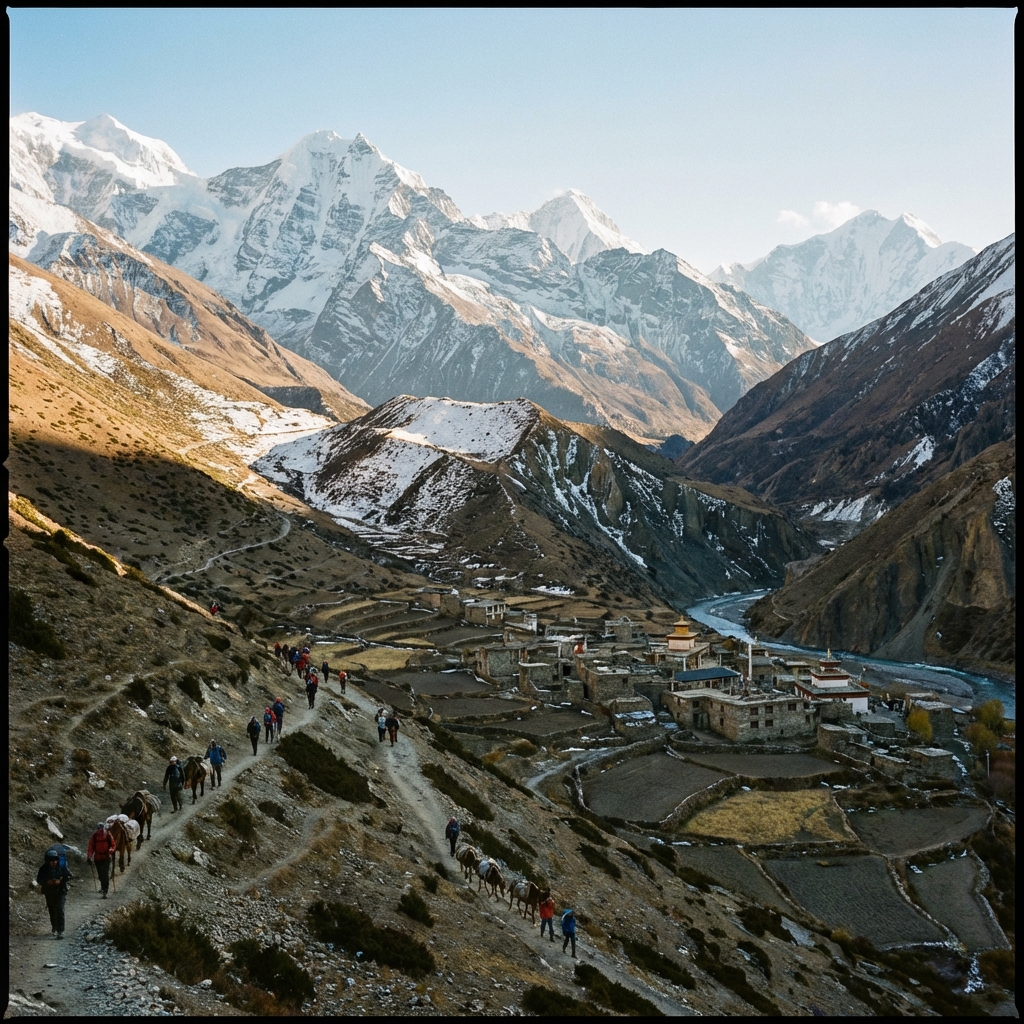
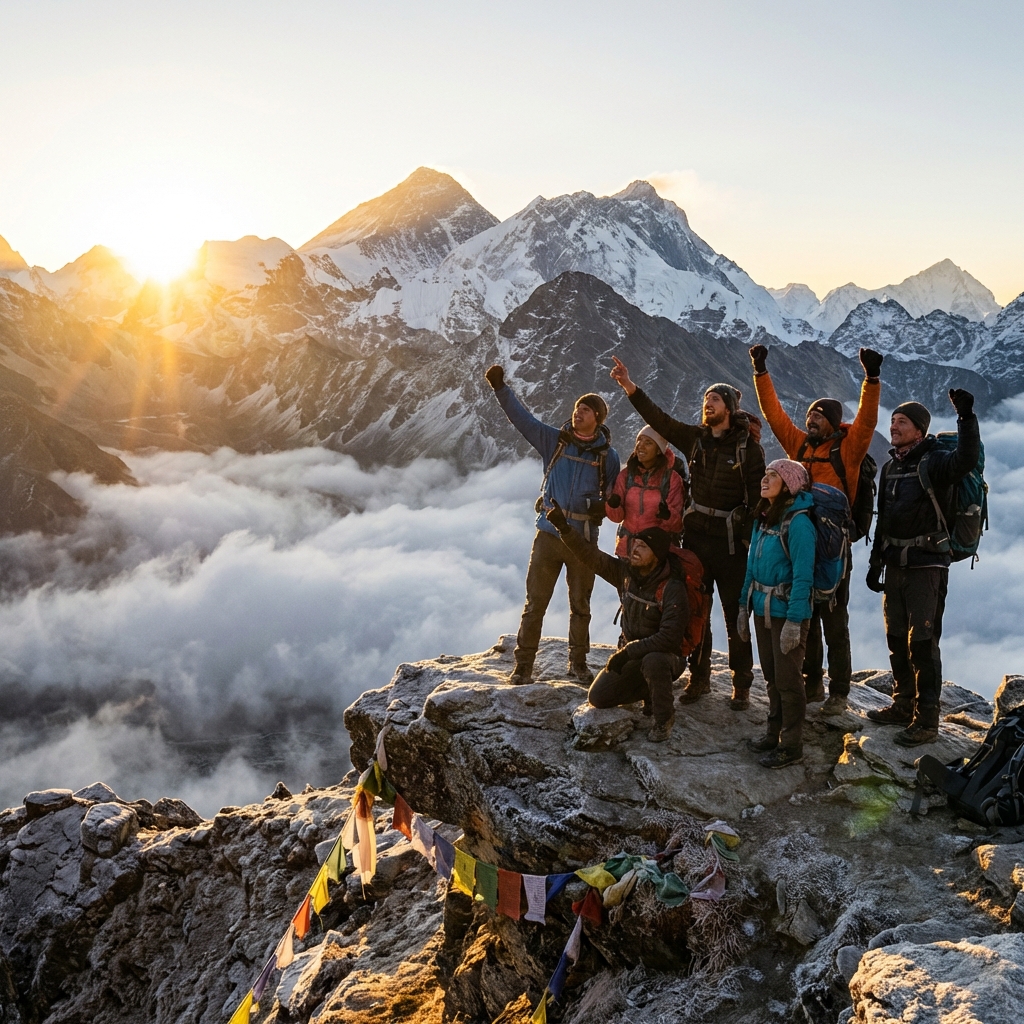
The Annapurna region is not just one of the world's most spectacular trekking destinations -- it is the heartland of the Gurung people, one of Nepal's most culturally rich and historically significant ethnic groups. While trekkers often focus on the soaring peaks and dramatic landscapes, the stone villages clinging to hillsides, the warm hospitality of Gurung families, and the ancient Buddhist-animist traditions woven into daily life are what elevate an Annapurna trek from a physical challenge to a genuinely transformative cultural experience.
The Gurung (also written as Tamu in their own language) have inhabited these middle hills for centuries, developing a unique civilization perfectly adapted to the steep terrain between the lowland Terai and the high Himalayan passes. Their distinctive round stone houses, elaborate festivals, shamanic traditions alongside Buddhist practice, and legendary martial prowess have made them one of Nepal's most respected communities. Today, every major route through the Annapurna region passes through Gurung settlements, giving trekkers unparalleled access to living cultural heritage.
This guide explores every dimension of Gurung culture that a trekker will encounter: who the Gurung are and how they got here, the villages you will walk through, the architecture that shelters mountain life, the food that fuels both locals and trekkers, the spiritual beliefs that shape the landscape, and the practical knowledge you need to engage with Gurung communities respectfully and meaningfully.
Approximately 700,000 in Nepal
Annapurna / Gandaki Province
Buddhist-Animist blend (Bon influences)
Tamu Kyi (Tibeto-Burman family)
Gurkha soldiers (British & Indian armies)
Ghandruk, Chhomrong, Sikles
Sheep herding, agriculture, military service
Tamu Lhosar (December/January)
Who Are the Gurung People?
The Gurung, who call themselves Tamu in their own language, are one of Nepal's major Janajati (indigenous nationality) groups. They are primarily concentrated in the Gandaki Province of central Nepal, occupying the hillsides and valleys that radiate outward from the Annapurna and Manaslu massifs. Their settlements span an elevation range from approximately 1,000m to over 3,000m, placing them firmly in the middle hill zone that characterizes so much of Nepal's inhabited landscape.
Origins and Migration History
The origins of the Gurung people remain a subject of scholarly debate, but linguistic and genetic evidence strongly suggests a Tibeto-Burman heritage with roots in the Central Asian steppe and the Tibetan Plateau. Unlike the Sherpas, whose migration from Tibet is relatively well documented, the Gurung arrival in their current homeland likely occurred much earlier, potentially over two thousand years ago.
Gurung oral traditions describe their ancestors arriving from Mongol lands to the north, crossing the high passes of the Himalayas and settling progressively lower as they adapted to the monsoon-influenced climate of Nepal's middle hills. This history is preserved in Gurung shamanic chants, which trace clan lineages back through specific migration routes.
The Gurung language, Tamu Kyi, belongs to the Tamangic branch of the Tibeto-Burman language family, linking them linguistically to their neighbors the Tamang people. However, the two groups have distinct cultural identities, social structures, and spiritual practices.
Social Structure and Clans
Traditional Gurung society is divided into two main hierarchical groups:
- Char Jat (Four Clans): The higher-status group, including the Ghale and Lama clans, traditionally associated with leadership and religious roles
- Sora Jat (Sixteen Clans): A larger group of clans with historically different social roles
While this hierarchy has diminished significantly in modern Nepal, it still influences marriage patterns and ceremonial roles in some villages. Trekkers may notice that certain families in a village hold traditional leadership positions -- these often trace back to the clan system.
Gurung vs. Sherpa: Different Peoples, Different Mountains
While both the Gurung and Sherpa are Tibeto-Burman peoples with Buddhist influences, they are distinct ethnic groups with separate languages, homelands, and traditions. The Gurung inhabit the middle hills around Annapurna, while the Sherpas are native to the high valleys of the Khumbu (Everest region). Each group has its own festivals, cuisine, and spiritual practices. Treating them as interchangeable erases important cultural distinctions. For more on Sherpa culture, see our comprehensive Sherpa guide.
Gurung Villages on the Trekking Routes
For trekkers on the Annapurna Base Camp, Poon Hill, or Annapurna Circuit routes, Gurung villages are a highlight of the journey. These settlements combine stunning mountain settings with living cultural heritage that has been maintained for centuries.
Ghandruk: The Cultural Capital
Elevation: 1,940m | Population: Approximately 5,500 | Trek Routes: ABC, Poon Hill, Ghandruk Loop
Ghandruk is the largest Gurung village in Nepal and serves as the cultural heart of the Gurung community in the Annapurna region. Perched on a ridge high above the Modi Khola valley, it offers jaw-dropping views of Annapurna South (7,219m), Hiunchuli (6,441m), and Machhapuchhre (6,993m) -- the iconic fishtail mountain.
What makes Ghandruk special:
- Gurung National Museum: A small but excellent museum documenting Gurung history, traditional dress, tools, weapons, and ritual objects. The museum occupies a traditional stone building and provides vital context for everything you will see in the village.
- Traditional Architecture: Ghandruk preserves some of the finest examples of traditional Gurung stone houses, with their characteristic slate roofs and wooden-framed windows.
- Living Culture: Unlike museum villages, Ghandruk is a thriving community. You will see women weaving on looms, farmers terracing hillsides, and children playing in courtyards.
- Sunset Viewpoint: The western edge of the village provides one of the best sunset viewing spots in the Annapurna region, with the peaks turning gold and then crimson.
Ghandruk Overnight Strategy
Many trekkers rush through Ghandruk in a few hours, but spending a full night here is worth it. The village empties of day-trippers by mid-afternoon, and the evening light on Annapurna South is extraordinary. Ask your lodge owner if any cultural events or pujas (prayer ceremonies) are happening -- you may be invited to observe.
Chhomrong: Gateway to the Sanctuary
Elevation: 2,170m | Population: Approximately 1,200 | Trek Route: ABC
Chhomrong is the last major Gurung settlement before entering the Annapurna Sanctuary. Spread across a steep hillside overlooking the Modi Khola gorge, it serves as both a cultural waypoint and a practical resupply stop for trekkers heading to Annapurna Base Camp.
For detailed information on accommodations and facilities, see our Chhomrong village guide.
Key features:
- Spectacular Setting: The village is draped across a near-vertical hillside, with terraced fields cascading down to the river and Machhapuchhre towering directly above.
- Hot Springs Nearby: About 30 minutes below the village, natural hot springs provide a welcome soak for weary trekkers.
- Community Homestays: Chhomrong has developed a community homestay program that allows trekkers to stay with Gurung families and share meals, offering deeper cultural immersion than standard tea houses.
- The Staircase: The 2,500+ stone steps connecting upper and lower Chhomrong are both an engineering marvel and a test of tired legs.
Sikles: The Untouched Gurung Village
Elevation: 1,980m | Population: Approximately 2,800 | Trek Route: Sikles Heritage Trek
Sikles is the largest Gurung village in the region by population and arguably the most culturally preserved. Unlike Ghandruk and Chhomrong, which sit on major trekking routes and have adapted to tourism, Sikles remains relatively unvisited and offers a more authentic glimpse of traditional Gurung life.
Why visit Sikles:
- Minimal Tourism Impact: Fewer than 2,000 trekkers visit annually, compared to tens of thousands on the ABC trail
- Pristine Architecture: The stone houses here have changed little in centuries
- Honey Hunting: Sikles is one of the last places where traditional Gurung honey hunting is practiced -- climbing sheer cliff faces on rope ladders to harvest wild bee nests
- Bird Watching: The surrounding forests are among the richest bird habitats in Nepal
Other Gurung Settlements on Trek Routes
| Village | Elevation | Trek Route | Gurung Highlights |
|---|---|---|---|
| Landruk | 1,565m | ABC, Poon Hill | Traditional stone houses, rice terraces |
| Tolka | 1,700m | ABC | Small farming settlement, authentic atmosphere |
| Dhampus | 1,650m | ABC, Short treks | Gateway village, panoramic views |
| Ghorepani | 2,860m | Poon Hill | Mixed Gurung-Magar village, famous sunrise |
| Birethanti | 1,025m | ABC, AC entry | Trail junction town, ACAP checkpoint |
| Jagat | 1,300m | Annapurna Circuit | River-valley Gurung settlement |
Respect Village Privacy
While Gurung villages are welcoming, remember these are people's homes. Do not enter private courtyards, photograph people without permission, or peer into windows. The lane through the village is public space, but the areas beyond front doors are private. If you are invited into a home, remove your shoes at the entrance.
Traditional Gurung Architecture
Gurung architecture is among the most distinctive in Nepal and perfectly adapted to the demands of mountain life. Walking through a traditional Gurung village, you will notice buildings that look remarkably different from the wooden lodges of lower elevations or the Tibetan-style flat-roofed buildings at higher altitudes.
Characteristic Features
Stone Construction: Gurung houses are built primarily from locally quarried stone, with walls often exceeding half a meter in thickness. This provides excellent insulation against both cold winters and the occasional summer heat.
Slate Roofs: The steep-pitched roofs are covered in flat slate tiles, laid in overlapping rows that shed monsoon rainfall and snow efficiently. These slate roofs are one of the most photographed features of villages like Ghandruk.
Oval or Circular Floor Plans: Traditional Gurung houses often feature rounded or oval floor plans, a characteristic that distinguishes them from the rectangular buildings of neighboring ethnic groups. Modern construction has shifted toward rectangular plans, but many historic buildings retain the traditional shape.
Two-Story Design: The ground floor typically houses livestock and storage, while the upper floor is the family's living space. This arrangement provides both insulation (animal body heat rises to warm the upper floor) and security.
Central Hearth: The upper floor is organized around a central fireplace that serves as the cooking, heating, and social center of the home. The chimney arrangement and smoke-blackened beams are instantly recognizable in traditional homes.
Wooden Window Frames: Carved wooden window frames are a point of pride, with more elaborate carvings indicating greater family wealth or status. Look for geometric patterns and occasionally animal motifs.
Reading Architecture Age
You can roughly date Gurung buildings by their construction. Traditional round-plan stone buildings with small windows date from before the 1960s. Rectangular stone buildings with larger windows are typically from the 1960s-1990s. Concrete or corrugated-roof buildings are modern. The oldest structures in Ghandruk and Sikles may be several hundred years old.
The Gurung Courtyard
At the center of traditional Gurung village life is the shared courtyard or chautara -- a raised stone platform, often shaded by a pipal or banyan tree, where community members gather to socialize, rest, and discuss village affairs. You will encounter these throughout Gurung villages. They are public spaces where trekkers are welcome to sit and rest, though you should avoid placing your feet on the platform (sit properly) and not leave trash.
Gurung Food and Cuisine
Food is central to Gurung culture, and trekkers will encounter Gurung culinary traditions both in teahouses and, if invited, in private homes. While the standard trekking menu (dal bhat, fried rice, noodles) dominates teahouse offerings, authentic Gurung dishes are distinct and worth seeking out.
Staple Dishes
Dhido (Dhindo): The traditional Gurung staple, dhido is a thick porridge made from buckwheat, millet, or corn flour. It is prepared by slowly stirring flour into boiling water until it forms a dense, smooth mass. Eaten by pulling off pieces with the right hand and dipping into curry or gundruk soup, dhido is hearty, filling, and perfectly suited to the caloric demands of mountain life.
Gundruk: Nepal's most famous fermented food, gundruk is made from leafy greens (mustard leaves, radish tops, or cauliflower leaves) that are sun-wilted, packed tightly into clay pots or bamboo vessels, and fermented for several weeks. The result is a tangy, probiotic-rich food that is made into soup or eaten as a side dish. Gundruk was traditionally essential for providing nutrients through the long winter when fresh vegetables were unavailable.
Sel Roti: A ring-shaped rice bread, deep fried to a crispy golden exterior with a soft interior. Sel roti is associated with festivals and celebrations but is increasingly available in teahouses. It is often served with tea as a snack.
Kwati: A mixed bean soup made from nine different types of sprouted beans. Kwati is particularly associated with the festival of Janai Purnima but is eaten throughout the year as a protein-rich complement to grain-based dishes.
Tongba: While not food, no discussion of Gurung cuisine is complete without mentioning tongba -- a traditional millet beer served in a wooden or bamboo container. Hot water is poured over fermented millet and the liquid is sipped through a bamboo straw. It is a social drink, constantly topped up with more hot water as the millet slowly releases its alcohol.
The Dal Bhat Connection
The ubiquitous dal bhat (lentil soup with rice) that trekkers eat daily is not specifically Gurung -- it is the national dish of Nepal shared across all ethnic groups. However, the Gurung version may include locally distinctive accompaniments: wild fern curries, nettle soup, or meat prepared with Gurung spice mixtures that differ from lowland Nepali cooking.
For a broader exploration of Nepali cuisine, see our Nepal food and cuisine guide.
| Dish | Description | Where to Find | Trekker Notes |
|---|---|---|---|
| Dhido | Thick buckwheat/millet porridge | Ghandruk, Sikles lodges | Ask specifically; not always on menu |
| Gundruk | Fermented leafy green soup | Most Annapurna teahouses | Acquired taste; very nutritious |
| Sel Roti | Ring-shaped fried rice bread | Festival times, some lodges | Best fresh and hot |
| Tongba | Fermented millet beer | Ghandruk, Chhomrong lodges | Mild alcohol; social drink |
| Kwati | Nine-bean sprouted soup | Some lodges on request | High protein, excellent for trekkers |
| Gurung Bread | Flatbread with spiced fillings | Homestays, some lodges | Similar to stuffed paratha |
Ask for the Gurung Menu
Most teahouse menus are standardized for international trekkers, but many Gurung lodge owners can prepare traditional dishes if asked a day in advance. Politely ask, "Do you have any Gurung food today?" or "Can you prepare dhido for dinner tomorrow?" Lodge owners are often delighted when visitors show interest in their food culture.
Spiritual Life: Buddhism, Shamanism, and Animism
The spiritual life of the Gurung people is one of the most fascinating aspects of their culture, characterized by a layered belief system that blends Tibetan Buddhism with ancient pre-Buddhist shamanic and animist practices. This syncretism is not considered contradictory by the Gurung themselves -- it is simply how their spiritual world operates.
The Three Spiritual Layers
1. Tibetan Buddhism: The majority of Gurung identify as Buddhist, and Buddhist monasteries, prayer flags, mani walls, and chortens (stupas) are prominent features of every Gurung village. The Gurung practice primarily follows the Nyingma tradition, the oldest school of Tibetan Buddhism, though Bon influences are also present.
2. Shamanism (Pachyu and Ghyabre): The Gurung maintain two distinct shamanic traditions that predate Buddhist influence. The Pachyu are healing shamans who use trance states, drumming, and ritual to diagnose and treat illness. The Ghyabre are priestly shamans who officiate at funerals, performing elaborate death rituals that guide the soul through the afterlife. These shamanic traditions coexist comfortably with Buddhism.
3. Animism: The Gurung believe that natural features -- mountains, rivers, forests, lakes, and individual trees -- are inhabited by spirits that must be respected and occasionally propitiated. Before clearing forest for farmland, before crossing a high pass, before beginning construction on a new house, appropriate rituals are performed to honor the resident spirits.
How This Manifests on the Trail
Trekkers will encounter evidence of all three spiritual layers:
- Prayer flags and mani walls along trails mark Buddhist influence. Always pass mani walls on their left side (keeping the wall to your right) as you walk.
- Small stone shrines at the base of trees or at crossroads are animist offerings. Do not disturb them.
- Rhythmic drumming from a house may indicate a shamanic healing session. Do not attempt to observe or photograph these private ceremonies unless explicitly invited.
For detailed guidance on respectful behavior around Buddhist monuments, see our guide to prayer flags, mani walls, and Buddhist symbols.
Sacred Mountains
Machhapuchhre (Fishtail Mountain, 6,993m) is considered sacred by the Gurung and is permanently off-limits to climbing. No expedition has ever been officially permitted to summit it, and only one unauthorized attempt reached near the top (in 1957). Trekkers should be aware that expressing a desire to climb Machhapuchhre may cause offense. It is a mountain to be admired, not conquered, in Gurung worldview.
Festivals and Celebrations
Gurung festivals combine Buddhist religious observance with indigenous celebrations. The major festivals a trekker might encounter include:
Tamu Lhosar (December/January): The Gurung New Year is the most important festival, marked by feasting, traditional dances, music, and community gatherings. If you are trekking in late December or early January, you may encounter Lhosar celebrations in villages. Visitors are generally welcome to observe and may be offered food and tongba.
Tamu Dhee (Rodhi): Traditional youth gatherings where young Gurung men and women sing, dance, and socialize. Historically, these served as social occasions for courtship. While less common today, Rodhi dances are performed during festivals and special events.
Pachyu Ritual Ceremonies: Shamanic rituals performed for healing, protection, or marking seasonal transitions. These involve drumming, chanting, and trance states. If you hear rhythmic drumming in a village, a Pachyu ritual may be underway.
For more on Nepal's festival calendar and how it affects trekking, see our Nepal festivals and trekking calendar.
The Gurkha Connection
Perhaps the most internationally famous aspect of Gurung identity is the Gurkha military tradition. The Gurung, along with the Magar, Rai, and Limbu peoples, have provided soldiers to the British and Indian Gurkha regiments for over 200 years, creating a military tradition that has profoundly shaped Gurung culture, economics, and villages.
Historical Background
The name "Gurkha" derives from the town of Gorkha in central Nepal, the seat of the Shah dynasty that unified Nepal in the 18th century. After the Anglo-Nepalese War of 1814-1816, the British were so impressed by the fighting ability of Nepali hill soldiers that they began recruiting them directly, establishing the Gurkha Brigade within the British Indian Army.
The Gurung, with their physical fitness, mountain hardiness, and strong community bonds, became one of the principal recruiting groups. Villages like Ghandruk and Sikles have sent generation after generation of young men into Gurkha service.
Impact on Gurung Villages
The military connection has shaped Gurung villages in visible ways:
- Remittance Wealth: Military service brought unprecedented cash income to subsistence farming communities. The stone houses, schools, and temples you see in Gurung villages were often funded by Gurkha pensions and remittances.
- British and Indian Influence: Returning soldiers brought back influences from their service -- English language skills, different cooking styles, and a worldliness that distinguishes Gurung villages from more isolated communities.
- The Welfare System: The Gurkha Welfare Scheme maintains clinics and welfare centers in Gurung areas, providing healthcare and support to veterans and their families.
- Memorials: Look for small memorial plaques and monuments in villages honoring soldiers who served or fell in conflicts from World War I through modern deployments.
The Famous Khukuri
The khukuri (kukri) -- the curved Nepali knife -- is the iconic weapon of the Gurkha soldier and a symbol of Gurung and Nepali martial identity. You will see khukuris for sale throughout Nepal. The genuine article is handforged steel with a traditional handle, quite different from the tourist-grade replicas sold in Thamel.
Talking About Gurkha Service
Many Gurung lodge owners or their family members have Gurkha military service backgrounds. They are generally proud of this connection and happy to share stories. If you notice military memorabilia or photographs in a lodge, it is perfectly appropriate to ask about them. Many retired Gurkhas speak excellent English from their service years.
How to Interact Respectfully with Gurung Communities
Understanding cultural etiquette is essential for meaningful interaction with Gurung communities. While the Gurung are generally warm and welcoming hosts, certain behaviors demonstrate respect for their culture.
Greetings and Basic Interactions
- Namaste (hands pressed together) is the universal Nepali greeting and appropriate everywhere. However, learning a few words of Tamu Kyi (Gurung language) delights locals: "Khay ba" means hello.
- Remove shoes before entering homes. Look for a pile of shoes near the entrance as your cue.
- Accept tea or food with your right hand or both hands. The left hand is considered unclean in South Asian cultures.
- Do not point your feet at people, religious objects, or the hearth. When sitting, tuck your feet underneath you or cross them away from others.
Photography Etiquette
- Always ask permission before photographing people. A simple gesture toward your camera with a questioning look works across language barriers.
- Elderly Gurung people may decline photographs. Respect this without argument.
- Do not photograph shamanic rituals or private religious ceremonies without explicit permission.
- Children may eagerly pose for photos, but this does not constitute parental permission. Try to make eye contact with a parent first.
For comprehensive photography etiquette, see our photography etiquette guide.
Dos and Don'ts
| Do | Don't |
|---|---|
| Greet with Namaste and a warm smile | Enter temples without removing shoes |
| Ask permission before photographing | Touch anyone's head (considered sacred) |
| Accept tea or food when offered | Step over people's legs or bodies |
| Show interest in local traditions | Wear revealing clothing in villages |
| Use right hand for giving/receiving | Point at religious objects with your finger |
| Bargain politely and fairly | Raise your voice or show anger publicly |
| Walk clockwise around Buddhist monuments | Place your feet toward the hearth or altar |
Tipping and Generosity
If you stay in a Gurung homestay or receive exceptional hospitality, a small tip or gift is appreciated but never expected. School supplies for children (notebooks, pens) are more valued than sweets or money. If offering a monetary tip, present it in an envelope or folded paper rather than handing cash directly -- this is considered more respectful.
The Gurung Museum in Ghandruk
The Gurung National Museum (Tamu Pye Lhu Sangrahalaya) in Ghandruk is a small but essential stop for culturally curious trekkers. Housed in a traditional stone building, it provides context for everything you will observe in Gurung villages.
What You Will Find
- Traditional Clothing and Jewelry: Display of the traditional Gurung dress, including the distinctive woven fabric patterns and silver jewelry worn by Gurung women
- Agricultural Tools: Implements used in traditional farming, including the heavy wooden plows drawn by oxen on terraced hillsides
- Weapons and Military Artifacts: Khukuris, swords, and memorabilia related to Gurkha military service
- Shamanic Objects: Drums, ritual implements, and costumes used by Pachyu shamans
- Household Items: Traditional cooking vessels, storage containers, and furnishings that illustrate daily life
- Photographs and Documents: Historical photographs of Gurung village life from the early 20th century onward
Practical Information
- Location: Upper Ghandruk, near the village center
- Hours: Generally 10:00 AM to 4:00 PM (may vary seasonally)
- Admission: NPR 100 for foreigners (approximately USD 0.75)
- Time Needed: 30-45 minutes
- Note: The museum is community-run and may occasionally close if the caretaker is unavailable
Visit Early Morning
If you are spending a night in Ghandruk, visit the museum first thing in the morning before the day-trippers arrive. You may have the entire space to yourself, and the caretaker often has time to explain exhibits in detail. The knowledge gained here will enrich every subsequent Gurung village you pass through.
Best Treks for Gurung Cultural Immersion
If Gurung culture is a priority for your trek, certain routes offer significantly richer cultural experiences than others.
Recommended Routes
1. Ghandruk Loop (3-4 days): The best short option for Gurung culture. This circuit from Pokhara visits Ghandruk, Landruk, and several smaller settlements with minimal high-altitude challenge.
2. Annapurna Base Camp via Ghandruk (10-14 days): The classic ABC route passes through multiple Gurung villages on both the ascent and descent. The cultural experience is built into the trek itinerary naturally. See our Annapurna region guide for full details.
3. Sikles Heritage Trek (4-5 days): A dedicated cultural trek through the Sikles area, specifically designed to showcase Gurung heritage. This is the least touristed option and offers the most authentic cultural experience.
4. Poon Hill via Ghandruk (5-6 days): Combines the famous Poon Hill sunrise with Gurung village visits. A good moderate option for those wanting both mountain views and cultural content.
For more options, see our guide to the best cultural treks in Nepal.
| Trek | Duration | Culture Rating | Altitude | Difficulty |
|---|---|---|---|---|
| Ghandruk Loop | 3-4 days | Excellent | 1,940m max | Easy |
| ABC via Ghandruk | 10-14 days | Very Good | 4,130m | Moderate |
| Sikles Heritage | 4-5 days | Outstanding | 1,980m max | Easy-Moderate |
| Poon Hill via Ghandruk | 5-6 days | Good | 3,210m | Easy-Moderate |
| Annapurna Circuit | 12-21 days | Good (mixed cultures) | 5,416m | Moderate-Hard |
Gurung Crafts and Material Culture
Weaving and Textiles
Gurung women are skilled weavers, producing thick woolen fabric on back-strap looms that is used for traditional garments, blankets, and bags. The weaving tradition uses locally produced sheep wool, often dyed with natural colors from plants and minerals. In villages like Ghandruk and Sikles, you may see women weaving on looms outside their homes, particularly in the cooler months when agricultural work is less demanding.
Metalwork
Gurung blacksmiths produce the tools and implements needed for mountain life: agricultural tools, cooking vessels, and, most famously, khukuris. While most khukuris sold to tourists are mass-produced, genuine village blacksmiths still forge traditional blades using time-honored techniques.
Basketry and Bamboo Work
The Doko -- the conical bamboo carrying basket used throughout Nepal -- is produced by Gurung artisans and is an essential piece of equipment for both farming and trekking porter work. You will see these baskets everywhere on Annapurna trails, carried with a tumpline across the forehead.
Buying Authentic Crafts
If you want to purchase genuine Gurung crafts, buy directly from village artisans rather than from Kathmandu or Pokhara shops, where items are often mass-produced imitations. The Gurung Museum in Ghandruk can sometimes direct visitors to local craftspeople. Prices in villages are typically lower and more of the money stays in the community.
Modern Challenges and Changes
Tourism's Double Edge
Tourism has brought significant economic benefits to Gurung communities on trekking routes. Villages like Ghandruk have seen improved infrastructure, schools funded by tourist revenue, and economic opportunities that keep young people from migrating to cities. However, tourism has also introduced challenges:
- Cultural Dilution: Teahouses increasingly serve pizza and burgers to cater to international trekkers, while traditional food knowledge erodes
- Economic Inequality: Villages on popular trekking routes prosper, while nearby villages off the trail see young people leave for employment
- Architectural Changes: Concrete buildings with corrugated roofing are replacing traditional stone construction, as they are cheaper and faster to build
Labor Migration
Like all Nepali hill communities, Gurung villages are affected by labor migration to Gulf states, Malaysia, and other countries. This outflow of working-age men has left many villages populated primarily by women, children, and the elderly. The remittances fund village improvements but come at the cost of family separation and community cohesion.
Cultural Preservation Efforts
Several organizations are working to preserve Gurung cultural heritage:
- The Tamu Pye Lhu Sangrahalaya (Gurung National Museum) documents and preserves material culture
- Community homestay programs provide economic incentives for maintaining traditional lifestyles
- Language preservation initiatives record and teach Tamu Kyi to younger generations
- The Annapurna Conservation Area Project (ACAP) integrates cultural preservation into its broader environmental mandate
Frequently Asked Questions
Final Thoughts
The Gurung people of the Annapurna region represent one of Nepal's richest living cultural traditions. Their stone villages, layered spiritual practices, distinctive cuisine, and legendary hospitality make the Annapurna region far more than a mountain trekking destination -- it is a cultural journey through centuries of Himalayan heritage.
As a trekker, your willingness to learn about and respectfully engage with Gurung culture enriches your experience immeasurably while supporting the cultural preservation that keeps these traditions alive. Take the time to visit the museum in Ghandruk, try dhido in a teahouse, ask your guide about the shamanic drumming you hear from a village house, and sit on a chautara to watch the evening light turn Machhapuchhre gold. These are the moments that transform a trek into a genuine cross-cultural encounter.