Is Everest Base Camp Too Hard for Beginners? Honest Assessment for First-Time Trekkers
5,364m (17,598 ft) at Base Camp
12-16 days (14 days recommended)
5-7 hours average
130 km (80 miles) round trip
Moderate to Challenging
90-97% with proper acclimatization
None - it's trekking, not climbing
Altitude, not technical difficulty
The Quick Answer: Yes, beginners CAN do Everest Base Camp—but with significant caveats. The trek doesn't require mountaineering skills, technical climbing, or elite athletic ability. What it does require is proper preparation, realistic expectations, adequate time for acclimatization, and respect for high altitude. With 8-12 weeks of dedicated training and a 14+ day itinerary, most reasonably fit adults can reach Base Camp successfully.
But let's be completely honest: EBC is NOT an easy first trek. It's at the challenging end of what beginners should attempt. If you're asking whether it's "too hard," you're asking the right question—and this guide will help you decide whether you're ready, or whether a gentler introduction to Himalayan trekking makes more sense.
Understanding What Makes EBC Hard
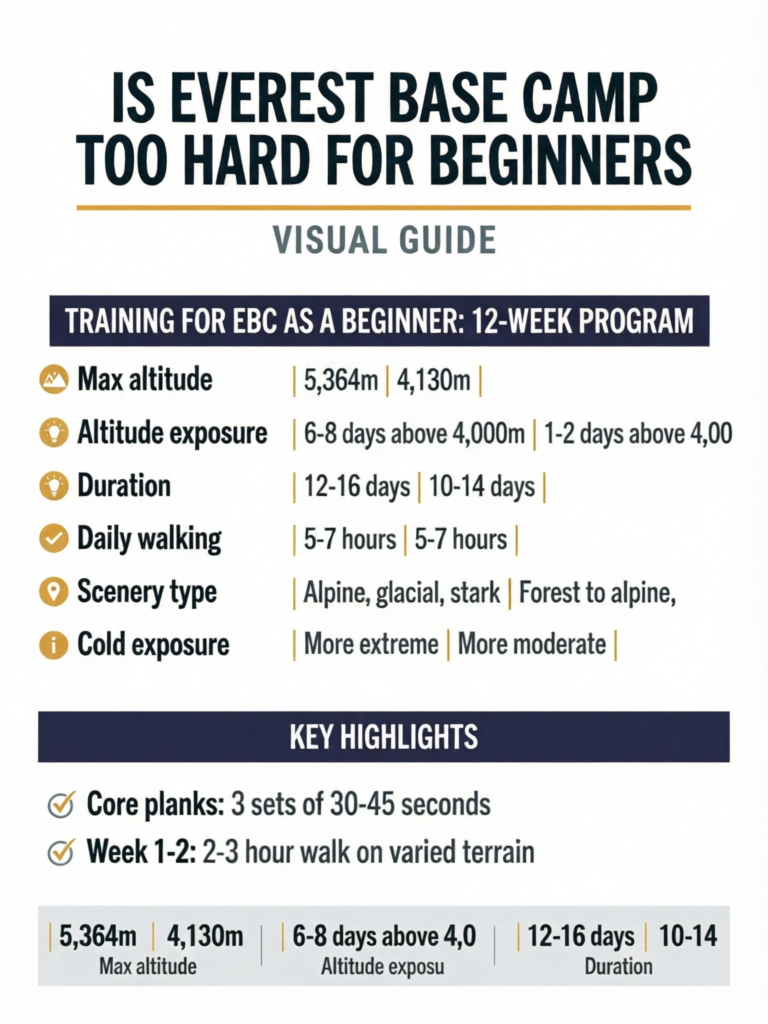
Before we can answer whether EBC is too hard for you specifically, let's break down exactly what creates the challenge. Understanding these factors helps you realistically assess your readiness.
The Primary Challenge: Altitude
The single biggest difficulty factor on EBC isn't the distance, the terrain, or the cold—it's altitude. This is what separates EBC from most treks people have done before, and it's what catches unprepared beginners off guard.
What altitude does to your body:
At sea level, air contains approximately 21% oxygen. That percentage stays the same at 5,364m—but the atmospheric pressure drops to roughly 50% of sea level. Each breath delivers half the oxygen your body is used to receiving.
| Altitude | Oxygen Availability | Where on EBC Trek | What You'll Feel |
|---|---|---|---|
| 0-2,500m | 100-75% | Kathmandu, Lukla | Normal |
| 2,500-3,500m | 75-65% | Phakding, Namche Bazaar | Mild breathlessness on exertion |
| 3,500-4,500m | 65-58% | Tengboche, Dingboche | Noticeable fatigue, possible headache |
| 4,500-5,000m | 58-55% | Lobuche, Gorak Shep | Every step is effort, breathing hard |
| 5,000-5,364m | 55-50% | Everest Base Camp | Gasping for breath, extreme fatigue |
The altitude exposure on EBC:
You'll spend 6-8 days above 4,000m and 2-3 days above 5,000m. This extended high-altitude exposure is what makes EBC more demanding than lower-altitude treks. Your body must adapt to functioning on significantly less oxygen than it's designed for.
Altitude Doesn't Care About Fitness
Here's what surprises many beginners: fitness level does NOT predict altitude tolerance. Young, fit athletes get altitude sickness just as often as older, less-fit trekkers. Marathon runners suffer while couch potatoes thrive. There's no reliable predictor—which is why proper acclimatization protocol matters more than your gym routine.
Physical Demands: What Your Body Will Experience
Daily exertion:
- Walking 5-7 hours per day (some days up to 8 hours)
- 130 km total distance over the round trip
- Significant elevation gain and loss daily
- Uneven, rocky terrain requiring constant attention
- Consecutive days without true rest (even "acclimatization days" involve hiking)
The physical grind:
Unlike a day hike where you go home and recover, EBC requires 10-14 consecutive days of sustained effort. By day 7 or 8, cumulative fatigue sets in. Your legs hurt before you start walking each morning. The backpack that felt fine on day 1 feels like lead by day 10.
What makes it different from regular hiking:
Most people have done day hikes of 5-7 hours. What they haven't experienced is:
- Doing that for 12+ days in a row
- Doing it while breathing half the normal oxygen
- Doing it in cold temperatures (-10°C to -20°C at high camps)
- Doing it while sleeping poorly due to altitude
- Doing it without proper rest or recovery
Duration and Mental Endurance
EBC isn't a weekend adventure—it's a two-week commitment. The mental stamina required is often underestimated.
The psychological challenges:
- Day 4-6 crisis: Almost everyone hits a low point when initial excitement fades and the remaining distance seems enormous
- Discomfort accumulation: Cold rooms, basic food, limited showers, disrupted sleep—these add up
- Uncertainty about your body: Not knowing if that headache is dehydration, fatigue, or altitude sickness creates anxiety
- The "what am I doing here?" moment: Usually happens around Lobuche or Gorak Shep when you're cold, exhausted, and questioning your life choices
Pro Tip
The mental challenge often exceeds the physical one. Trekkers with strong determination but average fitness consistently outperform fit people with weak mental resolve. Prepare your mind as deliberately as you prepare your body.
Environmental Conditions
Temperature reality:
| Location | Daytime High | Nighttime Low | Notes |
|---|---|---|---|
| Namche (3,440m) | 10-15°C | 0 to -5°C | Comfortable with layers |
| Dingboche (4,410m) | 5-10°C | -5 to -10°C | Cold, especially mornings |
| Lobuche (4,940m) | 0-5°C | -10 to -15°C | Very cold, frost inside |
| Gorak Shep (5,164m) | -2 to 3°C | -15 to -25°C | Extreme cold at night |
Accommodation reality:
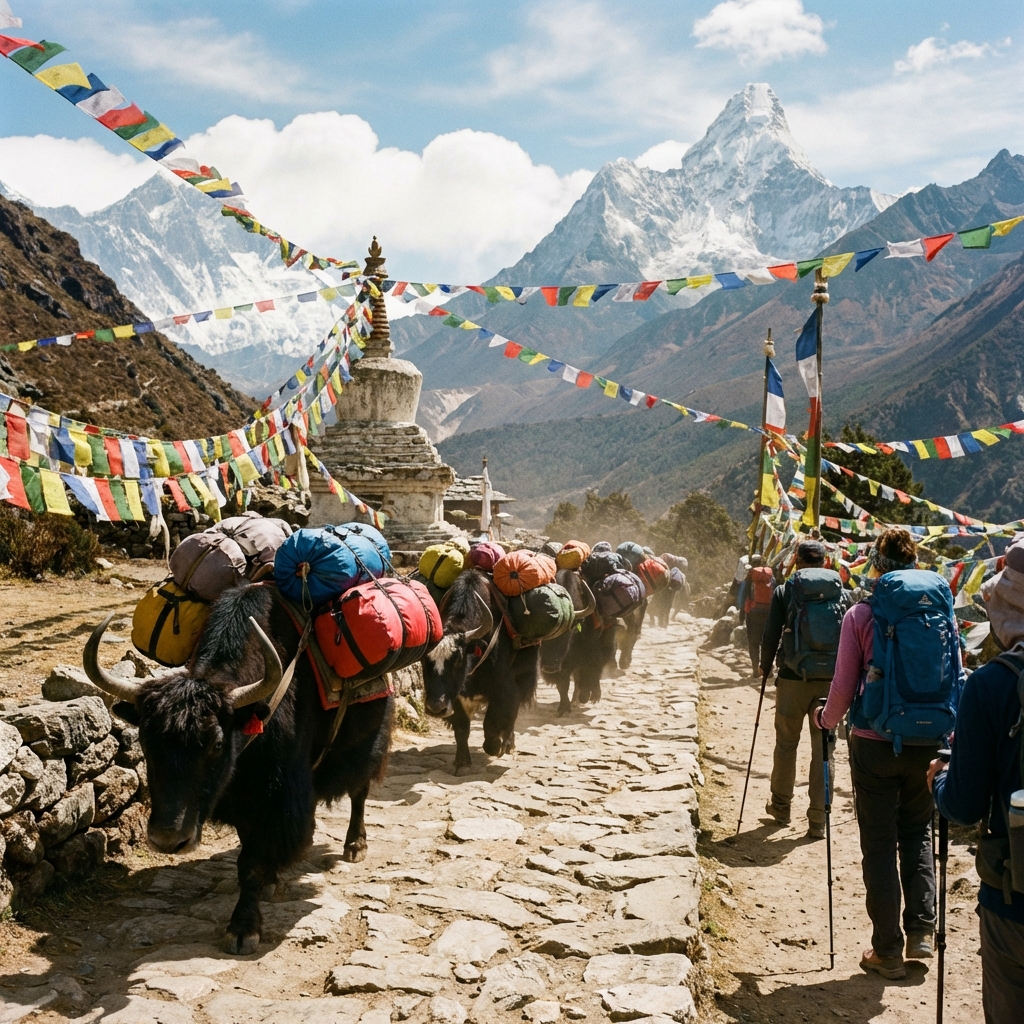
Tea houses on the EBC route are basic:
- Unheated rooms (except dining area sometimes has a stove)
- Thin walls—you hear everything
- Shared bathrooms (squat toilets, often outside)
- hot shower costs $2-$10 depending on altitude) and aren't always hot
- Electricity unreliable at higher elevations
This isn't glamping. You'll be uncomfortable. That's part of the experience—but beginners who expect comfort struggle more than those who mentally prepare for austerity.
Can Beginners Actually Do EBC? The Honest Assessment
Yes, Beginners Can Do EBC—With Conditions
The realistic criteria for beginner success:
-
Minimum 8-12 weeks of dedicated preparation
- Regular cardio training (4-5x per week)
- Specific stair climbing and hiking with weight
- Building endurance for multi-hour efforts
-
Choosing a 14-16 day itinerary (not 12-day express)
- More time = better acclimatization = higher success rate
- Budget itineraries that cut days are penny-wise, pound-foolish
-
Good general health
- No serious respiratory conditions
- No uncontrolled cardiac issues
- Doctor clearance for high-altitude trekking
-
Physical baseline fitness
- Can walk 15-20 km on hilly terrain without exhaustion
- Can climb 1,000m elevation in a day comfortably
- Can sustain 5-7 hours of walking for multiple consecutive days
-
Mental preparation for discomfort
- Willing to embrace basic conditions
- Flexible with changing plans
- Able to push through "I want to quit" moments
-
Proper gear and support
- Quality cold-weather gear (down jacket, warm sleeping bag)
- Licensed guide (now mandatory)
- Good travel insurance covering helicopter evacuation
Success Rates: What the Data Shows
Overall completion rate: 85-90% of trekkers who follow proper itineraries reach Everest Base Camp.
With proper acclimatization: Success rates climb to 90-97% when trekkers:
- Take both recommended acclimatization days (Namche and Dingboche)
- Use 14+ day itineraries
- Follow "climb high, sleep low" protocols
- Respond appropriately to altitude sickness symptoms
Why some fail:
| Reason | Percentage | Preventable? |
|---|---|---|
| Altitude sickness (properly managed descent) | 40% | Partially—by slower ascent |
| Pre-existing health conditions | 20% | Often—by medical screening |
| Inadequate fitness/preparation | 20% | Yes—by proper training |
| Injury or illness (unrelated to altitude) | 10% | Sometimes |
| Weather/logistics issues | 10% | No |
Most failures aren't catastrophic—they're sensible decisions to descend when symptoms appear. That's actually the safety system working.
When to Consider Alternatives
EBC might NOT be right for you if:
- You can't commit to 8+ weeks of serious training
- You have limited time and must rush the itinerary
- You have respiratory conditions (asthma, COPD) that haven't been evaluated for altitude
- You have cardiac conditions that limit exertion
- You're uncomfortable with extended basic conditions
- You panic at physical distress or uncertainty
- You're unwilling to turn back if symptoms require it
Consider easier alternatives if:
- This is your first multi-day trek ever
- You've never been above 3,000m altitude
- You're unsure about your altitude tolerance
- You prefer a gentler introduction to Himalayan trekking
- You have only 7-10 days available
EBC vs. Other Nepal Treks: How It Compares
Understanding where EBC sits relative to other options helps you calibrate whether it matches your current ability level.
| Trek | Duration | Max Altitude | Difficulty | Best For | Cost |
|---|---|---|---|---|---|
| Poon Hill | 4-5 days | 3,210m | Easy-Moderate | First-time trekkers | |
| Langtang Valley | 7-10 days | 4,773m | Moderate | Stepping stone to harder treks | |
| Annapurna Base Camp | 10-14 days | 4,130m | Moderate | Altitude introduction | |
| Everest Base Camp | 12-16 days | 5,364m | Moderate-Challenging | Prepared beginners | |
| Annapurna Circuit | 14-21 days | 5,416m | Challenging | Experienced trekkers | |
| Three Passes Trek | 18-21 days | 5,545m | Very Challenging | Advanced trekkers only |
Key Comparison: EBC vs. ABC (Annapurna Base Camp)
Many beginners debate between these two iconic treks. Here's how they compare:
| Factor | Everest Base Camp | Annapurna Base Camp |
|---|---|---|
| Max altitude | 5,364m | 4,130m |
| Altitude exposure | 6-8 days above 4,000m | 1-2 days above 4,000m |
| Duration | 12-16 days | 10-14 days |
| Daily walking | 5-7 hours | 5-7 hours |
| Scenery type | Alpine, glacial, stark | Forest to alpine, diverse |
| Cold exposure | More extreme | More moderate |
| Beginner suitability | Possible with preparation | Better for beginners |
| "Easier" version available | Not really | Yes (via helicopter return) |
Bottom line: If you're torn between them and this is your first major trek, ABC is objectively easier due to lower maximum altitude and less time in the danger zone. You'll still get spectacular Himalayan scenery and can progress to EBC on a future trip.
Is EBC Harder Than Kilimanjaro?
This comparison comes up frequently since both are iconic altitude challenges.
| Factor | Everest Base Camp | Mount Kilimanjaro |
|---|---|---|
| Max altitude | 5,364m | 5,895m (summit) |
| Duration | 12-16 days | 5-9 days |
| Altitude exposure | Longer, more gradual | Shorter, more intense |
| Summit push | No—EBC is destination | Yes—final summit day |
| Technical difficulty | Walk only | Walk only (Marangu/Machame routes) |
| Acclimatization time | More | Less |
| Success rate | 85-90% | 65-85% depending on route |
Different challenges: Kilimanjaro goes higher but faster. EBC takes longer but gives more acclimatization time. Many experienced altitude trekkers consider EBC's extended high-altitude exposure more demanding than Kilimanjaro's summit push, despite the lower final altitude.
Training for EBC as a Beginner: 12-Week Program
Proper preparation is the single biggest factor in beginner success. Here's a comprehensive 12-week program designed specifically for first-timers.
Weeks 1-4: Building the Foundation
Goals: Establish cardio baseline, begin leg strength training, develop walking habit
Cardio (4x per week):
- Week 1-2: 30-40 minutes at moderate pace (brisk walking, cycling, swimming)
- Week 3-4: 40-50 minutes with 2 sessions including hills or incline
- Target heart rate: 65-75% of max (conversational pace but with effort)
Strength (2x per week):
- Bodyweight squats: 3 sets of 15
- Walking lunges: 3 sets of 12 each leg
- Step-ups on stair/box: 3 sets of 15 each leg
- Calf raises: 3 sets of 20
- Core planks: 3 sets of 30-45 seconds
Walking/Hiking (weekends):
- Week 1-2: 2-3 hour walk on varied terrain
- Week 3-4: 3-4 hour hike with 300-400m elevation gain
Milestone check: By end of Week 4, you should complete 3-hour hikes without excessive fatigue.
Weeks 5-8: Building Endurance
Goals: Increase duration, add weight training, begin stair-specific work
Cardio (4-5x per week):
- 45-60 minute sessions
- Include 2 sessions with significant incline or stairs
- One longer session (75-90 minutes) at lower intensity
Strength (2x per week):
- Increase all reps by 20%
- Add single-leg exercises (Bulgarian split squats, single-leg deadlifts)
- Add weighted step-ups (start with 5kg, progress to 10kg)
- Increase plank holds to 60+ seconds
Stair Training (2x per week):
- Find stadium stairs, office building, or StairMaster
- Week 5-6: 20 minutes continuous stair climbing
- Week 7-8: 30 minutes with 5-8kg daypack
Hiking (weekends):
- Saturday: 4-5 hours with 8-10kg pack, 500-700m elevation gain
- Sunday: 2-3 hours recovery hike with same pack
Milestone check: By end of Week 8, you should complete 5-hour hikes with weighted pack feeling tired but not destroyed.
Weeks 9-12: Trek Simulation
Goals: Peak fitness, back-to-back days, full gear testing
Cardio (4x per week):
- Maintain 45-60 minute intensity
- One session of 90+ minutes at moderate pace
- Reduce intensity slightly in Week 12 (taper)
Strength (2x per week):
- Maintain Week 8 levels
- Week 11-12: Reduce to 1x per week (taper)
- Focus on injury prevention, not gains
Stair Training:
- 30-40 minutes with 8-10kg pack
- Week 11-12: Reduce to 20-25 minutes (taper)
Hiking (critical weeks):
- Week 9: Back-to-back days: 5-6 hours Saturday, 4-5 hours Sunday, full gear weight
- Week 10: Single long day: 6-7 hours, 800-1000m elevation gain
- Week 11: Back-to-back moderate days: 4 hours each day
- Week 12: Taper—short, easy walks only, focus on rest
Gear Testing:
- Week 9-10: Wear your actual trekking boots (should have 50+ km on them)
- Wear your actual daypack with planned weight
- Test layering system for temperature changes
- Identify any discomfort issues now, not on the mountain
Pro Tip
The back-to-back weekend hikes in weeks 9-10 are the most important training sessions. They simulate the cumulative fatigue you'll experience on the trek—walking when your legs are already tired from yesterday. If you can do these comfortably, you're physically ready.
Training Modifications for Specific Situations
For people over 50:
- Add 2 weeks to each phase (total 16-18 week program)
- Include flexibility and balance work (yoga, stretching) 2x per week
- Reduce high-impact activities; emphasize walking and swimming
- Consider joint supplements (consult doctor)
- Build in more recovery time between hard sessions
For overweight beginners:
- Emphasize low-impact cardio initially (swimming, elliptical, cycling)
- Transition to walking hills gradually
- Weight loss is a bonus but don't crash diet—you need energy for training
- Add extra weeks if needed; progress by feel, not schedule
- Consider starting with an easier trek (Poon Hill) to test capabilities
For already-fit athletes:
- Your cardio base is likely sufficient
- Focus training time on trek-specific activities: stair climbing, hiking with weight
- Practice sustained moderate effort rather than intense intervals
- Train at slower paces to simulate altitude (you'll be walking slow at 5,000m)
- Don't overtrain—your gym fitness transfers well; just adapt it
What to Expect Day by Day: Beginner Reality Check
Understanding the daily progression helps you mentally prepare for the journey.
Days 1-3: The Easy Start (Lukla to Namche)
Day 1: Fly to Lukla, trek to Phakding
- Flight is exciting (and potentially terrifying—Lukla is famous for its runway)
- Trek is gentle: 3-4 hours, mostly descending
- Altitude: 2,860m → 2,610m
- Energy: High, adrenaline-fueled excitement
- Challenge level: Easy
Day 2: Phakding to Namche Bazaar
- Longest day of first section: 5-6 hours
- Gradual start, brutal final 2-hour climb to Namche
- Altitude: 2,610m → 3,440m (830m gain)
- Energy: Depleted by arrival
- Challenge level: Moderate (the Namche climb is tough)
Day 3: Namche Acclimatization
- Rest day—but not complete rest
- Day hike to Everest View Hotel (3,880m) or Khumjung (3,790m)
- Altitude: Sleep at 3,440m
- Energy: Recovering, might feel mild altitude effects
- Challenge level: Easy-Moderate
Days 1-3 Beginner Experience
Most beginners feel great during days 1-3. You're excited, the scenery is stunning, and the altitude hasn't fully hit yet. Enjoy this—it gets harder before it gets easier. Use these days to establish good hydration habits and pacing.
Days 4-7: The Challenge Zone
Day 4: Namche to Tengboche
- Beautiful scenic day with views of Everest, Lhotse, Ama Dablam
- Undulating terrain: descend, then climb to monastery
- Altitude: 3,440m → 3,870m
- Energy: Variable; some feel altitude effects
- Challenge level: Moderate
Day 5: Tengboche to Dingboche
- Cross above treeline into alpine terrain
- Landscape becomes starker, more exposed
- Altitude: 3,870m → 4,410m
- Energy: Noticeably affected by altitude
- Challenge level: Moderate-Challenging
Day 6: Dingboche Acclimatization
- Critical rest day—don't skip this
- Day hike toward Nangkartshang Peak (~4,800m)
- Altitude: Sleep at 4,410m
- Energy: Possibly lowest point of trek
- Challenge level: Moderate (altitude makes everything harder)
Day 7: Dingboche to Lobuche
- Pass memorial cairns at Dugla—emotionally heavy
- Enter serious high altitude
- Altitude: 4,410m → 4,940m
- Energy: Depleted; walking is slow
- Challenge level: Challenging
Days 4-7 Beginner Experience
This is where beginners struggle most. Day 5-6 often brings the "what am I doing here?" crisis. Altitude effects compound: headaches, poor sleep, fatigue, loss of appetite. This is normal. Push through with proper hydration, slow pace, and communication with your guide. Day 8+ usually improves as your body adapts.
Days 8-10: The Summit Push
Day 8: Lobuche to Gorak Shep, trek to Everest Base Camp
- The big day: reach EBC (5,364m)
- Cross glacial moraine to Gorak Shep, then to Base Camp
- Altitude: 4,940m → 5,164m (sleep) via 5,364m (EBC)
- Energy: Adrenaline-fueled but physically depleted
- Challenge level: Very Challenging
Day 9: Kala Patthar and descent to Pheriche
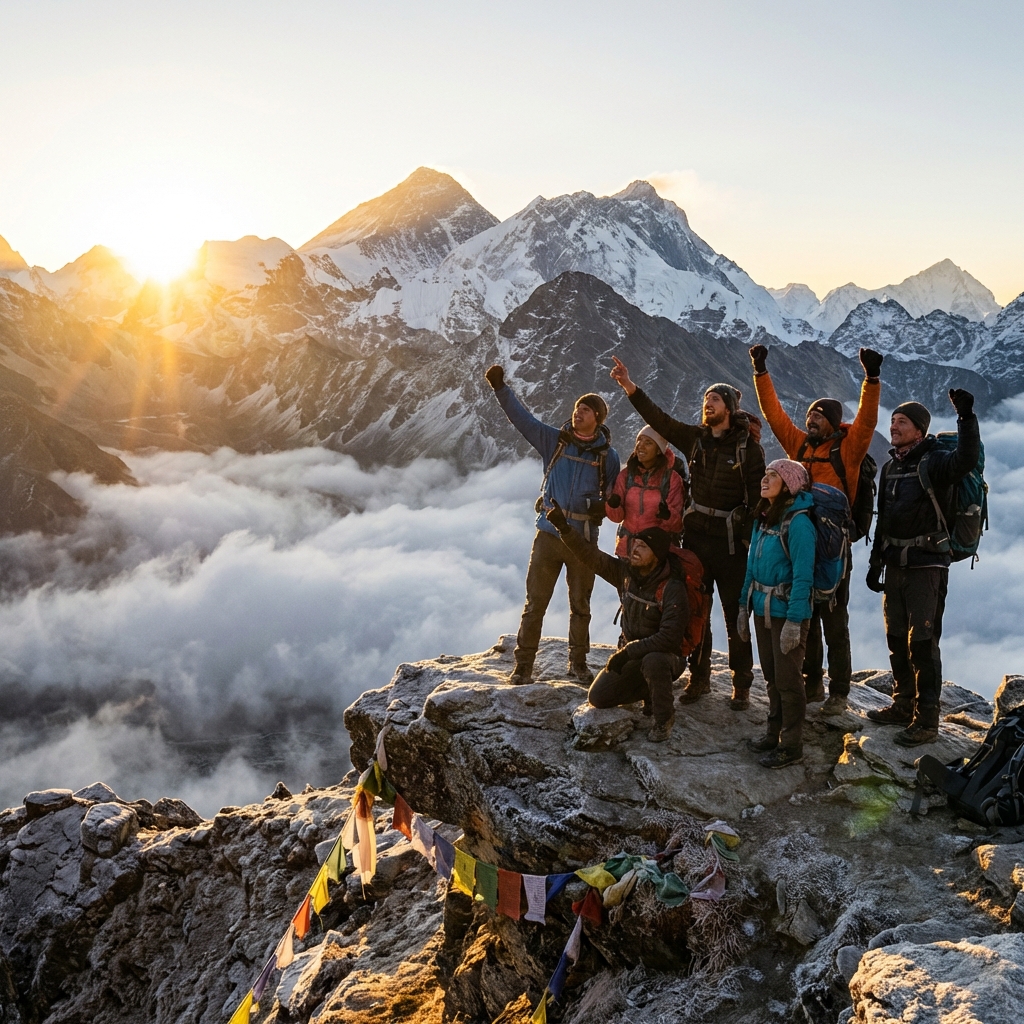
- Pre-dawn climb to Kala Patthar (5,545m) for sunrise views
- Long descent day after; body recovers with lower altitude
- Altitude: 5,164m → 4,280m
- Energy: Exhausted but elated; descent brings relief
- Challenge level: Very Challenging morning, Moderate afternoon
Day 10+: Descent
- Return journey is faster (3-4 days to Lukla)
- Lower altitude brings dramatic energy recovery
- Challenge level: Moderate to Easy
The Emotional Arc for Beginners
| Day | Typical Emotional State |
|---|---|
| 1 | Excitement, nervousness, awe |
| 2 | Accomplishment after Namche climb, fatigue |
| 3 | Optimism, wonder at views |
| 4 | First doubts may appear |
| 5 | Challenge hits; questioning commitment |
| 6 | Low point—"why am I doing this?" |
| 7 | Determination, acceptance of difficulty |
| 8 | Excitement returns; so close! |
| 9 | Euphoria at EBC; exhaustion; pride |
| 10+ | Relief, reflection, deep satisfaction |
10 Common Beginner Mistakes to Avoid
Learning from others' errors dramatically improves your chances of success.
1. Choosing Too Short an Itinerary
The mistake: Booking a 10-12 day "express" itinerary to save time or money.
Why it fails: Rushed schedules don't allow proper acclimatization. You ascend faster than your body can adapt, dramatically increasing altitude sickness risk. Many trekkers on express itineraries either fail to reach Base Camp or suffer unnecessarily.
The fix: Insist on 14-16 days minimum. The extra days cost more but provide:
- Two proper acclimatization days (Namche and Dingboche)
- Buffer days for weather delays
- Time to actually enjoy the experience
2. Skipping Acclimatization Days
The mistake: Feeling good at Namche or Dingboche and deciding to "push on" instead of resting.
Why it fails: Altitude sickness symptoms often appear 24-48 hours AFTER altitude gain. Feeling fine on arrival doesn't mean you've acclimatized. Skipping rest days is the leading cause of preventable altitude sickness.
The fix: Take both acclimatization days, no exceptions. Use them for "climb high, sleep low" day hikes. Your body needs this time even if your ego doesn't.
3. Inadequate Training
The mistake: Assuming you're "fit enough" without trek-specific preparation.
Why it fails: Gym fitness doesn't transfer directly to multi-day trekking at altitude. Running a 10K doesn't prepare you for 6 hours of walking daily for 12 days. And no amount of fitness prevents altitude sickness.
The fix: Follow the 12-week training program. Emphasize stair climbing, hiking with weight, and back-to-back day practice. Test your gear during training, not on the mountain.
4. Ignoring Altitude Sickness Symptoms
The mistake: Hiding symptoms from embarrassment or determination to continue.
Why it fails: Mild altitude sickness (headache, nausea, fatigue) is normal and manageable. But it's also a warning system. Ignoring moderate symptoms can lead to severe AMS, HACE (cerebral edema), or HAPE (pulmonary edema)—all life-threatening.
The fix: Communicate honestly with your guide about how you're feeling. Mild symptoms = monitor closely and don't ascend further until resolved. Moderate symptoms = stay put or descend. Severe symptoms = descend immediately, even at night.
5. Bringing Wrong Gear
The mistake: Packing for a summer hike instead of high-altitude conditions, or bringing untested gear.
Why it fails: Temperatures at Gorak Shep can drop to -25°C at night. Inadequate warmth means miserable nights and potential hypothermia. New boots cause blisters. Cheap gear fails when you need it most.
The fix: Invest in proper cold-weather gear: -15°C to -20°C sleeping bag, quality down jacket, warm layers. Break in boots with at least 50km of hiking before departure. Test everything during training.
6. Not Breaking in Boots
The mistake: Wearing brand-new boots on the trek.
Why it fails: Blisters are the most common injury on EBC, and they can be debilitating. New boots need time to mold to your feet. The EBC trail is no place to discover your boots cause hot spots.
The fix: Start wearing your trekking boots 3-4 months before departure. Put at least 50-100 km on them during training. Your boots should feel like comfortable old friends, not new acquaintances.
7. Rushing the Pace
The mistake: Walking too fast, especially early in the day or on ascent days.
Why it fails: Fast walking at altitude depletes energy reserves faster, increases oxygen debt, and raises altitude sickness risk. The person who reaches the tea house first doesn't get a prize—they just wait longer for everyone else.
The fix: Walk slowly enough to maintain conversation without gasping. This feels unnaturally slow at first. Trust the process. "Bistari, bistari" (slowly, slowly) is the Himalayan mantra for good reason.
8. Skipping Meals at Altitude
The mistake: Losing appetite at altitude and not forcing yourself to eat.
Why it fails: Your body burns 300-500 calories per hour while trekking at altitude. Without adequate fuel, you'll hit an energy wall. Loss of appetite is a symptom of altitude—but eating is the treatment.
The fix: Eat even when you don't feel hungry. Dal bhat is ideal—carbohydrate-rich, easy to digest, unlimited refills. Avoid fatty foods that are harder to process. Carry snacks for the trail.
9. Dehydration
The mistake: Not drinking enough water because it's cold, or avoiding fluids to minimize bathroom trips.
Why it fails: High altitude, cold air, and exertion create rapid dehydration. Dehydration worsens altitude sickness symptoms and reduces your body's ability to acclimatize. The inconvenience of peeing isn't worth the risk.
The fix: Drink 3-4 liters of water daily at altitude. Your urine should be clear to pale yellow. Carry at least 2 liters on the trail. Drink even when you don't feel thirsty—thirst is a lagging indicator.
10. Going with a mandatory licensed guide
The mistake: Attempting solo trekking to save money or "have freedom."
Why it fails: Since 2023, Nepal requires licensed guides for all trekkers in conservation areas—so it's not even legal anymore. Beyond regulations, guides provide critical safety support: altitude sickness recognition, emergency response, navigation, and logistics.
The fix: Budget for a licensed guide from the start ($25-35/day). Good guides are worth every dollar. They can be the difference between a successful trek and an emergency evacuation.
Alternative "Warm-Up" Treks Before EBC
If you're unsure about jumping straight to EBC, these treks provide excellent stepping stones to build experience and test your altitude tolerance.
Option 1: Poon Hill (3-5 days)
Max altitude: 3,210m
Why it's perfect preparation:
- Low altitude = virtually no AMS risk
- Introduces teahouse trekking culture
- Tests your gear and body for multi-day walking
- Spectacular views without extreme challenge
- Short duration—easy to fit into schedule
What you'll learn:
- Whether you enjoy teahouse trekking
- How your body handles consecutive walking days
- Whether your gear works
- Your actual (not imagined) pace and preferences
Progression path: Poon Hill → ABC → EBC
Option 2: Langtang Valley (7-10 days)
Max altitude: 4,773m (optional Kyanjin Ri viewpoint)
Why it's perfect preparation:
- Similar altitude profile to EBC but shorter duration
- 2-3 days above 4,000m tests altitude tolerance
- Gorgeous scenery with cultural immersion
- Closer to Kathmandu (saves travel days)
What you'll learn:
- How your body responds to 4,000m+ altitude
- Whether you can handle extended high-altitude exposure
- Mental stamina for longer treks
- Equipment performance in cold conditions
Progression path: Langtang → EBC
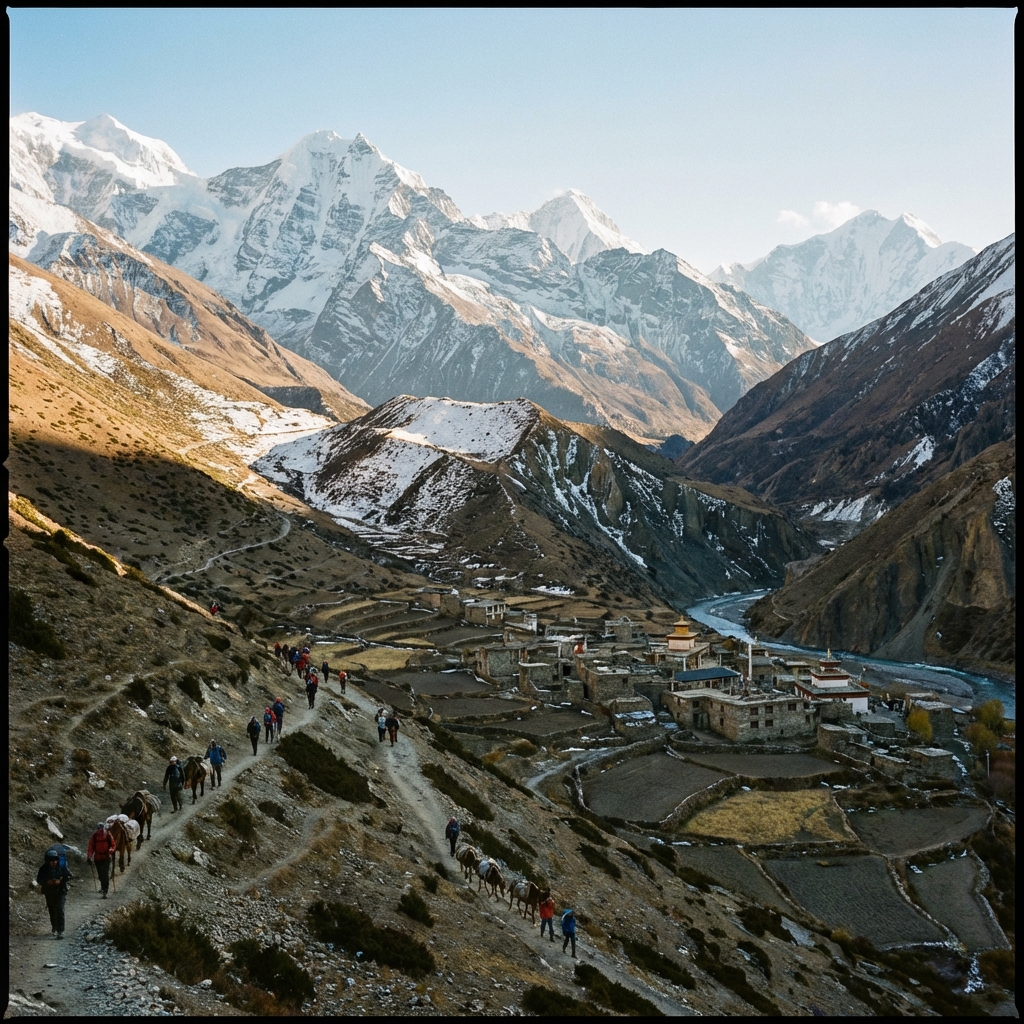
Option 3: Mardi Himal (5-7 days)
Max altitude: 4,500m
Why it's perfect preparation:
- Reaches similar altitude to mid-EBC without extended exposure
- Tests acclimatization response
- Less crowded than classic routes
- Can be completed in a week
What you'll learn:
- Your body's response to altitude
- Performance with reduced oxygen
- Gear adequacy for higher elevations
Progression path: Mardi Himal → EBC or ABC → EBC
The Two-Trek Strategy
Consider doing your "warm-up" trek and EBC in the same season. Fly to Nepal, do Langtang Valley (8 days), recover in Kathmandu for 2-3 days, then do EBC. Your body retains some acclimatization benefit, you've proven your capabilities, and you've tested all your gear. This is how many successful first-time high-altitude trekkers approach the Himalaya.
Final Verdict: Should You Do EBC as a Beginner?
Do EBC as Your First Major Trek If:
- You have 12+ weeks for dedicated preparation
- You can commit to a 14-16 day itinerary (not rush versions)
- You're in good general health with no serious respiratory or cardiac conditions
- You're mentally prepared for extended discomfort
- You have (or will develop) baseline fitness for 5-7 hours of daily walking
- You're willing to turn back if altitude sickness requires it
- You have proper gear or budget to rent/buy it
- You have travel insurance covering high-altitude helicopter evacuation
- You've researched thoroughly and understand what you're signing up for
Start with an Easier Trek If:
- You have limited preparation time (less than 8 weeks)
- You're unsure about your altitude tolerance and want to test it
- You prefer a gentler introduction to Himalayan trekking
- You have limited vacation days and can't commit to 14+ days
- You have health conditions that make high altitude risky
- You're primarily motivated by the "bucket list" appeal rather than genuine desire for the challenge
The Bottom Line
Everest Base Camp is NOT too hard for beginners who prepare properly. But it's at the challenging end of what beginners should attempt. It requires:
- Physical preparation that most people underestimate
- Mental fortitude that many overlook
- Time commitment that budget travelers try to shortcut
- Respect for altitude that first-timers often lack
The good news: tens of thousands of first-time trekkers complete EBC successfully every year. They're not superhuman—they're regular people who prepared well, chose appropriate itineraries, listened to their bodies, and had good support.
If you're asking "Is EBC too hard for beginners?", you're already thinking critically about the challenge. That self-awareness is exactly what you need. Use it to prepare honestly rather than to talk yourself out of an achievable goal—or into a challenge you're not ready for.
The mountains will be there when you're ready. Whether that's this season with dedicated preparation, or next season after a warm-up trek, the right time to do EBC is when you're genuinely prepared—not when your calendar is free or your Instagram needs content.
Frequently Asked Questions
Fitness and Difficulty
Q: Is EBC harder than Kilimanjaro for beginners?
A: Different challenges. Kilimanjaro goes higher (5,895m vs 5,364m) but in fewer days (5-9 vs 12-16). EBC involves longer high-altitude exposure but more acclimatization time. Many experienced altitude trekkers find EBC's extended time above 4,000m more demanding overall. Success rates for EBC (85-90%) are slightly higher than Kilimanjaro (65-85%) partly due to better acclimatization schedules.
Q: What fitness level do I actually need?
A: You should be able to walk 15-20 km on hilly terrain without exhaustion and handle 5-7 hours of daily walking for 10+ consecutive days. Prior multi-day hiking experience helps but isn't mandatory. The 12-week training program in this guide prepares most reasonably fit adults.
Q: Can I do EBC if I've never trekked before?
A: Technically yes, but it's not recommended as your very first multi-day trek. EBC has too many variables (altitude, duration, conditions) to learn everything simultaneously. Consider doing a shorter trek first (Poon Hill, Langtang) to understand teahouse culture, test gear, and learn your body's responses before committing to EBC.
Altitude Concerns
Q: How do I know if I'll get altitude sickness?
A: You can't predict altitude tolerance without exposure. Fitness level is NOT a predictor—athletes get sick as often as casual hikers. The only reliable approach is gradual ascent with proper acclimatization days. If you've successfully been to similar altitudes before, you'll likely do well again—but past success doesn't guarantee future immunity.
Q: What if I get altitude sickness during the trek?
A: Mild symptoms (headache, fatigue, mild nausea) are normal and manageable—stay hydrated, don't ascend further until symptoms resolve. Moderate symptoms (severe headache, vomiting, significant fatigue) require staying put or descending. Severe symptoms (confusion, difficulty walking, breathlessness at rest) require immediate descent—this is an emergency. Your guide is trained to recognize and respond to these situations.
Q: Should I take Diamox?
A: Discuss with your doctor. Acetazolamide (Diamox) helps prevent AMS by accelerating acclimatization. Typical preventive dose is 125mg twice daily starting 1-2 days before ascent. It doesn't mask symptoms—you'll still know if you're getting sick. Common side effects include tingling fingers and increased urination.
Logistics and Preparation
Q: Do I need a guide for EBC?
A: Yes—since 2023, Nepal requires all foreign trekkers to hire licensed guides in conservation areas. Beyond the legal requirement, guides provide safety (altitude sickness recognition, emergency response), navigation, cultural interpretation, and logistical support. Budget $25-35/day for a quality licensed guide.
Q: How much does EBC cost for beginners?
A: Budget $1,500-2,500 USD for a standard all-inclusive package including guide, porter, permits, accommodation, meals, and internal flights. Add $500-1,000 for gear (if buying new) and $100-200 for travel insurance. Not including international flights to Nepal.
Q: When should I book?
A: For peak seasons (October-November, April-May), book 6-8 weeks ahead. This secures better guides and locks in pricing. Shoulder seasons allow 3-4 weeks. Last-minute bookings are possible but reduce your options.
During the Trek
Q: What if I can't keep up with others?
A: You're not in a race. Guides accommodate varying paces—slower trekkers walk with the guide while faster ones go ahead; everyone meets at the destination. Set your own sustainable pace. "Bistari, bistari" (slowly, slowly) is how successful trekkers move.
Q: What's the food like?
A: Teahouse food is simple but adequate. Dal bhat (rice, lentils, vegetables) is the staple—order it repeatedly for unlimited refills and best nutrition-to-cost ratio. Other options include momos, noodle soups, fried rice, and Western breakfast items. Food is generally safe on well-traveled routes. Avoid meat at high elevations where refrigeration is questionable.
Q: What about showers and toilets?
A: Showers cost $3-5 and aren't always reliably hot. Many trekkers limit showers to every 2-3 days. Toilets are mostly squat-style, often cold and basic. Carry your own toilet paper. This isn't comfortable—it's adventure trekking.
Related Resources
Route and Planning:
- Everest Base Camp Complete Route Guide — Full itinerary, permits, costs
- EBC 14-Day Itinerary — Day-by-day detailed planning
- EBC Training Plan — Complete fitness preparation
- EBC Packing List — Essential gear checklist
Beginner Resources:
- Best Beginner Treks Nepal — Alternative first trek options
- What to Expect First Nepal Trek — Reality check for newcomers
- Fitness Requirements Nepal Trekking — Physical preparation guide
Altitude and Safety:
- Altitude Sickness Signs and Turnaround Rules — Critical safety information
- Travel Insurance Nepal Trekking — Coverage requirements
Compare Options:
- EBC vs ABC Comparison — Which iconic trek is right for you?
- Trek Finder Quiz — Personalized trek recommendations
This guide is maintained by the Nepal Trekking Team with input from licensed guides, the Himalayan Rescue Association, and hundreds of first-time EBC trekkers. Last updated February 2026. For corrections, updates, or questions, contact our editorial team.
Research Sources: This guide incorporates data from Nepal Tourism Board statistics, Himalayan Rescue Association case studies, licensed guide interviews, trekker surveys, and authoritative sources including Torn Tackies, Glorious Himalaya, Marvel Adventure, and Nepal Trekking Routes.