Yala Peak Climbing Guide: Nepal's Easiest 5,500m Peak
If you have ever looked at Nepal's trekking peaks and wondered which one is truly achievable for a first-time climber -- which summit does not require ice axes, jumars, fixed ropes, or glacier traverses -- the answer is Yala Peak. At 5,732 meters (18,806 feet), Yala Peak stands in the Langtang Valley as the most accessible trekking peak in Nepal, a mountain that blurs the line between high-altitude trekking and mountaineering in the most welcoming way possible.
Yala Peak is not a consolation prize. It is not a lesser objective chosen because other peaks are too difficult. It is a legitimate Himalayan summit that delivers a genuine sense of achievement, extraordinary views of Tibet's Shishapangma and the Langtang Himal, and the opportunity to stand on top of a named peak in Nepal -- all without the technical demands, specialized equipment, or steep costs that characterize peaks like Island Peak, Mera Peak, or Lobuche East.
For first-time peak climbers, for trekkers wanting to add a summit to a Langtang Valley trip, for those testing their altitude tolerance before committing to a larger objective, and for anyone who simply wants the experience of climbing a Himalayan peak without months of technical training, Yala Peak is the answer.
This guide covers everything you need: the route, the difficulty (refreshingly minimal), the itinerary, costs, permits, equipment, and how to combine Yala Peak with the beautiful Langtang Valley trek.
5,732m (18,806 ft)
F (Facile) - Easiest Alpine Grade
10-12 days from Kathmandu
6-8 hours round trip
$250 USD (autumn season)
$1,500-$2,500 with agency
October-November, March-May
85-90% in good conditions
4,800m (Kyanjin Ri area)
Good trekking fitness, no technical climbing needed
Why Yala Peak? The Case for Nepal's Friendliest Summit
The Easiest Trekking Peak -- And That Is Not a Weakness
Among Nepal's 33 NMA-designated trekking peaks, Yala Peak holds a unique position. It is the only peak where the standard route requires no glacier travel, no fixed ropes, no jumar ascent, and no crevasse crossing. The route is essentially a steep hike with some scrambling near the summit -- demanding in terms of altitude and endurance, but not in terms of technical climbing skill.
This accessibility is Yala Peak's greatest strength. It opens the world of peak climbing to trekkers who would otherwise never consider standing on a Himalayan summit. The gap between "I completed the EBC trek" and "I climbed a 6,000-meter peak" can feel enormous. Yala Peak bridges that gap by offering a summit that requires altitude fitness and determination rather than ropes and ice axes.
Stunning Views of Langtang Lirung and Shishapangma
Yala Peak's summit panorama is remarkable. You stand on the edge of the Tibetan Plateau, looking north into Tibet where Shishapangma (8,027m) -- the only 8,000-meter peak entirely within Tibet -- dominates the horizon. To the west, Langtang Lirung (7,227m) rises in a massive wall of ice and rock, its north face one of the most impressive sights in the Nepal Himalaya. The Langtang Valley stretches below you, flanked by Ganesh Himal, Dorje Lakpa, and countless unnamed peaks.
On clear days, the view extends to the Annapurna range to the west and the Everest region to the east. It is a panorama that rewards the effort of reaching 5,732 meters many times over.
Accessible from Kathmandu
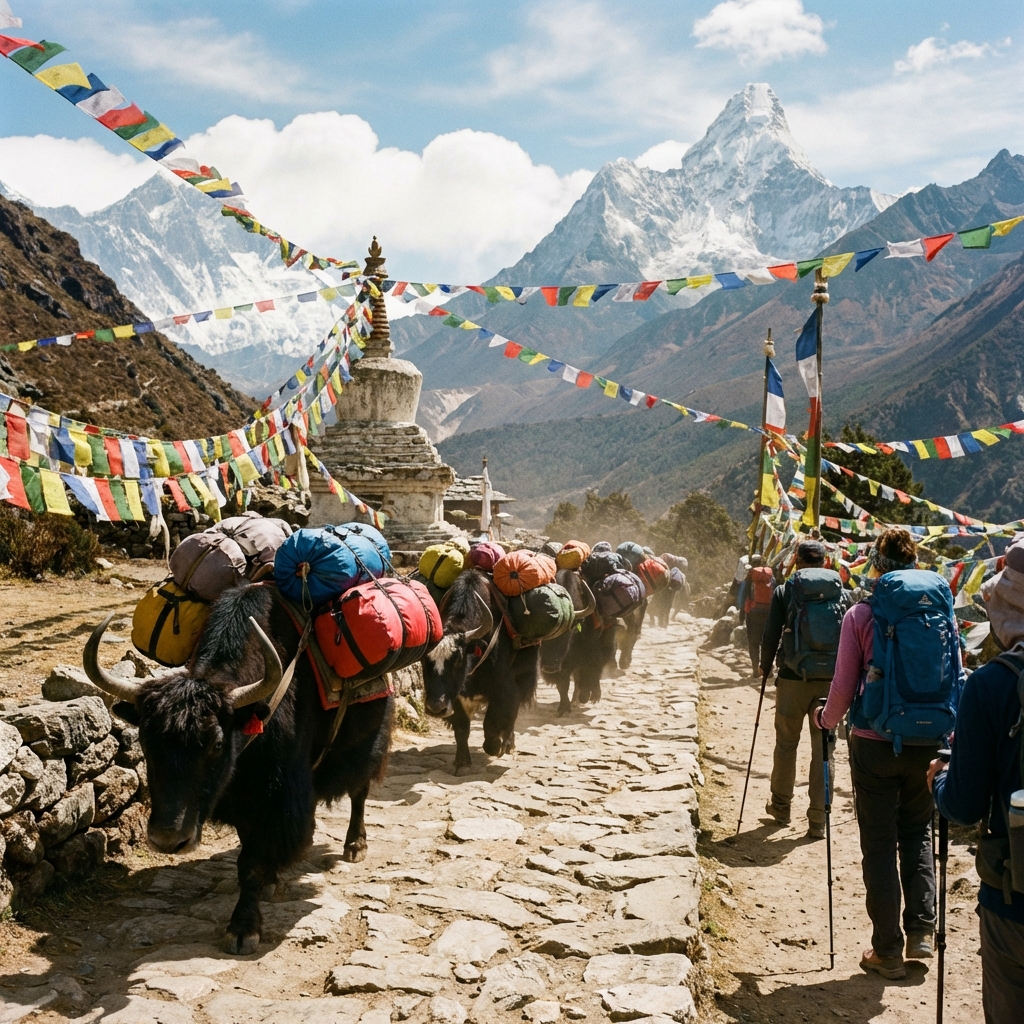
Unlike peaks in the Everest region (requiring flights to Lukla) or remote peaks like Mera (requiring multiple days of approach through roadless valleys), Yala Peak is accessible by road from Kathmandu. The drive to Syabrubesi, the trailhead for the Langtang Valley, takes 7-8 hours. This eliminates the risk of Lukla flight cancellations, reduces overall costs, and makes the expedition more predictable in terms of scheduling.
Significantly More Affordable
Yala Peak is one of the most budget-friendly trekking peaks in Nepal. Lower NMA permit fees (compared to 6,000m+ peaks), shorter duration, no Lukla flights, less specialized equipment, and cheaper lodging in the Langtang Valley combine to make this a genuinely affordable climbing experience. A complete Yala Peak expedition can cost $1,500-$2,500 -- roughly half the price of an Island Peak or Mera Peak trip.
Perfect Training Ground for Bigger Objectives
Many climbers use Yala Peak strategically: as a test of their altitude tolerance before committing to a more expensive and technical peak. If you summit Yala Peak comfortably, you have strong evidence that your body handles 5,700m well, which is valuable information for planning future attempts on Island Peak (6,189m), Lobuche East (6,119m), or Mera Peak (6,476m).
Pro Tip
Yala Peak is an excellent choice for a first visit to Nepal if you want more than a standard trek but are not ready for a technical climb. You get the Langtang Valley experience -- one of Nepal's most beautiful and culturally rich treks -- plus the satisfaction of a genuine summit, all within 10-12 days and at a fraction of the cost of Everest region peaks.
Difficulty Assessment: What F Grade Really Means
Alpine Grade: F (Facile)
Yala Peak is graded F on the International French Adjectival System, which is the easiest grade assigned to alpine climbing routes. In practical terms, this means:
- No technical climbing required -- the route is walking and scrambling throughout
- No glacier travel -- the approach and ascent avoid glaciated terrain
- No fixed ropes -- you will not use a jumar or mechanical ascender
- No ice climbing -- while snow may be present depending on season, there are no sustained ice sections
- Scrambling near the summit -- the final section involves hands-on-rock scrambling over loose boulders and scree, but this is not rock climbing
What Makes It Challenging
If Yala Peak is "just a hike," why does anyone fail to summit? Because altitude and endurance are their own form of difficulty:
Altitude: At 5,732 meters, the air contains roughly 50% of the oxygen available at sea level. Every step requires more effort, every breath provides less oxygen, and your body is working harder than at any point in most people's lives. Altitude does not care about your technical climbing skills -- it affects everyone, and it is the primary challenge on Yala Peak.
Endurance: Summit day involves 6-8 hours of sustained uphill effort on steep, uneven terrain. The final 300-400 meters of elevation gain traverses loose rock and scree, which is energy-sapping and frustrating. You will be tired, breathing hard, and potentially dealing with a headache or nausea from altitude.
Weather: Wind and cold at 5,700m are serious even on a "non-technical" peak. Exposed ridgelines and the summit itself offer no shelter. Sudden weather changes can make conditions dangerous.
Psychological challenge: The terrain near the summit -- steep, loose, exposed in places -- can be intimidating even without technical climbing. Confidence on rough mountain terrain is important.
F Grade Does Not Mean Easy
The F grade means "no technical climbing difficulty." It does not mean "easy." The altitude, weather, and endurance demands of Yala Peak are genuine challenges that should be respected. People with excellent general fitness but no altitude experience can still struggle significantly above 5,000 meters. Proper acclimatization, good physical fitness, and realistic expectations are essential.
Comparison with Other Trekking Peaks by Difficulty
| Peak | Grade | Elevation | Technical Gear Needed | Description |
|---|---|---|---|---|
| Yala Peak | F | 5,732m | None (crampons optional) | Steep hike with scrambling |
| Mera Peak | PD | 6,476m | Crampons, rope | Glacier walk, snow slopes |
| Island Peak | PD+ | 6,189m | Crampons, jumar, ice axe | Ice headwall, fixed ropes |
| Lobuche East | PD+ | 6,119m | Crampons, jumar, ice axe | Mixed rock/ice, exposed ridge |
| Pisang Peak | PD | 6,091m | Crampons, rope, ice axe | Snow/ice slopes, fixed ropes |
Yala Peak is clearly the most accessible option. If this is your first peak in Nepal, start here.
Route Description: The Standard Northwest Ridge
Overview
The standard route ascends the northwest ridge from a base camp area near Kyanjin Gompa (3,870m) or a higher camp at approximately 4,800m. The route is non-technical throughout, progressing from yak pastures through alpine scrub and rocky terrain to the summit ridge.
Section-by-Section Breakdown
Section 1: Kyanjin Gompa to Yala Base Camp (3,870m to 4,800m) From Kyanjin Gompa, the trail follows yak herder paths north through open grassland, gradually steepening as you gain altitude. The terrain transitions from grassy hillside to rocky moraine. This section takes 3-4 hours and gains approximately 930 meters. Some teams camp at a yak herder shelter around 4,800m, though it is possible to summit directly from Kyanjin Gompa on a very long day.
Section 2: Base Camp to the Ridge (4,800m to 5,400m) Above base camp, the trail steepens significantly. You ascend through boulder fields and scree slopes, following cairns or your guide's route across terrain that becomes increasingly loose and steep. This is the most physically demanding section -- the loose footing combined with altitude makes every step an effort.
Section 3: The Summit Ridge and Summit (5,400m to 5,732m) The final push follows a broad ridge, narrowing somewhat near the summit. The terrain is loose rock and occasional snow patches. Near the top, some scrambling over larger boulders is required -- hands-on-rock but nothing that would be considered technical climbing. The summit itself is a small rocky area with space for a few people at a time.
Conditions Vary by Season
In late autumn and spring, the upper sections of Yala Peak may carry significant snow cover, which can make the route more challenging and potentially require crampons and trekking poles for stability. In dry conditions (early autumn), the route may be entirely dry rock and scree. Ask your guide about current conditions before your summit attempt, and carry crampons just in case -- they weigh very little and can make a significant difference on icy morning surfaces.
Day-by-Day Itinerary: Yala Peak via Langtang Valley (12 Days)
This itinerary combines the classic Langtang Valley trek with a Yala Peak summit attempt, providing a complete experience of one of Nepal's most beautiful valleys plus a Himalayan summit.
Day 1: Kathmandu to Syabrubesi (1,460m)
- Transport: Local bus or private jeep
- Duration: 7-8 hours by bus, 6-7 hours by jeep
- Road condition: Paved to Dhunche, then unpaved to Syabrubesi
The drive from Kathmandu follows the Trisuli River valley north, climbing through terraced hillsides and small Tamang and Tibetan settlements. The road is scenic but winding, and landslides during or after monsoon can cause delays. Private jeep is recommended for comfort and reliability.
Day 2: Syabrubesi to Lama Hotel (2,470m)
- Trek distance: 13km
- Trek time: 5-6 hours
- Elevation change: Ascend 920m
The trail enters the Langtang Valley through dense subtropical and temperate forest. You trek along the Langtang Khola (river), climbing steadily through a narrow gorge. The forest is home to langur monkeys, red pandas (rarely seen), and abundant birdlife. Lama Hotel is a cluster of lodges in a forest clearing -- simple but comfortable accommodation.
Day 3: Lama Hotel to Langtang Village (3,430m)
- Trek distance: 10km
- Trek time: 5-6 hours
- Elevation change: Ascend 960m
The valley opens up dramatically as you gain altitude. The forest transitions from temperate to alpine, views expand, and the massive peaks of the Langtang Himal begin to reveal themselves. Langtang Village was devastated by the 2015 earthquake but has been fully rebuilt with earthquake-resistant structures on a site ~100m higher than the original village. Trails and teahouses are fully restored and safe for trekking-triggered avalanche and has been rebuilt -- a powerful reminder of the forces that shape this landscape.
The 2015 Earthquake and Langtang Valley
On April 25, 2015, a massive earthquake triggered an avalanche and landslide that buried much of Langtang Village, killing over 350 people including many trekkers and local residents. The village has been rebuilt at a slightly different location, and the Langtang community has shown remarkable resilience. Trekking through the valley supports the ongoing recovery and rebuilding efforts. A memorial at the original village site is worth visiting to pay respects.
Day 4: Langtang Village to Kyanjin Gompa (3,870m)
- Trek distance: 7km
- Trek time: 3-4 hours
- Elevation change: Ascend 440m
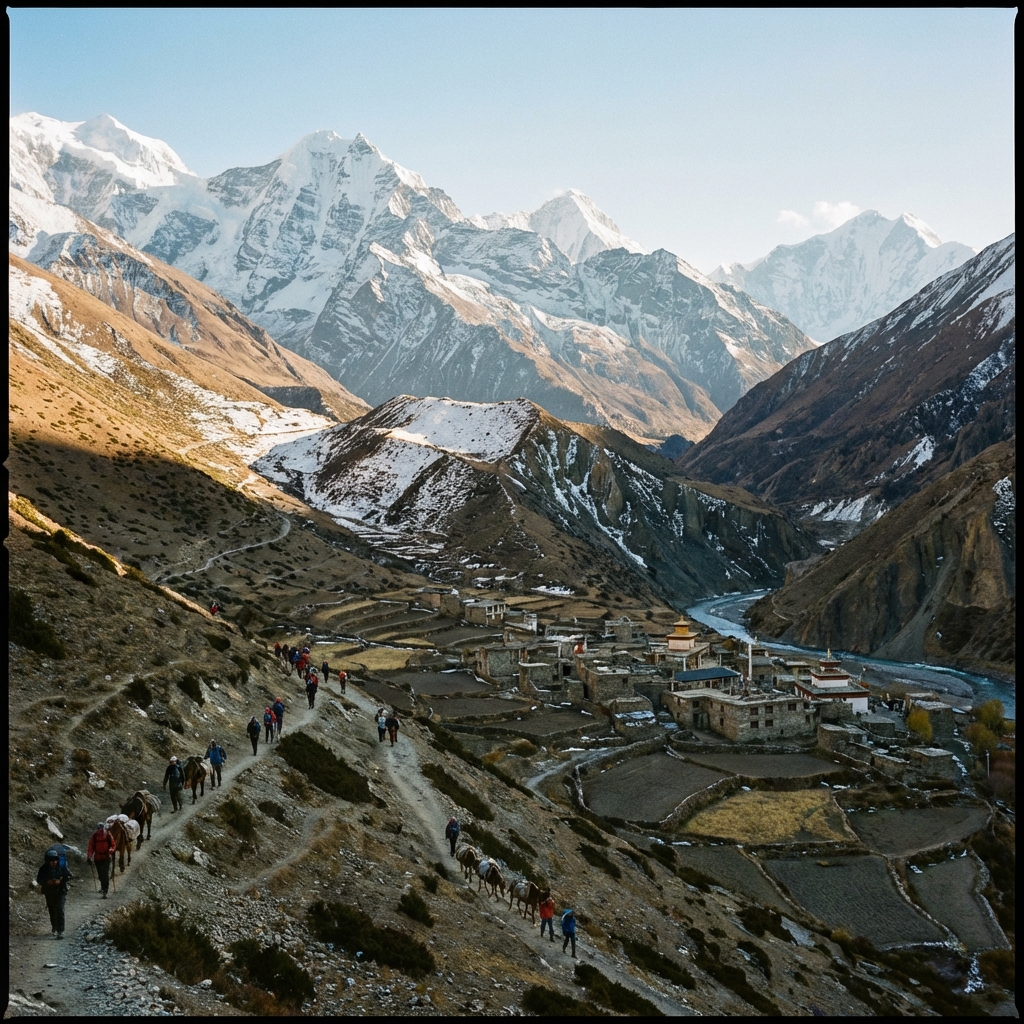
A shorter day to aid acclimatization. The trail passes through open meadows with spectacular mountain views -- Langtang Lirung's icy north face dominates the skyline to the west. Kyanjin Gompa is a small settlement centered around an ancient Buddhist monastery and a cheese factory (yes, really -- Swiss-assisted yak cheese production has been here since the 1950s). This is your base for the Yala Peak attempt.
Day 5: Acclimatization Day at Kyanjin Gompa (3,870m)
- Activities: Hike to Kyanjin Ri (4,773m), explore Tserko Ri (4,984m), or visit the glacier viewpoint
- Duration: 4-6 hours for acclimatization hike
This day is essential for altitude adaptation. The classic acclimatization hike is Kyanjin Ri, a hill directly above the settlement that offers a superb preview of the Langtang panorama. Stronger trekkers can push to Tserko Ri (4,984m), which provides views rivaling those from much more famous viewpoints. Pay attention to how you feel at higher altitude -- this is your body's dress rehearsal for Yala Peak.
Pro Tip
Tserko Ri (4,984m) is sometimes confused with Yala Peak and is occasionally marketed as a summit in its own right. It is an excellent acclimatization hike and viewpoint, but it is not a trekking peak -- no permit is required. If you are feeling strong on your acclimatization day, climbing Tserko Ri is the best possible preparation for Yala Peak and provides almost equally impressive views.
Day 6: Kyanjin Gompa to Yala Peak Base Camp (4,800m)
- Trek time: 3-4 hours
- Elevation change: Ascend 930m
Today you move to a higher camp in the yak pastures above Kyanjin Gompa. The trail follows herder paths through open grassland, gradually steepening as vegetation thins. Base camp is typically a tent camp near a yak herder shelter -- basic but functional. Spend the afternoon resting, hydrating, and preparing equipment for the summit attempt.
Alternatively: Some expeditions summit Yala Peak in a single long day from Kyanjin Gompa (10-12 hours round trip). This is more physically demanding but avoids the need for a high camp. This option works best for well-acclimatized, fit trekkers.
Day 7: Summit Day -- Yala Peak (5,732m), Return to Kyanjin Gompa (3,870m)
- Start time: 3:00-4:00 AM
- Summit time: 7:00-9:00 AM (typical)
- Round trip from base camp: 6-8 hours
- Descent to Kyanjin Gompa: 2-3 hours additional
The alarm comes early in the cold darkness. You set off by headlamp, ascending the increasingly steep terrain above base camp. The lower sections follow a cairned route through boulder fields; the upper sections involve steeper scrambling over loose rock with occasional snow patches. The physical effort is sustained and demanding at altitude, but the technical difficulty remains low.
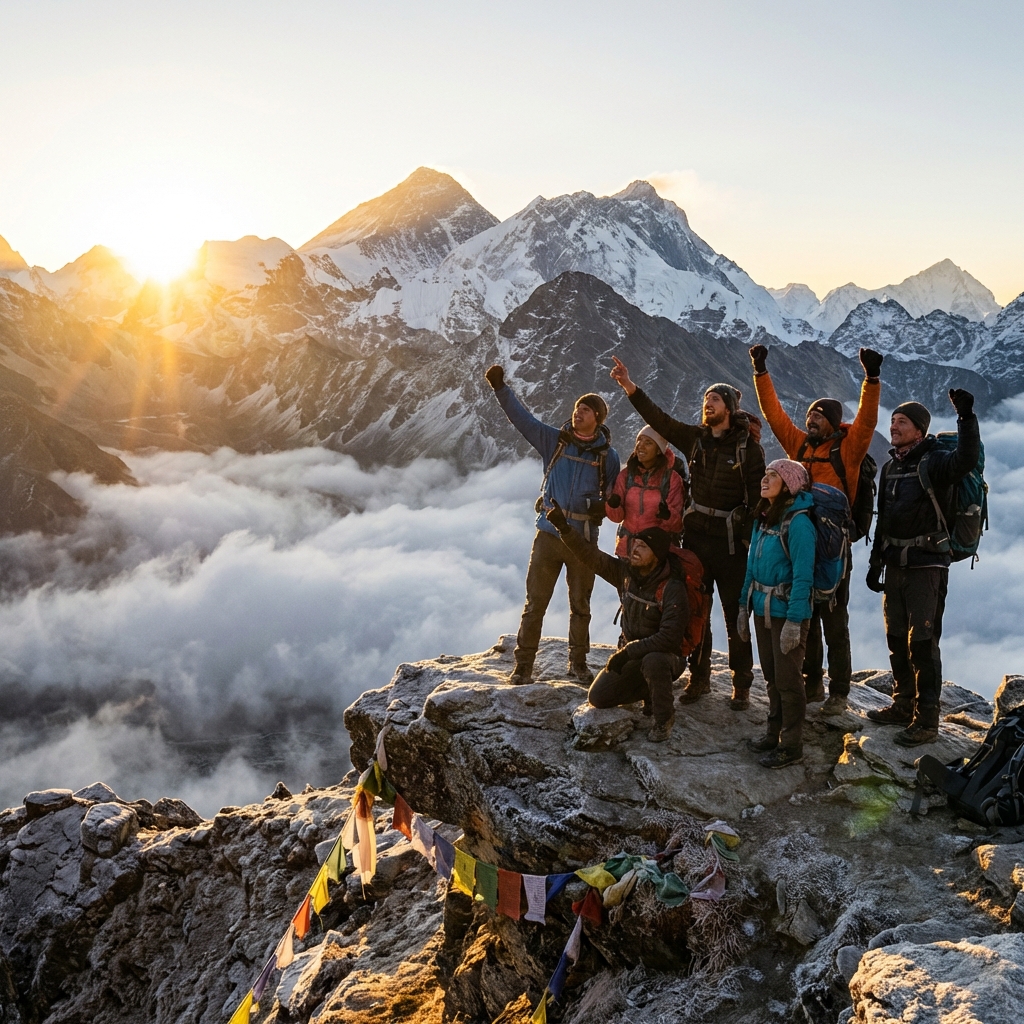
As dawn breaks, the summit panorama begins to reveal itself. Shishapangma to the north, Langtang Lirung to the west, Ganesh Himal to the southwest, and on clear days, distant views of the Annapurna and Everest ranges. The final scramble to the summit rocks is the steepest section -- use your hands for balance on the larger boulders, plant your feet carefully on the loose ground.
The summit is yours. At 5,732 meters, you stand on a trekking peak summit without having used a single piece of technical climbing equipment. This is a genuine mountaineering achievement, and the view -- with the Tibetan Plateau stretching north and the Himalayan chain sweeping east and west -- is your reward.
After summit photos and a brief rest, descend the same route to base camp. Break camp and continue descending to Kyanjin Gompa, where warm food and a proper bed await.
Day 8: Buffer Day at Kyanjin Gompa (3,870m)
- Purpose: Weather contingency for summit, recovery, or exploration
If you summited on Day 7, this is a rest and celebration day. Explore the monastery, sample the local yak cheese, or simply enjoy the mountain views. If weather prevented a summit attempt on Day 7, this is your second chance.
Why Include a Buffer Day?
Weather at 5,700 meters is unpredictable. High winds, snowfall, or poor visibility can make the summit attempt inadvisable. Having a buffer day means a single bad weather day does not end your summit hopes. Most successful expeditions build this flexibility into the itinerary.
Day 9: Kyanjin Gompa to Lama Hotel (2,470m)
- Trek distance: 17km
- Trek time: 6-7 hours
- Elevation change: Descend 1,400m
Long descent day back through the valley. The downhill trend and thicker air make the walking easier, though knees may protest on the steeper sections. Enjoy the forest scenery you passed through too quickly on the way up.
Day 10: Lama Hotel to Syabrubesi (1,460m)
- Trek distance: 13km
- Trek time: 5-6 hours
- Elevation change: Descend 920m
Continue the descent through the forest to Syabrubesi. Final night in the mountains before the road journey back to Kathmandu.
Day 11: Syabrubesi to Kathmandu (1,400m)
- Transport: Local bus or private jeep
- Duration: 7-8 hours
The return drive to Kathmandu. Unlike Lukla flights, road transport is rarely cancelled (though landslides can cause delays in monsoon season). Arrive in Kathmandu for a celebration dinner.
Day 12: Departure Day / Buffer
- Buffer day for travel delays or Kathmandu sightseeing
- Final shopping, temple visits, or simply rest
Alternative Itinerary: Combine with Gosainkunda (14-16 Days)
For trekkers wanting a more comprehensive experience, Yala Peak can be combined with a visit to the sacred Gosainkunda Lakes (4,380m), a series of high-altitude alpine lakes sacred to both Hindu and Buddhist traditions.
Modified itinerary:
- Days 1-7: Standard Langtang Valley + Yala Peak summit (as above)
- Day 8: Kyanjin Gompa to Langtang Village
- Day 9: Langtang Village to Thulo Syabru
- Day 10: Thulo Syabru to Laurebina (3,910m)
- Day 11: Laurebina to Gosainkunda (4,380m) -- explore the sacred lakes
- Day 12: Gosainkunda to Ghopte via Laurebina La (4,610m) or return to Dhunche
- Day 13: Continue to Kathmandu via Dhunche
This combination provides a diverse experience: valley trekking, peak climbing, high-altitude lake scenery, and a high pass crossing.
Equipment List for Yala Peak
One of Yala Peak's great advantages is the minimal specialized equipment required. You need standard high-altitude trekking gear plus a few additions for the summit day.
Essential Equipment
| Item | Notes |
|---|---|
| Trekking boots | Sturdy, ankle-supporting, broken in. B1 rating sufficient. |
| Trekking poles | Essential for stability on steep, loose terrain |
| Gaiters | Full-length, for scree and potential snow |
| Warm layers | Down jacket, fleece mid-layer, thermal base layers |
| Hardshell jacket | Windproof and waterproof for summit day |
| Hardshell pants | Wind protection for exposed summit ridge |
| Gloves | Liner gloves + insulated gloves (mittens for backup) |
| Warm hat and balaclava | Essential for summit day cold and wind |
| Glacier sunglasses | Category 3-4 with UV protection |
| Headlamp | With spare batteries for pre-dawn start |
| Sun protection | SPF 50+ sunscreen, lip balm with SPF |
| Water system | 2L capacity, insulated to prevent freezing |
| Daypack | 25-35L for summit day |
| Trekking backpack | 45-55L for the approach trek |
| Sleeping bag | Rated to minus 15 degrees Celsius (for high camp) |
Optional but Recommended
| Item | Notes |
|---|---|
| Crampons | Lightweight, strap-on type. Useful if snow or ice present on upper route. |
| Trekking helmet | For rockfall protection on scrambling sections (rare but possible) |
| Camp shoes | Sandals or light shoes for camp comfort |
| Hand/toe warmers | Chemical warmers for summit morning |
Pro Tip
Unlike Island Peak or Lobuche East, you do NOT need mountaineering boots, a climbing harness, jumar, ice axe, or fixed rope equipment for Yala Peak. Standard B1-rated trekking boots with good ankle support are sufficient. This significantly reduces both cost and the weight you carry. If snow conditions are expected, lightweight strap-on crampons (microspikes work well for light snow) provide adequate traction.
Cost Breakdown: Yala Peak on a Budget
Full Cost Range: $1,500 - $2,500 USD
Yala Peak is among the most affordable trekking peaks in Nepal, thanks to its shorter duration, road access (no Lukla flights), lower permit fees, and minimal specialized equipment needs.
Detailed Cost Breakdown
| Expense | Budget | Mid-Range | Premium |
|---|---|---|---|
| NMA Climbing Permit | $250 | $250 | $250 |
| Langtang National Park Entry | $30 | $30 | $30 |
| TIMS Card | $20 | $20 | $20 |
| Climbing Guide | $300 (shared) | $500 (small group) | $800 (private) |
| Kathmandu-Syabrubesi Transport | $25 (bus) | $80 (shared jeep) | $200 (private jeep) |
| Tea House Accommodation | $80 | $120 | $180 |
| Food and Drinks | $200 | $300 | $450 |
| High Camp Equipment | $50 (rental) | $80 | included |
| Porter Support | $100 | $150 | $200 |
| Tips and Gratuities | $60 | $100 | $150 |
| Travel Insurance | $80 | $120 | $150 |
| Contingency | $50 | $80 | $100 |
| Total | $1,245 | $1,830 | $2,530 |
Agency Package Costs
- Group expedition (4-8 trekkers): $1,500-$1,800 per person
- Small group (2-3 trekkers): $1,800-$2,200 per person
- Private expedition: $2,200-$2,800 per person
Cost Comparison with Other Trekking Peaks
| Peak | Duration | Cost Range | Flights Needed |
|---|---|---|---|
| Yala Peak | 10-12 days | $1,500-$2,500 | None (road access) |
| Island Peak | 16-18 days | $2,500-$4,500 | Lukla flights ($215) |
| Lobuche East | 14-16 days | $2,500-$4,000 | Lukla flights ($215) |
| Mera Peak | 18-20 days | $2,500-$4,500 | Lukla flights ($215) |
| Pisang Peak | 18-20 days | $2,000-$3,500 | None (road + trek) |
Yala Peak is the clear budget winner among Nepal's popular trekking peaks.
Permit Requirements
NMA Climbing Permit
Yala Peak is an NMA-designated trekking peak. The permit must be obtained through a registered trekking agency.
Permit fees (2026 season):
| Season | Fee Per Person |
|---|---|
| Spring (Mar-May) | $250 |
| Autumn (Sep-Nov) | $250 |
| Summer (Jun-Aug) | $125 |
| Winter (Dec-Feb) | $180 |
Langtang National Park Entry Permit
- Fee: $30 USD (or equivalent NPR) for foreign nationals
- Valid for: Duration of your trek within the park
- Obtainable: Kathmandu (Nepal Tourism Board) or at the park entrance at Dhunche
TIMS Card
- Fee: $20 USD
- Purpose: Trekker registration for safety and monitoring
- Obtainable: Through your trekking agency or at TIMS counters in Kathmandu
Mandatory Guide Requirement
As with all NMA trekking peaks, a licensed climbing guide arranged through a registered agency is required. However, given Yala Peak's non-technical nature, the guide serves primarily as a route-finder and safety coordinator rather than a technical climbing instructor.
Success Rate and What Affects It
Overall Success Rate: 85-90%
Yala Peak boasts the highest success rate of any trekking peak in Nepal. This reflects the non-technical nature of the route -- the primary reasons for failure are altitude-related illness, weather, and fitness limitations rather than technical climbing difficulty.
Why Some Attempts Fail
Poor acclimatization (40% of failures): Climbers who rush the approach or skip the acclimatization day at Kyanjin Gompa are significantly more likely to experience AMS symptoms that prevent summiting. The cure is simple: follow the recommended acclimatization schedule.
Weather (30% of failures): High winds, snowfall, and poor visibility can make the exposed upper route dangerous. Unlike technical failures that are within the climber's control, weather is not -- which is why the buffer day is important.
Insufficient fitness (20% of failures): The summit day is physically demanding even without technical climbing. Climbers who are not fit enough for 6-8 hours of sustained uphill effort at altitude will struggle. See the fitness requirements guide for preparation advice.
Other factors (10% of failures): Equipment problems, personal decisions to descend, gastrointestinal illness, and other unpredictable factors account for the remainder.
Best Seasons for Climbing Yala Peak
Primary Season: October-November (Autumn)
- Clear skies and excellent visibility for summit views
- Stable weather with lower precipitation probability
- Cold but manageable temperatures at high camp and summit
- Drier trail conditions on the approach
- Peak trekking season with good lodge availability in Langtang Valley
Typical summit window: Mid-October through late November.
Secondary Season: March-May (Spring)
- Warmer temperatures overall, though still cold at summit altitude
- Rhododendron blooms in the lower Langtang Valley (below 4,000m) -- spectacular in April
- More snow on the upper route potentially requiring crampons
- Afternoon cloud buildup more common than in autumn
- Quieter trails compared to the busy autumn season
Typical summit window: Late March through mid-May.
Seasons to Approach with Caution
Winter (December-February): Very cold at summit altitude (minus 20 degrees Celsius+), shorter days, and higher snow accumulation on the route. Achievable for well-prepared trekkers, but conditions are significantly more demanding. The Langtang Valley itself is accessible in winter, making a winter Yala Peak attempt feasible as part of a quieter off-season trek.
Monsoon (June-September): Heavy rain in the Langtang Valley, leeches on the lower trail, poor visibility, and increased landslide risk on the road from Kathmandu. Not recommended.
Who Should Climb Yala Peak?
Ideal Candidates
First-time peak climbers: If you have never stood on a Himalayan summit and want to start, Yala Peak is the logical first choice. The non-technical route means you can focus entirely on the altitude and endurance challenges without worrying about ropes, crampons, and ice axes.
Trekkers adding a summit to a Langtang trip: If you are already planning a Langtang Valley trek, adding Yala Peak requires only 2-3 extra days and transforms your trek from a valley walk into a peak climbing expedition.
Altitude testing before bigger peaks: Planning to climb Island Peak, Lobuche East, or Mera Peak? Yala Peak lets you test your body's response to high altitude at a fraction of the cost and time commitment. If you struggle at 5,700m, you have valuable information before investing in a more expensive and technical expedition.
Budget-conscious climbers: At $1,500-$2,500 total, Yala Peak costs roughly half of what Everest region trekking peaks charge. For travelers on a tighter budget, this is the most accessible entry point to peak climbing.
Older trekkers and those with moderate fitness: The non-technical nature of the route means that age and fitness limitations are less constraining than on technical peaks. If you can trek to high altitude and manage a long day of steep hiking, Yala Peak is within reach regardless of whether you could handle ice climbing or jumar ascending.
Who Should Choose a Different Peak
Experienced climbers seeking technical challenge: If you have climbing experience and want to test technical skills, Yala Peak will not satisfy you. Look at Island Peak, Lobuche East, or Pisang Peak instead.
Summit height seekers: If your primary goal is to stand as high as possible, Yala Peak's 5,732m is modest compared to Mera Peak (6,476m) or even Island Peak (6,189m). For maximum altitude achievement, those peaks are better choices.
Those wanting an Everest region experience: Yala Peak is in the Langtang region, not the Everest region. If your dream is to see Everest up close and climb a peak, Island Peak or Lobuche East are the options that combine both.
Training and Preparation
Physical Preparation
Yala Peak does not require technical climbing training, but it does demand solid cardiovascular fitness and endurance for sustained uphill effort at altitude.
8-12 Week Training Plan:
| Weeks Out | Focus | Activities |
|---|---|---|
| 12-8 | Cardiovascular base | Running, cycling, swimming -- 4-5 sessions per week, 30-60 minutes |
| 8-4 | Endurance building | Long hikes (3-5 hours) with daypack, stair climbing, incline treadmill |
| 4-2 | Peak training | Back-to-back long hike days, weighted pack training (8-10kg) |
| 2-0 | Taper | Reduce volume, maintain light activity, focus on rest |
Key fitness benchmarks before departure:
- Ability to hike uphill for 6 hours with a 5-8kg daypack
- Comfortable with 1,000m elevation gain in a single day
- Can manage two consecutive days of 5-6 hour hikes
- No significant knee, ankle, or joint issues during sustained downhill walking
Altitude Preparation
If you have not been above 4,000 meters before, consider:
- Researching acclimatization strategies thoroughly
- Discussing altitude medication (Acetazolamide/Diamox) with your doctor
- Arriving in Kathmandu (1,400m) at least one day before departure for rest
- Following the recommended itinerary without skipping acclimatization days
- Staying well hydrated throughout the trek (3-4 liters per day at altitude)
Mental Preparation
The physical challenge of Yala Peak is real, but the mental challenge should not be underestimated:
- Pre-dawn starts in extreme cold require motivation
- Loose, unstable terrain near the summit is frustrating and energy-draining
- Altitude symptoms (headache, nausea, fatigue) test your resolve
- The final push to the summit demands determination when your body is telling you to stop
Frequently Asked Questions
Is Yala Peak really the easiest trekking peak in Nepal?
Yes, by virtually all measures. It is the only popular trekking peak in Nepal where the standard route requires no glacier travel, no fixed ropes, no jumar technique, and no ice climbing. The route is graded F (Facile) -- the easiest alpine grade. However, "easiest" does not mean "easy." The altitude (5,732m), endurance requirement, and weather exposure make it a genuine challenge. It is the easiest trekking peak, but it is still harder than any standard trekking route in Nepal.
Do I need crampons for Yala Peak?
It depends on conditions. In dry autumn conditions (October), the route may be entirely free of snow and ice, making crampons unnecessary. In spring or after recent snowfall, the upper sections can be icy, and crampons or at minimum microspikes provide valuable traction. Lightweight strap-on crampons weigh very little -- carry them as insurance even if you may not need them.
Can I climb Yala Peak with a mandatory licensed guide?
Technically, NMA regulations require a licensed climbing guide for all trekking peak attempts. In practice, some independent trekkers attempt Yala Peak without a climbing guide (since the route is non-technical), but this is not legal and not recommended. A guide provides route-finding in poor visibility, safety support, and emergency assistance -- all valuable even on a non-technical peak.
How does the Langtang Valley compare to the Everest region?
The Langtang Valley offers a completely different experience from the Everest region: fewer trekkers, more cultural immersion with Tamang communities, lush lower valley forests, and a more intimate mountain setting. It lacks the iconic Everest views and the bustling Sherpa villages of the Khumbu, but compensates with tranquility, affordability, and the unique perspective of looking into Tibet from the summit of Yala Peak.
What is the accommodation like in the Langtang Valley?
Tea houses in the Langtang Valley are simpler than those in the Everest or Annapurna regions. Expect basic rooms with twin beds, shared bathrooms, and dining rooms with wood stoves. Kyanjin Gompa has several comfortable lodges with good food. High camp for Yala Peak is a tent camp -- your agency will provide tents and cooking equipment.
Can I combine Yala Peak with other treks?
Absolutely. The most popular combinations are:
- Yala Peak + Gosainkunda Lakes: Add 3-4 days for a visit to the sacred high-altitude lakes
- Yala Peak + Helambu: Continue south from Langtang through the Helambu region for a longer and more varied trek
- Yala Peak + Tamang Heritage Trail: Add 4-5 days for a cultural trek through Tamang villages before entering the Langtang Valley
Is Yala Peak a good preparation for Island Peak?
Excellent preparation. Summiting Yala Peak gives you validated altitude experience to 5,732m, confidence in multi-day high-altitude trekking, and a clear understanding of how your body responds at altitude. If you summit Yala Peak feeling strong, you can approach Island Peak or other 6,000m+ peaks with well-founded confidence -- though you will still need to learn technical climbing skills for those peaks.
What is the risk of altitude sickness?
Altitude sickness is the primary health risk on any Langtang trek that extends to Yala Peak altitudes. Common symptoms include headache, nausea, loss of appetite, difficulty sleeping, and fatigue. The recommended acclimatization schedule (rest day at Kyanjin Gompa, gradual ascent) significantly reduces risk. See our altitude sickness guide for detailed prevention and treatment information.
What is the weather like at the summit?
Expect temperatures between minus 10 and minus 20 degrees Celsius at the summit in autumn, with wind chill potentially much lower. Wind speeds can be high on the exposed upper ridge. In spring, temperatures are slightly warmer but snow and cloud are more likely. Always dress for the coldest possible conditions and carry wind protection.
How does the drive from Kathmandu to Syabrubesi compare to flying to Lukla?
The drive is longer (7-8 hours vs. 30 minutes) but far more reliable. Lukla flights cancel frequently due to weather, costing trekkers precious days. The road to Syabrubesi operates in virtually all conditions except major landslides (primarily a monsoon risk). You also save $350 per person on flights. The trade-off is comfort -- the road can be rough, particularly the unpaved section from Dhunche to Syabrubesi.
Is Yala Peak safe?
Yala Peak is among the safest trekking peaks in Nepal due to the absence of technical climbing hazards (no crevasses, no ice climbing, no fixed rope failures). The primary risks are altitude-related illness, weather exposure, and loose rock. These risks are manageable with proper acclimatization, appropriate equipment, and an experienced guide. Fatalities on Yala Peak are extremely rare.
When was Yala Peak first climbed?
Yala Peak was first climbed in 1980 by Bill Denz, a New Zealand mountaineer. Given its non-technical nature, it was likely ascended informally by local herders long before any recorded "first ascent." The peak was designated as an NMA trekking peak to provide an accessible climbing objective in the Langtang region.
Final Thoughts: The Perfect First Summit
Yala Peak will not make headlines in mountaineering magazines. It will not appear in lists of the world's most dramatic climbs or feature in expedition documentaries. What it will do is put you on top of a Himalayan peak -- a real summit, at a real altitude, with a real view -- in a way that is accessible, affordable, and achievable for anyone with the fitness to trek at altitude and the determination to keep walking uphill.
For many climbers, Yala Peak is where it begins. The experience of standing at 5,732 meters, looking north across the Tibetan Plateau to Shishapangma's massive bulk, plants a seed. You realize that you can do this. That the mountains are not only for elite climbers. That the next peak -- perhaps Island Peak, or Mera Peak, or something higher still -- is within reach.
Start with Yala Peak. It is the gateway to everything else.
Planning your Langtang Valley adventure? See our Langtang Valley route guide for trail details and logistics. For broader peak climbing information, read our comprehensive guide to peak climbing in Nepal. Ready for something more technical after Yala? Consider Island Peak or Pisang Peak as your next objective. Check our best time to trek Nepal guide for seasonal planning.