Lobuche East Peak Climbing Guide 2026: Technical Assessment & Itinerary
Lobuche East is the thinking climber's first 6,000-meter peak. While its neighbor Island Peak draws the crowds and the headlines, Lobuche East (6,119m / 20,075 ft) quietly rewards those who seek a more technical, more satisfying, and arguably more beautiful summit experience in the Khumbu region. Perched directly above Lobuche village on the Everest Base Camp trail, this peak offers something that no other trekking peak in Nepal can match: a genuine mountaineering challenge accessible from one of the most traveled routes in the Himalayas.
What makes Lobuche East special is the climb itself. Where Island Peak's difficulty is concentrated into a single headwall, Lobuche East presents a more sustained and varied technical challenge -- mixed rock, snow, and ice terrain that changes character with every hundred meters of elevation gained. The summit ridge, a narrow crest with dramatic exposure on both sides, delivers the kind of mountaineering experience that stays with you long after the photographs have been shared.
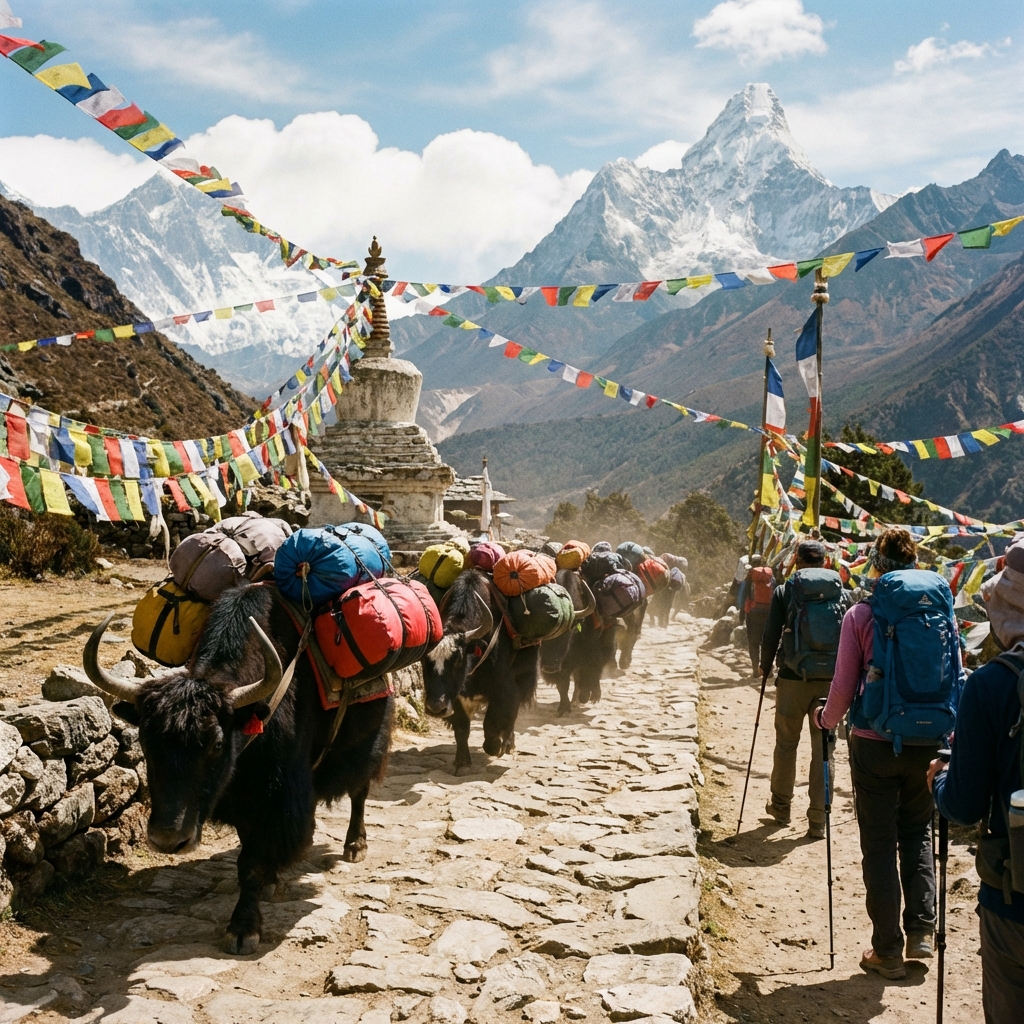
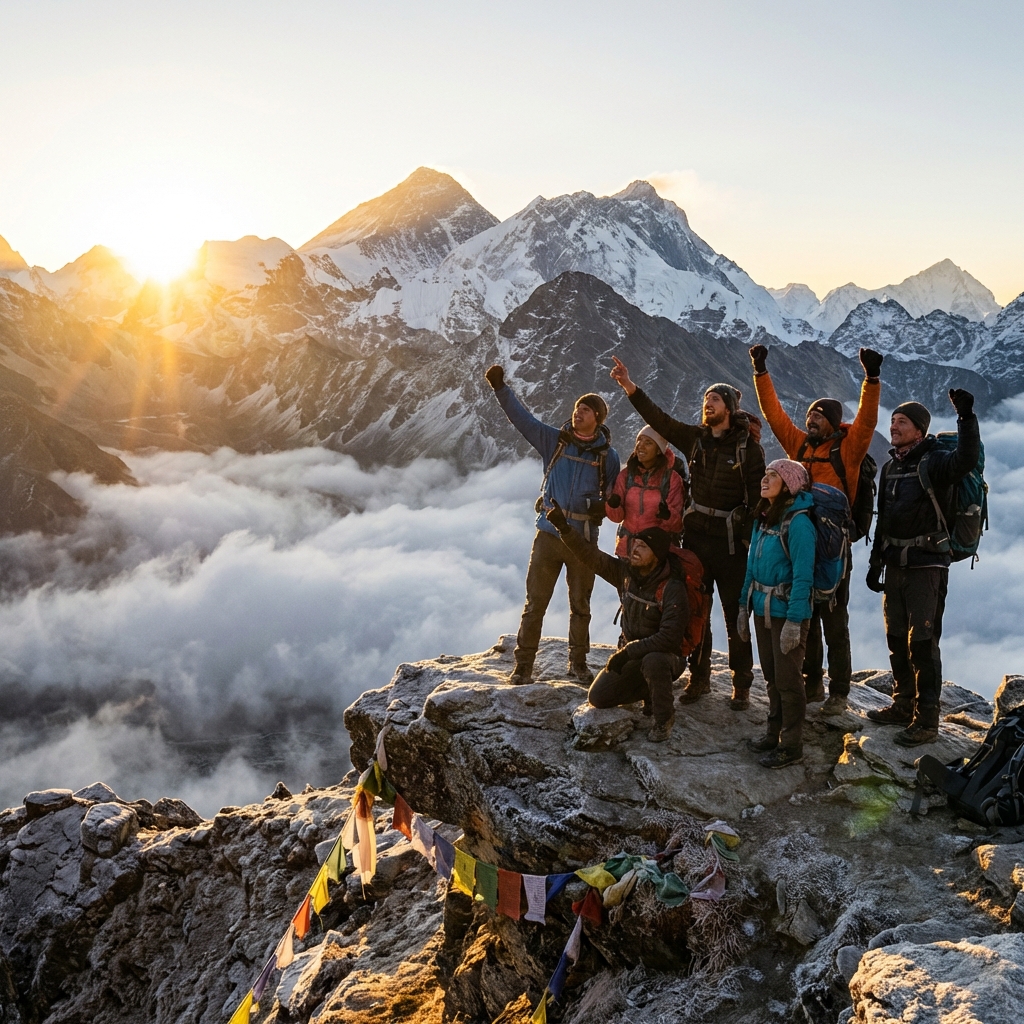
The location is extraordinary. From the summit, you stand in a private gallery between two of the Himalaya's most iconic faces: the colossal south wall of Nuptse to the north and the perfect ice pyramid of Ama Dablam to the south. Pumori, Changtse, and the upper ramparts of Everest complete a panorama that few summits can rival.
This comprehensive guide covers everything you need to plan, prepare for, and successfully climb Lobuche East -- from technical requirements and equipment lists to day-by-day itineraries, cost breakdowns, permit logistics, and an honest comparison with Island Peak.
6,119m (20,075 ft)
PD+ (Alpine Grading System)
14-16 days combined with EBC
8-12 hours round trip
$350 USD (autumn season)
$2,500-$4,000 with agency
October-November, April-May
60-70% depending on conditions
5,600m (18,373 ft)
High-altitude trekking, basic crampon and rope skills
Why Climb Lobuche East?
A More Technical and Rewarding Summit Than Island Peak
If Island Peak is the introduction to Himalayan mountaineering, Lobuche East is the next chapter. The climb demands more varied skills -- you will navigate mixed rock and ice terrain, ascend a sustained headwall on fixed ropes, and traverse an exposed summit ridge that requires genuine mountaineering judgment. This is not a criticism of Island Peak, which remains an excellent objective. It is simply an acknowledgment that Lobuche East offers a deeper, more complete climbing experience.
The NMA classifies both peaks as "trekking peaks," but climbers who have attempted both consistently describe Lobuche East as more engaging. The summit ridge alone -- a narrow snow crest with steep drops on both sides -- provides the kind of exposure that makes your pulse quicken and your focus sharpen in a way that Island Peak's more straightforward summit approach does not.
The Perfect EBC Trek Extension
Lobuche East's greatest logistical advantage is its location. The peak rises directly above Lobuche village (4,940m), a standard overnight stop on the Everest Base Camp trek. This means you can combine a full EBC trek with a summit attempt without any significant detour. You trek to EBC, visit Kala Patthar, then climb Lobuche East on the way back down -- or, alternatively, climb first while you are still fresh, then continue to base camp.
No other 6,000-meter trekking peak in the Khumbu can be reached this easily from the main EBC trail. Island Peak requires a detour to Chukhung village and an additional 2-3 days. Mera Peak requires a separate approach through the remote Hinku Valley. Lobuche East sits right there, visible from the trail, waiting.
The Summit Panorama
The view from Lobuche East's summit is exceptional even by Khumbu standards. You are positioned at a unique vantage point in the valley:
- Nuptse (7,861m) -- the massive south face fills the northern horizon, closer than from almost any other accessible viewpoint
- Ama Dablam (6,812m) -- the iconic ice pyramid stands in perfect profile to the south
- Pumori (7,161m) -- directly to the northwest, framing the route to Everest Base Camp
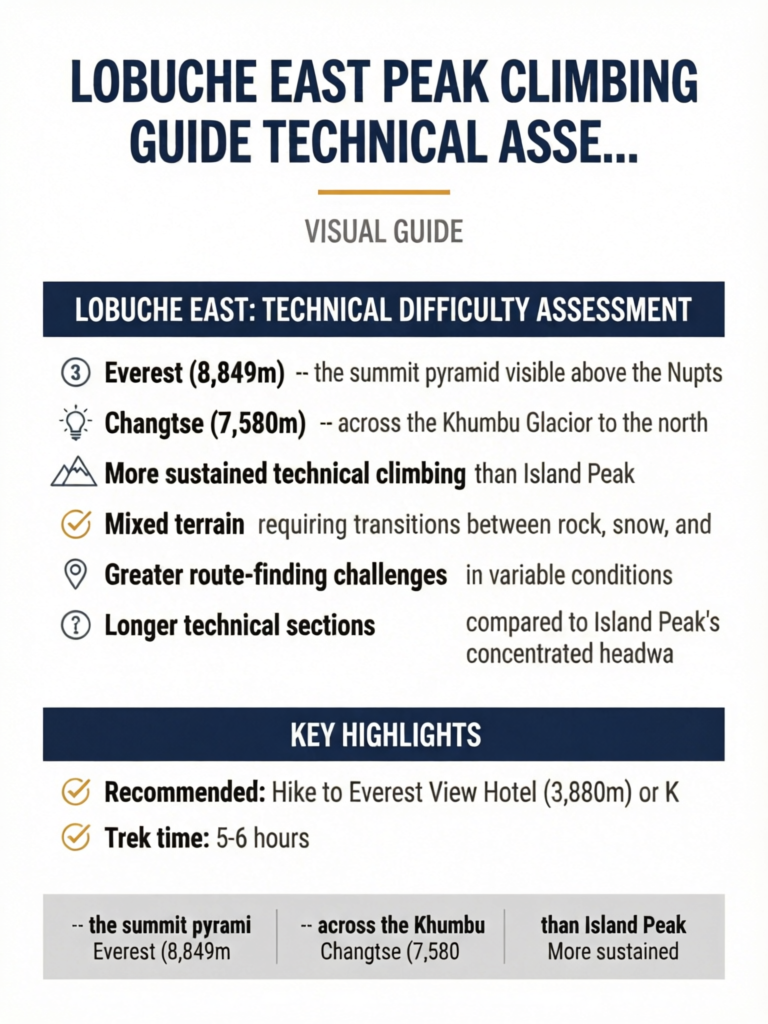
- Everest (8,849m) -- the summit pyramid visible above the Nuptse-Lhotse ridge
- Changtse (7,580m) -- across the Khumbu Glacier to the north
- Cholatse (6,440m) and Taboche (6,542m) -- the dramatic twin peaks to the west
Pro Tip
Many climbers consider the views from Lobuche East superior to those from Kala Patthar because you are higher (6,119m vs 5,545m) and positioned further into the valley, giving you a more dramatic perspective of Nuptse's south face and a clearer view of Ama Dablam. If you can only pick one high viewpoint in the Khumbu beyond EBC itself, Lobuche East delivers more than Kala Patthar -- and you get a real summit to show for it.
Less Crowded Than Island Peak
Lobuche East sees a fraction of Island Peak's traffic. While Island Peak attracts over 1,000 summit attempts per season, Lobuche East typically sees 200-300. This translates to shorter waits at fixed rope sections, a more intimate climbing experience, and a greater sense of accomplishment. The trade-off is fewer pre-fixed ropes and less established infrastructure on the mountain, which is precisely what makes it more interesting for those seeking a genuine mountaineering experience.
Lobuche East: Technical Difficulty Assessment
Alpine Grade: PD+ (Peu Difficile Superieur)
Lobuche East is graded PD+ on the International French Adjectival System (IFAS), placing it one notch above Island Peak's PD rating. In practical terms, this means:
- More sustained technical climbing than Island Peak
- Mixed terrain requiring transitions between rock, snow, and ice
- Greater route-finding challenges in variable conditions
- Exposed summit ridge requiring confidence with significant drop-offs on both sides
- Longer technical sections compared to Island Peak's concentrated headwall
Route Description: The Standard Southeast Ridge
The standard route ascends the southeast ridge from a high camp established at approximately 5,600 meters on the glacier above Lobuche village.
Section 1: Glacier Approach (5,600m to 5,700m) The route begins with a straightforward glacier crossing from high camp. The glacier is typically well-tracked in season, but crevasse awareness remains essential. Rope teams move together across relatively flat terrain before reaching the base of the climbing route proper.
Section 2: The Headwall (5,700m to 5,900m) This is the crux of the climb. A sustained section of 40-55 degree mixed rock, snow, and ice leads upward for approximately 200 vertical meters. Fixed ropes are typically in place during the climbing season, and climbers ascend using jumar (mechanical ascender) technique. The headwall is more sustained than Island Peak's equivalent section and involves more varied terrain -- you may be ascending ice one moment and scrambling over rock bands the next.
Section 3: The Summit Ridge (5,900m to 6,119m) After topping out on the headwall, the route follows a narrow snow ridge to the true summit. This is the most exposed section of the climb, with steep drops on both sides. The ridge is not technically difficult in good conditions -- it is essentially walking on crampons along a narrow path -- but the exposure and altitude combine to make it psychologically demanding. In poor visibility or high winds, this section becomes genuinely dangerous.
Rockfall Risk on the Headwall
The headwall section of Lobuche East is prone to rockfall, particularly in the afternoon as temperatures rise and ice holding loose rock in place begins to melt. Early starts (typically 2:00-3:00 AM from high camp) are essential not only for weather windows but also for reducing rockfall exposure. Always wear a helmet on the headwall and maintain awareness of climbers above you.
Comparison of Technical Sections
| Feature | Lobuche East | Island Peak |
|---|---|---|
| Alpine Grade | PD+ | PD+ |
| Headwall Angle | 40-55 degrees, sustained | 45-60 degrees, shorter |
| Headwall Length | ~200 vertical meters | ~150 vertical meters |
| Summit Ridge | Narrow, exposed, 200m+ | Broad, less exposed |
| Mixed Terrain | Rock/ice/snow transitions | Primarily snow and ice |
| Route Finding | Moderate in poor visibility | Straightforward |
| Rockfall Risk | Moderate-High | Low |
| Crevasse Risk | Low-Moderate | Moderate (glacier approach) |
Technical Requirements: Skills You Need
Lobuche East demands a broader skill set than Island Peak. While both require fundamental mountaineering skills, Lobuche East's mixed terrain and exposed summit ridge add dimensions that Island Peak does not test.
Essential Technical Skills
Crampon Technique (Intermediate Level): You will spend 6-10 hours in crampons on summit day, transitioning between different types of terrain. This requires confidence with:
- French technique (flat-footing) on moderate snow slopes
- Front-pointing on steeper ice sections
- Mixed technique on rock-ice transitions
- Walking confidently on the narrow summit ridge with exposure
Mechanical Ascender (Jumar) Proficiency: The headwall section relies on fixed ropes. You must be able to:
- Clip in and out of fixed rope anchors efficiently
- Ascend steep terrain using a jumar and safety sling
- Manage your jumar system while wearing thick gloves at altitude
- Pass other climbers on the fixed rope safely
Basic Ice Climbing: While you will not encounter vertical ice on the standard route, several sections of the headwall present steep ice up to 55 degrees. Familiarity with ice axe placement and crampon front-pointing on ice is important.
Rope Team Travel: The glacier approach requires moving as a roped team. You must understand:
- Proper rope spacing and tension management
- Self-arrest technique with an ice axe
- Basic crevasse rescue concepts (your guide will manage complex rescue scenarios, but you should understand the principles)
Exposure Management: The summit ridge is the psychological crux of the climb. If you freeze when faced with significant exposure (steep drops on both sides of a narrow ridge), this section will be extremely challenging. Prior experience on exposed terrain -- even on non-technical mountain ridges or via ferrata routes -- is highly valuable.
Pro Tip
If you have not climbed on mixed terrain before, consider booking a pre-trek mountaineering skills course in Kathmandu or hiring a guide who includes a training day at high camp. Many operators running Lobuche East expeditions include a half-day training session on the glacier near high camp, covering crampon technique, fixed rope procedures, and rope team travel. This is far more valuable than reading about these skills -- the muscle memory you develop in training could be critical on summit day.
Fitness Requirements
Lobuche East's physical demands are comparable to Island Peak but with one key difference: the summit day involves more sustained technical effort, which is more fatiguing than straightforward walking at altitude.
Cardiovascular Endurance:
- Ability to hike 7-9 hours daily with a 10-12kg daypack
- Comfortable maintaining moderate effort at heart rate zones 2-3 for extended periods
- Previous experience exercising at altitude (above 4,500m)
Leg Strength:
- Strong quadriceps and calves for sustained crampon climbing
- Good downhill strength for the descent (knees take significant punishment)
- Step-up and lunge capacity with added weight
Upper Body and Grip Strength:
- Jumar ascending requires sustained arm effort
- Ice axe use demands functional upper body fitness
- Grip strength matters when managing equipment with cold, gloved hands
Core Stability:
- Balance on crampons and narrow ridge sections depends on core strength
- Wearing a pack while climbing technically requires good trunk stability
Recommended Training Timeline
Begin dedicated training 12-16 weeks before your expedition:
| Weeks Out | Focus | Activities |
|---|---|---|
| 16-12 | Base fitness | Running, cycling, swimming -- build cardiovascular base |
| 12-8 | Endurance building | Long hikes (4-6 hours) with weighted pack, stair climbing |
| 8-4 | Specific training | Back-to-back long days, altitude simulation (if available), scrambling |
| 4-2 | Peak fitness | Reduce volume, maintain intensity, rest days between hard sessions |
| 2-0 | Taper | Light activity only, focus on rest and nutrition |
Day-by-Day Itinerary: Lobuche East Combined with EBC Trek (16 Days)
This itinerary combines the classic Everest Base Camp trek with a Lobuche East summit attempt, following the most popular approach. You trek to EBC and Kala Patthar first, then attempt Lobuche East on the descent. This approach maximizes acclimatization before the climb.
Day 0: Arrive in Kathmandu (1,400m)
- Arrive at Tribhuvan International Airport
- Transfer to Thamel hotel
- Equipment check with agency, gear fitting, expedition briefing
- Obtain any remaining permits (your agency typically handles this in advance)
- Early rest -- the journey begins tomorrow
Day 1: Fly Kathmandu to Lukla (2,860m), Trek to Phakding (2,610m)
- Flight time: 30 minutes (weather dependent)
- Trek distance: 8km
- Trek time: 3-4 hours
- Elevation change: Descend 250m
The dramatic flight to Lukla's Tenzing-Hillary Airport is your introduction to the Khumbu. The short trek to Phakding follows the Dudh Kosi river through rhododendron and pine forests, crossing several suspension bridges. An easy first day to settle into the rhythm of trekking.
Day 2: Phakding to Namche Bazaar (3,440m)
- Trek distance: 11km
- Trek time: 5-7 hours
- Elevation change: Ascend 830m
A demanding day with significant elevation gain. The trail crosses multiple suspension bridges over the Dudh Kosi before the steep, switchbacking ascent to Namche Bazaar. On clear days, you get your first glimpse of Everest from the trail above Jorsalle. Namche is the largest settlement in the Khumbu -- a bustling trading town carved into a hillside amphitheater.
Day 3: Acclimatization Day in Namche Bazaar (3,440m)
- Acclimatization hike: 3-5 hours
- Recommended: Hike to Everest View Hotel (3,880m) or Khumjung village
This rest day is essential for altitude adaptation. The climb-high-sleep-low principle means you should do an acclimatization hike to a higher elevation, then return to Namche to sleep. The hike to the Everest View Hotel provides stunning panoramic views of Everest, Lhotse, and Ama Dablam.
Acclimatization Is Not Optional
Skipping or shortening acclimatization days is the single most common mistake that leads to failed summit attempts. Your body needs 36-48 hours at Namche's altitude to begin adapting. The investment of one "lost" day here dramatically increases your chances of reaching both EBC and the summit of Lobuche East. For more details on altitude adaptation, see our acclimatization guide.
Day 4: Namche Bazaar to Tengboche (3,867m)
- Trek distance: 10km
- Trek time: 5-6 hours
- Elevation change: Ascend 427m
The trail contours high above the Dudh Kosi valley with spectacular views before descending to Phunki Tenga and climbing steeply to Tengboche. The monastery at Tengboche is the spiritual heart of the Khumbu, and the views of Ama Dablam from the monastery grounds are iconic. Afternoon mist often rolls in, so arrive early for the best views.
Day 5: Tengboche to Dingboche (4,410m)
- Trek distance: 12km
- Trek time: 5-6 hours
- Elevation change: Ascend 543m
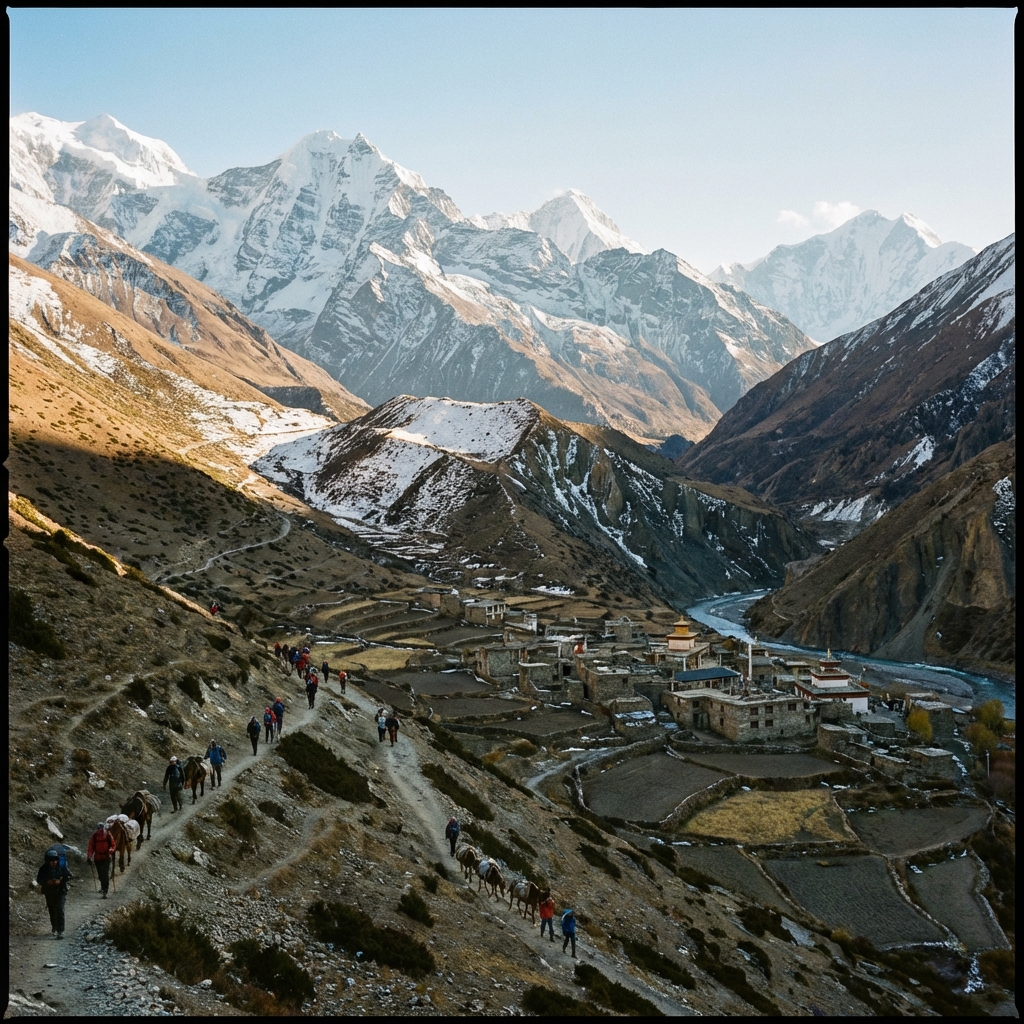
The trail descends through forest to Pangboche, the oldest Sherpa settlement in the Khumbu, then climbs through gradually thinning vegetation to Dingboche. The landscape transforms from forested hillsides to wide, open valleys flanked by enormous peaks. You are now firmly in high-altitude terrain.
Day 6: Acclimatization Day in Dingboche (4,410m)
- Acclimatization hike: 4-5 hours
- Recommended: Hike to Nangkartshang Peak (5,083m) for panoramic views
Another critical acclimatization day. The hike to Nangkartshang Peak is strenuous but rewards you with 360-degree views of the Khumbu, including Lobuche East -- you can study your climbing route from here. Pay attention to how you feel at 5,000m+ -- this is valuable data for predicting your performance higher.
Day 7: Dingboche to Lobuche (4,940m)
- Trek distance: 10km
- Trek time: 4-5 hours
- Elevation change: Ascend 530m
The trail climbs gradually past the Thukla memorial cairns -- a sobering collection of monuments to climbers who lost their lives in the Khumbu, including many who perished on Everest. From Thukla Pass, the path traverses the lateral moraine of the Khumbu Glacier to reach Lobuche village. Look up -- Lobuche East is directly above you.
Day 8: Lobuche to Gorak Shep (5,164m), Visit Everest Base Camp (5,364m)
- Trek distance: 12km total
- Trek time: 6-8 hours
- Elevation change: Ascend 424m (to base camp)
A big day. Trek across the Khumbu Glacier moraine to Gorak Shep, drop your bags, and continue to Everest Base Camp. The trail to EBC crosses the rocky, undulating glacier surface -- challenging terrain but deeply rewarding when you reach the base of the Khumbu Icefall. Return to Gorak Shep for the night.
Day 9: Kala Patthar (5,545m) Sunrise, Descend to Lobuche (4,940m)
- Early start: 4:00-4:30 AM
- Kala Patthar round trip: 3-4 hours
- Descent to Lobuche: 3-4 hours
Pre-dawn hike to Kala Patthar for the classic Everest sunrise panorama. This is the highest point most EBC trekkers reach and provides the best close-up views of Everest's summit pyramid. After descending, continue back to Lobuche where you will prepare for the climbing phase of your expedition.
Day 10: Rest and Preparation Day at Lobuche (4,940m)
- Equipment check, climbing gear preparation
- Briefing from climbing guide on route, techniques, and safety procedures
- Optional: Skills refresher on nearby glacier (crampon practice, rope work)
- Early rest for tomorrow's ascent to high camp
This day serves double duty as recovery from the EBC push and preparation for the climb. Your guide will review the route plan, weather forecast, and safety protocols.
Day 11: Lobuche to High Camp (5,600m)
- Trek time: 4-5 hours
- Elevation change: Ascend 660m
Ascend from Lobuche village to the high camp on the glacier at approximately 5,600 meters. The route follows a rocky trail up the moraine before reaching the snow-covered glacier where tents are pitched. Afternoon is spent resting, hydrating, and preparing gear for the summit attempt. Climbing guide provides a final briefing on the route, turnaround times, and safety procedures.
High Camp Conditions
High camp on Lobuche East is a tent camp on the glacier. Expect temperatures dropping to minus 15-25 degrees Celsius overnight. Wind can be severe. Ensure your sleeping bag is rated to at least minus 20 degrees Celsius and that you have a reliable insulated sleeping mat. Melt snow for water (or carry sufficient supply from Lobuche) and eat a substantial dinner -- you will need the calories for summit day.
Day 12: Summit Day -- High Camp to Summit (6,119m) and Back to Lobuche (4,940m)
- Start time: 2:00-3:00 AM
- Summit time: 6:00-9:00 AM (typical)
- Round trip: 8-12 hours (summit + descent to Lobuche)
The alarm sounds in the deep cold of the pre-dawn hours. You dress in full climbing gear, clip into your harness, and begin the ascent by headlamp. The first section crosses the glacier to the base of the headwall. Here, you clip into the fixed ropes and begin the sustained technical climb -- 200 vertical meters of mixed rock, ice, and snow at 40-55 degree angles. This is physically demanding work at nearly 6,000 meters, requiring focused use of jumar technique and careful foot placement.
Topping out on the headwall, the angle eases and the summit ridge stretches ahead. This narrow snow crest, with dramatic exposure on both sides, leads to the true summit. The final steps are deeply satisfying -- you have earned this view through genuine mountaineering effort.
After summit photos and a brief rest (do not linger -- weather can change rapidly), descend the same route. Fixed ropes aid the descent of the headwall, but down-climbing technical terrain is often more challenging than ascending. Return to high camp, break camp, and descend to Lobuche village.
Pro Tip
The turnaround time on Lobuche East is typically 9:00-10:00 AM. If you have not reached the summit by this time, your guide will likely call a turnaround regardless of how close you are. This is not arbitrary -- afternoon weather deterioration in the Khumbu is predictable and dangerous. Rockfall risk also increases significantly as the sun warms the headwall. Respect the turnaround time. The mountain will be there next season.
Day 13: Lobuche to Tengboche (3,867m)
- Trek distance: 20km
- Trek time: 6-7 hours
- Elevation change: Descend 1,073m
A long descent day, but the thicker air at lower altitude feels invigorating after days above 5,000 meters. The trail retraces your approach through Dingboche and past Pangboche to Tengboche. Your body will thank you for the oxygen-rich air.
Day 14: Tengboche to Namche Bazaar (3,440m)
- Trek distance: 10km
- Trek time: 4-5 hours
- Elevation change: Descend 427m
A relatively relaxed day of descent. Time for last visits to Namche's shops, cafes, and bakeries. Final evening in the Khumbu -- celebrate your achievements.
Day 15: Namche Bazaar to Lukla (2,860m)
- Trek distance: 19km
- Trek time: 6-7 hours
- Elevation change: Mixed, net descent 580m
The long descent back to Lukla. This is a tiring day with significant distance, but the downhill trend and lower altitude make it manageable. Final night in Lukla.
Day 16: Fly Lukla to Kathmandu (1,400m)
- Flight time: 30 minutes (weather dependent)
The return flight to Kathmandu. Weather delays are common -- always keep a buffer day in your travel schedule.
Buffer Days Are Essential
Lukla flights are notoriously weather-dependent. Cancellations are common, especially in spring when afternoon clouds build rapidly. Always plan at least one buffer day in Kathmandu before your international departure. If you are on a tight schedule, consider a helicopter return (approximately $350-500 per person in a shared flight) as backup. See our Lukla flights guide for details.
Alternative Itinerary: Climb First, Then EBC (14-16 Days)
Some climbers prefer to attempt Lobuche East before continuing to EBC, arguing that fresh legs improve summit chances. This approach works well but sacrifices the additional acclimatization that the EBC push provides.
Itinerary modification:
- Days 1-7: Same approach to Lobuche
- Days 8-9: High camp and summit attempt (before visiting EBC)
- Days 10-11: Rest day, then continue to Gorak Shep and EBC
- Day 12: Kala Patthar and descent
- Days 13-16: Return to Lukla and Kathmandu
Advantages: Fresh legs for the climb, EBC visit is a reward after the hard work Disadvantages: Less acclimatization time before the summit attempt, slightly higher AMS risk
Equipment List for Lobuche East
Climbing-Specific Gear
| Item | Notes |
|---|---|
| Mountaineering boots | B2 or B3 rated, crampon-compatible, broken in |
| Crampons | Step-in or semi-automatic, fitted to your boots |
| Ice axe | 50-60cm, standard mountaineering axe |
| Climbing harness | Lightweight, with gear loops |
| Mechanical ascender (jumar) | Right-hand model most common |
| Figure-8 or ATC belay device | For descent/rappel |
| Locking carabiners | Minimum 3 (harness, jumar, belay device) |
| 120cm sewn sling | For safety connection to fixed ropes |
| Climbing helmet | Essential for rockfall protection on headwall |
| Trekking poles | Collapsible, for approach trek |
Clothing
| Item | Notes |
|---|---|
| Base layer top and bottom | Merino wool or synthetic, moisture-wicking |
| Mid layer fleece or softshell | Insulating layer for climbing |
| Down jacket | 700+ fill, for high camp and summit ridge |
| Hardshell jacket | Waterproof, windproof, breathable (Gore-Tex or equivalent) |
| Hardshell pants | Waterproof, full side-zip ideal for putting on over boots |
| Insulated pants | For high camp evenings and cold summit mornings |
| Gloves (3 pairs) | Liner gloves, insulated climbing gloves, expedition mittens |
| Balaclava or buff | Wind protection for face and neck |
| Warm hat | Wool or fleece, fits under helmet |
| Sun hat | For trekking approach |
| Glacier sunglasses | Category 4, with side shields |
| Gaiters | Full-length, for snow and scree |
Camping and Personal Gear
| Item | Notes |
|---|---|
| Sleeping bag | Rated to minus 20 degrees Celsius minimum |
| Sleeping mat | Insulated, R-value 5+ for glacier camping |
| Headlamp | With spare batteries (cold drains batteries fast) |
| Water bottles (2x 1L) | Nalgene or insulated -- prevent freezing |
| Sunscreen | SPF 50+, glacier-grade |
| Trekking backpack | 50-65L for the approach trek |
| Summit pack | 25-35L for summit day |
Pro Tip
Rent or buy climbing-specific gear (crampons, ice axe, jumar, harness) in Kathmandu's Thamel district if you do not already own them. Quality rental gear is widely available at a fraction of the purchase price, and many agencies include gear rental in their packages. See our gear rental guide for recommended shops and current prices.
Cost Breakdown: How Much Does Lobuche East Cost?
Full Cost Range: $2,500 - $4,000 USD
The total cost of climbing Lobuche East varies significantly based on whether you join a group expedition, hire a private guide, and how you manage the EBC trek component.
Detailed Cost Breakdown
| Expense | Budget | Mid-Range | Premium |
|---|---|---|---|
| NMA Climbing Permit | $350 | $350 | $350 |
| Sagarmatha National Park Entry | $30 | $30 | $30 |
| TIMS Card | $20 | $20 | $20 |
| Climbing Guide | $500 (shared) | $800 (shared 1:2) | $1,200 (private 1:1) |
| Kathmandu-Lukla Flights | $215 | $380 | $380 |
| Tea House Accommodation | $200 | $300 | $400 |
| Food and Drinks on Trek | $350 | $500 | $700 |
| High Camp Equipment | $150 (rental) | $200 | included |
| Climbing Gear Rental | $100 | $150 | included |
| Porter/Sherpa Support | $200 | $300 | $500 |
| Tips and Gratuities | $100 | $200 | $300 |
| Travel Insurance | $100 | $150 | $200 |
| Contingency | $100 | $150 | $200 |
| Total | $2,550 | $3,530 | $4,280 |
Agency Package Costs
Most climbers book through an agency, which simplifies logistics considerably:
- Group expedition (4-8 climbers): $2,500-$3,000 per person
- Small group (2-3 climbers): $3,000-$3,500 per person
- Private expedition: $3,500-$4,500 per person
What a typical agency package includes:
- All permits and entry fees
- Experienced climbing guide (typically 1:2 or 1:3 ratio)
- Kathmandu-Lukla flights
- Tea house accommodation during the trek
- High camp tent, food, and equipment
- Climbing gear rental (if needed)
- Porter support for gear transport
What is typically NOT included:
- International flights to Kathmandu
- Kathmandu accommodation
- Personal climbing gear
- Travel insurance
- Tips and gratuities
- Personal expenses (snacks, charging, hot showers)
Cost Comparison with Island Peak
Lobuche East costs are comparable to Island Peak -- the NMA permit fee is identical ($215), approach logistics are similar (same Lukla flights, same trail), and guide fees are in the same range. The primary cost difference is that Lobuche East requires tent camping at high camp (whereas some Island Peak operators use a basic lodge at Chukhung), which may add $100-200 for camping equipment. Overall, expect to pay $200-400 more than an equivalent Island Peak trip.
Permit Requirements
Nepal Mountaineering Association (NMA) Climbing Permit
Lobuche East is classified as an NMA trekking peak. The permit must be obtained through a registered trekking agency in Nepal -- individual climbers cannot apply directly.
Permit fees (2026 season):
| Season | Solo Climber | Group (per person) |
|---|---|---|
| Spring (Mar-May) | $350 | $350 |
| Autumn (Sep-Nov) | $350 | $350 |
| Summer (Jun-Aug) | $250 | $250 |
| Winter (Dec-Feb) | $180 | $180 |
Additional permit requirements:
- Valid passport with Nepal visa
- Proof of travel insurance covering high-altitude rescue up to 6,500m
- Sagarmatha (Everest) National Park entry permit ($30 USD)
- TIMS card (Trekkers' Information Management System, $20 USD)
Mandatory Guide Requirement
All NMA trekking peak climbs require a licensed climbing guide arranged through a registered Nepali trekking agency. Solo climbing with a mandatory licensed guide is not permitted. Your agency will provide the guide as part of your expedition package.
Success Rates and What Affects Them
Overall Success Rate: 60-70%
Lobuche East's success rate is lower than both Mera Peak (75-85%) and Island Peak (60-75%), reflecting its more technical nature and greater weather sensitivity.
Factors That Influence Success
Weather (the dominant factor): High winds, snowfall, and poor visibility can make the summit ridge too dangerous to attempt. Unlike Island Peak, where the route is more sheltered, Lobuche East's exposed ridge is highly weather-dependent. Multiple summit days may be needed.
Acclimatization: Proper acclimatization following the recommended schedule is essential. Climbers who rush the approach or skip acclimatization days have significantly lower summit success rates.
Technical ability: The headwall and summit ridge demand real climbing skills. Climbers who arrive without prior crampon and rope experience may find these sections too challenging to complete safely.
Physical fitness: Summit day involves 8-12 hours of sustained effort at extreme altitude. Inadequate fitness is a primary cause of turnarounds.
Guide quality and ratio: Experienced guides who know the route intimately and maintain safe guide-to-client ratios (1:2 or better) achieve significantly higher success rates than budget operators running 1:4 or 1:5 ratios.
Best Seasons for Climbing Lobuche East
Primary Season: October-November (Autumn)
The autumn window is the premier climbing season for Lobuche East:
- Stable weather patterns with extended high-pressure windows
- Clear skies for summit views (the primary reward of the climb)
- Cold but manageable temperatures at high camp
- Good snow conditions on the headwall and summit ridge
- Peak season for the EBC trek, meaning better-maintained trails and tea house availability
Typical summit window: Mid-October through late November, with the best conditions usually in the last two weeks of October and first two weeks of November.
Secondary Season: April-May (Spring)
Spring offers a viable alternative with some differences:
- Warmer temperatures at high camp (minus 10-15 degrees Celsius vs minus 15-25 degrees Celsius in autumn)
- Higher snowfall probability, which can improve or worsen conditions depending on timing
- Afternoon cloud buildup is more common, making early starts even more critical
- Rhododendron blooms on the approach trek (below 4,000m)
- Pre-monsoon moisture can create heavier snowpack on the route
Typical summit window: Late April through the third week of May. The window closes as the monsoon approaches in early June.
Seasons to Avoid
Winter (December-February): Extreme cold (minus 30 degrees Celsius+ at high camp), high winds, and very short weather windows make winter ascents extremely challenging. Only experienced mountaineers should consider winter attempts.
Monsoon (June-September): Heavy precipitation, avalanche risk, obscured views, and dangerous trail conditions. The mountain is effectively closed during monsoon.
Lobuche East vs Island Peak: Detailed Comparison
This is the comparison most climbers want. Both peaks are in the Khumbu, both are accessible from the EBC trail, and both are classified as NMA trekking peaks. Here is how they actually differ.
| Factor | Lobuche East (6,119m) | Island Peak (6,189m) |
|---|---|---|
| Elevation | 6,119m | 6,189m (70m higher) |
| Alpine Grade | PD+ | PD+ |
| Technical Character | More varied (rock/ice/snow mix) | More concentrated (ice headwall) |
| Summit Ridge | Narrow, exposed, psychologically demanding | Broader, less exposed |
| Approach from EBC Trail | Direct -- above Lobuche village | Detour via Chukhung (+2-3 days) |
| Crowding | Low-moderate (200-300/season) | High (1,000+/season) |
| Success Rate | 60-70% | 60-75% |
| Cost | $2,500-$4,000 | $2,500-$4,500 |
| Training Required | More mixed terrain skills | More ice climbing focus |
| Rockfall Risk | Moderate-High | Low |
| EBC Combination | Seamless (on the route) | Requires detour |
| Views from Summit | Nuptse south face, Ama Dablam | Lhotse south face, Makalu |
| Best For | Climbers wanting more technical challenge | First-time 6,000m climbers |
Which Should You Choose?
Choose Lobuche East if:
- You want a more technical, varied climbing experience
- You prefer fewer crowds on the mountain
- You want to combine seamlessly with the standard EBC trek
- You have some prior climbing or scrambling experience
- The exposed summit ridge excites rather than terrifies you
Choose Island Peak if:
- This is your first 6,000-meter peak
- You want the most established infrastructure and highest guide-to-client ratios
- You prefer a route with lower rockfall risk
- You want to visit Chukhung valley (an excellent destination in its own right)
- You want the slightly higher summit altitude on your climbing resume
Pro Tip
The ultimate Khumbu climbing itinerary combines both peaks. Climb Lobuche East on the way to EBC, visit base camp and Kala Patthar, then detour to Chukhung to climb Island Peak on the way down. This "double summit" itinerary takes 20-22 days and provides an extraordinary range of climbing experience. Several agencies offer this as a package deal.
How Lobuche East Compares to Mera Peak
For climbers choosing between Lobuche East and Mera Peak, the comparison reveals fundamentally different experiences:
| Factor | Lobuche East (6,119m) | Mera Peak (6,476m) |
|---|---|---|
| Elevation | 6,119m | 6,476m (357m higher) |
| Technical Difficulty | PD+ (more technical) | PD (less technical) |
| Character | Technical mixed climbing | High-altitude snow walk |
| Approach | On EBC trail | Remote Hinku Valley |
| Duration | 14-16 days | 18-20 days |
| Crowds | Low-moderate | Low |
| Summit Views | Khumbu close-ups | Five 8,000m peaks panorama |
| Best For | Technical climbing development | Altitude experience, summit views |
Choose Lobuche East for technical climbing skills and EBC combination. Choose Mera Peak for the highest trekking peak title and the most spectacular summit panorama in Nepal.
Risks and Safety Considerations
Primary Risks on Lobuche East
Rockfall on the Headwall: This is the most significant objective hazard on the route. Loose rock embedded in ice on the headwall can release as temperatures warm. Mitigation: early starts, helmet use, and awareness of climbers above.
Weather Exposure on the Summit Ridge: The narrow, exposed ridge offers no shelter from wind or precipitation. Sudden weather changes can make descent dangerous. Mitigation: conservative turnaround times, constant weather monitoring, willingness to retreat.
Acute Mountain Sickness (AMS): The high camp at 5,600m and summit at 6,119m put climbers at significant altitude risk. Mitigation: proper acclimatization schedule, awareness of AMS symptoms, carrying emergency medication (Diamox, dexamethasone).
Falls on Technical Terrain: The headwall and summit ridge present genuine fall hazards. Mitigation: proper rope management, experienced guide, attention to anchors and fixed rope condition.
Hypothermia and Frostbite: High camp temperatures can drop below minus 25 degrees Celsius. Combined with wind chill on the summit ridge, cold injuries are a real risk. Mitigation: appropriate clothing and sleeping gear, monitoring extremities, turning back if numbness develops.
Emergency Evacuation
Helicopter evacuation from Lobuche East's high camp or summit ridge is possible but extremely difficult and weather-dependent. Evacuation from Lobuche village or Gorak Shep is more reliable. Ensure your travel insurance covers helicopter rescue up to 6,500 meters. Carry a satellite communicator or ensure your guide has one. Emergency contacts and evacuation procedures should be discussed with your agency before departure.
Combining Lobuche East with Other Objectives
Lobuche East + EBC (Standard Combination)
The most popular option, as described in the day-by-day itinerary above. 14-16 days total. This is what most climbers choose.
Lobuche East + Island Peak (Double Summit)
An ambitious 20-22 day expedition that combines both Khumbu trekking peaks with the full EBC experience. After climbing Lobuche East and visiting EBC, you continue to Chukhung to climb Island Peak. This provides an extraordinary range of climbing experience and two 6,000-meter summits.
Lobuche East + Gokyo Lakes via Cho La
For experienced trekkers, combining Lobuche East with a traverse to Gokyo Lakes via Cho La Pass creates one of the most comprehensive Khumbu itineraries possible. Allow 20-24 days.
Lobuche East as Part of Three Passes Trek
The ultimate Khumbu experience: Everest Three Passes trek (Kongma La, Cho La, Renjo La) combined with a Lobuche East summit. This requires 22-26 days and a high level of fitness and experience.
Frequently Asked Questions
Is Lobuche East harder than Island Peak?
Yes, most climbers and guides consider Lobuche East more technically demanding than Island Peak. While both are graded PD+, Lobuche East presents more varied terrain (mixed rock, ice, and snow versus Island Peak's primarily snow and ice), a more sustained headwall section, and a notably more exposed summit ridge. The rockfall hazard on the headwall adds an objective danger that Island Peak largely lacks. However, both peaks are within reach of well-prepared first-time climbers with proper guidance.
Can I climb Lobuche East without prior climbing experience?
It is possible but not recommended. Unlike Mera Peak, which is essentially a high-altitude walk, Lobuche East requires genuine technical skills. At minimum, you should have high-altitude trekking experience (above 5,000m) and ideally some basic mountaineering training. Many agencies offer pre-expedition training courses in Kathmandu or at high camp, which can provide sufficient skills for the climb. If you have zero climbing experience, consider Island Peak or Mera Peak first, then return for Lobuche East with a foundation of skills and altitude experience.
How long does summit day take?
Plan for 8-12 hours total from high camp (5,600m) to summit (6,119m) and back down to Lobuche village (4,940m). The ascent typically takes 5-7 hours and the descent 3-5 hours. Most teams start at 2:00-3:00 AM and return to Lobuche by early afternoon.
What is the best month for Lobuche East?
Late October and early November offer the most reliable conditions -- stable weather, clear skies, and good snow on the route. Late April and early May provide the best spring window. Avoid December through February (extreme cold and wind) and June through September (monsoon conditions).
Do I need my own climbing gear?
No. Quality climbing gear (crampons, ice axe, harness, jumar, helmet) can be rented in Kathmandu or through your agency. Rental costs typically range from $80-$150 for the full set. You should bring your own mountaineering boots, as fit is critical and rental boots may not match your feet.
What happens if I cannot summit?
Weather, illness, or insufficient acclimatization can prevent a summit attempt. Most agencies build one or two contingency days into the itinerary for weather delays. If you cannot summit, you still complete the full EBC trek -- a world-class experience in its own right. Some agencies offer partial refunds for failed summit attempts; clarify this policy before booking.
Is the summit ridge really that exposed?
Yes, the summit ridge is genuinely exposed with steep drops on both sides. However, it is not technically difficult in good conditions -- it is essentially walking in crampons on a narrow snow path. The exposure is psychological more than physical. If you have experience on exposed mountain terrain (knife-edge ridges, scrambling routes with significant drop-offs) and are comfortable with heights, you will manage fine. If heights are a significant fear, discuss this honestly with your guide before the climb.
Can I climb Lobuche East in winter?
Technically yes, but winter ascents are rare and significantly more challenging. Temperatures at high camp can drop below minus 30 degrees Celsius, and high winds are frequent. The summit ridge becomes dangerously icy and windswept. Winter climbing permits are cheaper ($180 vs $350) but the mountain demands much more experience and cold-weather equipment. Only attempt a winter ascent with significant prior mountaineering experience and a very experienced guide.
How does altitude affect the climb?
At 6,119 meters, the oxygen level is approximately 47% of sea level. This means every physical action requires significantly more effort. Walking uphill in crampons, ascending fixed ropes with a jumar, and even the simple act of changing a glove become exhausting tasks. Proper acclimatization following the recommended schedule mitigates these effects but does not eliminate them. Expect to move slowly and deliberately, and be patient with yourself.
What if Lukla flights are cancelled?
Lukla flight cancellations are common, particularly in spring. Always maintain a buffer day in your schedule. If flights are cancelled for multiple days, helicopter alternatives are available (approximately $350-500 per person in a shared flight). Some operators offer a jeep route from Kathmandu to Salleri followed by a two-day trek to Lukla as a backup plan. See our Kathmandu to Lukla flights guide for detailed information.
Should I take Diamox?
Discuss with your doctor before departure. Acetazolamide (Diamox) is widely used as an AMS prophylactic and can be helpful for climbers ascending to 6,000m+. Typical prophylactic dose is 125mg twice daily, starting 24 hours before ascending above 3,500m. Common side effects include tingling in fingers and toes, increased urination, and altered taste of carbonated drinks. Some climbers prefer to carry it as emergency medication rather than taking it prophylactically. See our altitude sickness prevention guide for detailed recommendations.
Can I do Lobuche East independently (without an agency)?
No. NMA regulations require all trekking peak climbs to be arranged through a registered Nepali trekking agency with a licensed climbing guide. You cannot obtain the climbing permit independently. The guide requirement is not merely bureaucratic -- the technical terrain, rockfall hazard, and high-altitude environment of Lobuche East genuinely warrant experienced climbing leadership.
Final Thoughts: Is Lobuche East Right for You?
Lobuche East occupies a sweet spot in Nepal's peak climbing landscape. It is more technical and more rewarding than Island Peak, more accessible than Ama Dablam, and more naturally combined with the EBC trek than any other 6,000-meter peak. For climbers who want a genuine mountaineering experience -- mixed terrain, fixed ropes, an exposed summit ridge, and a view that justifies every moment of effort -- Lobuche East delivers.
The ideal Lobuche East candidate is someone who has completed a high-altitude trek (ideally EBC or similar), has basic fitness for sustained uphill effort, is comfortable learning technical skills (or has some prior climbing experience), and is motivated by the challenge of a real summit rather than simply reaching a high point. If that description fits you, Lobuche East should be at the top of your Nepal climbing list.
Start planning early, invest in proper training, choose a reputable agency with experienced guides, and respect the mountain's demands. The summit ridge of Lobuche East, with Nuptse's massive wall on one side and Ama Dablam's perfect pyramid on the other, is one of the finest places a climber can stand in the entire Himalaya.
Looking for more peak climbing options? Read our comprehensive guide to peak climbing in Nepal or compare with Island Peak and Mera Peak. For the approach trek, see our Everest Base Camp route guide.