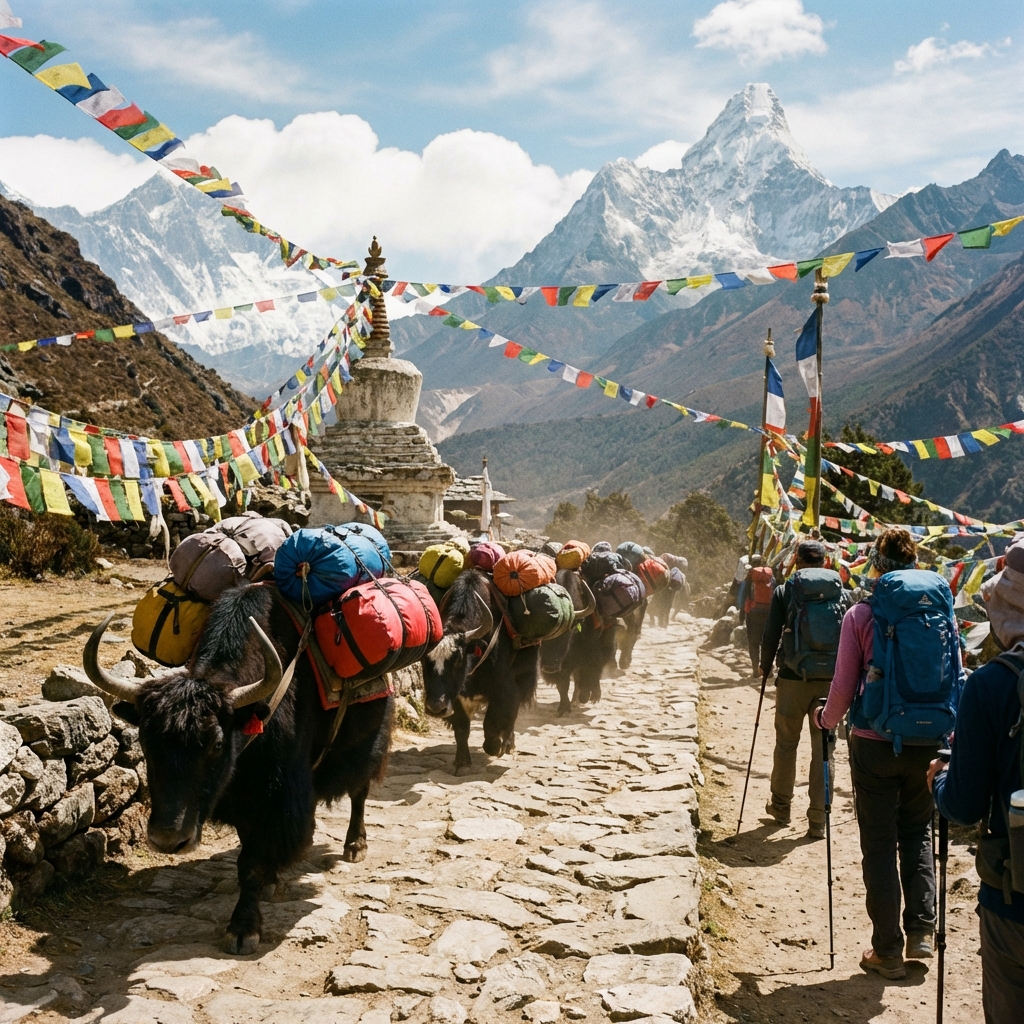
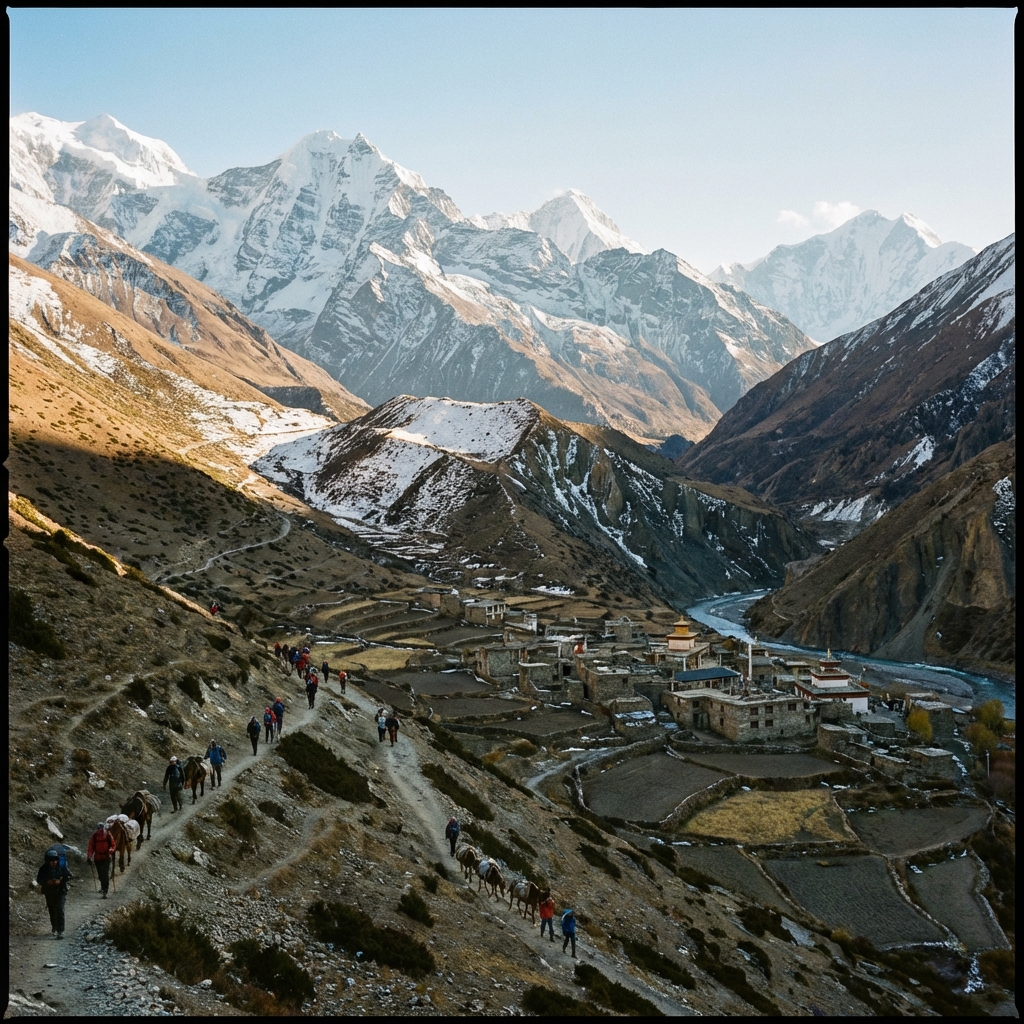
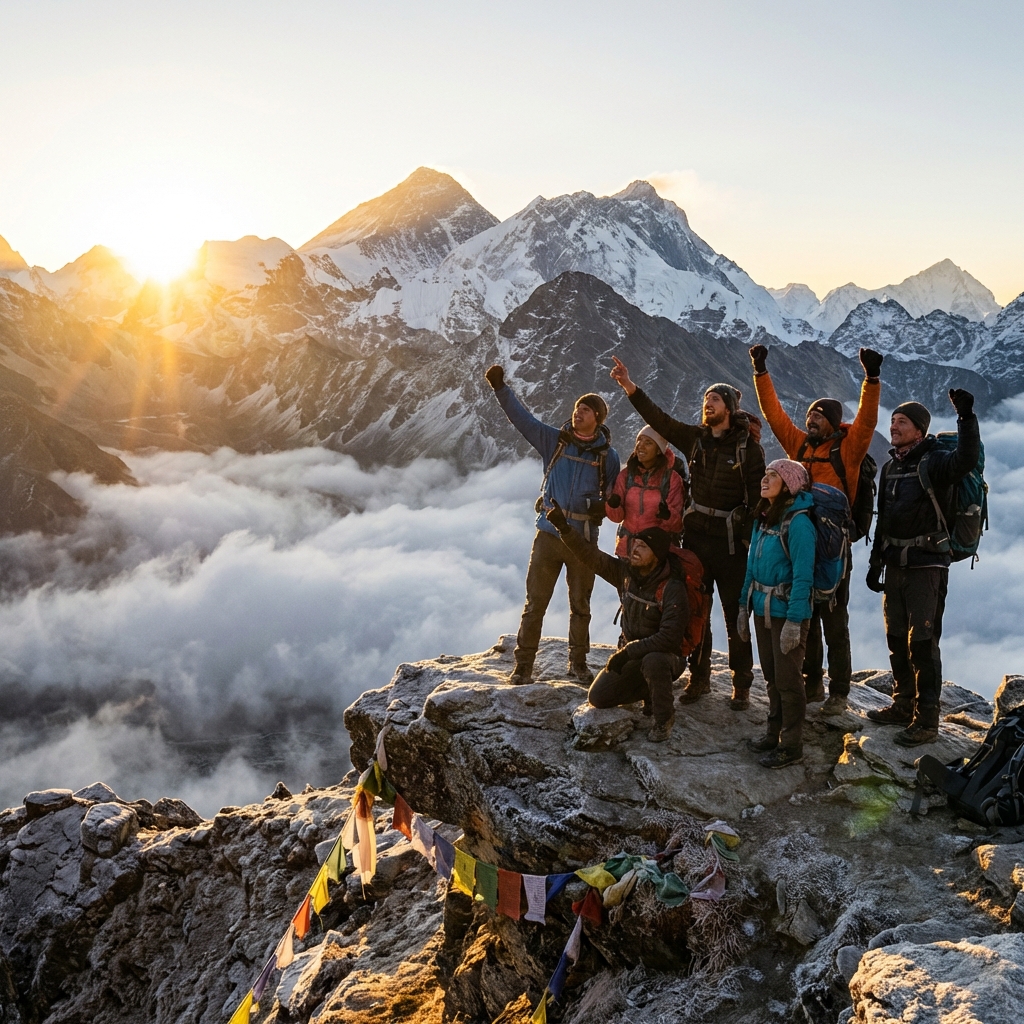
Every major trekking route in Nepal passes through at least one national park or conservation area. These protected areas are the backbone of Nepal's conservation system, safeguarding the extraordinary biodiversity of the Himalayas while providing the infrastructure that makes trekking possible. For trekkers, understanding these protected areas is not just about knowing which permits to buy. It is about appreciating the conservation framework that protects the landscapes, wildlife, and cultural heritage that make Nepal trekking so remarkable.
Nepal's protected area system covers approximately 23.39% of the country's total land area, an impressive figure that puts Nepal among the top countries globally for percentage of land under protection. The system includes 12 national parks, 1 wildlife reserve, 6 conservation areas, 1 hunting reserve, and 13 buffer zones, collectively protecting habitats from the lowland Terai to the highest peaks on Earth.
This guide focuses specifically on the national parks and conservation areas that are most relevant to trekkers, covering what each area protects, the trekking routes within it, permit requirements and fees, and the conservation successes that make these areas worth visiting.
23.39% of Nepal's total land area under formal protection
12 national parks, including 2 UNESCO World Heritage Sites
6 conservation areas managed with community participation
Over 500,000 foreign trekkers enter protected areas yearly
Annapurna Conservation Area at 7,629 sq km
Sagarmatha National Park reaches 8,848m (Everest summit)
NPR 3,000 for most national parks (SAARC: NPR 1,500)
Millions of dollars annually from trekking permits fund conservation
Understanding Nepal's Protected Area System
Nepal employs two main models for protecting land relevant to trekkers: national parks and conservation areas. Understanding the difference helps you navigate permits and expectations.
National Parks
National parks in Nepal follow a more traditional protection model. They are managed directly by the Department of National Parks and Wildlife Conservation (DNPWC), with rangers, wardens, and enforcement infrastructure. Human habitation within park boundaries predates the park designation, and existing communities are generally allowed to remain, but new settlement and resource extraction are restricted.
Key characteristics:
- Managed by government (DNPWC)
- Stricter regulations on resource use
- Entry fees collected at park checkpoints
- Army checkposts for anti-poaching enforcement
- Buffer zones around parks provide community benefit-sharing
Conservation Areas
Conservation areas represent Nepal's innovative approach to integrating conservation with community development. Rather than imposing top-down management, conservation areas empower local communities to manage natural resources sustainably. The most famous example, the Annapurna Conservation Area, has become a global model for community-based conservation.
Key characteristics:
- Co-managed with local communities
- Revenue shared directly with local conservation committees
- Sustainable resource use permitted
- Community development projects funded by entry fees
- More flexible management approach
Permit Planning
Most trekkers need two permits: a TIMS (Trekkers' Information Management System) card and a national park or conservation area entry permit. Some restricted areas require additional permits. Our comprehensive permits guide covers all requirements in detail. Plan to arrange permits in Kathmandu or Pokhara before heading to trailheads, as processing at checkpoints can cause delays.
Sagarmatha National Park (Everest Region)
Overview
Sagarmatha National Park is Nepal's most famous protected area and one of the most iconic natural spaces on Earth. Established in 1976 and designated a UNESCO World Heritage Site in 1979, the park encompasses the upper Khumbu region, including Mount Everest itself (8,848m) and three other peaks above 8,000m: Lhotse, Cho Oyu, and Makalu (Makalu sits in its own adjacent national park).
Area: 1,148 sq km Elevation range: 2,845m to 8,848m UNESCO designation: 1979 (World Heritage Site) Established: 1976
What It Protects
Sagarmatha National Park protects one of the world's most dramatic mountain landscapes, including:
- Glacial systems: The Khumbu Glacier, Ngozumpa Glacier (longest in the Himalayas), and dozens of smaller glaciers
- Wildlife: Himalayan tahr, musk deer, Himalayan black bear, red panda (rare), snow leopard (rare), over 150 bird species including Danphe pheasant and blood pheasant
- Cultural heritage: Ancient Sherpa monasteries including Tengboche (the largest in the Khumbu), traditional Sherpa villages, and Buddhist cultural landscapes
- Vegetation: Rhododendron, birch, and juniper forests up to approximately 4,000m, transitioning to alpine scrub and bare rock
Trekking Routes Within the Park
| Trek | Duration | Difficulty | Highlights |
|---|---|---|---|
| Everest Base Camp | 12-14 days | Moderate-Challenging | Base Camp view, Kala Patthar sunrise |
| Gokyo Lakes | 12-14 days | Moderate-Challenging | Turquoise lakes, Gokyo Ri panorama |
| Three Passes | 18-20 days | Challenging | Kongma La, Cho La, Renjo La passes |
| Everest Panorama / Tengboche | 7-10 days | Moderate | Tengboche monastery, mountain views |
Permit Requirements
You need the Sagarmatha National Park Entry Permit to enter the park:
- Foreign nationals: NPR 3,000 (approximately $22 USD)
- SAARC nationals: NPR 1,500
- Where to obtain: Nepal Tourism Board office in Kathmandu, or at the park entrance checkpoint in Monjo/Jorsale
- Additional requirement: TIMS card (obtained in Kathmandu or Pokhara)
For complete permit details, see our Sagarmatha National Park permit guide.
Conservation Successes
- Forest cover in the Khumbu has stabilized and even recovered in some areas since park establishment
- The Sagarmatha Pollution Control Committee (SPCC) has removed over 100,000 kg of waste since 1991
- Himalayan tahr populations have increased significantly under protection
- Solar and hydroelectric power have reduced deforestation pressure from teahouses
- Community forestry programs have empowered local Sherpa communities in conservation management
Everest Waste Deposit Rule
Since 2014, every climber on Everest must bring back at least 8 kg of waste beyond their own personal gear when descending from the mountain. This rule has significantly reduced the accumulation of abandoned equipment and garbage at higher camps. Trekkers to Base Camp, while not subject to the same formal requirement, are expected to carry out all their own waste.
Annapurna Conservation Area (ACAP)
Overview
The Annapurna Conservation Area Project (ACAP) is the largest protected area in Nepal and a pioneering example of community-based conservation that has been replicated worldwide. Established in 1986, it covers a vast and diverse landscape that includes some of Nepal's most popular trekking routes.
Area: 7,629 sq km (the largest protected area in Nepal) Elevation range: Approximately 800m to 8,091m (Annapurna I summit) Established: 1986 Managing body: National Trust for Nature Conservation (NTNC) Communities within: Over 100,000 residents in approximately 57 Village Development Committees
What It Protects
The ACAP protects an extraordinary range of ecosystems and biodiversity:
- Ecosystems: From subtropical forests to trans-Himalayan steppe, encompassing virtually every biome found in Nepal
- Wildlife: Snow leopard, blue sheep, Himalayan tahr, langur monkeys, Himalayan black bear, over 500 bird species, 102 mammal species, 39 reptile species, and 22 amphibian species
- Flora: Over 1,200 plant species including 38 orchid species and more than 9 rhododendron species
- Cultural diversity: Gurung, Magar, Thakali, and Manangba communities with distinct cultural traditions
- Geological heritage: The Kali Gandaki Gorge, the world's deepest gorge, and diverse geological formations
Trekking Routes Within the Area
| Trek | Duration | Difficulty | Highlights |
|---|---|---|---|
| Annapurna Circuit | 14-21 days | Moderate-Challenging | Thorong La Pass (5,416m), diverse landscapes |
| Annapurna Base Camp | 7-12 days | Moderate | Annapurna Sanctuary, mountain amphitheater |
| Poon Hill | 4-5 days | Easy-Moderate | Sunrise views, rhododendron forests |
| Mardi Himal | 5-7 days | Moderate | Off-the-beaten-path, ridge walking |
| Upper Mustang | 12-16 days | Moderate | Tibetan culture, arid landscapes |
| Nar-Phu Valley | 10-14 days | Challenging | Remote, restricted access, stunning scenery |
Permit Requirements
You need the Annapurna Conservation Area Permit (ACAP) to enter:
- Foreign nationals: NPR 3,000 (approximately $22 USD)
- SAARC nationals: NPR 200
- Where to obtain: ACAP office in Pokhara (most convenient), Nepal Tourism Board in Kathmandu, or at some trailhead checkpoints
- Additional for restricted areas: Upper Mustang and Nar-Phu Valley require separate restricted area permits (significantly more expensive)
- TIMS card: Required in addition to ACAP permit
For complete details, see our Annapurna Conservation Area permit guide.
The ACAP Model: How It Works
The ACAP model is worth understanding because it represents a fundamentally different approach to conservation:
- Revenue sharing: A significant percentage of entry fees goes directly to local Conservation Area Management Committees (CAMCs)
- Community decision-making: Local communities decide how conservation funds are spent
- Sustainable livelihoods: Programs support alternative energy, sustainable agriculture, and eco-tourism
- Cultural preservation: Funds support the maintenance of monasteries, cultural sites, and traditional practices
- Environmental programs: Trail maintenance, waste management, reforestation, and wildlife monitoring
Conservation Successes
- Community forestry has reversed deforestation in many areas, with forest cover increasing since the 1990s
- Alternative energy programs have installed over 3,000 solar water heaters and numerous micro-hydroelectric systems
- Anti-poaching efforts have stabilized snow leopard and blue sheep populations
- Waste management systems, including incinerators and sorting stations, have been established along major routes
- Ecotourism training for local communities has created sustainable livelihoods that reduce pressure on natural resources
The ACAP Success Story
Before ACAP was established in 1986, the Annapurna region was facing severe environmental degradation from uncontrolled tourism and resource extraction. Forest cover was declining rapidly, wildlife populations were falling, and waste was accumulating unchecked. Today, the region is healthier than it has been in decades, with recovering forests, stable wildlife populations, and communities that actively champion conservation because they directly benefit from it. The ACAP model has been studied and replicated in conservation areas across Asia, Africa, and South America.
Langtang National Park
Overview
Langtang National Park, established in 1976 as Nepal's first Himalayan national park, protects a stunning landscape of glaciated peaks, dense forests, and alpine meadows just 30 km north of Kathmandu. Despite its proximity to the capital, the park retains a sense of wilderness that has diminished on busier routes.
Area: 1,710 sq km Elevation range: Approximately 1,000m to 7,245m (Langtang Lirung) Established: 1976 Buffer zone: 420 sq km
What It Protects
- Forests: Some of Nepal's finest rhododendron, oak, and bamboo forests, supporting exceptional biodiversity
- Wildlife: Red panda (one of Nepal's most important populations), Himalayan black bear, wild boar, Himalayan tahr, musk deer, over 250 bird species
- Glacial systems: The Langtang and Lirung glaciers and associated high-altitude lakes
- Cultural heritage: Tamang and Sherpa communities, Buddhist monasteries, ancient cheese-making traditions
Trekking Routes Within the Park
| Trek | Duration | Difficulty | Highlights |
|---|---|---|---|
| Langtang Valley | 7-10 days | Moderate | Kyanjin Gompa, Tserko Ri views |
| Gosaikunda Lakes | 5-7 days | Moderate | Sacred alpine lakes, Hindu pilgrimage |
| Helambu Circuit | 5-7 days | Easy-Moderate | Cultural villages, forest birding |
| Langtang-Gosaikunda-Helambu | 14-18 days | Moderate-Challenging | Combined route, maximum diversity |
| Tamang Heritage Trail | 5-7 days | Easy-Moderate | Cultural immersion, homestays |
Permit Requirements
- Foreign nationals: NPR 3,000 (approximately $22 USD)
- SAARC nationals: NPR 1,500
- Where to obtain: Nepal Tourism Board in Kathmandu or at the park entrance at Dhunche
- TIMS card: Required
For complete details, see our Langtang National Park permit guide.
Post-2015 Earthquake Recovery
The devastating 2015 earthquake caused massive landslides in the Langtang Valley, burying the village of Langtang and killing over 175 people. The park and its communities have shown remarkable resilience:
- Langtang village has been rebuilt at a new, safer location nearby
- Trail infrastructure has been restored and in many cases improved
- Teahouse accommodation is fully operational along all major routes
- The tragedy has strengthened community bonds and conservation commitment
- Tourism has recovered strongly, providing vital income for rebuilding
Langtang's Hidden Gem
Most trekkers visit Langtang for the valley trek to Kyanjin Gompa, but the Tamang Heritage Trail on the park's western edge offers a completely different experience. This route passes through traditional Tamang villages with homestay accommodation, offering deep cultural immersion alongside excellent forest birding. It can be combined with the Langtang Valley trek for a comprehensive circuit that covers both alpine and cultural highlights.
Makalu-Barun National Park
Overview
Makalu-Barun National Park is one of Nepal's most biologically diverse and least visited protected areas. Located in eastern Nepal, it encompasses the world's fifth-highest peak, Makalu (8,485m), and the pristine Barun Valley, which harbors some of the last untouched forests in the Himalayas.
Area: 1,500 sq km (plus 830 sq km buffer zone) Elevation range: 435m to 8,485m (the greatest elevation range of any protected area in Nepal) Established: 1992
What It Protects
The park's extraordinary elevation range, from subtropical forests to permanent ice, creates unparalleled biodiversity:
- Forests: Some of the most pristine and least disturbed forests in the Himalayas, including virgin stands of rhododendron, juniper, birch, and bamboo
- Wildlife: Snow leopard, red panda, clouded leopard, Himalayan black bear, wild boar, musk deer, Himalayan tahr, over 400 bird species including 16 globally threatened species
- Flora: Over 3,128 species of flowering plants, representing one of the richest floral assemblages in the eastern Himalayas
- Geological heritage: Dramatic glacial formations, the Barun Glacier, and unique geological features
Trekking Routes
The Makalu Base Camp trek is the primary route:
- Duration: 18-22 days round trip from the roadhead
- Difficulty: Challenging (remote, limited infrastructure, high passes)
- Highlights: Pristine wilderness, spectacular mountain views, minimal trekker traffic
- Permits: National park entry permit (NPR 3,000) plus restricted area permit in some sections
Conservation Significance
Makalu-Barun is especially important for conservation because:
- It contains one of the largest remaining blocks of undisturbed forest in the Himalayas
- The extreme elevation gradient supports an exceptionally high number of species per unit area
- Several species found here are at the edge of their range and occur nowhere else in Nepal
- Low visitor numbers mean minimal human impact on sensitive ecosystems
Remote and Demanding
The Makalu-Barun region is significantly more remote and logistically challenging than Everest or Annapurna treks. Infrastructure is minimal, with basic teahouses on lower sections and camping required higher up. Emergency evacuation is difficult and may take days. This trek is recommended only for experienced trekkers with good fitness, proper equipment, and an organized support team. Always carry comprehensive travel insurance with helicopter evacuation coverage.
Manaslu Conservation Area
Overview
The Manaslu Conservation Area protects the landscape surrounding Mount Manaslu (8,163m), the world's eighth-highest peak. Established in 1998, it is managed by the National Trust for Nature Conservation (NTNC) using the same community-based model pioneered by ACAP.
Area: 1,663 sq km Elevation range: Approximately 1,400m to 8,163m Established: 1998 Managing body: NTNC
What It Protects
- Ecosystems: Subtropical forests, alpine meadows, and trans-Himalayan landscapes
- Wildlife: Snow leopard, Himalayan tahr, blue sheep, musk deer, langur monkeys, over 110 bird species
- Cultural heritage: Nubri and Tsum Valley communities with strong Tibetan Buddhist traditions
- Glacial systems: The Manaslu and Pung Gyen glaciers
Trekking Routes
| Trek | Duration | Difficulty | Highlights |
|---|---|---|---|
| Manaslu Circuit | 14-18 days | Challenging | Larkya La Pass (5,160m), diverse landscapes |
| Tsum Valley | 12-16 days | Moderate | Sacred valley, Tibetan Buddhist culture |
| Manaslu Circuit + Tsum Valley | No minimum (solo OK with guide)0-25 days | Challenging | Combined route for maximum experience |
Permit Requirements
The Manaslu region is a restricted area, requiring special permits:
- Restricted Area Permit: $100 per person per week (September-November), $75 per person per week (December-August)
- Manaslu Conservation Area Permit: NPR 3,000
- TIMS card: Required
- Minimum group size: Two trekkers with a registered guide (no independent trekking with a mandatory licensed guide is no longer permitted (mandatory guide rule since April 2023))
- Where to obtain: Through a registered trekking agency in Kathmandu
For complete details, see our Manaslu restricted area permit guide.
Conservation Successes
- Community-based conservation has reduced human-wildlife conflict
- Anti-poaching patrols have stabilized snow leopard populations
- Sustainable tourism generates income for remote communities
- Traditional land management practices have been integrated with modern conservation science
Manaslu as an Alternative to Annapurna Circuit
The Manaslu Circuit offers a trekking experience comparable to the Annapurna Circuit but with roughly one-tenth the trekker traffic. The restricted area permit requirement limits numbers, preserving the wilderness feel. The Larkya La Pass (5,160m) provides a dramatic high-point comparable to Thorong La, and the cultural experience in the Nubri and Tsum valleys is arguably richer. If you have already done the Annapurna Circuit, Manaslu should be your next trek.
Shey Phoksundo National Park (Dolpo)
Overview
Shey Phoksundo National Park, Nepal's largest national park by area, protects the remote and mystical Dolpo region in western Nepal. This is the setting of Peter Matthiessen's classic book "The Snow Leopard," and the landscape lives up to the literary hype. The park encompasses the stunning Phoksundo Lake, one of Nepal's deepest and most beautiful alpine lakes.
Area: 3,555 sq km (Nepal's largest national park) Elevation range: Approximately 3,000m to 6,883m Established: 1984
What It Protects
- Trans-Himalayan landscapes: Arid, high-altitude terrain resembling the Tibetan Plateau
- Wildlife: Snow leopard (one of Nepal's most important populations), blue sheep (large herds), Himalayan wolf, Tibetan gazelle, over 200 bird species
- Phoksundo Lake: Nepal's deepest lake (145m), with stunning turquoise waters and no aquatic outflow
- Cultural heritage: Bon and Buddhist communities with pre-Buddhist Bon traditions that are found almost nowhere else in the world
Trekking Routes
| Trek | Duration | Difficulty | Highlights |
|---|---|---|---|
| Lower Dolpo (Phoksundo Lake) | 10-14 days | Moderate-Challenging | Phoksundo Lake, Bon monasteries |
| Upper Dolpo | 21-28 days | Very Challenging | Remote, Shey Gompa, snow leopard habitat |
| Dolpo to Jumla | 20-25 days | Very Challenging | Trans-Himalayan traverse |
Permit Requirements
- National park entry permit: NPR 3,000
- Lower Dolpo restricted area permit: $500 per person for 10 days
- Upper Dolpo restricted area permit: $500 per person for 10 days
- Minimum group size: Two trekkers with a registered guide
- Where to obtain: Through a registered trekking agency
Why Dolpo Is Special
Dolpo is arguably the most unique trekking destination in Nepal. The trans-Himalayan landscape, sitting in the rain shadow of the Dhaulagiri and Churen Himal ranges, looks nothing like the lush green valleys of Annapurna or Everest. It is a high, arid world of wind-sculpted rock, deep blue sky, and scattered settlements where ancient Bon traditions survive alongside Tibetan Buddhism.
The combination of remoteness, expense, and physical difficulty means that Dolpo sees very few trekkers, preserving an atmosphere of genuine wilderness and cultural authenticity that has largely disappeared from more popular routes.
Kanchenjunga Conservation Area
Overview
The Kanchenjunga Conservation Area protects the landscape surrounding the world's third-highest peak, Kanchenjunga (8,586m), in the far eastern corner of Nepal. Managed by local communities with support from the government, it is one of the most remote and least visited trekking areas in the country.
Area: 2,035 sq km Elevation range: Approximately 1,200m to 8,586m Established: 1997
What It Protects
- Diverse ecosystems: From subtropical forests to high alpine terrain
- Wildlife: Snow leopard, red panda, Himalayan black bear, clouded leopard, musk deer, over 250 bird species including eastern Himalayan specialties not found in other trekking regions
- Flora: Exceptional plant diversity including many eastern Himalayan species at the western edge of their range
- Cultural heritage: Limbu, Rai, and Sherpa communities with distinct cultural traditions
Trekking Routes
- Kanchenjunga Base Camp Trek: 20-25 days, reaching the north and/or south base camps
- Difficulty: Challenging to very challenging (remote, limited infrastructure)
- Highlights: Views of five peaks above 8,000m, pristine wilderness, rich cultural encounters
Permit Requirements
- Conservation area entry permit: NPR 3,000
- Restricted area permit: $10 per person per week
- Minimum group size: Two trekkers with a registered guide
- TIMS card: Required
Conservation Significance
The Kanchenjunga Conservation Area is managed through an innovative model that gives local communities full ownership of conservation management. This has produced strong outcomes:
- Community-managed forest areas have seen significant regeneration
- Red panda populations are stable and possibly increasing
- Local conservation committees patrol for poaching and illegal logging
- Ecotourism provides sustainable income for remote communities
Complete Protected Areas Comparison for Trekkers
| Protected Area | Size (sq km) | Main Treks | Entry Fee | Additional Permits | Best Season |
|---|---|---|---|---|---|
| Sagarmatha NP | 1,148 | EBC, Gokyo, Three Passes | NPR 3,000 | TIMS | Oct-Nov, Mar-May |
| Annapurna CA | 7,629 | AC, ABC, Poon Hill, Mardi | NPR 3,000 | TIMS (+ restricted for Upper Mustang, Nar-Phu) | Oct-Nov, Mar-May |
| Langtang NP | 1,710 | Langtang Valley, Gosaikunda, Helambu | NPR 3,000 | TIMS | Oct-Nov, Mar-May |
| Makalu-Barun NP | 1,500 | Makalu Base Camp | NPR 3,000 | Restricted area permit for some sections | Oct-Nov, Mar-May |
| Manaslu CA | 1,663 | Manaslu Circuit, Tsum Valley | NPR 3,000 | Restricted area permit ($100/week peak) | Sep-Nov, Mar-May |
| Shey Phoksundo NP | 3,555 | Lower/Upper Dolpo | NPR 3,000 | Restricted area permit (USD 50/day) | Jun-Sep, Sep-Nov |
| Kanchenjunga CA | 2,035 | Kanchenjunga BC | NPR 3,000 | Restricted area ($10/week) | Oct-Nov, Mar-May |
TIMS Card: The Universal Requirement
The Trekkers' Information Management System (TIMS) card is required for virtually all treks in Nepal, regardless of the specific national park or conservation area. It costs NPR 2,000 for independent trekkers (Free Individual Trekker category) and NPR 1,000 for those trekking with a registered agency (Group Trekker category). Obtain it from the Nepal Tourism Board office in Kathmandu or the TIMS counter in Pokhara before heading to the trailhead. For complete details, see our TIMS card guide.
How Your Entry Fees Support Conservation
Understanding how your trekking fees are used can deepen your appreciation for the protected area system and the conservation it enables.
Where the Money Goes
National parks (DNPWC-managed):
- Anti-poaching patrols and wildlife monitoring
- Trail and infrastructure maintenance
- Wildlife research and census programs
- Community development in buffer zones (30-50% of revenue)
- Staff salaries and operational costs
Conservation areas (NTNC-managed):
- Community-managed conservation programs
- Alternative energy installations (solar, micro-hydro)
- Trail maintenance and waste management
- Cultural heritage preservation
- Education and awareness programs
- Sustainable livelihood development
The Economics of Conservation
The scale of conservation funding generated by trekking is significant:
- Over 500,000 foreign trekkers enter protected areas annually
- At NPR 3,000 per entry, this generates over NPR 1.5 billion (approximately $11 million USD) annually in entry fees alone
- Additional revenue comes from restricted area permits, TIMS cards, and concession fees
- Community-based conservation areas reinvest 30-60% of revenue directly into local communities
This revenue stream has proven far more sustainable and effective than government-only funding, giving local communities a direct financial stake in conservation outcomes.
Tips for Trekking in Protected Areas
Before You Go
- Arrange permits in advance: Obtain national park/conservation area entry permits and TIMS cards in Kathmandu or Pokhara before traveling to the trailhead
- Carry permit documents: Keep your permits accessible, as you will be asked to show them at multiple checkpoints
- Understand regulations: Each protected area has specific rules about camping, fires, and resource collection
- Pack out waste: All protected areas require trekkers to carry out their waste
On the Trail
- Stay on designated trails: Leaving marked trails damages vegetation and disturbs wildlife
- Do not collect plants, rocks, or artifacts: Removing natural or cultural items from protected areas is illegal
- Respect wildlife: Maintain safe distances, do not feed animals, and report any poaching evidence to park authorities
- Minimize fire use: Use established cooking facilities rather than making campfires
- Respect cultural sites: Monasteries, stupas, and mani walls are protected cultural heritage
Supporting Conservation Beyond Fees
- Choose trekking agencies that demonstrate genuine commitment to environmental and cultural conservation
- Participate in volunteer cleanup activities if available on your route
- Report environmental concerns to park checkpoints
- Share responsible trekking practices with fellow trekkers
- Consider donating to conservation organizations working in Nepal
For more on minimizing your environmental impact, see our guides on environmental impact of trekking in Nepal and leave no trace principles for Nepal.
The Two-Park Trek
For a truly comprehensive experience, consider a trek that passes through two protected areas. The Langtang-Gosaikunda-Helambu traverse covers Langtang National Park and the adjacent Shivapuri Nagarjun National Park buffer zone. The Three Passes trek in the Everest region covers the full extent of Sagarmatha National Park. These longer routes provide the greatest diversity of habitats, wildlife, and landscapes within Nepal's protected area system.
Frequently Asked Questions
Q: Do I need separate permits for each national park or conservation area I visit? A: Yes. Each national park and conservation area requires its own entry permit. If your trek passes through multiple protected areas, you will need a permit for each one. For example, a trek combining Langtang Valley and Gosaikunda requires only one Langtang National Park permit, as both areas are within the same park.
Q: Can I buy national park permits at the park entrance? A: For most parks, yes. However, permits for Sagarmatha National Park are more reliably obtained in Kathmandu, and ACAP permits are best obtained in Pokhara. Restricted area permits (Manaslu, Upper Mustang, Dolpo) must be arranged through a registered trekking agency in Kathmandu.
Q: Are permits checked on the trail? A: Yes, frequently. Expect checkpoints at park entrances, major villages, and key trail junctions. Officials will check your national park or conservation area permit and TIMS card. Keep these documents easily accessible in a waterproof pouch.
Q: What happens if I do not have the required permits? A: You will be turned back at checkpoints and may face fines. In restricted areas, trekking without a permit is a more serious offense that can result in significant fines and potential deportation. There is no legitimate way to avoid permit requirements.
Q: Can I enter national parks at night? A: Park entry checkpoints typically operate during daylight hours only. Plan your travel so that you arrive at checkpoints during operating hours (generally 6:00 AM to 6:00 PM, though hours vary by location and season).
Q: Are drones allowed in national parks? A: Drones are generally prohibited in Nepal's national parks and conservation areas without special permission from the DNPWC. Even with permission, there are restrictions on altitude, distance from wildlife, and areas that can be overflown. Fines for unauthorized drone use can be substantial.
Q: How does Nepal compare to other countries for protected area coverage? A: Nepal's 23.39% protected area coverage is significantly above the global average and ahead of many developed nations. The quality of protection, particularly the community-based conservation model, is recognized internationally as a best practice.
Q: Can I camp anywhere in national parks? A: Camping is generally restricted to designated camping areas or near established settlements. Wild camping away from trails is discouraged and may require special permission. Most trekkers use teahouse accommodation on popular routes.
Q: Do entry fees increase regularly? A: Fees are reviewed periodically by the government. The current rate of NPR 3,000 for foreigners has been stable for several years, but always check current rates before your trip through the Nepal Tourism Board or your trekking agency.
Q: Is it possible to volunteer for conservation work in the parks? A: Several organizations offer volunteer conservation programs in and around Nepal's protected areas, including trail maintenance, wildlife monitoring, environmental education, and community development. Organizations like the NTNC, Snow Leopard Conservancy, and various international conservation NGOs have volunteer programs.
Q: Which national park has the best wildlife viewing? A: For trekkers, Langtang National Park offers the best combination of accessible wildlife (red panda, Himalayan black bear, diverse birds) and manageable trekking routes. For dedicated wildlife enthusiasts, Makalu-Barun National Park has exceptional biodiversity but is much more remote and challenging. See our wildlife guide for detailed species-by-region information.
Q: Are there entrance fees for Nepali citizens? A: Nepali citizens pay significantly reduced entry fees for national parks, typically NPR 100-150 per person. This reflects the policy of ensuring that protected areas remain accessible to the people who live closest to them.
Related Resources
- Nepal Trekking Permits Explained - Complete overview of all permits required for trekking
- Sagarmatha National Park Permit - Detailed permit guide for the Everest region
- Annapurna Conservation Area Permit - Detailed permit guide for the Annapurna region
- Langtang National Park Permit - Detailed permit guide for the Langtang region
- Manaslu Restricted Area Permit - Permit requirements for the Manaslu Circuit
- TIMS Card Guide - Everything about the TIMS card requirement
- Wildlife of Nepal's Trekking Regions - Animals you will encounter in these protected areas
- Bird Watching on Nepal Treks - Birding opportunities across protected areas
- Environmental Impact of Trekking - How trekking affects these environments