
Leave No Trace Nepal: Sustainable Trekking Practices Guide
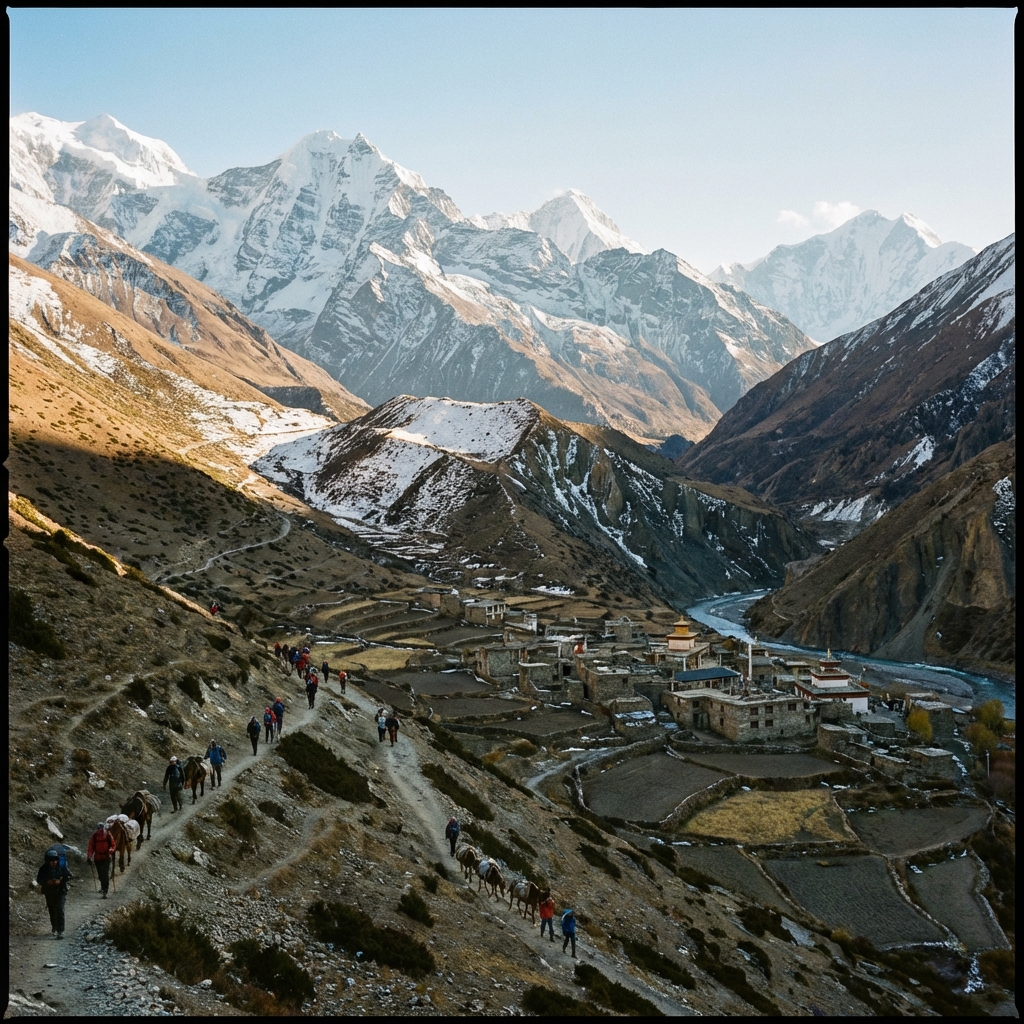
The Himalayas are not indestructible. Stand at the foot of Annapurna or gaze across the Khumbu Valley toward Everest, and it is easy to assume that mountains this vast, this ancient, this powerful could never be harmed by something as small as a human footprint. But they can, and they are being harmed—not by any single trekker, but by the cumulative impact of over half a million visitors walking through fragile alpine ecosystems every year.
Plastic water bottles litter the trail to Everest Base Camp. Toilet paper blooms like white flowers in the bushes along the Annapurna Circuit. Human waste contaminates water sources that communities downstream depend on for drinking and irrigation. Trails widen as trekkers cut switchbacks. Prayer flags and mani stones disappear into backpacks as souvenirs. And the carbon footprint of flying to Nepal, then flying to Lukla, then helicoptering out adds measurably to the climate change that is melting the very glaciers trekkers come to see.
None of this is inevitable. Every one of these impacts can be reduced, and many can be eliminated entirely, through informed, intentional choices. This guide adapts the seven Leave No Trace principles specifically for Nepal's trekking environment, providing practical, actionable guidance for trekking responsibly in the Himalayas.
Over 500,000 foreign trekkers visit Nepal yearly
Estimated 50+ tons of plastic waste on trails annually
Over 75,000 kg of trash left on trails each year
35,000+ kg removed from Everest in 2026 alone
75% of streams near popular trails show contamination
Over 100,000 kg waste removed since 1991
$4,000 deposit required per Everest climbing team
Average trekker generates 1-2 kg waste per day on trail
Why Environmental Responsibility Matters in Nepal
The Waste Crisis on Popular Trails
The numbers are staggering. Nepal's most popular trekking routes—Everest Base Camp, Annapurna Base Camp, and the Annapurna Circuit—see a combined total of several hundred thousand trekkers annually. Each trekker generates an estimated 1 to 2 kilograms of waste per day on the trail, from food packaging and water bottles to toilet paper and personal care products. Much of this waste has no disposal infrastructure. There are no garbage trucks in the Himalayas.
For a deeper analysis of the scope of the environmental challenge, see our comprehensive environmental impact guide.
Impact on Water Sources
When waste is discarded improperly—whether it is food scraps, human waste, or detergent—it eventually reaches water sources. Streams and rivers that flow from the mountains provide drinking water, irrigation, and sustenance for communities downstream. Studies have found that 75 percent of streams near popular trekking routes show some level of contamination, particularly from human waste and soap residue.
Plastic Pollution
Single-use plastic water bottles are perhaps the most visible environmental problem on Nepal's trails. Each trekker may consume two to four bottles per day over a two-week trek, and most of those bottles have no recycling pathway in mountain communities. They are burned (releasing toxic fumes), buried, or simply left alongside the trail.
Climate Change and Glacial Retreat
Nepal's glaciers are retreating at an accelerating rate, with some studies indicating they have lost over 30 percent of their volume since the 1970s. While individual trekkers are not the primary driver of global climate change, the tourism industry's collective carbon footprint—international flights, domestic flights, helicopter evacuations, and transportation—contributes to the broader problem. The landscapes we trek through are being actively altered by the climate impacts of the global tourism industry.
The 7 Leave No Trace Principles Adapted for Nepal Trekking
The seven Leave No Trace principles, developed by the Leave No Trace Center for Outdoor Ethics, provide a universal framework for minimizing human impact in outdoor spaces. Here is how each principle applies specifically to trekking in Nepal.
Principle 1: Plan Ahead and Prepare
Responsible trekking begins before you leave home. The choices you make during planning directly determine your environmental impact on the trail.
Reduce Packaging Before You Go
- Remove all excess packaging from snacks, energy bars, and supplements before packing. Transfer items to reusable bags or containers
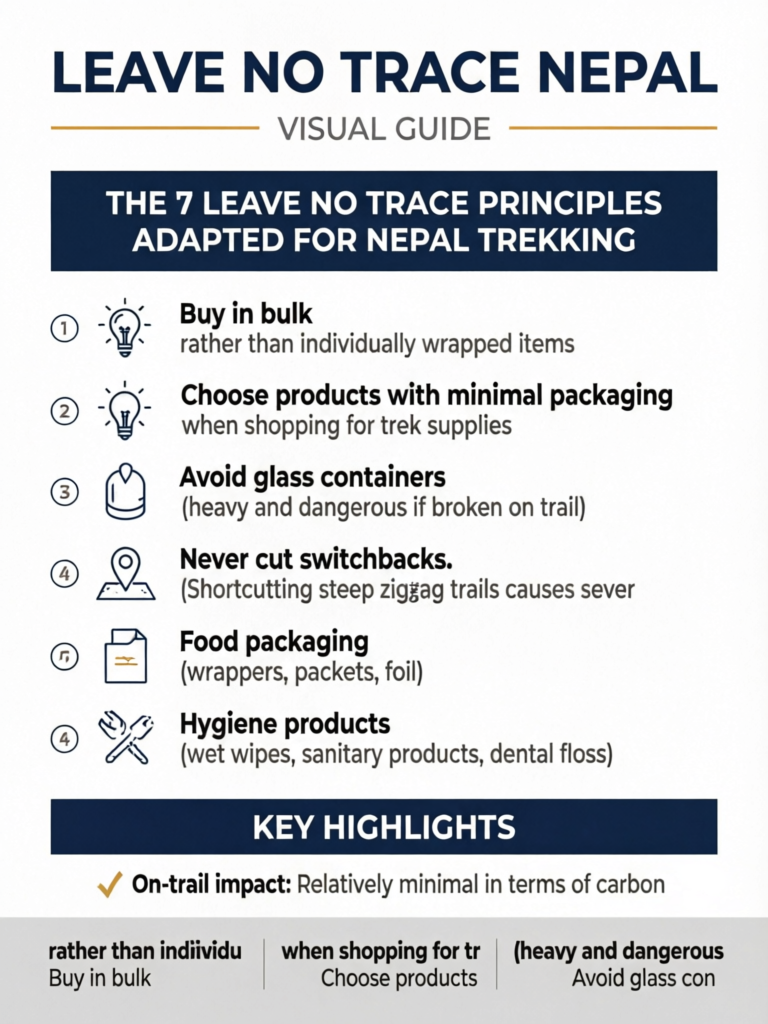
- Buy in bulk rather than individually wrapped items where possible
- Choose products with minimal packaging when shopping for trek supplies
- Avoid glass containers (heavy and dangerous if broken on trail)
Carry a Reusable Water System
The single most impactful environmental decision you can make is to eliminate single-use plastic water bottles from your trek.
Recommended approach:
- Carry two 1-liter reusable water bottles (Nalgene or similar)
- Bring a reliable water purification system: SteriPen UV purifier, chemical treatment tablets, or a filter
- Use safe water refill stations on the trail (available on many popular routes)
- Buy boiled water from tea houses and transfer to your own bottles
Pro Tip
A single trekker using plastic water bottles on a 14-day trek consumes approximately 30 to 60 bottles. That is 30 to 60 pieces of plastic that will likely never be recycled. A reusable bottle with a SteriPen costs approximately $90 and eliminates thousands of bottles over its lifetime. The math is clear, the weight is less, and the environmental benefit is enormous.
Research Your Route
Understanding the specific environmental challenges of your route helps you prepare appropriately:
- Know where safe water stations are located
- Understand waste disposal options along your route
- Pack appropriate bags for carrying out waste
- Know the toilet facilities situation at each stop
Choose an Eco-Friendly Agency
If trekking with a guided group, your agency's practices determine much of your environmental impact. Ask potential agencies about their waste management policies, porter welfare practices, and environmental commitments. See our section on choosing eco-friendly agencies below.
Principle 2: Travel on Durable Surfaces
Nepal's mountain trails are carved through some of the most erosion-prone terrain on Earth. Steep gradients, monsoon rains, freeze-thaw cycles, and thousands of daily footsteps combine to create significant trail degradation.
Stay on Marked Trails
- Never cut switchbacks. Shortcutting steep zigzag trails causes severe erosion. The switchback exists to distribute water runoff and reduce slope gradient. Cutting it creates a gully that funnels water and rapidly widens
- Walk through muddy sections rather than around them. Walking around mud widens the trail. Accept muddy boots rather than creating a wider path
- Follow established trail markers and cairns. Going off-trail damages fragile alpine vegetation that may take decades to recover at high altitude
- Respect trail closures and rerouting. If a section of trail has been closed for restoration, follow the detour without complaint
Campsite Selection (for Camping Treks)
For those on camping treks rather than tea house treks:
- Use established campsites whenever possible
- Camp on durable surfaces (rock, dry grass, packed earth)
- Avoid camping on vegetation, especially fragile alpine meadows above 4,000m
- Do not dig drainage trenches around tents (use a waterproof groundsheet instead)
Pack Animal Impact
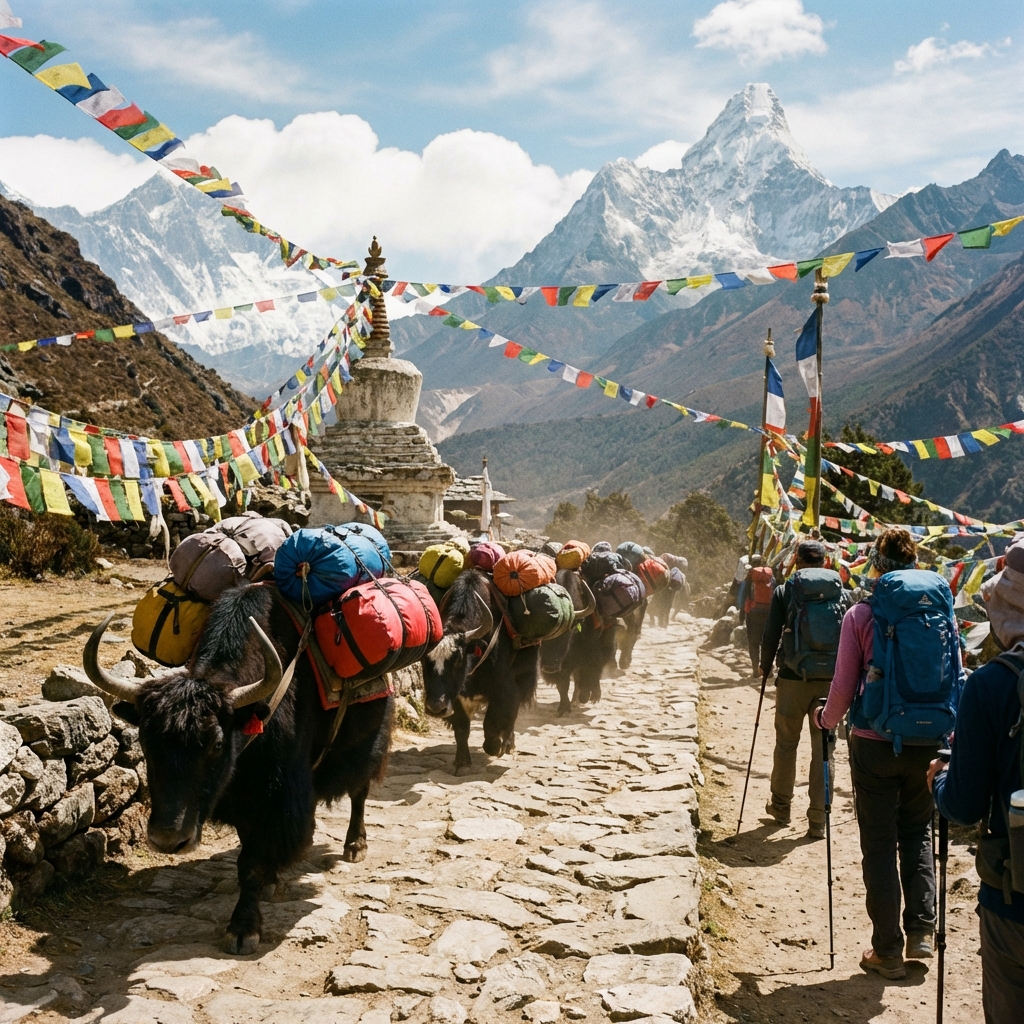
Mule and yak trains are a significant source of trail degradation. While you cannot control these operations, you can:
- Step aside to let pack animals pass rather than forcing them off the trail
- Choose agencies that limit pack animal use or maintain their animals responsibly
- Carry your own pack when feasible to reduce the need for additional animals
Principle 3: Dispose of Waste Properly
Waste disposal is the most critical Leave No Trace principle for Nepal trekking. The mountains have no municipal waste collection, and what you leave behind stays behind—often for decades.
The "Carry It In, Carry It Out" Rule
Everything you bring onto the trail that does not naturally decompose must leave the trail with you:
- Food packaging (wrappers, packets, foil)
- Batteries (especially critical—batteries leach heavy metals into soil)
- Hygiene products (wet wipes, sanitary products, dental floss)
- Broken gear (do not abandon broken equipment)
- Any item that was not there before you arrived
Practical Waste Carrying System
Carry a small dry bag or ziplock bags specifically for waste:
- One bag for burnable waste (paper, cardboard)
- One bag for non-burnable waste (plastic, foil, batteries)
- One sealed bag for used toilet paper (see below)
- Compress waste regularly to minimize volume
Toilet Paper Protocol
This is the issue that many trekkers find uncomfortable but that has one of the biggest environmental impacts.
The reality: Toilet paper does not decompose quickly at altitude. Cold, dry conditions above 3,000m mean that tissue can persist for years. White clumps of toilet paper scattered around trails and behind tea houses are one of the most common and ugliest forms of trail pollution.
Best practice:
- Use established toilet facilities whenever available (virtually all tea houses have them)
- If you must go outdoors, dig a cat hole at least 15 centimeters deep and at least 60 meters from any water source, trail, or campsite
- Carry out all used toilet paper in a sealed ziplock bag. Do not bury it, as animals dig it up. Do not burn it, as fires have been started this way
- Consider using a portable bidet (lightweight squeeze bottle) to reduce or eliminate toilet paper use entirely
- Dispose of sealed waste bags at tea houses that have waste collection or carry them to the next town with disposal facilities
Do Not Burn Toilet Paper
Some trekkers attempt to burn used toilet paper on the trail. This has caused multiple brush fires and forest fires in Nepal's trekking regions, particularly during the dry spring season. The risk of fire far outweighs the inconvenience of carrying out waste. Carry it out. Always.
Human Waste
When no toilet facility is available:
- Dig a cat hole at least 15 to 20 centimeters deep
- Choose a location at least 60 meters from water sources, trails, and campsites
- Cover and disguise the hole when finished
- In alpine zones above 5,000m where soil is minimal, use a waste bag (WAG bag) and carry it out
- Never defecate on snow or glaciers—the waste persists indefinitely in cold conditions
Food Waste
- Do not throw food scraps into the environment, even "biodegradable" items like orange peels and apple cores. At high altitude, decomposition is extremely slow (an orange peel can take 2 to 5 years to decompose above 4,000m)
- Eat all your food or carry leftovers out
- Strain food particles from dishwater before disposal
Pro Tip
Start carrying a dedicated "trash bag" from day one and make it a non-negotiable habit. Attach a small dry bag to the outside of your pack for easy access. When picking up waste becomes automatic, it stops feeling like a burden and becomes just another part of your trekking routine, like filtering water or applying sunscreen.
Principle 4: Leave What You Find
Nepal's mountains are rich with cultural and natural artifacts that belong where they are. Taking souvenirs diminishes the experience for future visitors and can violate local religious beliefs.
Cultural Artifacts: Do Not Remove
- Mani stones - Carved stones with Buddhist mantras placed along trails and at passes. These are sacred religious objects, not souvenirs. Moving or taking them is deeply disrespectful
- Prayer flags - Even faded, torn prayer flags are sacred. They are left to weather naturally as part of their spiritual function. Do not remove them
- Religious offerings - Flowers, food, incense, and other items placed at shrines and stupas are offerings to deities. Leave them undisturbed
- Historical artifacts - Stone carvings, old tools, pottery fragments, and other historical items belong in place
Natural Objects: Leave Them
- Rocks and minerals - Including interesting formations, crystals, and fossils
- Plants and flowers - Do not pick alpine flowers, which may take years to bloom at high altitude
- Animal artifacts - Bones, feathers, horns, and antlers should remain where found
Respecting Built Structures
- Walk clockwise around Buddhist stupas, chortens, and mani walls (following local custom)
- Do not climb on religious structures for photographs
- Do not move or rearrange cairns that serve as trail markers
The Prayer Flag Exception
If you wish to contribute prayer flags, you may purchase new ones and hang them at appropriate locations (passes, monasteries, bridges). This is a respectful cultural practice when done properly. Ask your guide or local people for appropriate locations. Never remove existing flags to make room for yours.
Principle 5: Minimize Campfire Impact
On tea house treks, campfires are not a concern as you will not be building any. However, the broader principle of minimizing heat and fuel impact applies.
On Tea House Treks
- Use tea house heating facilities rather than requesting additional fires
- Dress warmly rather than asking for the dining room stove to be overloaded (wear your down jacket indoors; see our layering guide)
- Limit hot shower use at altitude - Heating water for showers requires significant fuel (wood or gas), and at high altitude, resources are scarce and expensive. A solar-heated shower or a wet wipe "bath" has a much smaller footprint
- Avoid ordering excessive hot drinks just for warmth. One tea plus wearing proper clothing is more environmentally sound than four teas to compensate for inadequate clothing
On Camping Treks
- Use established fire rings where they exist
- If no fire ring exists, avoid building fires. Use camp stoves instead
- Keep fires small and burn wood completely to ash
- Do not leave fire rings in pristine areas
- Never break branches from living trees for firewood
Cooking Fuel Considerations
On camping treks, your cooking crew's fuel source matters:
- Gas/kerosene stoves are preferable to wood fires in areas where firewood is scarce (above the tree line, or in heavily deforested areas)
- Do not allow your crew to cut live trees for firewood under any circumstances
- Some areas require mandatory use of gas stoves (notably some parts of the Annapurna Conservation Area)
Principle 6: Respect Wildlife
Nepal's mountains are home to remarkable wildlife, from snow leopards and Himalayan tahr to musk deer and dozens of bird species. Trekkers have a responsibility to minimize their impact on these animals.
Do Not Feed Animals
- Do not feed monkeys, dogs, crows, or any wild animals. Feeding habituates animals to humans, alters their natural behavior, and creates aggressive begging behavior
- Store food securely at campsites so animals cannot access it
- Do not leave food scraps that attract animals to trail areas
Maintain Distance
- Observe wildlife from a distance using binoculars
- Do not approach, chase, or corner animals for photographs
- If an animal moves away from you, do not follow it
- Give nesting birds and animals with young extra space
Reduce Noise
- Keep voices at reasonable levels, especially in forested areas where wildlife is present
- Do not play music from speakers on the trail
- Avoid making sudden loud noises that startle animals
Stray Dogs
Nepal's trails have a significant stray dog population. While it is tempting to befriend them:
- Do not feed stray dogs, as this increases the population around tea houses and creates aggression between dogs
- Do not pet or touch stray dogs (rabies risk)
- If a dog follows you, do not encourage it
Wildlife Photography Ethics
If you are interested in wildlife photography on your trek, practice ethical wildlife photography: use long lenses rather than approaching closely, never bait or lure animals, do not disturb habitat to get a better view, and never pursue an animal that is fleeing. For more on photography ethics, see our photography etiquette guide.
Principle 7: Be Considerate of Others
The "others" in Nepal trekking includes fellow trekkers, local communities, porters, guides, and the broader culture you are moving through.
Trail Etiquette
- Yield to uphill trekkers (they have right of way)
- Step aside for pack animal trains (always step to the uphill side)
- Do not block the trail for extended photo sessions
- Keep your group together rather than spreading across the trail width
- Greet fellow trekkers and locals with "namaste"
Cultural Respect
- Remove shoes before entering homes and some lodges when requested
- Ask permission before entering monastery grounds and follow the rules posted there (see our monastery etiquette guide)
- Dress modestly in villages and religious sites
- Learn and follow local customs including walking clockwise around Buddhist monuments
- See our comprehensive cultural etiquette guide for detailed guidance
Noise
- Keep voices at reasonable levels, especially early morning and after dark
- Do not play music from speakers on the trail. Use headphones if you want music
- Be quiet in tea house dormitories after lights out
- Religious sites are places of silence and contemplation
Photography Consent
- Always ask before photographing people, especially children
- See our dedicated photography etiquette guide for comprehensive guidance
- Never photograph people in distress (struggling porters, sick trekkers) for social media content
Porter Welfare
Environmental responsibility extends to human welfare. Nepal's porters carry the infrastructure that makes trekking possible. Ensure your agency treats them ethically:
- Porters should carry no more than 25 to 30 kilograms
- Porters should have appropriate clothing, shelter, and food
- Porters should receive fair wages paid directly
- Do not create unnecessary weight by overpacking
The Plastic Bottle Problem: Solutions That Work
Single-use plastic water bottles are Nepal's most visible trekking waste problem. Here are practical solutions.
The Scale of the Problem
Conservative estimates suggest that trekkers leave behind over 50 tons of plastic water bottle waste on Nepal's trails each year. Most of these bottles are not recycled. They are burned (releasing dioxins and other toxic chemicals), buried in pits, or left alongside trails where they persist for centuries.
Your Alternatives
Option 1: SteriPen UV Purifier (Recommended)
- Purifies 1 liter in 90 seconds
- Eliminates bacteria, viruses, and parasites
- Rechargeable USB models last the entire trek
- Cost: approximately $90 for the device
- Savings: $100 or more over a 2-week trek versus buying bottled water
Option 2: Chemical Treatment Tablets
- Chlorine dioxide tablets (Aquamira, Micropur)
- Lightweight and compact
- 30-minute treatment time for bacteria and viruses
- Cost: approximately $15 for 30 treatments
- Best as a backup to SteriPen
Option 3: Water Filters
- Sawyer Squeeze or similar filter systems
- Physical removal of bacteria and parasites
- Instant filtration
- May not remove viruses (combine with chemical treatment)
- Cost: approximately $30 to $50
Option 4: Safe Water Stations
- Established purification stations on popular routes
- Refill reusable bottles for NPR 50 to 100
- Available on Annapurna Circuit, parts of Everest route, and Langtang
- Reduces both plastic waste and cost
Option 5: Boiled Water from Tea Houses
- Available at every tea house
- Transfer to your reusable bottles
- Cost: NPR 100 to 300 per liter
- Absolutely reliable purification method
Pro Tip
Carry two 1-liter reusable bottles and fill both at every opportunity. This ensures you never run out between water sources and eliminates the temptation to buy a plastic bottle "just this once." A Nalgene bottle weighs 180 grams empty. Two plastic water bottles weigh more and will end up in a Himalayan landfill.
What About Recycling?
While recycling infrastructure exists in Kathmandu, it is virtually nonexistent in mountain communities. Do not assume that bottles placed in "recycling bins" at tea houses will actually be recycled. The only reliable solution is to not generate the waste in the first place.
The Nepal Government's Cleanup Initiatives
Nepal has recognized the environmental crisis on its trekking routes and has implemented several initiatives.
Everest Region
- Garbage deposit system: Climbing expeditions must pay a $4,000 deposit and bring down a minimum weight of waste to receive a refund
- SPCC operations: The Sagarmatha Pollution Control Committee has removed over 100,000 kilograms of waste from the Everest region since 1991
- Annual cleanup campaigns: Government-organized cleanups in spring and autumn remove accumulated waste from base camp and the climbing route
- Single-use plastic ban consideration: Nepal has discussed banning single-use plastics in national parks, though implementation remains challenging
Annapurna Region
- ACAP conservation fees: The Annapurna Conservation Area Project uses permit fees to fund trail maintenance, waste management, and community conservation programs
- Alternative energy promotion: ACAP has promoted solar energy, micro-hydro, and gas stoves to reduce deforestation
- Community waste management: Village-level waste collection programs have been established in several communities along major routes
Trail Cleanup Programs
Several organizations coordinate regular cleanup efforts:
- Sagarmatha Pollution Control Committee (SPCC) - Focused on the Everest region
- Annapurna Conservation Area Project (ACAP) - Focused on the Annapurna region
- Himalayan Cleanup - Volunteer-driven cleanup events across multiple regions
- Eco Everest Expedition - Annual cleanup climbing expedition
- KEEP (Kathmandu Environmental Education Project) - Education and cleanup programs
How You Can Contribute
- Participate in organized cleanup treks
- Pick up litter you encounter on the trail (carry a spare bag for this purpose)
- Report significant waste dumps to SPCC or ACAP offices
- Support organizations working on trail cleanup through donations
- Choose agencies that actively participate in environmental programs
How to Choose an Eco-Friendly Trekking Agency
Your choice of trekking agency significantly impacts your environmental footprint. Here is what to look for.
Questions to Ask Potential Agencies
- What is your waste management policy? Do they carry out all waste? Do they provide reusable water bottles?
- How do you handle human waste on camping treks? Do they use WAG bags above the tree line?
- What are your porter welfare standards? Weight limits, clothing, shelter, wages?
- Do you participate in any environmental programs? Cleanup campaigns, tree planting, conservation organizations?
- Do you use gas stoves or wood fires on camping treks?
- What is your carbon offset policy?
Green Flags
- Agency provides reusable water bottles and purification equipment
- Agency has a written environmental policy
- Agency is a member of TAAN (Trekking Agencies' Association of Nepal) with environmental certifications
- Agency participates in trail cleanup programs
- Guides carry trash bags and pick up litter on the trail
- Agency offsets or acknowledges carbon footprint
Red Flags
- No mention of environmental practices on website or in conversation
- No waste management plan for camping treks
- Use of wood fires in deforested areas
- Excessive pack animal use when alternatives exist
- Porters carrying overweight loads (environmental and ethical concern)
- Disposable plates, cups, and cutlery used on camping treks
Carbon Footprint of Nepal Trekking
The uncomfortable truth is that the biggest environmental impact of your Nepal trek is not the plastic bottles or the toilet paper—it is getting there.
The Numbers
- International return flight (from Europe or North America): 2 to 5 tons of CO2 per person
- Domestic flight (Kathmandu to Lukla and return): approximately 100 to 150 kg CO2
- Helicopter evacuation: approximately 200 to 300 kg CO2
- Ground transport (Kathmandu to Pokhara by bus): approximately 15 to 20 kg CO2
- On-trail impact: Relatively minimal in terms of carbon
Reducing Your Travel Carbon Footprint
- Take the bus instead of flying where possible (Kathmandu to Pokhara by bus instead of flying, for example)
- Choose overland routes when practical (drive to Jiri and walk to Lukla instead of flying)
- Extend your trip to amortize the flight emissions over more days (a 3-week trip has the same flight emissions as a 10-day trip)
- Combine objectives if visiting Nepal for multiple treks rather than multiple separate trips
Offsetting Your Impact
While carbon offsetting is imperfect, it is better than nothing:
- Calculate your trip's carbon footprint using online calculators
- Invest in verified offset programs, preferably Nepal-based projects (clean cookstove programs, reforestation, solar energy installations)
- Consider donating to Nepal-focused environmental organizations instead of generic offset programs
- Some trekking agencies offer built-in carbon offset options
The Paradox of Ecotourism
There is an inherent tension in sustainable trekking: the most environmentally friendly option is to not go at all. But Nepal's mountain communities depend on trekking tourism for their livelihoods, and the economic incentive of tourism is one of the strongest forces protecting natural areas from more destructive development. The goal is not to stop trekking but to trek as responsibly as possible, minimizing harm while maximizing the positive economic impact on local communities.
Practical Packing List for Low-Impact Trekking
Beyond your standard trekking gear, add these items specifically for reducing your environmental impact:
- Two 1-liter reusable water bottles (Nalgene or similar)
- Water purification (SteriPen + chemical tablets as backup)
- Collapsible dry bag for carrying waste
- Multiple ziplock bags (for used toilet paper, food waste, general trash)
- Cloth handkerchief or bandana (reduce tissue use)
- Reusable shopping bag (for market purchases in towns)
- Biodegradable soap (small bottle, for personal washing)
- Portable bidet (reduce toilet paper use)
- Reusable cutlery (if on a camping trek)
- Headlamp with rechargeable batteries (avoid disposable battery waste)
- Solar charger (reduce reliance on tea house electricity from diesel generators)
Frequently Asked Questions
How bad is the waste problem on Nepal's trekking routes?
The waste problem is significant on popular routes. Over 75,000 kilograms of trash is estimated to be left on trails annually, including plastic bottles, food packaging, and human waste. The problem is most severe on the Everest Base Camp route and the Annapurna Circuit. However, cleanup efforts have intensified, and trekker awareness is improving. Individual trekkers can make a meaningful difference by practicing Leave No Trace principles.
What should I do with my waste on the trail?
Carry all non-biodegradable waste out with you in sealed bags. Use established toilet facilities at tea houses. If you must go outdoors, dig a cat hole (15 centimeters deep, 60 meters from water) and carry out used toilet paper in a sealed bag. Dispose of waste at tea houses with collection services or carry it to the nearest town with waste management infrastructure.
How do I avoid using plastic water bottles on trek?
Carry two reusable water bottles and a purification system (SteriPen UV purifier, chemical tablets, or water filter). Refill from streams (after purification), safe water stations, or by purchasing boiled water from tea houses. This eliminates the need for single-use plastic bottles entirely and is actually cheaper over the course of a trek.
Are there recycling facilities on Nepal's trekking routes?
Recycling infrastructure is minimal to nonexistent on mountain trails. Some tea houses have collection bins, but the waste often ends up burned or buried rather than recycled. The only reliable solution is waste avoidance: reduce what you carry in, and carry out what you cannot avoid.
How can I offset the carbon footprint of my Nepal trek?
Calculate your trip's emissions using online carbon calculators, then invest in verified offset programs. Nepal-based projects (clean cookstove distribution, reforestation, solar installations) are ideal. Some trekking agencies offer built-in offset options. You can also reduce emissions by taking buses instead of flights where possible and extending your trip to spread flight emissions over more days.
Should I pick up other people's litter on the trail?
Yes, if you can do so safely. Carry a spare bag and collect litter you encounter. Many experienced trekkers make a habit of picking up a few pieces of waste every day. Even small efforts contribute to cleaner trails. Report large waste dumps to SPCC or ACAP offices.
What is the Sagarmatha Pollution Control Committee (SPCC)?
The SPCC is a community-based organization established in 1991 to manage waste in the Sagarmatha (Everest) region. It operates garbage collection, recycling, and cleanup programs. The SPCC has removed over 100,000 kilograms of waste from the Everest area since its founding. It is funded through tourism fees, donations, and government support.
How do I choose an eco-friendly trekking agency?
Ask about waste management policies, porter welfare, environmental program participation, and carbon offset options. Look for agencies with written environmental policies, TAAN membership, and demonstrated commitment to sustainability. Our agency selection guide provides detailed criteria.
Is it true that toilet paper does not decompose at altitude?
Toilet paper decomposes very slowly at altitude due to cold, dry conditions and thin soil. Above 3,000m, it can persist for years. Buried toilet paper is frequently dug up by animals. The only responsible option is to carry it out in sealed bags or to use a portable bidet to eliminate the need for paper entirely.
Can I have a campfire on a Nepal trek?
On tea house treks, campfires are not relevant as you use tea house heating. On camping treks, campfires may be possible at lower altitudes where dead wood is available, but gas stoves are preferable in most situations. Above the tree line, campfires are not possible and gas stoves are required. In some conservation areas, wood fires are restricted or banned.
What happens to garbage in Nepal's mountains?
Waste that is not carried out by trekkers or collected by organizations like SPCC typically ends up burned (releasing toxic fumes), buried in makeshift landfills, or left in open dumps near villages. Some waste washes into rivers during monsoon season. This is why carrying out your waste is so important—there is no municipal waste system in mountain areas.
How can I reduce my impact as a solo trekker?
Solo trekkers can reduce impact by carrying reusable water systems, practicing strict waste carry-out, choosing eco-conscious tea houses, tipping and supporting local businesses, walking on established trails, and picking up litter when encountered. Consider hiring a local guide to support the local economy while getting expert assistance.
The Himalayas will endure long after we are gone, but the condition in which they endure is determined by the choices we make today. Every reusable water bottle, every sealed bag of carried-out waste, every decision to stay on the trail rather than cutting a switchback, contributes to preserving these mountains for future generations of trekkers, for the communities who call them home, and for the extraordinary biodiversity they harbor.
Leave No Trace is not a set of restrictions. It is a set of practices that allow us to enjoy wild places without diminishing them. Trek responsibly, and the Himalayas will reward you with the experience of a lifetime.
For more on responsible trekking, see our environmental impact guide, porter ethics guide, and water purification guide.