
Multi-day walking journeys through Himalayan trails
Tea house trekking (lodge-based)
4-21 days depending on route
Mandatory since April 2023
October-November, March-May
$40-100/day all-inclusive
Moderate to good (route dependent)
None required for standard treks
Welcome to the Himalayas. If you're reading this guide, you're probably curious about trekking in Nepal but aren't sure where to start, what to expect, or whether you can actually do it. The good news: Nepal trekking is far more accessible than you might imagine. Every year, hundreds of thousands of ordinary people—teachers, office workers, retirees, students, families—successfully complete treks ranging from gentle 4-day walks to challenging 3-week expeditions.
This comprehensive guide covers everything a complete beginner needs to understand about Nepal trekking. We'll explain what trekking actually is (and isn't), how the entire system works, what you'll experience day-to-day, and exactly how to plan your first adventure. By the end, you'll have the knowledge and confidence to start planning your own Himalayan journey.
No prior trekking experience? No problem. That's exactly who this guide is written for.
What Is Trekking in Nepal?
Let's start with the basics: what exactly is trekking, and how is it different from hiking or mountaineering?
Trekking vs. Hiking vs. Mountaineering
These terms often get confused, but they describe distinctly different activities:
Hiking is typically a single-day activity. You start in the morning, walk on trails for several hours, and return home the same day. Day hikes might be easy strolls or challenging climbs, but they don't involve overnight stays on the trail.
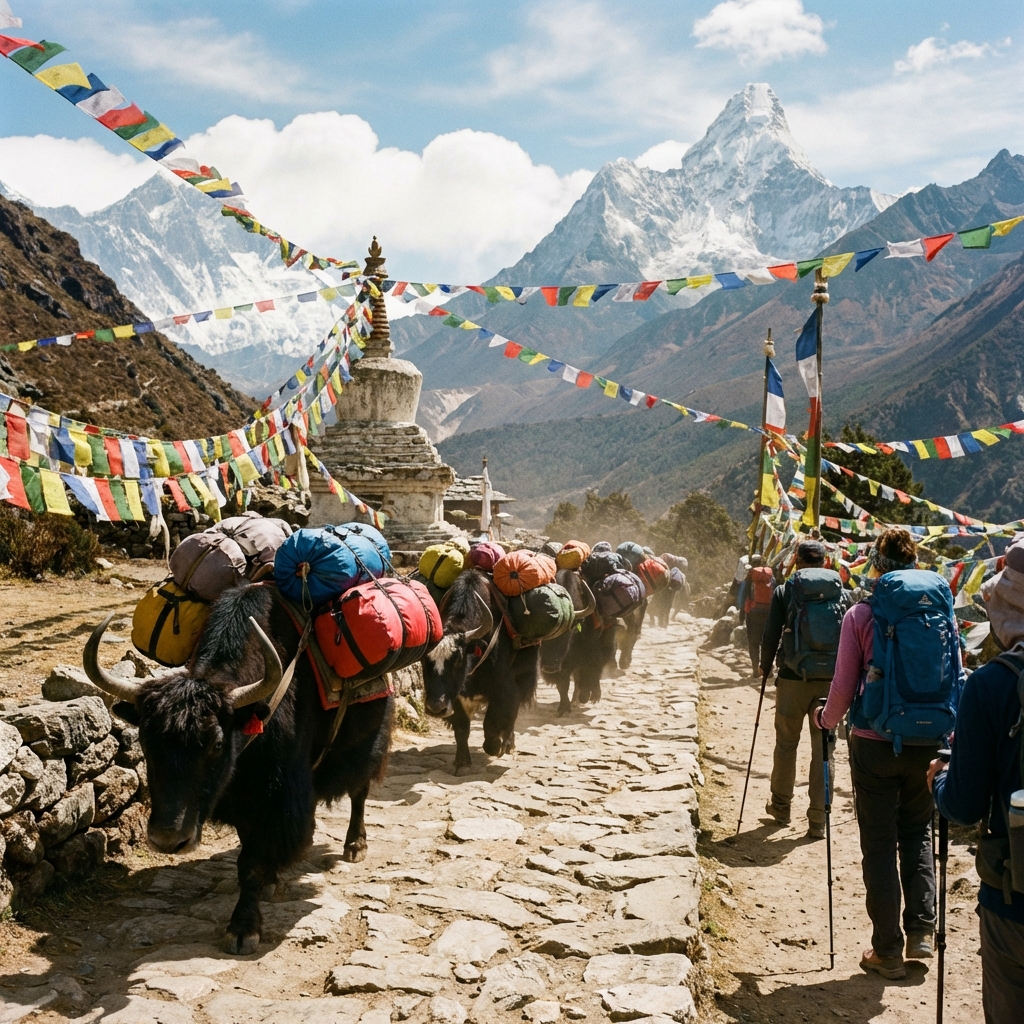
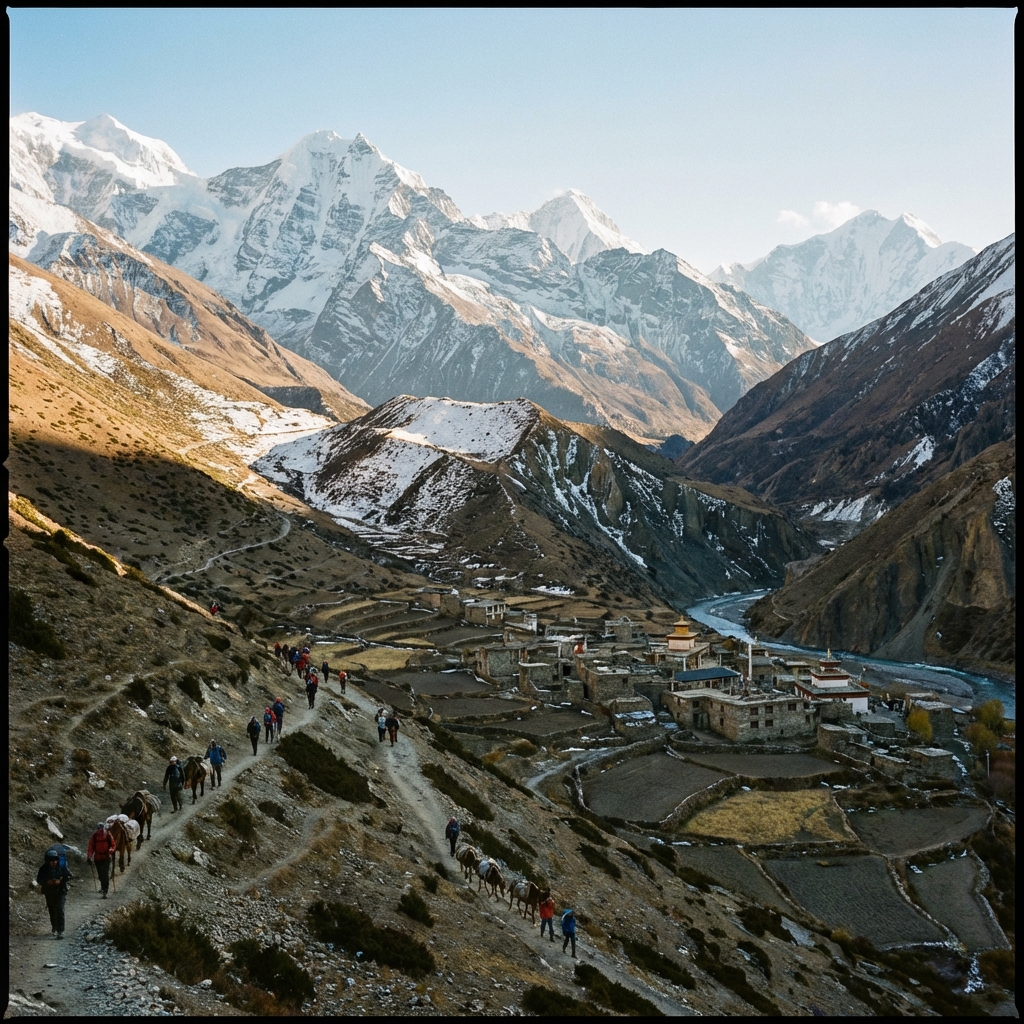
Trekking is multi-day walking that involves overnight stays along the route. In Nepal, this means walking from village to village over several days or weeks, sleeping in mountain lodges (tea houses) or tents each night. Trekking trails in Nepal are generally well-established paths—you're walking, not climbing.
Mountaineering involves technical climbing on peaks. This requires specialized equipment (ropes, crampons, ice axes), technical skills, and often high-altitude experience. Mountaineering expeditions target specific summits and involve significant risk.
The Key Distinction
Nepal trekking is essentially extended hiking with overnight stays in the mountains. You don't need technical climbing skills, specialized equipment, or mountaineering experience. If you can walk up stairs and hills for several hours, you can trek in Nepal.
What Makes Nepal Trekking Unique
Nepal offers something no other country can match: the world's most developed trekking infrastructure combined with the planet's most spectacular mountain scenery.
The Geography: Nepal contains eight of the world's fourteen 8,000-meter peaks, including Mount Everest (8,849m). The terrain rises from tropical lowlands at 60 meters to the world's highest point across just 150 kilometers—creating incredible ecological and cultural diversity along trek routes.
The Infrastructure: Unlike most mountain destinations, Nepal has an extensive network of tea houses (mountain lodges) along popular routes. This means you can trek for weeks carrying only a daypack while sleeping in beds and eating hot meals prepared by local families.
The Culture: Trekking in Nepal isn't just about mountains—it's about walking through living communities. You'll pass through villages of Sherpa, Tamang, Gurung, and other ethnic groups, each with distinct traditions, architecture, and cuisine. Buddhist monasteries, Hindu temples, and ancient trade routes add layers of cultural richness.
The Accessibility: Despite featuring the world's highest mountains, Nepal trekking is remarkably accessible. Standard routes require no technical skills, permits are straightforward, and the tea house system makes logistics simple. You don't need to be an elite athlete or have previous mountain experience.
Who Can Trek in Nepal?
Short answer: almost anyone with reasonable health and basic fitness.
Successful Nepal trekkers include:
- Complete beginners who've never done multi-day hiking
- Families with children as young as 8-10 years old
- Senior trekkers in their 60s and 70s
- People with modest fitness who train appropriately
- Solo travelers, couples, and groups of friends
- Professionals using vacation time for adventure
Nepal trekking is NOT limited to:
- Ultra-fit athletes (though fitness helps)
- Young backpackers (all ages participate)
- Experienced outdoor adventurers (beginners do fine)
- People with endless vacation time (treks range from 4 days to 3 weeks)
The key factors for success are choosing the right trek for your fitness level, preparing appropriately, and maintaining realistic expectations about the challenge ahead.
Pro Tip
If you're unsure whether you're fit enough, choose an easier beginner trek (Poon Hill, Helambu) for your first experience. These routes let you test your capabilities at lower altitudes and shorter durations before committing to more challenging journeys.
Types of Trekking in Nepal
Not all Nepal treks are the same. Understanding the different styles helps you choose the right experience for your goals, budget, and comfort level.
Tea House Trekking (Most Common)
Tea house trekking is by far the most popular style in Nepal, accounting for roughly 90% of all trekking tourism. This is likely what you'll choose for your first trek.
How It Works: You walk from village to village along established routes, staying overnight in family-run mountain lodges called "tea houses." These lodges provide simple accommodation (twin rooms with beds) and meals (prepared fresh by the tea house kitchen). You carry only a daypack with your daily essentials while a porter or your main bag carries heavier items.
Why It's Popular:
- Comfortable: Sleep in beds, not tents. Eat hot meals, not freeze-dried food.
- Lightweight: No tents, cooking equipment, or food supplies to carry
- Cultural: Stay with local families, experience authentic mountain hospitality
- Flexible: Change plans easily, extend or shorten your trek
- Social: Meet other trekkers in communal dining rooms
- Affordable: Significantly cheaper than camping treks
What Tea Houses Are Like: Tea houses range from very basic structures at high altitudes to comfortable multi-story lodges at lower elevations. Typical facilities include twin rooms with thin mattresses, shared bathrooms (often squat toilets), communal dining rooms, and basic electricity for charging devices. Hot showers are available at most locations for an additional fee.
Available Routes: Tea house infrastructure exists on all popular routes including Everest Base Camp, Annapurna Circuit, Annapurna Base Camp, Langtang Valley, Poon Hill, Manaslu Circuit, and many others.
Camping Treks
Camping treks involve carrying tents and setting up camp each night. This style is necessary for remote regions without tea house infrastructure.
How It Works: You hire a full trekking crew—guide, cook, kitchen assistant, and porters—who carry tents, cooking equipment, and food supplies. Camps are set up at designated camping spots or scenic locations. A cook prepares fresh meals in a kitchen tent.
When It's Necessary:
- Remote regions without tea houses (Upper Dolpo, Makalu, parts of Kanchenjunga)
- Off-season when tea houses close
- Very high altitude routes above tea house coverage
- Trekkers wanting complete wilderness experience
Advantages:
- Access remote, untouched areas
- Complete privacy and solitude
- Flexible camping locations
- Customized meals to your preferences
Disadvantages:
- Significantly more expensive ($90-150+ per day vs. $40-60 for tea house)
- Requires full crew (guide, cook, porters)
- More complex logistics
- Less cultural immersion with villages
Who It's For: Camping treks suit experienced trekkers seeking remote wilderness, those with larger budgets, or travelers heading to areas without lodges. Not recommended for first-time Nepal trekkers.
Tea House vs. Camping Treks
| 0 | 1 | 2 |
|---|---|---|
| Daily Cost | $40-70 with guide/porter | $90-150+ with full crew |
| Accommodation | Lodge rooms with beds | Tents on ground |
| Meals | Lodge kitchen prepares | Personal cook prepares |
| Pack Weight | 5-8kg daypack | 5-8kg (crew carries rest) |
| Cultural Experience | High (stay in villages) | Low (camp separately) |
| Flexibility | Very high | Moderate (crew logistics) |
| Available Routes | Popular established trails | Can go anywhere |
| Best For | First-timers, most trekkers | Remote areas, experienced trekkers |
Guided vs. Independent Trekking
This is where Nepal trekking has changed significantly in recent years.
The New Regulation (April 2023): Nepal now requires all foreign trekkers in national parks and conservation areas to hire a licensed guide. This regulation covers virtually all trekking routes. Solo independent trekking is no longer permitted.
What This Means for You:
- You must hire at least a licensed guide for any trek
- Guides must be registered with Nepal Tourism Board
- Fines and deportation possible for violations
- Guide requirement applies to all foreign nationals
Guide Options:
Licensed Guide ($25-35/day): Provides navigation, safety monitoring, cultural interpretation, and logistical support. Carries only their personal gear.
Porter-Guide ($25-30/day): Combines guide and porter roles—carries your bag AND provides basic guiding. Good budget option but less specialized in either role.
Guide + Porter ($45-60/day total): Best option for comfortable trekking. Guide provides expertise while porter handles your luggage. You walk with just a daypack.
Important: Guide Requirement
Since April 2023, hiring a licensed guide is mandatory for all trekking in Nepal's national parks and conservation areas. This includes all popular routes. Budget for guide costs from the start, and ensure your guide has proper NTB (Nepal Tourism Board) registration.
Why Guides Are Valuable Beyond the Legal Requirement:
Even before the mandate, experienced trekkers recommended guides for first-timers:
- Navigation: Even well-marked trails have confusing junctions, especially in poor weather
- Safety: Guides recognize altitude sickness symptoms and coordinate emergency response
- Cultural Bridge: Translation, cultural context, and deeper understanding of communities
- Logistics: Tea house booking, meal ordering, problem-solving
- Local Support: Money stays in Nepali communities
The Trekking Experience: What to Expect
Understanding what a typical trekking day looks like helps you prepare mentally and practically. Here's a realistic picture of the tea house trekking experience.
A Typical Day on the Trail
6:00-6:30 AM - Wake Up
Your day starts early. Tea house life runs on daylight hours, and you'll want to take advantage of morning weather (usually clearest). Expect to wake to cold rooms—tea houses aren't heated—and the sounds of other trekkers stirring.
7:00-8:00 AM - Breakfast
Gather in the communal dining room (often the only warm space thanks to a morning stove) for breakfast. Options typically include porridge, eggs, pancakes, Tibetan bread, and toast, with plenty of tea and coffee. Order something substantial—you'll need the calories.
8:00-12:30 PM - Morning Trek
This is your primary hiking block, usually 3-4 hours of walking. Morning energy levels are highest, and this is when you'll tackle the day's significant climbs. Stop every 45-60 minutes for short breaks, drink water consistently, and snack on trail food.
12:30-2:00 PM - Lunch
Arrive at a tea house for lunch. Remove boots, rest legs, and rehydrate. Popular choices include dal bhat (rice, lentils, vegetables—unlimited refills), noodle soup, fried rice, or momos (dumplings). Allow 30-45 minutes for food preparation—kitchens cook fresh.
2:00-4:30 PM - Afternoon Trek
Resume hiking for another 1.5-3 hours. This session is often mentally harder—you're tired, the afternoon sun can be strong, and your pack feels heavier. Frequent breaks help.
4:30-5:30 PM - Arrive at Destination
Reach your overnight stop, check into a tea house, secure a room, and finally remove your boots. Immediate relief.
5:30-7:30 PM - Rest and Social Time
Unpack, wash up (shower if available and desired), and gather in the dining room. This is the social heart of tea house trekking—playing cards with other trekkers, sharing trail stories, and warming up around the stove.
7:30-9:00 PM - Dinner and Wind Down
Dinner is served, usually communally. Dal bhat remains the best value (unlimited refills help recovery). Afterwards, finalize plans for tomorrow, make one last bathroom trip, and retreat to your room.
9:00-9:30 PM - Sleep
You'll be tired enough that 9 PM bedtime feels natural. Slip into your sleeping bag quickly—the room is cold—and attempt sleep despite altitude effects, unfamiliar sounds, and neighboring room noises through thin walls.
Tea House Accommodation Explained
Tea houses are the backbone of Nepal trekking. Understanding what they are and what to expect eliminates surprises.
What Tea Houses Are: Tea houses are family-run mountain lodges along trekking routes that provide accommodation, meals, and basic services to trekkers. They evolved from simple rest stops where traders could get tea into the comprehensive hospitality network that exists today.
The Business Model: Room rates are deliberately low ($3-10/night) because tea houses make their profit from food and services. This means you're expected to eat meals at the lodge where you stay—eating elsewhere is considered poor form and undermines the business model that makes affordable trekking possible.
Room Types and Conditions:
- Twin rooms are standard: two single beds with thin foam mattresses, usually 8-12 square meters
- Walls are thin: You'll hear neighbors' conversations, snoring, and other sounds
- Rooms are unheated: Temperature matches outside air at night
- Bedding provided: Blankets and pillows, though you should bring a sleeping bag
- Electricity: Usually available for lighting, sometimes a socket for charging
Bathroom Facilities:
- Shared bathrooms are the norm (2-4 toilets for 10-20 rooms)
- Squat toilets become more common at higher altitudes
- Bring your own toilet paper (tea houses don't provide it)
- Hot showers are available for $2-5 extra but not at all locations
- Bathrooms are cold, especially for nighttime trips
Quality Varies by Altitude:
- Below 3,000m: Better rooms, Western toilets, reliable hot showers, WiFi
- 3,000-4,000m: Basic but adequate facilities, squat toilets more common, showers available but expensive
- Above 4,000m: Very basic structures, minimal facilities, hot showers rare or nonexistent
Pro Tip
Bring a sleeping bag rated for your trek's altitude, a sleeping bag liner for hygiene, earplugs for thin-walled rooms, and a headlamp for nighttime bathroom trips. These items dramatically improve comfort.
Food and Meals on the Trail
Tea house food is simple, filling, and surprisingly varied.
The Staples:
Dal Bhat: Rice, lentil soup, and vegetable curry. This is Nepal's national dish and the best value on any menu—you get unlimited refills. Many trekkers eat dal bhat twice daily.
Momos: Tibetan dumplings filled with vegetables or meat, served steamed or fried.
Noodle dishes: Fried noodles, noodle soup, thukpa (Tibetan noodle soup).
Fried rice: Simple but satisfying carbohydrates.
Tibetan bread: Fried bread, often served with honey for breakfast.
Western options: Pizza, pasta, and pancakes are available at most tea houses, though quality varies significantly.
Food Safety: Stick to freshly cooked, hot food. Avoid raw vegetables (unless you can peel them), uncooked items at altitude, and meat at very high elevations (refrigeration is questionable). Digestive issues are common but usually mild—bring medication for stomach upset.
Costs Increase with Altitude: A dal bhat costing $5 at 2,500m might cost $10 at 4,500m. Everything must be carried to high altitude, making prices rise predictably.
Hydration: Drink 3-4 liters of water daily. Options include bottled water (expensive, environmentally problematic), filtered water from ACAP stations, or water purification tablets/SteriPen (bring from home).
Trail Conditions
Nepal's trekking trails vary from well-maintained stone paths to rough mountain tracks.
What You'll Walk On:
- Stone steps (thousands of them, often steep)
- Dirt paths through villages and forests
- Rocky trails across high alpine terrain
- Occasional suspension bridges
- Snow on high passes during certain seasons
What You Won't Encounter on Standard Treks:
- Technical climbing sections
- Rope work or glacier crossings
- Dangerous exposed ridges (routes are designed for walkers)
- Equipment-intensive terrain
Trail Challenges:
- Altitude: The biggest challenge—thin air makes everything harder
- Elevation changes: Expect 300-800m gain/loss daily
- Stone steps: Especially in the Annapurna region, endless stone staircases
- Weather: Sudden changes, especially afternoon clouds or rain
- Uneven surfaces: Twisted ankles are a risk, especially when tired
Key Concepts Every Beginner Must Know
Before diving into specific planning, you need to understand several foundational concepts that affect every Nepal trek.
Altitude and Acclimatization Basics
Altitude is the single most important factor in Nepal trekking. Understanding it prevents problems.
What Happens at Altitude: At sea level, air contains roughly 21% oxygen. That percentage stays the same at altitude, but lower atmospheric pressure means each breath delivers less oxygen to your body. Your body must adapt, and this takes time.
Where Altitude Effects Begin:
- Below 2,500m: No significant effects for most people
- 2,500-3,500m: Mild shortness of breath during exertion, possible sleep disruption
- 3,500-4,500m: Noticeable breathlessness, headaches possible, significant fatigue
- Above 4,500m: High risk of Acute Mountain Sickness (AMS) if not acclimatized
Acute Mountain Sickness (AMS): AMS occurs when you ascend faster than your body can adapt. Symptoms include headache, nausea, fatigue, dizziness, and sleep problems. Severe AMS can progress to life-threatening conditions (HACE, HAPE).
Prevention Strategies:
- Ascend gradually: No more than 300-500m increase in sleeping altitude per day above 3,000m
- "Climb high, sleep low": Take day hikes to higher elevations, then return to sleep lower
- Stay hydrated: 3-4 liters of water daily
- Walk slowly: "Bistari, bistari" (slowly, slowly) is Nepal's trekking mantra
- Communicate symptoms: Tell your guide immediately if you feel unwell
- Consider Diamox: Acetazolamide helps prevent/treat AMS (consult your doctor)
When to Descend
If you experience severe symptoms—confusion, difficulty walking straight, severe vomiting, or shortness of breath at rest—descend immediately, even at night. Severe AMS can progress to life-threatening conditions within hours. Descent is the only reliable treatment.
Beginner Trek Altitude Considerations:
- Poon Hill (3,210m): Very low altitude risk—virtually no concerns
- Helambu (3,650m): Low risk with normal gradual ascent
- ABC (4,130m): Low-moderate risk—follow acclimatization guidelines
- Langtang (4,773m optional): Moderate risk—include rest days
- EBC (5,364m): Higher risk—requires careful acclimatization schedule
Permits and Regulations
Nepal requires permits for all trekking in protected areas. Understanding the system prevents problems at checkpoints.
Types of Permits:
TIMS (Trekkers' Information Management System):
- Required for most treks
- Obtained through trekking agencies or tourism offices
- Cost: Free when arranged through agencies with licensed guides
- Purpose: Safety tracking of trekkers
Conservation Area Permits:
- ACAP (Annapurna Conservation Area Permit): For all Annapurna region treks
- SNNP (Sagarmatha National Park Permit): For Everest region treks
- Langtang National Park Permit: For Langtang/Helambu treks
- Cost: NPR 3,000 ($22-25) each
Restricted Area Permits: Some regions (Upper Mustang, Upper Dolpo, Manaslu, etc.) require special permits costing $50-500+ with mandatory organized group travel.
How to Get Permits:
- Through your agency: Most convenient—they handle everything
- Nepal Tourism Board office: In Kathmandu or Pokhara
- ACAP office: In Kathmandu or Pokhara for Annapurna permits
Checkpoint System: Permits are checked at multiple points along trails. Keep permits accessible and don't lose them—replacement involves significant bureaucracy.
Guide and Porter System
Understanding how guides and porters work helps you make informed decisions.
Licensed Guides:
- Must be registered with Nepal Tourism Board (NTB)
- Required by law since April 2023
- Provide navigation, safety monitoring, cultural interpretation
- Carry only their personal gear
- Daily rate: $25-35
Porters:
- Carry trekker's main bag (up to 20-25kg for two trekkers)
- Do not provide guiding services
- Often speak limited English
- Daily rate: $20-25 (for two trekkers sharing)
Porter-Guides:
- Combine both roles—carry bags AND provide basic guiding
- Good budget option
- Less specialized than dedicated guide or porter
- Daily rate: $25-30
What's Included in Guide/Porter Costs:
- Guide/porter's daily wages (paid to them)
- Guide/porter's food and accommodation (you typically pay this)
- Insurance (responsibility of agency)
- Tips at trek end (you pay, $20-$30 /day recommended)
Finding Good Guides:
- Book through established trekking agencies
- Verify NTB registration
- Read reviews on TripAdvisor, Google
- Clarify English proficiency if important to you
- Discuss expectations before committing
Seasons and Weather
Nepal has distinct trekking seasons that significantly impact your experience.
Autumn (October-November) - Peak Season:
- Weather: Clear skies, stable conditions, excellent mountain visibility
- Temperature: Warm days (15-20°C), cool nights (5-10°C at mid-altitude)
- Crowds: High—popular routes are busy
- Best for: First-time trekkers wanting ideal conditions
Spring (March-May) - Second Peak Season:
- Weather: Clear mornings, possible afternoon clouds
- Temperature: Warmer than autumn, can be hot at low altitude
- Special feature: Rhododendron forests in spectacular bloom (March-April)
- Best for: Trekkers who prefer warmer temperatures and spring flowers
Winter (December-February) - Off-Season:
- Weather: Clear skies but very cold, especially at altitude
- Temperature: Below freezing at night above 3,000m
- Crowds: Minimal—genuine solitude
- Best for: Experienced trekkers seeking quiet trails (lower-altitude treks only)
Monsoon (June-September) - Not Recommended:
- Weather: Heavy rain, muddy trails, poor visibility
- Challenges: Leeches, landslide risk, flight cancellations
- Exception: Rain-shadow areas (Upper Mustang, Upper Dolpo)
Trekking Seasons Compared
| 0 | 1 | 2 | 3 |
|---|---|---|---|
| Autumn (Oct-Nov) | Clear, stable, excellent views | High | All routes |
| Spring (Mar-May) | Clear mornings, rhododendrons | Moderate-High | All routes, especially Annapurna |
| Winter (Dec-Feb) | Clear but very cold | Low | Low-altitude only (Poon Hill, Helambu) |
| Monsoon (Jun-Sep) | Heavy rain, poor visibility | Very Low | Rain-shadow areas only |
What You Need for Nepal Trekking
With foundational concepts understood, let's cover what you need to prepare.
Physical Preparation Overview
You don't need to be an elite athlete, but you do need adequate fitness for your chosen trek.
Minimum Fitness for Easy Treks (Poon Hill, Helambu):
- Able to walk 4-6 hours on varied terrain
- Comfortable hiking 8-10km with 300-500m elevation gain
- Some experience with multi-hour outdoor activities
- 4-6 weeks of preparation training
Fitness for Moderate Treks (ABC, Langtang, Mardi Himal):
- Able to walk 5-7 hours with significant elevation changes
- Comfortable hiking 12-15km with 500-800m elevation gain
- Regular hiking or endurance activities
- 6-8 weeks of preparation training
Training Principles:
- Build cardio base: Walking, hiking, stair climbing 4-5 times per week
- Strengthen legs: Squats, lunges, step-ups, calf raises
- Practice with pack: Train with your actual daypack weight
- Stair climbing: Specifically prepares for Nepal's stone steps
- Build duration: Work up to 3-4 hour training hikes
8-Week Training Framework:
- Weeks 1-2: Establish routine, 30-45 minute sessions, 4x per week
- Weeks 3-4: Increase to 45-60 minutes, add pack weight
- Weeks 5-6: Weekend hikes of 3-4 hours, back-to-back days
- Weeks 7-8: Peak with 4-5 hour hikes, then taper before departure
Pro Tip
If you live somewhere flat, find a tall building with stairs and climb repeatedly. This specifically prepares for Nepal's endless stone staircases and is more relevant training than gym cardio equipment.
Essential Gear Basics
You don't need expensive technical equipment for standard treks, but certain items are essential.
The Essentials:
Footwear:
- Trekking boots: Ankle support, broken in before trip (50+ km of use)
- Camp shoes/sandals: For tea house evenings
Clothing Layers:
- Base layer: Moisture-wicking thermal underwear
- Mid layer: Fleece or down jacket for warmth
- Outer layer: Waterproof/windproof jacket
- Down jacket: Essential above 3,000m (can rent in Kathmandu)
Sleeping Gear:
- Sleeping bag: Temperature rated for your trek's altitude (can rent)
- Sleeping bag liner: For hygiene and extra warmth
Day Pack:
- 25-35 liters for daily essentials
- Rain cover included
Other Essentials:
- Trekking poles (highly recommended, reduce knee strain)
- Headlamp with spare batteries
- Water bottles/hydration system
- Sun protection (hat, sunglasses, sunscreen)
- Basic first aid kit
- Personal medications
- Toilet paper in ziplock bags
- Hand sanitizer
What to Rent in Nepal: Sleeping bags, down jackets, and trekking poles can be rented in Kathmandu or Pokhara for $1-2/day each. Quality varies—inspect before renting.
What to Buy at Home: Boots (fit is critical), base layers, rain jacket, personal items. Don't gamble on fit for items that cause blisters or fail when you need them.
Budget Expectations
Understanding realistic costs helps you plan appropriately.
All-Inclusive Package Costs (2026 Estimates):
| Trek | Budget Package | Standard Package | Premium Package |
|---|---|---|---|
| Poon Hill (4-5 days) | $350-450 | $500-700 | $800-1,000 |
| Langtang (8 days) | $600-800 | $900-1,200 | $1,400-1,800 |
| ABC (12 days) | $900-1,200 | $1,300-1,800 | $2,000-2,500 |
| EBC (14 days) | $1,200-1,500 | $1,700-2,200 | $2,500-3,500 |
What Packages Typically Include:
- Licensed guide
- Porter (standard/premium packages)
- All permits
- Tea house accommodation
- All meals during trek
- Transportation to/from trailhead
- Guide/porter insurance
What Packages Don't Include:
- International flights to Nepal
- Nepal visa ($30-50)
- Pre/post-trek accommodation
- Travel insurance
- Personal gear
- Hot showers ($2-5 each)
- WiFi charges ($3-5/day)
- Drinks beyond basic tea
- Tips for guide/porter
- Emergency evacuation
Daily Costs if Arranging Independently:
- Accommodation: $5-15/night
- Meals: $20-35/day
- Guide (with food/accommodation): $45-55/day
- Porter (optional, with food/accommodation): $35-45/day
Other Nepal Expenses:
- Nepal visa: $30 (15 days) to $50 (30 days)
- Pre-trek Kathmandu accommodation: $15-40/night
- Kathmandu meals: $5-15/day
- Travel insurance: $50-150
- Gear rental (if needed): $120-$280 for trek duration
- Domestic flights (if needed): $100-350
Complete Trip Budget Example (Poon Hill, 10 days total in Nepal):
- Trek package (5 days): $500
- Kathmandu accommodation (4 nights): $80
- Meals in Kathmandu: $50
- Visa: $30
- Travel insurance: $70
- Tips for guide/porter: $60
- Miscellaneous: $60
- Nepal total: ~$850
- International flights: $700-1,500 (varies by origin)
- Complete trip: $1,550-2,350
Time Requirements
How much vacation time do you need?
Minimum Trip Lengths by Trek:
| Trek | Trekking Days | Travel Days | Minimum Nepal Time |
|---|---|---|---|
| Poon Hill | 4-5 | 2-3 | 7-8 days |
| Helambu | 5-6 | 2-3 | 8-9 days |
| Mardi Himal | 5-7 | 2-3 | 8-10 days |
| Langtang Valley | 7-9 | 2-3 | 10-12 days |
| ABC | 10-12 | 3-4 | 14-16 days |
| EBC | 12-14 | 4-5 | 17-19 days |
| Annapurna Circuit | 12-18 | 3-4 | 16-22 days |
Why Extra Days Matter:
- Acclimatization in Kathmandu: 1-2 days to recover from jet lag
- Weather buffer: Flights can be delayed, trails can be snowed in
- Flexibility: Rest days on trek if feeling altitude effects
- Exploration: Kathmandu/Pokhara deserve some time
Don't Rush
Many trekkers regret choosing the shortest possible itinerary. Extra days allow proper acclimatization, rest when needed, and actually enjoying the experience rather than just surviving it. If possible, add 2-3 buffer days to any trek duration.
Popular Beginner Routes Overview
Here's a brief introduction to the most suitable first-time treks. Each offers a different experience while remaining accessible to beginners.
Poon Hill Trek (3-5 Days)
The Essentials: Maximum altitude 3,210m, duration 4-5 days, difficulty easy-moderate
Why It's Perfect for First-Timers: Poon Hill is Nepal's most popular short trek and arguably the best introduction to Himalayan trekking. The relatively low altitude presents virtually no altitude sickness risk, while the iconic sunrise viewpoint delivers panoramic views of Dhaulagiri (8,167m), Annapurna I (8,091m), and Machapuchare's distinctive fishtail peak.
What You'll Experience: Rhododendron forests (spectacular in March-April), traditional Gurung villages, well-maintained trails, excellent tea house infrastructure, and some of Nepal's best mountain panoramas without the commitment of longer treks.
The Challenge: Day 2 features 3,000+ stone steps ascending from Tikhedhunga to Ghorepani. This is physically demanding but achievable at any pace.
Best For: First-time trekkers, those with limited time, families, anyone wanting to test their trekking capabilities before committing to longer routes.
Langtang Valley Trek (7-10 Days)
The Essentials: Maximum altitude 4,773m (optional viewpoint), duration 8-9 days, difficulty moderate
Why It's Good for Beginners: Langtang Valley offers the classic moderate trekking experience closest to Kathmandu. The "Valley of Glaciers" provides spectacular mountain scenery, rich Tamang Buddhist culture, and the experience of high-altitude environments without extreme difficulty.
What You'll Experience: Bamboo and rhododendron forests, Tamang villages with Tibetan influence, Buddhist monasteries, yak cheese factory at Kyanjin Gompa, and dramatic glaciated peaks surrounding the valley.
The Challenge: Daily walking averages 5-7 hours with meaningful altitude gain. The optional Kyanjin Ri viewpoint (4,773m) is steep and demanding at altitude.
Best For: Fit beginners wanting a moderate challenge, those with 8-10 days, travelers seeking culture alongside scenery, budget-conscious trekkers (closer to Kathmandu = lower transport costs).
Annapurna Base Camp (10-14 Days)
The Essentials: Maximum altitude 4,130m, duration 11-13 days, difficulty moderate
Why It's Iconic: ABC is Nepal's most beloved moderate-altitude journey. The Annapurna Sanctuary—a sacred amphitheater ringed by 7,000-8,000m peaks—ranks among trekking's most spectacular destinations and is genuinely achievable for fit first-timers.
What You'll Experience: Incredible ecological diversity from subtropical bamboo to high alpine, traditional Gurung villages, dramatic river gorges, and the ultimate destination: standing at 4,130m surrounded by massive peaks on all sides.
The Challenge: Longer duration requires more vacation time and stamina. The 3,000+ stone steps from Chomrong challenge knees on both ascent and descent. You'll walk 5-7 hours daily for 10-12 consecutive days.
Best For: Fit beginners with 12-14 days, those wanting an iconic destination, nature enthusiasts, trekkers seeking the "full Himalayan experience."
Pro Tip
If you're unsure which trek to choose, start with Poon Hill. Completing a shorter trek first lets you understand your body's response to altitude, your comfort with tea house conditions, and your overall enjoyment of multi-day trekking. You can always return for longer adventures.
Getting Started: Step-by-Step
Ready to plan your first trek? Here's the practical process from decision to departure.
Step 1: Choose Your Trek (2-4 Months Before)
Consider these factors:
- Available time: Match trek duration to your vacation days
- Fitness level: Be honest about your current condition
- Season: Check optimal timing for your chosen route
- Budget: Include all costs, not just the trek package
- Priorities: Mountain views, cultural immersion, solitude, challenge?
Decision Framework:
- 4-5 days available: Poon Hill or Ghorepani-Ghandruk
- 5-7 days available: Mardi Himal or Helambu
- 8-10 days available: Langtang Valley
- 12-14+ days available: ABC, EBC, Annapurna Circuit
Step 2: Book Your Trek (6-8 Weeks Before)
Options:
Through a Nepal-Based Agency (Recommended for first-timers):
- Handles all logistics: permits, guide, porter, accommodation, transport
- Provides complete packages with clear pricing
- Offers support before and during trek
- Research agencies through reviews (TripAdvisor, Google)
- Request detailed itinerary and inclusions before booking
Through an International Tour Operator:
- More expensive but more hand-holding
- Often includes international flights and pre/post-trek touring
- Better for those wanting zero planning responsibility
- Suited for those with larger budgets
What to Verify Before Booking:
- Agency is registered with Nepal Tourism Board
- Guide is licensed (NTB registration)
- What's included vs. excluded in the price
- Cancellation policy
- Insurance coverage for guides/porters
- Group size (if joining a group)
Step 3: Prepare Physically (6-8 Weeks Before)
Start training immediately after booking:
- Follow the 8-week training framework outlined earlier
- Focus on hiking with pack, stair climbing, and building endurance
- Test all gear during training hikes
- Address any fitness gaps early
Step 4: Gather Gear (4-6 Weeks Before)
Buy at Home:
- Trekking boots (break in immediately)
- Base layers and rain jacket
- Daypack
- Personal items (first aid, medications, toiletries)
Plan to Rent in Nepal:
- Sleeping bag
- Down jacket
- Trekking poles (if you don't own them)
Create a Packing List: Work from a proven checklist rather than inventing your own. Pack light—every gram matters at altitude.
Step 5: Handle Logistics (2-4 Weeks Before)
Travel Insurance: Purchase comprehensive coverage that explicitly covers:
- Trekking to your maximum altitude (verify the policy limit)
- Helicopter evacuation (typically $3,000-10,000 without insurance)
- Trip cancellation and interruption
- Medical expenses abroad
Vaccinations: Consult a travel medicine clinic 6-8 weeks before departure. Common recommendations include Hepatitis A, Typhoid, and routine vaccines. No vaccinations are legally required for Nepal entry.
Nepal Visa: Obtain on arrival at Kathmandu airport ($30 for 15 days, $50 for 30 days). Bring passport photos and USD cash for efficiency.
Flights: Book international flights once trek dates are confirmed. Consider arrival in Kathmandu at least 2 days before trek start for acclimatization and jet lag recovery.
Step 6: Final Preparations (1 Week Before)
- Confirm all bookings with agency
- Print copies of insurance documents, permits, itinerary
- Digital copies on phone (offline accessible)
- Final gear check—nothing new or untested
- Download offline maps (Maps.me, Gaia GPS)
- Alert bank of Nepal travel (avoid card blocks)
- Arrange airport pickup with agency
Step 7: Arrive and Acclimate (1-2 Days Before Trek)
- Rest after long flights
- Hydrate extensively
- Explore Kathmandu or Pokhara
- Finalize permit paperwork if needed
- Buy any last-minute supplies
- Meet guide, review itinerary, ask questions
Frequently Asked Questions for Complete Beginners
General Questions
Q: Is Nepal trekking safe?
A: Yes, standard Nepal treks are remarkably safe. Trails are well-established, tea houses provide shelter, and rescue infrastructure exists. The main risks—altitude sickness, weather, and injury—are manageable with proper preparation, appropriate trek selection, and listening to your guide. Thousands of trekkers complete these routes successfully every year.
Q: Can I trek if I've never hiked before?
A: Yes, but choose an easier trek (Poon Hill, Helambu) and prepare with 6-8 weeks of training. Build up to multi-hour walks before departure. Many first-time trekkers are new to hiking and succeed with proper preparation.
Q: What if I can't finish the trek?
A: Withdrawal is always possible. Your guide will help arrange transport from the nearest road access. This happens occasionally due to altitude sickness, injury, or other issues—it's not a failure, it's sensible safety management. Travel insurance with trip interruption coverage helps financially.
Q: Do I need to speak Nepali?
A: No. English is widely spoken along popular routes, especially by guides and tea house staff. Your guide handles translation when needed. Learning basic phrases (Namaste = hello, Dhanyabad = thank you) is appreciated but not required.
Health and Fitness
Q: I'm not very fit. Can I still trek?
A: Yes, with the right trek and preparation. Choose the easiest option (Poon Hill) and commit to 8 weeks of training. Walk slowly on the trail. Many successful trekkers started as self-described "non-athletic" people who prepared appropriately.
Q: What about altitude sickness?
A: Altitude sickness affects some people above 2,500m regardless of fitness. Prevention involves gradual ascent, hydration, slow walking pace, and communication with your guide. Symptoms include headache, nausea, and fatigue. Severe cases require descent. Choosing treks with lower maximum altitudes reduces risk.
Q: What vaccinations do I need?
A: No vaccinations are legally required. Recommended: Hepatitis A, Typhoid, and routine vaccines (Tetanus, MMR). Consult a travel medicine clinic 6-8 weeks before departure.
Q: What about my medications?
A: Bring adequate supply of any prescription medications in original packaging with prescription documentation. Altitude can affect some conditions—consult your doctor before booking if you have heart, lung, or blood pressure issues.
Practical Concerns
Q: How do I go to the bathroom on the trail?
A: Tea houses have toilets (often squat style at higher altitudes). Between villages, use "nature's bathroom" following Leave No Trace principles: 200m from water, bury waste, pack out toilet paper. Bring your own toilet paper and hand sanitizer.
Q: Is there phone/internet service?
A: Mobile coverage exists in main villages along popular routes, though patchy between. WiFi is available at most tea houses for $3-5/day but is very slow. Download entertainment, maps, and guides before departure. Consider a local SIM card (Ncell or Nepal Telecom).
Q: How do I handle money?
A: Bring all cash in Nepali Rupees from Kathmandu or Pokhara—no ATMs exist on trails. Budget 30-50% more than calculated need for contingencies. Tea houses and services are cash only.
Q: What if there's bad weather?
A: Weather delays happen. Buffer days in your itinerary help. Your guide assesses conditions and makes safety decisions. Options include waiting, alternate routes, shortening the trek, or returning. Travel insurance with trip interruption coverage is important.
Cost and Logistics
Q: How much should I budget?
A: Nepal costs only (excluding international flight): $800-1,200 for short treks (Poon Hill), $1,200-1,800 for moderate treks (Langtang, ABC), $1,500-2,500 for longer treks (EBC, Annapurna Circuit). Add international flight costs ($700-1,500 from most origins).
Q: Should I book through an agency or arrange independently?
A: First-timers should book through an agency. The convenience, support, and reduced stress are worth the modest additional cost. Agencies handle permits, guides, logistics, and provide support if problems arise. Independent arrangement requires more knowledge and effort.
Q: How far in advance should I book?
A: For October peak season, book 6-8 weeks ahead. For other months, 3-4 weeks is adequate. Last-minute booking (1-2 weeks) is possible outside peak season but reduces options.
Q: What's the tipping custom?
A: Tipping guides and porters is expected. Standard rates: Guide $10-15 per trekking day, Porter $8-12 per day. Present at trek's end with thank you. Budget this from the start—it's meaningful income for them.
Related Resources
Continue your research with these in-depth guides:
Beginner Trek Selection:
- Best Nepal Treks for Beginners: 7 Perfect First Treks — Detailed comparison of all beginner-suitable routes
Understanding the Experience:
- What to Expect on Your First Nepal Trek — Brutally honest reality check for first-timers
- Tea House Trekking Explained — Complete guide to lodge-based trekking
Planning Details:
- Nepal Trekking Permits Explained — Everything about ACAP, TIMS, and permit requirements
- Best Time to Trek Nepal — Detailed seasonal guide
- Nepal Trekking Packing List — Complete gear checklist
Route Guides:
- Poon Hill Trek Guide — Best short beginner trek
- Langtang Valley Trek Guide — Classic moderate trek
- Annapurna Base Camp Trek Guide — Iconic moderate destination
Safety:
- Altitude Sickness Signs and Turnaround Rules — Critical safety knowledge
Final Thoughts: You Can Do This
If you've read this far, you're serious about trekking in Nepal. Here's what we want you to know:
Trekking in Nepal is achievable for ordinary people. The trails are filled with teachers, accountants, students, retirees, and families—not just elite athletes or professional adventurers. What unites successful trekkers isn't superhuman fitness but rather appropriate preparation, realistic expectations, and willingness to embrace both challenge and discomfort.
Proper preparation transforms the experience. Follow a training plan. Choose the right trek for your fitness. Invest in good boots and essential gear. Book through a reputable agency. Get proper insurance. These decisions dramatically affect whether your trek becomes a life-highlight or a struggle to survive.
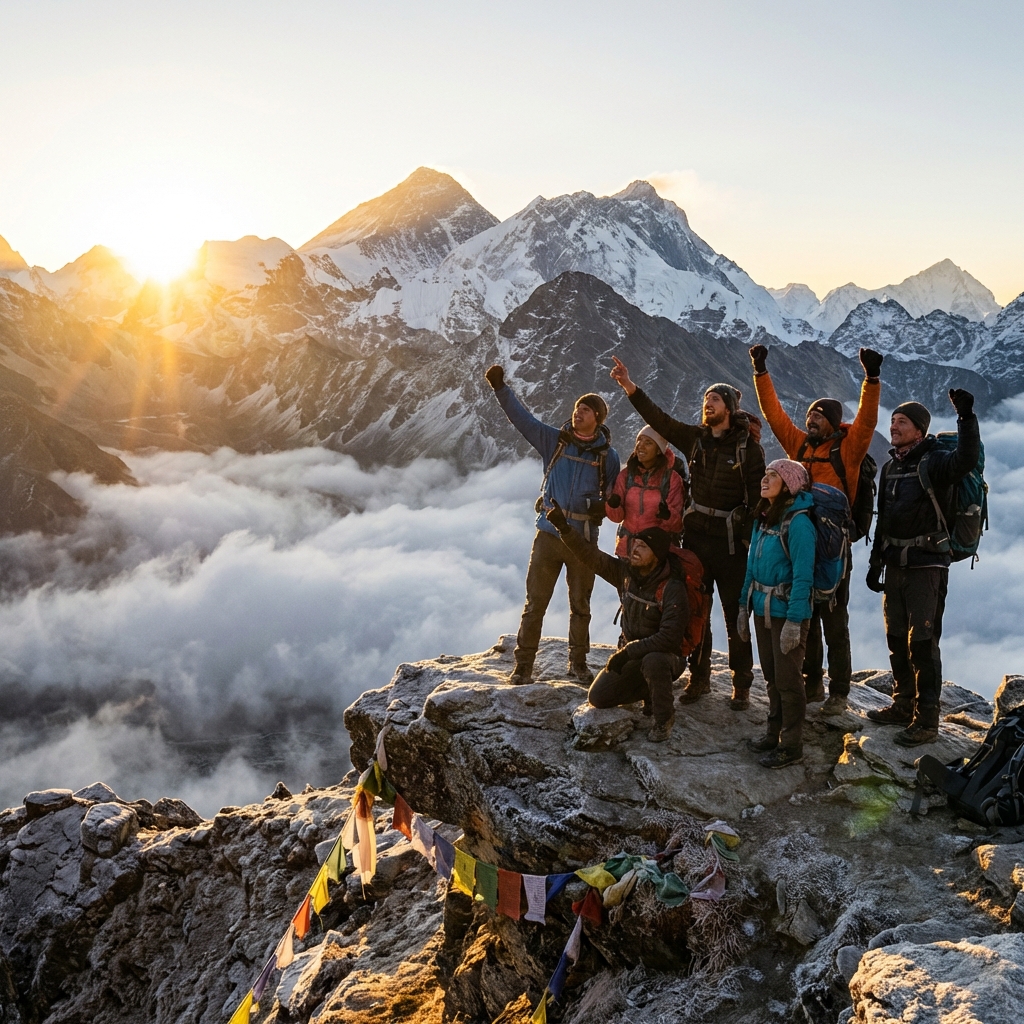
The rewards exceed the challenges. Yes, you'll be tired. Your legs will hurt. Some days will be hard. But you'll also experience moments of extraordinary beauty—sunrise over peaks you've only seen in photographs, warmth and hospitality from people whose lives differ vastly from yours, the deep satisfaction of accomplishing something physically demanding, and the surprising joy of simple things: hot tea after a cold morning, removing boots at day's end, connection with fellow trekkers around a dining room stove.
Start with a beginner trek. Poon Hill or Langtang are perfect introductions. They let you understand your body's response to altitude, your comfort with tea house conditions, and whether multi-day trekking suits you—all without the commitment of longer expeditions. Success on a first trek builds confidence and skills for bigger adventures later.
The mountains will still be there. You don't need to do Everest Base Camp on your first trip. Nepal has hundreds of routes across decades of potential visits. Start appropriately, enjoy the journey, and return for bigger challenges with more experience.
The trails are waiting. The question isn't whether you can do it—with the right trek and proper preparation, you can. The question is: when will you take the first step?
This guide is maintained by the Nepal Trekking Team with input from licensed guides, trekking agencies, and feedback from thousands of first-time trekkers. Last updated February 2026. For corrections or questions, contact our editorial team.