Best Treks October Nepal: 2026 Peak Season Guide
The best treks October Nepal offers are the Everest Base Camp, Annapurna Circuit, Annapurna Base Camp, Manaslu Circuit, and Langtang Valley treks. October delivers the clearest post-monsoon skies of the year, stable weather, comfortable temperatures, and all high passes open — making it the single best month for trekking in Nepal.
October is universally regarded as the single best month for trekking in Nepal. If you could only choose one month out of the entire year to experience the Himalayas on foot, October would be the overwhelming recommendation from guides, agencies, seasoned trekkers, and tourism authorities alike.
The reasons are compelling and converge into a perfect storm of ideal conditions. The monsoon retreats in late September or early October, leaving behind an atmosphere washed clean of dust and haze. Mountain views reach their absolute clearest. Temperatures settle into a comfortable range across most altitude bands. Trails have dried out from the monsoon rains but haven't yet accumulated the dust of the dry season. Vegetation remains lush and green from months of rainfall. And the festival season adds cultural richness to an already extraordinary experience.
But October also means crowds, higher prices, and the need to book far in advance. This comprehensive guide helps you navigate all of it: which treks are best suited for October conditions, how to manage the peak-season rush, what to expect weather-wise at every altitude, how the Dashain festival impacts your plans, and practical booking strategies to secure the trek you want.
Whether you are planning your first Himalayan adventure or your tenth, understanding October's unique characteristics will help you maximize every day on the trail.
Best month for trekking in Nepal (10/10)
Excellent - monsoon withdrawal complete by early-mid October
Best of the year - crystal-clear mountain views
Comfortable across all altitude bands
Excellent - dried but not dusty, minimal mud
Highest of the year - peak season
Highest - premium pricing on flights, lodges, agencies
Usually mid-October - significant logistical impact
Essential - 3-6 months ahead recommended
Yes - Thorong La, Cho La, Renjo La, Larkya La all accessible
Approximately 11.5 hours
All permits available but offices may close during Dashain
Why October Is the Best Month for Trekking in Nepal
Post-Monsoon Atmospheric Clarity
The single most important factor that makes October exceptional is visibility. During the monsoon months (June through September), moisture-laden air masses saturate the atmosphere, creating persistent cloud cover and haze that can obscure mountain views for weeks at a time. When the monsoon withdraws in late September to early October, it takes this atmospheric moisture with it.
The result is dramatic. Skies turn deep blue. The Himalayan peaks, freshly dusted with new snow from late-monsoon precipitation, stand in razor-sharp relief against these crystalline skies. Distant ranges that are invisible during other months suddenly become part of the panorama. Photography conditions reach their absolute peak.
This clarity is not just aesthetic. For trekkers navigating high passes or planning summit attempts on trekking peaks, clear visibility means better route-finding, safer travel, and the ability to read weather patterns approaching from the north and west.
Stable Weather Patterns
October's weather is remarkably predictable compared to the transitional months of September and November. The typical daily pattern follows a reliable rhythm:
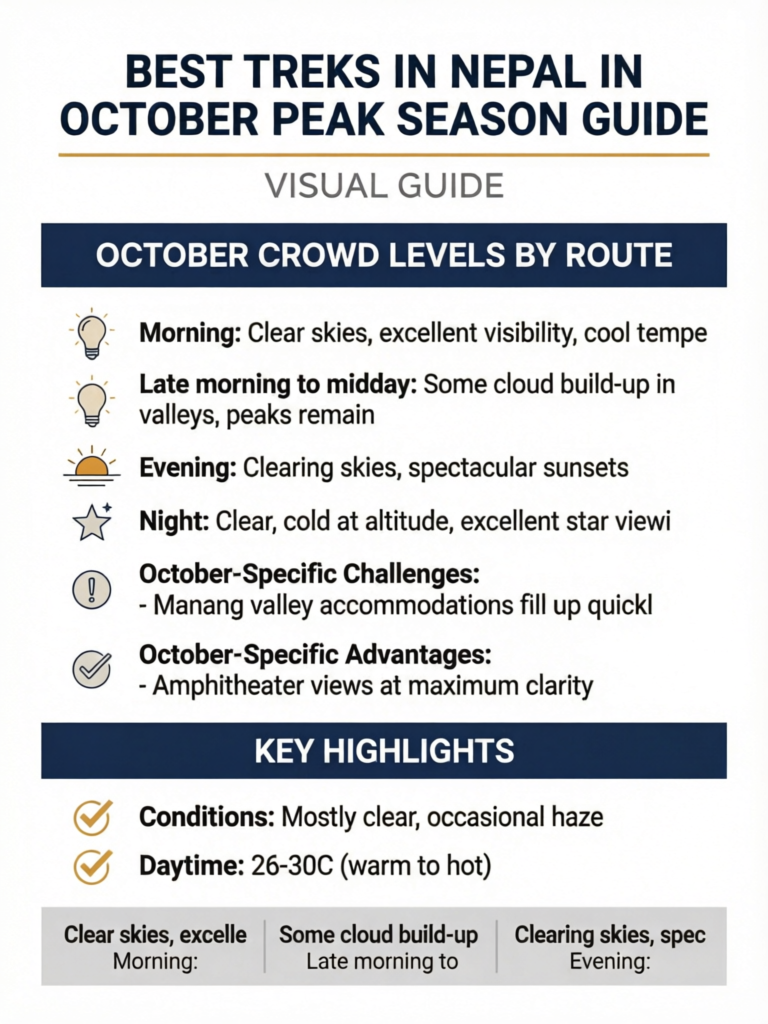
- Morning: Clear skies, excellent visibility, cool temperatures
- Late morning to midday: Some cloud build-up in valleys, peaks remain clear
- Afternoon: Possible light cloud cover at lower elevations, generally dry
- Evening: Clearing skies, spectacular sunsets
- Night: Clear, cold at altitude, excellent star viewing
Rain becomes increasingly rare as October progresses. Early October may still see occasional afternoon showers (the monsoon's last whisper), but by mid-to-late October, precipitation is essentially absent at trekking elevations.
Early October vs. Late October
Early October (1st-15th): Monsoon may still linger at lower elevations. Slightly warmer, marginally more cloud cover, but fewer crowds than late October. Lush vegetation at its greenest. Some trails still drying.
Late October (16th-31st): Virtually guaranteed clear weather. Cooler temperatures, especially at altitude. Peak crowd levels. Best period for high-altitude passes and summits. The absolute prime window for Himalayan photography.
Moderate Temperature Range
October hits the temperature sweet spot across all altitude bands. Unlike December and January, when cold can be brutal above 4,000 meters, October provides comfortable conditions from Kathmandu to Everest Base Camp and beyond.
| Altitude Band | Daytime High | Nighttime Low | Comfort Level |
|---|---|---|---|
| Kathmandu (1,400m) | 25-28C | 12-15C | Warm and pleasant |
| 2,000-3,000m | 18-22C | 5-10C | Ideal trekking temperature |
| 3,000-4,000m | 12-18C | 0-5C | Cool, comfortable with layers |
| 4,000-5,000m | 5-12C | -5 to 0C | Cold at night, pleasant by day |
| Above 5,000m | 0-8C | -10 to -5C | Cold, manageable with proper gear |
These moderate temperatures mean less extreme gear requirements. You still need a good sleeping bag and warm layers for altitude, but you won't face the bone-chilling conditions of winter treks.
Lush Post-Monsoon Landscapes
Four months of monsoon rain transform Nepal's landscapes into vibrant green tapestries. In October, you experience the tail end of this lushness before the dry season begins to brown everything. Rhododendron forests are deep green, waterfalls run full, rice terraces glow golden as the harvest approaches, and wildflowers still bloom at moderate altitudes.
This creates a visual richness that spring (March-May) can match but autumn surpasses in terms of atmospheric clarity combined with green landscapes. Spring has the famous rhododendron blooms, but October has clearer skies.
Pro Tip
The first two weeks of October often offer the best combination of green landscapes AND clear skies. By November, the vegetation starts drying out. If you want lush valleys with crystal-clear mountain backdrops, target early-to-mid October.
Top 10 Treks in Nepal for October (Ranked)
1. Everest Base Camp Trek
October Rating: 10/10
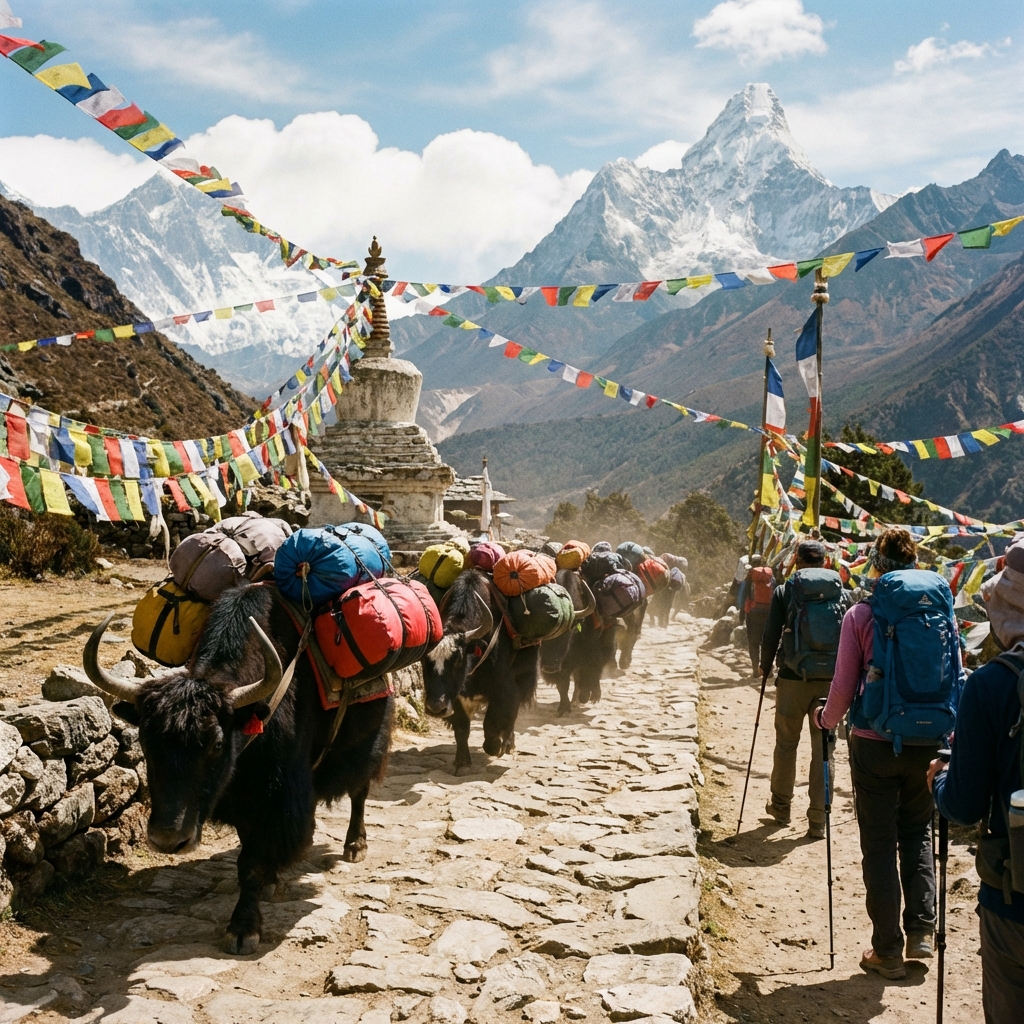
October is the definitive month for EBC. Clear skies reveal Everest, Lhotse, Nuptse, and Ama Dablam with stunning clarity. The Lukla flights, while still weather-dependent, have their highest reliability in October. Trail conditions are excellent above Namche Bazaar.
12-14 days
5,364m (Everest Base Camp)
Daytime: 0-5C | Night: -8 to -3C
Very High - busiest month
Sagarmatha National Park + TIMS/Guide
4-6 months for flights, 2-3 months for agency
October-Specific Advantages:
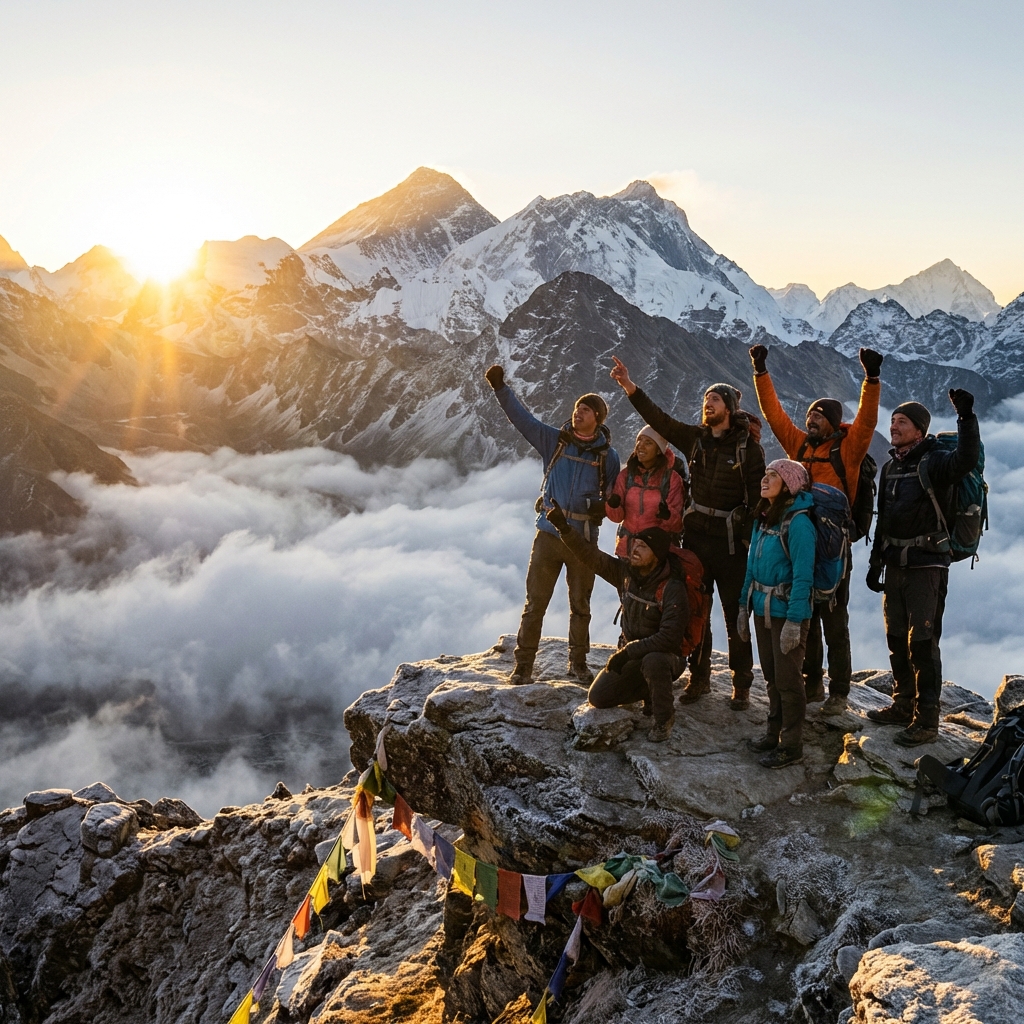
- Crystal-clear views of Everest from Kala Patthar at sunrise
- Comfortable daytime temperatures for walking, cold but manageable nights
- All teahouses open and fully staffed
- Best conditions for the optional Gokyo Lakes or Cho La Pass extensions
- Maximum chance of successful Lukla flights
October-Specific Challenges:
- Teahouses can fill up, especially at Namche, Tengboche, and Gorak Shep
- Lukla flights may still experience delays in early October
- Trail congestion at popular viewpoints during peak hours
- Premium pricing on everything from flights to lodge rooms
Crowd Management Strategy: Start your trek in the first week of October if possible. Most peak-season trekkers cluster in the second half of October. Alternatively, consider the Gokyo Lakes route, which receives roughly 30% fewer trekkers than the classic EBC route.
Learn more in our Everest Base Camp best time guide and EBC complete itinerary.
Pro Tip
Book your Lukla flights the moment you confirm your trek dates. October flights sell out months in advance. Consider booking a helicopter return from Lukla as a backup option. If your Lukla flight is delayed, a helicopter seat can save your itinerary from cascading disruptions.
2. Annapurna Circuit Trek
October Rating: 10/10
The full Annapurna Circuit in October is arguably Nepal's greatest trekking experience. You traverse multiple climate zones from subtropical to alpine, cross the legendary Thorong La Pass (5,416m) under clear skies, and descend into the Kali Gandaki valley with panoramic views of Dhaulagiri and Annapurna.
14-21 days (classic route)
5,416m (Thorong La Pass)
Daytime: -2 to 3C | Night: -12 to -6C
High on main route, moderate on alternatives
ACAP + TIMS/Guide
95%+ in clear conditions
October-Specific Advantages:
- Thorong La Pass at optimal conditions (minimal snow, clear visibility)
- Full range of climate zones experienced at their most pleasant
- Lower Annapurna region still lush and green
- Upper Manang valley bathed in clear, dry air
- Excellent photography conditions throughout the circuit
October-Specific Challenges:
- Manang valley accommodations fill up quickly
- Thorong La crossing can be congested on peak days
- Bus road construction has shortened the lower sections
Expert Recommendation: Consider adding the Tilicho Lake detour. At 4,919 meters, Tilicho Lake is one of the world's highest lakes, and October's clear conditions make the side trek spectacular. It also helps with acclimatization before Thorong La.
For detailed timing, see our best time for Annapurna Circuit guide.
3. Annapurna Base Camp Trek
October Rating: 9.5/10
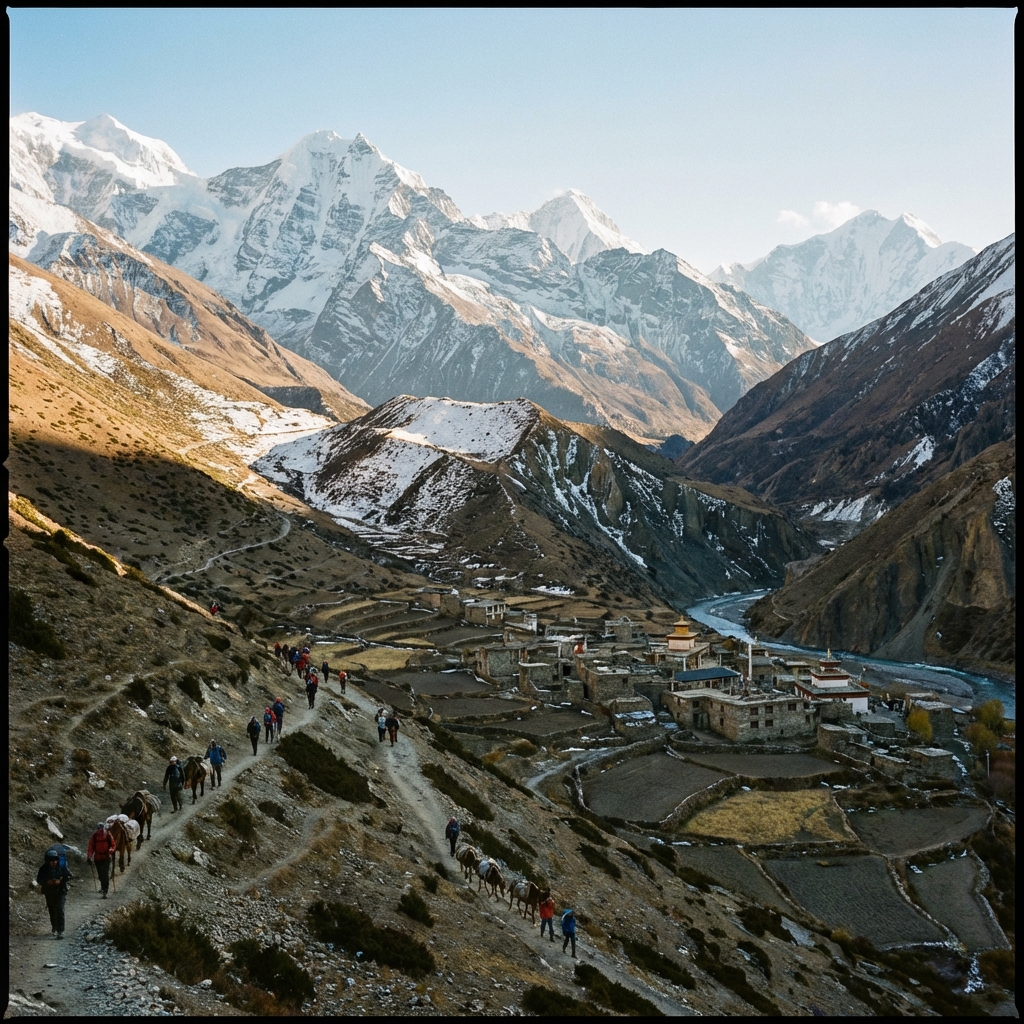
The ABC trek in October delivers the classic Himalayan amphitheater experience at its finest. The base camp sits in a natural bowl surrounded by Annapurna I, Annapurna South, Machapuchare, Hiunchuli, and Gangapurna. In October, these peaks are fully visible against deep blue skies, often for the entire day.
7-12 days
4,130m (Annapurna Base Camp)
Daytime: 5-10C | Night: -5 to 0C
High
ACAP + TIMS/Guide
First-time trekkers wanting peak conditions
October-Specific Advantages:
- Amphitheater views at maximum clarity
- Rhododendron forests still green (unlike spring blooms but equally beautiful)
- Moderate altitude means comfortable temperatures even at base camp
- Sunrise and sunset over the amphitheater are at their most dramatic
- All teahouses fully operational with best menus
What Sets ABC Apart in October: The Annapurna Sanctuary approach passes through some of Nepal's most beautiful middle-altitude terrain: bamboo forests, rhododendron groves, and alpine meadows. In October, these zones are at their lushest, and the clearer skies above mean you can see the peaks from vantage points where monsoon clouds would obscure them entirely.
Explore our best time for ABC trek guide and ABC 10-day itinerary.
4. Manaslu Circuit Trek
October Rating: 9.5/10
Manaslu is often called "the next Annapurna Circuit" for its similar diversity but with a fraction of the crowds. October is when this restricted-area trek truly shines. The Larkya La Pass (5,160m) is at its most accessible, and the Tibetan-influenced culture of the Nubri and Tsum valleys adds depth that few other treks can match.
14-18 days
5,160m (Larkya La Pass)
Daytime: -3 to 2C | Night: -15 to -8C
Moderate - restricted permits limit numbers
Restricted Area Permit + MCAP + TIMS
Must trek with registered agency, minimum 2 trekkers
Why Manaslu Excels in October:
- Restricted permits naturally limit crowd sizes even during peak season
- Larkya La Pass conditions are optimal (less snow than November)
- Tibetan Buddhist monasteries and villages are most active during October festivals
- Views of Manaslu (8,163m) at close range are extraordinary in clear October air
- The Budhi Gandaki gorge, often cloud-filled during monsoon, is finally clear
Pro Tip
Manaslu no longer requires a minimum group size — solo trekkers are allowed when accompanied by a licensed guide booked through a registered agency. If you are solo and want to share costs, your agency can pair you with another trekker. Book early for October as permit numbers are limited, and the best agencies fill their Manaslu departures months ahead.
Read more: Manaslu Circuit cost breakdown and best agencies for Manaslu.
5. Langtang Valley Trek
October Rating: 9/10
Langtang Valley offers the closest major trekking destination to Kathmandu, and October showcases this rebuilt valley (post-2015 earthquake) at its very best. The Tamang culture is vibrant, the valley views are sweeping, and the optional extension to Kyanjin Ri (4,773m) provides an accessible high-point with 360-degree panoramas.
7-10 days
4,773m (Kyanjin Ri) or 3,870m (Kyanjin Gompa)
Daytime: 8-14C | Night: -3 to 2C
Moderate
Langtang National Park + TIMS/Guide
7-8 hour bus from Kathmandu (no flights needed)
October-Specific Highlights:
- Langtang Lirung (7,227m) visible in full glory from the valley floor
- Cheese factories in operation, offering fresh yak cheese to trekkers
- Tamang villages buzzing with post-harvest and festival activities
- The Gosainkunda Lakes extension is accessible and spectacular
- No flight dependencies - bus access makes scheduling reliable
For regional details: Langtang Valley agency recommendations.
6. Three Passes Trek (Everest Region)
October Rating: 9/10
For experienced trekkers, the Three Passes Trek (Renjo La, Cho La, Kongma La) represents the ultimate Everest region challenge. October is the ideal month for this demanding route, as all three passes are reliably open with minimal snow.
18-21 days
5,535m (Kongma La)
Daytime: -5 to 2C | Night: -15 to -8C
Low to Moderate (much less than EBC)
Challenging - requires trekking experience
Excellent - minimal snow, clear routes
Why October Is Critical for Three Passes: This trek requires all three passes to be open simultaneously. October offers the highest probability of this occurring. By November, early winter snow can make Cho La and Kongma La treacherous. In September, lingering monsoon weather creates unsafe conditions.
For pass-specific details, see our guides to Renjo La, Cho La, and Kongma La.
7. Gokyo Lakes Trek
October Rating: 9/10
The Gokyo Lakes route provides a compelling alternative to the classic EBC trek, with turquoise glacial lakes and arguably the best viewpoint in the Khumbu region from the summit of Gokyo Ri (5,357m). October's clear conditions make the lake colors their most vivid.
12-14 days
5,357m (Gokyo Ri)
Moderate (significantly less than EBC)
Panoramic view of 4 of the world's 6 highest peaks
Most vivid in October - turquoise to emerald
October Advantage: From Gokyo Ri summit on a clear October morning, you can see Everest, Lhotse, Makalu, and Cho Oyu simultaneously. This four-eight-thousander panorama is one of the most spectacular viewpoints on Earth, and October offers the highest probability of a perfectly clear viewing day.
Learn more: Gokyo Lakes agency guide.
8. Poon Hill Trek
October Rating: 8.5/10
The classic short trek from Pokhara is at its most rewarding in October. While this beginner-friendly route is excellent year-round (except monsoon), October adds crystal-clear mountain views and comfortable temperatures. The iconic sunrise over Dhaulagiri and Annapurna from the Poon Hill viewpoint is at its most reliable.
3-5 days
3,210m
Daytime: 10-16C | Night: 2-6C
Very High
First-time trekkers, short schedules
Over 85% in October
October Consideration: Poon Hill is extremely popular in October. The sunrise viewpoint can feel crowded with 200 or more people. For a less congested alternative with similar views, consider the Mardi Himal trek, which reaches higher altitude and sees fewer trekkers.
9. Upper Mustang Trek
October Rating: 8.5/10
Upper Mustang is remarkable in that it is one of the few treks in Nepal that works during monsoon season (thanks to the rain shadow effect). October adds even better conditions: the last traces of monsoon moisture have vanished, the sky is impeccably clear, and the stark desert-like landscapes of this former Tibetan kingdom glow in golden autumn light.
12-16 days
3,850m (Lo Manthang)
Daytime: 12-18C | Night: -2 to 5C
Low to Moderate
Restricted Area Permit (USD 500 for first 10 days) + ACAP
Medieval walled city of Lo Manthang
October Advantage for Upper Mustang: While Upper Mustang works during monsoon, October adds the bonus of cleared high passes and the possibility of combining the trek with Annapurna Circuit segments. The Tiji Festival does not occur in October (it is usually in May), but the cultural immersion in Lo Manthang is extraordinary year-round.
10. Mardi Himal Trek
October Rating: 8.5/10
Mardi Himal has rapidly become one of Nepal's most sought-after treks, offering close-up views of Machapuchare (Fishtail Peak) and the Annapurna range from a dramatic ridge walk. In October, the ridge trail provides panoramic views in every direction.
5-7 days
4,500m (Mardi Himal Base Camp)
Daytime: 5-10C | Night: -5 to 0C
Moderate (growing popularity)
ACAP + TIMS/Guide
Ridge walk with panoramic mountain views
Why Mardi Himal Is a Smart October Choice: This trek offers mountain views comparable to ABC but with fewer crowds and a more adventurous feel. The ridge walk above the tree line is particularly spectacular in October when visibility is unlimited and you can see from Dhaulagiri to Manaslu. It is increasingly popular but still has not reached the congestion levels of Poon Hill or ABC.
October Crowd Levels by Route
Understanding crowd distribution helps you choose wisely and set expectations.
| Trek | Crowd Level | Peak Period | Strategy |
|---|---|---|---|
| Everest Base Camp | Very High | Oct 15-31 | Go early October or choose Gokyo |
| Annapurna Circuit | High | Oct 10-30 | Start from Chame/Dharapani, not Besisahar |
| Annapurna Base Camp | High | Oct 10-31 | Consider via Mardi Himal approach |
| Poon Hill | Very High | All October | Midweek departures less crowded |
| Manaslu Circuit | Moderate | Oct 15-30 | Permits naturally limit numbers |
| Langtang Valley | Moderate | Oct 15-30 | Gosainkunda extension is quieter |
| Three Passes | Low-Moderate | Oct 15-31 | Self-regulating (difficulty limits numbers) |
| Gokyo Lakes | Moderate | Oct 10-30 | Good alternative to crowded EBC |
| Upper Mustang | Low-Moderate | Oct 10-30 | Permit cost limits numbers |
| Mardi Himal | Moderate | Oct 15-31 | Growing but still manageable |
Pro Tip
The single most effective strategy for avoiding October crowds is to start your trek in the first week of October. Most international trekkers arrive mid-October to coincide with European and North American school holidays. Early October may see occasional afternoon clouds from the retreating monsoon, but the trails are noticeably quieter.
The Dashain Factor: Nepal's Biggest Festival
Dashain (Vijaya Dashami) is Nepal's most important festival, typically falling in October. In 2026, the main celebrations are expected around mid-October (exact dates follow the lunar calendar and are confirmed annually). Understanding Dashain's impact on your trek is essential.
How Dashain Affects Trekkers
Transportation Disruptions:
- Buses between cities can be fully booked as millions of Nepalis travel to their home villages
- Domestic flights may have reduced schedules or added holiday services
- Taxi and private vehicle prices can surge during the main festival days
- Road traffic in Kathmandu and Pokhara intensifies dramatically
Service Closures:
- Government permit offices may close for 3-5 days during the main festival period
- Banks and foreign exchange offices close during the public holiday
- Some trekking agency offices close (though phone support usually continues)
- In Kathmandu, many restaurants and shops close temporarily
On the Trail:
- Teahouses in popular trekking areas generally remain open (trekkers are their livelihood)
- You may encounter Nepali domestic trekkers enjoying their holiday
- Some lodge staff may take holiday, resulting in reduced service
- Local porters and guides may request time off for family celebrations
The Positive Side:
- Experiencing Dashain celebrations in mountain villages is an extraordinary cultural experience
- Villagers are in festive spirits, often offering tika (blessing marks) and treats to passing trekkers
- The atmosphere in lodges can be celebratory, with special meals and music
Tihar Follows Dashain
Tihar (the festival of lights), Nepal's second-biggest festival, falls roughly two to three weeks after Dashain — usually late October or early November in 2026. Tihar has a milder logistical impact than Dashain, but expect another short public holiday with bank and office closures. On the trail, you may see lodges and villages lit with marigold garlands and oil lamps, and porters and guides may again request a day for family celebrations. For the full festival calendar, see our Nepal festivals trekking calendar.
Dashain Planning Essentials
Before Dashain:
- Obtain all permits and complete all Kathmandu logistics at least 2 days before the festival begins
- Confirm your domestic flights well in advance
- Withdraw sufficient cash (ATMs may run out or go offline)
- Stock up on any medication or supplies you need
During Dashain:
- Expect reduced service in cities but normal operations on established trekking routes
- Carry extra cash as electronic payment systems may be unreliable
- Be patient with any delays and embrace the cultural experience
- Your guide will likely appreciate a small Dashain bonus (it is customary)
October Weather Deep Dive
Temperature Ranges by Altitude
Understanding October temperatures at specific trekking locations helps with gear planning.
Kathmandu Valley (1,400m):
- Daytime: 24-28C (warm, pleasant)
- Nighttime: 11-15C (comfortable)
- Conditions: Mostly clear, occasional haze
Pokhara (800m):
- Daytime: 26-30C (warm to hot)
- Nighttime: 15-19C (mild)
- Conditions: Clear mornings, afternoon clouds possible early October
Namche Bazaar (3,440m):
- Daytime: 10-15C (cool, comfortable for walking)
- Nighttime: 0-5C (cold, sleeping bag required)
- Conditions: Generally clear, occasional clouds in afternoon
Manang (3,540m):
- Daytime: 10-16C (comfortable in sunshine)
- Nighttime: -2 to 3C (cold)
- Conditions: Dry, clear, minimal precipitation
Everest Base Camp (5,364m):
- Daytime: 0-5C (cold but manageable in sun)
- Nighttime: -8 to -3C (very cold)
- Conditions: Clear, occasional high-altitude winds
Thorong La Pass (5,416m):
- Daytime: -2 to 3C (cold, wind chill significant)
- Nighttime: -12 to -6C (very cold)
- Conditions: Usually clear if crossed early morning
Precipitation
October is one of the driest months across most trekking regions.
| Region | October Precipitation | Rain Days |
|---|---|---|
| Khumbu (Everest) | 25-40mm | 2-4 days |
| Annapurna | 30-60mm | 3-5 days (early October) |
| Langtang | 25-45mm | 2-4 days |
| Manaslu | 20-40mm | 2-3 days |
| Upper Mustang | 5-15mm | 0-1 days |
Most October precipitation occurs in the first ten days as the monsoon makes its final retreat. By the second half of October, rain at trekking elevations is exceptionally rare.
Photography Conditions in October
October is widely considered the best month for Himalayan photography, and for good reason.
Why October Photography Excels
Atmospheric Clarity: Post-monsoon air is the cleanest of the year. Particulate matter settles out after months of rain washing the atmosphere. This translates to sharper images, more saturated colors, and visible detail on distant peaks.
Light Quality: The sun angle in October creates warm, golden light during morning and evening hours. The lower angle compared to summer means longer golden hours and more dramatic shadows on mountain faces.
Snow Coverage: Fresh snow on high peaks from late-monsoon storms creates stunning white-against-blue contrasts. By January, wind can strip snow from ridges, reducing the visual impact.
Green Foregrounds: The combination of lush green valleys (still holding monsoon moisture) with clear white peaks and blue skies creates the classic Nepal trekking photograph that defines the country's tourism imagery.
Best Photography Spots in October
- Kala Patthar sunrise - Everest, Nuptse, and Lhotse bathed in golden light
- Poon Hill sunrise - Dhaulagiri and Annapurna panorama
- Gokyo Ri - Four 8,000-meter peaks in a single frame
- Annapurna Base Camp - The amphitheater at golden hour
- Thorong La descent - Dhaulagiri and Tukuche Peak views
- Namche Bazaar viewpoint - Everest framed above Sherpa homes
- Kyanjin Ri (Langtang) - 360-degree panorama including Langtang Lirung
- Mardi Himal ridge - Machapuchare close-up from the ridge trail
Pro Tip
Bring a polarizing filter for your camera lens. In October's clear conditions, a polarizer deepens the blue sky dramatically and reduces glare on snow-covered peaks. The difference in mountain photography with and without a polarizer in these conditions is remarkable.
For detailed photography gear recommendations, see our photography gear guide for Nepal trekking and our trekking photography guide.
Permits and Booking Strategy for October
Book Early - This Cannot Be Overstated
October is the single busiest month for Nepal trekking. The practical implications of this are significant.
What Sells Out:
- Lukla flights (often fully booked 3 or more months ahead)
- Top-rated trekking agencies fill their October departures by June or July
- Specific date ranges on restricted-area permits (Manaslu, Upper Mustang)
- Premium lodges along popular routes (Yeti Mountain Home chain, Everest region)
Recommended Booking Timeline:
| Item | When to Book |
|---|---|
| Lukla flights | 4-6 months ahead (as soon as RARA schedules release) |
| Trekking agency | 3-4 months ahead for top-rated agencies |
| Restricted area permits | 2-3 months ahead (agency handles this) |
| Domestic flights (other) | 2-3 months ahead |
| Hotels in Kathmandu/Pokhara | 1-2 months ahead for popular options |
| Standard permits (TIMS, ACAP, etc.) | Can be obtained on arrival but best done before Dashain |
Last-Minute October Trekking
It is possible to arrange an October trek with just 2-3 weeks notice, but your options narrow considerably. Budget agencies may still have availability. Lukla flights may require a helicopter option (more expensive). Popular lodges en route may be full, requiring flexibility in your itinerary. If you find yourself planning an October trek at the last minute, focus on routes that do not require flights (Annapurna region, Langtang, Manaslu) rather than Lukla-dependent routes.
Permit Information for October
All standard permits are available in October, though be aware of Dashain closures at government offices.
| Permit | Cost | Where to Obtain |
|---|---|---|
| TIMS (Trekkers Information Management System) | Varies (NPR 2,000 with guide in most areas) | Nepal Tourism Board, Kathmandu/Pokhara |
| ACAP (Annapurna Conservation Area) | NPR 3,000 (foreigners) | ACAP Counter, Kathmandu/Pokhara/Besisahar |
| Sagarmatha National Park | NPR 3,000 (foreigners) | Park entry at Monjo |
| Langtang National Park | NPR 3,000 (foreigners) | Park entry or Kathmandu |
| Manaslu Restricted Area | $100/week (Sep-Nov) | Through registered trekking agency only |
| Upper Mustang | $500 for first 10 days, then $50/day | Through registered trekking agency only |
What to Pack for October Trekking
October packing is more moderate than winter months but still requires preparation for cold nights at altitude.
Essential October Packing List
Layering System:
- Moisture-wicking base layers (merino wool or synthetic)
- Insulating mid-layer (fleece or light down jacket)
- Down jacket for evenings and high altitude (rated to -10C is sufficient)
- Waterproof shell jacket (occasional early October showers, wind protection at altitude)
- Trekking pants (convertible zip-off style works well in October's temperature range)
- Warm hat, sun hat, and buff/neck gaiter
Sleeping:
- Sleeping bag rated to -10C (sufficient for October at most altitudes)
- Silk or fleece liner for added warmth and hygiene
Footwear:
- Broken-in trekking boots (waterproof recommended)
- Camp shoes or sandals for evenings
- Quality trekking socks (merino wool, 3-4 pairs)
Sun and Eye Protection:
- Category 3 or 4 sunglasses (essential above 3,000m)
- SPF 50 sunscreen (UV is intense at altitude even in October)
- Lip balm with SPF
Other Essentials:
- Trekking poles (highly recommended)
- Headlamp with spare batteries
- Water purification (SteriPen or Sawyer filter)
- First aid kit
- Power bank (multiple, as charging can be expensive on trek)
- Camera with polarizing filter
For complete packing details, see our what to wear trekking guide and layering system guide.
October vs. Other Peak Months
October vs. November
| Factor | October | November |
|---|---|---|
| Visibility | Excellent (10/10) | Excellent (9.5/10) |
| Temperature | Warmer, more comfortable | Noticeably colder, especially at altitude |
| Crowds | Peak (highest) | High (slightly less than October) |
| Vegetation | Lush, green | Starting to dry and brown |
| High Passes | All open, minimal snow | Open but snow increasing |
| Festivals | Dashain, Tihar | Tihar (early November) |
| Costs | Highest | High (slightly less than October) |
October vs. March/April (Spring)
| Factor | October | March/April |
|---|---|---|
| Visibility | Superior (cleanest air) | Good but increasing haze |
| Unique Feature | Post-monsoon clarity | Rhododendron blooms |
| Temperature | Moderate | Slightly warmer at lower altitudes |
| Crowds | Very high | High (slightly less than October) |
| Vegetation | Lush green | Blooming (rhododendrons) |
| High Passes | All open | Opening (may have snow in March) |
| Photography | Best conditions | Good, but hazier |
Specific October Advantages by Major Route
Everest Base Camp in October
October is when Everest photography is at its absolute best. The post-expedition season (spring climbing season ends in May, autumn attempts are fewer) means Base Camp itself is relatively quiet. The Khumbu Icefall is visible but not active with climbers. The trail through the Khumbu valley passes villages preparing for winter, adding a poignant cultural dimension.
The Kala Patthar viewpoint at 5,545 meters is best attempted at sunrise in October. With clear skies, you can see from Everest to Pumori to Nuptse to Ama Dablam. The light is golden and the air crisp. This single viewpoint justifies timing your EBC trek for October.
Annapurna Circuit in October
The Annapurna Circuit in October benefits from the full diversity of the route being accessible and pleasant. The lower subtropical sections (Besisahar to Chame) are warm but not oppressively hot. The middle sections (Chame to Manang) are at their most comfortable. And the high pass crossing of Thorong La is at optimal conditions with minimal snow and clear visibility.
Langtang in October
Langtang's proximity to Kathmandu (no flights needed) makes it a logistically simpler choice during the busy October period. The valley views of Langtang Lirung and the Langtang Himal are at their clearest, and the optional Gosainkunda Lakes extension adds sacred lakes that are particularly beautiful under October skies.
Tips for Managing October Peak Season
-
Start early in the day. Hit the trail by 7:00-7:30 AM to secure teahouse rooms and avoid afternoon crowds at viewpoints.
-
Carry a backup plan. If your preferred teahouse is full, have alternative stops in mind. Your guide (if you have one) will manage this.
-
Be flexible with dates. If you can shift your departure by even a few days, you might find significantly better availability.
-
Consider less popular routes. The Three Passes Trek, Manaslu Circuit, and Langtang Valley all offer world-class experiences with fewer crowds than EBC and ABC.
-
Book premium lodges. If budget allows, chains like Yeti Mountain Home (Everest region) guarantee room reservations with advance booking, eliminating the daily room race.
-
Travel midweek. Domestic trekkers often start weekends. Beginning on a Tuesday or Wednesday can offset crowd timing slightly.
-
Embrace the community. October crowds mean meeting trekkers from around the world. Some of the best trekking memories come from shared teahouse evenings.
Who Should Trek in October (And Who Should Consider Other Months)
October Is Ideal For:
- First-time trekkers who want the best possible conditions and don't mind crowds
- Photographers who prioritize crystal-clear mountain views above all else
- High-pass trekkers who need reliable conditions for Thorong La, Cho La, Larkya La, etc.
- Peak climbers attempting Island Peak, Mera Peak, or other trekking peaks
- Festival enthusiasts who want to experience Dashain celebrations in mountain communities
- Group trekkers who appreciate a social atmosphere on popular routes
Consider Other Months If:
- You prioritize solitude: November, February, or March offer similar (though slightly inferior) conditions with noticeably fewer trekkers
- You are budget-conscious: December-February offer significant savings on everything from agency fees to lodge rates
- You want spring blooms: March-April delivers rhododendron forests in full flower
- You have limited flexibility: If you can only go during specific October dates that coincide with Dashain, logistics may be challenging
Frequently Asked Questions
Is October really the best month to trek in Nepal?
Yes, by virtually every objective measure. October offers the best combination of weather stability, visibility, temperature, trail conditions, and full access to all routes and passes. The only downsides are crowd levels and cost, but for most trekkers, the superior conditions more than compensate. If you have complete flexibility in scheduling, October (specifically the second half) is the optimal window.
How far in advance should I book for October trekking?
For Lukla flights, 4-6 months ahead is recommended. For top-rated trekking agencies, 3-4 months. For restricted area permits (Manaslu, Upper Mustang), 2-3 months through your agency. Hotels in Kathmandu can often be booked 1-2 months ahead. The earlier you book, the more choices you will have.
Will Dashain ruin my October trek?
No, but it requires planning. If you obtain permits and arrange logistics before the festival begins, your trek should proceed normally. Teahouses on major routes remain open during Dashain. The main impact is on city services and transportation in the days immediately surrounding the festival. Many trekkers find experiencing Dashain on the trail to be a highlight.
What is the weather like in early October vs. late October?
Early October (1st-15th) may see occasional afternoon clouds or brief showers as the monsoon makes its final retreat, especially at lower elevations. Late October (16th-31st) is almost always clear and dry. Early October is warmer and has fewer crowds; late October has more reliable clear conditions but more people.
Can I trek independently in October, or do I need a guide?
As of 2026, Nepal requires trekkers to have a licensed guide for all national park and conservation area treks. This rule applies year-round. In October, having a guide is particularly valuable for navigating full teahouses and managing logistics during the peak season. See our independent vs. guided trekking guide for details.
How crowded is Everest Base Camp in October?
Very crowded by Nepal standards. You will encounter dozens to hundreds of trekkers daily on the main trail. Teahouses in Namche, Tengboche, Dingboche, and Gorak Shep can fill up by early afternoon. The trail between Lukla and Namche can feel like a highway on peak days. However, "crowded" in Nepal is still far less congested than popular trails in Europe or North America. The experience remains deeply rewarding.
Is there snow in Nepal in October?
There is little to no fresh snowfall at trekking elevations in October. The high passes — Thorong La, Cho La, Renjo La, and Larkya La — carry only residual snow from late-monsoon storms and are reliably crossable, which is exactly why October is the prime pass-crossing month. Heavy snow does not typically arrive until late November and December. You will see permanent snow and glaciers on the high peaks year-round, but the trails themselves stay clear in October.
Is October good for the Annapurna Circuit?
October is arguably the best month for the full Annapurna Circuit. Thorong La Pass is at optimal conditions, the diverse climate zones are all at comfortable temperatures, and the views are extraordinary. The main consideration is that the road from Besisahar has been extended, shortening the lower sections. Many trekkers now start from Chame or Dharapani. See our Annapurna Circuit guide.
What if my Lukla flight is cancelled in October?
Even in October, Lukla flights are subject to weather delays. Having a buffer day or two in your itinerary is essential. Helicopter services provide a backup option at higher cost (approximately $400-600 per person one way). Some trekkers book a helicopter return from the outset to eliminate uncertainty. See our Lukla flight guide and helicopter return option.
How cold does it get at Everest Base Camp in October?
Nighttime temperatures at Base Camp (5,364m) typically range from -8C to -3C in October, with daytime temperatures of 0-5C in sunshine. This is significantly warmer than December or January (when nights can drop below -20C). A sleeping bag rated to -10C or -15C is sufficient for October at Base Camp elevations.
Should I take altitude sickness medication in October?
The need for altitude sickness prevention (typically Acetazolamide/Diamox) depends on your itinerary and personal susceptibility, not the month. Any trek going above 3,000 meters carries altitude sickness risk regardless of season. Consult a travel medicine doctor before your trip. Proper acclimatization (ascending slowly, taking rest days) is more important than medication. See our altitude sickness prevention guides for comprehensive information.
Can I combine multiple treks in October?
Yes, October's full month of excellent conditions makes it ideal for multi-trek combinations. Popular combinations include EBC plus Gokyo Lakes (18-20 days), Annapurna Circuit plus Poon Hill (18-21 days), or Langtang Valley plus Helambu (12-14 days). Ensure adequate rest between strenuous sections. See our multi-trek combination guide.
Is October good for peak climbing?
October is excellent for trekking peaks like Island Peak (6,189m) and Mera Peak (6,476m). Conditions are optimal: clear visibility for route-finding, moderate temperatures (by high-altitude standards), and stable weather windows. Most peak climbing expeditions target October or November for their summit attempts.
What happens if I arrive in Nepal without pre-booking anything for October?
You can still arrange a trek, but your options will be limited. Budget agencies may have availability. Premium agencies and specific departure dates will likely be sold out. Lukla flights may only be available through helicopter services. You will pay premium prices for whatever is available. Walking-in works better for Annapurna region treks (no flight required) than for Everest region treks.
Final Thoughts
October in Nepal is trekking at its best. The mountains are clear, the weather is stable, the trails are in excellent condition, and every major route is accessible. Yes, it is the busiest month and the most expensive. But there is a reason tens of thousands of trekkers from around the world converge on Nepal each October: the conditions are simply unmatched.
The key to a successful October trek is preparation. Book early, plan for Dashain, pack appropriately for the temperature range, and choose your route based on your tolerance for crowds as much as your fitness and experience level. Whether you choose the iconic Everest Base Camp trail or the quieter Manaslu Circuit, October rewards every trekker with the Himalayas at their most spectacular.
For month-by-month seasonal details, explore our comprehensive Nepal trekking seasons overview and our dedicated October trekking guide.
Planning your October Nepal trek? Start with our how to choose a trekking agency guide and complete trekking introduction for foundational preparation.