Nepal's popular trekking regions — Everest, Annapurna, and the Annapurna Sanctuary — collectively host over 300,000 trekkers annually, accounting for roughly 80% of all trekking tourism in the country. Their popularity is not merely a function of marketing or name recognition; it reflects decades of infrastructure investment, trail development, and community-based tourism that has created genuinely world-class trekking experiences. These regions have the densest teahouse networks, the most reliable communication coverage, the most accessible permits, and the deepest base of local knowledge from guides who have walked these trails thousands of times. For first-time trekkers and experienced Himalayan travellers alike, they remain the benchmark against which all other Nepal trekking regions are measured.
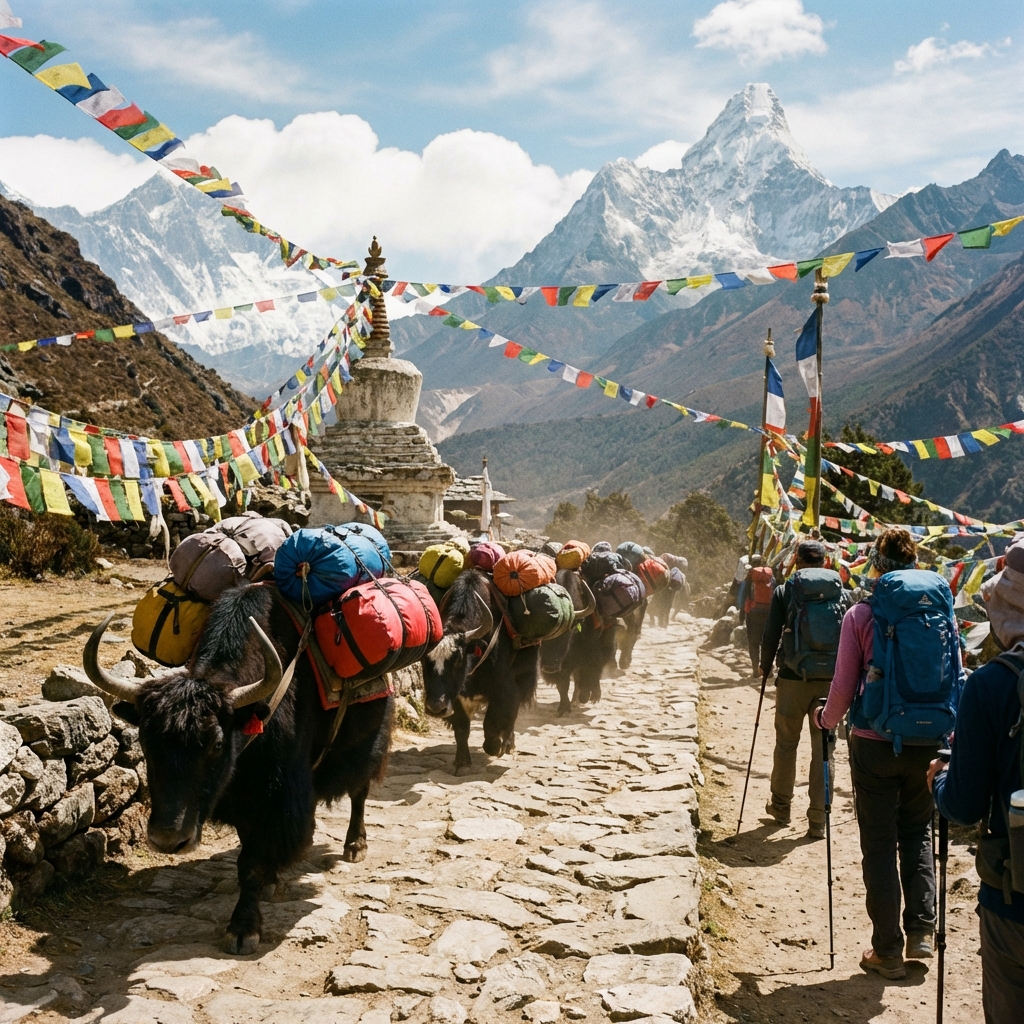
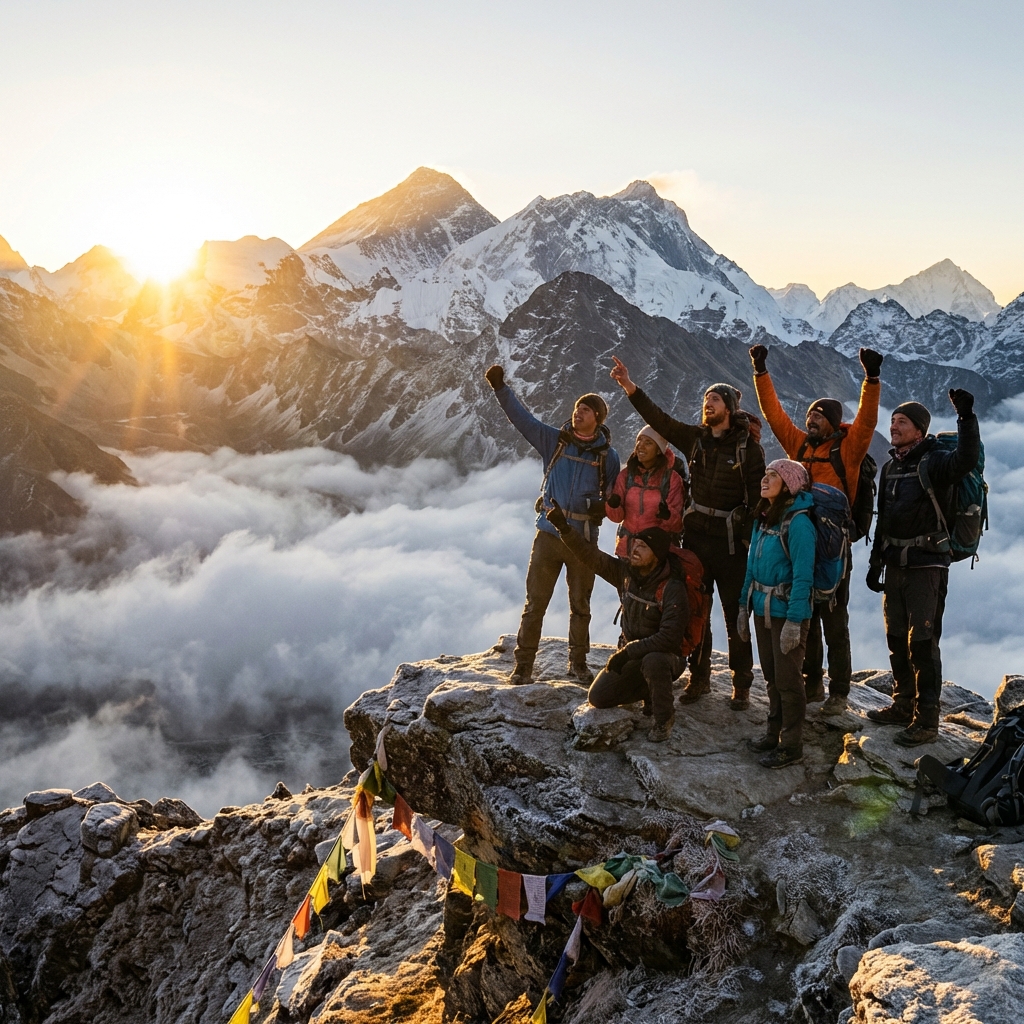
The Everest region, centred on the Khumbu valley and the homeland of the legendary Sherpa people, draws approximately 60,000 trekkers per year to its network of trails radiating from the gateway town of Lukla at 2,860 metres. The Everest Base Camp trek is the single most popular high-altitude trek on Earth, but the region offers far more than the EBC route: the Gokyo Lakes circuit provides turquoise glacial lakes and the panoramic summit of Gokyo Ri; the Three Passes trek combines Kongma La, Cho La, and Renjo La for experienced trekkers seeking the ultimate Khumbu challenge; and the Jiri-to-EBC approach follows Edmund Hillary's original 1953 route through Solu before entering the Khumbu. Sagarmatha National Park, a UNESCO World Heritage Site since 1979, protects 1,148 square kilometres of alpine ecosystem above 3,000 metres, including Himalayan thar, musk deer, and the elusive snow leopard. The Sherpa community has transformed trekking tourism into an economic engine that funds schools, health clinics, and cultural preservation throughout the Khumbu — every teahouse stay directly supports this ongoing partnership between tourism and traditional mountain culture.
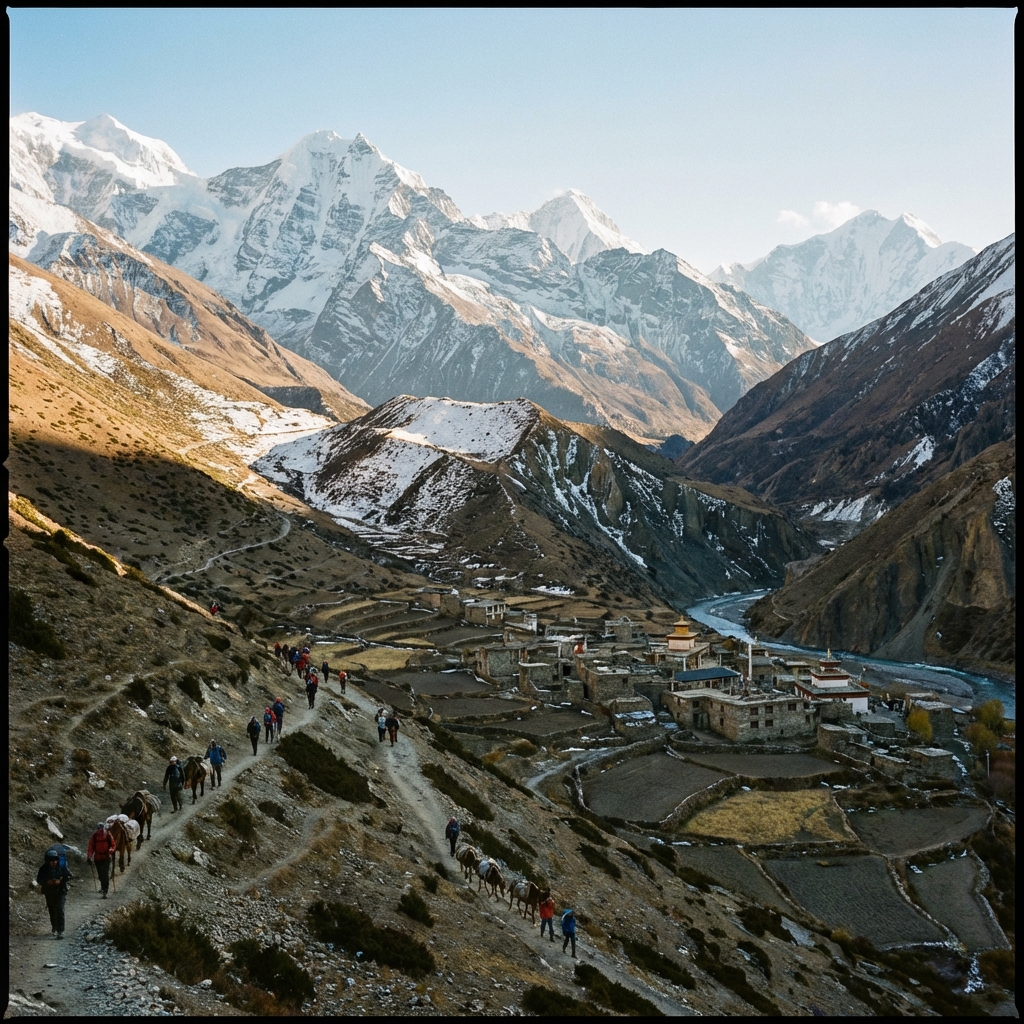
The Annapurna region, accessed from the lakeside city of Pokhara, is Nepal's most geographically and culturally diverse trekking destination. The Annapurna Conservation Area Project (ACAP) encompasses 7,629 square kilometres containing more ecological zones than any other protected area in Nepal — from subtropical forests at 800 metres through temperate oak-rhododendron forests, alpine meadows, and trans-Himalayan steppe, to permanent ice above 6,000 metres. This diversity means that a single trek like the Annapurna Circuit (the classic 21-day circumnavigation crossing Thorong La at 5,416m) passes through dramatically different landscapes every few days. The region supports multiple ethnic communities — Gurung, Thakali, Magar, and Tibetan-origin populations — each with distinct architecture, cuisine, and cultural traditions. The Thakali cuisine of the Kali Gandaki valley is widely considered the best food on any Nepal trek: dal bhat with local vegetables, apple brandy, and buckwheat pancakes that fuel some of the longest trekking days in the Himalaya.
The Annapurna Sanctuary, while geographically part of the broader Annapurna region, deserves separate recognition as a distinct trekking experience. The Sanctuary is a glacial amphitheatre — a vast natural bowl enclosed by a 360-degree wall of peaks exceeding 7,000 metres, including Annapurna I (8,091m), Annapurna South (7,219m), Hiunchuli (6,441m), and the sacred Machapuchare (6,993m). Access is through the narrow Modi Khola gorge, a dramatic river canyon that serves as the single gateway into the amphitheatre. The Annapurna Base Camp (ABC) trek, typically completed in 10-12 days round trip from Pokhara, takes trekkers from subtropical lowlands to the heart of this glacial basin at 4,130 metres. The Sanctuary holds deep spiritual significance for the local Gurung community — Machapuchare is considered the home of the god Shiva and has never been climbed, with mountaineering permanently prohibited. This cultural dimension adds a contemplative quality that distinguishes the ABC trek from the more commercially oriented EBC experience.
Infrastructure quality in popular regions has improved dramatically over the past decade, driven by competition among teahouse owners, community development projects, and increased trekker expectations. Along the EBC route, most teahouses now offer private rooms with foam mattresses, USB charging points, hot showers (for an additional fee), and Wi-Fi (satellite-based, variable quality). The Annapurna Circuit and ABC trails offer similar standards at lower elevations, though quality decreases above 4,000 metres where construction materials must be carried by porter or mule. Both regions have established emergency infrastructure: the Himalayan Rescue Association operates aid posts at Pheriche (Everest, 4,371m) and Manang (Annapurna, 3,540m) staffed by volunteer doctors during trekking season, providing altitude sickness consultations and emergency treatment. Helicopter rescue is available from most major stops, with multiple operators serving both regions.
Seasonal timing in popular regions follows Nepal's monsoon-driven climate pattern but with important regional variations. Both Everest and Annapurna are at their best during the post-monsoon autumn window of October and November, when clear skies, moderate temperatures, and fully operational teahouses create ideal trekking conditions. Spring (March-May) is the second major season, offering warmer temperatures and spectacular rhododendron blooms in the Annapurna forests, though with slightly more haze than autumn. The Everest region is marginally drier than Annapurna during monsoon (June-August) due to its position further from the moisture source, but neither region is recommended for monsoon trekking. Winter (December-February) brings clear but cold conditions — viable for experienced trekkers below 4,000 metres but challenging above that threshold due to extreme cold, short days, and reduced teahouse availability. The critical planning insight is that popular regions have the longest comfortable trekking season of any Nepal destination: roughly seven months (September through May, excluding monsoon) with varying conditions.
Choosing between popular regions depends on your priorities, timeline, and experience level. Everest is the choice for trekkers motivated by proximity to the world's highest peak, immersion in Sherpa Buddhist culture, and the high-altitude challenge of reaching 5,364 metres at Base Camp. The minimum trek length is 12-14 days for the standard EBC return route. Annapurna suits trekkers seeking landscape diversity, cultural variety across multiple ethnic groups, and flexibility in trek duration — from 4 days (Poon Hill) to 21 days (full Circuit). The Annapurna Sanctuary is ideal for trekkers who want a 10-12 day experience combining moderate altitude (4,130m maximum) with the most dramatic mountain amphitheatre in the Himalaya. All three regions are accessible to fit beginners with proper acclimatization, though Everest demands more altitude tolerance and Thorong La on the Annapurna Circuit requires high-pass experience. The common thread is reliability: these regions deliver consistent, high-quality trekking experiences because they have been refined by hundreds of thousands of trekkers and decades of community investment.