Dolpo Permits Guide: Upper vs Lower Dolpo Requirements
Dolpo is one of Nepal's most remote and least-visited trekking regions — a high-altitude trans-Himalayan landscape in the far northwest that straddles the Tibetan Plateau. The region splits into two distinct trekking zones, Upper Dolpo and Lower Dolpo, and this distinction matters enormously for permits. Upper Dolpo requires an expensive restricted area permit (USD 50/day (no minimum)) that places it among Nepal's most exclusive trekking destinations. Lower Dolpo, centred on the breathtaking Shey Phoksundo National Park, has no restricted area fee and is accessible to any trekker willing to make the journey.
Understanding which zone your itinerary covers — and what permits that demands — is the first and most important step in planning any Dolpo trek. This guide covers both zones in full: the permit structure, costs, application processes, required documents, and practical logistics for reaching one of the Himalaya's most extraordinary corners. You will also need a TIMS card alongside your Dolpo permits — see our comprehensive Nepal trekking permits guide for the full picture.
$500 USD per 10 days
$30 USD entry fee
NPR 1,000–2,000 (~$7.50–$15 USD)
2 trekkers (Upper Dolpo only)
Mandatory for Upper Dolpo
Required for Upper Dolpo
June–September (Upper); Mar–Nov (Lower)
Department of Immigration, Kathmandu
~$545 USD per person
Table of Contents
- The Upper / Lower Dolpo Distinction
- Upper Dolpo Permits: Full Breakdown
- Lower Dolpo Permits: Shey Phoksundo Entry
- Side-by-Side Permit Comparison
- Required Documents
- Application Process
- Seasonal Considerations
- Permit Checkpoints in Dolpo
- Logistics: Getting to Dolpo
- Common Problems and Solutions
- Frequently Asked Questions
The Upper / Lower Dolpo Distinction
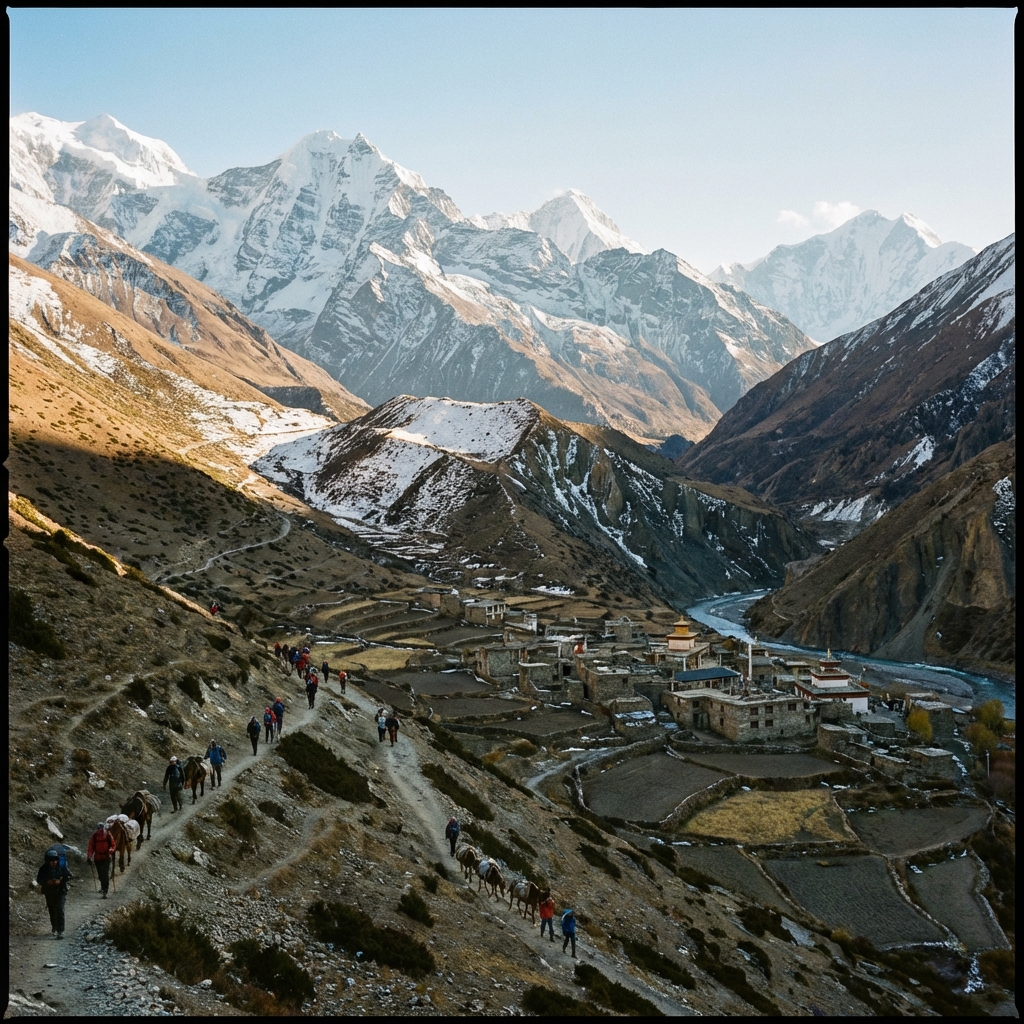
The boundary between Upper and Lower Dolpo is both geographic and administrative. The Phoksundo River valley and Shey Phoksundo National Park form the heart of Lower Dolpo, accessible from Juphal (the main entry airport). Upper Dolpo lies north and northeast of the park boundary, extending toward the Tibetan border — a landscape of wind-scoured plateaus, ancient Bon monasteries, and the legendary village of Shey Gompa.
Why the Difference Exists
Upper Dolpo's restricted status derives from the same combination of factors that restrict other border-adjacent regions: proximity to Tibet, extremely fragile ecosystems, and cultural preservation for the Bon Buddhist communities who have lived here largely unchanged for centuries. The region gained global attention through Peter Matthiessen's book The Snow Leopard and the French film Himalaya, but remains genuinely remote.
Lower Dolpo — primarily Shey Phoksundo National Park — was opened to regular trekkers and requires only standard national park entry. The turquoise waters of Phoksundo Lake, Nepal's deepest lake at 145 meters, are one of the country's most dramatic natural spectacles and are accessible without the Upper Dolpo restricted area permit.
Do You Need Upper or Lower Dolpo Permits?
If your itinerary reaches Shey Gompa (Crystal Mountain), Phoksundo Monastery on the north shore, or any area north of the Phoksundo National Park boundary, you are in Upper Dolpo and need the restricted area permit. If you are trekking to Phoksundo Lake from Juphal and returning, you are in Lower Dolpo and need only the national park entry. Confirm the exact routing with your agency before booking.
Upper Dolpo Permits: Full Breakdown
Upper Dolpo requires three separate permits, identical in structure to Upper Mustang — Nepal's other premium restricted area at the same price point.
Permit 1: Restricted Area Permit (RAP)
This is the primary permit governing access to Upper Dolpo's restricted zone.
| Nationality | Duration | Cost |
|---|---|---|
| Foreign nationals | First 10 days | $500 USD |
| Foreign nationals | Each additional 7 days | $150 USD |
| SAARC nationals | First 10 days | $250 USD |
| SAARC nationals | Each additional 7 days | $75 USD |
Important fee mechanics: The $500 covers the first 10 days inside the restricted area. If your itinerary requires more time — common for the full Upper Dolpo circuit from Juphal to Dunai via Shey Gompa and Saldang — you pay $150 per additional week. A 17-day Upper Dolpo trek therefore costs $650 per person in restricted area permit fees.
Issued by: Department of Immigration, Kalikasthan, Kathmandu. The permit cannot be obtained in Pokhara, at the airport, or on the trail.
Permit 2: Shey Phoksundo National Park Entry
The national park permit covers transit through the park boundary and applies to all trekkers regardless of whether they continue into Upper Dolpo.
| Nationality | Fee |
|---|---|
| Foreign nationals | $30 USD |
| SAARC nationals | $15 USD |
| Nepali nationals | NPR 100 |
This can be purchased at the park entrance gate near Suligad, on the trail from Juphal. However, for Upper Dolpo trekkers, your agency should include this in the Kathmandu permit package.
Permit 3: TIMS Card
The Trekkers' Information Management System card is required for all Dolpo trekkers.
| Type | Fee |
|---|---|
| Group/Agency TIMS | NPR 1,000 (~$7.50 USD) |
| Individual TIMS | NPR 2,000 (~$15 USD) |
Since Upper Dolpo mandates an agency, trekkers obtain the group TIMS at the lower rate.
Total Upper Dolpo Permit Cost
| Permit | Cost (Foreign National) |
|---|---|
| Restricted Area Permit (10 days) | $500 USD |
| Shey Phoksundo National Park | $30 USD (~NPR 4,050) |
| TIMS Card (Group) | NPR 1,000 (~$7.50 USD) |
| Total (10-day trek) | ~$537 USD |
Upper Dolpo Is Nepal's Most Expensive Restricted Area Trek
At USD 50/day (no minimum days), Upper Dolpo matches Upper Mustang as Nepal's priciest restricted area permit. This is not a budget destination. Total trekking costs including agency fees, porter, accommodation, and transport typically run $2,500–4,000 per person for a 14-18 day Upper Dolpo expedition. Plan your budget accordingly before committing.
Lower Dolpo Permits: Shey Phoksundo Entry
Lower Dolpo — specifically the Shey Phoksundo National Park circuit — has a dramatically simpler and cheaper permit structure.
What You Need for Lower Dolpo
| Permit | Cost (Foreign) | Where to Get It |
|---|---|---|
| Shey Phoksundo National Park | $30 USD | Park gate (Suligad) or Kathmandu |
| TIMS Card | NPR 1,000–2,000 | NTB office, Kathmandu or Pokhara |
That's it. No restricted area permit, no minimum group size, no mandatory agency or guide (though both are strongly recommended given the remoteness).
What Lower Dolpo Covers
A standard Lower Dolpo itinerary from Juphal visits:
- Dunai (district headquarters)
- Suligad (park entry gate)
- Ringmo village above Phoksundo Lake
- Phoksundo Lake viewpoints
- Optionally: the lower trail to Phoksundo Monastery
Pro Tip
Lower Dolpo Without an Agency?
Technically possible for Lower Dolpo, but not practical for most trekkers. The trail from Juphal is remote, poorly marked in sections, and facilities are extremely limited. A local guide or at minimum a porter-guide from Juphal is strongly recommended. There are no lodge-style tea houses as found on the Annapurna or Everest trails — most accommodation is basic homestays or camping.
Side-by-Side Permit Comparison
| Feature | Upper Dolpo | Lower Dolpo |
|---|---|---|
| Restricted Area Permit | $500 (10 days) | Not required |
| National Park Fee | $30 (Shey Phoksundo) | $30 (Shey Phoksundo) |
| TIMS Card | NPR 1,000 (group) | NPR 1,000–2,000 |
| Minimum Group Size | 2 trekkers | None |
| Agency Required | Yes | No (recommended) |
| Licensed Guide | Yes (mandatory) | No (recommended) |
| Total Permit Cost | ~$537 USD | ~$37 USD |
| Typical Trek Duration | 14–21 days | 8–12 days |
| Trailhead Airport | Juphal (Dolpo Airport) | Juphal (Dolpo Airport) |
| Best Season | June–September | March–November |
The Smart Route: Lower Dolpo First
Many experienced trekkers do Lower Dolpo (Phoksundo Lake circuit) as a standalone trip and save Upper Dolpo for a separate, dedicated expedition. The two zones share the same trailhead but demand very different budgets, fitness levels, and logistical commitments. If you're uncertain, Lower Dolpo is a world-class trek in its own right.
Required Documents
For Upper Dolpo (Restricted Area Permit)
- Valid passport — Minimum 6 months validity. Agency requires a clear photocopy of the information page.
- Passport-sized photographs — Three per person (35mm x 45mm).
- Valid Nepal tourist visa — Must cover the full trek duration.
- Agency booking confirmation — Agency registration number, trek dates, group member details.
- Detailed trek itinerary — Day-by-day breakdown specifying time in the restricted area.
- Travel insurance documentation — Must cover emergency helicopter evacuation. Upper Dolpo reaches over 5,000 meters on high passes; verify your policy covers this altitude.
- Emergency contact information — Name, relationship, phone, and email of a contact outside Nepal.
For Lower Dolpo (Shey Phoksundo NP)
- Valid passport — For registration at the park gate.
- Park entry fee — $30 USD in Nepali Rupees at gate, or paid in Kathmandu via agency.
- TIMS card — Obtained in Kathmandu or Pokhara before departure.
Pro Tip
Application Process
Upper Dolpo — Step by Step
Step 1: Book with a registered agency (3–6 months before) Select a TAAN-registered trekking agency experienced in Dolpo. The region's extreme remoteness means agency competence directly affects safety. Confirm permit costs are included or get a written breakdown.
Step 2: Send documents to your agency (4–6 weeks before) Provide passport scans, emergency contact details, and insurance documentation. Your agency prepares the application package.
Step 3: Agency submits application in Kathmandu The Department of Immigration, Kalikasthan, Kathmandu, receives applications in person. Processing takes 1–3 working days. The Department is closed Saturdays and public holidays.
Step 4: TIMS and park permit obtained simultaneously Your agency collects the TIMS card from the Nepal Tourism Board counter (Pradarshani Marg, near Bhrikutimandap) and coordinates the Shey Phoksundo park permit.
Step 5: Permits delivered before you depart Kathmandu Review all permits for accuracy: dates, spelling of your name, passport number, agency details. Correct errors immediately — they cannot be fixed on the trail.
Step 6: Fly to Juphal (Dolpo Airport) All Dolpo trekkers fly from Nepalgunj to Juphal on small mountain aircraft (15–20 minute flight). The Nepalgunj–Juphal route operates weather-dependently on Twin Otters; budget 1–2 buffer days for delays.
Lower Dolpo — Simplified Process
Lower Dolpo trekkers need only the TIMS card obtained before departure. The national park permit can be purchased at Suligad gate (2–3 days from Juphal). Many agencies still collect both in Kathmandu for convenience.
How Much Does a Dolpo Permit Cost?
The total permit cost depends entirely on whether you are trekking Upper or Lower Dolpo. Upper Dolpo costs approximately $537 USD per person for 10 days (restricted area permit, national park entry, and TIMS card combined). Lower Dolpo costs just $37 USD total. See the side-by-side comparison table above for a detailed breakdown. For context on how Dolpo compares with other restricted area permits in Nepal, Upper Dolpo matches Upper Mustang as the most expensive option.
Where Do I Get a Dolpo Permit?
The Upper Dolpo restricted area permit can only be obtained from the Department of Immigration in Kalikasthan, Kathmandu — not in Pokhara or at the trailhead. Your registered trekking agency handles the application. The Shey Phoksundo National Park permit for Lower Dolpo can be purchased at the park gate at Suligad or in advance from the Nepal Tourism Board office in Kathmandu.
Seasonal Considerations
Upper Dolpo: June–September
Upper Dolpo's ideal trekking season differs from most Nepal treks. The region lies in the rain shadow of the Himalaya, meaning the Indian monsoon has minimal impact north of the main range. While lower Nepal drowns in June–August, Upper Dolpo enjoys relatively stable weather. This counter-intuitive season is when most Upper Dolpo expeditions operate.
- June–July: Warming temperatures, blooming wildflowers, yak herding season on high pastures. Some passes may retain snow from winter.
- August–September: Optimal conditions. Clear skies, warm days, active monastery festivals including the Dolpo Tiji festival equivalent.
- October–November: Cooling rapidly, snow possible on high passes after mid-October. Some agencies still operate but conditions become increasingly challenging.
- December–May: Most routes impassable or extremely demanding. No permit applications should be planned for this window.
Lower Dolpo: March–November
Phoksundo Lake is accessible in a much wider window since the approach stays at lower elevations.
- March–May: Spring wildflowers, warming trails, excellent visibility.
- June–August: The approach from Juphal gets some rain but is generally passable. Phoksundo Lake is beautiful in all seasons.
- September–November: Best overall conditions — clear skies, settled weather, full lodge operations.
- December–February: Possible for experienced cold-weather trekkers but extremely cold; some guesthouses close.
Juphal Flight Reliability
Dolpo Airport at Juphal (2,475m) has one of Nepal's most weather-affected flight routes. Cancellations due to clouds, wind, or poor visibility are routine. Budget a minimum of 3 buffer days in Nepalgunj on your return — missing a connecting flight from Kathmandu to Nepalgunj to Juphal on either end of your trek is a real possibility. Many trekkers have extended their Kathmandu stays by several days due to Dolpo flight delays.
Permit Checkpoints in Dolpo
Juphal / Dunai
Entry registration at Dunai (the Dolpo district headquarters) is your first checkpoint. All trekkers are logged here regardless of final destination.
Suligad (Shey Phoksundo NP Gate)
This gate on the trail to Phoksundo Lake is where the national park permit is checked or purchased. All trekkers heading to Phoksundo Lake pass through this point.
Ringmo Village
At the village above Phoksundo Lake, Upper Dolpo trekkers face an additional checkpoint where the restricted area permit is verified before proceeding north toward Shey Gompa.
Shey Gompa Area
The deepest checkpoint in Upper Dolpo, at or near the Crystal Mountain monastery complex. Officers verify all permits including agency paperwork and guide credentials.
Pro Tip
Logistics: Getting to Dolpo
Flight Route
All Dolpo trekkers follow this flight sequence:
- Kathmandu → Nepalgunj: 1-hour flight. Multiple airlines operate daily (Buddha Air, Yeti Airlines, Shree Airlines). Cost: ~$100–130 USD one way.
- Nepalgunj → Juphal: 15–20 minute flight on Twin Otter aircraft. Operates weather-dependently, usually early morning only. Cost: ~$110–140 USD one way.
Budget approximately $220–280 USD per person for round-trip flights to Juphal. Some agencies include these in package prices; others list them as separate.
Alternative: Overland to Dolpo
A small number of trekkers reach Dolpo overland from Pokhara via Beni and Dhorpatan — a multi-day drive and walk through roadless terrain. This approach is rare, adds significant time, and is not practical for most trip schedules. Discuss with your agency only if flight options are unavailable.
Accommodation
Lower Dolpo: Basic teahouse-style guesthouses in Dunai and Ringmo. Simple rooms, dal bhat meals. Not comparable to Everest or Annapurna in terms of facilities.
Upper Dolpo: Primarily camping. Some villages offer homestays. Your agency must provide tents, cooking equipment, and most food supplies. This is a full expedition-style trek.
Common Problems and Solutions
Problem: Solo Trekker Needs an Upper Dolpo Partner
Upper Dolpo's two-person minimum is strictly enforced. Contact your agency's partner-matching list. Upper Dolpo has a small but dedicated community of experienced trekkers; agencies running regular Dolpo departures (primarily in July–September) can match solo travellers with compatible partners.
Problem: Permit Dates and Flight Delays Don't Align
Juphal flights are weather-dependent. If your flight is delayed by 2+ days, the restricted area permit start date will not match your actual entry date. Discuss this scenario with your agency in advance — most build 1–2 buffer days into the permit dates precisely for this reason.
Problem: Insurance Doesn't Cover Upper Dolpo Altitudes
The high passes of Upper Dolpo reach 5,000–5,360 meters (Sela La and Numa La). Standard travel insurance may only cover helicopter evacuation to 4,000 meters. Purchase a specialist Himalayan trekking policy before departing your home country.
Problem: Permit Document Errors
Check all permit details immediately on receipt from your agency. Name misspellings, wrong passport numbers, or incorrect dates must be corrected in Kathmandu before you fly to Juphal. Changes cannot be made in Dolpo.
Frequently Asked Questions
Planning Your Dolpo Trek
Planning a Dolpo Trek?
Whether you're heading to Phoksundo Lake or the remote Upper Dolpo plateau, understanding your permits is the first step. Compare trekking agencies that specialise in Dolpo expeditions and verify all permit requirements before you book.