Nepal vs The World
You've decided to do a serious trek — but should it be in Nepal? Maybe Kilimanjaro's summit has been calling, or Patagonia's glaciers, or Peru's Inca Trail. These are all world-class destinations that deserve your time and money. Our international comparisons give you the honest data — cost, difficulty, scenery, logistics, and cultural experience — so you can choose the destination that matches your dream, not just the one with the best marketing.
An honest yardstick
Why Compare Nepal to Other Destinations?
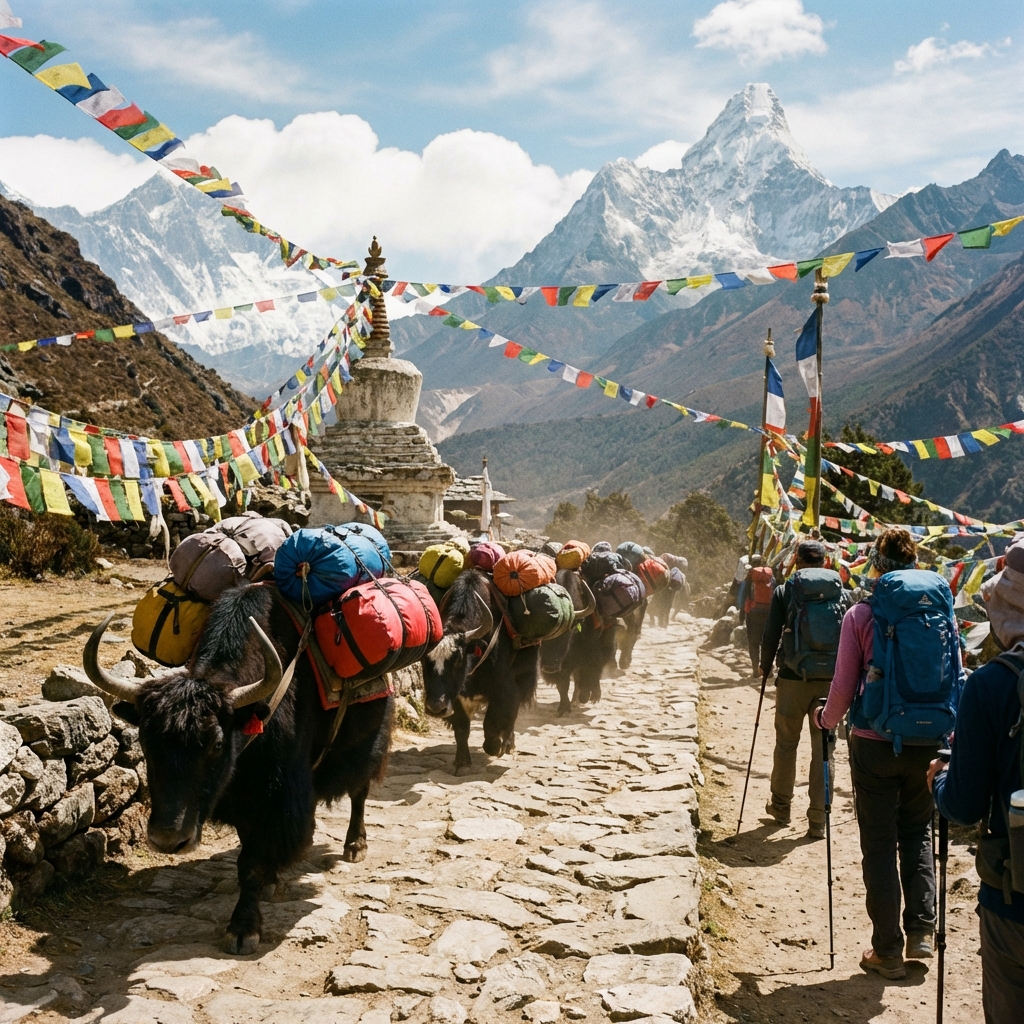
Nepal dominates the trekking world for good reason — eight of the fourteen 8,000-meter peaks, the world's best tea house infrastructure, incredibly affordable costs, and a trekking culture that has been refined over half a century. But Nepal isn't the only option, and it isn't always the right one.
If you hate high altitude, Patagonia's Torres del Paine delivers world-class scenery below 1,500 meters. If you have only 5 days, Kilimanjaro's summit push or Peru's Inca Trail pack more achievement into less time. If you want to combine trekking with archaeological wonder, Peru's Machu Picchu is untouchable. And if you prefer European comfort with alpine scenery, the Tour du Mont Blanc offers mountain huts with wine lists.
The point of these comparisons isn't to declare Nepal the winner — it's to help you understand what each destination does best. Many serious trekkers do Nepal first and branch out from there. Others start with Kilimanjaro or Peru and come to Nepal later with better context for what they want from a trekking holiday. There's no wrong order, just different priorities.
Side by side
At a Glance
Quick snapshots of how Nepal stacks up against each destination. Click through to the full guides for detailed breakdowns of cost, fitness requirements, itineraries, and logistics.
Nepal
12-14 day trek through Sherpa villages to 5,364m. Tea house accommodation. $1,200-3,000 total. Multiple route options. No technical climbing.
Alternative
5-9 day summit push to 5,895m (Africa's highest). Camping only. $2,000-6,000 total. Single mountain focus. Summit night is grueling but non-technical.
Key difference: Nepal is a journey through culture; Kilimanjaro is a singular summit goal.
Nepal
Budget-friendly ($25-40/day), high altitude (3,000-5,500m), warm tea house culture, permit-based access, developing-world infrastructure.
Alternative
Expensive ($80-150/day), low altitude (under 1,500m), fierce winds, well-maintained refugios, first-world infrastructure, no permits for most treks.
Key difference: Nepal rewards altitude tolerance and cultural curiosity; Patagonia rewards wind tolerance and love of glacial landscapes.
Nepal
Longer treks (7-21 days), higher altitude ceiling (5,500m+), tea house infrastructure, Hindu-Buddhist culture, monsoon summer season.
Alternative
Shorter treks (4-8 days), similar altitude (4,200-5,000m), camping-focused, Inca history, dry-season winter trekking (May-Sep).
Key difference: Nepal offers more trekking variety and longer immersion; Peru combines shorter treks with world-class archaeological sites.
What it really costs
The Cost Question
Cost is often the deciding factor between destinations, and Nepal wins this comparison overwhelmingly. Here's a realistic total-trip cost comparison for a 2-week trekking holiday (including international flights from a major hub, permits, accommodation, food, guide/porter, insurance, and gear):
- Nepal (EBC or Annapurna Circuit): $2,500-4,500 total
- Kilimanjaro: $3,500-7,000 total
- Peru (Inca Trail + extensions): $3,000-5,500 total
- Patagonia (Torres del Paine): $4,000-7,000 total
- Tour du Mont Blanc: $3,500-6,000 total
Nepal's cost advantage comes from three factors: extremely affordable local costs ($25-60/day on the trail), competitive international flights to Kathmandu from most major cities, and the absence of expensive park fees that destinations like Kilimanjaro ($70/day park fee) and Patagonia charge. A budget trekker in Nepal can complete a 14-day EBC trek for under $1,500 in local costs — try that on Kilimanjaro.
However, cost shouldn't be the only factor. Patagonia's higher costs come with first-world infrastructure, zero altitude sickness risk, and scenery that's genuinely different from anything in Asia. Kilimanjaro offers a singular summit achievement that no Nepal trek matches (standing on Africa's highest point). Peru combines trekking with Machu Picchu, one of the world's great archaeological sites. Each destination delivers unique value that transcends the price tag.
The full library
All International Comparisons
Each guide covers cost, difficulty, logistics, scenery, culture, and our recommendation for who should choose each destination — with real data from trekkers who've done both.
Good to know
Frequently Asked Questions
Is Nepal the best trekking destination in the world?
Nepal is widely considered the world's premier trekking destination for several reasons: it has the highest concentration of 8,000m peaks (8 of 14), the most established tea house trekking infrastructure, the best value for money of any major trekking destination, and an unmatched diversity of routes from easy 4-day hikes to month-long expeditions. That said, "best" depends on what you want. Patagonia offers more dramatic glacial scenery at lower altitudes. Peru combines trekking with Inca archaeology. Kilimanjaro offers a unique summit achievement. Nepal wins on variety, value, and cultural depth — but every destination has its strengths.
How does Nepal compare on cost to other trekking destinations?
Nepal is the most affordable major trekking destination in the world. A 14-day EBC trek costs $1,200-3,000 all-inclusive. Compare that to Kilimanjaro ($2,000-6,000 for 5-9 days), the Inca Trail in Peru ($500-1,500 for 4 days but with expensive flights), Torres del Paine in Patagonia ($1,500-3,000 for 5 days plus expensive Chilean infrastructure), or the Tour du Mont Blanc in Europe ($1,500-3,000 for 7-10 days). Nepal's low tea house costs ($5-15/night), cheap meals ($3-8), and affordable guide/porter services ($25-35/day) make it possible to trek for weeks on a modest budget. The international flights are the biggest expense for most trekkers.
Is altitude sickness worse in Nepal than other trekking destinations?
Nepal's popular treks reach higher altitudes than most international alternatives, which does increase altitude sickness risk. EBC reaches 5,364m, Annapurna Circuit's Thorong La hits 5,416m, and peak climbing routes go above 6,000m. By comparison, Kilimanjaro's summit (5,895m) is higher but ascent is faster and more dangerous for altitude sickness. Peru's Inca Trail peaks at 4,215m. Patagonia stays below 1,500m. The key difference is that Nepal's tea house infrastructure allows proper acclimatization — you ascend gradually over many days with rest stops built in. Kilimanjaro's faster ascent schedule causes higher rates of altitude sickness despite comparable maximum elevations.
Should I trek in Nepal or Kilimanjaro first?
For most trekkers, Nepal is the better first destination. Here's why: Nepal's tea house system eases you into multi-day trekking with proper beds, hot meals, and gradual altitude gain. You have multiple route options from easy (Poon Hill, 4 days) to challenging (EBC, 14 days). If you struggle with altitude or fitness, you can adjust your itinerary on the trail. Kilimanjaro is a single-objective summit push with no flexibility — if conditions or your fitness don't cooperate, there's no plan B. However, if your dream has always been to stand on Africa's highest point, and you have the fitness and budget, Kilimanjaro is an incredible standalone achievement that doesn't require the 2-3 week time commitment of Nepal's major treks.
Can I trek internationally with no experience?
Absolutely — but choose your destination wisely. Nepal's short treks (Poon Hill, Mardi Himal, Langtang Valley) are among the world's best options for beginners because tea houses eliminate camping complexity, trails are well-marked, guides are affordable, and the scenery is immediately rewarding. Peru's Inca Trail is also beginner-accessible but requires months-advance permit booking. Patagonia's Torres del Paine W Trek is straightforward navigation-wise but demands weather resilience. Kilimanjaro is technically non-technical but the altitude and pace make it a poor first trek for most people. The Tour du Mont Blanc in Europe is excellent for beginners with mountain hut infrastructure similar to Nepal's tea houses.
What about safety — is Nepal safer than other destinations?
Nepal's popular trekking routes are remarkably safe thanks to decades of tourism infrastructure development. The Annapurna and Everest regions have helicopter rescue services, satellite phone coverage, health posts staffed by doctors during peak season, and well-trained local guides. The main risks — altitude sickness, weather, and trail conditions — exist everywhere people trek at elevation. Compared to Kilimanjaro (higher summit death rate), Patagonia (extreme weather changes), or remote Peru routes (limited rescue access), Nepal's major trails are well-supported. The key is hiring a licensed guide, carrying appropriate insurance, and following acclimatization protocols. Nepal's trekking safety record on established routes is among the best in the world.
Keep comparing