Style, Season & Planning
Choosing a trek route is only half the decision. How you trek matters just as much — and sometimes more. Tea house or camping? Spring or autumn? Solo or with a group? Budget backpacker style or luxury lodge comfort? These planning decisions shape your entire experience on the trail, from daily comfort to total cost to the kind of memories you bring home. Our comparison guides break down every angle so you can plan your trek with clarity and confidence.
Before you book
Key Decisions Every Trekker Faces
Answer these fundamental questions before you book flights or buy gear. Each decision has trade-offs that affect your budget, comfort, safety, and overall experience.
Style Decisions
Nepal trekking costs range from $25/day (budget tea house) to $300+/day (luxury lodge trek). The mountain views are identical — the difference is hot showers, private rooms, Western menus, and porter service.
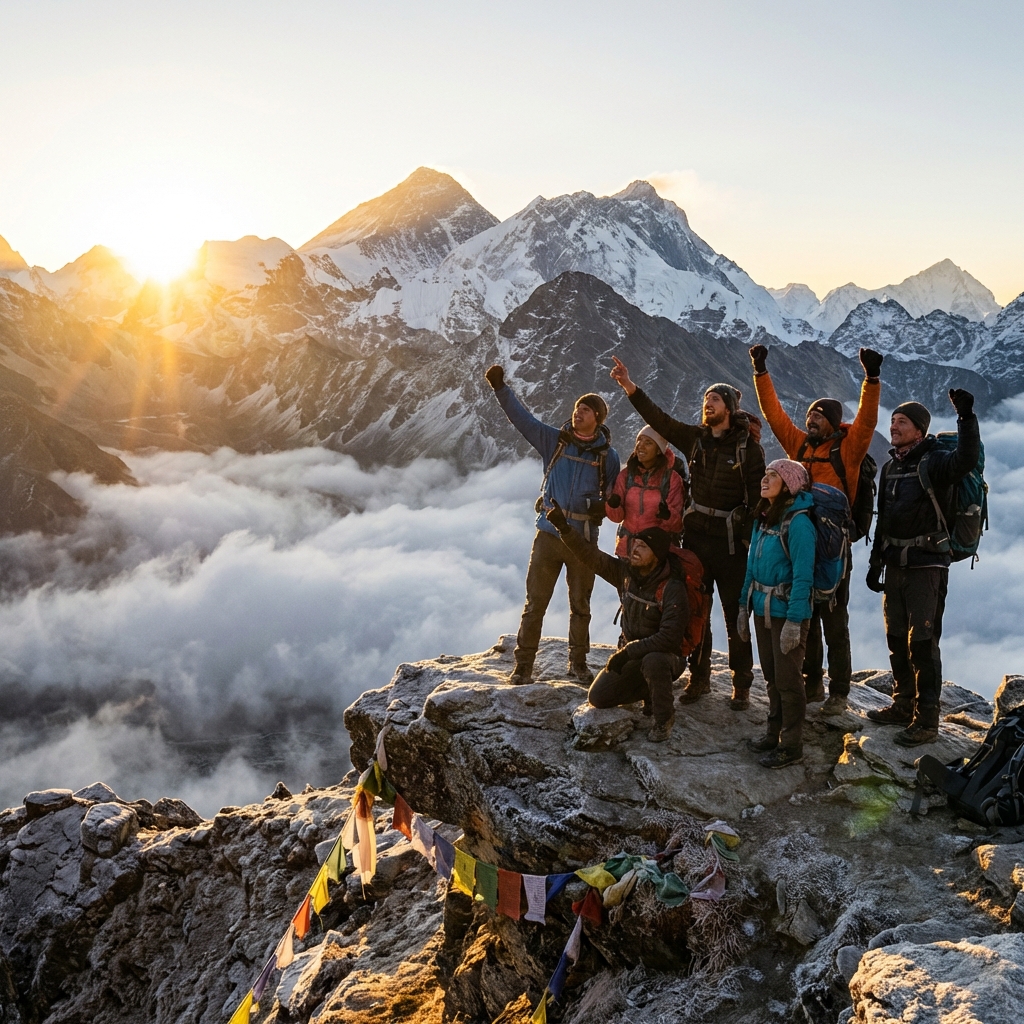
Solo trekking offers ultimate flexibility and deeper local interactions. Group treks provide safety, shared costs, and built-in social experience. Both are viable on Nepal's popular routes.
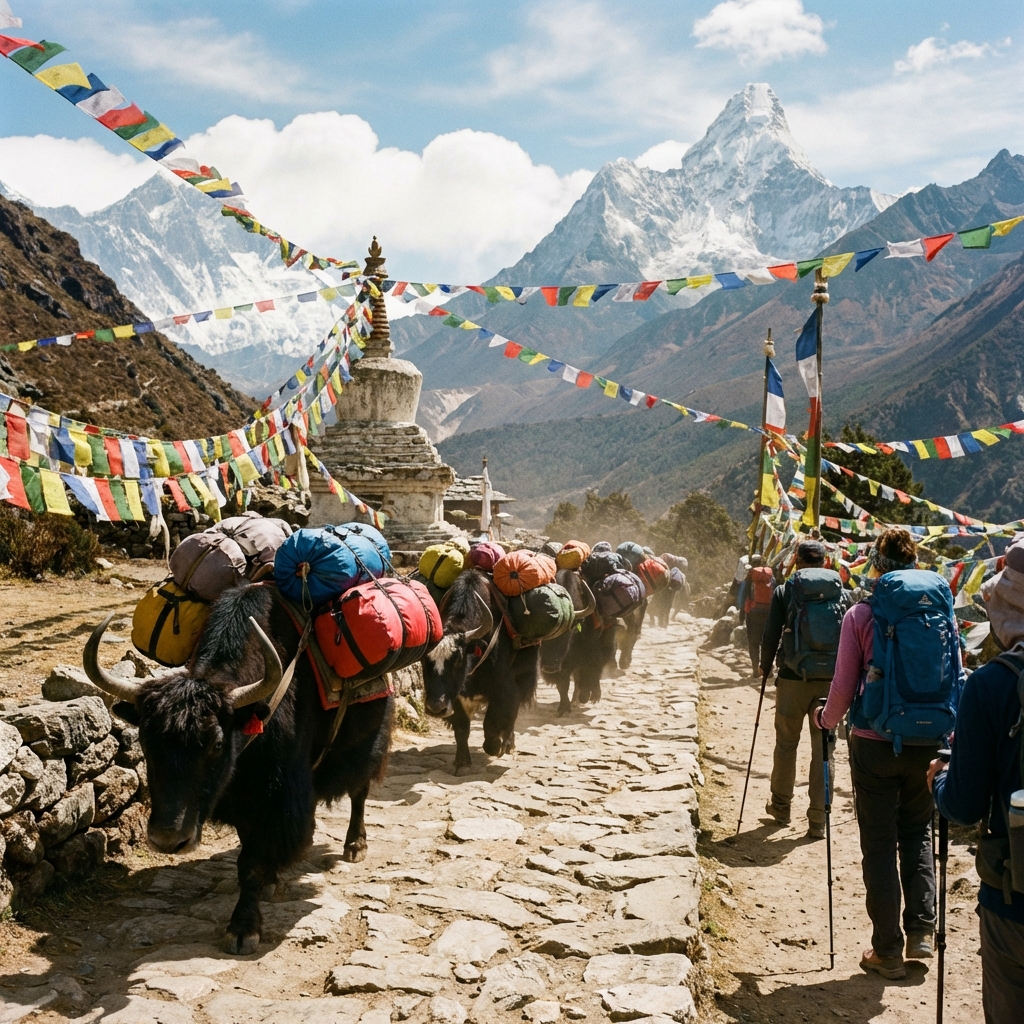
Tea houses offer warm beds, cooked meals, and social common rooms along established routes. Camping unlocks remote wilderness areas where no lodges exist, with total self-sufficiency.
Season Decisions
Autumn (Oct-Nov) delivers the clearest skies and most stable weather. Spring (Mar-May) brings rhododendron blooms and warmer temperatures but hazier views. Both are peak seasons with similar crowd levels.
Everest-specific seasonal nuances — autumn has colder nights but crystal visibility, while spring offers warmer days and the famous Khumbu Icefall climbing season atmosphere.
The price of comfort
How Style Choices Affect Your Budget
The biggest surprise for first-time Nepal trekkers is how dramatically style choices affect total cost. The same 14-day Annapurna Circuit can cost anywhere from $600 to $5,000+ depending on how you trek. Here's the reality:
Budget tea house trekking ($25-40/day) means shared rooms in basic lodges, dal bhat twice a day, no porter, and carrying your own 8-12kg backpack. You'll sleep in plywood rooms with thin mattresses, share squat toilets, and charge your phone for $2-3 per hour. The mountain views are identical to what luxury trekkers see — you just experience them with numb fingers and instant noodle breath.
Mid-range guided trekking ($60-120/day) adds a licensed guide, a porter for your bag, better room selection (sometimes private), and the freedom to order whatever you want from the menu without worrying about cost. Your guide handles logistics, navigation, permit checks, and emergency coordination. This is the sweet spot for most trekkers.
Luxury lodge trekking ($200-350/day) on the Annapurna or Everest routes means staying in purpose-built lodges with hot showers, heated rooms, Western-style toilets, spring mattresses, and multi-course meals prepared by trained chefs. Companies like Ker & Downey and Himalayan Encounters operate these exclusive circuits. You get the same trails and peaks, wrapped in genuine comfort.
Camping treks vary wildly — a basic camping setup on a restricted route adds $30-50/day for the camping crew, cook, and equipment. Fully catered expeditions on routes like Makalu or Kanchenjunga can run $150-250/day with a full support team, mess tent, and fresh-cooked meals.
The full library
All Style & Planning Comparisons
Each guide includes real cost data, practical advice from experienced trekkers, and clear recommendations for different trekker profiles — from first-timers to veterans.
Good to know
Frequently Asked Questions
Is it cheaper to trek independently or with a group?
Independent trekking is typically 30-40% cheaper than organized group treks. A budget independent trekker on the Annapurna Circuit spends $25-40 per day on tea house accommodation ($5-10), meals ($15-20), and incidentals. An organized group trek with a licensed agency costs $60-120 per day but includes a guide, porter, permits, meals, and airport transfers. The gap narrows on restricted treks like Manaslu where a guide and permit agency are mandatory. For luxury lodge treks (Annapurna or Everest), expect $200-350 per day with premium accommodation, gourmet meals, and full porter service.
Can I trek in Nepal during monsoon season (June-September)?
Yes, but with significant caveats. The rain shadow regions — Upper Mustang, Upper Dolpo, and parts of the Annapurna Circuit north of the Himalayan divide — receive far less rainfall and are trekked during monsoon. The Everest region gets afternoon clouds and rain but mornings are often clear. Lower-altitude treks like Poon Hill are extremely wet and leech-prone during monsoon. If you must trek during June-September, stick to trans-Himalayan routes or be prepared for reduced visibility, muddy trails, and potential landslide delays on popular routes.
Should a beginner choose tea house or camping?
Tea house trekking, every time. For beginners, tea houses eliminate the complexity of carrying camping gear, cooking equipment, and food supplies. You sleep in a bed, eat freshly cooked meals, and socialize with other trekkers in warm common rooms. The established tea house networks on routes like ABC, EBC, Langtang, and the Annapurna Circuit make logistics simple — just walk to the next village and check in. Save camping for your second or third trip when you want to explore remote routes like Makalu, Kanchenjunga, or Upper Dolpo where tea houses don't exist.
What's the difference between peak climbing and trekking?
Trekking follows established trails to base camps, passes, and viewpoints — no technical climbing skills required. Peak climbing involves ascending a summit that requires ropes, crampons, ice axes, and often fixed lines. Nepal's "trekking peaks" (like Island Peak at 6,189m and Mera Peak at 6,476m) are the entry point — they combine a standard trek approach with 1-2 days of technical climbing to reach a Himalayan summit. You'll need basic mountaineering skills (crampon walking, fixed-rope ascent, glacier travel) and significantly higher fitness than a base camp trek.
How do I decide between a short trek (5-7 days) and a long trek (14-21 days)?
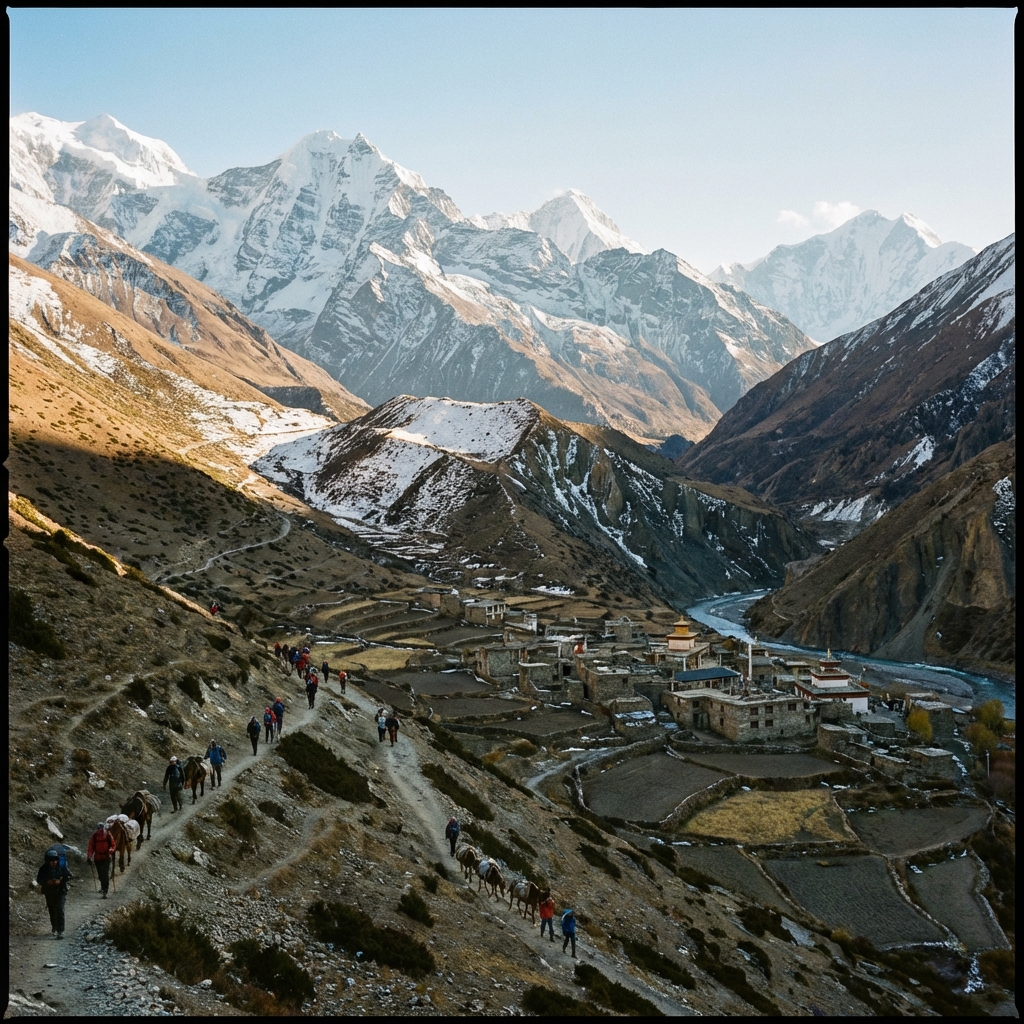
Consider your available time, fitness, and altitude comfort. Short treks like Poon Hill (4-5 days), Mardi Himal (5-7 days), and Langtang Valley (7-9 days) deliver incredible experiences without the altitude challenges of higher routes. They're perfect for trekkers with limited vacation time, those testing their fitness for a future longer trek, or travelers who want to combine trekking with other Nepal experiences like Chitwan safaris or Kathmandu sightseeing. Long treks like the Annapurna Circuit (14-21 days), EBC (12-14 days), or Manaslu Circuit (14-16 days) offer a deeper immersion — you fully adapt to the rhythm of trail life, experience dramatic landscape transitions, and feel a genuine sense of accomplishment crossing high passes.
Is clockwise or counterclockwise better for the Annapurna Circuit?
Counterclockwise (Besisahar to Jomsom) is the standard and recommended direction for most trekkers. It provides gradual altitude gain from 800m to the Thorong La pass at 5,416m, better acclimatization, and the dramatic descent into Muktinath. Clockwise (Jomsom to Besisahar) is faster for experienced trekkers — the altitude gain is more aggressive, which saves days but increases altitude sickness risk. About 90% of trekkers go counterclockwise. If you go clockwise, you'll walk against the flow of other trekkers, which some find isolating and others find refreshing.