Heat Management While Trekking in Nepal
Heat management trekking Nepal comes down to four habits: hydrate to 4–5 litres per day with electrolytes on hot lower sections, hike early and rest through the 11 AM–3 PM peak, wear light moisture-wicking clothing with SPF 50+ sun protection, and learn to recognise heat exhaustion before it becomes heat stroke. The danger zone is the subtropical approach below 2,500m, especially in April–May.
Most Nepal trekking guides focus on cold: altitude, frostbite, hypothermia, wind chill. This is understandable — the dramatic high-altitude environments draw attention and the consequences of cold at altitude are severe.
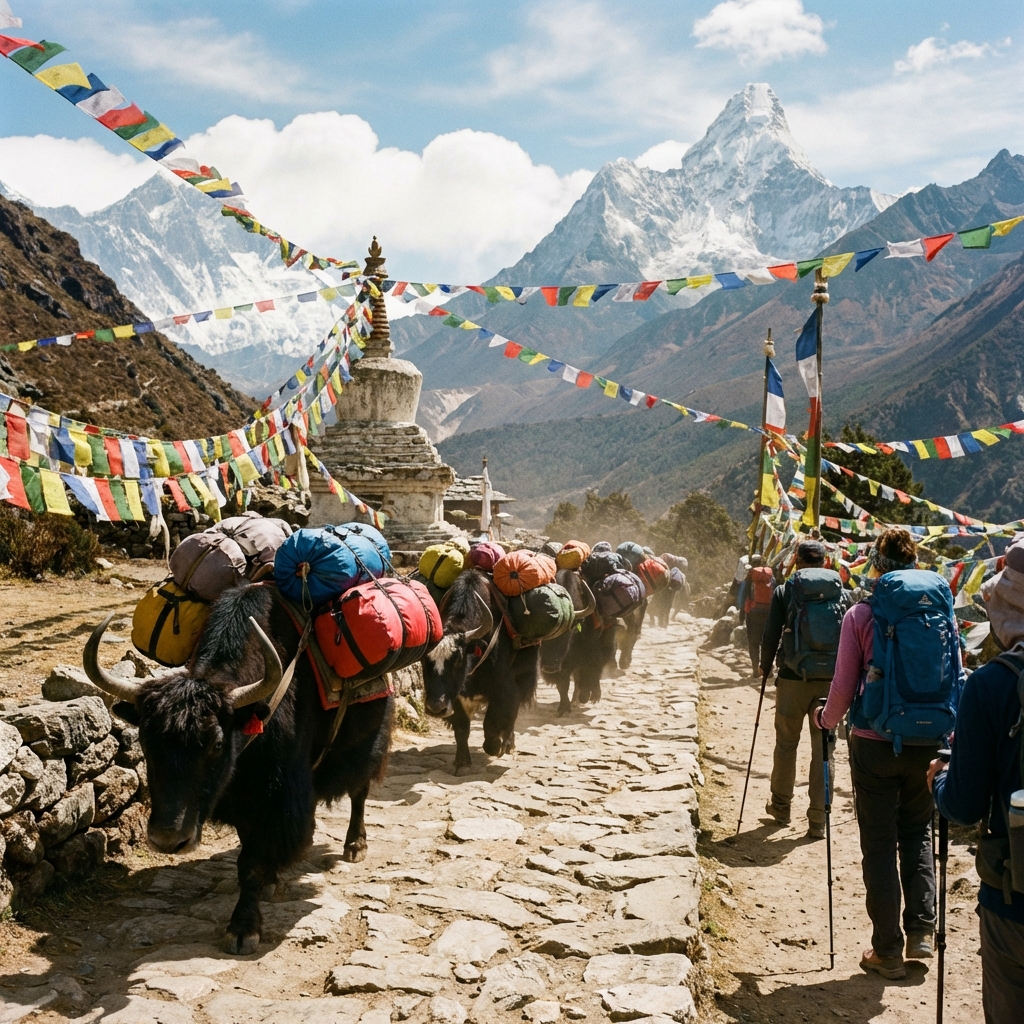
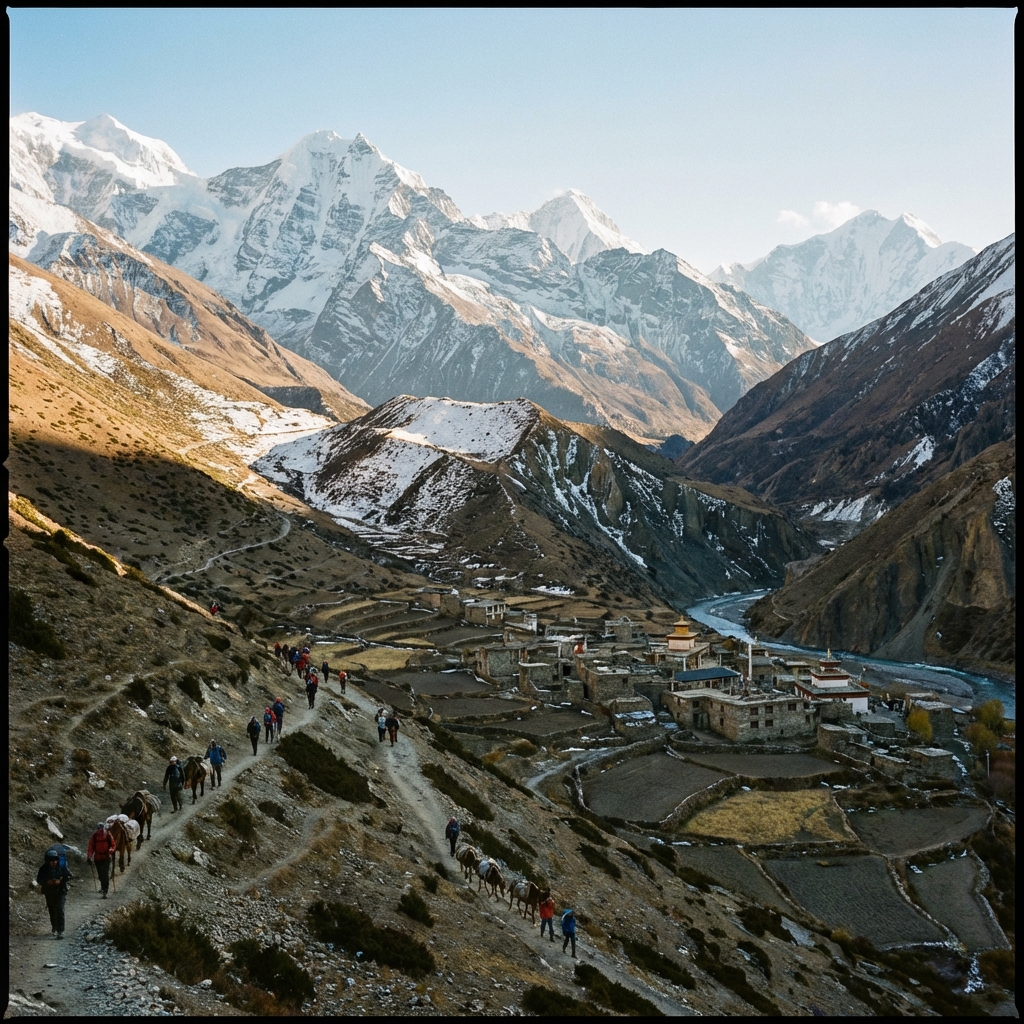
But the reality of a Himalayan trek is that you spend the first and last several days in subtropical terrain that can be genuinely hot. The approach to Everest Base Camp begins in Lukla at 2,840m — warm enough for short sleeves in spring and autumn. The Pokhara approaches to the Annapurna region start even lower. The Langtang approach from Syabrubesi and the Kanchenjunga approach from Taplejung pass through jungle-fringed valleys that can reach 35°C in spring.
For trekkers conditioned by media images of frozen Himalayan passes, this heat comes as a surprise. And surprise, in this context, means dehydration and heat illness sneak up on people who are fully prepared for the cold they expected to encounter but not for the warmth they didn't. This guide covers the full picture: where heat hits hardest, how much to drink, how to read the warning signs, and how to plan your day so heat never becomes a problem.
Subtropical approach below 2,500m
April–May (35–40°C in low valleys)
4–5 litres + electrolytes
11 AM – 3 PM
SPF 50+, UPF 50 hat, UV400 sunglasses
Autumn (October–November)
Nepal's Thermal Geography
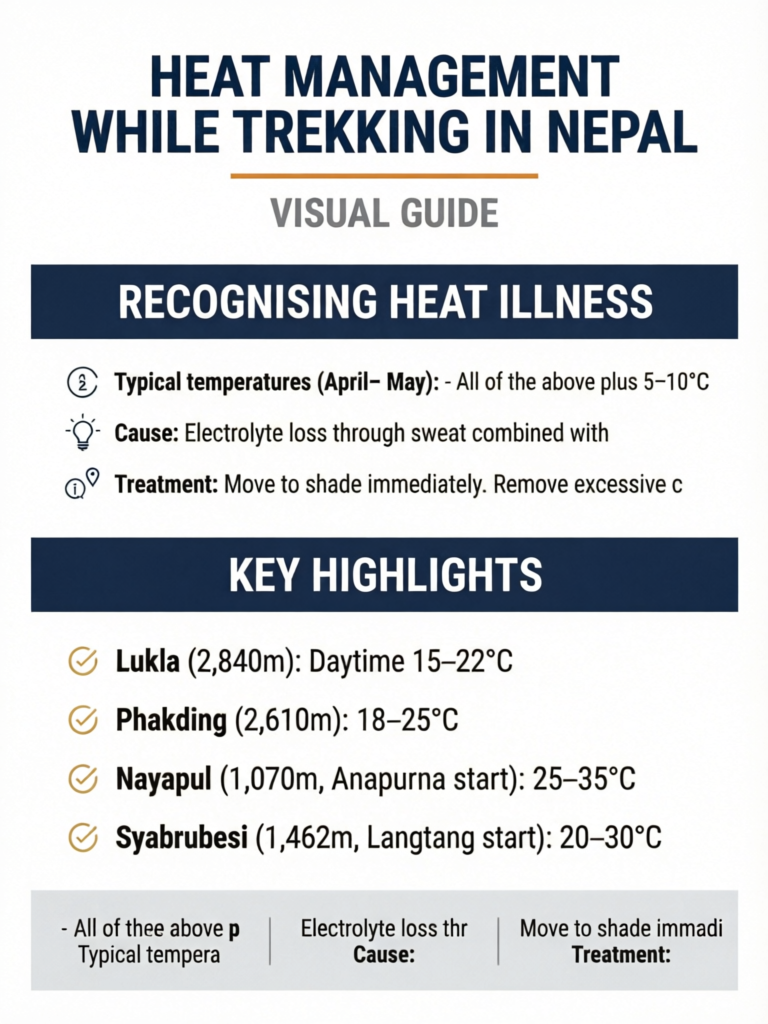
Understanding the temperature distribution across a Nepal trek helps you prepare properly.
The Approach Zone (Below 2,500m)
The lower approach sections of Nepal's major treks pass through subtropical to warm-temperate zones:
Typical temperatures (October–November):
- Lukla (2,840m): Daytime 15–22°C
- Phakding (2,610m): 18–25°C
- Nayapul (1,070m, Annapurna start): 25–35°C
- Syabrubesi (1,462m, Langtang start): 20–30°C
- Taplejung (1,820m, Kanchenjunga start): 15–28°C
Typical temperatures (April–May):
- All of the above plus 5–10°C
- Nayapul in May can reach 38–40°C on hot days
- Monsoon humidity amplifies heat stress significantly
The critical insight: On a day you are hiking from Nayapul to Tikhedhunga on the Poon Hill route in April, you may be walking 3–4 hours in temperatures that would challenge marathon runners. This is the same day you are carrying a trekking backpack, potentially a new pair of boots, and maintaining a good hiking pace toward the high hills ahead.
The Midrange Zone (2,500m–3,500m)
Once you gain altitude, temperatures moderate significantly. But the midday sun at this elevation — unfiltered by the atmospheric moisture that buffers lower elevations — is intense. UV radiation here is substantially higher than at sea level, and the combination of UV intensity and exercise can produce heat and radiation stress even at temperatures that feel moderate (15–20°C).
A trekker in a t-shirt at Namche Bazaar (3,440m) on a sunny October day is exposed to UV radiation 30–40% higher than at sea level. The comfortable air temperature masks the radiation load.
Why Humidity Matters More Than the Thermometer
Air temperature alone understates the danger on Nepal's lower trails. The body cools itself almost entirely by evaporating sweat, and that mechanism stalls when the air is already saturated with moisture. In the humid valleys of the Annapurna foothills, the Langtang approach, and the eastern hills toward Kanchenjunga, relative humidity in the warmer months can sit high enough that sweat drips off rather than evaporating — so it cools you very little while still draining your fluids and salts.
This is why a humid 32°C day on a low Nepal approach can feel and behave like a far hotter dry-heat day. The practical lesson: treat humid lower sections with the same respect you would give an obviously scorching desert trail. Drink more, walk slower, rest more often in shade, and do not measure your effort by the air temperature alone.
Which Treks Are Hottest on the Approach
Heat risk is not uniform across Nepal's trekking regions. Knowing where the hot sections fall helps you plan timing and water:
- Annapurna (Poon Hill, Annapurna Base Camp) — the Nayapul / Ghandruk / Jhinu approach is among the hottest, starting near 1,070m. Long stone-staircase climbs in full sun.
- Annapurna Circuit — the lower Marsyangdi valley below Chame is warm and humid before the trail climbs into the dry, high country toward Thorong La.
- Langtang — the Langtang Valley approach from Syabrubesi (1,462m) follows a jungle-fringed river gorge that holds heat and humidity.
- Kanchenjunga and Makalu — eastern approaches from low road-heads pass through subtropical farmland and forest; long, hot first days.
- Everest — the Lukla start at 2,840m is the mildest of the big treks, but the riverside sections to Phakding and Monjo still warm up sharply at midday in spring.
Hot-Approach Comparison at a Glance
The table below ranks the major trek approaches by heat exposure, using the start altitudes and spring temperature ranges described above. Lower start points and longer days in full sun mean more heat to manage.
| Trek approach | Start point (altitude) | Spring heat (April–May) | Heat load |
|---|---|---|---|
| Annapurna Base Camp / Poon Hill | Nayapul (1,070m) | 35–40°C | Highest |
| Kanchenjunga | Taplejung (1,820m) | up to 33°C | High |
| Langtang Valley | Syabrubesi (1,462m) | 25–35°C, humid gorge | High |
| Annapurna Circuit | Lower Marsyangdi valley | 30°C+, humid below Chame | Moderate–High |
| Everest Base Camp | Lukla (2,840m) | 20–27°C riverside | Moderate |
Use this to decide where to start very early, where to carry extra water, and which approaches reward an autumn departure over a late-spring one. None of these treks is dangerous because of heat alone — but each rewards a trekker who plans the hot hours rather than fights them.
Recognising Heat Illness
Heat Cramps
What: Painful muscle spasms in legs, arms, or abdomen during heavy exercise in heat. Cause: Electrolyte loss through sweat combined with dehydration. Treatment: Rest in cool area, drink water with electrolytes (ORS sachets), gentle stretching. Do not continue trekking until cramps resolve. Caution: Heat cramps are an early warning sign of more serious heat illness developing.
Heat Exhaustion
What: The body's temperature regulation beginning to fail under sustained heat and fluid loss. Symptoms: Heavy sweating, cool pale clammy skin, weakness, fatigue, headache, nausea, dizziness, rapid weak pulse. Core temperature typically normal or mildly elevated (below 40°C). Treatment: Move to shade immediately. Remove excessive clothing. Apply cool wet cloths to neck, armpits, and groin. Oral rehydration with electrolytes. Rest completely — do not resume trekking the same day. Monitor for progression to heat stroke.
Heat Stroke
What: A medical emergency. The body's temperature regulation has failed completely. Core temperature above 40°C. Symptoms: High body temperature, hot dry skin (if classic heat stroke) or wet skin (if exertional), confusion or altered consciousness, slurred speech, seizures possible. The absence of sweating in hot conditions combined with confusion is a red flag. Treatment: This is an emergency. Cool the body by any means possible (immersion in cool water is most effective; wet cloths and fanning otherwise). Arrange immediate evacuation to medical care. Do not give fluids to a confused or unconscious person — aspiration risk.
Heat Stroke on Nepal Treks
Heat stroke is rare on Nepal treks but does occur, primarily on the lower approach sections in April–May. It has a mortality rate of up to 50% without treatment and brain damage from hyperthermia can occur within minutes of temperature exceeding 42°C. If you encounter a trekker who is confused and hot, treat it as a medical emergency equal in severity to HACE or HAPE.
Heat Illness vs Altitude Sickness: Telling Them Apart
This matters because the early symptoms overlap and the treatments diverge. Headache, nausea, fatigue and dizziness appear in heat exhaustion, in dehydration, and in acute mountain sickness alike. Misreading one for the other can send you the wrong way.
The clearest distinguishing clue is altitude and context. On a hot day below 3,000m, after hours of sweating and too little fluid, suspect heat and dehydration first — move to shade, cool down, and rehydrate with electrolytes, and symptoms should ease within an hour or two. Higher up, after a day of significant ascent, suspect altitude — and the rule there is do not climb higher, and descend if symptoms worsen. When you genuinely cannot tell, treat for both at once: stop, hydrate, cool down, and do not gain further altitude until you feel clearly better. If confusion, loss of coordination, or breathlessness at rest appear, treat it as an emergency regardless of cause and arrange descent and rescue. See the HAPE & HACE emergency guide for the high-altitude red flags.
Hydration Strategies for Hot Lower Sections
How Much Water?
Standard trekking hydration recommendations (3–4 litres per day) are designed for moderate altitude. On hot lower-altitude sections, increase this to 4–5 litres per day, more if you are a heavy sweater.
Practical test: Your urine should be pale yellow throughout the day. Dark yellow means you are dehydrated. Clear means you may be overhydrating (which carries its own electrolyte risks — hyponatremia). Pale yellow is the target.
When to drink: Start your morning before the trail — drink 500ml of water before breakfast. Drink at every rest stop regardless of whether you feel thirsty. Thirst lags behind actual hydration need — by the time you're thirsty at altitude or in heat, you're already measurably dehydrated.
Know Your Sweat Rate
People lose fluid at very different rates, and "drink 4–5 litres" is a starting point, not a universal prescription. A simple way to learn your own rate is to weigh yourself before and after a hot training hike: each kilogram lost is roughly a litre of fluid you failed to replace, and that gap is what you should aim to close on the trail. Heavy sweaters, larger trekkers, and anyone trekking in the warmer pre-monsoon weeks will sit at the high end of the range or above it.
The opposite mistake is just as real. Forcing down water far beyond your losses, with no salt, dilutes your blood sodium and brings on hyponatremia. The goal is balance: replace what you actually lose, always with some electrolytes, and use urine colour as your running gauge.
Electrolyte Replacement
Plain water is insufficient for multi-hour trekking in heat. Sweating depletes sodium, potassium, and magnesium. Drinking large volumes of plain water without electrolyte replacement can cause hyponatremia — dangerously low sodium — with symptoms including headache, nausea, and confusion that mimic both AMS and heat exhaustion.
Carry Oral Rehydration Salt (ORS) sachets — available at every Nepali pharmacy for a few rupees each. Add one to 500–750ml of water and drink with meals or after heavy sweating. Commercial electrolyte tablets (Nuun, SaltStick, etc.) serve the same purpose and are lighter.
A practical Nepal habit: the standard trekking lunch of dal bhat is naturally salty and replaces sodium lost to sweat far better than a plain snack. Salty teahouse soups and the ubiquitous lemon-salt-sugar drinks serve the same purpose. You do not have to get every electrolyte from a sachet.
Water Sources and Safety
Lower-altitude Nepal streams are not safe to drink untreated. Agricultural chemicals, animal waste, and village sewage affect water sources throughout the lower approach valleys. Use iodine tablets, chlorine dioxide, or a UV pen purifier on all stream water. Our water purification and hydration guide compares each method, and the gear page on purification covers specific kit.
Teahouse water below 2,500m should be treated as suspicious — ask whether water is boiled before drinking unfiltered tap water. Carrying capacity matters too: on the hottest approach days you may drink faster than you can refill, so plan to carry at least 2 litres between reliable water points.
Pro Tip
Buy your ORS sachets and electrolyte tablets in Kathmandu or Pokhara before you start. They are cheap and easy to find in city pharmacies, but stock thins out and prices climb the higher and more remote you go.
Sun Protection at Lower and Mid Altitudes
The UV Altitude Factor
For every 1,000m of altitude gain, UV radiation increases by 10–12%. Nepal's lower trekking zones receive intense solar radiation due to limited atmospheric moisture and high solar angle in spring and autumn:
| Altitude | UV Increase vs Sea Level |
|---|---|
| 1,000m | +10–12% |
| 2,000m | +20–24% |
| 3,000m | +30–36% |
Combined with Nepal's low latitude (27–29°N), solar angles are high and direct radiation is intense throughout the trekking seasons.
Practical Sun Protection
Sunscreen: SPF 50+ on all exposed skin. Apply 30 minutes before going outside and reapply every 2 hours (more if sweating heavily). Don't forget the back of the neck, ears, and the top of the nose.
Hat: A wide-brimmed hat (8cm brim or more) provides meaningful face and neck shade. A hat with UPF 50 fabric adds UV protection beyond the brim shadow. See our hats for Nepal trekking guide for specific styles.
Clothing: Long-sleeve base layers in light, moisture-wicking fabric provide better sun protection than sunscreen alone. Modern UPF 30–50 rated hiking shirts are both sun-protective and cooler than cotton T-shirts because they wick sweat efficiently.
Sunglasses: Polarised sunglasses with UV400 filter are appropriate for lower altitudes. Above snowlines, upgrade to Category 4 glacier goggles. Our sunglasses and sun protection guide covers the categories in detail.
Lip balm: SPF 30+ lip balm. Cracked and burned lips are both painful and a vector for infection.
Neck protection: A lightweight neck gaiter or buff can be soaked in water and worn damp to cool the neck while shielding it from direct sun — a cheap, dual-purpose tool for hot approach days.
Clothing Choices for Heat Management
Fabrics
Merino wool: Excellent temperature regulation across a range of conditions. Naturally wicking, resists odour, and comfortable against the skin. Can feel warm in very hot weather but outperforms cotton in the transition zones.
Synthetic moisture-wicking: Polyester-based trekking shirts dry faster than merino and are often cheaper. In sustained heat, a well-designed synthetic shirt in light colour is excellent.
Cotton: Avoid for trekking. Cotton absorbs moisture and loses its insulative properties when wet. In heat, wet cotton keeps the skin damp and can cause chafing. In cold, wet cotton can contribute to hypothermia. Cotton is the wrong choice for Nepal's thermal variability.
Colour: Light colours reflect solar radiation; dark colours absorb it. In hot lower sections, light-coloured clothing reduces the radiation load on your body.
For a fuller breakdown of fabric trade-offs, see merino wool vs synthetic layers and the complete layering system for Nepal trekking.
Layering for Variable Conditions
Nepal's lower approach valleys are thermally variable — early morning can be 15°C, midday 30°C, and evening 18°C. Pack for easy layering with:
- Light moisture-wicking long-sleeve base layer (for sun protection and morning cold)
- Removable windshirt or light fleece
- Wide-brimmed sun hat
Feet, Chafing and Heat
Heat does its damage at the extremities too. Hot, sweaty feet swell and soften, and damp skin blisters far more easily — which is why so many first-day blisters happen on warm low approaches rather than the cold high passes. Choose moisture-wicking trekking socks, let your feet air out at lunch stops, and break boots in well before the trip; the blister prevention guide covers the rest. Sweat-driven chafing on the thighs and waist is the other common warm-weather complaint — loose, smooth-seamed clothing and a small anti-chafe balm prevent most of it.
Time-of-Day Strategy
The simplest heat management tool is hiking timing:
Start early. Most experienced Nepal trekkers depart by 6–7 AM, taking advantage of the cool morning air. On approach sections in spring or summer, 5 AM starts are appropriate on hot sections.
Midday rest. In hot conditions, resting from 11 AM to 2 PM during peak heat (the "siesta strategy") is both culturally appropriate in Nepal and physiologically sensible. Most trail restaurants accommodate long midday meals.
Afternoon short sessions. If needed, resume walking after 3 PM when solar heat intensity drops. The final hours of daylight in Nepal's lower valleys are often the most pleasant for walking.
Building this rhythm into your schedule means planning short morning stages on the hottest approach days rather than pushing through the heat of the early afternoon. A good guide or local agency will already structure low-altitude days this way; if you are trekking independently, do it deliberately.
Heat Acclimatisation Before and During the Trek
Acclimatisation is a word trekkers usually attach to altitude, but your body also adapts to heat — and the two adaptations are separate. A trekker who is well prepared for the thin air of Thorong La can still struggle on a 35°C first day if they arrived straight from a cold-climate winter with no heat conditioning at all.
The body adapts to heat faster than to altitude. With repeated exposure to exercise in warm conditions, you begin sweating sooner, sweat more efficiently, lose less salt in that sweat, and keep a lower core temperature for the same effort. Meaningful gains start within several days of regular heat exposure and continue to build over a couple of weeks.
What this means in practice:
- Train in the heat where you can. If your trek starts in a hot Nepal spring, do some of your final training walks in the warmest part of your own day rather than only in the cool morning. Even a few warm sessions blunt the shock of the first low-altitude approach day.
- Ease into the first days. Treat the opening low-altitude stages as part of your heat conditioning, not a race. Shorter, slower mornings let your body adjust before you ask it to carry a full pack through midday sun.
- Build a fitness base first. A heat-acclimatised body is far easier to achieve on top of general aerobic fitness. The work you put into trekking fitness and cardiovascular training pays off twice — once for the climbs and again for the heat.
You cannot fully heat-acclimatise in a Kathmandu hotel before you start, but you can avoid the worst of the surprise by arriving fit, hydrated, and rested, and by treating the first hot days with respect.
Active Cooling Techniques on the Trail
When the heat builds despite your planning, deliberate cooling buys you margin. The principle is simple: help your body shed heat through evaporation and contact with cooler surfaces, and target the places where blood runs close to the skin.
- Wet the neck, wrists and head. Soak a neck gaiter or buff and wear it damp; splash water on your wrists, forearms and the back of your neck at rest stops. These are high-blood-flow areas where cooling reaches the core fastest.
- Find shade and stop moving. Sitting in shade for five to ten minutes does more than walking slowly in sun. Pick lunch and rest stops where there is real shade — a teahouse veranda, forest canopy, or the shaded side of a gorge.
- Use moving air. A light breeze accelerates evaporation. On still, humid days, fanning yourself or simply removing a layer of trapped damp air against the skin helps.
- Drink cool, not ice-cold. Cool fluids are absorbed well and lower your internal load; there is no need for ice, which is rarely available on the trail anyway.
- Loosen and ventilate clothing. Open cuffs and collars at rest to let trapped heat escape, then cover up again for sun protection while walking.
These techniques are also the front line of treatment if a member of your group starts to overheat — cool first, then assess, and never push a heat-affected trekker onward in the midday sun.
Heat by Season: When the Approaches Bite
Heat risk rises and falls sharply across the trekking calendar, and matching your trip to the right window is half the battle. The 2026 seasons follow the usual pattern, so plan your hot-region treks around it.
- Spring (March–May): The hottest standard trekking season on the low approaches. April and especially May bring the 35–40°C lower-valley days described above, with rising humidity as the pre-monsoon builds. This is when heat management matters most.
- Monsoon (June–September): Lower elevations are hot, humid and wet. Trekking continues mainly in the rain-shadow regions like Mustang and Dolpo, but the road-head approaches are sticky and draining. See the monsoon trekking guide.
- Autumn (September–November): The most popular season. Crisp at altitude, but the lower approaches in early October can still be warm and the autumn sun is strong.
- Winter (December–February): Heat is rarely an issue, though clear-sky midday UV remains high. Cold becomes the dominant concern.
If you have flexibility, planning a hot-region trek for autumn rather than late spring is the single biggest heat-management decision you can make. Our best time to trek Nepal guide and the Annapurna and Everest season pages help you choose.
Who Is Most at Risk
Some trekkers feel heat harder and need extra margin:
- Children and families: Kids heat up faster, have a smaller fluid reserve, and may not flag thirst or fatigue clearly. Keep them in the shade, drinking, and out of the midday sun.
- Older adults: The thirst response and sweat efficiency both decline with age, so deliberate scheduled drinking matters more.
- Trekkers with health conditions: Heart, kidney and blood-pressure conditions, and many common medications (including diuretics and some blood-pressure drugs), change how the body handles heat and fluid. Get medical advice before a hot-weather trek.
- The unacclimatised and unfit: Arriving straight from a cool winter climate to a hot Nepal spring approach, with no heat-acclimatised fitness base, is a recipe for an early heat scare. Build trekking fitness before you fly.
Packing and Water Logistics for Hot Days
Heat management is partly a packing problem. The right kit makes drinking, cooling and sun-shielding effortless; the wrong kit leaves you rationing water or roasting in cotton.
- Water capacity. Carry the means to hold at least 2 litres for the hottest approach stages — a hydration bladder plus a backup bottle is ideal, because a bite-valve hose makes you sip far more often than a bottle buried in your pack. Plan refills around safe water points, since you can drink faster than you refill on a 35–40°C day.
- Purification you trust. Hot, low approaches are exactly where stream water is least safe, so carry a reliable method — UV pen, chlorine dioxide, or a filter. Compare options in the water purification and hydration guide and the purification gear page.
- Electrolytes in reach. Keep ORS sachets or tablets in a hip-belt or lid pocket, not the bottom of the pack, so you actually use them. Top up your supply in Kathmandu or Pokhara before you start.
- Sun and cooling kit accessible. A wide-brim hat, sunglasses, sunscreen, lip balm and a buff belong where you can grab them without unpacking.
- A breathable pack against your back. A ventilated back panel reduces the sweat patch that soaks your base layer. See the trekking backpacks guide for hot-weather features.
- Light, breathable clothing on top of the layering plan. Build your layering system around a light, sun-protective base for the hot approach, not just the cold high camps.
For the full kit, cross-check your complete trekking gear list and the seasonal what to wear trekking in Nepal guide so the warm first days are covered as carefully as the cold high ones.
A Simple Hot-Day Action Plan
When a hot approach day is unavoidable, run this checklist:
- Pre-hydrate the night before and drink 500ml before you set out.
- Start by 6 AM and aim to finish the stage before midday.
- Carry 2+ litres plus ORS, and refill at every safe water point.
- Drink at every rest stop, not just when thirsty; salt your lunch.
- Shade and slow down through 11 AM–3 PM; never race the heat.
- Cool actively if you overheat — wet buff on the neck, splash water, rest in shade.
- Watch your group for headache, nausea, stumbling or confusion, and stop early at the first sign.
The 30-second self-check
On a hot day, glance at three things at every break: the colour of your last pee (aim pale yellow), how you feel after five minutes in the shade (you should rebound), and whether you are still sweating (stopping while still hot is a warning sign). Any red flag means stop, cool, and rehydrate before moving on.
Plan a Trek That Works With the Heat
The best heat management decision is built into the plan: the right region, the right season, and a schedule that respects the hot hours. A verified local agency or guide will pace your low-altitude days, manage water and rest stops, and read the early signs of heat illness in your group — experience that is hard to replicate on a first trek.
Plan your Nepal trek with confidence
Match your trek and timing to the weather, and trek with a verified local guide who manages heat, hydration and pacing on the trail.
Related Resources
How Hot Does It Get on Nepal Trek Approach Trails?
Lower-altitude approach trails in Nepal can reach 35-40C during April-May, particularly on the Annapurna approaches from Nayapul and the Kanchenjunga approach from Taplejung. Even in the prime autumn season (October-November), temperatures below 2,500m regularly exceed 25C. Most trekkers prepare for cold but are surprised by the subtropical heat of the first few days.