
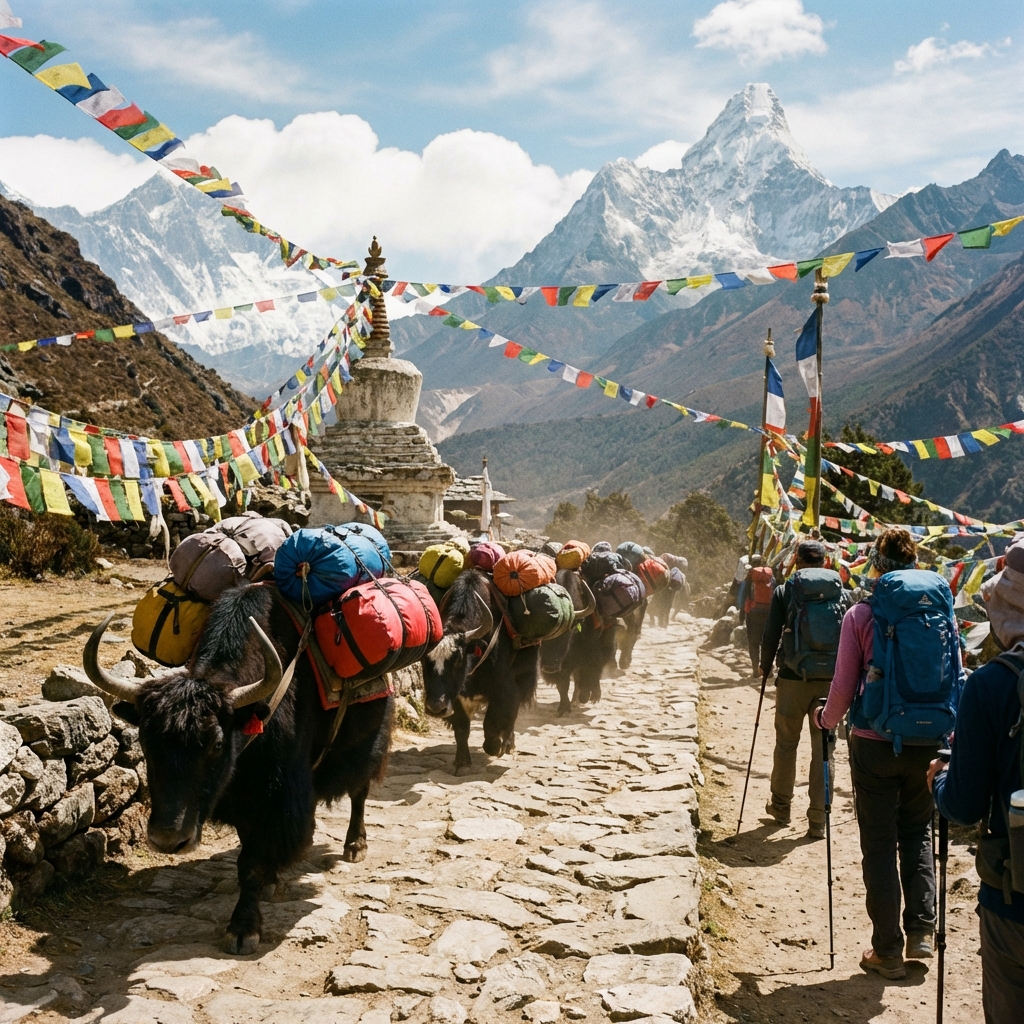
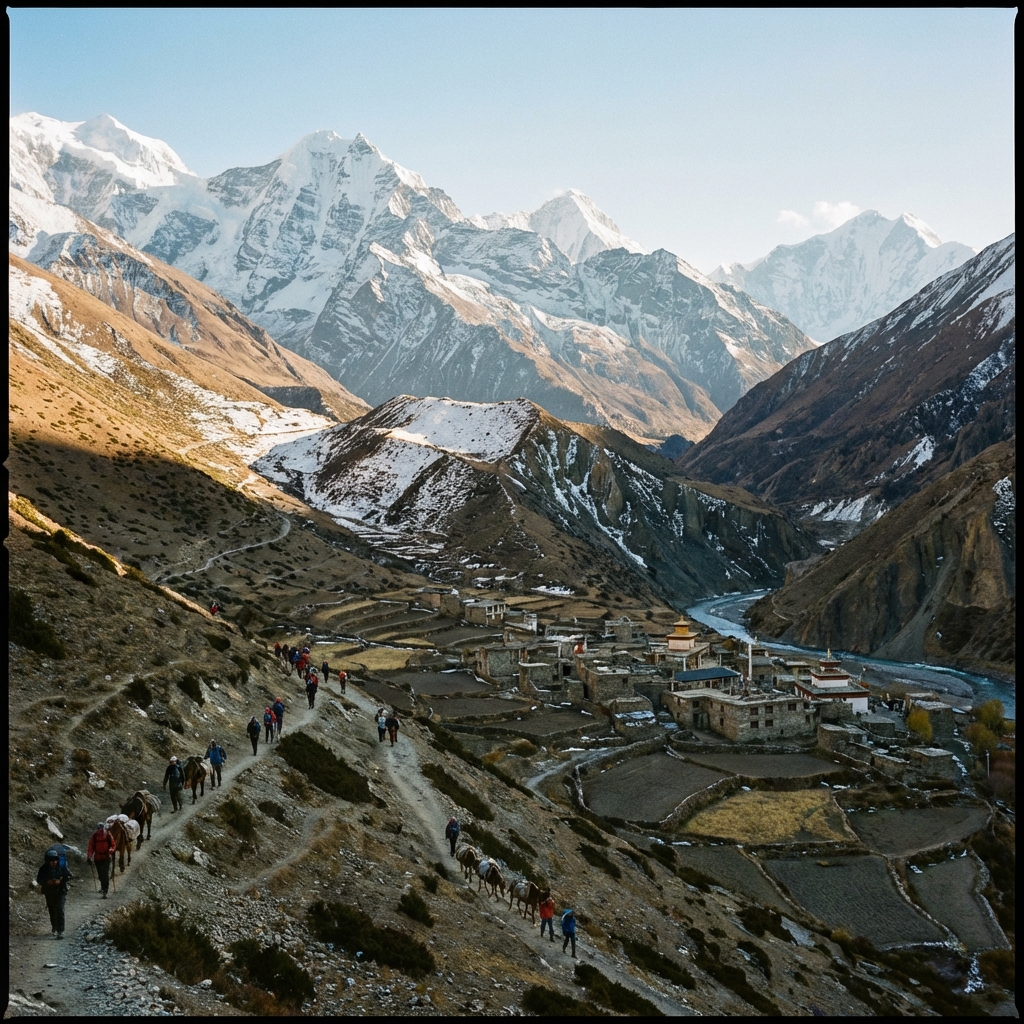
The Manaslu Circuit demands more from your gear than almost any other non-technical trek in Nepal. The combination of 14-17 days in a restricted remote area, Larkya La Pass at 5,160m, pre-dawn sub-zero temperatures, limited resupply options, and unpredictable weather means your packing decisions directly affect your safety and summit success.
This is not a list of what is nice to have. Every item below is tested against the specific conditions of the Manaslu Circuit — the cold nights in Samagaon, the 4:00 AM start in -15°C at Dharamsala, the long rain-soaked days in the lower Budhi Gandaki gorge, and the 22km descent from Bimthang after the pass crossing.
14-17 days
5,160m (Larkya La Pass)
-10°C to -20°C (dawn)
0°C to -5°C nights above 3,500m
12-15kg (guide carries heavier loads)
5-8kg maximum
25kg per porter load
Available Kathmandu (not on trail)
The Manaslu-Specific Packing Challenges
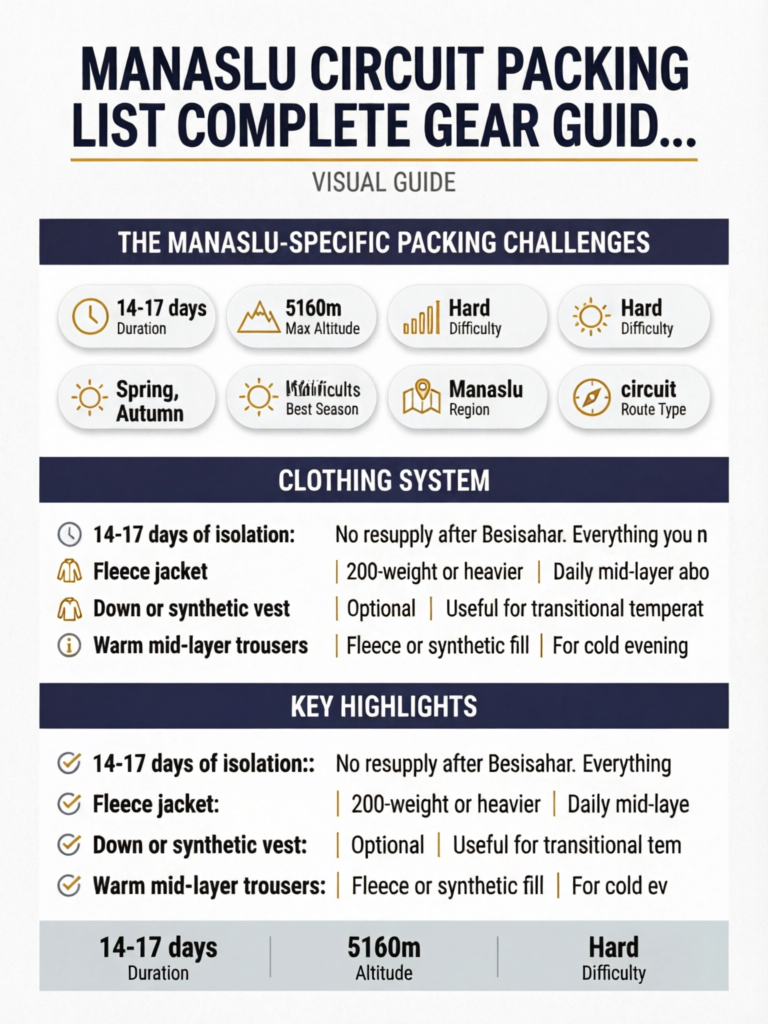
Higher altitude than ABC or Poon Hill: Larkya La at 5,160m is significantly colder than the Annapurna Base Camp (4,130m) or Poon Hill (3,210m). You need gear rated for at least -15°C.
14-17 days of isolation: No resupply after Besisahar. Everything you need must go in from day one.
Restricted area — no emergency gear purchase on trail: Unlike Namche Bazaar (EBC) or Pokhara (ABC), there are no gear shops in the Manaslu Conservation Area. If you forget something, you go without it.
Mandatory guide = porter support: You will have at least one porter (required by permit regulations). Use this to carry your main bag — keep a 5-8kg daypack for the trail.
Clothing System
Base Layers
| Item | Specification | Quantity | Notes |
|---|---|---|---|
| Merino wool long-sleeve top | 200-weight | 2 | Better than synthetic for 14+ days |
| Merino or synthetic long underwear | Lightweight | 2 | |
| Trekking shirts/t-shirts | Quick-dry | 2-3 | Lower valley heat |
| Trekking trousers | Zip-off convertible | 2 | |
| Lightweight shorts | Optional | 1 | Lower valley only |
Insulating Layers
| Item | Specification | Notes |
|---|---|---|
| Fleece jacket | 200-weight or heavier | Daily mid-layer above 2,500m |
| Down jacket | 600-fill or higher, -10°C rated | Critical — use at Samagaon, Samdo, Dharamsala, pass day |
| Down or synthetic vest | Optional | Useful for transitional temperatures |
| Warm mid-layer trousers | Fleece or synthetic fill | For cold evenings in teahouses |
Down Jacket Weight
Do not bring a lightweight packable down jacket designed for city use. The Manaslu Circuit, specifically the pass day at 5,160m, requires a substantial down jacket with a fill power of 600+ and temperature rating of at least -10°C. A jacket rated to 0°C will leave you dangerously cold at pre-dawn Dharamsala.
Outer Layers (Weather Protection)
| Item | Specification | Notes |
|---|---|---|
| Hardshell jacket | Waterproof/breathable, taped seams | Essential — monsoon approach season brings rain |
| Hardshell trousers | Waterproof/breathable | |
| Gaiters | Low or full height | For snow on Larkya La in autumn |
Head, Hands, Feet
| Item | Notes |
|---|---|
| Warm hat / balaclava | Balaclava strongly preferred for pass day |
| Buff / neck gaiter | 1-2 for versatile layering |
| Lightweight gloves | For hiking below 3,500m |
| Insulated waterproof gloves or mitts | Essential for pass day (-15°C wind chill) |
| Wool or merino socks | 4-5 pairs; merino manages odor over 14+ days |
| Liner socks | 2 pairs to prevent blisters |
| Trekking boots | Waterproof, ankle support, broken in |
| Trekking sandals or camp shoes | For teahouse evenings |
| Sunglasses | UV400, Category 3-4 — glacial reflection at 5,000m |
| Goggles (optional) | If hiking in wind/snowstorm conditions |
Sleeping System
| Item | Specification | Notes |
|---|---|---|
| Sleeping bag | -15°C rated (comfort, not limit) | Teahouses above 3,500m are cold; some unheated |
| Sleeping bag liner | Silk or fleece | Adds 5-10°C of warmth, improves hygiene |
| Sleeping mat (optional) | Foam or inflatable | Most teahouses provide mattresses |
Pro Tip
Rent a -15°C rated sleeping bag in Kathmandu if you don't own one. The cost is $15-25 for the full trek. Budget brands available in Thamel are adequate for most conditions. Wash the liner yourself between treks if hygiene is a concern.
Navigation and Safety
| Item | Notes |
|---|---|
| Trekking poles | Two poles — essential for Larkya La descent (22km, 1,440m down) |
| Headlamp | Minimum 200 lumens; extra batteries or USB-rechargeable |
| Extra batteries | For headlamp, camera; no reliable charging above Samagaon |
| Whistle | Emergency signaling |
| Emergency space blanket | Weighs nothing, life-saving in storm |
| First aid kit | See full kit list below |
| Altitude medication (Diamox) | Consult your doctor before the trek |
| GPS device or downloaded offline maps | Maps.me or MAPS.ME has Manaslu Circuit |
| Portable power bank | 20,000mAh — charging is expensive and unreliable above 3,000m |
First Aid Kit
Carry a personal first aid kit in addition to your guide's kit. The Manaslu Circuit is 2+ days from the nearest hospital.
| Item | Why |
|---|---|
| Diamox (acetazolamide 250mg) | AMS prevention/treatment — consult doctor |
| Dexamethasone | HACE treatment — for emergencies, guide administers |
| Nifedipine | HAPE treatment — for emergencies |
| Ibuprofen / Paracetamol | Headache and body pain |
| Oral rehydration salts | Diarrhea and dehydration |
| Ciprofloxacin or Azithromycin | Traveler's diarrhea |
| Antinausea (Ondansetron) | Altitude nausea |
| Moleskin and blister prevention | 14-17 days = foot wear |
| Athletic tape | Ankle support and general |
| Antiseptic wipes and wound dressings | Trail cuts and scrapes |
| Water purification tablets | Backup to filter |
| Pulse oximeter | Daily SpO2 monitoring above 3,000m |
Pulse Oximeter Is Essential
A pulse oximeter ($20-40) is one of the most important items for Manaslu. At altitude, oxygen saturation drops silently — you may feel fine while your SpO2 is dangerously low. Check morning and evening above 3,500m. Normal: 90%+ SpO2. Concerning: below 85%. Action required: below 80% (descend immediately). Your guide will monitor this, but personal awareness is invaluable.
Hydration and Water Treatment
| Item | Notes |
|---|---|
| Water filter (Sawyer Squeeze or similar) | Primary water treatment |
| Purification tablets | Backup; keep in daypack |
| 2 water bottles (1L each) | Insulated bottles prevent freezing on pass day |
| Hydration bladder (optional) | Easy drinking while walking; can freeze above 4,500m |
| Thermos flask | Fill with hot water at teahouses for pass day |
Water strategy: Fill and treat water at every teahouse. Above Samagaon, water sources become less reliable. Always start each day with a minimum of 2L.
Electronics and Connectivity
| Item | Notes |
|---|---|
| Camera | Mirrorless or DSLR; extra batteries; keep warm in jacket |
| Smartphone | Nepali SIM with data works to Samagaon; silent above |
| Solar charger (optional) | Useful above 4,000m where electricity is intermittent |
| Portable power bank 20,000mAh | Most important electronic after camera and headlamp |
| Universal plug adapter | Nepali outlets vary; bring a 3-in-1 adapter |
| Cable organizer | 14+ days of cables; organization prevents loss |
Hygiene and Personal Care
| Item | Notes |
|---|---|
| Biodegradable soap | Environmental protection in conservation area |
| Hand sanitizer | Before every meal; stomach bugs are trail-enders |
| Baby wipes | Trail showers above Namrung |
| Quick-dry towel | Compact microfiber |
| Toothbrush and toothpaste | Minimal |
| Toilet paper + small trowel | Some sections have no toilet facilities |
| Sunscreen (SPF50+) | UV intensity doubles at 5,000m |
| Lip balm with SPF | Lips crack at altitude |
| Moisturizer | Cold dry air desiccates skin rapidly |
| Feminine hygiene products | No reliable supply in restricted area |
Documents and Money
| Item | Notes |
|---|---|
| Passport | Multiple checkpoints require in-person verification |
| Permits (copies) | Agency handles originals; carry photocopies |
| Travel insurance documents | With emergency evacuation number |
| Emergency contact card | Laminated, in daypack |
| Cash (Nepali Rupees) | Last reliable ATM is Besisahar; carry 40,000-60,000 NPR |
| Small bills | Teahouses rarely have change for 1,000 NPR notes |
What NOT to Bring
| Item | Why to Leave It |
|---|---|
| Heavy books | Download e-books; weight adds up over 14 days |
| Excessive clothing | You'll wear the same 2-3 outfits; laundry available in Samagaon |
| Cotton anything | Cotton holds moisture and causes hypothermia |
| Frame tent | Camping not needed on circuit; adds 3-5kg |
| Luxury items | Your porter has a weight limit; be realistic |
Gear Rental vs Purchase: Manaslu-Specific Advice
Always rent:
- Sleeping bag (-15°C): $120-$280 for 14 days in Kathmandu
- Gaiters: $8-12 if you don't own them
- Trekking poles (if you don't own): $8-12
Always buy:
- Trekking boots — comfort and fit are critical over 14+ days; broken-in boots only
- Waterproof jacket — fit matters for long days in rain
Consider renting if budget-limited:
- Down jacket: $12-20 for 14 days
Packing Weight by Category
| Category | Target Weight |
|---|---|
| Clothing system (all) | 3.5-4.5kg |
| Sleeping bag + liner | 1.5-2kg |
| Safety and first aid | 0.5-0.8kg |
| Electronics | 0.8-1.2kg |
| Hygiene and personal care | 0.5-0.8kg |
| Food and water | 1-1.5kg |
| Documents and cash | 0.2kg |
| Daypack weight | 8-11kg total |
| Main bag to porter | Additional 4-6kg of bulky items |
Frequently Asked Questions
Can I rent gear for the Manaslu Circuit in Kathmandu?
Yes. Sleeping bags, down jackets, trekking poles, and gaiters are all available for rent in Thamel, Kathmandu. However, there are no rental shops along the Manaslu trail itself, so arrange everything before departure. See our rent vs buy gear guide for details.
What temperature sleeping bag do I need for Manaslu?
A sleeping bag rated to at least -15C comfort is recommended. Nights at Dharamsala (4,460m) before the Larkya La crossing regularly drop to -15C or colder, and teahouse blankets are insufficient at that altitude.
Should I bring a water purification system?
Yes, absolutely. Bring either a SteriPEN UV purifier, chlorine dioxide tablets (Aquamira), or a filter system. Bottled water is expensive and environmentally damaging on remote sections. Boiled water is available at teahouses but costs NPR 100-200 per liter.
How much cash should I carry on the Manaslu Circuit?
Carry NPR 50,000-80,000 ($380-615 USD) in small denominations. There are no ATMs on the trail, and card payment is not available anywhere on the circuit. Your guide may carry emergency funds but do not rely on this.
Is a porter mandatory on the Manaslu Circuit?
A licensed guide is mandatory, but a porter is not legally required. However, most trekkers use a porter because the 14-17 day duration means more gear and supplies than most people want to carry themselves.