
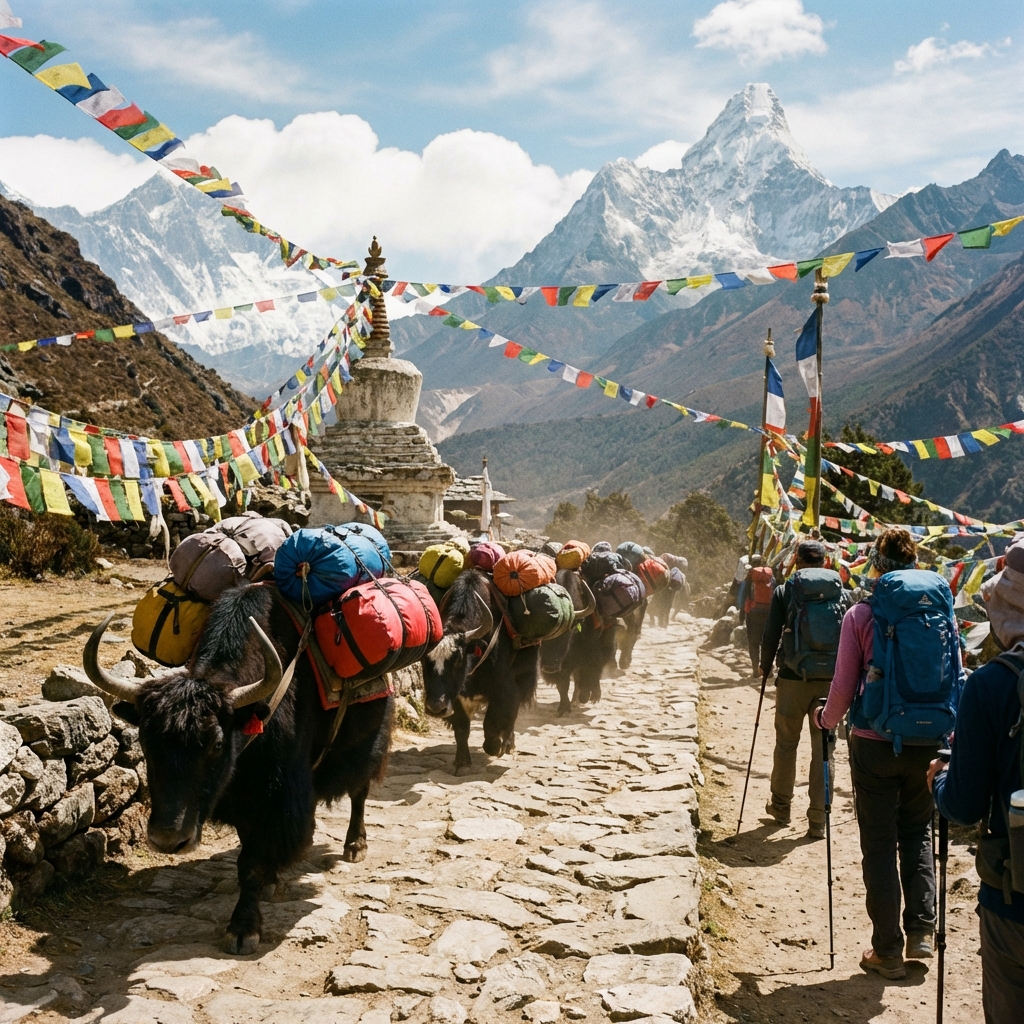
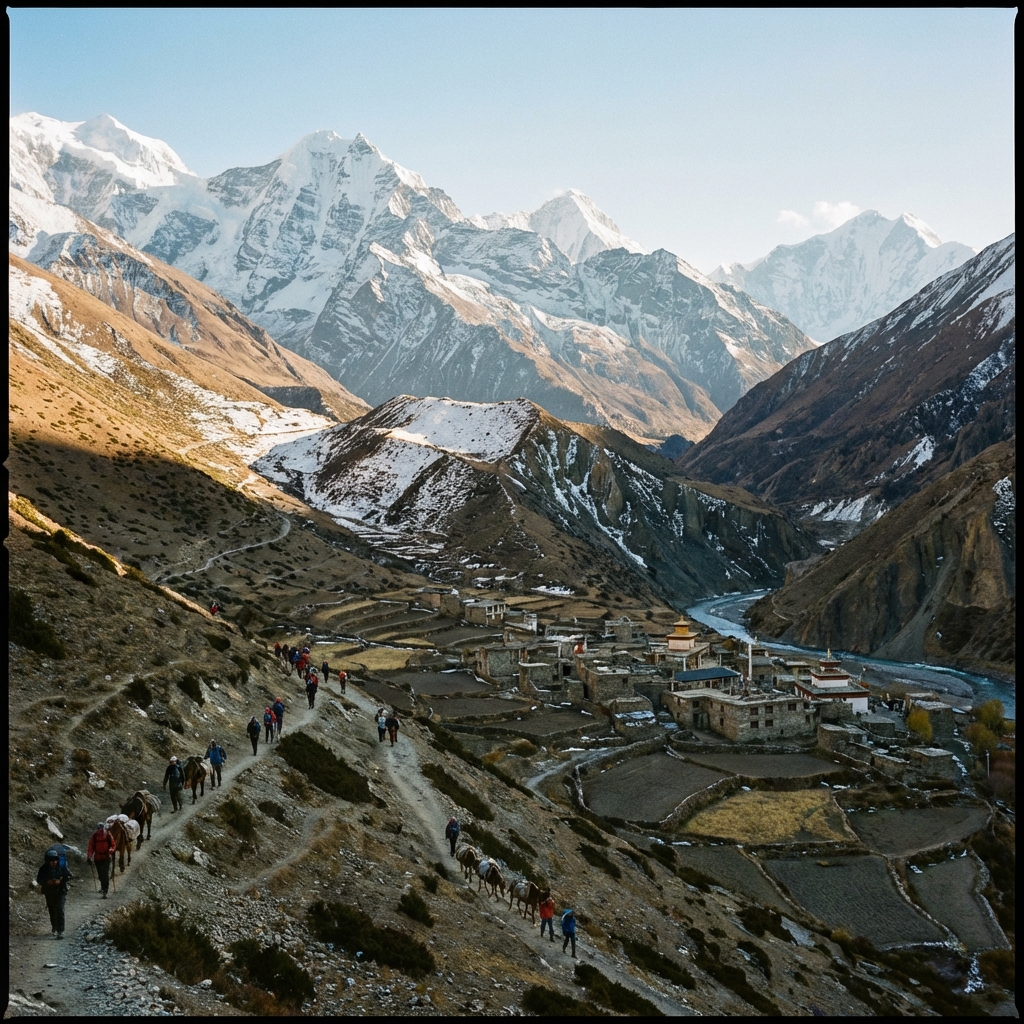
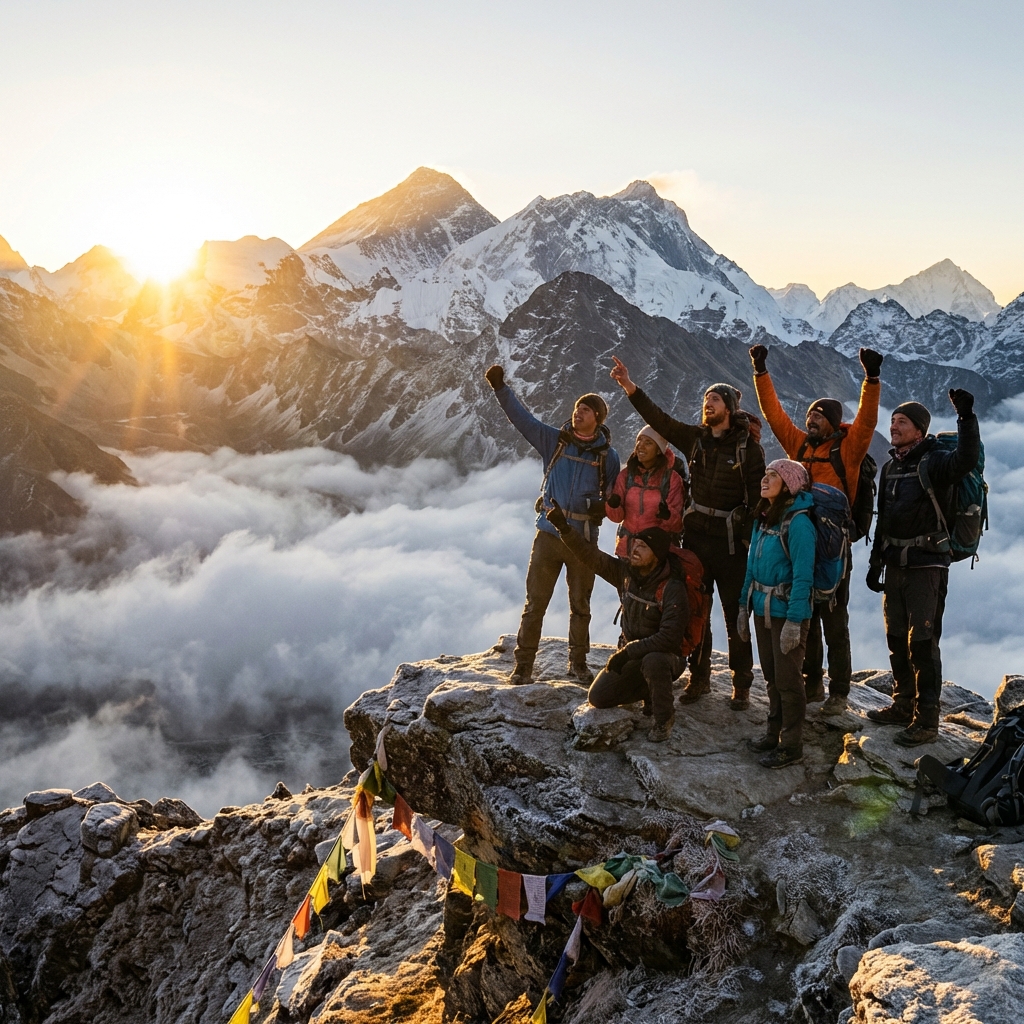
For trekkers with a spare day in Kathmandu, whether before a trek, after returning, or during a layover, Nagarkot offers one of the most rewarding half-day excursions available. Perched at 2,175 meters on the eastern rim of the Kathmandu Valley, this hilltop village provides panoramic views of the Himalayan range stretching from Dhaulagiri in the west to Kanchenjunga in the east, an arc spanning more than 300 kilometers of the greatest mountain range on Earth.
On a clear day, you can see Mount Everest (8,849m) from Nagarkot, a claim that draws thousands of visitors annually. But even when Everest is hidden in haze, the views of the Langtang range, Ganesh Himal, Gauri Shankar, and dozens of other peaks are spectacular enough to justify the trip. For trekkers who have already been to the mountains, Nagarkot provides a convenient way to see ranges you did not visit. For those about to embark on a trek, it is a tantalizing preview of what awaits.
The beauty of Nagarkot is its accessibility. Just 30 kilometers from central Kathmandu, you can be watching the sunrise over the Himalayas within 90 minutes of leaving your hotel. Combine it with a visit to the ancient city of Bhaktapur on the way back, and you have a full day of extraordinary experiences without the need for trekking equipment, permits, or fitness preparation.
2,175m (7,136ft)
30 km (1-1.5 hours by car)
300+ km from Dhaulagiri to Kanchenjunga
Yes, on clear days (159 km away)
Oct-Nov and Feb-Apr
$40-$60 USD
$15-$100+ per night
Bhaktapur Durbar Square
Why Nagarkot Deserves a Spot on Your Itinerary
For Pre-Trek Trekkers
If you have just arrived in Kathmandu and are waiting to start your trek, Nagarkot provides an exciting appetizer. Seeing the Himalayan panorama from a viewpoint gives you a visual reference for the mountains you are about to trek through. You can identify specific peaks, understand the scale of the ranges, and build anticipation for your trek.
Nagarkot also serves as a gentle acclimatization step. At 2,175 meters, it is roughly the same elevation as Namche Bazaar or many starting points in the Annapurna region. Spending a few hours at this altitude will not provide meaningful physiological acclimatization, but it gives your body a gentle introduction to higher elevations.
For Post-Trek Trekkers
After returning from an Everest Base Camp trek or Annapurna Circuit, you might think you have had enough of mountain views. But seeing the Himalayas from Nagarkot offers an entirely different perspective. From the high ridgeline, you see the full panoramic sweep of ranges that you could only see one at a time from the trail. Trekkers who visited the Everest region can now see the Annapurna and Langtang ranges, and vice versa.
For Non-Trekking Travel Companions
If you are traveling with someone who is not joining your trek, Nagarkot is the single best way for them to experience Himalayan views without any physical demands beyond a short walk to a viewpoint.
Overnight Stay for the Best Sunrise
What You Can See from Nagarkot
The Himalayan Panorama
On a clear day, the view from Nagarkot encompasses peaks from eight of the thirteen mountain ranges visible from the Kathmandu Valley rim. The panorama from west to east includes:
| Range/Peak | Height | Direction | Distance from Nagarkot | Visibility |
|---|---|---|---|---|
| Dhaulagiri (I) | 8,167m | Far West | ~175 km | Clear days only |
| Annapurna Range | 7,219-8,091m | West | ~140 km | Good clear days |
| Manaslu | 8,163m | West-Northwest | ~120 km | Good clear days |
| Ganesh Himal | 7,422m | Northwest | ~80 km | Most clear days |
| Langtang Lirung | 7,227m | North | ~60 km | Frequently visible |
| Langtang Range | 6,000-7,227m | North | ~50-70 km | Frequently visible |
| Jugal Himal | 6,563m | North-Northeast | ~55 km | Frequently visible |
| Dorje Lakpa | 6,966m | North-Northeast | ~50 km | Frequently visible |
| Gauri Shankar | 7,134m | Northeast | ~70 km | Good clear days |
| Numbur | 6,959m | East-Northeast | ~95 km | Good clear days |
| Everest (Sagarmatha) | 8,849m | East | ~159 km | Clear days only |
| Kanchenjunga | 8,586m | Far East | ~190 km | Exceptional days only |
When Can You See Everest?
This is the question everyone asks, and the honest answer is: not always. Everest is 159 kilometers from Nagarkot, and at that distance, atmospheric haze can obscure even the world's tallest mountain. Your best chances for an Everest sighting are:
- October-November: After the monsoon rains have washed the atmosphere clean, visibility is at its best. This is the prime window.
- February-March: Cold, dry air provides good visibility, especially after weather fronts pass through.
- Early morning: Before thermals create afternoon clouds, the air is clearest at dawn.
- After rainfall: The day after a rainstorm often produces exceptional clarity.
Even without an Everest sighting, the Langtang range and closer peaks provide a magnificent display. Do not consider your trip wasted if Everest is not visible; the panorama is spectacular regardless.
Identifying Everest from Nagarkot
Everest does not stand out as dramatically from Nagarkot as you might expect. At 159 km distance, it appears as a dark, triangular peak peeking above the closer ridgeline to the east-northeast. Look for the distinctive black pyramid shape rising just above the ridge. The Nagarkot View Tower has labeled markers identifying each peak, which is extremely helpful for first-time visitors.
Best Viewpoints in Nagarkot
Nagarkot View Tower (Main Viewpoint)
The primary viewpoint is the Nagarkot View Tower, a multi-story observation tower at the highest point of the ridge. This provides 360-degree views with the Himalayan panorama to the north and the Kathmandu Valley spread out to the south and west.
- Location: Highest point of Nagarkot ridge
- Access: Short walk from the main road, well-signposted
- Entry fee: NPR 50 (about $0.40)
- Best time: 5:30-7:00 AM for sunrise, 4:30-6:00 PM for sunset
Nagarkot Panoramic Hiking Trail
A ridge trail connects several viewpoints along the Nagarkot ridge, offering 2-3 hours of easy walking with continuously changing perspectives. The trail is well-marked and passes through forests and farmland with mountain views throughout.
This is an excellent option for trekkers who want some light exercise. The trail eventually descends to Changu Narayan, an ancient temple that is another UNESCO World Heritage Site.
Hotel Rooftops and Gardens
Many hotels in Nagarkot are positioned specifically for mountain views. The rooftop terraces of establishments like Hotel at the End of the Universe, Club Himalaya, and Hotel Country Villa offer excellent sunrise viewing with the added comfort of hot tea or coffee served to your seat.
Nagarkot to Changu Narayan Hike
Getting to Nagarkot from Kathmandu
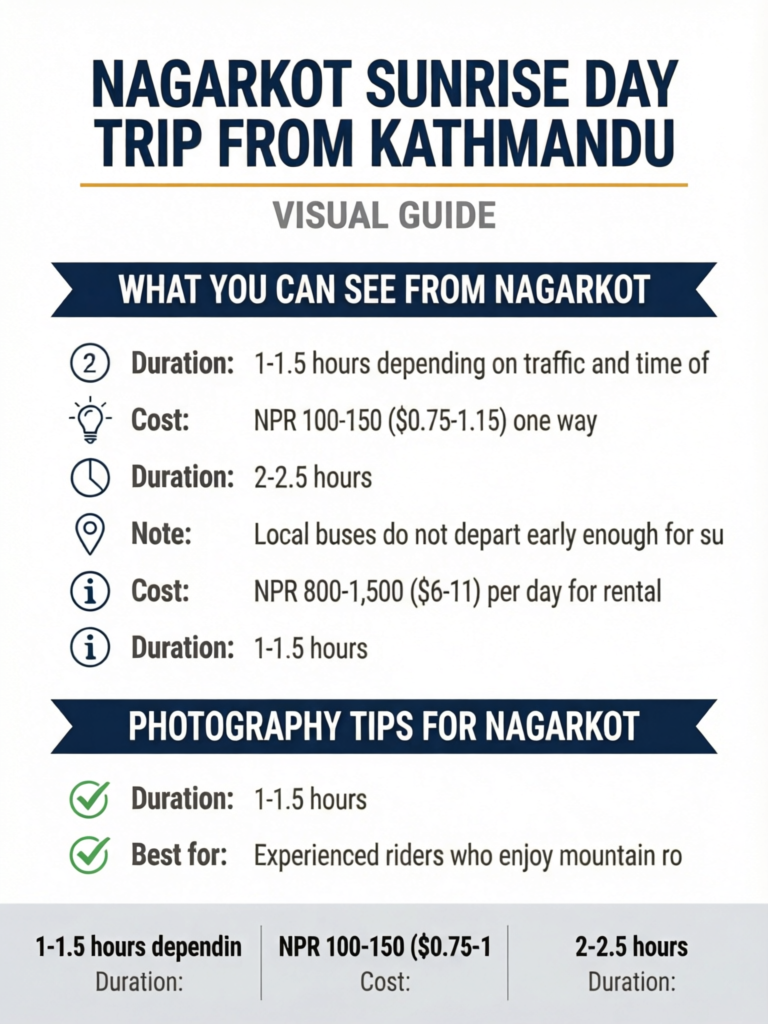
Option 1: Private Taxi (Most Popular)
- Cost: NPR 4,000-6,000 ($30-45) one way, or NPR 6,000-8,000 ($45-60) round trip with waiting time
- Duration: 1-1.5 hours depending on traffic and time of day
- Booking: Through your hotel, any travel agency, or hail a taxi and negotiate
- Route: Kathmandu to Bhaktapur to Nagarkot via winding mountain road
- Best for: Sunrise trips (pre-dawn departure), small groups, flexible scheduling
For a sunrise visit, you will need to leave Kathmandu by 4:30-5:00 AM (depending on season). Most hotels can arrange a taxi the night before. Negotiate the round-trip price including waiting time at Nagarkot.
Option 2: Local Bus
- Cost: NPR 100-150 ($0.75-1.15) one way
- Duration: 2-2.5 hours
- Departure: From Kamal Pokhari bus stop in Kathmandu, several morning departures
- Note: Local buses do not depart early enough for sunrise viewing
Option 3: Hire a Motorbike
- Cost: NPR 800-1,500 ($6-11) per day for rental
- Duration: 1-1.5 hours
- Best for: Experienced riders who enjoy mountain roads
- Note: The road has many switchbacks and can be narrow in sections
Option 4: Organized Tour
- Cost: $25-50 per person
- Duration: Half-day (sunrise tour) or full-day (with Bhaktapur)
- Includes: Transport, guide, sometimes breakfast
- Best for: Solo travelers, those who prefer organized logistics
Pre-Dawn Driving Safety
The road to Nagarkot involves steep switchbacks and narrow sections. If taking a taxi before dawn, ensure your driver is experienced with this route and drives at a safe speed. The road is generally well-maintained but has no guardrails in several sections. Avoid riding a motorbike in the dark unless you are very experienced with mountain roads.
Sunrise vs. Sunset: Which Is Better?
Sunrise (Recommended)
The sunrise at Nagarkot is the main attraction and what most visitors come for. As the first light of dawn illuminates the snow-capped peaks from behind you (east), the mountains transition from dark silhouettes to glowing pink, orange, and gold. The color display on the snow changes minute by minute, creating spectacular photography opportunities.
Sunrise timing (approximate):
- October: 5:45-6:00 AM
- November: 6:00-6:15 AM
- December-January: 6:15-6:30 AM
- February: 6:15-6:30 AM
- March: 6:00-6:15 AM
- April: 5:30-5:45 AM
Sunset
The sunset view from Nagarkot is also beautiful but different in character. The mountains are backlit as the sun descends behind you, creating dramatic silhouettes against warm-colored skies. The valley below fills with golden light, and the distant peaks catch the last rays of sun. Sunset is less crowded and more relaxed than sunrise.
Stay for Both Sunrise and Sunset
Photography Tips for Nagarkot
Equipment
- Wide-angle lens (16-35mm equivalent): Essential for capturing the full panoramic sweep
- Telephoto lens (200-400mm): For isolating individual peaks, especially Everest
- Tripod: Critical for pre-sunrise low-light photography and time-lapses
- Polarizing filter: Reduces haze and deepens blue skies
- Extra batteries: Cold morning temperatures drain batteries faster
Shooting Tips
For sunrise:
- Arrive at your viewpoint 30-45 minutes before official sunrise time
- The best colors often appear 10-15 minutes before the sun breaks the horizon
- Shoot in manual or aperture priority mode to control exposure
- Bracket exposures, as the dynamic range between bright snow and dark foreground is extreme
- Include foreground elements (prayer flags, trees, silhouetted buildings) for depth and scale
For panoramas:
- Shoot overlapping frames (30-40% overlap) and stitch in post-processing
- Keep the horizon level across all frames
- Use consistent exposure settings across the panorama
- A nodal point adapter on your tripod eliminates parallax errors for cleanest stitching
For Everest identification shots:
- Use a 200mm+ telephoto lens
- Enable image stabilization or use a tripod
- Shoot when light first hits the summit for the most dramatic effect
- Include the ridge in the frame for context and scale
For more comprehensive mountain photography advice, see our best photography treks in Nepal and trekking photography guide.
Smartphone Photography
Modern smartphones with telephoto lenses can capture impressive Nagarkot sunrise photos. Use the panorama mode for wide sweeps, and the telephoto (2x or 3x) lens for isolating peaks. Night mode or long-exposure mode can capture pre-dawn colors. Download a sun tracking app to know exactly where the sun will rise relative to your position.
Combining Nagarkot with Bhaktapur
The combination of Nagarkot and Bhaktapur is one of the best day trips from Kathmandu, offering both natural beauty and cultural heritage in a single outing. Bhaktapur lies directly on the road between Kathmandu and Nagarkot, making it a natural stop.
Bhaktapur: Medieval City of Devotees
Bhaktapur is one of the three ancient royal cities of the Kathmandu Valley and a UNESCO World Heritage Site. Its remarkably well-preserved medieval architecture, narrow brick-paved streets, traditional pottery squares, and stunning temples make it arguably the most atmospheric of the valley's historic cities.
Key sights in Bhaktapur:
- Bhaktapur Durbar Square - the royal palace complex with the famous 55 Window Palace
- Nyatapola Temple - the tallest temple in Nepal, a five-story pagoda
- Pottery Square - where traditional potters still work using centuries-old techniques
- Taumadhi Square - the lively social hub with cafes and the Bhairavnath Temple
- Dattatreya Square - the eastern end of the old city with beautiful wood carvings
- Peacock Window - an exquisite carved window considered a masterpiece of Newari art
For detailed coverage of Bhaktapur and other Kathmandu Valley heritage sites, see our Kathmandu Durbar Square, Patan, and Bhaktapur guide.
Suggested Itinerary: Nagarkot Sunrise + Bhaktapur
| Time | Activity | Notes |
|---|---|---|
| 4:30-5:00 AM | Leave Kathmandu by taxi | Pre-arranged the night before |
| 5:30-6:00 AM | Arrive Nagarkot | Head to viewpoint |
| 5:45-7:00 AM | Watch sunrise | Photography, hot tea |
| 7:00-8:00 AM | Breakfast in Nagarkot | Many hotels serve non-guests |
| 8:00-8:30 AM | Drive to Bhaktapur | 30-40 minutes downhill |
| 8:30-12:00 PM | Explore Bhaktapur | Durbar Square, Pottery Square, temples |
| 12:00-1:00 PM | Lunch in Bhaktapur | Juju Dhau (king curd) is a must-try |
| 1:00-1:45 PM | Return to Kathmandu | 30-45 minutes |
Combined cost estimate:
- Taxi (round trip with Nagarkot and Bhaktapur stops): $50-65
- Bhaktapur entry fee: NPR 1,500-1,800 (~$11) for foreigners
- Breakfast in Nagarkot: $3-8
- Lunch in Bhaktapur: $3-8
- Total: $70-95 per person (less if sharing taxi)
Bhaktapur Entry Fee Tip
Where to Stay in Nagarkot (Overnight Option)
If you choose to stay overnight (recommended), Nagarkot offers accommodation ranging from basic lodges to comfortable resorts.
Budget ($15-30 per night)
- Basic rooms with shared or attached bathroom
- Hot water may be solar-heated (limited in winter)
- Mountain views from common areas or rooftop
- Simple Nepali and Western food available
Mid-Range ($40-80 per night)
- Comfortable rooms with attached bathroom and hot water
- Mountain-facing rooms with private balcony
- Restaurant with varied menu
- Garden or rooftop viewing area
- Examples: Hotel Mystic Mountain, Nagarkot Farmhouse Resort
Upscale ($80-150+ per night)
- Well-appointed rooms with premium bedding
- Private balcony with direct mountain views
- Quality restaurant and bar
- Heated rooms (important in winter)
- Examples: Club Himalaya, Hotel at the End of the Universe, Niva Niwa Lodge
Winter Temperatures
Nagarkot can be surprisingly cold, especially from December to February. Nighttime temperatures can drop below freezing, and many budget lodges do not have heating. If visiting in winter, book accommodation with heated rooms or bring warm layers. The cold morning air makes the sunrise experience more bracing but also more atmospheric, with mist in the valley below and crisp, clear mountain views above.
Best Season for Nagarkot Views
| Month | View Quality | Temperature (Day/Night) | Crowd Level | Notes |
|---|---|---|---|---|
| January | Good to Excellent | 10°C / -2°C | Low | Cold but clear post-front |
| February | Very Good | 12°C / 0°C | Low | Improving visibility |
| March | Good | 18°C / 5°C | Moderate | Spring haze building |
| April | Moderate | 22°C / 8°C | Moderate | Haze common, still possible |
| May | Poor to Moderate | 25°C / 12°C | Low | Pre-monsoon haze |
| June | Poor | 26°C / 15°C | Very Low | Monsoon approaching |
| July-August | Very Poor | 25°C / 16°C | Very Low | Monsoon, clouded views |
| September | Improving | 24°C / 14°C | Low | Post-monsoon clearing |
| October | Excellent | 22°C / 8°C | High | Prime season, clearest skies |
| November | Excellent | 18°C / 3°C | High | Prime season continues |
| December | Very Good | 12°C / -1°C | Moderate | Cold, clear, beautiful |
Frequently Asked Questions
Final Thoughts
Nagarkot represents the easiest way to experience Himalayan views from Kathmandu. For trekkers with a spare day, whether waiting for a flight, recovering from a trek, or simply wanting to see mountain ranges beyond the one they trekked through, the short journey to Nagarkot delivers extraordinary rewards for minimal effort.
The combination of a Nagarkot sunrise with a Bhaktapur visit creates what is arguably the best day trip in the Kathmandu Valley, blending natural grandeur with cultural heritage in a single, manageable outing. Whether you choose the pre-dawn taxi dash or a relaxed overnight stay, the memory of watching dawn light transform the Himalayan skyline from pink to gold will stay with you long after you leave Nepal.
For more on making the most of your Kathmandu time, see our Kathmandu sightseeing guide for trekkers and Kathmandu Durbar Square, Patan, and Bhaktapur guide.