
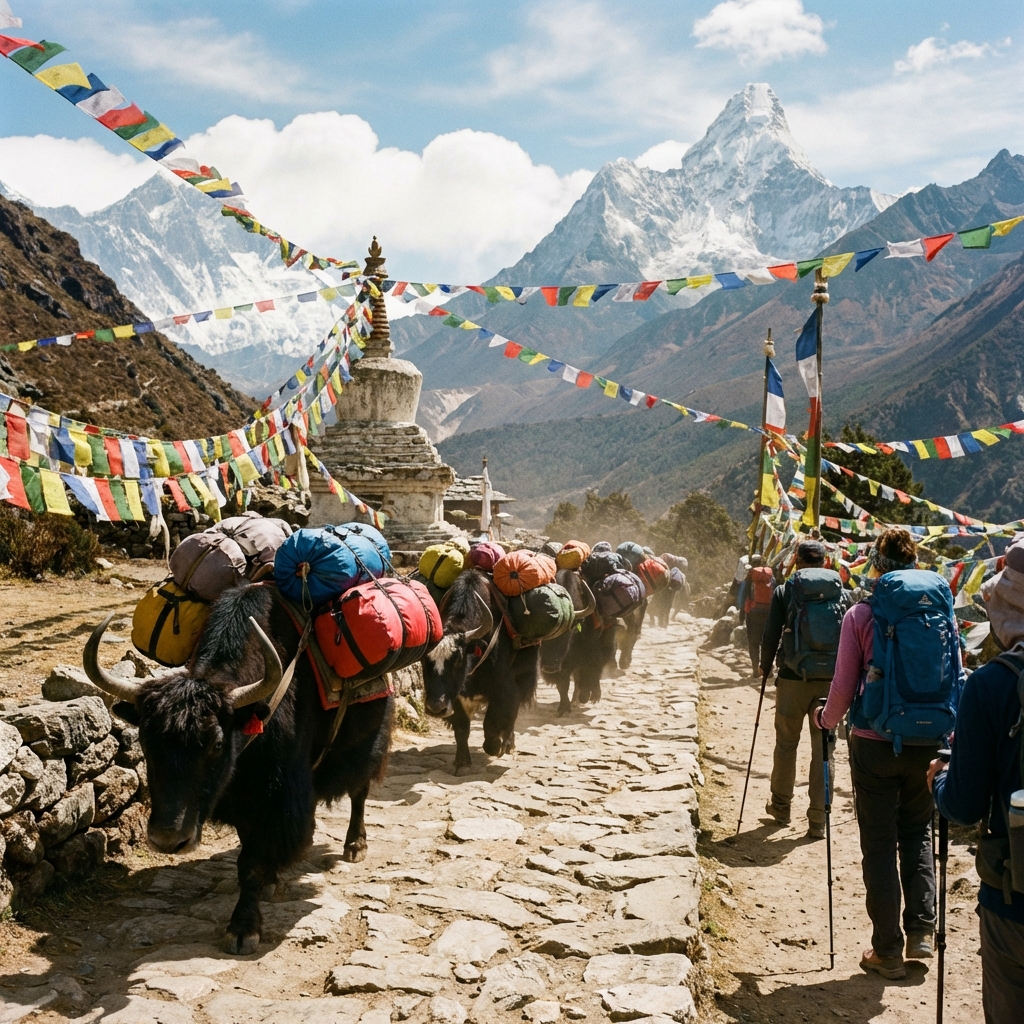
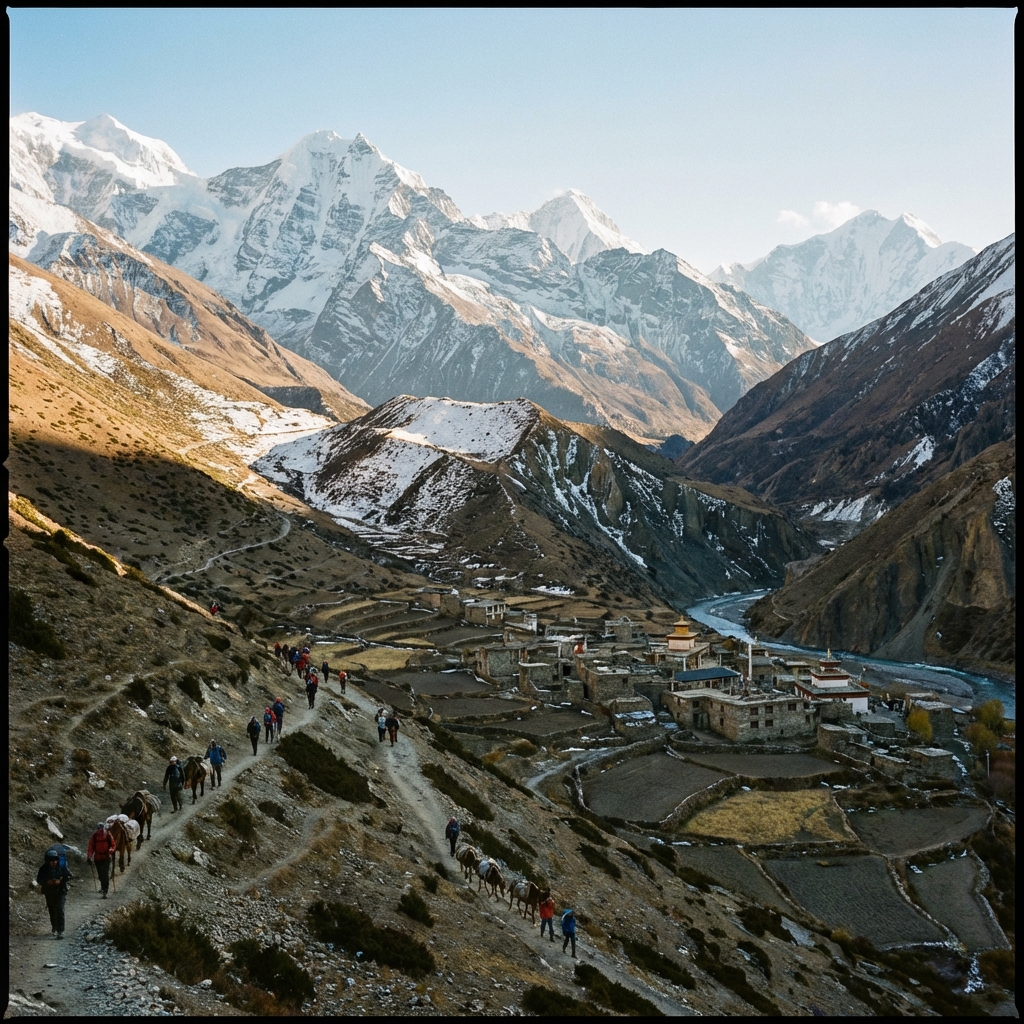
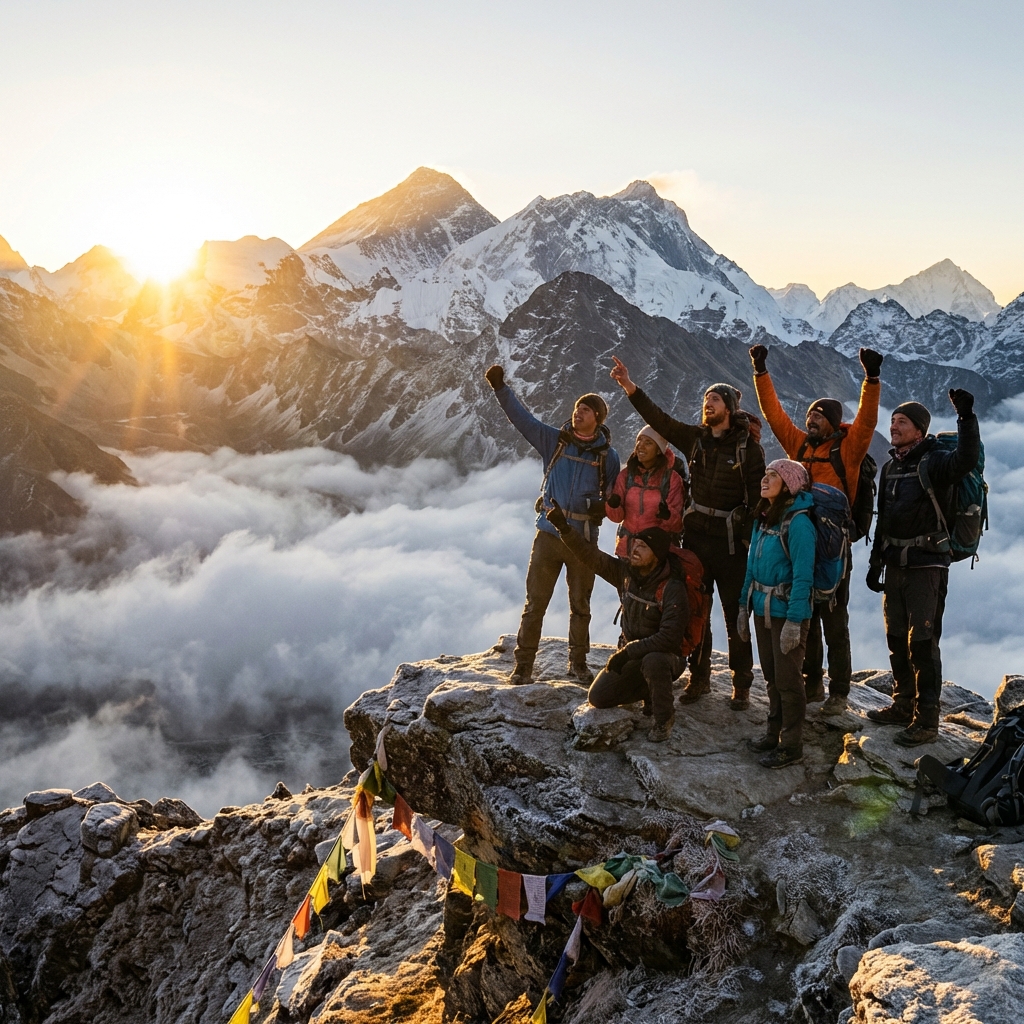
The Nar Phu Valley is rated Hard — and unlike some "Hard" ratings applied to well-maintained high-altitude routes with excellent facilities, this rating genuinely earns its designation. The challenge comes from the Kang La Pass crossing (5,243m), the extreme remoteness (evacuation requires hours of flying at additional cost), the altitude duration (multiple nights above 4,000m), and the limited infrastructure in the restricted valleys.
This is not a trek for those attempting their first high-altitude Himalayan experience. It is appropriate for fit, experienced trekkers who have already done a moderate-altitude Nepal trek (ABC, Mardi Himal, Poon Hill) and understand their own altitude response.
Hard
Day 9: Kang La Pass crossing (5,243m)
Low-Moderate (may require care on Kang La in early season)
7+ nights above 4,000m
Moderate-High (multi-day exposure above 4,000m)
High (evacuation complex and expensive)
Previous high-altitude trek strongly recommended
~80-85% (Kang La weather/condition failure)
Why Nar Phu is Hard
1. Kang La Pass (5,243m)
The pass is comparable to Thorong La (5,416m) on the Annapurna Circuit in cardiovascular demand. However:
Kang La specific challenges:
- Less foot traffic means less maintained trail — fewer cleared sections after snowfall
- No High Camp teahouse equivalent — you stage from Base Camp (4,800m) only
- More technical terrain near the pass summit (loose rock, possible snow and ice)
- Less well-marked trail in the upper section
- If you fail to cross, retreating to Nar takes a full day, adding significant logistical complexity
Kang La vs Thorong La:
| Factor | Kang La (Nar Phu) | Thorong La (Annapurna Circuit) |
|---|---|---|
| Altitude | 5,243m | 5,416m |
| Annual crossings | ~400 | ~15,000+ |
| Trail maintenance | Minimal | Excellent |
| Emergency support | Very limited | Multiple tea houses |
| Rescue accessibility | Poor (hour+ from Ngawal) | Moderate (Muktinath nearby) |
| Technical difficulty | Moderate (conditions-dependent) | Low-Moderate |
2. Extended High-Altitude Exposure
Spending 7+ nights above 4,000m is significantly more demanding than the 2-3 nights above 4,000m typical of the Annapurna Circuit.
Physiological impact: Extended high-altitude exposure creates cumulative acclimatization stress. Even trekkers who handle initial altitude exposure well can develop fatigue, sleep disruption, and increased AMS vulnerability over 7+ days at 4,000m+.
3. Remoteness
If you become seriously ill at Phu (Day 4-5) or Nar (Day 6-7):
- Helicopter rescue requires weather window and may take 12-24 hours to arrive
- No hospital within 2+ days' walk
- Your guide and agency are your only immediate support
This remoteness is part of what makes Nar Phu extraordinary — but it requires taking the trek's medical requirements seriously.
4. Limited Infrastructure
Unlike the Annapurna Circuit's well-stocked teahouses, Nar and Phu lodges have:
- No reliable electricity (some have solar, evenings only)
- No WiFi above Meta
- Limited menu (dal bhat primarily)
- Basic sanitary facilities
- No gear purchase possibility
If you forget something essential, you go without it.
Day-by-Day Difficulty Profile
| Day | Destination | Physical Demand | Altitude Risk |
|---|---|---|---|
| 1 | Kathmandu | None | None |
| 2 | Koto (drive) | Low | None |
| 3 | Meta | Moderate-High (gorge) | Low |
| 4 | Phu Village | Moderate | Moderate (4,080m) |
| 5 | Phu (rest) | Low (acclimatization hike) | Low-Moderate |
| 6 | Nar Village | Moderate (ridge crossing) | Moderate |
| 7 | Nar (rest) | Low | Low-Moderate |
| 8 | Kang La Base | Moderate (steep) | Moderate-High |
| 9 | Kang La Pass + Ngawal | Very High | High |
| 10 | Manang | Low | Low (descent) |
| 11-14 | Return | Low-Moderate | Low |
Fitness Requirements
Minimum Requirements
Physical fitness:
- Comfortable hiking 6+ hours daily with 600m+ elevation gain
- Previous high-altitude experience (above 4,000m strongly preferred)
- No cardiovascular conditions
- Good general health (minor medical issues can become serious at altitude)
Experience:
- At least one previous multi-day trek in Nepal or equivalent
- Familiarity with reading your own altitude response (headache, appetite, sleep quality)
- Understanding of when to descend (non-negotiable skill)
Recommended Preparation (12-16 Weeks Before Trek)
- Cardiovascular base: 4+ sessions/week sustained aerobic exercise, building to 4-hour efforts
- Altitude simulation: High-altitude training if accessible; at minimum, maximum effort exercise
- Strength: Quad and hip strength for 1,586m descents on loose terrain
- Gear test: Full day hike in all trek gear, including boots fully broken in
Altitude Sickness: Nar Phu Risk Profile
High-Risk Moments
Day 4 — Phu (4,080m): First night above 4,000m. Common mild symptoms: headache, reduced appetite, disrupted sleep.
Day 9 — Kang La Pass (5,243m): Highest altitude of trek. Extended time above 5,000m increases HACE and HAPE risk.
Cumulative risk — Days 5-9: The extended multi-day stay above 4,000m creates compounding altitude stress. Mild symptoms that are manageable on Day 4 may become more significant by Day 8 after 5 nights of disrupted high-altitude sleep.
Warning Signs — Descend Immediately If:
- Ataxia (loss of coordination)
- Confusion or unusual behavior
- Persistent cough worsening overnight (HAPE indicator)
- SpO2 below 75% at rest, unresponsive to slow breathing
- Severe headache not controlled by Diamox and ibuprofen
Acclimatization Strategy
The 14-day itinerary builds in two rest days (Days 5 and 7) specifically for altitude adaptation. Do not compress these into a shorter version without replacing the acclimatization content.
Who Should NOT Attempt Nar Phu
- First-time high-altitude trekkers (strongly consider ABC or Annapurna Circuit first)
- Those who experienced significant AMS symptoms on previous treks above 3,500m
- Trekkers with cardiovascular or pulmonary conditions
- Trekkers who cannot afford helicopter evacuation insurance
- Anyone who cannot commit to descending if symptoms become serious
Comparison to Other Hard Nepal Treks
| Trek | Max Alt | Remote | Pass Difficulty | Duration |
|---|---|---|---|---|
| Nar Phu Valley | 5,243m | Extreme | Moderate | 14 days |
| Annapurna Circuit | 5,416m | Moderate | Moderate | 15 days |
| Manaslu Circuit | 5,160m | High | Moderate | 14 days |
| Upper Mustang | 3,840m | High | Low (no pass) | 12 days |
Nar Phu's unique difficulty factor: Remoteness. Thorong La (Annapurna Circuit) is comparable in altitude and pass difficulty but has vastly better emergency infrastructure.
Frequently Asked Questions
Is the Nar Phu Valley harder than the Annapurna Circuit?
Yes. The Kang La Pass (5,243m) is similar in altitude to Thorong La (5,416m), but Nar Phu adds extreme remoteness, limited rescue infrastructure, and multi-day exposure above 4,000m. The Annapurna Circuit has better trails and more teahouses.
What fitness level do I need for the Nar Phu Valley?
You should be able to hike 6-8 hours daily with a daypack for 14 consecutive days. Previous high-altitude trekking experience (at least one trek above 4,000m) is strongly recommended before attempting Nar Phu.
What happens if weather closes the Kang La Pass?
Your guide will arrange a return via the same route back to Koto/Meta rather than crossing the pass. This adds days to the trek but avoids the risk of attempting a dangerous pass crossing. Flexible scheduling is important.