
43 Guides
Annapurna Region Guides
From the beginner-friendly Poon Hill sunrise to the high-altitude drama of Thorong La Pass (5,416m), the Annapurna region offers Nepal's greatest ecological and cultural diversity across treks ranging from 3 to 21 days.
Nepal's Most Diverse
Why the Annapurna Region?
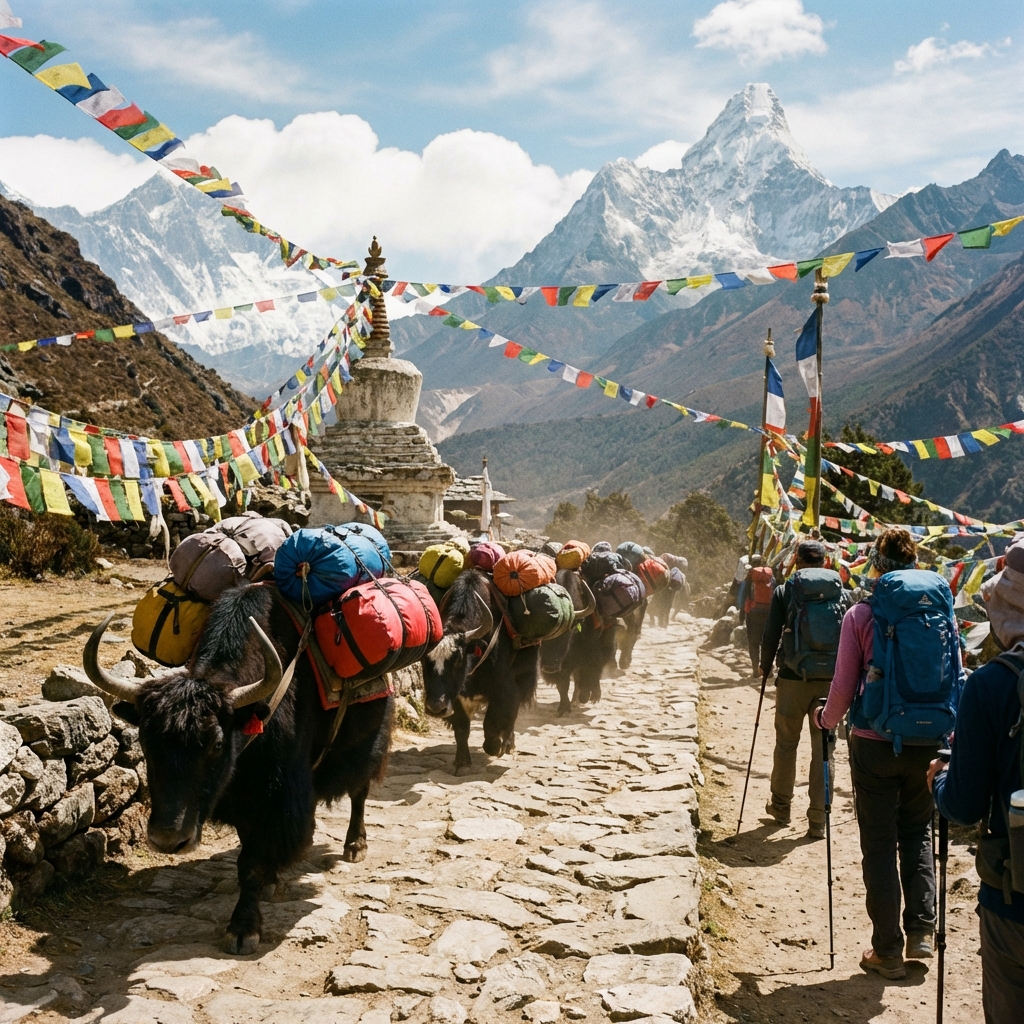
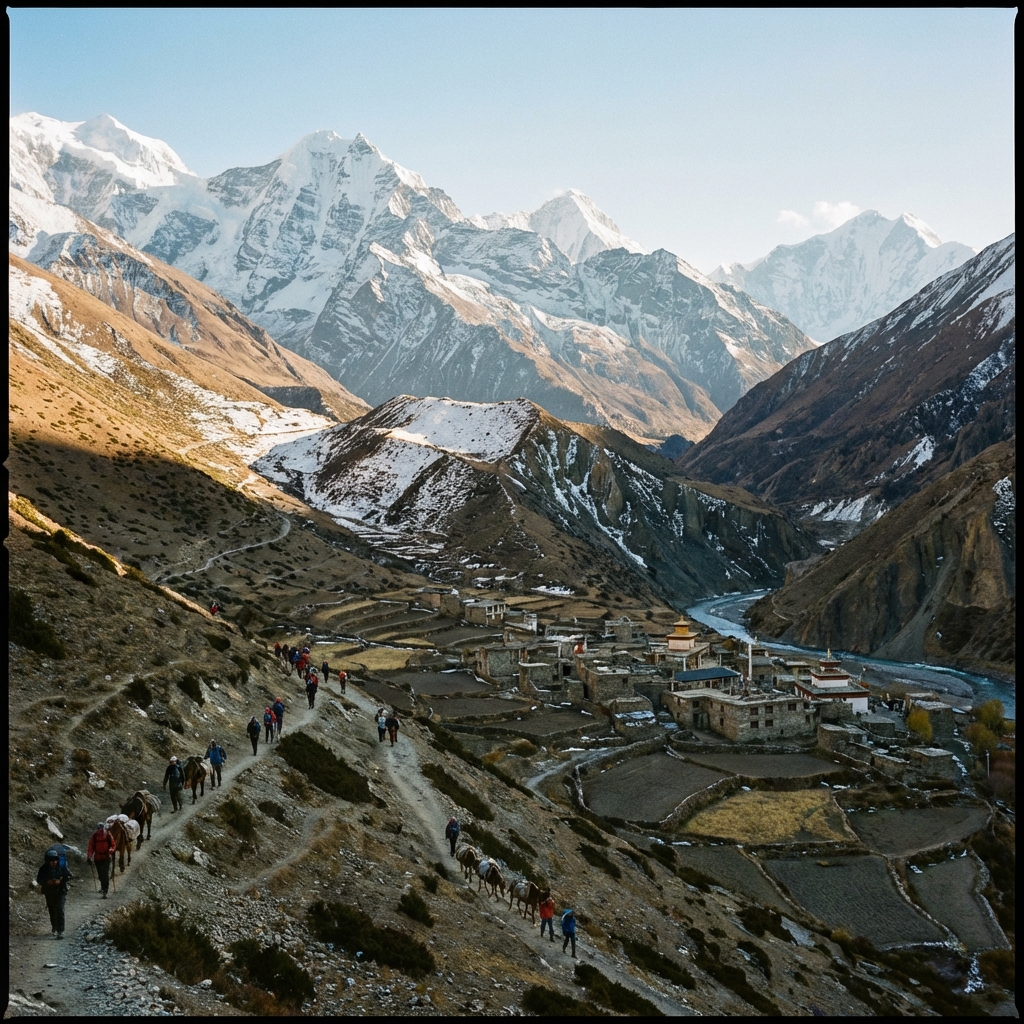
No other trekking region in Nepal — or arguably in the world — offers the ecological and cultural spectrum of the Annapurna Conservation Area (ACAP). Starting at 800m in the subtropical Pokhara foothills, the landscape transitions through terraced rice paddies, dense rhododendron and oak forests, Gurung and Magar villages with their distinctive architecture and festivals, alpine meadows blanketed in wildflowers, and finally the stark high-altitude desert plateau surrounding the Thorong La Pass at 5,416m — all within a single trek.
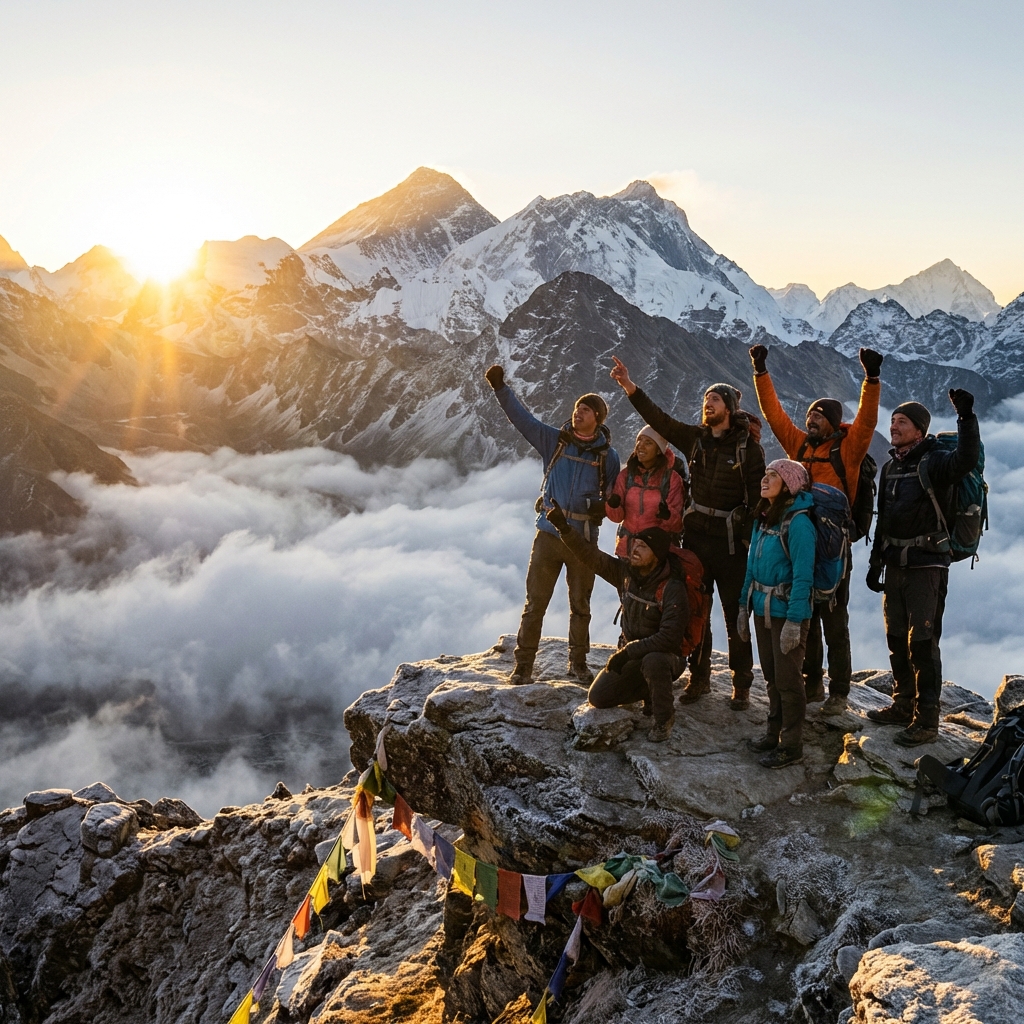
At its heart is Annapurna Base Camp (4,130m), cradled inside a glacial amphitheater that mountaineers and trekkers alike call one of the most dramatic places on Earth. Annapurna I (8,091m), the world's tenth highest peak and one of the deadliest mountains ever climbed, towers directly above camp. On clear mornings, the sunrise alpenglow on the surrounding peaks — Machapuchare, Hiunchuli, Gangapurna — creates an almost surreal light show that photographers travel thousands of miles to witness.
Beyond the two flagship treks, the Annapurna region hosts a constellation of satellite routes for every ability level. Mardi Himal Trek (5–7 days) follows a high ridge with continuous mountain views and sees only a fraction of the ABC crowds. Khopra Ridge connects the Ghorepani trail to a secluded viewpoint above Dhaulagiri with a side trip to the sacred Khayer Lake. The Nar Phu Valley trek — accessible only with a special restricted permit — penetrates a pristine Tibetan-influenced community that remained closed to outsiders until 2002.
Logistics are extremely accessible from Pokhara, Nepal's second city, which serves as the gateway to the Annapurna region. Trailheads are reached by 1–4 hour bus or jeep rides from Pokhara, meaning you can be trekking within half a day of arriving. The ACAP permit ($30) and TIMS card ($20) are easy to arrange at the ACAP office in Pokhara or Kathmandu. Our guides cover every route option, seasonal nuances, cost breakdowns, permit logistics, and packing lists tailored specifically to Annapurna conditions.
By the Numbers
Annapurna Region at a Glance
5,416m
Thorong La Altitude
Annapurna Circuit high point
3–21 days
Duration Range
Poon Hill to full Circuit
$800–$4,000
Budget Range
All-in estimate
$30 + $20
Permit Cost
ACAP + TIMS card
Browse the Library
All Annapurna Region Guides
Complete guides for every Annapurna trek — ABC, the Circuit, Poon Hill, Mardi Himal, Khopra Ridge, and Nar Phu, with itineraries, permit info, and cost breakdowns.
Good to Know
Frequently Asked Questions
What is the difference between Annapurna Base Camp and the Annapurna Circuit?
These are two distinct treks with very different characters. Annapurna Base Camp (ABC) is a shorter, more focused trek (7–12 days) that climbs directly into the heart of the Annapurna Sanctuary — a stunning glacial amphitheater ringed by Annapurna I (8,091m), Machapuchare (6,993m), and seven other peaks above 6,000m. It reaches 4,130m and is accessible for most reasonably fit trekkers. The Annapurna Circuit is a much longer undertaking (14–21 days classic, 10 days shortened) that circumnavigates the entire Annapurna massif, crossing the Thorong La Pass at 5,416m. The Circuit offers extraordinary ecological diversity — you pass through subtropical lowland forests, terraced paddy fields, Gurung villages, Tibetan-influenced Manang, and the arid high-altitude desert around Mustang. If time is limited, ABC delivers more mountain drama per day. If you have 3 weeks and want Nepal's full diversity, the Circuit is unparalleled.
What is the best season to trek in the Annapurna region?
The Annapurna region shares Nepal's two peak seasons: autumn (October–November) and spring (March–May). October and November offer the clearest skies and most stable conditions — ideal for both ABC and the Circuit. Spring brings rhododendron forests ablaze with pink and red blooms at 2,000–3,500m, making the lower sections of both routes spectacularly beautiful. March can still bring cold nights and occasional snowfall on the Thorong La, so early April to mid-May is generally preferred for the Circuit. The monsoon (June–September) makes lower-elevation trails leechy and slippery, though the Annapurna Circuit's Mustang section lies in a rain shadow and remains reasonably accessible in monsoon months for the adventurous.
Is Poon Hill suitable for beginner trekkers?
Poon Hill is one of the most popular introductory treks in Nepal and is genuinely accessible for fit beginners. The 4–5 day circuit from Pokhara via Ghorepani reaches a maximum altitude of 3,210m (Poon Hill viewpoint) — high enough for spectacular Annapurna and Dhaulagiri panoramas, but low enough to avoid serious altitude concerns. Daily walking times average 4–6 hours on well-maintained stone-stepped trails with frequent tea houses. The main physical demand is the ascent to Ghorepani (2,850m), which involves cumulative elevation gain over 2 days. Any reasonably active person who walks regularly can complete Poon Hill. It's an excellent confidence-builder before attempting ABC or the full Circuit on a return trip.
How difficult is the Thorong La Pass crossing on the Annapurna Circuit?
Thorong La (5,416m) is the defining challenge of the Annapurna Circuit and should not be underestimated. Most trekkers start the crossing at 3:00–4:00am from Thorong Phedi or High Camp to avoid afternoon winds and ensure they descend to Muktinath (3,760m) before cloud rolls in. The ascent from High Camp (4,925m) to the pass takes 2–4 hours and involves steep, sometimes icy switchbacks. Descending to Muktinath takes a further 2–3 hours. The total crossing is 16km with 1,000m gain and 1,600m descent. AMS is a significant risk — spend at least 2 days acclimatizing in Manang (3,519m) before attempting the pass. Do not attempt the crossing in heavy snowfall or high winds. With proper preparation and acclimatization, the vast majority of trekkers complete it without incident.
Can I combine multiple Annapurna treks in one trip?
Absolutely, and there are several excellent combinations. The most popular is Poon Hill plus ABC: trek up to Ghorepani and Poon Hill first, then continue or loop around to the ABC trail via Tadapani and Chhomrong. This creates a 12–15 day itinerary covering both the Ghorepani panorama and the Annapurna Sanctuary. Another popular combination adds the Mardi Himal trek (5–7 days) to an ABC trip, since both treks share lower trail sections. The Khopra Ridge extension from the Ghorepani area is a 3-day add-on with superb Dhaulagiri views and far fewer crowds. For Annapurna Circuit trekkers, a detour to Tilicho Lake (4,919m) is one of the most rewarding side trips in Nepal, adding 2–3 days to the itinerary.
Do I need a guide for the Annapurna region?
Unlike some restricted areas in Nepal, the Annapurna Conservation Area does not currently require a mandatory guide for most trekkers. The trails to ABC, Poon Hill, and along the Circuit are clearly marked and extensively signposted, with dense tea house networks providing food, lodging, and route information. Independent trekking is very common and safe on these routes. That said, a local guide adds real value: they speak Nepali and can resolve logistical problems, they know the weather patterns and when to push on or wait, and they provide cultural and botanical interpretation that greatly enriches the experience. If this is your first time at altitude, a guide offers an important safety net for recognizing and responding to AMS. Porter hire ($15–20/day) is highly recommended regardless of whether you use a guide, as it directly benefits local communities.
Keep Exploring