42 Guides
Everest Region Guides
Everything you need to plan your Khumbu adventure — from the classic Everest Base Camp trek and the dramatic Three Passes loop to the turquoise Gokyo Lakes, Island Peak summit, and the living Sherpa culture woven through every village above Lukla.
The Khumbu
Why the Everest Region?
The Khumbu region of northeastern Nepal is home to the world's highest mountain and arguably the most iconic trekking route on the planet. Standing at Everest Base Camp (5,364m) with the Khumbu Icefall thundering above you and the massive flanks of Nuptse and Lhotse hemming in the horizon is an experience that simply cannot be replicated anywhere else on Earth. But the Everest region is far more than a single trail to a single destination.
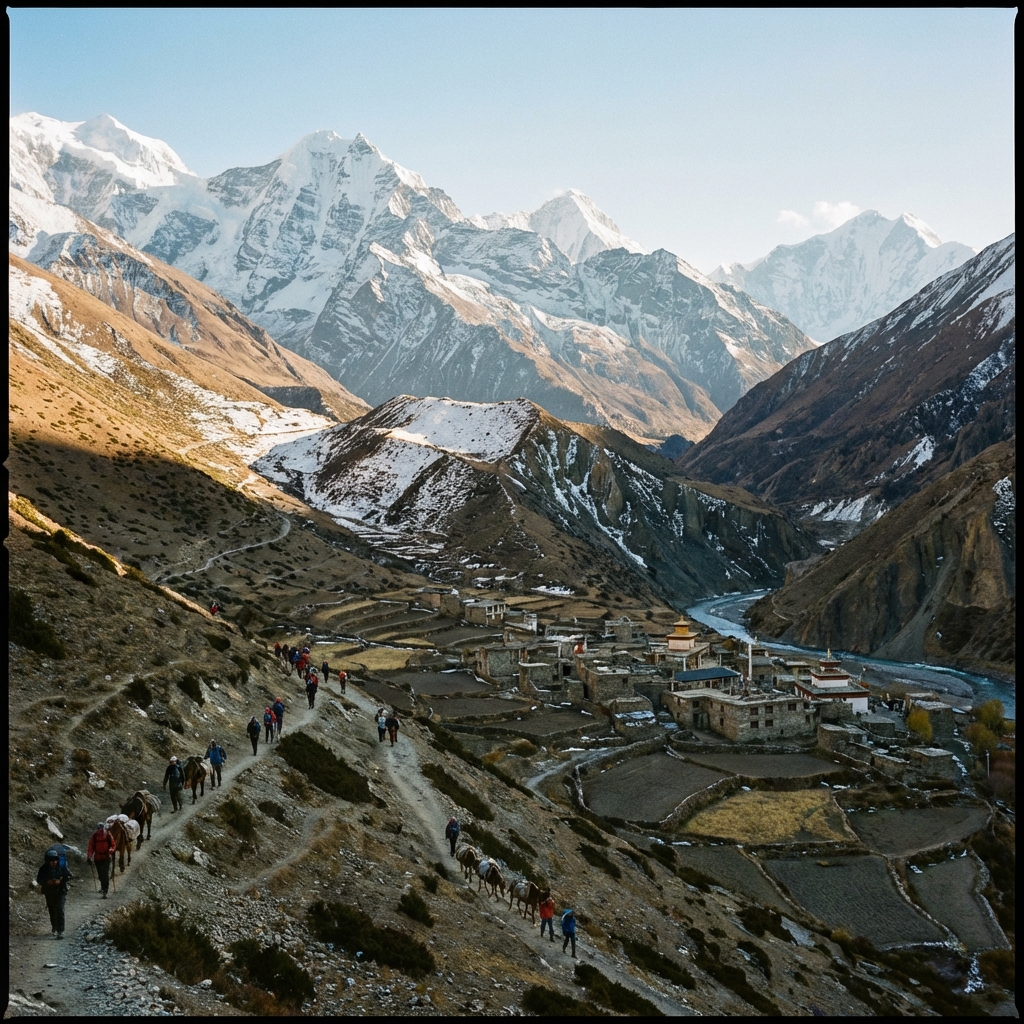
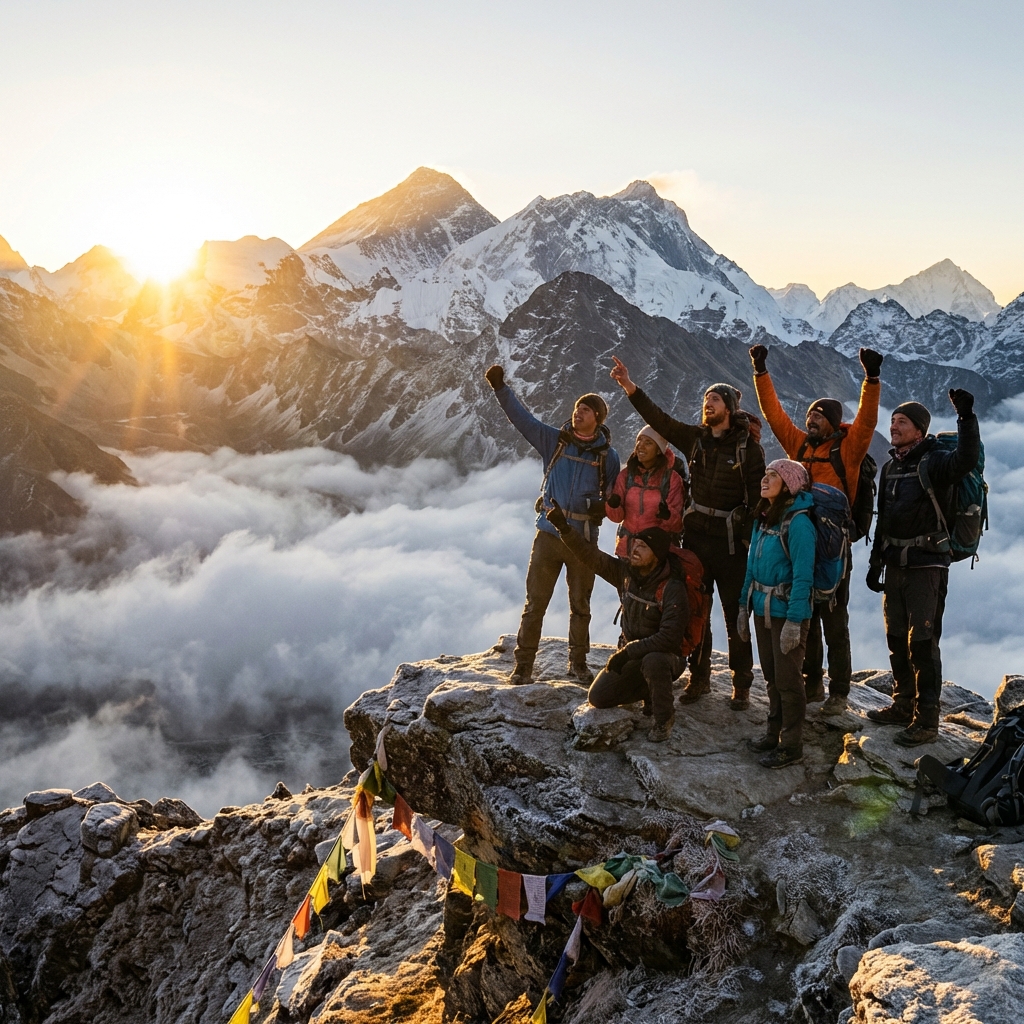
The Gokyo Valley, reached via the Cho La Pass or the longer Renjo La route, rewards trekkers with a chain of sacred glacial lakes set against the backdrop of Cho Oyu (8,188m), the world's sixth highest peak. Gokyo Ri (5,357m) — a straightforward scramble above the lake — is widely regarded as offering one of the finest panoramic views in all of Nepal, with Everest, Lhotse, Makalu, and Cho Oyu visible simultaneously. Meanwhile, the Three Passes trek weaves all the major valleys into a single epic loop that challenges even experienced high-altitude trekkers.
For those seeking their first taste of technical mountaineering, Island Peak (6,189m) and Lobuche East (6,119m) offer summit objectives that are accessible to motivated trekkers with minimal prior climbing experience — guide companies provide all the technical instruction and equipment needed. Mera Peak (6,476m) to the south is the highest of the "trekking peaks" and offers a non-technical snow climb with extraordinary views from its summit.
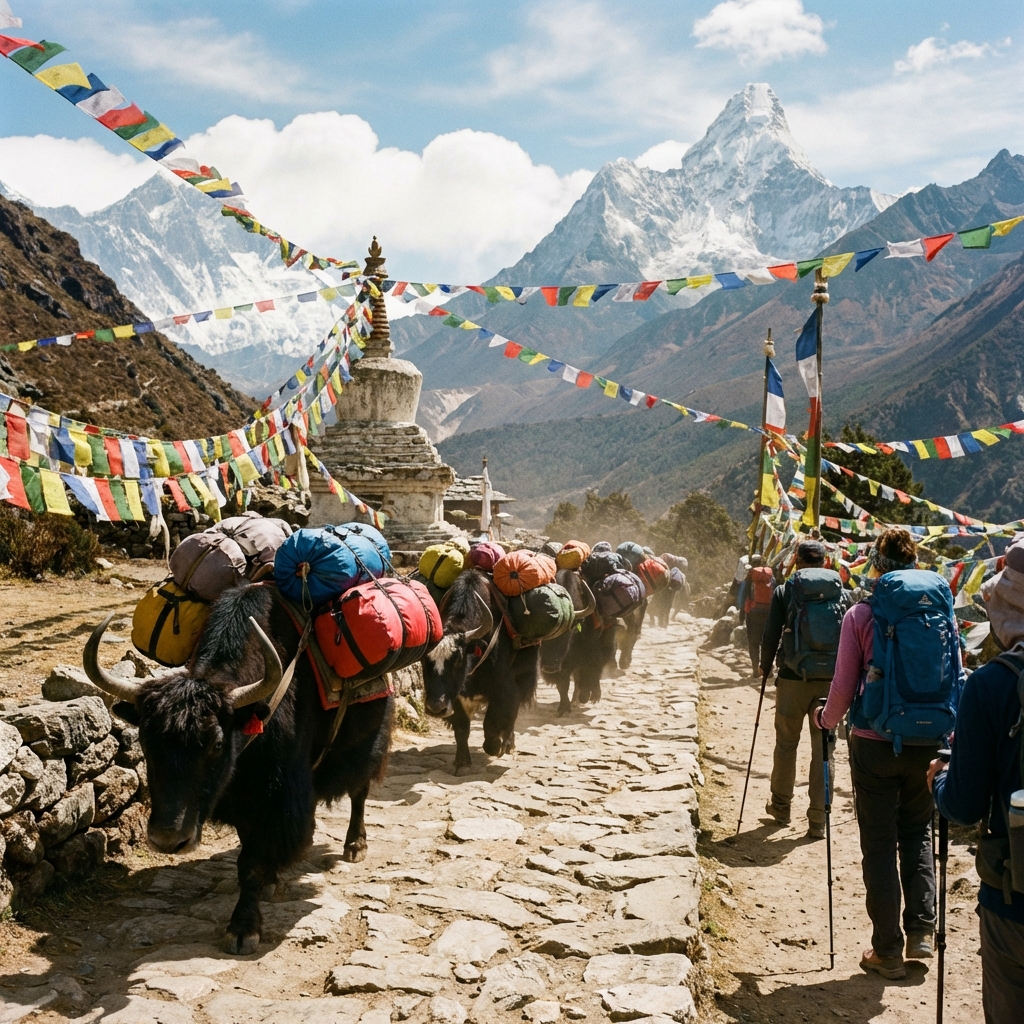
The infrastructure in the Khumbu has developed dramatically over the past two decades. Tea houses along the EBC route now range from basic wood-panelled rooms ($3–8/night) to surprisingly comfortable lodges in Namche Bazaar with hot showers, Wi-Fi, and menus featuring everything from yak steak to apple pie. The Sherpa communities that operate these lodges are among the most welcoming and entrepreneurially impressive in the Himalayas — understanding their culture, the significance of the monasteries at Tengboche and Khumjung, and the complex relationship between mountaineering tourism and traditional life adds enormous depth to any visit. Our guides cover every aspect of this region: from airport transfers and Lukla flight realities to permit logistics, acclimatization schedules, and the best viewpoints at each elevation.
By the Numbers
Everest Region at a Glance
5,364m
EBC Max Altitude
Everest Base Camp
12–14 days
Typical Duration
Standard EBC return
$1,200–$5,000
Budget Range
All-in estimate
$30 + $20
Permit Cost
Sagarmatha NP + TIMS
Browse the Library
All Everest Region Guides
Detailed guides covering every aspect of trekking in the Khumbu — itineraries, costs, accommodation, permits, and specific route advice from Lukla to Base Camp and beyond.
Good to Know
Frequently Asked Questions
How difficult is the Everest Base Camp trek?
EBC is rated moderate-to-hard and is primarily a challenge of altitude, not technical terrain. The trails are well-maintained and non-technical, but sustained elevation gain — including multiple days above 4,000m — demands solid cardiovascular fitness. Most healthy adults without prior altitude experience complete the trek successfully with proper acclimatization days built in. If you can hike 6–8 hours per day with a 5–7kg daypack and have trained for 8–12 weeks beforehand, EBC is achievable. The most common reason people turn back is Acute Mountain Sickness (AMS), which affects roughly 30–40% of trekkers to some degree. Proper acclimatization, not racing to Base Camp, is the single most important factor in your success.
What is the best time of year to trek to Everest Base Camp?
The two prime seasons are autumn (October–November) and spring (March–May). Autumn offers the clearest skies and most stable weather after the monsoon, with October being considered the single best month overall — crisp air, excellent mountain views, and drier trails. Spring is favored by mountaineers attempting Everest summits and offers rhododendron blooms at lower elevations. March can still have cold nights and residual snow on high passes. Avoid the monsoon (June–August) when leeches, landslides, and cloud cover dominate, and winter (December–February) when temperatures at Gorak Shep can plunge to -20°C overnight.
How reliable are Lukla flights and what happens if they're delayed?
Lukla (Tenzing-Hillary Airport) is notoriously weather-dependent. Flights operate with small twin-engine aircraft and require visual flight rules — meaning they cancel when clouds, rain, or wind exceed minimums. Delays of 1–3 days are common in shoulder seasons, and week-long groundings can occur during the monsoon or early winter. Build a minimum of 2 buffer days at the end of your itinerary before any international flight. If Lukla is completely grounded, helicopter evacuation to Kathmandu costs $400–$800 per person and is covered by most comprehensive travel insurance policies. Alternatively, some trekkers walk out to Salleri and take a jeep, adding 2–3 days.
How do I prevent Acute Mountain Sickness (AMS) on the EBC trek?
The golden rule is "climb high, sleep low" — ascend during the day but return to sleep at lower elevations when possible. The standard EBC itinerary includes an acclimatization day in Namche Bazaar (3,440m) and often a second in Dingboche (4,360m) for good reason. Ascend no more than 300–500m of sleeping elevation per day above 3,000m. Drink 3–4 litres of water daily. Avoid alcohol and sleeping pills for the first week. Many doctors prescribe Diamox (acetazolamide) 125–250mg twice daily as prophylaxis — discuss this with your doctor before departure. Never ignore AMS symptoms: headache, nausea, dizziness, or loss of appetite. If symptoms worsen, descend immediately. No summit is worth your life.
Can I combine Gokyo Lakes with Everest Base Camp?
Yes, and this combination is considered one of the finest Himalayan trekking experiences available. The classic combination links EBC and Gokyo via the Cho La Pass (5,420m), creating the Three Passes trek when the Renjo La (5,360m) and Kongma La (5,535m) passes are also included. The Three Passes loop typically takes 18–20 days and is rated hard — the passes involve short sections of glacier travel and can be icy in early morning. You will need crampons or microspikes in spring and autumn. The combined Gokyo–EBC loop visits Gokyo Ri (5,357m), which many experienced trekkers rate as having better Everest views than Base Camp itself. Plan for 20 days minimum for a comfortable pace with acclimatization days.
Should I trek EBC solo or with a guided group?
Both approaches work well on the EBC trail, which is clearly marked with extensive tea house infrastructure and a well-worn path. Independent trekking is legal (you do not need a mandatory guide in the Khumbu region unlike some restricted areas), and experienced trekkers do it successfully every season. However, a local guide adds genuine value: they can recognize early AMS symptoms, negotiate with tea houses during busy season, and provide cultural context about Sherpa communities and Buddhist monasteries. Porters ($15–20/day) carry your main bag, letting you focus on the trek rather than weight. For first-time high-altitude trekkers, the safety net of a guide is often worth the $25–40/day cost. Budget travellers frequently join small group tours to share guide costs.
Keep Exploring