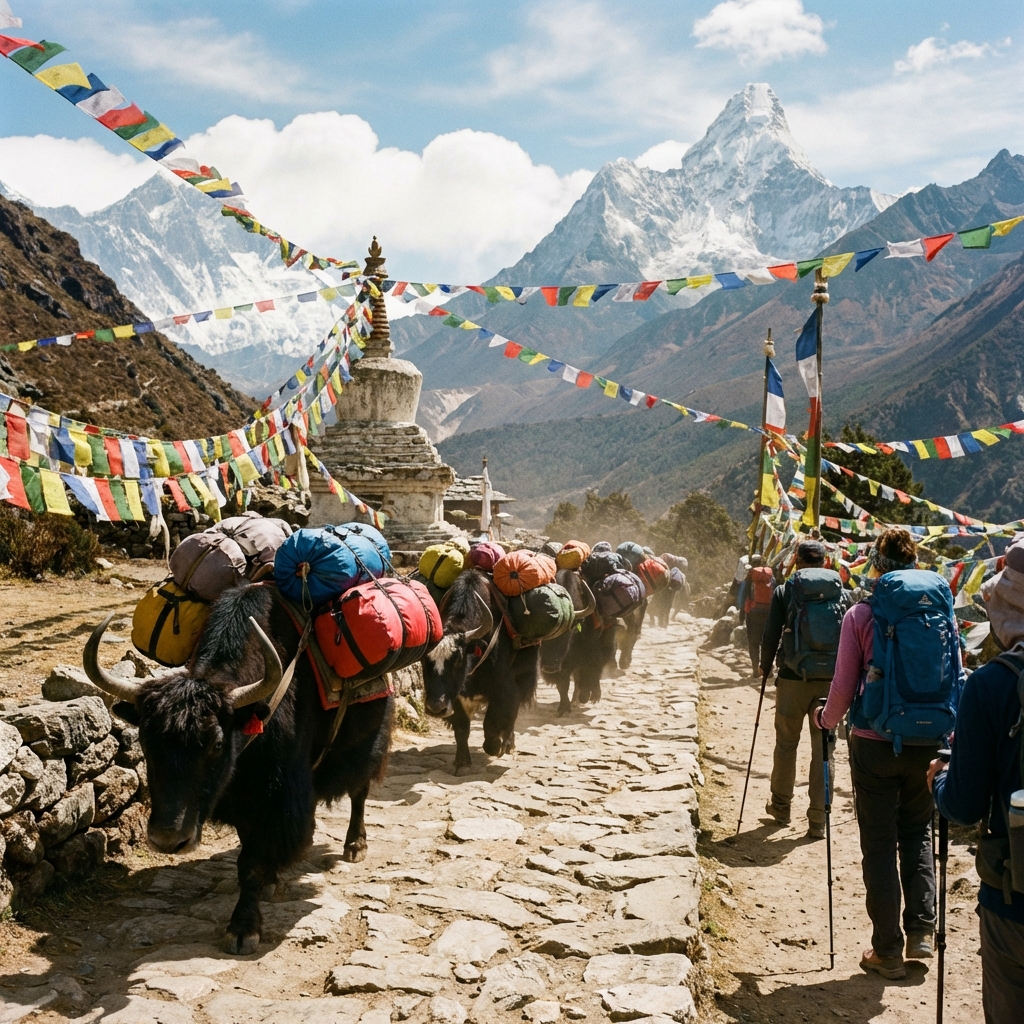
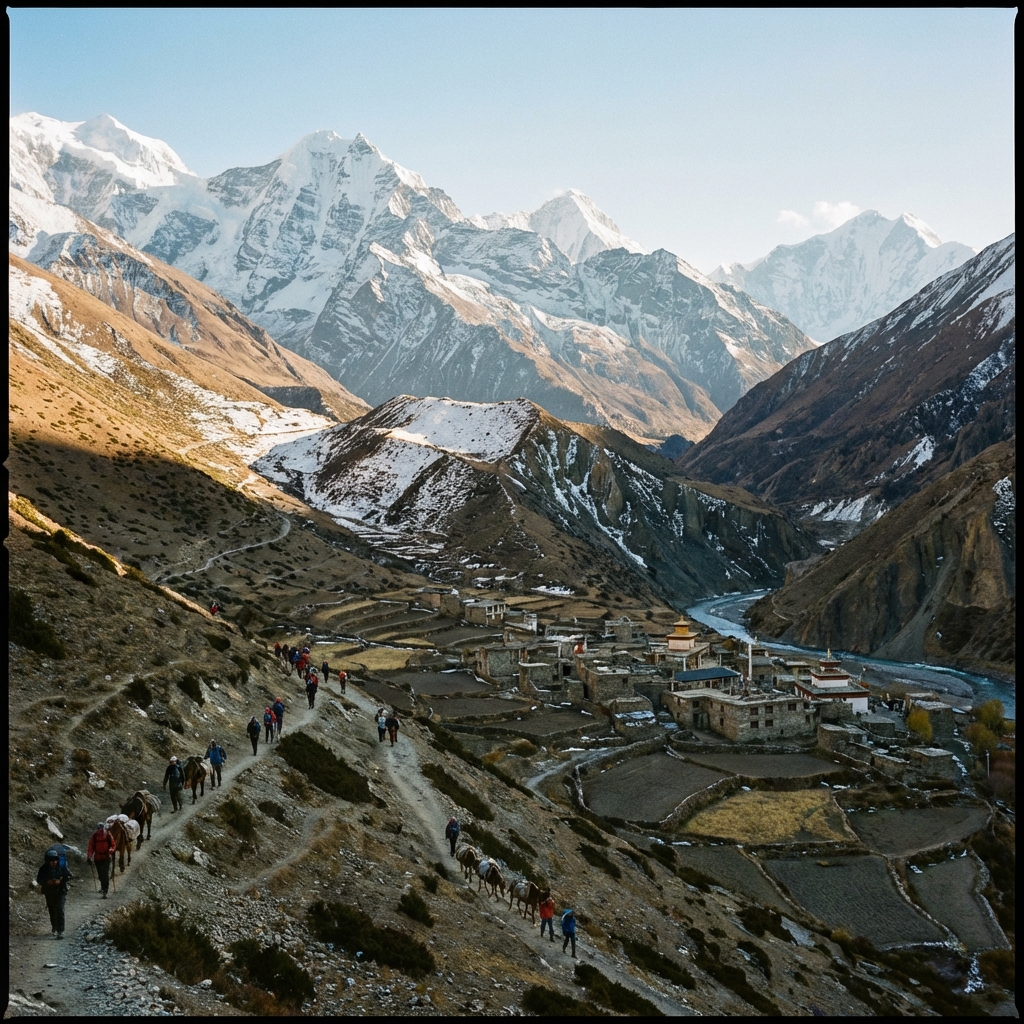
Namche Bazaar is the commercial, social, and cultural capital of the Khumbu region, a remarkable town carved into a horseshoe-shaped hillside at 3,440m. Most trekkers arrive with EBC or Gokyo on their mind and treat Namche as a pass-through point — spend one night, do one acclimatization hike, move on. This is a mistake.
Namche sits at the center of a web of day hikes and short treks that cover some of the most beautiful and culturally rich terrain in the Everest region. Within a day's walk in any direction, you can stand at the Everest View Hotel for the finest accessible mountain panorama in Nepal, walk to the Sherpa villages of Khumjung and Khunde where Edmund Hillary built schools and hospitals, trek west to the remote Thame valley where the Sherpa population traces its Tibetan roots, or stand on the old Syangboche airstrip and look down at Namche's horseshoe far below.
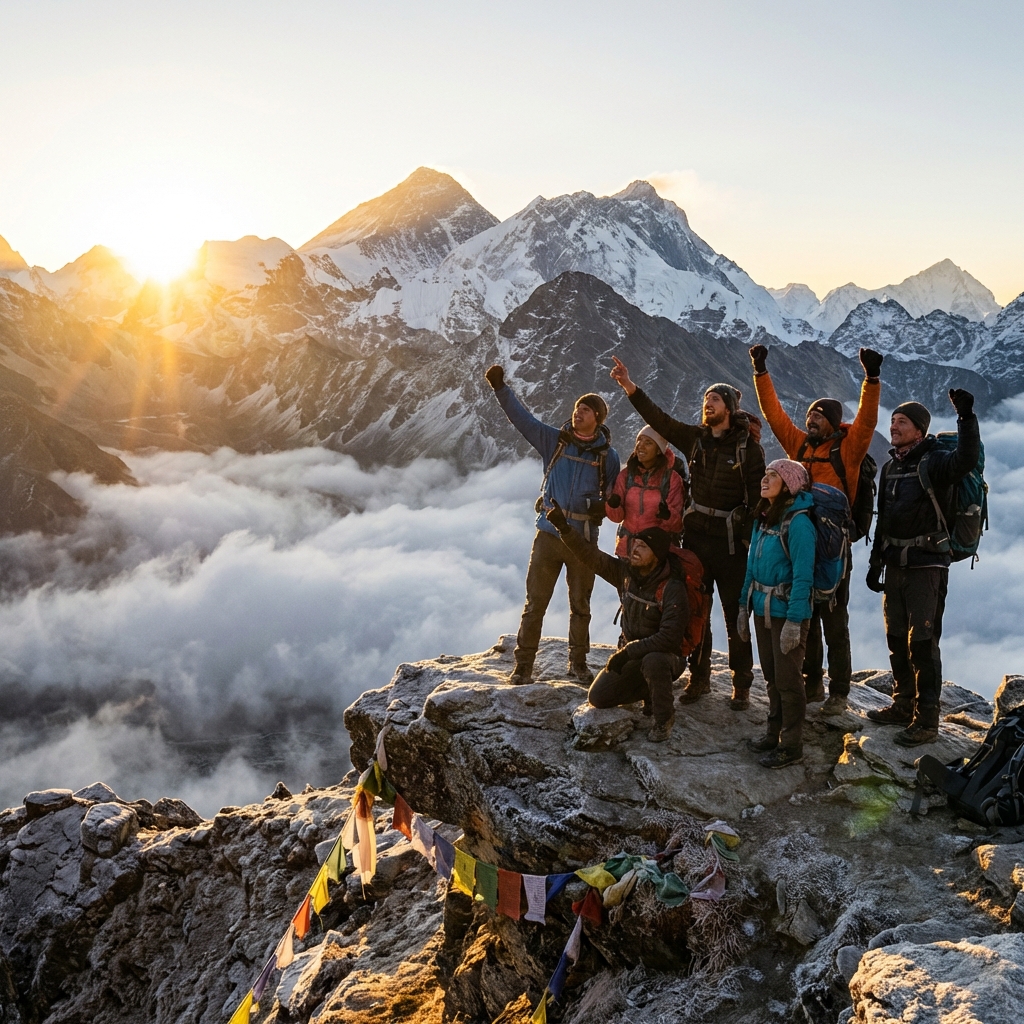
Whether you are using Namche as an acclimatization base, exploring the Khumbu on a shorter itinerary, or simply want to experience the high Himalayas without pushing all the way to base camp, the day hikes and short circuits from Namche Bazaar offer outstanding rewards for modest effort.
3,440m
3,880m (Everest View Hotel area)
3,820m (full-day hike or overnight)
3,790m (half-day from Namche)
3,748m (45-60 min from Namche)
Every Saturday
Oct-Nov, Mar-May
Sagarmatha National Park Permit (already held by EBC/Gokyo trekkers)
Easy to Moderate
Lukla flight + 2-day trek, or direct helicopter
Why Namche Deserves More Than One Day
The standard EBC and Gokyo Lake itineraries allocate one acclimatization day in Namche. This is the physiological minimum, not the cultural minimum. Namche rewards travelers who stay longer.
The town has the best restaurants, bakeries, and accommodation in the Khumbu. It has a museum, a market, gear shops, and internet. But more than the facilities, Namche serves as the gateway to a collection of day hikes and short treks that would each justify making the town a multi-day base in their own right.
For trekkers on the short Everest trek, two nights in Namche is standard. For trekkers on a dedicated Khumbu exploration without the commitment of the full EBC route, Namche as a three or four-night base camp opens up the entire circuit described in this guide.
Namche Bazaar: Orientation
The Town
Namche sits in a natural amphitheater on the east side of the Bhote Koshi Valley. The town faces roughly south, with higher ridges behind (north and east) and the valley dropping away below (south). The main street curves through the middle of the horseshoe. Most lodges, restaurants, and shops line this main street or the terraces above and below it.
Key landmarks:
- Main street: Bakeries, equipment shops, restaurants, pharmacies
- Upper market area: Where Saturday market concentrates
- National Park Visitor Center and Museum: Upper part of town, near the main trail in from below
- Police checkpoint: Where all trekking permits are checked (enter and exit)
- Main viewpoint trail: Behind the upper part of town, heading north-northeast to Syangboche
Namche Saturday Market
Saturday transforms Namche. Traders from surrounding villages, yak herders, and Tibetan merchants converge on the market grounds. The market has operated every Saturday for generations.
What is sold:
- Fresh vegetables (potatoes, garlic, onions, greens) from lowland farms carried up by porter
- Yak cheese, yak butter, and dried yak meat from local herders
- Tibetan goods: turquoise jewelry, singing bowls, prayer flags, wool blankets
- Practical trekking supplies: batteries, snacks, instant noodles, trekking poles
- Fresh bread, momos, and cooked food from market stalls
Best time: Arrive at the market area by 8:00 AM to see the most active trading. By 11:00 AM, the best produce is gone and traders begin packing. The market is worth building your acclimatization day schedule around.
Market Day Logistics
If your acclimatization day at Namche falls on a Saturday, reverse the usual order: visit the market first thing (7:30-9:30 AM), then head up to Syangboche and the Everest View Hotel for the morning mountain views. The market crowds thin by late morning, and the mountain views are at their clearest in the morning before afternoon clouds build. Two experiences, perfectly scheduled.
Day Hike 1: Syangboche Airstrip and Mountain Viewpoint
Distance: 3 km round trip from Namche upper area Altitude gain: 308m (Namche 3,440m to Syangboche 3,748m) Duration: 45-60 minutes up, 30-40 minutes down Difficulty: Moderate (steep ascent)
The Syangboche trail begins at the upper end of Namche, heading north past the National Park Visitor Center. The first section climbs steeply on stone steps and switchbacks through blue pine forest before emerging at the Syangboche plateau — a wide, flat area at 3,748m that once served as a small STOL airstrip for light aircraft.
Today, Syangboche sees almost no commercial flights (the airstrip is too short and high for regular service). Instead, it serves as an excellent viewpoint and the starting point for the Everest View Hotel approach.
What you see from Syangboche:
- Namche Bazaar spread below in its horseshoe, looking surprisingly small from above
- Kongde Ri (6,187m) directly west across the valley, massive and close
- Thamserku (6,623m) to the east
- Everest, Lhotse, and Nuptse visible to the northeast
National Park Visitor Center
Before heading up to Syangboche, stop at the National Park Visitor Center near the top of Namche (above the main market area). The center has well-curated exhibits on Sagarmatha National Park's ecology, geology, and history, plus a detailed topographic model of the Khumbu that helps you visualize the terrain you are trekking through. The Sherpa Culture Museum on the upper floor covers the history of Sherpa migration from Tibet, the development of Himalayan mountaineering, and key cultural practices. Allow 45-60 minutes. Admission is included with your park permit.
Day Hike 2: Everest View Hotel
Distance: 6 km round trip from Namche Altitude gain: 440m (Namche 3,440m to hotel 3,880m) Duration: 1.5-2 hours up, 1-1.5 hours down Difficulty: Moderate (sustained climb through forest)
The Everest View Hotel hike is the classic Namche acclimatization walk and one of the finest short hikes in Nepal. The trail continues beyond Syangboche, climbing through forest on a well-worn path that emerges at the hotel's famous terrace viewpoint.
The Everest View Hotel (also known as Hotel Everest View) holds a Guinness World Record as one of the highest-elevation hotels in the world. Built by a Japanese company in 1971, it remains a functioning hotel and day-visitor destination at 3,880m.
At the Hotel
You do not need to stay overnight to enjoy the hotel. The terrace is open to day visitors, and the dining area serves tea, coffee, lunch, and snacks. Prices are higher than standard tea houses (a pot of tea runs approximately NPR 500-800) but the setting is worth every rupee.
The terrace view encompasses Everest (8,849m), Lhotse (8,516m), Nuptse (7,861m), Ama Dablam (6,812m), Thamserku, Kantega, and a dozen other major peaks. In clear conditions, this is arguably the most accessible world-class Himalayan panorama anywhere — reached in under two hours from a town with good coffee and hot showers.
For overnight stays: Rooms at the Everest View Hotel cost approximately $150-250+ per night and include the panoramic mountain view from your window or balcony. It is one of the most unusual hotel experiences in the world — a proper hotel room with linen sheets and a private bathroom, at 3,880m in the Himalayas, with Everest visible from the pillow.
Optimal Timing for Hotel Views
Arrive at the Everest View Hotel by 9:00-10:00 AM. Mountain views are clearest in the morning before convective clouds develop in the valleys. By early afternoon, Everest is often partially obscured by cloud. Order tea, claim a terrace table, and spend 45-60 minutes with the mountains before the view changes. If the hotel terrace is busy (common in October), walk up the ridge above the hotel for an equally good view with more space.
Day Hike 3: Khumjung and Khunde Villages
Distance: 8-10 km loop from Namche via Syangboche Altitude: 3,748m (Syangboche) to 3,790m (Khumjung) to 3,840m (Khunde) Duration: 4-5 hours for the full loop Difficulty: Moderate
This is the best full-day hike from Namche, combining mountain viewpoints with genuine Sherpa cultural immersion. The route goes up to Syangboche, continues to Khumjung, visits Khunde, and returns to Namche via a different trail.
Khumjung Village
Khumjung (3,790m) is one of the largest Sherpa villages in the Khumbu, home to approximately 600-700 people (when not seasonally migrated to lower elevations). The village has a traditional character that Namche, with its tourism infrastructure, has partly lost.
Key sites in Khumjung:
The Hillary School: Built in 1961 by Sir Edmund Hillary and the Himalayan Trust, the Khumjung school was the first permanent school in the Khumbu. Hillary believed education was the most lasting gift he could leave the Sherpa community. Today the school educates hundreds of children from surrounding villages. The original building still stands, with newer additions surrounding it. Visitors are welcome to visit the school grounds and observe classes (do not disturb teaching).
Khumjung Monastery: The village monastery houses one of the Khumbu's most unusual religious objects — a purported yeti scalp. The scalp, a wrinkled, cone-shaped artifact with reddish-brown hair, has been the subject of scientific debate since Hillary himself brought it to Chicago for analysis in 1960 (results were inconclusive). The caretaker monk can show it to visitors for a small donation. Whatever its origin, the artifact is intriguing and the monastery itself is beautiful.
Potato fields: Khumjung and the surrounding area are covered in terraced potato fields. Potatoes are the primary agricultural product of the Khumbu, introduced by Tibetan traders in the 19th century. The fields are most photogenic in summer (green) and autumn (golden before harvest).
Khunde Village
From Khumjung, a 20-minute walk leads to Khunde (3,840m), a slightly smaller and quieter village notable for the Khunde Hospital.
Khunde Hospital: Built by the Himalayan Trust in 1966, Khunde Hospital is the primary medical facility for the Khumbu Sherpa population and provides emergency care for trekkers and climbers. The hospital offers high-altitude medical consulting for trekkers concerned about AMS symptoms. If you have health concerns during your trek, this is a legitimate resource.
Tea at a Village Home
If you have a guide with local connections — and this is one of the best reasons to hire a Sherpa guide — ask if they can arrange tea at a local home in Khumjung or Khunde. A 30-minute visit with a Sherpa family in their kitchen, drinking butter tea and eating homemade bread, provides a window into daily high-altitude Himalayan life that no museum exhibit can replicate.
Day Hike / Short Trek 4: Thame Valley
Distance: 14 km round trip from Namche (or 7 km one way for an overnight) Altitude: 3,440m (Namche) to 3,820m (Thame) Duration: 3-4 hours each way Difficulty: Moderate
Thame is one of the most significant Sherpa villages in the Khumbu, sitting in the Bhote Koshi Valley to the northwest of Namche. Unlike the main EBC trail, the Thame valley sees relatively few trekkers, making it one of the most atmospheric routes in the region.
Why Thame Is Special
Thame has produced some of the most accomplished high-altitude climbers in the world. The village is home to the families of Tenzing Norgay (who completed the first ascent of Everest with Edmund Hillary in 1953), Apa Sherpa (21 Everest summits), and other legendary climbers. Walking into Thame is walking into Himalayan mountaineering history.
The Thame Monastery (Thame Gompa), situated above the village on a rock ledge, is one of the oldest and most important monasteries in the Khumbu. It predates Tengboche Monastery and has been less affected by tourism. The gompa hosts a smaller version of the Mani Rimdu festival each spring (May), a few months before the Tengboche celebration.
The Thame Trail
The trail from Namche to Thame follows the Bhote Koshi river valley northwest. After leaving Namche's upper entrance, the trail climbs slightly then traverses the hillside above the valley floor, passing through the small settlements of Thamo and Thomde before reaching Thame.
The valley has a different character than the main EBC corridor — drier, more austere, and with Tibet feel (the trail continues up to the Nangpa La pass at 5,716m, historically the main trading route between Tibet and Nepal).
Wildlife note: The Thame valley and the Bhote Koshi headwaters are one of the most documented snow leopard habitats in Nepal. Sightings are very rare, but this is one of the places where snow leopard researchers have camera-trapped individuals. Himalayan tahr and musk deer are common.
Thame as an Overnight
Rather than doing Thame as a strenuous 14 km round trip day hike, consider staying one night at the tea houses in or near Thame. This allows you to explore the monastery at leisure, walk above the village in the afternoon light, and experience the extraordinary quiet of this less-visited valley. Return to Namche the following morning. The overnight approach is far more satisfying and does not require pushing the pace.
Nangpa La Trading Route
The trail up the Bhote Koshi valley from Thame continues to the Nangpa La pass (5,716m), the ancient trading route between Nepal and Tibet. For centuries, Sherpa merchants carried goods — salt, wool, and Buddhist artifacts — between the Khumbu and Tingri in Tibet via this pass. The route is rarely trekked today due to restricted Tibet border zones. But looking up the valley from Thame toward the pass gives you a sense of the ancient connections between Sherpa and Tibetan cultures.
Day Hike 5: Kongde Ri View Trek
Distance: Variable (4-8 km depending on how high you go) Altitude: 3,440m (Namche) to 4,000m+ (upper ridgeline) Duration: 3-5 hours depending on turnaround point Difficulty: Moderate to Strenuous
The ridgeline west of Namche above the Bhote Koshi valley offers spectacular views of Kongde Ri (6,187m) directly across the valley, plus Thamserku, Kangtega, and other peaks to the east. This hike is less developed than the Everest View Hotel route and sees fewer trekkers.
The trail starts from the western side of Namche and climbs the ridge above the valley. There is no specific destination — you climb as high as comfortable and descend the same way. The views improve continuously with altitude.
Best for: Trekkers who want a more solitary hike with less traffic than the Everest View Hotel route.
Namche as an Acclimatization Base for EBC
For EBC trekkers, the acclimatization day at Namche is mandatory and medically important. The principle is "climb high, sleep low" — hike to a higher altitude during the day, then return to sleep at Namche's lower elevation, stimulating red blood cell production.
Optimal Acclimatization Strategy at Namche
Standard acclimatization day:
- Start from Namche (3,440m) after breakfast
- Hike to Syangboche (3,748m) — 45-60 minutes
- Continue to Everest View Hotel (3,880m) — additional 30-40 minutes
- Spend 45-60 minutes at the hotel (tea, views)
- Optional: Continue to Khumjung (additional 30 minutes from hotel)
- Return to Namche for dinner and overnight
- Total time: 4-6 hours, maximum altitude 3,880m
This standard acclimatization day provides a 440m altitude push and returns to sleep at 3,440m — an effective protocol. Trekkers who feel strong can extend to Khumjung and add approximately another 350m distance without significant additional altitude gain.
Rest Does Not Mean Inactive
Many trekkers mistake "acclimatization day" for "rest day" and spend it eating, reading, and sleeping at Namche. This is wrong. The acclimatization benefit comes from reaching a higher altitude and returning to sleep lower — passive rest at Namche altitude provides no acclimatization benefit. You must hike up to at least 3,700-3,800m and return for the day to physiologically productive.
Two Nights at Namche for the Gokyo Trek
The standard EBC itinerary spends one acclimatization day at Namche before continuing. The Gokyo Lakes trek, which climbs higher (to 4,790m+ at Gokyo versus continuing on the EBC trail), benefits particularly from two nights at Namche. Two nights allows a full acclimatization day (Everest View Hotel or Khumjung circuit) plus genuine rest, significantly reducing AMS risk on the higher Gokyo approach. If your schedule allows, add an extra Namche night before continuing to the Gokyo Valley.
Namche Bazaar Facilities
Namche has the best facilities of any town on any major trekking route in Nepal. If you have needs before heading to higher altitudes, Namche is where to address them.
Accommodation
Namche has accommodation for every budget. For detailed recommendations, see our best lodges in the Everest region guide.
| Category | Examples | Price Range | Features |
|---|---|---|---|
| Budget | Local tea houses on lower market street | $4-10/night | Basic rooms, shared bathrooms |
| Mid-range | Khumbu Lodge, Panorama Lodge | $15-30/night | Better rooms, some en-suite |
| Premium | Yeti Mountain Home Namche | $80-150/night | En-suite, heated dining, mountain views |
Food and Drink
Namche's food scene is remarkable for 3,440m. Highlights:
- Namche Bakery: Fresh bread, cinnamon rolls, croissants, pizza — genuinely good
- Café Danphe: Known for real coffee and reliable WiFi
- The Namaste Bakery: Apple pie and carrot cake at high altitude
- Dal bhat at local lodges: The calorie-dense Nepali staple, excellent fuel before altitude
Practical Services
- ATM: Two ATMs in Namche (unreliable, have cash backup)
- WiFi: Available at most lodges (NPR 300-600/day, speeds vary, works better at lower-traffic times)
- Device charging: NPR 200-500 per device at most lodges
- Hot showers: Available at most mid-range and premium lodges (NPR 300-500)
- Gear rental and shopping: Multiple shops with genuine and replica gear
- Pharmacy: Basic medications including Diamox, altitude sickness treatment supplies
ATM Reliability Warning
Namche's ATMs run out of cash during peak season (October especially) and sometimes malfunction. Do not rely solely on the Namche ATM for your trekking cash. Withdraw sufficient Nepali rupees in Kathmandu before flying to Lukla. A general guideline is NPR 5,000-8,000 per day on the trail (food, accommodation, tips, charging, activities).
Best Season for Namche Day Hikes
October-November (Prime)
Clear skies, excellent mountain visibility, comfortable daytime temperatures (10-18 degrees Celsius in Namche). The Saturday market is at its busiest. Mani Rimdu festival at Tengboche occurs during this window. The trade-off: highest trekker traffic, lodges fill up, and prices may be slightly higher.
March-May (Excellent)
Warmer temperatures, rhododendron blooms on the hillsides above Namche (March-April), longer days for hiking. Slightly more atmospheric haze than autumn but still excellent views. Less crowded than peak autumn. Spring is ideal for the Khumjung and Thame circuits when the landscape is greener.
December-February (Quiet and Cold)
Namche stays open year-round, but winter brings cold temperatures (nights well below freezing) and reduced services. Day hikes to Syangboche and the Everest View Hotel are possible but cold. The market still operates. Very few trekkers — town is quiet. Good for travelers who want solitude.
June-September (Monsoon)
Not recommended. Heavy rain, cloud cover obscuring mountain views, and muddy trails. The market operates but outdoor hikes are unrewarding in persistent rain and cloud.
Combining Namche Hikes into a Circuit
For trekkers using Namche as a base for 3-4 days, a logical circuit combines the key hikes:
Day 1 (arrival): Settle in, explore Namche town, evening market street Day 2: Syangboche + Everest View Hotel + Khumjung loop (full day, 5-6 hours) Day 3: Thame valley (full day or overnight) Day 4: Kongde Ri ridge hike, rest afternoon, depart preparation
This four-day Namche circuit visits every major day-hiking destination and provides thorough acclimatization for those planning to continue to higher elevations. Combined with the Tengboche extension (add 2 days), this becomes an 8-10 day comprehensive Khumbu cultural and mountain experience without going above 3,870m.
Frequently Asked Questions
Can I visit Namche Bazaar without trekking to EBC?
Yes. A short 4-5 day trek from Lukla to Namche and back is a popular standalone itinerary. The day hikes from Namche to the Everest View Hotel, Khumjung, and Thame provide exceptional mountain experiences without the commitment of the full EBC trek.
What day is market day in Namche Bazaar?
Saturday is the traditional market day when traders from surrounding villages converge on Namche. The market operates from early morning until mid-afternoon and offers local produce, clothing, and household goods alongside tourist items.
Is Namche Bazaar a good acclimatization base?
Excellent. At 3,440m, Namche is the ideal altitude for a rest day with acclimatization hikes. The standard EBC itinerary includes one or two nights here specifically for altitude adjustment before proceeding higher.