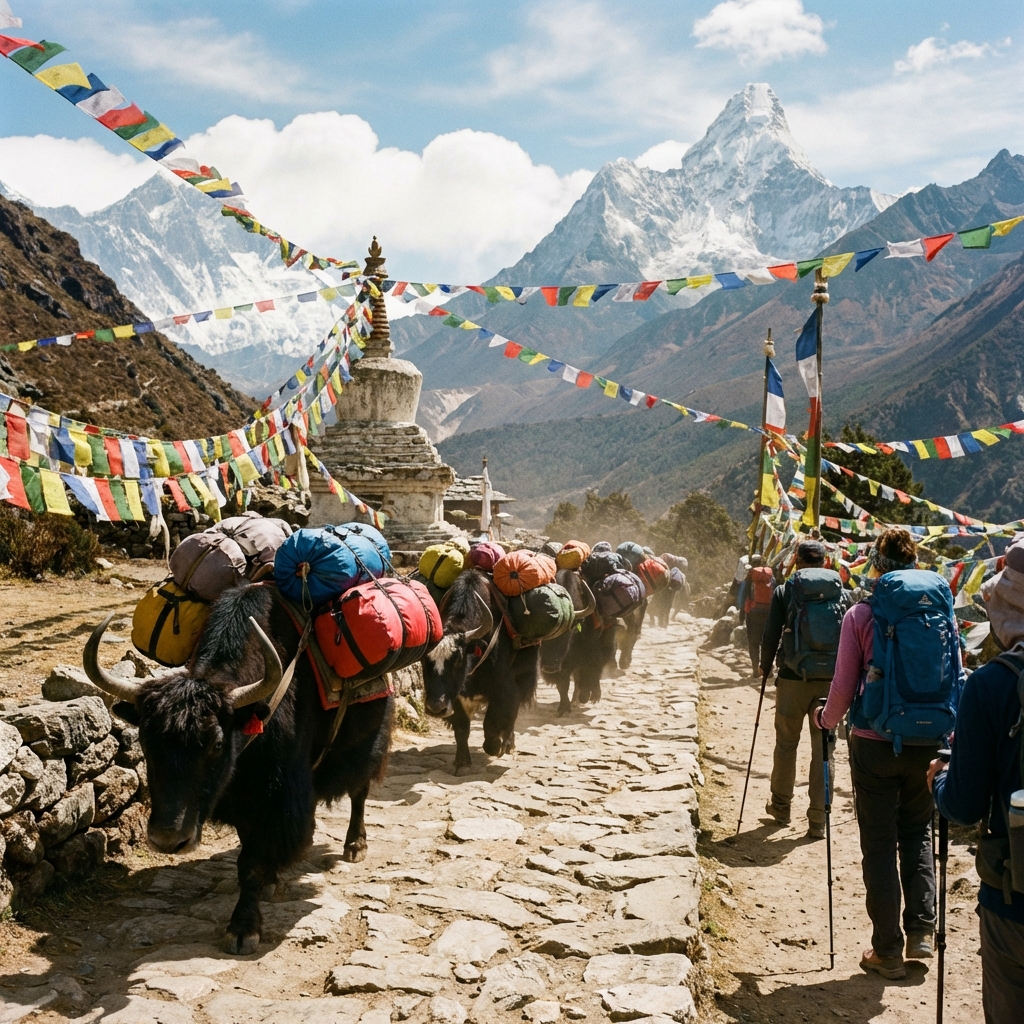
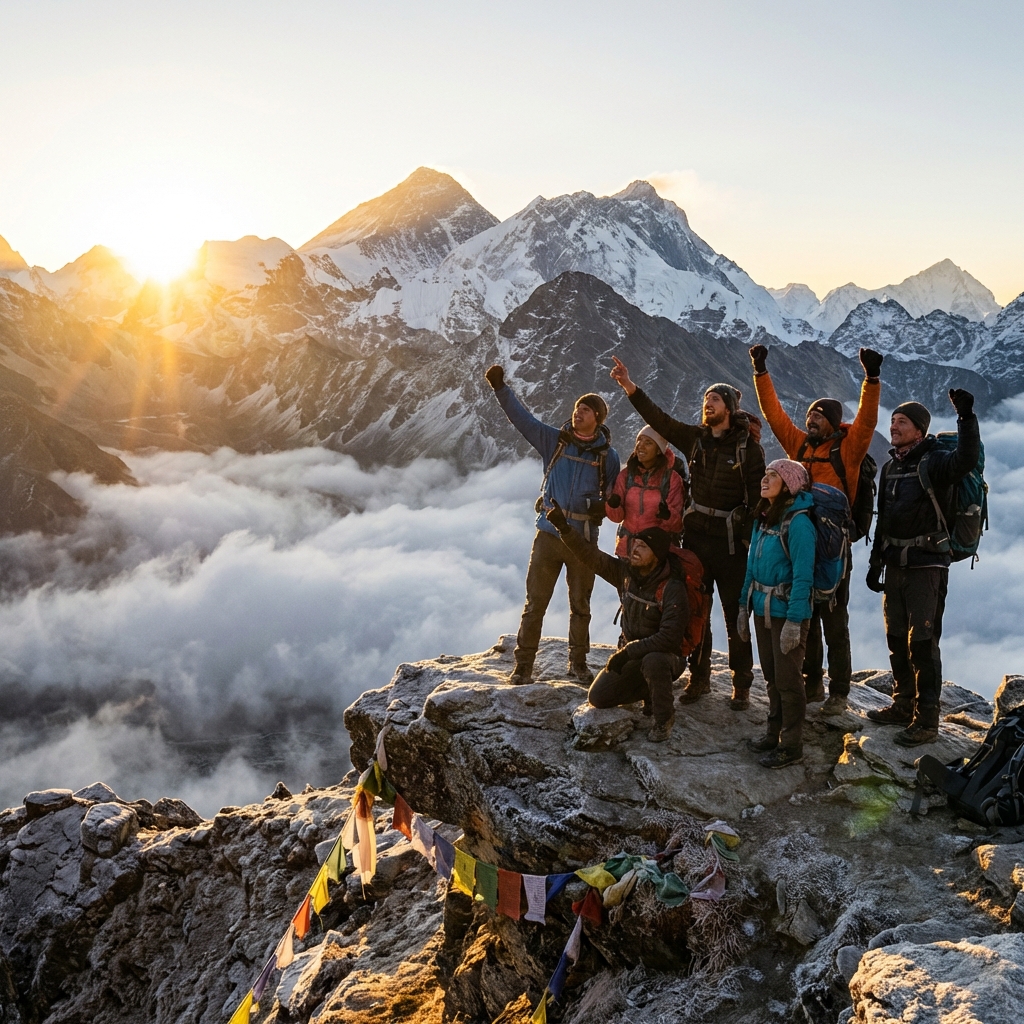
There is a moment on the trail to Tengboche Monastery, about 20 minutes before you arrive, when the forest opens and the full panorama announces itself: Ama Dablam's perfect pyramid rising directly ahead, Everest visible over the ridge, the ancient monastery set against the mountain wall like it was built to be photographed. Trekkers stop mid-stride. It is one of those views that makes you understand why people travel halfway around the world to walk in the Himalayas.
Tengboche Monastery is the largest and most important Tibetan Buddhist monastery in the Khumbu, perched on a forested ridge at 3,870m above the confluence of the Dudh Koshi and Imja rivers. Built in 1916, rebuilt after a 1934 earthquake, and restored again following a devastating 1989 fire, the monastery sits at the spiritual heart of Sherpa culture. It is home to approximately 40-50 monks, presided over by the Rinpoche — the reincarnate lama who is the highest religious authority in the Khumbu.
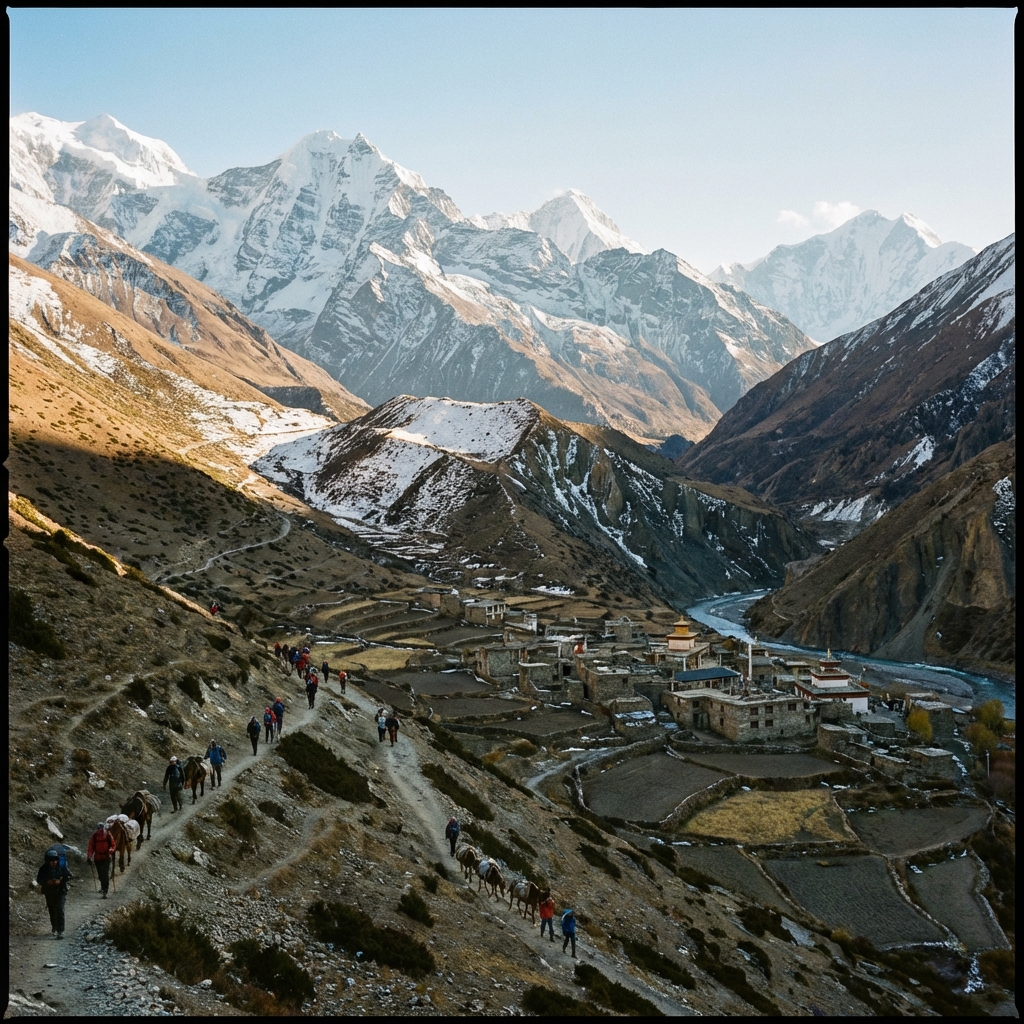
The trek to Tengboche from Lukla takes 7-9 days at a comfortable pace, reaching a maximum altitude of 3,870m — well below the danger threshold for serious altitude illness, making it one of the most accessible yet genuinely immersive treks in the Everest region. This is the trek that delivers the cultural depth and mountain drama of the Khumbu without the physical commitment of the full EBC route.
7-9 days (including Lukla flights)
5-7 days on trail
3,870m (Tengboche)
Moderate (Grade 2-3 of 5)
Oct-Nov (Mani Rimdu), Mar-May (rhododendrons)
Lukla (35-min flight from Kathmandu)
Sagarmatha Entry Permit + Khumbu Rural Municipality Fee
$215-1,800 (independent to guided)
Tea houses throughout (good quality)
Tengboche Monastery, Mani Rimdu festival (Oct-Nov)
Who Is This Trek For?
The Tengboche Monastery trek is one of the most versatile treks in Nepal. It works for an unusually wide range of trekkers.
Beginners Seeking the Everest Region
With a maximum sleeping altitude of 3,870m, this trek avoids the most challenging altitude zones of the full EBC route. The daily walking distances are moderate (4-6 hours), the tea house infrastructure is excellent, and the trail is clear and well-traveled. For first-time Nepal trekkers who want to experience the Khumbu without the commitment of EBC, this is the ideal introduction. See our best beginner treks guide for how this compares with other accessible options.
Culturally Motivated Travelers
Tengboche is not just a viewpoint. It is the center of Sherpa Buddhist culture in the Khumbu, hosting the Mani Rimdu festival and daily prayer ceremonies. Trekkers who prioritize cultural immersion over altitude achievement will find the Tengboche trek deeply satisfying.
Time-Limited Trekkers
If you have 7-10 days total in Nepal (including Kathmandu), this trek fits your schedule. Compare this to EBC, which requires 14-18 days including travel. For more context on timing, see our Everest view short trek guide.
Families and Older Trekkers
Children aged 10 and above, and trekkers in their 60s and 70s, find this trek manageable with proper pacing. The lower altitude ceiling reduces altitude risk, and the well-developed tea house network ensures comfortable nightly stops.
The Cultural Trek vs. the Summit Trek
The Tengboche trek is fundamentally a cultural experience. While you will see extraordinary mountain views, the heart of this trek is Sherpa Buddhism — the monastery, the monks, the prayer wheels, the incense, and the ancient rhythms of life in the high Himalayas. If you come expecting primarily a mountain viewpoint experience, you will be pleasantly surprised by how much more the monastery offers. For deeper context, read our guide to Sherpa culture before you go.
About Tengboche Monastery
History and Significance
Tengboche Monastery (formally Dawa Choling Gompa) was founded in 1916 by Lama Gulu, a student of the Rongbuk Monastery on the Tibetan side of Everest. It is the highest monastery in the Khumbu and the spiritual anchor of the Sherpa community.
The original structure was destroyed by the 1934 Nepal-Bihar earthquake. Rebuilt, it burned to the ground in 1989 when a faulty generator ignited a catastrophic fire. The current monastery, completed in 1993 with international support, is larger and more elaborate than the original. The rebuilding was led by the current Rinpoche and supported by the Sir Edmund Hillary Foundation and numerous donors from the global mountaineering community.
The monastery follows the Nyingma school of Tibetan Buddhism, one of the oldest schools, characterized by its emphasis on meditation and the preservation of ancient tantric teachings.
The Rinpoche of Tengboche
The head lama of Tengboche is a reincarnate — identified through the traditional Tibetan process of recognizing a child as the reborn consciousness of the previous Rinpoche. The current Tengboche Rinpoche is a respected and scholarly figure who has worked to modernize facilities while preserving traditional practice. If he is in residence during your visit, a brief audience may be possible through your guide.
The Monastery Complex
The main prayer hall (Dukhang) houses large gilded statues of Shakyamuni Buddha, Guru Rinpoche (Padmasambhava, who brought Buddhism to Tibet), and Chenrezig (the bodhisattva of compassion). The walls are covered in elaborate thankas (painted silk scrolls) and murals depicting the Wheel of Life and scenes from Buddhist cosmology.
Surrounding the main hall are monks' quarters, a small museum, a bakery operated by the monastery (excellent apple pie and cakes), and the famous tea house area with views of Ama Dablam and Everest.
Monastery Etiquette
Tengboche welcomes visitors, but the monastery is a functioning religious community, not a tourist attraction. Respectful behavior matters.
Before Entering
- Remove shoes before entering the prayer hall
- Dress modestly — cover shoulders and legs
- Do not bring food or drink into the prayer hall
- Ask permission before photographing monks or ceremonies
- Do not touch religious objects, statues, or thankas
During Prayer Ceremonies
Afternoon prayer ceremonies typically begin around 3:00 PM. Visitors may observe by sitting quietly at the back of the hall. Do not enter or exit while monks are actively chanting. Turn mobile phones completely off. Do not use flash photography during ceremonies. The monks are aware of trekkers watching and are generally accommodating, but overt tourism behavior (chatting, moving around) is inappropriate.
Prayer Wheels and Stupa Circuit
Walk clockwise around the monastery complex, the stupas, and all prayer wheels. This is standard Buddhist practice throughout Nepal and Tibet. Spinning prayer wheels clockwise as you pass sends merit to all sentient beings according to Buddhist belief.
Best Time for the Prayer Ceremony
The afternoon prayer ceremony at Tengboche is one of the most atmospheric experiences in the Khumbu. Arrive at the monastery by 2:30 PM, tour the exterior and museum, and be seated in the prayer hall by 3:00 PM. The ceremony lasts approximately 45-60 minutes and involves deep rhythmic chanting, cymbals, drums, and long horns. The resonance inside the ancient hall, combined with the incense smoke and dim lighting, creates an atmosphere unlike anything outside of Tibet.
The Mani Rimdu Festival
The Mani Rimdu festival is the single most important Buddhist celebration in the Khumbu and one of the most compelling reasons to time your Tengboche trek carefully.
What Is Mani Rimdu?
Mani Rimdu is a three-day Tibetan Buddhist festival centered on masked dance (Cham) performances depicting the victory of Buddhism over the Bon religion and the forces of evil. The dances are performed by monks wearing elaborate costumes representing deities, demons, and protective spirits.
When Does It Occur?
Mani Rimdu falls on the full moon of the ninth month of the Tibetan lunar calendar, typically in late October or early November (sometimes December). The exact dates change annually with the lunar calendar. Key events:
- Day 1: Public ceremony, preparation rituals (limited visitor access)
- Day 2: Main masked dance (Cham) performances in the monastery courtyard — the primary public event
- Day 3: Conclusion ceremonies, monks emerge to bless visitors
What You Will See
The masked dances are visually extraordinary. Monks in elaborate silk costumes and carved wooden masks enact scenes from Buddhist mythology over 6-8 hours. The costumes represent Mahakala (the protector deity), various wrathful and peaceful deities, and clown-like figures who interact with the crowd. Local Sherpa families descend on Tengboche from villages throughout the Khumbu. The atmosphere combines deep spiritual significance with community celebration.
Book Well in Advance for Mani Rimdu
If you plan to attend Mani Rimdu, book your Lukla flights and Tengboche accommodation 4-6 months in advance. This is the busiest period at Tengboche, and the handful of lodges near the monastery fill up weeks ahead. Arriving at Tengboche without accommodation during Mani Rimdu means sleeping in a tent in the monastery grounds or descending to Phunki Tenga (3,250m) for the night — possible but suboptimal. Check the exact festival dates for your year before booking.
Arriving Early for Mani Rimdu
Arrive at Tengboche the day before the main Cham dance performances. This gives you time to explore the monastery in relative calm, attend any preparatory ceremonies, and secure a good viewing position for the main event. The morning of the Cham dances, the monastery fills quickly. Positions at the front of the courtyard viewing area are claimed from early morning.
Day-by-Day Itinerary
8-Day Tengboche Monastery Trek (Recommended)
| Day | Route | Altitude | Hours | Highlights |
|---|---|---|---|---|
| 1 | Fly Kathmandu to Lukla, trek to Phakding | 2,610m | 3-4h | Mountain flight, Dudh Koshi valley entry |
| 2 | Phakding to Namche Bazaar | 3,440m | 5-6h | Hillary suspension bridges, first Everest view |
| 3 | Namche acclimatization day | 3,440-3,880m | 3-5h | Everest View Hotel hike, museum, market |
| 4 | Namche to Tengboche | 3,870m | 5-6h | Descent to Phunki Tenga, monastery arrival |
| 5 | Tengboche full day | 3,870m | — | Monastery exploration, prayer ceremony, hiking |
| 6 | Tengboche to Namche | 3,440m | 4-5h | Return, Namche exploration |
| 7 | Namche to Lukla | 2,840m | 6-7h | Long descent day, Khumbu farewell |
| 8 | Fly Lukla to Kathmandu | — | 35 min | Build in buffer for flight delays |
The 7-Day Minimum Version
If you have exactly one week:
| Day | Route | Altitude | Hours |
|---|---|---|---|
| 1 | Fly Kathmandu to Lukla, trek to Phakding | 2,610m | 3-4h |
| 2 | Phakding to Namche Bazaar | 3,440m | 5-6h |
| 3 | Namche acclimatization (essential) | 3,880m hike | 3-5h |
| 4 | Namche to Tengboche | 3,870m | 5-6h |
| 5 | Tengboche to Namche | 3,440m | 4-5h |
| 6 | Namche to Lukla | 2,840m | 6-7h |
| 7 | Fly Lukla to Kathmandu | — | 35 min |
Do Not Skip the Acclimatization Day
The jump from Phakding (2,610m) to Namche (3,440m) is 830m of altitude gain in one day. Your acclimatization rest day at Namche is not optional, even if you feel perfectly fine. The standard hike up to the Everest View Hotel ridge (3,880m) and back down to Namche applies the "climb high, sleep low" principle that kickstarts your acclimatization for Tengboche (3,870m) the next day. Skipping this day and going straight to Tengboche risks AMS that could end your trek.
Namche Bazaar to Tengboche: The Trail
From Namche to Phunki Tenga (3,250m)
The trail from Namche to Tengboche begins with a descent — counterintuitive but unavoidable. From Namche, the trail drops steeply through blue pine and fir forest to the Dudh Koshi river at Phunki Tenga (3,250m). This descent of approximately 200m takes about 1.5-2 hours.
Phunki Tenga sits at the confluence of the Dudh Koshi and Bhote Koshi rivers. Two large prayer wheels powered by the river current spin continuously. This is the lowest point on the Namche-Tengboche route and a natural stopping point for tea.
The Climb to Tengboche
From Phunki Tenga, the trail climbs steeply through increasingly magnificent rhododendron and silver fir forest, gaining approximately 620m to Tengboche over 2-3 hours. This is the most visually dramatic section of the trail, with the forest opening at intervals to reveal Ama Dablam's south face directly ahead.
The rhododendron forest between Phunki Tenga and Tengboche is among the most beautiful in Nepal, particularly in March-April when the trees bloom in crimson, pink, and white. In autumn (October-November), the same forest displays copper and gold foliage.
The final approach: As the trail reaches the monastery ridge, the forest opens and you walk the last 300m across open grassland with the monastery directly ahead and the full mountain panorama unfolding behind it. This arrival moment is one of the great experiences in Nepal trekking.
Start from Namche Before 8:00 AM
The Namche to Tengboche walk takes 5-6 hours. Start early enough to arrive at Tengboche by early afternoon (ideally by 2:30 PM), giving you time to settle in, explore the monastery exterior, and be seated for the 3:00 PM prayer ceremony. If you leave Namche at 7:30-8:00 AM, you arrive at Phunki Tenga for a late morning tea break and Tengboche for early afternoon — ideal timing.
Mountain Views from Tengboche
Ama Dablam
Ama Dablam (6,812m) dominates the view from Tengboche as it dominates no other viewpoint. At just 12 km from the monastery, the peak fills the southeastern skyline in near-perfect proportions. Ama Dablam translates roughly as "Mother's Necklace" — a reference to the hanging glacier (the "necklace") suspended on the mountain's upper face.
Many mountaineers and photographers consider Ama Dablam the most beautiful mountain in the world. From Tengboche, the peak is perfectly framed above the monastery roof, creating the photograph that appears on more Nepal trekking posters than any other single image.
Everest, Lhotse, and Nuptse
Looking north from Tengboche, Everest (8,849m), Lhotse (8,516m), and Nuptse (7,861m) form a wall of rock and ice that fills the northern horizon. From this angle, at 3,870m, you are close enough that the mountains appear enormous.
The best Everest view from Tengboche is from the open ground north of the monastery, where a clear line of sight runs up the Khumbu Valley to the EBC area. On crisp autumn mornings, the summit plume of Everest is clearly visible.
Thamserku and Kantega
To the east, Thamserku (6,623m) and Kantega (6,782m) form a dramatic pair above the Khumbu Valley. These peaks are less famous than Everest and Ama Dablam but no less impressive at close range.
Combining Tengboche with Namche Exploration
Namche Bazaar deserves more than a single acclimatization day. With a two-night stay, you can explore the town properly while acclimatizing.
What to Do in Namche
Saturday Market: The legendary weekly market transforms Namche every Saturday morning. Tibetan traders bring goods from across the border — turquoise jewelry, singing bowls, carpets, and dried foods. Sherpa farmers bring yak cheese, butter, and local vegetables. Trekkers supplement their gear from well-stocked shops. Arrive early (before 9:00 AM) for the most active trading.
Sherpa Culture Museum: A well-curated museum in the National Park Visitor Center explains Sherpa history, the development of Himalayan mountaineering, and the ecological importance of Sagarmatha National Park. Admission is included with your park permit. Allow 1-2 hours.
Syangboche Airstrip Hike: A short but steep hike (about 45 minutes from Namche) leads to the old Syangboche airstrip and the area surrounding the Everest View Hotel. The panoramic views of Everest, Lhotse, Ama Dablam, and Nuptse are superb. This also serves as your acclimatization hike.
Khumjung Village: From Syangboche, a 30-minute walk leads to Khumjung, one of the largest Sherpa villages in the Khumbu. The Khumjung school — built by Edmund Hillary in 1961 — is historically significant. The village monastery reportedly houses a yeti scalp, viewable on request. The surrounding potato fields and the traditional Sherpa architecture make Khumjung one of the most photogenic villages in Nepal.
Khunde: A 20-minute walk from Khumjung, this small village has a hospital founded by the Himalayan Trust. The hospital serves the local Sherpa population and trekkers in medical emergencies. The village itself has beautiful mountain views and a traditional character.
The Namche-Khumjung-Khunde Loop
The best day hike from Namche combines Syangboche, Khumjung, and Khunde in a 4-5 hour loop. Start early from Namche, climb to Syangboche, visit the Everest View Hotel area for tea and mountain views, continue to Khumjung for village exploration, walk to Khunde, and return via the trail back to Namche. This loop reaches approximately 3,880m and provides excellent acclimatization while covering the most culturally interesting villages above Namche.
Altitude and Safety
AMS Risk at Tengboche (3,870m)
The maximum sleeping altitude on this trek — 3,870m at Tengboche — is below the threshold where serious AMS becomes common. Most healthy trekkers with proper pacing will not develop more than mild symptoms (slight headache on the first night at Namche, reduced appetite, disrupted sleep).
That said, AMS is unpredictable. Fit young trekkers develop it; older unfit trekkers sometimes have no trouble. The protocol is the same regardless:
- Day 1 at Namche: Mild headache is common and expected. Drink plenty of water, take paracetamol if needed, and rest.
- Day 2 (acclimatization day): The headache should be gone or significantly improved. If not, do not continue upward.
- Tengboche: If you feel fine at Namche after your acclimatization day, Tengboche is within safe reach.
If you experience persistent headache, nausea, or dizziness that does not improve with rest, descend immediately to Namche or Phakding. Do not continue higher with AMS symptoms.
Know the Descent Route
Tengboche has no hospital. The nearest medical facility is in Namche (3,440m). If you develop serious AMS symptoms at Tengboche — extreme headache, vomiting, confusion, or loss of coordination — begin descending immediately. The 2-3 hour walk down to Namche through Phunki Tenga provides enough altitude drop to significantly reduce symptoms. In serious cases, helicopter evacuation can be arranged through your trekking agency or travel insurance provider.
Permits and Costs
Required Permits
-
Sagarmatha National Park Entry Permit: NPR 3,000 (approximately $23). Obtained at Monjo checkpoint or the Nepal Tourism Board office in Kathmandu.
-
Khumbu Pasang Lhamu Rural Municipality Fee: NPR 2,000 (approximately $15). Collected at Lukla.
-
TIMS Card: NPR 1,000-2,000. Obtained from TAAN office in Kathmandu.
Estimated Trek Costs
| Expense | Budget | Notes |
|---|---|---|
| Kathmandu-Lukla flights | $215-400 return | Book 4-8 weeks ahead |
| Permits (all three) | $38-46 | Park entry + municipality + TIMS |
| Accommodation (6-7 nights) | $25-60 | $4-9/night tea house twin rooms |
| Food on trail (6-7 days) | $120-220 | $20-30/day |
| Guide (7-8 days) | $175-280 | $25-35/day, highly recommended |
| Porter (if used, 7-8 days) | $140-224 | $20-28/day |
| Tips | $70-120 | For guide and porter |
| Travel insurance | $60-100 | Must cover helicopter evacuation |
| Total (independent) | $700-1,000 | Budget-conscious approach |
| Total (with guide) | $900-1,400 | Recommended |
| Total (agency package) | $1,200-1,800 | All-inclusive |
Best Season
October-November: Prime Season and Mani Rimdu
October and November deliver the best mountain views and include the Mani Rimdu festival. Post-monsoon clarity means crisp panoramas from every viewpoint. The rhododendron forest between Phunki Tenga and Tengboche shows copper and gold autumn colors. Nights are cold (below freezing at Tengboche) but daytime temperatures are comfortable (8-15 degrees Celsius). This is the busiest season — book early.
March-May: Rhododendron Season
The forest between Phunki Tenga and Tengboche erupts in rhododendron blooms from late March through April — crimson, pink, and white flowers against the blue sky and white peaks. Spring mornings are clear before afternoon haze builds. Temperatures are warmer than autumn, making this season more comfortable for altitude-sensitive trekkers.
December-February: Quiet and Cold
Winter trekking to Tengboche is possible. The trail is generally snow-free below 3,500m, though Tengboche (3,870m) may have snow. Views are often excellent on clear winter days. Very few trekkers — you may have the monastery largely to yourself. Cold temperatures (well below freezing at night at Tengboche) require serious warm gear. Some tea houses reduce services in deep winter.
Off-Season Tengboche
December and January offer a uniquely atmospheric Tengboche experience. The monastery has more monks in residence during winter (some monks trek to lower elevations in peak season), the grounds are quieter, and the prayer ceremonies feel more intimate without tourist crowds. If you have proper cold-weather gear and do not mind the challenge, a winter Tengboche visit is memorable.
Do You Need a Guide?
The trail from Lukla to Tengboche is the most developed and clearly marked in Nepal. Navigation is not the primary argument for hiring a guide.
The stronger arguments are cultural. A guide who speaks Sherpa and has personal connections in the Khumbu transforms the Tengboche experience. They can arrange a meeting with monastery monks, explain the religious practices you observe, interpret the Mani Rimdu performances, and connect you with local families in ways no independent trekker can match.
For a culturally focused trek like this one, a guide is not just practical support — they are the lens through which the experience makes sense. Budget for one.