The standard 14-day EBC itinerary is optimized for efficiency. It gets fit, experienced trekkers to base camp and back within two weeks, with two acclimatization days carefully placed at Namche and Dingboche. For the majority of healthy, moderately fit trekkers under 55, it works well.
But efficiency is not always the goal. For trekkers who want the Everest Base Camp experience without the relentless daily pace — older travelers, those prioritizing altitude safety over schedule, couples on a once-in-a-lifetime trip who want to savor each day, or anyone who simply prefers comfort over speed — the 16-day luxury itinerary offers a fundamentally different experience of the same magnificent route.
Two extra days means two extra nights somewhere on the trail. Combined with premium lodge accommodation at lower elevations, a private room with a hot shower every night through the Tengboche section, and deliberate slow pacing on the physically demanding upper sections, the 16-day luxury approach changes the character of the EBC trek from an athletic achievement to a comfortable, sustainable expedition.
This is still EBC. The trails are the same, the altitude is the same, the mountain views are the same. What changes is the pace, the accommodation, and the margin for error — the extra days that let your body adapt properly and your mind absorb rather than merely endure.
16 days (trek) + travel days
14 days on trail
5,545m (Kala Patthar)
3 full rest/acclimatization days
7-8 nights (up to Tengboche area)
6-7 nights (above Tengboche)
Moderate (slower pace reduces perceived difficulty)
Older trekkers, first-timers, luxury seekers, couples
$5,000-8,000 per person (guided, luxury lodges)
October-November, March-May
Why 16 Days Instead of 14?
The Two Extra Days Change Everything
The difference between a 14-day and a 16-day EBC itinerary is not just two extra nights — it is a fundamentally different physiological and experiential approach to the trek.
Physiologically: The two most dangerous altitude transitions on the EBC route are between Namche and Dingboche (climbing from 3,440m to 4,410m) and between Dingboche and Lobuche (4,940m). The standard 14-day itinerary schedules one rest day at Namche and one at Dingboche. The 16-day itinerary adds an extra day at Namche (making it a two-night, two-day acclimatization), an extra day at Dingboche or Lobuche, and a slower ascent pattern throughout. This additional time reduces AMS risk significantly.
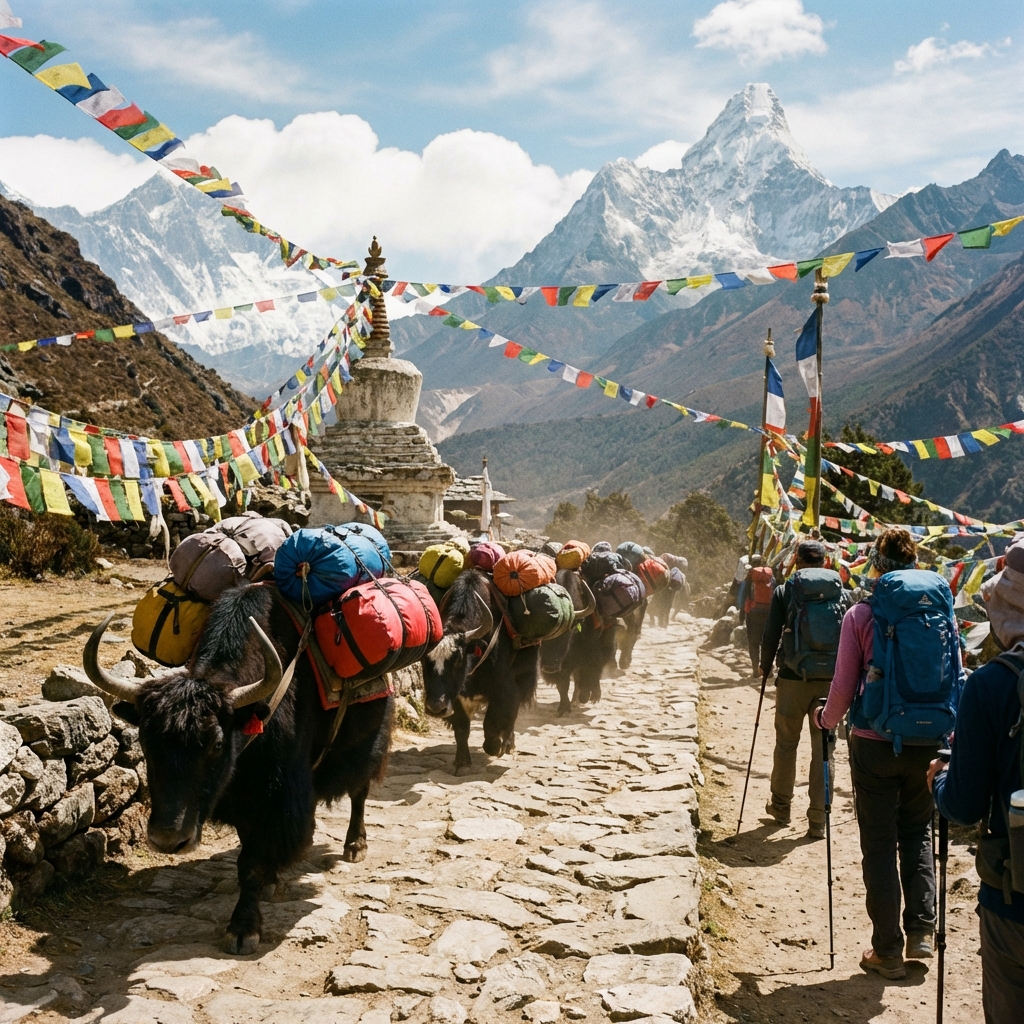
Experientially: Two extra days means afternoons spent sitting on a tea house terrace watching Ama Dablam turn gold in the evening light rather than rushing to reach the next destination. It means mornings in Namche exploring the Saturday market without worrying about a 6-hour walk ahead. It means Tengboche visited at leisure rather than as a lunch stop.
Success Rate Data
| Itinerary | AMS Incidence | Completion Rate | Trekker Satisfaction |
|---|---|---|---|
| 12-day EBC | 35-45% | 70-75% | Moderate |
| 14-day EBC | 20-30% | 85-90% | High |
| 16-day EBC (this guide) | 12-18% | 90-95% | Very High |
The 16-day approach approaches the maximum recommended acclimatization pace for recreational trekkers. Going slower than 16 days (18-20 day itineraries exist) rarely adds physiological benefit over 16 days and significantly increases costs.
Who Benefits Most from 16 Days
The 16-day luxury EBC itinerary is specifically designed for: trekkers aged 55 and above; anyone who has experienced AMS on previous high-altitude trips; first-time high-altitude trekkers without a clear sense of their altitude tolerance; couples or small groups where one member is stronger than the other (the slower pace accommodates both); and anyone for whom this trek is a major life experience rather than an athletic achievement to complete as quickly as possible.
Luxury Lodge Accommodation: What to Expect
Before the day-by-day itinerary, understanding what "luxury" means on the EBC route is essential. For a full breakdown, see our EBC luxury lodge trek guide.
The Critical Reality
Luxury lodge accommodation exists only up to approximately 3,900m — the Tengboche area. Above that altitude, from Dingboche (4,410m) through Gorak Shep (5,164m) and back, every trekker shares the same basic tea houses regardless of budget. The luxury premium covers the first five to six days of the trek and the final four to five days of the return.
What Luxury Means Below 3,900m
At Yeti Mountain Home lodges (the primary luxury network on the EBC route):
- Private rooms with solid walls, real beds, warm duvets, and clean linen
- Ensuite bathrooms with Western flush toilets and hot showers
- Multi-course meals with more variety and quality than standard tea house fare
- Heated dining rooms with comfortable seating
- Charging stations and WiFi included (WiFi remains slow — this is high-altitude Himalaya)
- Higher staff-to-guest ratio and more attentive service
What Standard Tea Houses Offer Above Tengboche
Above the Tengboche area (Dingboche, Lobuche, Gorak Shep):
- Basic twin rooms, often with plywood dividers between rooms
- Shared squat or Western toilets (squat more common above Pheriche)
- No hot showers above Namche (cold water or bucket wash only)
- Simple menus: dal bhat, noodles, potatoes, eggs, tea
- Dining rooms heated by yak dung stoves in the evenings
- Charging: NPR 300-600 per device
- Basic but functional — and surprisingly cozy in their own way
The Right Mindset for the Upper Section
The most satisfied luxury EBC trekkers are those who embrace the tea house section above Tengboche rather than resenting the downgrade. The simplicity of Dingboche and Lobuche is part of the high-altitude Khumbu experience. You are at 4,400-5,164m in one of the most remote mountain environments on earth. The dal bhat tastes better because it is the only option and your body needs the carbohydrates. The shared toilet is inconvenient but shared by everyone including expedition climbers. Approach the upper tea houses as the authentic expedition experience, not a disappointment.
Day-by-Day 16-Day Luxury EBC Itinerary
Day 1: Fly Kathmandu to Lukla, Trek to Phakding
Altitude: 2,840m (Lukla) → 2,610m (Phakding) Walking time: 3-4 hours Accommodation: Yeti Mountain Home Phakding (luxury)
The 35-minute Lukla flight is the most exciting domestic flight in the world — mountain views out every window, the sudden appearance of a mountain runway perched on a cliff edge, a sharp landing that leaves first-timers breathless. Lukla (2,840m) buzzes with trekkers, porters, and yaks.
The trek to Phakding (2,610m) descends along the Dudh Koshi river through pine forest. The walk is gentle — the first afternoon is intentionally easy, letting you find trail legs and acclimate gently to the altitude. Phakding itself is a pleasant riverside village with good facilities.
Day 1 focus: Arrive healthy, hydrate aggressively, eat a good dinner, sleep well.
The Lukla Landing
The landing at Lukla's Tenzing-Hillary Airport (the official name) is famous for its steep uphill runway that ends at a stone wall. Fixed-wing aircraft land heading uphill. This is standard procedure but disconcerting for first-timers. The flight is operated by experienced pilots who do this route daily. Relax, enjoy the views on approach, and consider it the opening act of the adventure.
Day 2: Phakding to Namche Bazaar
Altitude: 2,610m (Phakding) → 3,440m (Namche Bazaar) Altitude gain: 830m Walking time: 5-6 hours Accommodation: Yeti Mountain Home Namche (luxury, night 1 of 3)
The trail to Namche is magnificent and challenging in equal measure. You cross the Hillary Suspension Bridge — the longest suspension bridge in the Khumbu, swaying above the Dudh Koshi gorge — and several other suspension bridges as you climb through increasingly dramatic mountain scenery.
The final 600m climb to Namche is steep and relentless, arriving at the horseshoe of this remarkable high-altitude town just as the legs begin to protest properly. Your first Everest view appears on the climb: a dark pyramid visible through a notch in the ridge.
At Namche, the Yeti Mountain Home lodge sits above the town with panoramic views. Hot shower, a real bed, multi-course dinner. After a full day on the trail, this feels extraordinary.
Day 3: Namche Bazaar — Acclimatization Day 1
Altitude: 3,440m (sleep) → 3,880m (Everest View Hotel hike) Walking time: 3-5 hours (acclimatization hike) Accommodation: Yeti Mountain Home Namche (night 2 of 3)
The first acclimatization day follows the "climb high, sleep low" principle. After breakfast, hike up to the Everest View Hotel (3,880m), the highest-placed hotel in the world with a terrace overlooking Everest, Lhotse, Ama Dablam, and a parade of other peaks.
Spend 45-60 minutes at the hotel. Have tea or lunch on the terrace. Then return to Namche. The afternoon is yours — explore the town, visit the National Park Visitor Center and Sherpa Culture Museum, browse the Saturday market if today is Saturday, or rest.
If today is Saturday, prioritize the market in the morning (7:30-9:30 AM) before the Everest View Hotel hike.
The extra Namche day advantage: The 14-day itinerary has one acclimatization day here. The 16-day itinerary has two. The second Namche day allows deeper acclimatization, a more thorough town exploration, and a genuine rest before the demanding Tengboche climb.
Day 4: Namche Bazaar — Acclimatization Day 2 (16-Day Advantage)
Altitude: 3,440m all day Walking time: 3-5 hours (Khumjung/Khunde loop optional) Accommodation: Yeti Mountain Home Namche (night 3 of 3)
This is the extra day that distinguishes the 16-day itinerary. Options for the day:
Option A - Khumjung and Khunde village circuit: Hike via Syangboche to Khumjung (3,790m) and Khunde (3,840m) for a 4-5 hour cultural loop. This provides additional acclimatization altitude (reaching 3,840m) while visiting Edmund Hillary's original school and the famous yeti scalp monastery.
Option B - Thame valley half-day: Walk part of the way toward Thame along the Bhote Koshi valley for a 3-4 hour gentle walk in a beautiful, quieter valley.
Option C - Pure rest day: If your body needs recovery — if you had a rough night at Namche with significant headache or disrupted sleep — genuine rest is the correct choice. Namche is comfortable, well-equipped, and a pleasant place to spend a quiet day. Read, eat, reorganize your pack, plan the next section.
Do Not Rush Past Namche
The temptation on a well-paced luxury itinerary is to feel guilty about moving slowly. Resist this. The extra Namche day is not wasted time — it is purchased safety margin for the higher sections. Your body is doing the invisible work of producing more red blood cells, increasing pulmonary blood flow, and adjusting kidney function to compensate for lower oxygen. This work takes time. Give it the time it needs.
Day 5: Namche Bazaar to Tengboche
Altitude: 3,440m (Namche) → 3,870m (Tengboche) Walking time: 5-6 hours Accommodation: Yeti Mountain Home Tengboche area (luxury)
The trail to Tengboche descends steeply to the Dudh Koshi river at Phunki Tenga (3,250m) before climbing through one of the most beautiful rhododendron forests in Nepal to Tengboche's open ridge. In spring, the rhododendrons bloom in crimson and white. In autumn, the same forest turns copper and gold.
Tengboche Monastery, the largest and most important Buddhist monastery in the Khumbu, sits at the top of this climb. The arrival view — the monastery against Ama Dablam and Everest — is one of the iconic moments of the EBC trek.
Afternoon: Visit the monastery, attend the 3:00 PM prayer ceremony, walk the exterior circuit. Check if the Mani Rimdu festival coincides with your visit (late October or November — dates change annually).
Tengboche Prayer Ceremony
The afternoon prayer ceremony at Tengboche (approximately 3:00 PM, lasting 45-60 minutes) is one of the most atmospheric cultural experiences in the Khumbu. Sit quietly at the back of the prayer hall and absorb the deep rhythmic chanting, the smell of incense, and the resonance of long horns. Your guide can explain the ceremony's significance. Photography of the ceremony interior requires permission and should be unobtrusive.
Day 6: Tengboche to Dingboche
Altitude: 3,870m (Tengboche) → 4,410m (Dingboche) Altitude gain: 540m Walking time: 5-6 hours Accommodation: Standard tea house (transition from luxury to standard)
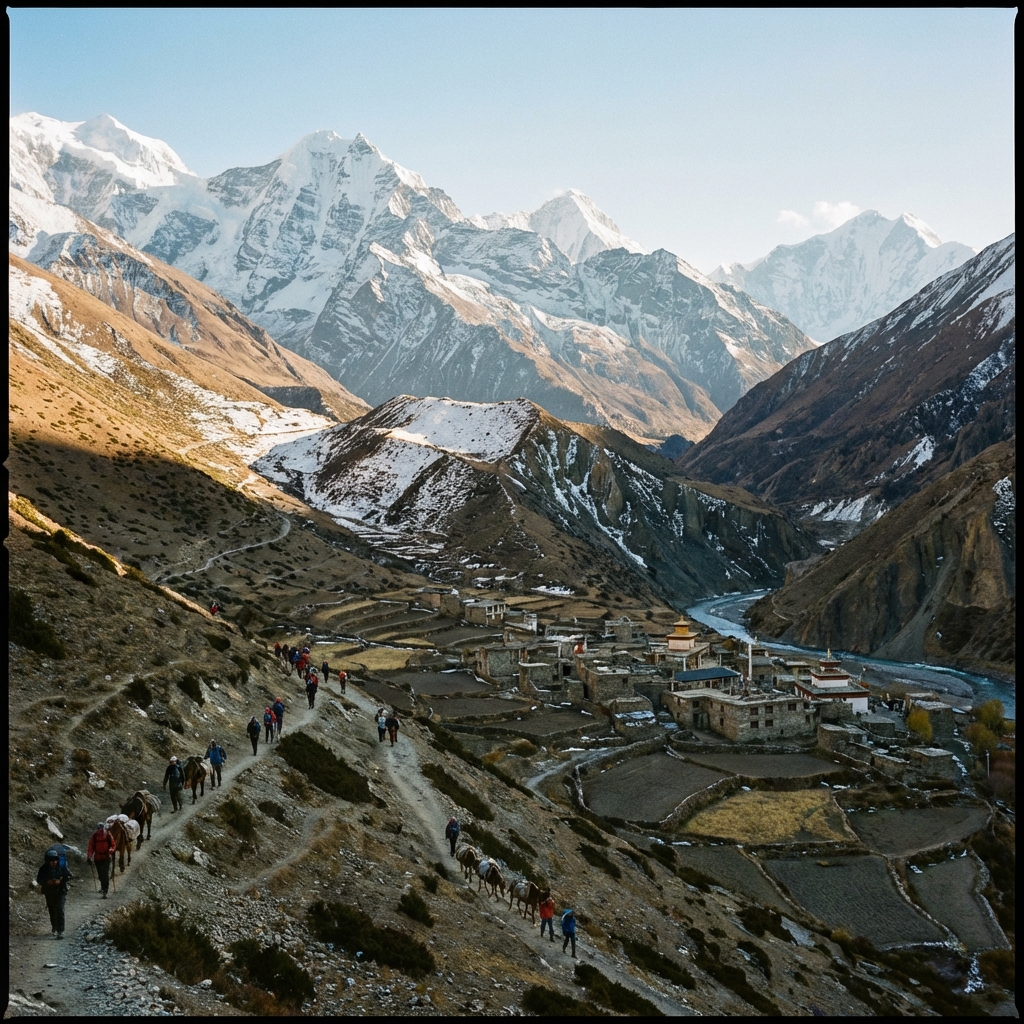
This is the day the luxury experience transitions to standard tea houses. The trail descends through forest to Debuche, crosses the Imja river, and climbs steadily through the high alpine valley to Dingboche.
The landscape changes dramatically. You leave the rhododendron and silver fir forest behind and enter open alpine terrain with dwarf juniper, stone walls, and the widening valley above. The air is noticeably thinner.
Dingboche (4,410m) is a large, relatively comfortable tea house village with several good lodges. The views of Ama Dablam, Island Peak, and the Lhotse wall are outstanding. This is where the high-altitude experience truly begins.
Accommodation reality: The tea houses at Dingboche are the best available above Tengboche. Private rooms are usually available (though not guaranteed during peak season). Shared bathrooms with Western toilets are standard. Hot showers are increasingly rare above Namche — cold bucket washes become the norm.
Day 7: Dingboche — Acclimatization Day 3
Altitude: 4,410m (Dingboche) → 5,000m (acclimatization hike) Walking time: 4-5 hours Accommodation: Standard tea house Dingboche (night 2)
The third acclimatization day of this itinerary occurs at Dingboche. The standard acclimatization hike climbs to the ridge above Dingboche toward Nagkartshang Hill (approximately 5,083m), with excellent views of Ama Dablam, Island Peak (6,189m), Baruntse (7,129m), and the Imja Valley.
The hike takes 3-4 hours round trip. Return to Dingboche for a late lunch, afternoon rest, and evening preparation for the demanding days ahead.
What the extra acclimatization day achieves at this altitude: Reaching 5,000m+ in a day hike while sleeping at 4,410m is a powerful "climb high, sleep low" stimulus. Your body is pushed to adjust to near-EBC altitude without the sustained exposure of sleeping there. The next morning, heading to Lobuche (4,940m), will feel significantly more manageable because of this preparation.
Dingboche vs. Pheriche for Acclimatization
Some EBC itineraries use Pheriche (4,288m) rather than Dingboche (4,410m) as the acclimatization stop. Dingboche is slightly higher and better positioned for the acclimatization hike toward Nagkartshang. The Himalayan Rescue Association operates a medical post at Pheriche with altitude sickness talks in the afternoon during peak season — worth attending if you are staying at Pheriche. The 16-day itinerary uses Dingboche, but Pheriche is equally valid.
Day 8: Dingboche to Lobuche
Altitude: 4,410m (Dingboche) → 4,940m (Lobuche) Altitude gain: 530m Walking time: 5-6 hours Accommodation: Standard tea house Lobuche
The trail to Lobuche passes through Thukla (4,620m) and then climbs steeply above a glacial terminal moraine — the most emotionally significant climb on the EBC route. At the top of the moraine is the Thukla Memorial — a collection of cairns and stone memorials to climbers and trekkers who have died on Everest and in the Khumbu. The memorials include monuments to Scott Fischer, Rob Hall, and dozens of climbing Sherpas. Stop here. Read the names. It puts what you are doing in context.
Lobuche sits at 4,940m in a narrow valley with Lobuche Peak rising to the west. The tea houses here are crowded during peak season, the toilets basic, and the wind cuts through thin walls at night. This is the upper Khumbu at its most austere. It is also spectacularly beautiful.
Cold Nights at Lobuche
Nighttime temperatures at Lobuche reach -10 to -20 degrees Celsius in October-November. Your sleeping bag must be rated to at least -15 degrees Celsius. The tea house dining room is heated in the evening, but bedrooms are not. Sleep in your thermal base layer, fleece mid-layer, and use the provided blankets in addition to your sleeping bag. This is not the moment to discover you packed too light.
Day 9: Lobuche to Gorak Shep, Afternoon EBC
Altitude: 4,940m (Lobuche) → 5,164m (Gorak Shep) → 5,364m (EBC) Walking time: 6-8 hours total Accommodation: Standard tea house Gorak Shep
This is the summit day of the trek in terms of distance and altitude gain. The trail from Lobuche to Gorak Shep crosses the lateral moraine of the Khumbu Glacier, passing enormous boulders and ice formations. The terrain is beautiful and otherworldly.
Reach Gorak Shep (5,164m) in 2-3 hours. Leave bags at the tea house and continue to Everest Base Camp (5,364m) — a 1.5-2 hour walk across the glacier moraine. EBC itself is an area of rocks, colored tents (during climbing season), and prayer flags at the base of the Khumbu Icefall. The summit of Everest is not visible from base camp — it is hidden behind the Lhotse-Nuptse wall. But the Khumbu Icefall, the roar of the glacier, and the awareness of where you are make this a profound moment for most trekkers.
Return to Gorak Shep for dinner and overnight.
EBC in Non-Climbing Season
If you trek in October-November (autumn), EBC is empty of expedition camps. In spring (April-May), base camp is a city of colored tents with hundreds of climbers preparing for Everest summit attempts. Both experiences are worthwhile but different. Autumn EBC is quieter and more meditative; spring EBC is a window into the high-altitude climbing world. The trail to EBC is open year-round regardless of climbing season.
Day 10: Kala Patthar Sunrise, Descend to Pheriche
Altitude: 5,164m (Gorak Shep) → 5,545m (Kala Patthar) → 4,288m (Pheriche) Walking time: 7-9 hours total Accommodation: Standard tea house Pheriche
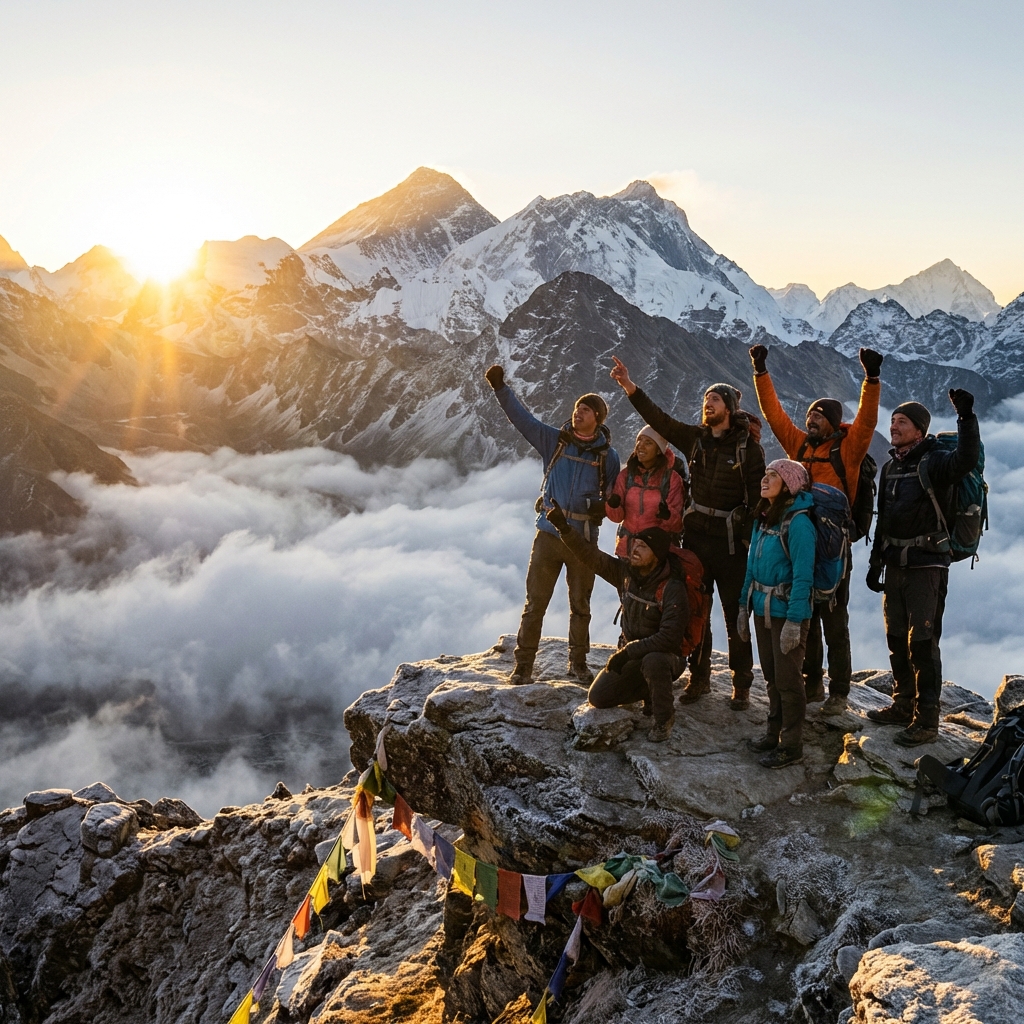
The pre-dawn alarm at Gorak Shep is the final physical test of the EBC trek. Kala Patthar (5,545m) lies 381m above — a 2-2.5 hour climb in cold darkness. The summit at sunrise delivers the most direct Everest view available to non-climbers: the south face rising directly above, the summit visible, the Khumbu Icefall directly below.
After sunrise photography and a moment on the summit, descend to Gorak Shep for breakfast, collect your bags, and begin the long descent to Pheriche (4,288m). This is a substantial day — the summit climb plus nearly 1,500m of altitude loss on tired legs. Move carefully on the descent, use trekking poles, and pace yourself.
Reaching Pheriche feels like arriving at a lower world. The air is noticeably thicker. The tea houses have better food and warming conditions than Gorak Shep. Sleep comes more easily.
The Descent Is Not Over
Many trekkers make the mistake of relaxing completely once they reach Pheriche and start descending. Descent injuries (twisted ankles, knee strain from repeated downhill steps) are as common as altitude problems on the EBC route. Your legs are tired, your concentration is lower than on the ascent, and the trail remains uneven. Use trekking poles on every descent section, take shorter steps, and stop for proper rests.
Day 11: Pheriche to Tengboche
Altitude: 4,288m (Pheriche) → 3,870m (Tengboche) Walking time: 4-5 hours Accommodation: Yeti Mountain Home Tengboche area (luxury returns)
The descent from the high Khumbu back through the alpine zone to Tengboche is one of the most beautiful sections of the return trek. The trail drops rapidly and your body responds viscerally to the increasing oxygen — food tastes better, sleep comes more easily, and the world has color again.
Reaching the Yeti Mountain Home lodge at Tengboche feels like the return of civilization. A hot shower, a real bed, a multi-course dinner. After five nights of standard tea houses at 4,000-5,164m, this transition is genuinely moving for many trekkers. Several guests describe this evening as an emotional moment — relief, achievement, and the comfort of familiar luxury combining into something powerful.
Day 12: Tengboche to Namche Bazaar
Altitude: 3,870m (Tengboche) → 3,440m (Namche Bazaar) Walking time: 4-5 hours Accommodation: Yeti Mountain Home Namche (luxury)
The return to Namche via the forest trail through Phunki Tenga is comfortable and beautiful. Your body is now acclimatized to these altitudes — what felt like a demanding climb on Day 5 is an easy descent on Day 12.
Namche welcomes you back like a long-familiar friend. Hot showers, bakery cakes, real coffee. The Sherpa Culture Museum might make more sense now that you have been deeper into the Khumbu. The gear shops have things you now understand you needed.
Evening option: If you arrive at Namche by early afternoon (likely), a short walk to the Everest View Hotel for an afternoon mountain viewing session is worth the 2-hour round trip. The light on the peaks in late afternoon is warm and golden.
Day 13: Namche Bazaar — Extra Rest and Celebration Day (16-Day Advantage)
Altitude: 3,440m Walking time: Optional light hiking Accommodation: Yeti Mountain Home Namche (luxury)
The second extra day in this 16-day itinerary is placed at Namche on the return. This day serves multiple purposes.
Recovery: After the upper Khumbu demands — the cold nights at Lobuche, the Gorak Shep to Kala Patthar to Pheriche mega-day, the five nights of basic tea houses — your body deserves a genuine recovery day at the most comfortable altitude on the route.
Celebration: Many trekking groups use this day for a celebration dinner. You have done EBC. That deserves recognition. Namche has restaurants that can produce a genuinely good celebratory meal.
Buffer: The Lukla flight is the most logistically uncertain element of the entire trip. Lukla flights are cancelled 30-40% of days in peak season due to weather. Having a free day at Namche provides valuable scheduling flexibility — if flights are delayed tomorrow, this day absorbs the shock.
Optional Thame valley walk: For those who feel energetic, a half-day walk into the Thame valley (northwest of Namche) provides a beautiful, uncrowded taste of a different Khumbu valley.
The Celebration Dinner
Book ahead for the celebration dinner at one of Namche's better restaurants. The Café Danphe and several hotels near the top of town have genuine menus — pasta, pizza, Nepali specialties, apple pie, and even wine if you have been waiting two weeks for a glass. Order the yak cheese pizza. It is better than it sounds.
Day 14: Namche Bazaar to Lukla
Altitude: 3,440m (Namche) → 2,840m (Lukla) Walking time: 6-7 hours Accommodation: Tea house or lodge in Lukla
The Namche to Lukla walk is long but mostly downhill — 600m of descent spread over 18-19 km of trail. The pace is comfortable. Your legs are trail-hardened. The views of peaks you now know by name provide a different kind of satisfaction on the return.
Arriving in Lukla feels like completing a circle. The airstrip, the lodges, the gear shops — all familiar from Day 1, now carrying the weight of the experience you have accumulated.
Lukla evening: Allow time for a genuine meal and early sleep. Lukla flights are early morning (6:00-10:00 AM), requiring an early breakfast and transfer to the airport.
Day 15: Fly Lukla to Kathmandu (Primary)
Flight: 35 minutes, usually morning departure
- Multiple airlines operate this route (Tara Air, Summit Air)
- Flights cancel frequently due to weather — have a backup plan
- Keep your main luggage below the weight limit (typically 10-15 kg)
Day 16: Buffer Day (Kathmandu or Lukla)
The 16th day serves as a built-in buffer for the notoriously unreliable Lukla flight. If your flight departed on Day 15, use Day 16 in Kathmandu for sightseeing, recovery, gear return, and the beginning of reintegration into lower-altitude life.
If your Day 15 flight was cancelled, Day 16 is when you fly (or arrange helicopter transport if multiple days of cancellations have occurred). Never book an international flight departing Kathmandu on the same day as your Lukla flight.
Buffer Days Are Insurance, Not Waste
Every trekker who has missed an international connection because of a Lukla delay wishes they had kept a buffer day. Trekkers who have never experienced a Lukla delay think buffer days are wasted. Keep the buffer. A delayed Lukla flight is not inconvenient — it is extremely costly if it cascades into a missed international connection, expensive rebooking, and potential insurance complications.
Complete Itinerary at a Glance
| Day | Route | Altitude | Type | Accommodation |
|---|---|---|---|---|
| 1 | Kathmandu → Lukla → Phakding | 2,610m | Trek | Luxury (YMH) |
| 2 | Phakding → Namche Bazaar | 3,440m | Trek | Luxury (YMH) |
| 3 | Namche acclimatization (EVH hike) | 3,880m hike | Rest/Hike | Luxury (YMH) |
| 4 | Extra day - Khumjung/rest | 3,440-3,840m | Rest/Hike | Luxury (YMH) |
| 5 | Namche → Tengboche | 3,870m | Trek | Luxury (YMH) |
| 6 | Tengboche → Dingboche | 4,410m | Trek | Standard tea house |
| 7 | Dingboche acclimatization hike | 5,000m hike | Rest/Hike | Standard tea house |
| 8 | Dingboche → Lobuche | 4,940m | Trek | Standard tea house |
| 9 | Lobuche → Gorak Shep → EBC | 5,364m | Trek | Standard tea house |
| 10 | Kala Patthar → Pheriche | 5,545m → 4,288m | Summit/Descend | Standard tea house |
| 11 | Pheriche → Tengboche | 3,870m | Descend | Luxury (YMH) |
| 12 | Tengboche → Namche Bazaar | 3,440m | Descend | Luxury (YMH) |
| 13 | Extra day - Namche rest/celebration | 3,440m | Rest | Luxury (YMH) |
| 14 | Namche → Lukla | 2,840m | Trek | Tea house |
| 15 | Fly Lukla → Kathmandu | — | Flight | Hotel |
| 16 | Buffer day | — | Buffer | Hotel |
Luxury nights: 8 (Days 1-5, 11-13) Standard tea house nights: 6 (Days 6-10, 14)
Cost Breakdown: 16-Day Luxury vs. Standard 14-Day
Understanding the cost difference helps you decide which approach fits your budget and priorities.
| Expense | Standard 14-Day | Luxury 16-Day | Difference |
|---|---|---|---|
| Lukla flights | $215-400 | $350-400 | None |
| Permits | $38-46 | $38-46 | None |
| Standard tea houses (all nights) | $300-500 | $200-350 | (fewer standard nights) |
| Luxury lodge nights (8 nights) | $0 | $800-1,400 | +$800-1,400 |
| Food on trail (14-16 days) | $400-650 | $500-750 | +$100-100 (2 extra days) |
| Agency guide (16 days) | $350-500 (14d) | $400-560 | +$50-60 |
| Porter (16 days) | $280-400 (14d) | $320-448 | +$40-48 |
| Tips | $120-200 | $150-250 | Slight increase |
| Travel insurance | $100-180 | $100-180 | None |
| Total (standard tea houses) | $1,800-2,900 | — | — |
| Total (luxury lodges) | — | $2,700-4,100 | +$900-1,200 |
| Total (agency package, standard) | $2,500-3,500 | — | — |
| Total (agency package, luxury) | — | $5,000-8,000 | +$2,500-4,500 |
The large gap in the agency package prices reflects the all-inclusive nature of luxury trek packages (which typically include luxury lodge fees, guide, porter, permits, and sometimes flights in the package price) compared with the more itemized costs of standard agency packages.
The Value Equation
The premium for luxury lodge accommodation adds approximately $900-1,200 in direct costs over a standard tea house trek. But the 16-day itinerary's other major benefit — extra acclimatization time — reduces the risk of a failed trek due to AMS. A failed EBC trek (turning back at Dingboche or Lobuche due to AMS) wastes 100% of the investment in flights, permits, accommodation, and time. The 16-day luxury approach is partial insurance against that outcome.
Who Should Choose the 16-Day Luxury Itinerary
Recommended For
Trekkers aged 55 and above: The slower pace, better sleep conditions, and reduced AMS risk make the 16-day approach significantly more appropriate for older trekkers. Age alone does not prevent EBC success, but the margin for error decreases with age — the extra days provide that margin.
Anyone with previous AMS history: If you have experienced altitude sickness above 3,500m on previous trips, the additional acclimatization at Namche and Dingboche substantially improves your odds.
First-time high-altitude trekkers: Without a reference point for how your body responds to altitude, the conservative 16-day pace removes uncertainty. You can always hike faster once you know you acclimatize well; you cannot retroactively slow down after developing AMS.
Couples or groups with mixed fitness: The 16-day pace accommodates a wider fitness range. A stronger member of a pair is far better served by a slower pace than by their partner struggling and potentially needing evacuation.
Special occasion trekkers: A honeymoon, a significant birthday, a retirement celebration trek — these deserve a pace that allows savoring rather than enduring.
Standard 14-Day May Be Preferable For
- Experienced high-altitude trekkers with no previous AMS issues
- Those with strict time constraints who have previously trekked at similar altitudes
- Budget-constrained trekkers where the luxury lodge premium is significant
- Physically very fit trekkers under 45 with a solid training base
For a detailed standard comparison, see our 14-day EBC itinerary.
Choosing an Agency for the Luxury EBC Trek
The luxury EBC trek requires a reputable agency with confirmed access to the Yeti Mountain Home network or equivalent premium accommodation. Not all agencies can book the YMH lodges, and in peak season, these lodges fill up months in advance.
Key questions to ask any agency:
- Do you have confirmed bookings with Yeti Mountain Home lodges, or comparable premium lodges?
- What is the exact accommodation on each night of the itinerary (lodge name, not just "luxury")?
- What happens on nights above Tengboche — which specific tea houses?
- Is the guide a certified, licensed trekking guide with high-altitude experience?
- What is the cancellation and refund policy if you must abandon the trek for health reasons?
- Is helicopter evacuation insurance included or required separately?
See our best trekking agencies for EBC for vetted agency recommendations.
Book Six Months Ahead
The Yeti Mountain Home lodges at Namche and Tengboche have limited room capacity and are sold out months in advance for peak October season. If you want the luxury lodge experience on the 16-day itinerary in October, begin planning in April or May. Even March-April (spring season) should be booked 2-3 months ahead. Walk-in rates, if available at all, are significantly higher than advance booking rates.