
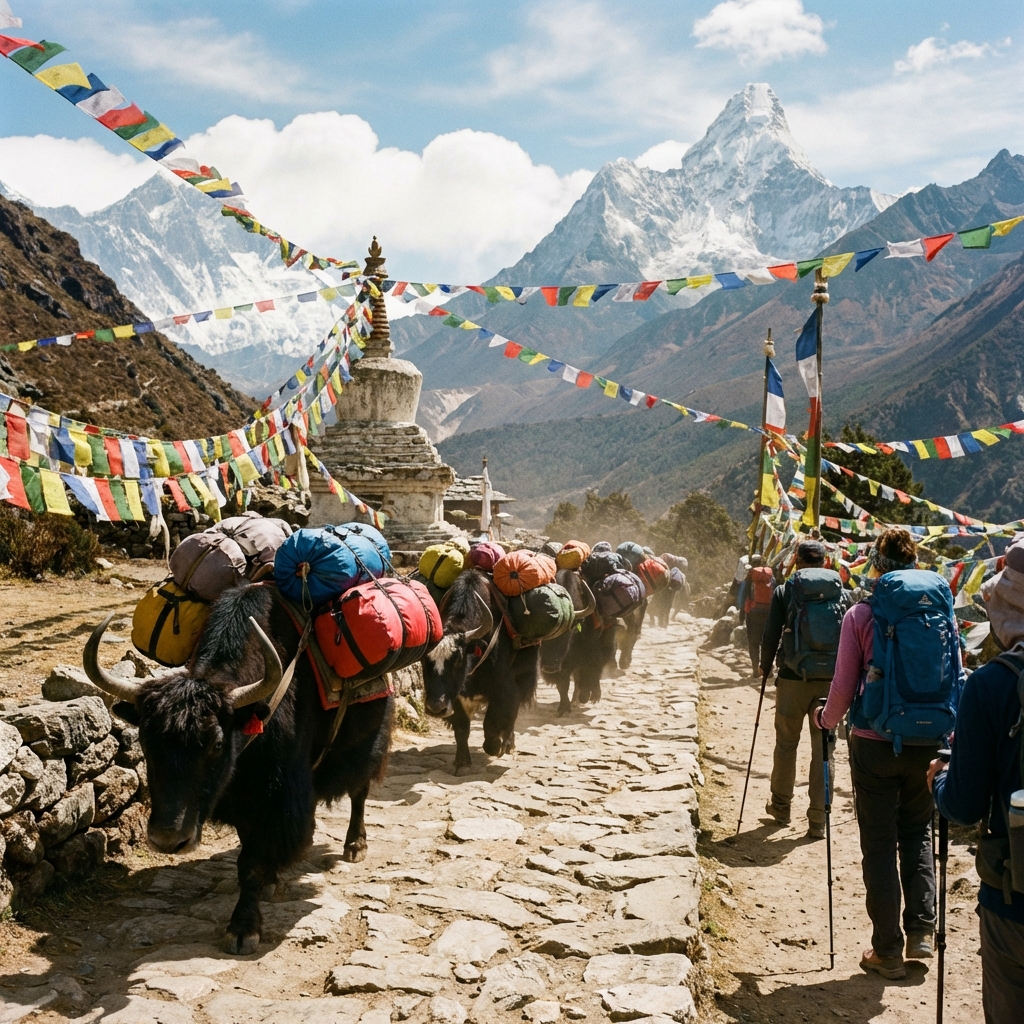
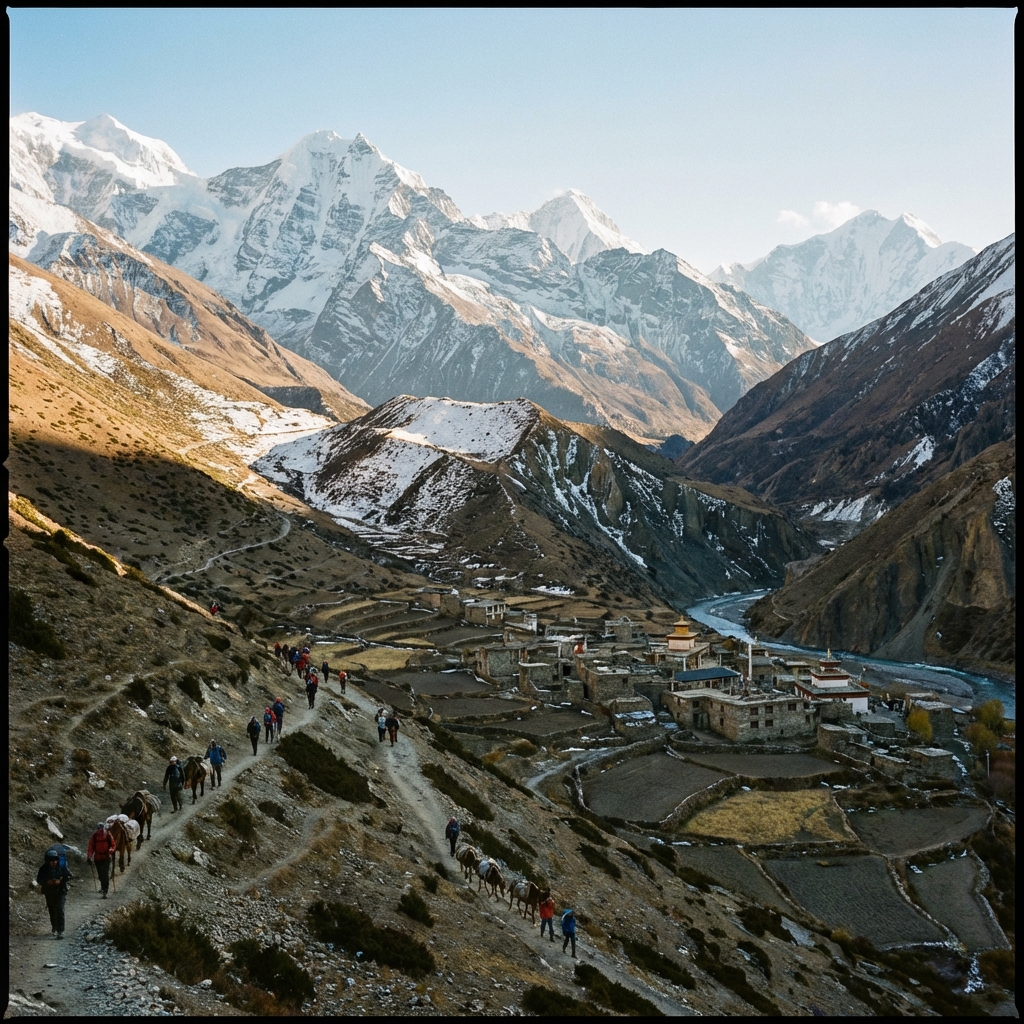
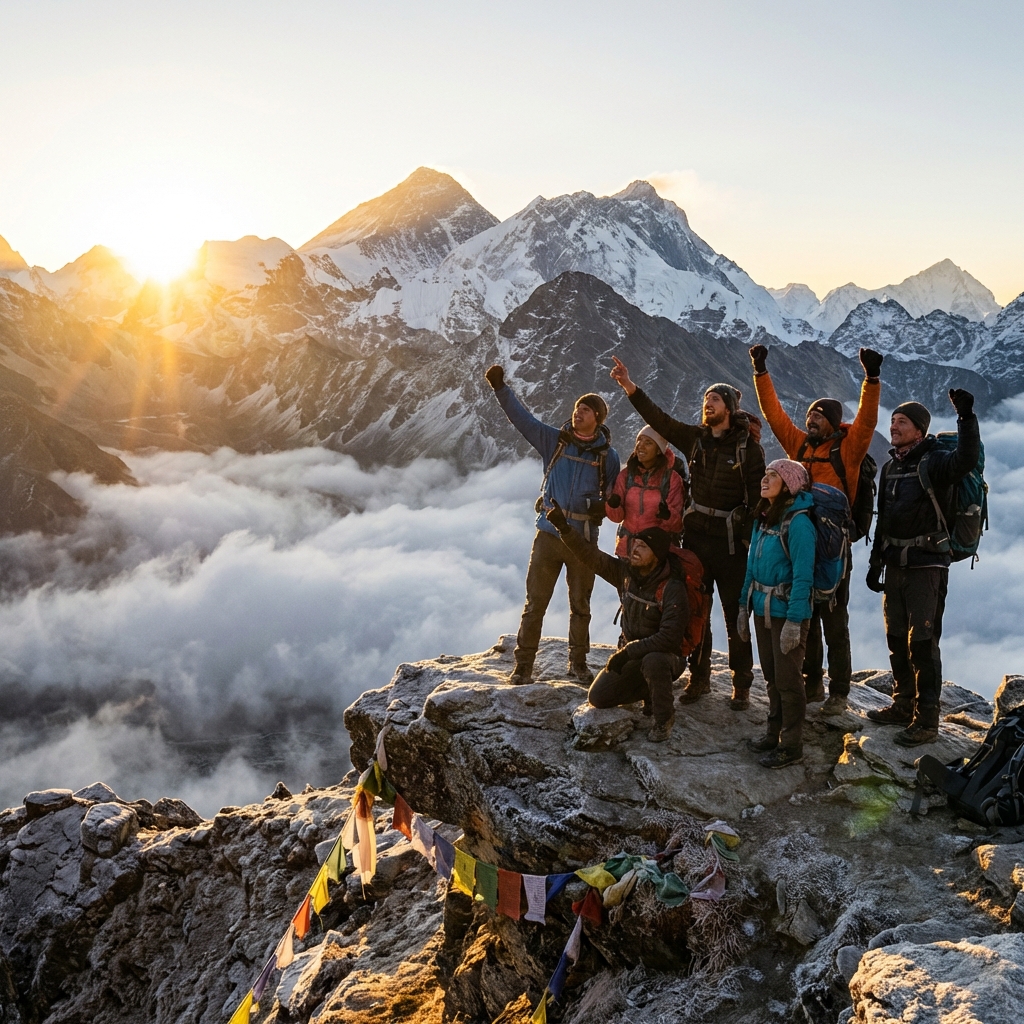
"Climb high, sleep low" is the foundational principle of high-altitude acclimatization — and it is why rest days on Nepal's classic treks are not really rest days at all. The day you spend in Namche Bazaar or Dingboche doing nothing is not wasted time. It is physiological preparation that determines whether you summit or turn around.
But doing nothing is also not the optimal approach. The "climb high, sleep low" principle tells you to add altitude during the day (through a hike) and then descend back to your sleeping altitude. The combination of the short altitude gain and the return to lower altitude for sleep creates the ideal stimulus for acclimatization adaptation.
This guide covers the physiology of why acclimatization days matter, the best day hikes from each main acclimatization village on Nepal's major routes, and practical tips for making these days productive, enjoyable, and genuinely useful for your body.
Why Acclimatization Days Work: The Physiology
When you ascend rapidly to altitude, the partial pressure of oxygen in your blood drops. Your body responds through a cascade of adaptations:
Immediate responses (hours): Hyperventilation increases to take in more oxygen. Heart rate elevates. Mild fluid shifts from blood to tissues (which partly explains the puffy face at altitude).
Short-term adaptations (24–72 hours): Erythropoietin (EPO) production increases in the kidneys, stimulating red blood cell production. Kidneys excrete bicarbonate to buffer the alkalosis caused by hyperventilation. Blood becomes more acidic, which increases oxygen offloading from haemoglobin.
Longer-term adaptations (1–2 weeks): Red blood cell mass increases measurably. Mitochondrial density in muscle cells increases. The body becomes more efficient at extracting oxygen from thinner air.
How rest days accelerate this: The day hike creates a temporary altitude exposure that stimulates the adaptation. The descent to sleeping altitude allows full rest without the oxygen stress of sleeping high. Research consistently shows that trekkers who take proper acclimatization days have significantly lower rates of altitude mountain sickness (AMS).
The Two Critical Rules
First: Never ascend more than 500m in sleeping altitude per day above 3,000m. If you are sleeping in Namche (3,440m), your next sleeping altitude should be no higher than 3,940m.
Second: If you feel unwell — headache, nausea, dizziness, fatigue beyond normal tiredness — the acclimatization day hike does not happen. Rest completely. If symptoms worsen, descend. Never ascend with active AMS symptoms, even for a day hike.
Acclimatization Day Hikes: Namche Bazaar (3,440m)
Namche Bazaar is the capital of the Khumbu and the location of almost every Everest trekking itinerary's first major acclimatization day. The standard itinerary spends two nights here (arriving on day 4-5 of the trek, departing on day 5-6). The acclimatization day hike on day 2 in Namche is arguably the most important single day on the entire EBC trek.
Option 1: Everest View Hotel (3,880m)
Duration: 3–4 hours return Elevation gain: 440m Difficulty: Moderate Why it works: Ascends 440m above Namche, providing the ideal acclimatization stimulus, then returns to 3,440m for sleep — a 440m gain on sleeping altitude.
The trail climbs east from Namche through juniper forest, passing a small army camp and continuing to the Everest View Hotel — the highest hotel in the world (there is some debate about this claim but it is certainly among the highest). The hotel terrace offers what the name promises: the first truly unobstructed view of Everest on the standard EBC route.
On clear mornings (best before 9 AM), the panorama includes Everest, Lhotse, Nuptse, Ama Dablam, Thamserku, and Kantega. This is the first time most trekkers see Everest on their trek, and the moment is genuinely moving.
From the hotel, you can continue to Khumjung village (3,790m) — the largest Sherpa village in the Khumbu. The Hillary School, funded by Sir Edmund Hillary's Himalayan Trust, is located here and welcomes respectful visitors. The famous "Yeti Scalp" in the Khumjung monastery — long a source of anthropological fascination — is kept here.
Option 2: Syangboche Airstrip (3,748m) and Khumjung Loop
Duration: 4–5 hours Elevation gain: 308m to airstrip, 350m to Khumjung Difficulty: Easy to moderate
A shorter but still effective acclimatization loop. The Syangboche airstrip, used by helicopter and small STOL aircraft, sits above Namche and offers open terrain ideal for walking. The loop continues through Khumjung and returns to Namche via the forest trail.
Option 3: Thame Valley (3,810m)
Duration: 6–7 hours return Elevation gain: 370m Difficulty: Moderate (some trail complexity)
For the more active acclimatisation trekker, the walk to Thame provides excellent views of the Thame Valley and access to one of the Khumbu's most significant monasteries — Thame Gompa. This is a longer day and should only be attempted if you are feeling genuinely strong.
The Namche–Thame loop makes a popular full day out.
Acclimatization Day Hikes: Dingboche (4,410m)
Dingboche (or Pheriche — depending on your route) is the second major acclimatization stop on the EBC trail. At 4,410m, this is serious altitude — most trekkers spend two nights here to allow the body to adapt before ascending toward Lobuche at 4,940m.
Option 1: Nangkartshang Peak (5,083m)
Duration: 5–6 hours return Elevation gain: 673m above Dingboche Difficulty: Strenuous Summit: 5,083m — a real summit at real altitude
This is the best acclimatization day hike in the Khumbu. The trail climbs steeply from Dingboche up the ridge to the northeast, gaining 673m and crossing the important 5,000m threshold for the first time. Views from the summit encompass Makalu, Baruntse, Island Peak, Ama Dablam, Lhotse, and Everest.
The physiological benefit of reaching 5,083m before sleeping at 4,410m is substantial. You are giving your body a 673m altitude stimulus above sleeping elevation — close to the maximum recommended. Most trekkers report that this hike significantly improves how they feel on the days following.
Important: Only attempt Nangkartshang if you have no AMS symptoms. The HRA aid post at Pheriche (4,250m) on the Everest trail, staffed during spring and autumn seasons) — 30 minutes below Dingboche — is the nearest medical facility if problems develop.
Option 2: Chhukung (4,730m) and Chhukung Ri (5,550m)
Duration: Chhukung 4–5 hours return; Chhukung Ri full day (7–9 hours return) Elevation gain: 320m to Chhukung; 1,140m to Chhukung Ri Difficulty: Chhukung moderate; Chhukung Ri strenuous-extreme
Chhukung valley, accessed by an hour's walk from Dingboche, offers views of Island Peak (6,189m) and the massive south face of Lhotse. The valley is used by Island Peak climbing teams for acclimatization. For the very fit, Chhukung Ri (5,550m) is a serious day hike that would represent genuine altitude preparation.
See the Island Peak best time guide if considering this extension.
Acclimatization Day Hikes: Manang (3,519m)
Manang sits in the rain-shadow desert of the Annapurna Circuit, surrounded by the 7,000m+ peaks of the Annapurna massif. The standard Annapurna Circuit spends two nights here before the big push to Thorong High Camp and Thorong La (5,416m).
Option 1: Ice Lake (4,600m)
Duration: 5–6 hours return Elevation gain: 1,081m Difficulty: Strenuous
The Ice Lake (Kicho Tal) above Manang is the classic acclimatization day hike for the Annapurna Circuit. The trail is steep and unmarked in places — a guide or local knowledge helps — but the reward is extraordinary. The glacial lake sits in a hanging valley with views of Gangapurna (7,455m) directly ahead and the entire Manang Valley below.
The 1,081m gain is significant — at the upper limit of the "climb high" principle for acclimatization. Only attempt this hike if you have spent a full day in Manang already and have no symptoms.
Option 2: Gangapurna Glacier Viewpoint (3,800m)
Duration: 2–3 hours Elevation gain: ~300m Difficulty: Easy to moderate
A shorter option for rest days where full fitness hasn't returned. The viewpoint above the Gangapurna Lake moraine offers views of the glacier and surrounding peaks without the extreme effort of the Ice Lake trail.
Option 3: Braga Village and Monastery (3,475m)
Duration: 2–3 hours Elevation gain: Minimal — essentially flat Difficulty: Easy
Braga village, 30 minutes from Manang, contains a 500-year-old monastery that is one of the finest examples of traditional Tibetan Buddhist architecture in Nepal. The monastery (Braga Gompa) has impressive thangka paintings and a remarkable collection of religious statuary. A rest day visit here provides cultural richness with minimal physical demand — appropriate for genuinely unwell days when any altitude gain would be unwise.
General Acclimatization Day Tips
Eat before the hike. Altitude suppresses appetite but your body needs fuel for the adaptation process. A bowl of porridge, dal bhat, or tsampa porridge before departing is essential.
Hydrate aggressively. Aim for 3–4 litres of water per day at altitude, including 1–1.5 litres before and during the acclimatization hike. Urine should be pale yellow. Dark yellow or amber urine means you are dehydrated.
Move slowly. The purpose of the acclimatisation hike is altitude exposure, not cardiovascular training. Move at a pace where you can speak in full sentences without stopping to breathe. Guides call this "Himalayan pace" — deliberately slow but continuous.
Inform your lodge. Tell your lodge owner or guide your planned hike route and expected return time before departing. This is standard practice in the Khumbu and Manang.
No Diamox on acclimatization days. Acetazolamide (Diamox) modifies the acclimatization response. If you are taking it, discuss timing with a physician. Generally, the medication should be taken consistently if used, not started and stopped around hikes.
Assess on return. After the acclimatization hike, assess how you feel that evening. Mild headache that resolves after rehydration and rest is normal. Worsening headache, nausea, or loss of appetite suggests the hike was too ambitious and the following day should be a genuine rest day.
Is It Safe to Skip Acclimatization Days?
No. Skipping acclimatization days is the single most common cause of altitude sickness, failed treks, and medical evacuations in Nepal. The data from the Himalayan Rescue Association is unambiguous: trekkers who skip scheduled rest days at Namche Bazaar or Dingboche have significantly higher rates of AMS, HACE, and HAPE than those who follow the standard acclimatization protocol. Even if you feel strong on arrival day, your body needs time to produce the additional red blood cells and make the respiratory adjustments that safe high-altitude travel demands. The acclimatization day is not optional -- it is medical necessity.
Frequently Asked Questions
How long should an acclimatization day hike be?
Most acclimatization hikes should be 3-5 hours round trip, gaining 300-700m above your sleeping altitude. The goal is to stress your body with altitude exposure, then return to sleep at a lower elevation. You should feel challenged but not exhausted.
Can I just rest in my tea house instead of hiking?
Complete rest is acceptable if you feel unwell, but an active acclimatization hike (climb high, sleep low) is physiologically superior to staying at sleeping altitude. The altitude stimulus from the hike accelerates adaptation.
What if I get a headache during the acclimatization hike?
A mild headache that resolves with hydration and rest is normal. If the headache worsens, turn around immediately and descend to your tea house. Do not continue ascending with a worsening headache -- this is a warning sign of AMS.
Do I need acclimatization days on the ABC trek?
The standard ABC route reaches only 4,130m and most itineraries do not include a formal acclimatization day. However, the Annapurna Base Camp 11-day itinerary builds in gradual ascent that serves the same purpose. If you ascend rapidly, you increase AMS risk.
What should I eat and drink on acclimatization days?
Hydrate aggressively (3-4 liters of water), eat carbohydrate-rich meals like dal bhat, and avoid alcohol. See our altitude nutrition guide for detailed eating strategies.