| Route | Duration | Max Altitude | Difficulty | Permits | Teahouses | Crowds |
|---|---|---|---|---|---|---|
| Namche-Thame Loop | 5-7 days | 3,820m | Easy-Moderate | $30-35 | Good-Excellent | Low |
| Everest Base Camp | 12-16 days | 5,545m | Moderate-Challenging | $30-35 | Excellent | Very High |
| Ama Dablam Base Camp | 10-12 days | 4,570m | Moderate-Challenging | $30-35 | Good | Low |
| Pikey Peak | 6-8 days | 4,065m | Easy-Moderate | TIMS only (NPR 2,000) | Basic | Very Low |
Thame village sits in a side valley above Namche Bazaar, just an hour's walk from the main Everest corridor, yet most trekkers never visit. That's remarkable given that Thame has produced more Everest summiteers per capita than any settlement on earth — Tenzing Norgay spent his early years here; the Norgay family homestead is still standing. Apa Sherpa, who holds the record for most Everest summits, is from Thame. The village is, quite literally, the birthplace of Himalayan climbing.
The Namche to Thame loop is a 5-7 day trek that explores the quieter western arm of the Khumbu Valley, visiting Thame and its ancient monastery before looping back through the Bhote Koshi river valley. It's one of the Everest region's finest cultural treks: authentic Sherpa villages largely unchanged by mass tourism, a monastery that predates commercial trekking by centuries, and mountain scenery — including views of Cho Oyu and the Nangpa La pass into Tibet — that rivals anything on the main EBC route.
This is also the perfect acclimatization trek. Trekkers planning Everest Base Camp or higher objectives regularly use the Namche-Thame loop to acclimate at Namche's altitude before pushing higher. Others come simply for Thame itself — and find it worth the journey without any higher objective.
Route Snapshot
5-7 days from Lukla
3,820m (12,533 ft) at Thame village
55-70 km (34-44 miles)
Easy to Moderate
Mar-May (Spring), Sep-Nov (Autumn)
Khumbu, Everest Region
Lukla (via Kathmandu flight)
Sagarmatha National Park ($30), TIMS (NPR 2,000)
Good teahouse lodges throughout
$800-$1,600 (all-inclusive)
Popular Route Variants:
| Variant | Duration | Route | Best For |
|---|---|---|---|
| Standard Loop | 5-6 days | Lukla-Namche-Thame-Namche-Lukla | Most trekkers |
| Extended Cultural | 7 days | Add Khumjung and Khunde villages | Culture focus |
| Acclimatization Trek | 7-10 days | Loop + rest days for EBC preparation | EBC/high-altitude prep |
| Thame Only | 4-5 days | Lukla-Namche-Thame-Namche-Lukla fast | Time-limited trekkers |
Thame: Village of Everest Summiteers
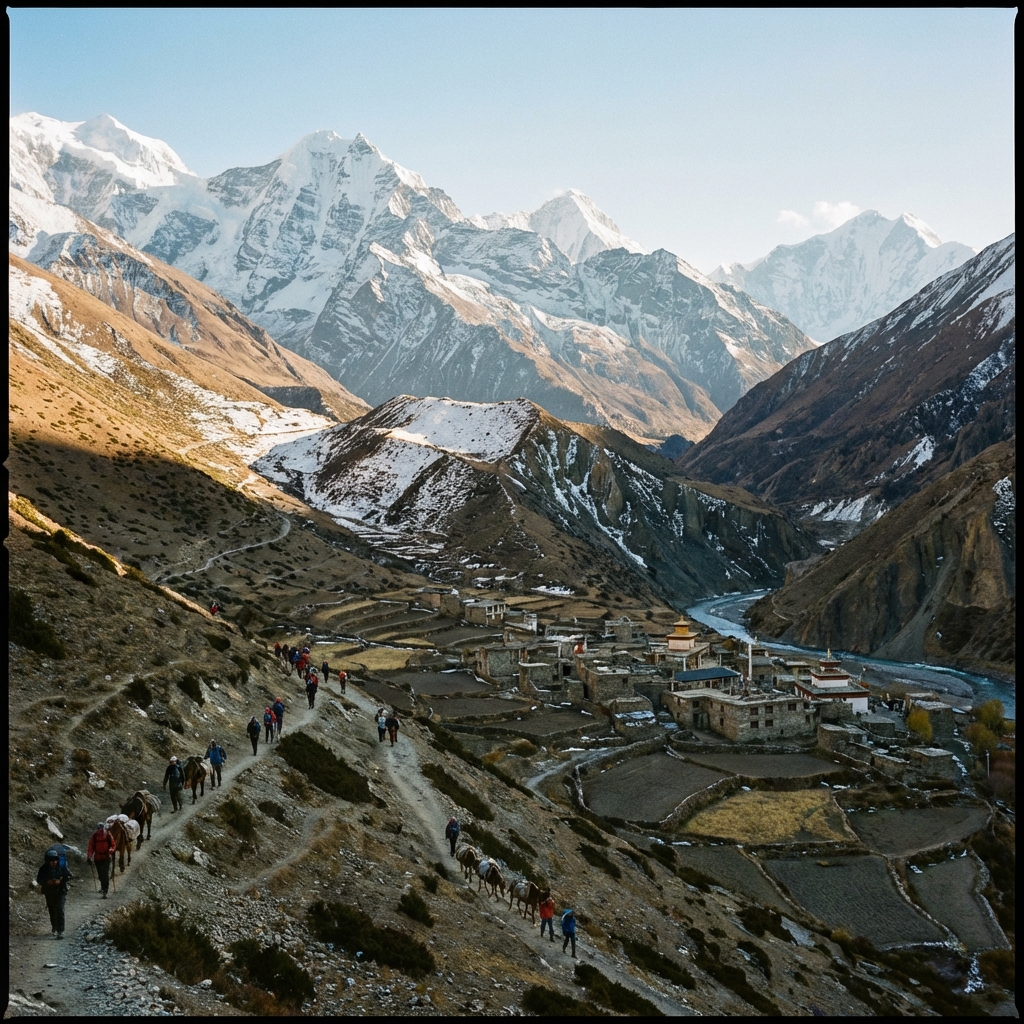
Thame (3,820m) occupies a bowl-shaped valley above the main Khumbu corridor, sheltered from the stronger westerly winds that affect higher settlements. The village looks much as it has for centuries — stone houses with flat roofs, yak wool drying outside, the monastery rising above on the hillside, the Bhote Koshi river rushing below.
The Sherpa Climbing Heritage
The Sherpa community's relationship with Himalayan mountaineering began in Thame. The early British Everest expeditions recruited Sherpa high-altitude workers from this valley, and the tradition of excellence at altitude became a defining characteristic of the community.
Notable Thame connections:
- Tenzing Norgay: Spent formative years in Thame; his family is from the surrounding area. The man who stood on Everest's summit with Hillary in 1953 is deeply connected to this village.
- Apa Sherpa: Born in Thame, holds the record for most Everest summits (21 summits as of 2011). His family home is in the village.
- Chhewang Nima Sherpa: Another Thame native with multiple Everest summits to his name.
- The Norgay Family: Still present in the area, maintaining the connection between this quiet village and the most famous mountain on earth.
Walking through Thame knowing this history adds a dimension that few trekking destinations can offer. The village that looks so unchanged, so quietly agricultural, has contributed more to the history of high-altitude mountaineering than any settlement outside of Nepal's major cities.
Thame Monastery (Tengboche's Elder Sibling)
The Thame Gompa, perched on the hillside above the village, is one of the oldest monasteries in the Khumbu — predating the more famous Tengboche by several hundred years. It belongs to the Nyingma school of Tibetan Buddhism, the oldest of the four major traditions.
Monastery highlights:
- 17th-century foundation, with sections considerably older
- Active religious community of monks and resident lamas
- Annual Mani Rimdu festival (spring, around April-May) with elaborate masked dances
- Ancient thangka paintings and religious objects
- Commanding views of Thame valley and toward the Nangpa La
Mani Rimdu Festival at Thame
The Thame Mani Rimdu festival occurs in spring (typically April-May, exact date following the Tibetan lunar calendar) and represents one of the Khumbu's most authentic cultural events. Unlike the Tengboche Mani Rimdu which draws significant tourist crowds, Thame's festival is attended primarily by local Sherpa families. If your trek dates coincide, this is a rare cultural opportunity.
Route Overview: The Namche-Thame Loop
Standard Route Architecture
The loop explores the Bhote Koshi valley above Namche, visiting Thame before returning on a slightly different path.
Day 1: Kathmandu → Lukla → Phakding (2,610m)
Day 2: Phakding → Namche Bazaar (3,440m)
Day 3: Namche acclimatization — Khumjung village day hike
Day 4: Namche → Thame (3,820m) via Bhote Koshi valley
Day 5: Thame monastery morning, return to Namche (3,440m)
Day 6: Namche → Lukla (2,840m)
Day 7: Lukla → Kathmandu flight
Extended Cultural Option (7-8 days):
Add visits to Khunde village (Khumbu's main hospital, founded by Sir Edmund Hillary), Khumjung (the Hillary school), and Syangboche for a richer cultural immersion.
Trail Terrain Summary
| Section | Distance | Elevation Change | Terrain | Challenge |
|---|---|---|---|---|
| Lukla to Namche | 20-22 km | +830m net | Valley trail, suspension bridges | Moderate |
| Namche to Thame | 8-10 km | +380m | River valley, yak pastures, stone trail | Easy-Moderate |
| Thame monastery visit | 2-3 km | +200m | Stone path up hillside | Easy |
| Thame to Namche return | 8-10 km | -380m | Same trail, reversed | Easy |
| Namche to Lukla | 20-22 km | -830m net | Descent via valley trail | Moderate (knees) |
Complete Itinerary: 5-6 Day Trek
Day 1: Kathmandu to Lukla to Phakding (2,610m)
Flight: Kathmandu to Lukla (~30 minutes) Trek: Lukla to Phakding (2-3 hours)
The adventure begins at Lukla's Tenzing-Hillary Airport, named for the first Everest summiteers. From Lukla your trek descends gently into the Dudh Koshi valley, following the river downstream to Phakding — an easy half-day's walking that eases you into the trekking rhythm.
The trail crosses multiple suspension bridges, passes through pine and rhododendron forest, and delivers first glimpses of the high peaks to the north. Phakding's lodges offer comfortable first-night accommodation.
Day 2: Phakding to Namche Bazaar (3,440m)
Trek duration: 5-6 hours Distance: 13-14 km Elevation gain: +830m (with significant ups and downs)
This classic stage is one of the most dramatic in Nepali trekking. The trail navigates the Dudh Koshi gorge via multiple long suspension bridges — the Hillary Suspension Bridge among them — before the sustained climb to Namche Bazaar.
The approach to Namche through its iconic stone gateway delivers the first views of Everest and Lhotse above the valley head, and your first sighting of the great natural amphitheater that Namche occupies. The town appears suddenly after a ridge — a sprawling horseshoe of lodges, shops, and lodges that is simultaneously a trekking hub and a living Sherpa community.
Namche in a nutshell:
- 3,440m — high enough to begin altitude adaptation
- Saturday market: traditional Tibetan-Sherpa trading, still active
- Best infrastructure in the Khumbu: bakeries, ATMs, gear shops, medical care
- Excellent base for exploring the western Khumbu before heading to Thame
Day 3: Namche Acclimatization — Khumjung and the Hillary Villages
Day hike: Namche → Syangboche → Khumjung → Khunde → Namche Elevation gain: +350m to Syangboche, return to 3,440m Duration: 4-5 hours round trip
Spend two nights in Namche — the altitude demands it. But an acclimatization day is not a rest day: the principle is to walk high and sleep low, and the Khumjung plateau above Namche offers the perfect destination.
Khumjung Village: The Hillary school here, built with funds raised by Sir Edmund Hillary's Himalayan Trust, has educated generations of Sherpa children. The village is traditional and quiet, a contrast to commercial Namche below. The Khumjung Monastery reportedly houses another alleged yeti scalp.
Khunde Village: Adjacent to Khumjung, Khunde hosts the Khunde Hospital — Hillary's most practical gift to the Sherpa people, providing medical care to the Khumbu since 1966. The hospital still operates, staffed by volunteer doctors from New Zealand and elsewhere.
Syangboche Airstrip: The highest commercial airport in Nepal (3,740m), now used primarily by helicopter, offers superb views of Namche and surrounding peaks. The Everest View Hotel nearby has one of the most stunning mountain panoramas of any lodge in the world.
Information current as of January 2025.
Namche Bazaar
3,440m
Room: $15-35/night
Dal Bhat: $8-15
The Khumbu's main hub. Spend two nights minimum. Cash is essential — this is the last ATM. Stock up on any missing gear.
Day 4: Namche Bazaar to Thame (3,820m)
Trek duration: 3-4 hours Distance: 8-10 km Elevation gain: +380m
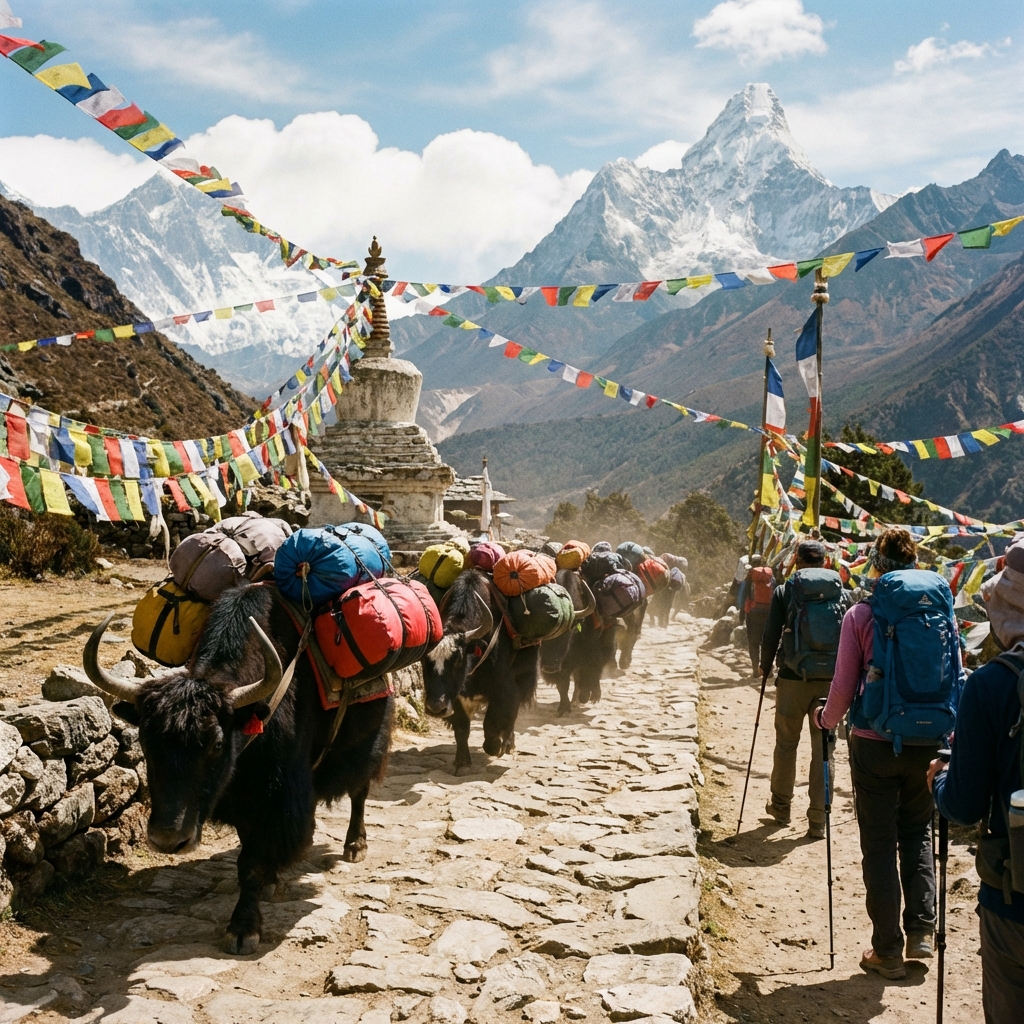
This is the walk most Khumbu trekkers never take. From Namche, the trail heads northwest up the Bhote Koshi valley — the historic trade route between Tibet and the Khumbu, traveled for centuries by traders carrying salt, wool, and turquoise from the Tibetan plateau.
The trail climbs gradually above the river, passing through Thamo village and its small monastery before the final approach to Thame. The valley becomes increasingly wild and beautiful as you leave the main EBC circuit behind — yak caravans on this trail outnumber trekking groups.
The Bhote Koshi Valley: The Bhote Koshi (literally "river from Tibet") flows from the Nangpa La, the historic high pass into Tibet at 5,716m. On clear days, you can see toward the pass from the trail above Thame. This was the route that Tibetan refugees, including many who went on to found monasteries across Nepal, used to flee during the 1950s and 1960s.
Thame arrival: The village materializes gradually — stone houses scattered across a protected bowl, the monastery on the hillside above, the river below. It is remarkably unchanged by tourism. Lodges are simple but welcoming, and the evening atmosphere is defined by yak bells rather than trekker conversation.
Information current as of January 2025.
Thamo
3,490m
Room: $8-12/night
Dal Bhat: $5-7
Small village on the way to Thame. The monastery here is active and worth a brief visit.
Thame
3,820m
Room: $12-18/night
Dal Bhat: $7-10
The real destination. Quiet, authentic, and historically significant. Request a room with views of the Thame valley. The monastery is 200m uphill — visit morning or afternoon.
Day 5: Thame Monastery and Return to Namche (3,440m)
Morning: Thame monastery visit (1.5-2 hours) Trek: Thame to Namche (3-4 hours)
Begin the morning with a visit to Thame Gompa before the day's trekking heat builds. The monastery path climbs steeply above the village on a clear stone trail, reaching the gompa at approximately 4,000 meters with sweeping views back down the Bhote Koshi valley.
The monastery itself rewards unhurried exploration. Morning prayers (typically 6:00-8:00 AM) are conducted with the kind of unperformed devotion that distinguishes religious sites that haven't been shaped for tourist consumption. Photography with the monks' permission, respectful observation, and a small donation ($5-10) are appropriate.
After the monastery visit, return to Thame for breakfast and then retrace the Bhote Koshi trail back to Namche. The descent is quick — under 3 hours — and the return journey sees the valley from the reverse direction, with Namche's horseshoe shape gradually appearing on the hillside ahead.
Day 6: Namche Bazaar to Lukla (2,840m)
Trek duration: 5-6 hours Distance: 20-22 km Elevation loss: -830m net
The descent from Namche to Lukla retraces the Day 2 approach but feels entirely different going downhill. You'll move faster, notice different details, and have time for photography stops at the iconic suspension bridges that felt so dramatic on the way up.
Aim to arrive in Lukla by mid-afternoon to avoid the afternoon mist that sometimes reduces airport visibility. Your final evening in Lukla — perhaps at one of the bakeries near the airstrip — is a time to reflect on what the Khumbu delivered.
Day 7: Lukla to Kathmandu
Flight: Lukla to Kathmandu (~30 minutes)
Lukla flights depart early morning (typically 6:00-9:00 AM) before afternoon cloud builds. The morning slot is critical — book through your trekking agency well in advance. Weather delays are common; always schedule buffer days in Kathmandu before international connections.
Difficulty Assessment
Easy to ModerateThe Namche-Thame loop is among the more accessible Everest region treks for reasonably fit travelers.
What makes it accessible:
- Moderate max altitude: 3,820m at Thame keeps AMS risk low
- Built-in acclimatization: Two nights in Namche before ascending to Thame
- Shorter daily stages: 3-6 hours per day
- Excellent infrastructure: Good lodges throughout
- No technical terrain: Stone trails, no exposure or scrambling
Challenges to prepare for:
- Namche approach climb: The final hour to Namche is steep and sustained
- Altitude at Thame: 3,820m requires respect, especially for first-time altitude trekkers
- Cumulative 5-6 days of trekking: General fitness and comfortable footwear essential
- Lukla flight logistics: Weather dependency adds uncertainty to planning
Fitness requirements:
- Walk 4-6 hours on uneven terrain without excessive fatigue
- Sustain uphill climbs at moderate altitude
- No specific altitude experience required; helpful if available
Why This Trek Works as Acclimatization for EBC
The Namche-Thame loop has a secondary function that serious Everest region trekkers use strategically: it's an excellent acclimatization circuit before heading to higher altitude.
The acclimatization logic:
If you plan to trek to Everest Base Camp (5,364m) or climb Island Peak (6,189m), spending several nights between 3,400m and 3,820m prepares your body for the altitude demands ahead. The loop gives your red blood cell count time to increase, your respiratory patterns time to adjust, and your body time to acclimatize before the critical higher elevations.
Combined itinerary concept:
- Days 1-7: Namche-Thame loop (acclimatization)
- Days 8-18: Continue to Everest Base Camp / Kala Patthar
This adds significant time and cost but substantially reduces AMS risk on the EBC route.
Best Time to Visit
| Month | High | Low | Conditions | Crowds | Notes |
|---|---|---|---|---|---|
| January | 5°C | -10°C | 10mm | Very Low | Cold but clear. Some lodges have limited service. Experienced cold-weather trekkers only. |
| February | 7°C | -8°C | 15mm | Low | Still cold. Beginning to warm. Early-season trekkers starting to appear. |
| MarchBest | 11°C | -4°C | 35mm | Moderate | Good spring conditions. Rhododendrons blooming on lower trail. Clear skies most mornings. |
| AprilBest | 14°C | -1°C | 50mm | Moderate-High | Peak spring. Mani Rimdu festival at Thame possible. Best combination of conditions. |
| MayBest | 16°C | 2°C | 80mm | Moderate | Late spring. Some pre-monsoon cloud. Generally still good. |
| June | 16°C | 6°C | 170mm | Very Low | Monsoon. Rain and obscured views. Not recommended. |
| July | 15°C | 8°C | 250mm | Very Low | Full monsoon. Avoid. |
| August | 15°C | 8°C | 240mm | Very Low | Monsoon continues. |
| September | 13°C | 3°C | 120mm | Low | Monsoon clearing. Second half of month improving. Variable. |
| OctoberBest | 11°C | -4°C | 20mm | High | Best autumn conditions. Crystal clear skies. All lodges open and well-stocked. |
| NovemberBest | 7°C | -7°C | 8mm | Moderate | Excellent clarity. Cooler but stable. Fewer trekkers than October. Very good choice. |
| December | 4°C | -10°C | 5mm | Low | Cold and quiet. Some lodges closed or limited service. For experienced winter trekkers. |
Best months: October for maximum clarity; April for Mani Rimdu festival possibility and rhododendron blooms below Namche.
Permits and Costs
Required Permits
| Permit | Cost | Notes |
|---|---|---|
| Sagarmatha National Park | $30 USD | Paid at checkpoint before Namche, cash only |
| TIMS Card | NPR 2,000 (as of 2026) | Obtained in Kathmandu or at Lukla |
Cost Breakdown
| Package Type | Price Range (USD) | Includes |
|---|---|---|
| Budget Group | $800-$1,100 | Basic lodges, shared guide, most meals, Lukla flight |
| Standard Private | $1,100-$1,500 | Good lodges, private guide, all meals, Lukla flight |
| Comfortable Private | $1,500-$2,000 | Best lodges, experienced guide + porter, all meals, Lukla flight |
Frequently Asked Questions
Is this trek good for someone who has never trekked in the Himalayas?
Yes, with caveats. The maximum altitude (3,820m) is manageable for most healthy adults with proper acclimatization. The trail infrastructure is excellent. However, the Lukla approach — long flights from Kathmandu and the famous mountain airport — adds logistical complexity that requires good planning. A first-time Himalayan trekker will find this rewarding but should research altitude awareness and pack conservatively.
Can I do this trek independently, with a mandatory licensed guide?
Nepal's 2023 regulations require foreign trekkers to hire a licensed guide or porter-guide. Beyond legal compliance, a Sherpa guide on this route adds substantial cultural value — interpretation of monastery visits, introductions to village residents, historical context for Thame's climbing heritage. The cultural dimension of this trek is significantly enhanced by good guiding.
How crowded is the trail compared to EBC?
The Namche-Lukla section follows the same trail as EBC and can be busy in October peak season. From Namche to Thame, however, traffic drops dramatically — you may encounter more yak caravans than fellow trekkers. This is one of the trek's great appeals.
What is the Nangpa La and can I see it?
The Nangpa La is a 5,716m pass into Tibet at the head of the Bhote Koshi valley above Thame. It's the historic trade and refugee route between Tibet and Nepal. On clear days from the upper section of the Thame approach, you can see the distant snows of the pass and the peaks flanking it. You cannot trek to the pass without special permits (Tibet entry requirements apply), but the view is striking.
Is this trek suitable for children?
With caveats, yes. The 3,820m maximum altitude is safer than higher Khumbu destinations. Children aged 10 and above with hiking experience can complete this trek comfortably if given adequate time and rest days. Add extra acclimatization days and hire a porter to carry children's packs. The cultural experience — the monastery, the village life, the yaks on the trail — tends to captivate young trekkers.
Related Routes and Planning Resources
Nearby Treks in Everest Region:
- Ama Dablam Base Camp Trek — Spectacular mountain at 4,570m
- Everest Base Camp Trek — The classic ultimate Everest journey
- Gokyo Lakes Trek — Turquoise lakes and alternative Everest views
- Pikey Peak Trek — Alternative Everest views from lower Solu region
Essential Planning Guides:
- Everest/Khumbu Region Overview — Complete regional planning guide
- Nepal Trekking Permits Explained — Permit details and fees
- Altitude Sickness Prevention — Essential safety information
- Best Time to Trek Everest Region — Seasonal advice
Final Thoughts: Where Everest's Climbers Come From
The irony of the Namche-Thame loop is that it visits the place that made Everest possible — the village where the men who climbed the world's tallest mountain grew up, trained, and returned to between expeditions — yet almost nobody goes there.
Thame is not a dramatic destination in the way Everest Base Camp is dramatic. It doesn't have records or superlatives attached. It has something rarer: genuine history quietly preserved in a village that hasn't changed much since Tenzing Norgay walked these same stone paths.
The mountains here — Cho Oyu, the peaks flanking the Nangpa La, the ridges above Thame — are beautiful without being famous. The monastery is ancient without being performative. The village is welcoming without depending on you.
That combination — authentic, quiet, historically resonant, within reach of most fit travelers — makes the Namche-Thame loop one of the Khumbu's best kept secrets. Consider it kept no longer.
This guide is maintained by the Nepal Trekking Team with input from Khumbu-based guides, the Sherpa Cultural Museum in Namche, and the Himalayan Trust. Last updated March 2026.


