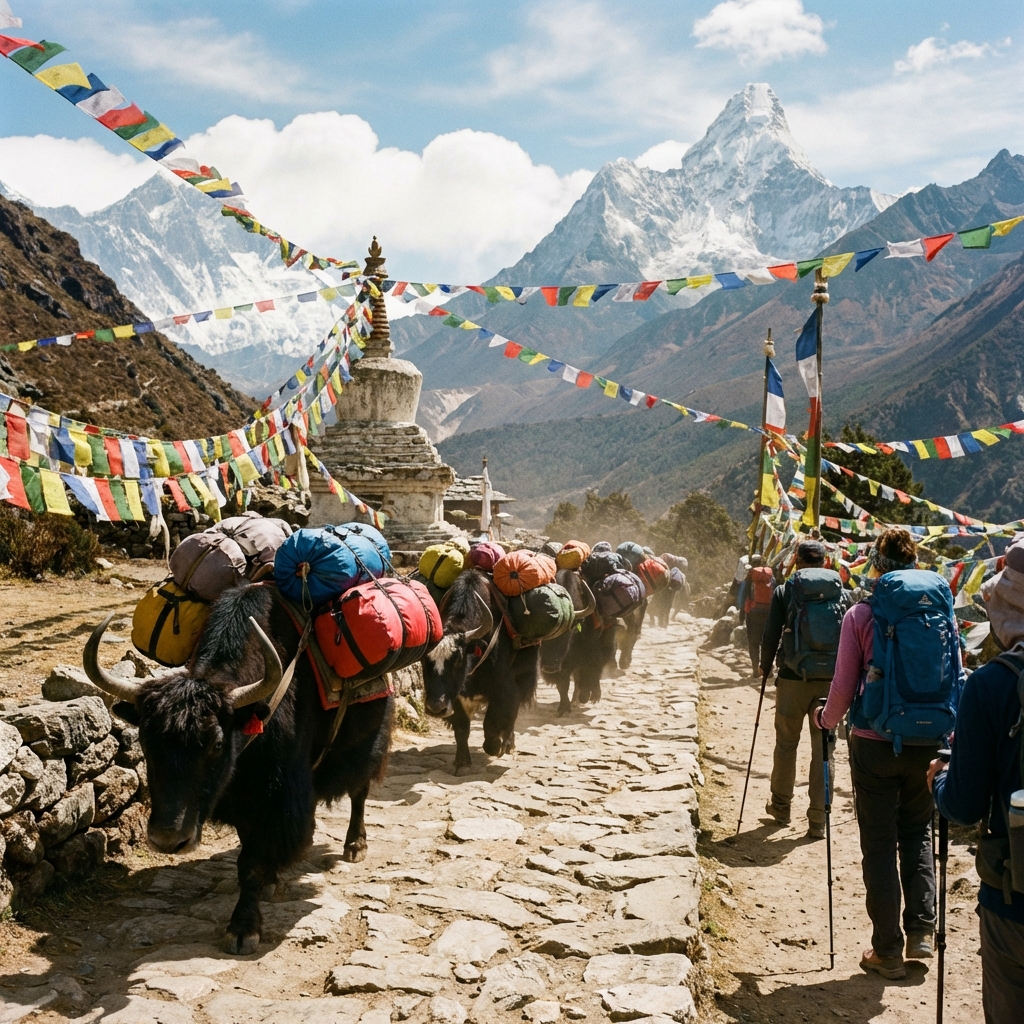
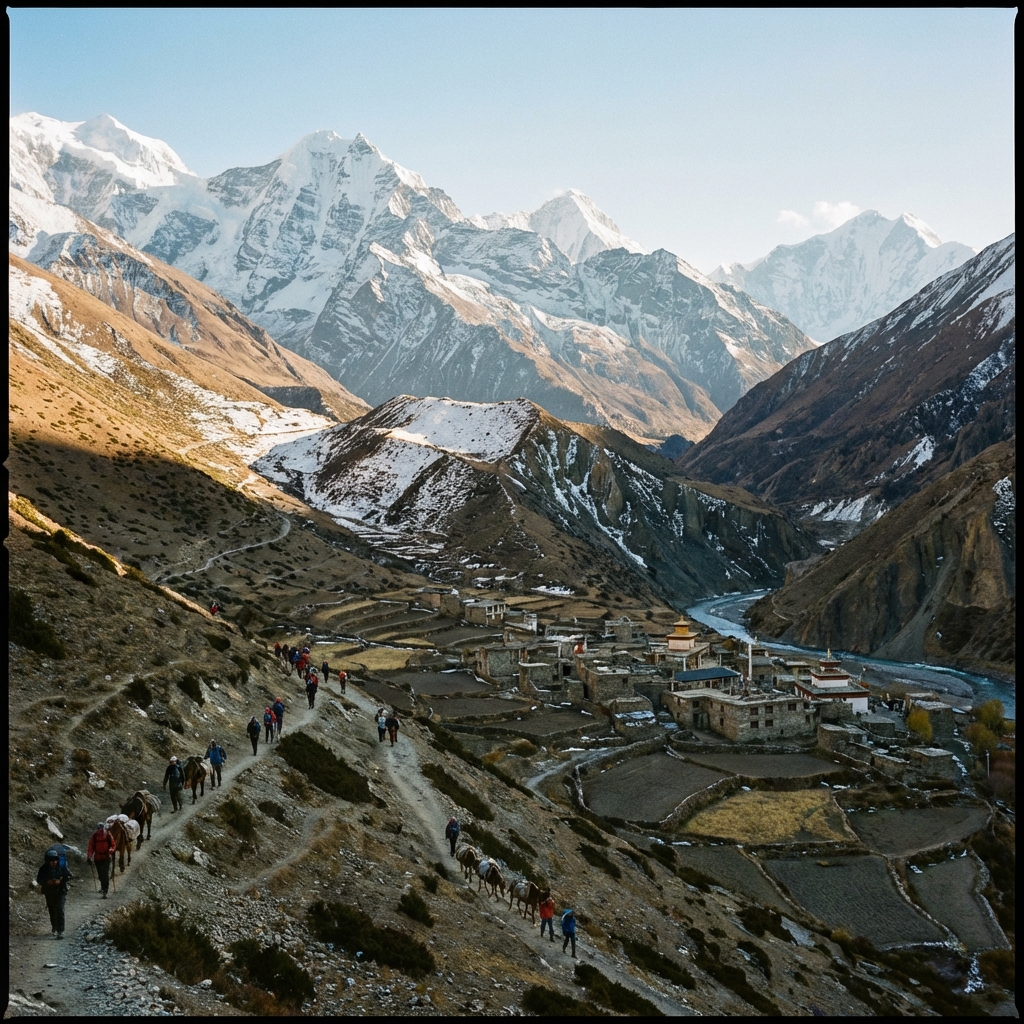
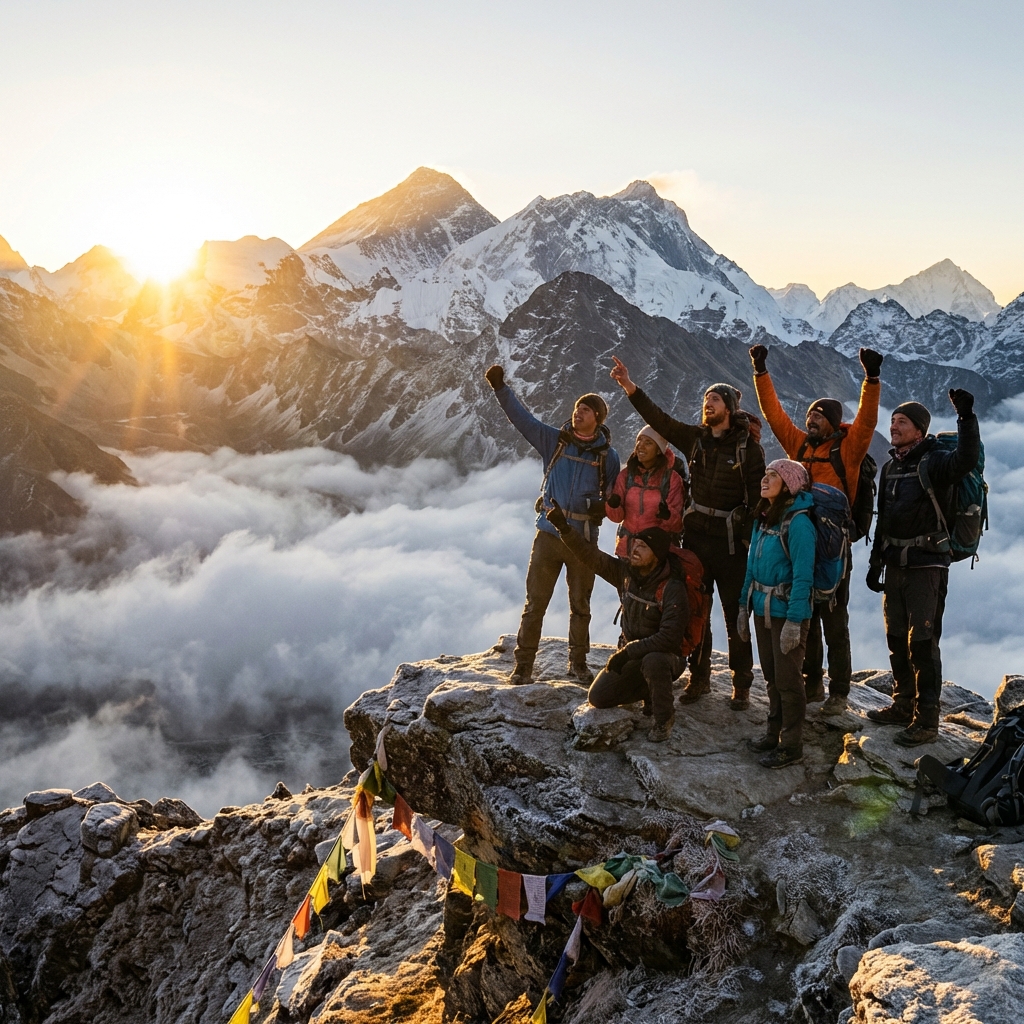
A Nepal trek is, among many other things, one of the world's finest classrooms. Every day on the trail offers direct engagement with geography, ecology, mathematics, cultural studies, history, and physical science in ways that no textbook or screen can replicate. For families who homeschool or take extended educational trips, Nepal provides a living curriculum that children remember for a lifetime.
This guide is for parents who want to intentionally use a Nepal trek as a structured educational opportunity — not just an adventure, but a learning experience with real curriculum value. It covers the subjects naturally embedded in the trekking experience, specific activities and exercises for different age groups, journaling approaches, and which treks offer the richest educational opportunities.
Why Nepal Treks Work as Education
Multisensory, Immersive Learning
Educational research consistently shows that immersive, multisensory learning produces stronger retention than classroom instruction. A child who identifies rhododendron species in the Annapurna foothills, touches the leaf structure, smells the bloom, sketches it in a journal, and then reads about it in a field guide that evening has engaged 5 senses and 3 learning modes. Compare that to reading about rhododendrons in a textbook.
Nepal's trails offer this multisensory depth across virtually every subject:
- Science: Geology, ecology, botany, zoology, meteorology, altitude physiology
- Geography: Cartography, climate zones, river systems, mountain formation
- Mathematics: Altitude calculations, pace and distance, currency exchange, altitude-temperature relationships
- Cultural studies: Buddhism, Hinduism, Tibetan culture, Nepal's ethnic diversity, economic development
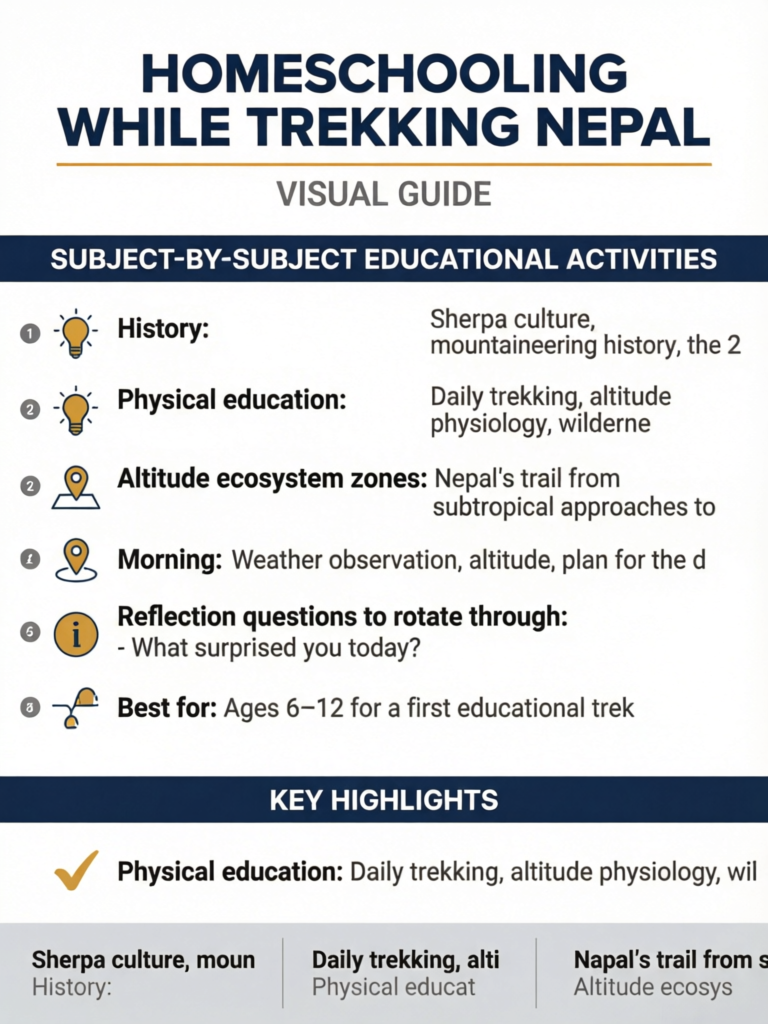
- History: Sherpa culture, mountaineering history, the 2015 earthquake and recovery, Gurkha history
- Physical education: Daily trekking, altitude physiology, wilderness skills
- Art: Sketching landscapes, photographing wildlife and landscapes, observational drawing
The "Why" is Answered
Perhaps most importantly, the educational context of a Nepal trek answers the question every schoolchild asks but rarely gets a satisfying answer to: "Why do I need to learn this?"
On the trail, the mathematics is the pace calculation that tells you whether you'll reach the next village before dark. The biology is the altitude sickness warning signs that could save your life. The geography is the mountain you're looking at and understanding why it's there. The learning is purposeful.
Subject-by-Subject Educational Activities
Geography and Cartography
Topographic map reading: Purchase a topographic map of your trek route before departure (Himalayan MapHouse 1:50,000 series covers most major treks and is sold in Kathmandu). Teach your child to read contour lines — the relationship between the density of lines and the steepness of terrain they're actually walking becomes tangible on Nepal's trails.
Activity: Each morning, read the day's route on the map with your child. Identify the contour crossings, estimate the total elevation gain (count contours x 50m), and predict the day's challenge level. In the evening, compare prediction to reality.
River system mapping: Nepal's rivers flow south from the Himalayan divide. Trace the day's river on the map — identify the tributaries, the valley direction, and where the river eventually joins the Ganges system heading to the sea.
Mountain identification: Using the Himalayan mountain identification apps (PeakFinder, or simple printed charts available in Kathmandu) or a guidebook, identify the peaks visible from viewpoints. Note their heights, their geological characteristics, and their relationship to the broader Himalayan chain.
Ecology and Natural Science
Altitude ecosystem zones: Nepal's trail from subtropical approaches to alpine meadows passes through 5–6 distinct vegetation zones. Create a simple chart with your child tracking which plants appear at which altitude. Record each new vegetation zone.
Wildlife spotting journal: The Himalayan wildlife guide lists species to look for. Give your child a list appropriate to their age (5 species for younger children; 15+ for teenagers) and have them record each sighting with date, location, altitude, and a sketch.
Meteorology: Mountain weather patterns are vivid in Nepal — the morning cloud build-up, the afternoon storms, the high-altitude wind plumes from summit ridges. Teach weather observation: cloud types, wind direction, weather forecasting from observable conditions.
Glaciology: At or above the Khumbu/Annapurna glaciers, the Khumbu conservation guide provides a context for discussing climate change, glacier retreat, and how scientists measure glacier change over time.
Mathematics in Context
Elevation gain calculations: Every night, calculate the day's elevation gain and total distance from the map. Create a cumulative altitude graph as the trek progresses.
Currency maths: Nepal's Rupee provides excellent daily mathematics practice. Convert prices from NPR to home currency. Calculate meal costs for the family. Compare prices at different altitudes. Budget remaining days against remaining currency.
Pace and distance: On long days, teach the concept of pace per hour and remaining distance. "We've walked 4 km in 2 hours, we have 6 km remaining — when will we arrive?" This has genuine practical application that makes the maths immediate.
Food and calorie maths: At altitude, discuss calorie needs vs. appetite. Nepal's teahouse menus provide real food math — dal bhat has approximately 600 calories, a Snickers 250 calories, and climbing 1,000m of altitude burns approximately 500 calories. "How much food do we need today?"
Cultural Studies
Buddhism and Hinduism: Nepal's trail communities practice Buddhism (predominantly in northern communities — Sherpa, Tamang, Tibetan communities), Hinduism (in lower-altitude communities), and Bon (in far-western regions). Temple visits, mani walls, and chortens provide direct learning opportunities.
Activity: At each major monastery or temple, have your child sketch the key religious imagery (prayer wheels, Om Mani Padme Hum mantras, thangka paintings, stupas) and research the significance that evening. A simple children's book on Tibetan Buddhism (available in Kathmandu bookshops) provides excellent context.
Languages: Basic Nepali is learnable for children with surprising speed. Practice namaste, dhanyabad (thank you), kati ho? (how much?), and numbers. Children's ability to greet locals in Nepali generates enormous goodwill and immediate positive cultural interaction.
Cooking and food: Lodge owners throughout Nepal are generally happy to explain their cuisine. What is dal bhat? What grains are grown locally? What does a Sherpa family eat for breakfast? These conversations, facilitated by a guide, provide cultural depth impossible to get from books.
Journaling: The Core Activity
A trek journal is the single most valuable educational tool for the entire journey. It integrates writing, observation, science, drawing, and reflection. It creates a permanent record of the learning experience.
Setting Up the Journal
Before departure:
- Purchase a blank notebook (hardcover holds up better on trail)
- Paste or tape a small topographic map into the front pages
- Create a species checklist page
- Write out vocabulary lists for Nepali and Buddhist/Hindu terms to learn
Daily Journal Structure (Adaptable by Age)
Morning: Weather observation, altitude, plan for the day On trail: One natural observation, one cultural observation, one sketch Evening: Route narrative, altitude gain calculated, one reflection question answered
Reflection questions to rotate through:
- What surprised you today?
- Draw the best view you saw today
- Describe one person you met and what you learned from them
- What question do you have that you don't know the answer to?
- If you could bring one person from home to see this, who would it be and why?
Best Treks for Homeschooling Families
Poon Hill Trek (4–5 days, max altitude 3,210m)
Best for: Ages 6–12 for a first educational trek Educational highlights: Rhododendron forest ecology, Gurung culture, Dhaulagiri glacier views, terraced agriculture Infrastructure: Excellent teahouses, child-friendly trail
The Poon Hill circuit offers sufficient altitude gain (and therefore altitude zone diversity) to teach vegetation zonation without requiring high-altitude fitness from young children.
Langtang Valley Trek (8–10 days, max altitude 3,870m)
Best for: Ages 8–14, earthquake history education Educational highlights: Tamang culture, 2015 earthquake reconstruction, yak herding, Tibetan-influenced monasteries
The Langtang Valley's recovery from the 2015 earthquake (which destroyed the main village) provides a powerful real-world context for studying natural disasters, community resilience, and post-disaster reconstruction. The Langtang Valley route guides cover this context.
Annapurna Circuit (12–18 days, max altitude 5,416m)
Best for: Ages 12–16, longer commitment with high educational density Educational highlights: Complete altitude zone traverse, diverse ethnic communities (Gurung, Manangi, Thakali, Mustangi), rain shadow geography, Thorong La high pass crossing
The circuit's diversity — from subtropical to alpine desert, from Hindu villages to Tibetan Buddhist communities — provides the broadest cultural and ecological curriculum of any standard Nepal trek.
Practical Considerations for Homeschooling on Trek
School schedule flexibility: Pack a light load — a maths workbook, one chapter book relevant to the journey (Into Thin Air for older teens, a Nepal-specific children's book for younger ones), and the science field guides. Don't try to complete a full daily school curriculum on top of 6–8 hours of hiking. Let the hiking be the school.
Gear for educational activities: A small sketchbook separate from the journal, coloured pencils, a compact field guide to Himalayan birds and flowers (Helen Wigmore's "Himalayan Flowers" is excellent), and a compass for map reading.
Energy management: A child who has hiked 8 hours is not ready for complex cognitive tasks in the evening. Keep evening educational activities short (20–30 minutes), reflective rather than demanding, and optional if genuine exhaustion is present.
Related Resources
What Age Is Best for Educational Trekking in Nepal?
Children aged 8-14 get the most educational value from Nepal trekking. At 8+, they can read maps, perform altitude calculations, maintain a journal, and engage meaningfully with cultural encounters. Below 8, the trek is still a wonderful family experience but the structured educational component is harder to sustain. Teenagers benefit from more advanced geography, ecology, and cultural studies.
Frequently Asked Questions
Which Nepal treks are best for homeschooling families?
The Langtang Valley and Poon Hill treks are ideal. Both are accessible without flights, have moderate difficulty, and pass through culturally rich villages with diverse ecological zones. The Tamang Heritage Trail is exceptional for cultural education.
What educational materials should I bring?
A topographic map (Himalayan MapHouse 1:50,000 series), a simple field guide to Himalayan wildlife and plants, a journal with blank and lined pages, coloured pencils, and a children's introduction to Buddhism. All are available in Kathmandu bookshops.
Can children handle the altitude on Nepal treks?
Children are more susceptible to altitude sickness and symptoms can be harder to detect. Stick to routes below 4,000m for children under 12. The family-friendly trekking agencies specialise in appropriate route selection.
How do I structure learning on the trail?
Dedicate 30-60 minutes each morning to map reading and daily planning, use walking time for observation activities, and spend 30 minutes each evening on journal writing. Keep sessions short and tied to the day's actual experiences.
Is trekking in Nepal considered legitimate homeschooling?
Most homeschool frameworks recognise experiential learning. Document activities with dated journal entries, photographs, and a record of subjects covered. Many families find a two-week Nepal trek covers geography, science, maths, cultural studies, and physical education comprehensively.