
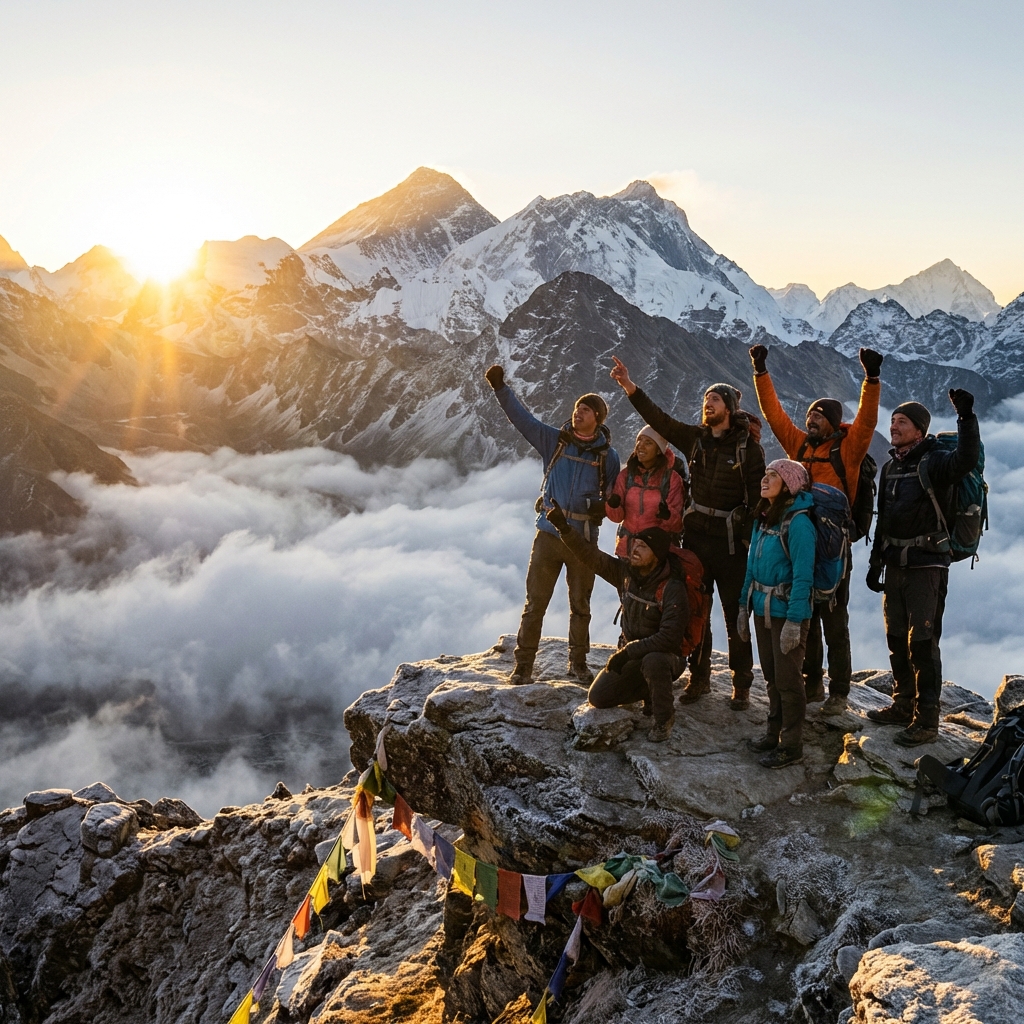
Trekking Nepal as a single parent with children requires more planning than the same trip with two adults — but it is absolutely achievable, and many solo parents report that it is one of the most profoundly bonding experiences they've had with their children.
The challenges are real: you cannot hand a child to a co-parent when you need both hands on a steep section. You cannot take turns managing logistics and managing children. If your child becomes ill, you are making all the medical decisions and doing all the care. If you become ill, you need a support structure that accommodates both your needs and your child's.
But with the right planning, the right route choice, and the right local support — primarily a good guide — these challenges are entirely manageable.
Why Nepal Works Well for Solo Parent Families
The Guide as Co-Responsibility
A good guide in Nepal is not just a route-finder. On a family trek with a solo parent, your guide becomes your most important support person: helping manage your children on steep sections, translating cultural interactions, coordinating lodging, carrying child-specific gear, and providing an adult presence when the trail demands your full attention.
This is not an unusual expectation — guides on family treks routinely take on a broader role. But it means guide selection is even more critical than on an adult-only trek. Look specifically for guides with documented family trek experience.
The Teahouse System Reduces Logistics
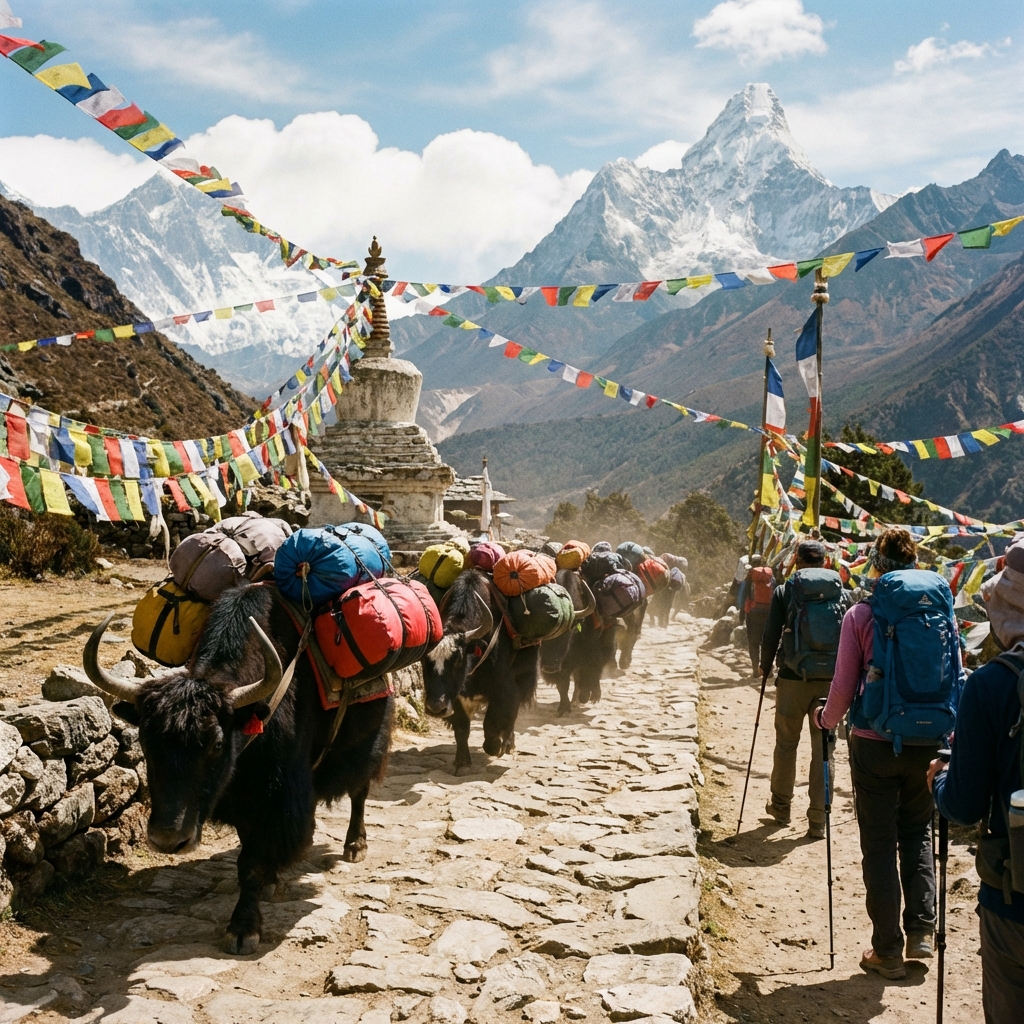
Nepal's teahouse network on the major trekking routes eliminates one of solo travel's most challenging logistics: camp setup and breakdown while managing children. You arrive at a teahouse, your child goes to the dining room or yard, and the meal appears in 20–30 minutes. You don't have to cook, set up a tent, or manage a camp kitchen simultaneously with managing a tired child.
Nepal's Community Culture
Nepal's communities are extraordinarily child-welcoming. In teahouses throughout the Khumbu and Annapurna regions, children are immediately included by lodge families, offered snacks, involved in daily activities (feeding chickens, carrying small loads, spinning prayer wheels). Solo parent travellers consistently report that this cultural warmth reduces the isolation of single-parenting in a challenging environment.
Choosing the Right Trek
Key Criteria for Solo Parent Routes
1. Teahouse infrastructure throughout: Camping treks are not appropriate for solo parents with children under 14. You need the teahouse support system.
2. Maximum altitude matched to child's age: Use conservative altitude guidelines — maximum altitude should be lower than what you might attempt with two adults.
3. Rescue accessibility: Can a helicopter reach the trail? Is there a road out if you need to abort? The medical facilities guide covers this by route.
4. Duration matched to child's stamina: 5–6 hours maximum hiking per day for children under 10. 7–8 hours for children 10–14.
Recommended Solo Parent Routes
Poon Hill (4–5 days): The best first trek for solo parents with children aged 6–12. The trail from Ghorepani to Poon Hill (3,210m) is clearly marked, well-trafficked, and fully teahouse-supported. Altitude is appropriate for younger children. The rhododendron forests in spring are magical. Emergency evacuation via road is possible from Pokhara end.
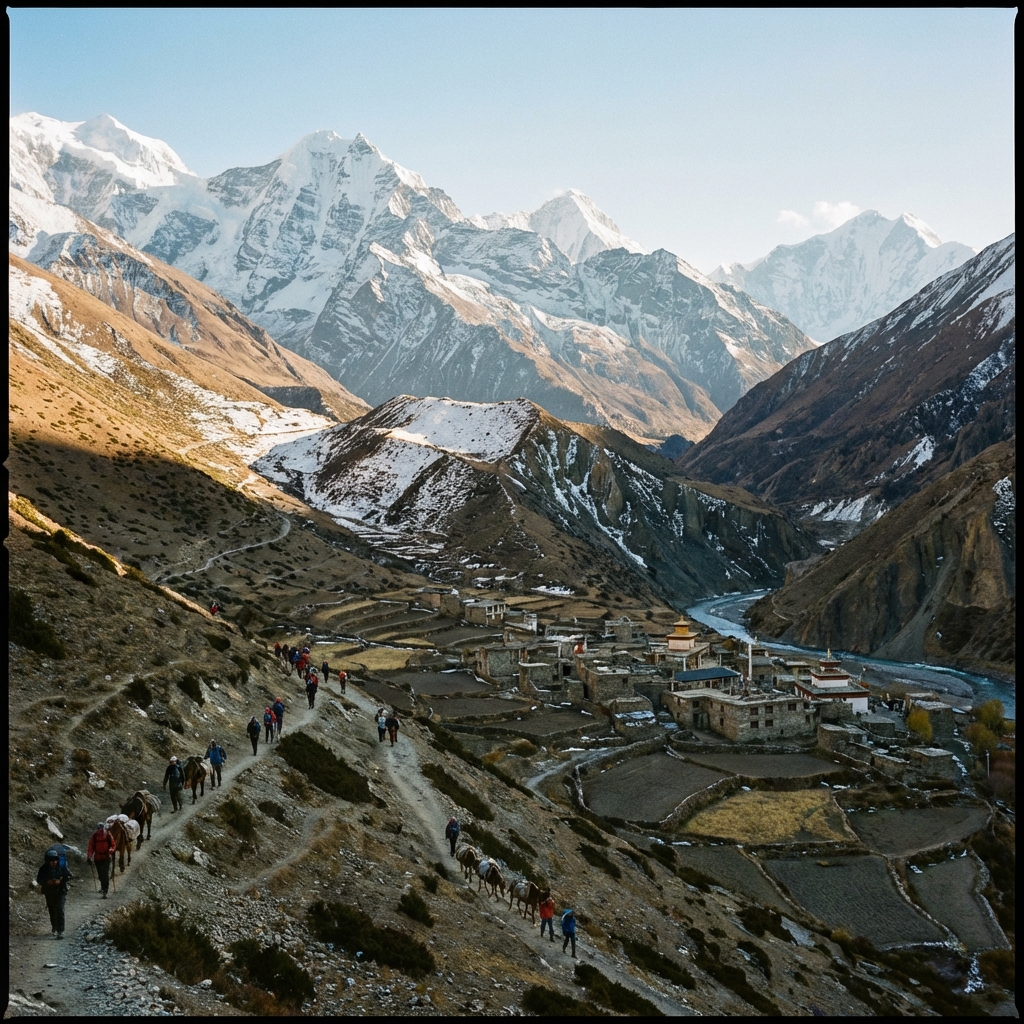
Langtang Valley (8–10 days, max 3,870m): Excellent for solo parents with children 8–14. The valley is compact, the communities are warm, and the trail is well-supported. The 2015 earthquake recovery story provides meaningful context for older children. Road access at Syabrubesi.
Mardi Himal (5–7 days, max 4,500m): A quieter alternative to ABC, appropriate for children 10–14 with good fitness. Lower trekker numbers mean more personal teahouse attention. The forest approach is beautiful.
Lower Annapurna Circuit (Jagat to Chame section, 5–8 days): For solo parents wanting to give older children (12+) a taste of the circuit without committing to the full route. The lower sections have excellent teahouses and road access for emergencies.
Altitude Guidelines for Children
The medical consensus on children at altitude is more cautious than for adults:
| Child's Age | Recommended Max Sleeping Altitude | Notes |
|---|---|---|
| Under 5 | Not recommended above 2,500m | Altitude illness risk poorly understood; difficult to self-report symptoms |
| 5–8 | 2,500–3,000m maximum | Watch carefully for AMS signs |
| 8–12 | Up to 3,500m with careful acclimatization | Poon Hill, lower Langtang |
| 12–16 | Up to 4,500m with careful acclimatization | Mardi Himal, Kyanjin Gompa |
| 16+ | Standard adult guidelines apply | With full AMS education |
Children experience altitude illness at similar rates to adults but are less able to accurately report symptoms. Younger children cannot reliably say "I have a headache." Watch for behavioural changes — unusual irritability, loss of appetite, unusual fatigue — as AMS indicators.
Guide and Support Hiring
What to Look for in a Family Guide
Experience with children specifically: Ask directly — "Have you guided families with children under 10/12/15 years old?" Ask for references from family clients if possible. A guide who has successfully managed family treks will have specific anecdotes and approaches.
Patience and engagement: Meet your guide before committing if possible. Observe how they interact with children. The best family guides naturally engage with kids — storytelling, showing animals and plants, making the trail an adventure.
CPR and first aid training: All professional guides should have this, but verify. Wilderness First Aid certification is a plus.
English proficiency: Adequate for the educational interaction you want with your children, not just minimum direction-giving.
Porter Support for Solo Parents
A porter who carries your pack and your child's pack frees your hands for the child. This is particularly valuable on:
- Steep descent sections where you may need to help your child's footing
- River crossings
- Rocky technical sections that require hands-on assistance
Many solo parents on Nepal treks travel with one guide and one porter, assigning the porter specifically to gear carrying so the guide can remain focused on the child(ren) and trail management.
Cost: Porter rates vary by route but expect NPR 600–900 per day plus food and accommodation. A porter for a 10-day trek costs approximately $80–120 total — outstanding value for the security and freedom it provides.
Recommended Agency Approach
Rather than hiring guide and porter independently, solo parents are strongly advised to book through a reputable agency that can:
- Vet their guides specifically for family experience
- Provide agency backup if the guide cannot complete the trek
- Coordinate emergency protocols with insurance providers
- Handle permit logistics leaving you free to focus on the children
Contact 3–4 agencies before committing. Be explicit about your situation: single parent, number and ages of children, your trekking experience, and your concerns. Good agencies respond to this information with specific guidance and relevant guide profiles.
Emergency Planning for Solo Parents
The Critical Difference
The scenario that changes most for solo parents is a medical emergency. Two adults allow one to manage the emergency while the other manages the children. One adult managing both simultaneously is genuinely difficult.
Pre-trek emergency planning:
-
Write out an emergency plan that your guide has a copy of. Include: insurance policy number, insurance emergency line, emergency contact at home, medical conditions of all family members, nearest medical facility from each trail section.
-
Establish a check-in protocol with someone at home. Daily or every-other-day WhatsApp or satellite message confirming your location and status. If the check-in is missed, they know to alert your insurance.
-
Pre-brief your guide on emergency scenarios: "If I become incapacitated, your priority is the children's safety. Call this insurance number first."
-
Consider a satellite communicator (Garmin inReach) over cellular-only communication. Solo parents have less margin for communication gaps than paired-adult trekkers.
-
Brief your children appropriately for their age. "If anything happens to me, stay with the guide and do whatever they say. The guide knows the emergency plan."
What Can Go Wrong and How to Handle It
Child becomes ill (AMS, GI illness, injury): Your guide assists while you manage the child. A porter can be converted to a stretcher carrier if needed. Evacuation decisions: when in doubt, descend.
You become incapacitated: This is the hardest scenario. Your guide manages both you and the child. This is why guide selection, guide briefing, and satellite communication are essential.
Child has a meltdown/refuses to continue: Entirely normal. Your guide's experience with children helps here. Plan A: extended rest stop, food and warmth, calm conversation. Plan B: porter carries child's pack, reducing their load. Plan C: adjust the route — teahouse trekking allows itinerary flexibility that camping treks don't.
Frequently Asked Questions
What is the minimum age for children trekking in Nepal?
There is no official minimum age, but most experienced guides recommend age 6 and above for short treks like Poon Hill and age 8-10 for multi-day treks reaching 3,500m or higher. Children under 5 should stay below 2,500m.
Do I need legal documentation to trek Nepal as a solo parent?
Nepal does not require custody documentation for a parent traveling with their child. However, your home country's exit requirements may differ, and airlines sometimes request a consent letter from the absent parent. Check your country's regulations before departure.
Can a guide carry my child if they get tired?
Guides will help with children on difficult sections but should not be expected to carry a child for extended periods. Hiring a dedicated porter who can assist with carrying younger children on steep sections is a better arrangement for treks with children under 8.
Is travel insurance different for solo parent families?
Your travel insurance should cover both you and your child for high-altitude trekking and helicopter evacuation. Ensure your policy includes coverage for a companion to accompany your child if you are evacuated and vice versa.
What happens if I get sick on the trail as a solo parent?
This is the primary reason a good guide is essential for solo parent treks. Your guide becomes your child's caretaker if you are incapacitated and coordinates evacuation logistics. Discuss this scenario with your guide before the trek begins.