
Rolwaling Valley Nepal: Sacred Hidden Valley Trek Guide
The Rolwaling Valley is a remote, restricted glacial valley in Dolakha district, east-central Nepal, running below the sacred peak Gaurishankar (7,134m) along the Tibet border. This sacred "beyul" hides Tsho Rolpa lake, the Sherpa villages of Beding and Na, and the technical Tashi Lapcha Pass (5,755m) linking Rolwaling to Everest's Khumbu.
In the landscape of Sherpa mythology, the Rolwaling Valley is a beyul — a hidden sacred valley consecrated by Guru Rinpoche (Padmasambhava) in the 8th century as a place of refuge for those with pure intentions. It is a valley where the spiritual and physical worlds remain in close contact, where the glaciers carry the names of guardian deities, and where the community of Beding exists at an altitude (3,690m) that would be considered a base camp elevation in more accessible regions.
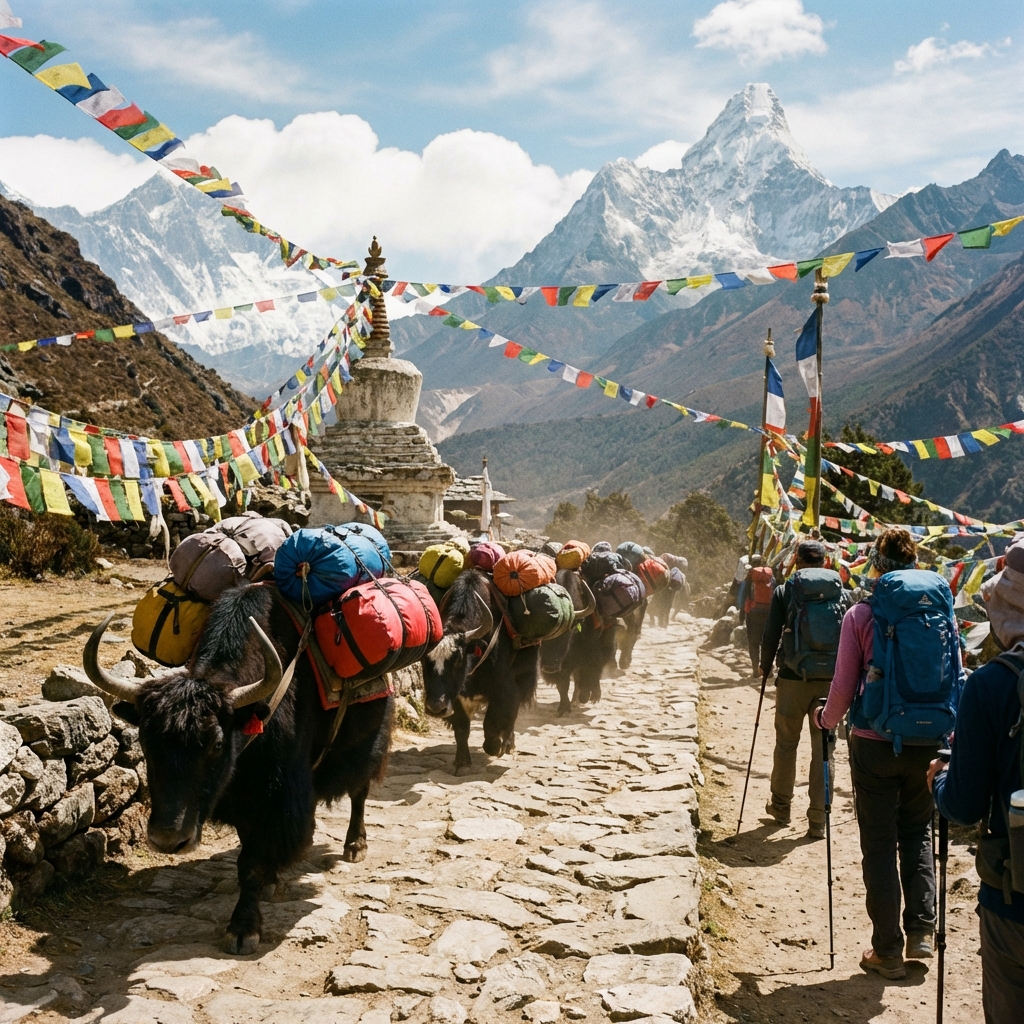
Between the Everest massif to the east and the Langtang range to the west, Rolwaling occupies a restricted alpine corridor that receives perhaps 200-300 trekkers per year — fewer than a busy day on the Everest Base Camp trail. The valley earns this solitude: it requires a Restricted Area Permit, demands serious physical preparation, and ultimately confronts trekkers with the Tashi Lapcha Pass (5,755m), one of Nepal's most technically demanding non-mountaineering passes, which marks the boundary between Rolwaling and the Khumbu Everest region.
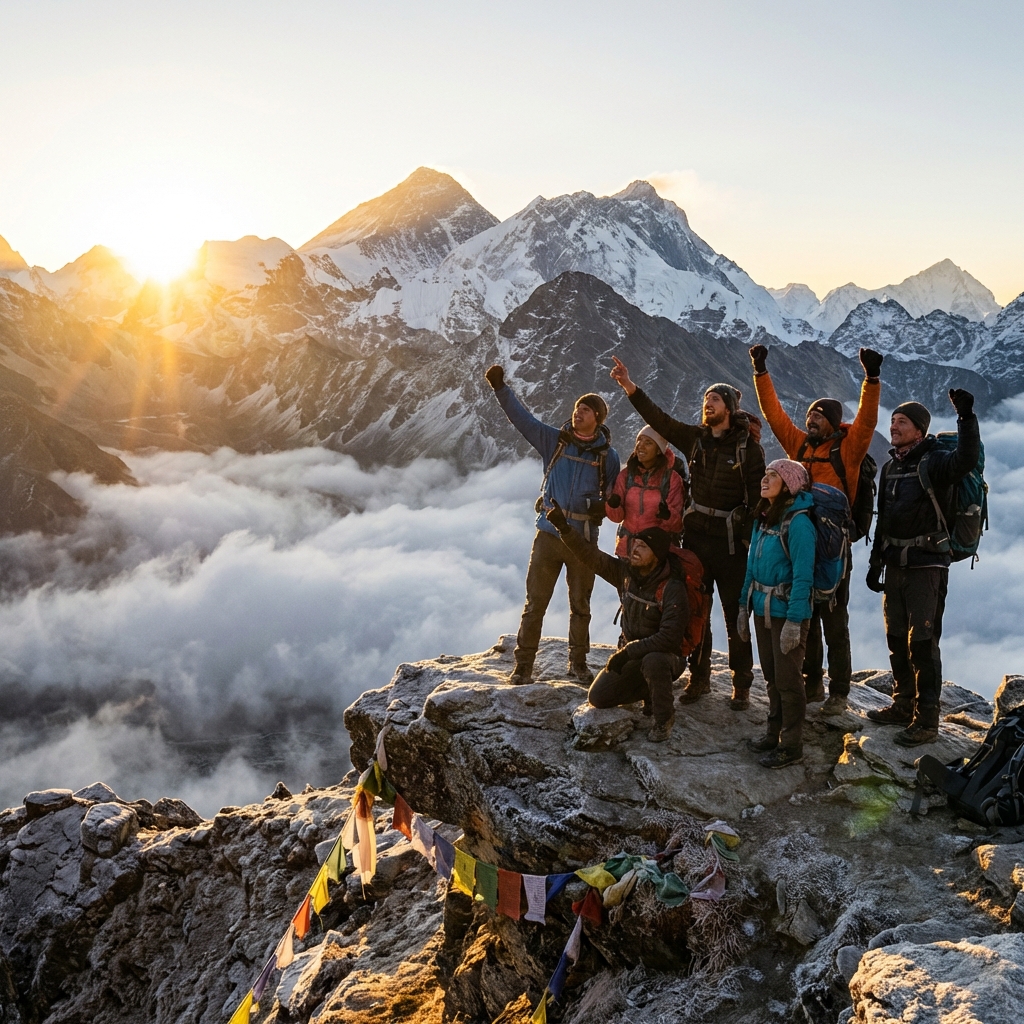
For those who complete the crossing — and not everyone does — the Rolwaling-to-Khumbu traverse stands as one of Nepal's most demanding and rewarding multi-week journeys, linking two of the country's greatest mountain landscapes through terrain that remains genuinely wild and spiritually charged in ways that busier regions have largely lost.
6-7 hours by road to Charikot/Dolakha; or via Jiri
14-21 days (Rolwaling valley and pass crossing)
5,755m (Tashi Lapcha Pass)
Strenuous to Very Strenuous — technical pass crossing required
Apr-May (Spring), Oct-Nov (Autumn)
Restricted Area Permit + Gaurishankar Conservation Area Permit
$20/week (RAP) + $20 (GCAP) — minimum 2 trekkers + licensed guide
Simigaon, Beding, Na (Naa)
Sherpa (Tibetan Buddhist) — deeply traditional, yak herding culture
Teahouses in Beding; tented camps for Na and above
$2,000-3,800 (fully guided, Rolwaling only)
Extremely Low — among Nepal's least visited restricted valleys
Why Choose Rolwaling? The Compelling Case
A Beyul: The Sacred Hidden Valley
The concept of the beyul is central to understanding Rolwaling's character. In Tibetan Buddhist cosmology, beyuls are hidden valleys consecrated as places of refuge — physically difficult to reach, spiritually protective, preserving ancient teachings and practices. Guru Rinpoche, who brought Buddhism to Tibet and Nepal in the 8th century, is said to have blessed Rolwaling as one of these sacred valleys.
Whether one holds this belief or not, the effect is real: the Rolwaling Valley retains a quality of preservation — physical, cultural, and spiritual — that more accessible valleys have lost. The two permanent villages, Beding and Na, exist in authentic relationship with their environment. Yak herding continues on the high pastures as it has for centuries. The monastery at Beding is an active center of religious life, not a museum piece. The glaciers and sacred landscape features have Sherpa names and stories that place them in a living cosmological system.
Rolwaling is the right choice for trekkers who:
- Seek a mountain valley that feels genuinely set apart from the modern trekking world
- Are motivated by the intersection of spectacular mountain scenery and living spiritual culture
- Have the physical conditioning for a technically demanding trek with a high-altitude pass
- Want to complete a cross-regional traverse connecting Rolwaling to the Everest region
- Appreciate that some of the most meaningful experiences require genuine effort to reach
Tashi Lapcha Pass: The Great Crossing
At 5,755m, Tashi Lapcha Pass is the defining physical challenge of the Rolwaling region. It is not merely a high pass — it involves glacier travel, fixed ropes on the Khumbu side, potentially icy and technical sections depending on conditions, and demands crampons, ice axe, and experience. It is the dividing line between trekkers and those who need to turn back.
For those who cross, the descent into the Thame Valley of the Khumbu is one of the most dramatic transitions in Nepal trekking. One day you are in the remote, silent beyul of Rolwaling; the next you are in the Khumbu, within two days' walk of Namche Bazaar. The contrast underscores how different these worlds are, and how the pass is not just a physical but a conceptual boundary.
Tsho Rolpa: Nepal's Highest Glacial Lake
At 4,580m, Tsho Rolpa is one of the largest glacial lakes in Nepal — a body of turquoise water trapped behind a moraine dam, fed by the melting Trakarding Glacier. The lake has grown dramatically in recent decades as glaciers retreat and melt volume increases. It is both a thing of stark beauty and a sobering reminder of Himalayan glacier dynamics.
The day hike to Tsho Rolpa from Na village is one of the Rolwaling trek's signature experiences — the lake's colour against the surrounding glacial terrain and peaks is extraordinary, and the walk along the moraine provides close encounters with active glacial processes visible nowhere more dramatically in Nepal.
Complete Solitude
Rolwaling receives an estimated 200-300 trekkers per year — on its busiest autumn days, the trail through the valley may carry a dozen people. More typically, you will walk for entire days without encountering another international trekker. This is solitude of a quality that requires genuine effort to find elsewhere in Nepal.
Glacier Lake Outburst Risk — Important Safety Note
Tsho Rolpa glacial lake poses a documented glacial lake outburst flood (GLOF) risk. The lake is monitored and warning systems are in place in lower valleys. Trekkers should be aware of the risk and follow guide advice on camping locations near and below the lake. Current monitoring data shows the situation as stable but meriting continued attention. Your guide will have current information on conditions.
Rolwaling Region Overview: Geography and Terrain
The Rolwaling Valley runs east-west along the Rolwaling Khola, roughly parallel to the Bhote Kosi River (Everest access corridor) to the north and the Tamba Kosi (Tamakosi) to the south. The valley rises from its entrance near Simigaon at around 2,000m to the high pasture settlement of Na at 4,183m, and finally to the Tashi Lapcha Pass at 5,755m marking the boundary with the Khumbu.
Administratively, the Rolwaling Valley sits within Gaurishankar Rural Municipality in Dolakha district, on the Nepal–Tibet border. The surrounding Rolwaling Himal range includes Melungtse (7,181m) and Melungtse II (7,023m) inside Tibet and Gaurishankar (7,134m) on the border, plus roughly 50 additional peaks over 6,000m. The first Western exploration of the valley was made by Eric Shipton in 1951 during the British reconnaissance of Mount Everest — a history that places Rolwaling at the origin of modern Everest mountaineering.
The Valley's Structure
Lower Rolwaling (Simigaon to Beding): The approach from Charikot climbs through mixed communities (Tamang, Sherpa, and farming groups) before entering the protected Gaurishankar Conservation Area. The trail passes through forest zones and progressively more dramatic terrain. Beding (3,690m), the principal village, is reached after 5-7 days depending on starting point.
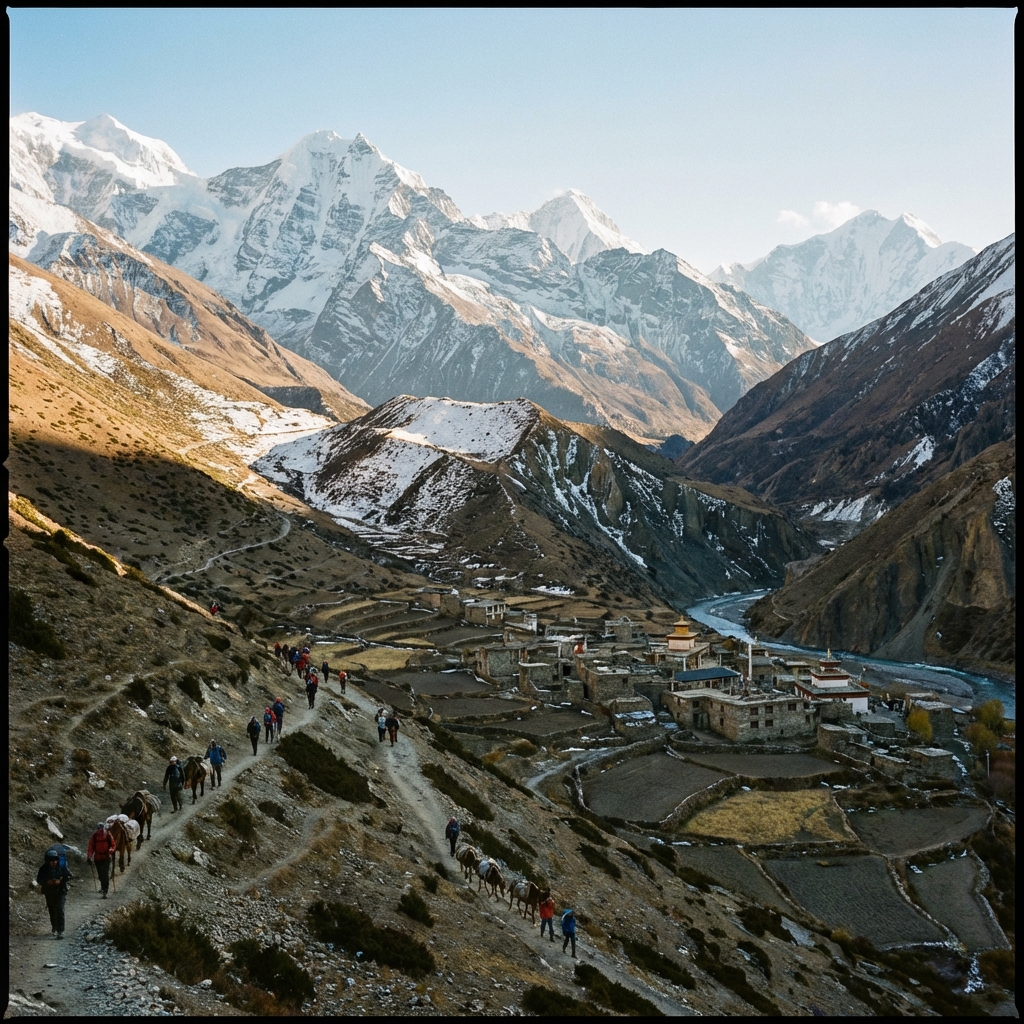
Upper Rolwaling (Beding to Na): Above Beding, the valley opens into increasingly glacial terrain. Na (Naa) village at 4,183m is the last permanent settlement, a summer yak herding community of extraordinary beauty surrounded by peaks exceeding 6,000m. The high pastures above Na are used from approximately May to October.
The Glacial Zone (Na to Tashi Lapcha): Above Na, the trail crosses the Trakarding Glacier and continues along increasingly technical terrain to the base of Tashi Lapcha Pass. This section requires glacier travel competency and appropriate equipment. The pass itself demands ice axe, crampons, and ideally fixed rope management experience.
The Mountain Backdrop
Gaurishankar (7,134m) The dominant peak of the region, visible throughout the lower valley, is one of Nepal's most sacred mountains — a deity peak in both Hindu and Buddhist traditions. It was long believed to be the world's highest mountain before accurate measurements were made, and its twin summits (Gauri and Shankar) represent the divine couple Parvati and Shiva in Hindu cosmology.
Melungtse (7,181m) Remote and difficult to see from the main valley, Melungtse rises above the upper glacial basin. It remains among the least-climbed significant peaks in Nepal.
Ramdung Go (5,925m) and Pachermo (6,187m) Popular trekking peaks accessible from the Rolwaling valley. Pachermo in particular is considered one of the most rewarding of Nepal's trekking peaks, offering genuine mountaineering experience with excellent views.
Yalung Ri (5,630m) A popular introductory trekking peak above Na, frequently used as an acclimatization climb or a standalone summit objective. Yalung Ri offers a relatively approachable first 5,000m+ summit with panoramic views toward the Rolwaling glacial basin and, on clear days, the Everest massif. It is commonly combined with the valley trek before any Tashi Lapcha attempt.
Dragnak Ri (5,926m) High viewpoint above Na offering a 360-degree panorama of the glacial basin and surrounding peaks. A strenuous but non-technical day hike that reveals the full scale of the upper Rolwaling landscape.
Ecological Character
Mid-Altitude Forest (2,000-3,500m): Mixed rhododendron, oak, and fir forests on the approach. Dense and biodiverse, with typical mid-Himalayan ecological character.
Subalpine Zone (3,500-4,200m): Open landscape with dwarf rhododendron scrub, alpine meadows, and yak grazing pastures. Beding and Na villages exist within this zone.
Alpine and Glacial (Above 4,200m): Trakarding Glacier and surrounding moraines. Glacial lakes including Tsho Rolpa. Permanent snowfields. The landscape becomes progressively more severe above Na — a world of ice, rock, and sky.
All Rolwaling Region Treks: Complete Route Overview
1. Rolwaling Valley Trek (10-12 Days) — The Valley Experience
An accessible introduction to Rolwaling exploring the valley, villages, and Tsho Rolpa without the high-pass commitment.
Route: Charikot → Simigaon → Beding (3,690m) → Na (4,183m) → Tsho Rolpa (4,580m) → Return via same route
Duration: 10-12 days Max Altitude: 4,580m (Tsho Rolpa lake) Difficulty: Moderate to Strenuous Best For: Trekkers wanting the beyul experience without technical pass commitment, those with altitude concerns, first Rolwaling visit
Highlights:
- Beding village and active Buddhist monastery
- Na village — one of Nepal's highest permanent settlements
- Tsho Rolpa glacial lake — dramatic turquoise lake in glacial setting
- Dragnak Ri viewpoint (optional, strenuous day hike from Na)
- Complete wilderness and solitude
- Authentic Sherpa yak-herding culture
Cost Range: $1,400-2,200 (guided, with teahouse to Beding, tented above)
2. Rolwaling to Khumbu via Tashi Lapcha (14-18 Days) — The Classic Traverse
The complete Rolwaling experience, crossing the high and technical Tashi Lapcha Pass into the Khumbu Everest region.
Route: Charikot → Simigaon → Beding → Na → Tsho Rolpa → Tashi Lapcha Pass (5,755m) → Thame → Namche Bazaar → Lukla → Kathmandu
Duration: 14-18 days Max Altitude: 5,755m (Tashi Lapcha Pass) Difficulty: Very Strenuous — technical glacier and pass section Best For: Experienced trekkers with mountaineering skills, those wanting a cross-regional traverse, adventurers with appropriate technical competency
Technical Requirements:
- Ice axe and crampon use (mandatory for pass crossing)
- Basic rope handling (fixed ropes may be in place; you must manage them safely)
- Previous glacier travel experience strongly recommended
- Altitude experience above 5,000m strongly recommended
- Licensed guide with pass experience is essential (see technical pass crossings in Nepal)
Highlights:
- Complete Rolwaling beyul experience
- Tashi Lapcha Pass crossing — one of Nepal's great adventure trekking challenges
- Dramatic transition from remote Rolwaling to the Khumbu world
- Pachermo Peak summit option (6,187m) for trekking peak climbers
- Thame Valley — arguably the most authentic remaining Khumbu Sherpa village
- Possibility to extend in Khumbu (Namche, EBC, or other Khumbu destinations)
Cost Range: $2,500-4,000
Critical note: The Tashi Lapcha crossing is not a standard high pass. Conditions vary significantly by season. Spring crossings (May) are typically the most reliable. Early autumn (October) can involve fresh snow on the pass. Your guide must have recent, specific knowledge of current conditions before committing to the crossing.
3. Rolwaling with Pachermo Peak (16-20 Days) — Trekking Peak Summit
The valley trek extended with a summit attempt on Pachermo (6,187m), one of Nepal's most rewarding trekking peaks.
Route: Charikot → Rolwaling Valley → Na → Pachermo Base Camp → Summit attempt → Tashi Lapcha Pass → Khumbu
Duration: 16-20 days Max Altitude: 6,187m (Pachermo summit) Difficulty: Mountaineering Best For: Experienced trekkers with basic mountaineering skills, those seeking Nepal Mountaineering Association (NMA) trekking peak summit
Requirements:
- NMA trekking peak permit (~$250-350 depending on season)
- Mountaineering guide and technical equipment
- Ice axe, crampons, harness, helmet, rope
- Prior experience on snow and ice terrain
- Very good physical conditioning
Highlights:
- Pachermo summit delivers one of Nepal's finest 360-degree high mountain panoramas
- View range from Everest and Lhotse to Cho Oyu, Gaurishankar, Melungtse
- Complete Rolwaling valley immersion before peak attempt
- Natural progression to Tashi Lapcha after summit
Cost Range: $3,500-5,500
4. Jiri to Rolwaling to Khumbu (20-25 Days) — The Extended Classic
A longer historical route beginning from Jiri (the original Everest Base Camp approach), passing through Rolwaling, and continuing to the Khumbu — retracing and extending the classic Himalayan approach routes.
Route: Kathmandu → Jiri → Solu Khumbu hill approach → Rolwaling Valley → Tashi Lapcha → Khumbu → Lukla
Duration: 20-25 days Max Altitude: 5,755m (Tashi Lapcha Pass) Difficulty: Very Strenuous — longest and most demanding route option Best For: Dedicated trekkers seeking the deepest eastern Nepal experience, those wanting to walk the historical approach routes
Highlights:
- Jiri approach: The route taken by Hillary and Tenzing in 1953 and by classic Everest expeditions until Lukla airport opened
- Maximum cultural diversity: lower-altitude Tamang, Sherpa, and mid-hill communities
- Complete traverse of a major section of the Himalayan arc
- Every ecological zone from subtropical to glacial
- The satisfaction of the longest, most complete approach
Cost Range: $3,500-6,000
Trek Comparison: Choosing Your Rolwaling Route
| Route | Duration | Max Altitude | Difficulty | Permits | Teahouses | Crowds |
|---|---|---|---|---|---|---|
| Rolwaling Valley Only | 10-12 days | 4,580m | Moderate-Strenuous | RAP + GCAP ($40+) | Beding; tented above | Extremely Low |
| Rolwaling to Khumbu | 14-18 days | 5,755m | Very Strenuous | RAP + GCAP ($40+) | Beding + Khumbu | Extremely Low (Rolwaling); Moderate (Khumbu) |
| Rolwaling + Pachermo | 16-20 days | 6,187m | Mountaineering | RAP + GCAP + NMA ($290+) | Beding + Khumbu | Extremely Low |
| Jiri to Rolwaling to Khumbu | 20-25 days | 5,755m | Very Strenuous | RAP + GCAP ($40+) | Throughout (varies by section) | Low throughout |
Quick decision guide:
- First Rolwaling visit, moderate experience: Rolwaling Valley (10-12 days) — no technical commitment
- Technical skills, full traverse: Rolwaling to Khumbu (14-18 days) — the classic and most rewarding
- Mountaineering ambitions: Add Pachermo Peak (6,187m) summit to the traverse
- Maximum depth and duration: Jiri to Rolwaling to Khumbu (20-25 days)
- No ice axe experience: Do NOT attempt Tashi Lapcha Pass — return via same route from Na
Side Trips and Acclimatization Hikes in the Rolwaling Valley
Beyond the main trail to Tsho Rolpa and Tashi Lapcha, the Rolwaling Valley rewards extra days with side trips that double as acclimatization. Building one or two of these into your itinerary improves your high-altitude adjustment before the pass and deepens the wilderness experience. (See our broader guide to acclimatization day activities and hikes.)
- Tsho Rolpa Lake (4,580m): The signature day hike from Na — one of Nepal's largest glacial lakes, ringed by the Trakarding Glacier and surrounding peaks. 2–3 hours each way.
- Dragnak Ri viewpoint (5,926m): A strenuous, non-technical high viewpoint above Na delivering a 360-degree panorama of the upper glacial basin.
- Dudh Pokhari (Milky Lake): A sacred lake near Tsho Rolpa, considered holy by the local Sherpa and Tamang communities. A quiet, spiritually significant detour amid snow-capped peaks.
- Yalung Ri (5,630m) climb: A popular introductory trekking peak from Na, ideal as an acclimatization summit before Tashi Lapcha or Pachermo.
- Daldung La (4,500m) alternate route: An alternative approach to Beding via the Tashinam side, crossing Daldung La pass through forest, Himalayan flora, and varied culture — a richer (if longer) way into the valley.
Wildlife, Flora and Fauna of the Rolwaling Valley
The Rolwaling Valley lies within the Gaurishankar Conservation Area, which protects a striking range of Himalayan habitats from subtropical river gorge to permanent snow. Trekkers move through distinct ecological bands as they climb.
Flora: The lower and mid-valley is dominated by rhododendron, oak, pine and fir forests — spectacular when the rhododendrons bloom in April. Higher up, the landscape transitions to alpine meadows, dwarf scrub and finally rock and ice. Medicinal herbs and alpine flowers appear across the subalpine zone.
Fauna: The conservation area is home to Himalayan tahr, musk deer, and Himalayan black bear, with the elusive snow leopard ranging the higher slopes. Birdwatchers may spot the colourful Himalayan monal (Nepal's national bird), blood pheasant, and eagles riding the valley thermals. The very low trekker traffic means wildlife sightings are more likely here than on busier trails.
Rolwaling Sherpa Culture: The Beyul Community
The Sherpa of Rolwaling
The Rolwaling valley's permanent communities — primarily Beding and the seasonal high pasture village of Na — are among the most traditional Sherpa settlements in Nepal. Unlike the heavily tourism-influenced Sherpa communities of the Khumbu, Rolwaling's Sherpa live at the intersection of subsistence pastoralism, Buddhist practice, and a landscape they understand as sacred and animate.
Cultural Characteristics:
- Yak herding: The primary economic activity, with annual transhumance cycles moving animals between lower winter pastures and Na's high summer grazing
- Monastery life: Beding's monastery is an active center of Buddhist practice — monks perform daily rituals and annual ceremonies
- Beyul knowledge: Elders hold extensive traditional knowledge about the valley's sacred geography — specific sites, seasonal rituals, and the valley's spiritual governance
- Limited tourism interaction: The very low trekker numbers mean Rolwaling Sherpas have not developed the tourism-industry orientation common in the Khumbu. Interactions are more personal and less commercial
Beding Village: The Heart of the Beyul
Beding (3,690m) is the principal year-round settlement of the Rolwaling Valley — a compact village of stone houses arranged around the central monastery. The village is inhabited by approximately 200-300 people during the main season, many of whom also have homes in lower-altitude winter villages.
Beding Highlights:
- Beding Monastery: Active Nyingma Buddhist monastery with regular prayer sessions and annual ceremonies. Visitors are generally welcomed respectfully. Remove footwear before entering, and ask permission before photographing inside
- Village architecture: Traditional Sherpa stone construction, well-preserved and maintained
- Yak culture: Yaks are visible in and around the village throughout the trekking season, tended by families who have managed these animals for generations
- Community life: Village social life is organized around agricultural and pastoral seasons, Buddhist festivals, and mutual support practices
Na Village: The High Pasture Settlement
Na (Naa) at 4,183m is a remarkable settlement — a cluster of stone buildings used primarily in the summer months by yak herders and their families. In the trekking season (April-May and October-November), a few of these buildings operate as very basic teahouses or homestays. The setting is extraordinary: a flat glacial terrace surrounded by peaks and glaciers, with the sound of the Rolwaling Khola and distant icefalls the only sounds.
Na Highlights:
- Day hike to Tsho Rolpa lake from Na (strenuous, 2-3 hours each way)
- Dragnak Ri viewpoint hike — a serious day hike revealing the full glacial basin
- Yak herding culture at close range
- Extraordinary silence and sense of elevation
Sherpa Buddhist Festivals
The timing of major Sherpa Buddhist festivals can create memorable encounters if your trek coincides:
- Mani Rimdu (October/November): The most important regional Buddhist festival. Celebrated at Tengboche (Khumbu) but also observed in Rolwaling monasteries. Masked dances, religious ceremonies, and community gatherings
- Losar (February/March): Tibetan New Year. Monasteries host special ceremonies, families gather
- Dumji (June/July): Rolwaling's local festival celebrating the establishment of the beyul — a uniquely Rolwaling ceremony rarely witnessed by outsiders
Pro Tip
The Dumji festival in Beding is one of the least-observed important Sherpa ceremonies in Nepal. If you are interested in attending, contact agencies working specifically with the Rolwaling community and inquire about the exact dates, which are determined by the Tibetan lunar calendar and vary year to year. Being present for Dumji transforms a wilderness trek into a profound cultural experience.
Best Time to Visit: Month-by-Month Analysis
| Month | High | Low | Conditions | Crowds | Notes |
|---|---|---|---|---|---|
| January | 4°C | -18°C | 12mm | None | Extreme cold, high passes snowbound, valley access difficult, not recommended |
| February | 6°C | -14°C | 18mm | None | Still very cold, Losar festival at Beding monastery, trails challenging |
| March | 10°C | -8°C | 45mm | Very Low | Snow melting, approach trails improving, some early season operators |
| AprilBest | 13°C | -4°C | 75mm | Low | Spring peak: rhododendrons blooming on approach, Tashi Lapcha becoming viable |
| MayBest | 15°C | 0°C | 140mm | Low | Best month for Tashi Lapcha crossing: most stable snow conditions, warm |
| June | 18°C | 6°C | 350mm | None | Monsoon arrives, heavy rain at altitude, trails slippery and dangerous |
| July | 18°C | 8°C | 490mm | None | Peak monsoon — Rolwaling is inaccessible for trekking |
| August | 18°C | 8°C | 420mm | None | Monsoon continues, Dumji festival (dates vary), trail conditions dangerous |
| September | 16°C | 4°C | 240mm | Very Low | Late monsoon, conditions improving, some operators begin pre-season logistics |
| OctoberBest | 14°C | -3°C | 25mm | Low | Peak autumn: excellent conditions, clearest skies, Tashi Lapcha viable if dry |
| NovemberBest | 10°C | -8°C | 8mm | Very Low | Good conditions early; fresh snow on Tashi Lapcha becomes more likely later |
| December | 6°C | -14°C | 8mm | None | Rapidly cooling, upper trails snowbound, region closing for season |
Spring Season (April-May): Optimal for Tashi Lapcha Crossing
Why spring excels for Rolwaling:
- May is widely considered the most reliable month for Tashi Lapcha Pass crossing
- Spring snow conditions (firm, consolidated) are more stable than post-monsoon fresh snow
- Rhododendron blooms on the lower approach (spectacular in April)
- Long daylight hours assist demanding pass day
- Warmer temperatures reduce hypothermia risk on the high section
Spring considerations:
- April still has winter snowpack on upper sections; experienced guide assessment essential
- Pre-monsoon rain possible from late May
- Leeches active below 2,500m after rain
Best spring months: Late April to mid-May for Tashi Lapcha crossing; early April for lower valley and rhododendrons
Autumn Season (October-November): Crystal Views, Variable Pass
Why autumn works for Rolwaling:
- Clearest skies and best mountain photography of the year
- Stable weather patterns through October
- Post-monsoon landscapes vivid and dramatic
- Comfortable temperatures at valley levels
Autumn considerations for Tashi Lapcha:
- Fresh snow from monsoon can make the pass more challenging than spring
- Early October (before significant snowfall) is often reliable
- Mid-to-late November becomes risky as winter snowfall begins
- More variable than spring — requires careful assessment with current agency information
Best autumn month: October — optimal balance of clear skies, stable pass conditions, and comfortable temperatures
Permits and Access: Essential Planning
Required Permits
1. Restricted Area Permit (RAP) — see our restricted area permits overview
- Cost: USD $20 per person per week
- Minimum requirements: Groups of 2+ trekkers AND a licensed Nepali trekking guide
- Where to get: Department of Immigration, Kathmandu — only through a licensed trekking agency
- Cannot be obtained at trailhead — Kathmandu processing only
- Processing time: 1-3 working days
2. Gaurishankar Conservation Area Permit (GCAP)
- Cost: NPR 3,000 ($23) for foreigners
- Where to get: Department of National Parks, Kathmandu or at checkpoints
- Validity: Duration of trek within the conservation area
3. TIMS Card
- Cost: NPR 2,000 ($20) for independent trekkers, NPR 1,000 ($10) for organized trekkers
- Where to get: Nepal Tourism Board, Kathmandu
Total Permit Cost: Approximately $58-80 depending on trek duration and group size
If crossing to Khumbu: Standard Sagarmatha National Park/Khumbu region permits also required on the Khumbu side. Your guide and agency must plan this carefully, as permits must be obtained before departure — you cannot purchase Khumbu permits in Rolwaling.
Getting to Rolwaling
From Kathmandu to Charikot:
- Distance: ~155km
- Duration: 6-7 hours by bus or jeep
- Route: Kathmandu → Dolalghat → Charikot (Dolakha)
- Cost: Local bus NPR 600-800; tourist bus NPR 1,000-1,200; private jeep NPR 10,000-15,000
From Charikot to Dolakha to Simigaon:
- 2-3 days walking to reach Simigaon (the valley entrance)
- Road progress toward Rolwaling is ongoing — check current road status with your agency
Alternative: Jiri approach
- Historical route via Jiri adds 3-5 days but provides richer cultural and ecological transition
- Recommended for trekkers who want the full depth of the approach
Exit via Khumbu (if crossing Tashi Lapcha):
- Descend to Thame, continue to Namche Bazaar, fly Lukla-Kathmandu (~$200-250)
- Or walk Lukla-Phaplu and fly from Phaplu (less weather-dependent alternative)
Cost Breakdown: Planning Your Rolwaling Budget
Budget Framework (2026 Pricing)
| Budget Level | Total Cost | What's Included |
|---|---|---|
| Standard Agency Package (Valley only) | $1,400-2,200 | Permits, licensed guide, porter, teahouse to Beding, tented above |
| Standard Agency Package (With Tashi Lapcha) | $2,500-3,800 | Above + technical equipment, Khumbu exit logistics |
| With Pachermo Peak | $3,500-5,500 | All above + NMA permit, mountaineering guide, technical gear |
Detailed Cost Breakdown (14-Day Traverse with Tashi Lapcha)
Fixed Costs:
| Item | Cost (USD) | Notes |
|---|---|---|
| Restricted Area Permit | $40-60 | $20/week × 2-3 weeks |
| Gaurishankar Conservation Area Permit | $23 | |
| TIMS | $20 ($10 group) | |
| Sagarmatha NP Permit (Khumbu side) | $30 | Required if crossing to Khumbu |
| Kathmandu-Charikot transport (bus) | $10 | One way |
| Lukla-Kathmandu flight (exit) | $200-250 | Return to Kathmandu post-crossing |
| Total Fixed | $318-388 |
Daily Variable Costs (Per Person, With Agency):
| Item | Cost Range | Notes |
|---|---|---|
| Licensed guide | $30-45/day | Mandatory; must have pass experience |
| Porter | $22-28/day | Essential for equipment carry |
| Accommodation | $6-15/night | Teahouse (Beding); tented above |
| Meals | $10-20/day | Teahouse meals below; camp-cooked above |
| Total Daily | $68-108/day |
For 12 trekking days: $816-1,296
Sample Total (14-Day Traverse): $2,500-3,500
Major Villages: Your Trail Stops
Information current as of January 2025.
Charikot (Dolakha)
1,960m
Room: $10-20/night
Dal Bhat: $5-8
District headquarters of Dolakha and most convenient road endpoint before the trek. Last reliable ATM. Stock up on supplies, check permits, and meet your guide here.
Simigaon
1,990m
Room: $6-10/night
Dal Bhat: $5-7
Gateway village to the Rolwaling Valley. Mixed Tamang and lower-hill community. Gaurishankar Conservation Area entry checkpoint — ensure permits are ready.
Dongang
2,980m
Room: $7-12/night
Dal Bhat: $6-8
Mid-valley stop on the approach to Beding. Forest setting with classic rhododendron and fir character. Cold nights begin here — sleeping bag essential.
Beding
3,690m
Room: $10-15/night
Dal Bhat: $7-10
The principal beyul village and the cultural heart of Rolwaling. Visit the monastery (remove shoes, dress modestly). Plan 2 nights for acclimatization before proceeding to Na. Very basic teahouses — bring your own sleeping bag.
Na (Naa)
4,183m
Room: $10-20/night (seasonal)
Dal Bhat: $8-12
The last permanent settlement and the base for Tsho Rolpa lake visit and Tashi Lapcha approach. Extraordinary mountain setting. Very limited seasonal facilities — your agency should plan for tented camp contingency. Yak herding culture at its most visible.
Tsho Rolpa Lake
4,580m
Room: Day trip or camping only
Dal Bhat: Self-catering
One of Nepal's largest glacial lakes — a day hike from Na. Turquoise water against glacial terrain is extraordinary. GLOF monitoring equipment visible near the lake. Follow guide advice on proximity and camping locations.
Tashi Lapcha Pass
5,755m
Room: Camping only (below)
Dal Bhat: Self-catering
The dramatic crossing point between Rolwaling and Khumbu. Technical section requiring ice axe and crampons — fixed ropes may be in place. Your guide must have recent specific knowledge of conditions. The descent to Thame is technically demanding.
Thame (Khumbu side)
3,820m
Room: $10-15/night
Dal Bhat: $7-12
First village on the Khumbu side after the pass crossing. One of the Khumbu's most authentic and less-visited villages. Active monastery. Restock here before continuing to Namche.
Technical Section: Tashi Lapcha Pass Crossing
This section provides specific guidance for the technical Tashi Lapcha Pass crossing — essential reading for anyone planning the traverse.
What to Expect
The Tashi Lapcha Pass at 5,755m involves:
Rolwaling Approach (below the pass):
- Glacier crossing on the Trakarding Glacier — crevasse awareness required
- Steep moraine and rocky terrain to the base of the headwall
- Camp is typically established at approximately 5,300-5,500m below the final headwall
The Pass Headwall:
- Steep snow and ice slope (angle varies 40-55 degrees depending on conditions and season)
- Fixed ropes typically in place during peak season — ability to clip and unclip while moving essential
- Ice axe and crampons mandatory — not optional
- Helmets recommended (rockfall and ice fall risk)
- Time on the steep section: 1-3 hours depending on conditions and fitness
Khumbu Descent:
- Initially steep snow and ice — careful crampon technique essential
- Transition to rocky moraine then trail
- Descent to Thame takes 4-6 hours from pass
Essential Technical Equipment
- Ice axe: Standard mountaineering ice axe, 60-70cm, appropriate for self-arrest
- Crampons: 12-point technical crampons fitting your boots — NOT trail crampons
- Harness: Basic sit harness for clipping fixed ropes
- Carabiners: 2-3 locking carabiners
- Jumar/ascender: Optional but useful if fixed ropes are icy
- Helmet: Strongly recommended
- Gaiters: Waterproof, over-boot style
Guide Selection for Tashi Lapcha
Your guide for the Tashi Lapcha crossing must have:
- Previous successful crossings of Tashi Lapcha (ask specifically how many times and in what seasons)
- Ability to assess current conditions and make a no-go decision
- Technical equipment of their own
- First aid training specifically for cold injury and altitude illness
- Knowledge of both Rolwaling and Khumbu descent to Thame
Ask your agency directly for your guide's specific Tashi Lapcha experience. A guide with Khumbu experience but no Rolwaling/Tashi Lapcha experience is not appropriate for this crossing.
When Not to Cross
The pass should not be attempted when:
- Fresh snow has fallen in the past 48 hours (avalanche risk on headwall)
- Cloud is building over the pass by mid-morning (afternoon conditions deteriorate rapidly)
- Your guide assesses the snow conditions as unconsolidated or avalanche-prone
- Any team member is showing altitude illness symptoms
- Wind is significant at camp (conditions at the pass will be worse)
A conservative guide who turns the group around at the pass when conditions are uncertain is displaying good judgment — not failure. The valley trek is a complete and rewarding experience without the crossing.
Emergency and Safety
Specific Rolwaling Hazards
Glacial Lake Outburst (GLOF) Risk: Tsho Rolpa is a documented GLOF-risk lake. Warning systems are in place in lower valleys. The risk is currently considered stable but monitored. Do not camp on low-lying terrain below the lake; follow your guide's direction on camping locations. Your guide should have current information on monitoring status.
Tashi Lapcha Technical Hazards:
- Rockfall and icefall on the headwall
- Crevasse falls on the glacier approach
- Avalanche risk on the headwall in post-snowfall conditions
- Hypothermia risk if conditions deteriorate during the crossing
General Remote Hazards:
- Helicopter rescue possible but limited by weather windows — response time 2-6 hours from Kathmandu (see emergency protocols for remote regions)
- Satellite communication device strongly recommended
- Medical facilities: none above Charikot — all serious emergencies require evacuation
- Cold-injury preparation matters at the pass — review frostbite and hypothermia prevention
Insurance Requirements
Insurance must explicitly cover:
- High-altitude trekking to 5,755m+
- Technical glacier travel and pass crossing
- Helicopter evacuation from high altitude
- Check that technical trekking (ice axe use) is not excluded
Many standard travel insurance policies exclude technical trekking activities. Verify coverage details before departure — not at the trailhead.
What Treks Are in the Rolwaling Region?
The main routes are the Rolwaling Valley trek (10-14 days) to Na village and Tsho Rolpa glacial lake, and the Tashi Lapcha pass crossing (16-20 days) connecting Rolwaling with the Everest/Khumbu region. The Tashi Lapcha crossing at 5,755m involves glacier travel and requires mountaineering experience. All treks need a Gaurishankar Conservation Area permit and TIMS card.
How Do I Get to the Rolwaling Region?
Drive from Kathmandu to Charikot in Dolakha district (6-8 hours by jeep), then continue to the trailhead at Singati or Gongar. The road condition deteriorates significantly beyond Charikot. No flights serve the Rolwaling Valley directly. If crossing Tashi Lapcha into Khumbu, you will exit via Namche Bazaar and fly from Lukla.
Frequently Asked Questions
Where is the Rolwaling Valley located?
The Rolwaling Valley is in Dolakha district, east-central Nepal, within Gaurishankar Rural Municipality on the Tibet border. It runs east-west below Gaurishankar (7,134m), between the Everest (Khumbu) region to the east and Langtang to the west. The road approach is via Charikot, about 155km (6–7 hours) from Kathmandu.
Why is the Rolwaling Valley considered sacred?
In Tibetan Buddhist tradition the Rolwaling Valley is a beyul — a hidden sacred valley said to have been consecrated by Guru Rinpoche (Padmasambhava) in the 8th century as a refuge for those with pure intentions. Its glaciers and landscape features carry Sherpa deity names, and the active monastery at Beding sustains living Buddhist practice, which is why it is sometimes called the "Valley of the Gods."
Do I need mountaineering experience for Rolwaling?
For the valley-only trek (returning from Na), no technical skills are required — it is strenuous but non-technical. For the Tashi Lapcha crossing, you need at minimum: crampons competency, ice axe use for self-arrest, ability to manage fixed ropes, and ideally previous experience on snow and ice terrain. Previous mountaineering course strongly recommended if you have no prior technical experience.
Can I do Rolwaling as my first Nepal trek?
The valley-only option (10-12 days to Na and Tsho Rolpa) is ambitious but possible for a first Nepal trek if you are fit, go with an experienced guide, and do not have altitude issues. The Tashi Lapcha crossing is not appropriate for first-time Nepal trekkers. Consider building experience on Langtang or Khumbu first.
How does Rolwaling compare to other remote Nepal treks?
Rolwaling is comparable in difficulty to Kanchenjunga North Base Camp for the valley section, and significantly more technically demanding than any other non-mountaineering trek when the Tashi Lapcha crossing is included. It is more accessible than Makalu (teahouse accommodation to Beding) but more technically challenging at the pass.
When is the best time for the Tashi Lapcha crossing?
May is generally considered optimal — spring snowpack is consolidated, weather is stable, and conditions on the headwall are most predictable. October is second choice but more variable due to potential fresh snow. November and April crossings are possible but require careful assessment.
What is on the Khumbu side after crossing?
You descend to Thame village (3,820m), one of the Khumbu's most authentic Sherpa villages with an active monastery. From Thame it is 2-3 hours walk to Namche Bazaar. From Namche you have full options: continue to Everest Base Camp, fly from Lukla, or explore other Khumbu destinations.
Are teahouses available throughout the trek?
Teahouses are available to Beding (good selection) and at Na (limited, seasonal). Above Na, tented camp is required. Your agency must arrange full camp support for the high sections.
Related Routes and Comparisons
Within Rolwaling Region:
- Rolwaling Valley Trek — Valley-only, 10-12 days to Na and Tsho Rolpa
- Rolwaling to Khumbu Traverse — Complete traverse via Tashi Lapcha
Comparison Treks:
- Kanchenjunga Region Guide — Similarly remote restricted valley, eastern Nepal
- Langtang Region Guide — Adjacent region to the west, more accessible, no technical pass
- Everest Region Guide — The destination after crossing Tashi Lapcha
- Manaslu Region Guide — Restricted region with high pass, more infrastructure
Practical Guides:
- Eastern Nepal Overview — Broader remote regions context
- Nepal Trekking Permits Explained — All permit requirements including RAP
- Altitude Sickness Signs and Turnaround Rules — Essential safety information
- Rolwaling Valley Trek — Detailed Route Guide
- Gaurishankar Conservation Area Permit
- Restricted Area Permits Overview
- Technical Pass Crossings in Nepal
- Everest Region Guide (after Tashi Lapcha)
- Langtang Region Guide (Compare)
- Kanchenjunga Region Guide (Remote Compare)
- Namche Bazaar Village Guide
- Emergency Protocols for Remote Regions
- Best Off-the-Beaten-Path Treks in Nepal
This Rolwaling Valley region guide is maintained by the Nepal Trekking Team with input from verified local agencies, Gaurishankar Conservation Area authorities, and experienced mountain guides. Last updated June 2026. For corrections or updates, contact our editorial team.
Special acknowledgment to the Sherpa community of Beding and Na who maintain the beyul's sacred character while welcoming respectful visitors. Rolwaling's extraordinary quality depends on the restraint and care of the trekkers who visit — please carry that responsibility with you.


