

Eastern Nepal: Complete Region, Districts & Trekking Guide
Eastern Nepal is the far-eastern arc of the country bordering Sikkim (India) and Tibet, covering roughly 28,456 km² of Terai lowlands, mid-hills, and high Himalaya. It is home to Kanchenjunga (8,586m) and Makalu (8,485m) — two of the world's 14 eight-thousanders — and to the Kirant heartland of the Limbu and Rai peoples. It receives under 3% of Nepal's trekkers, making it Nepal's most remote, authentic region.
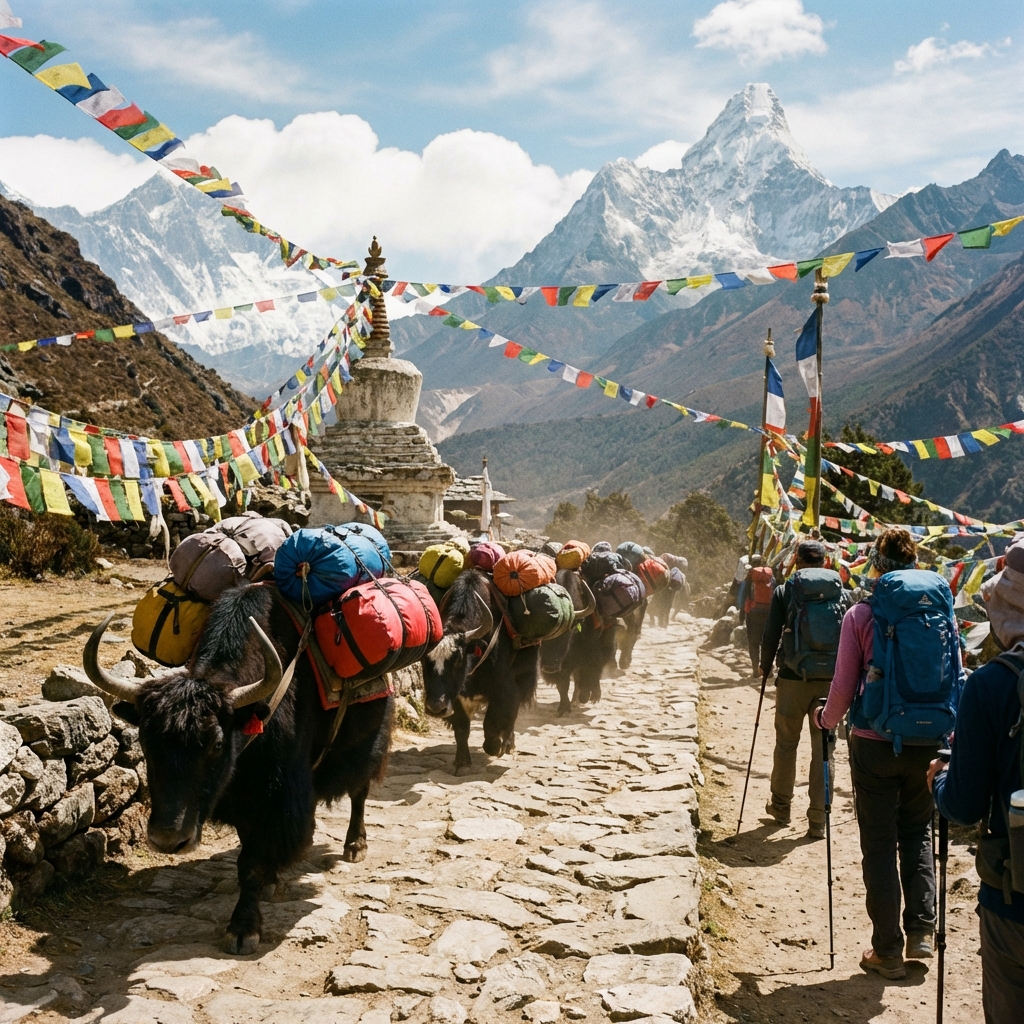
While the trekking world focuses its attention on Everest's Khumbu Valley, Annapurna's circuit routes, and Langtang's glacier valleys, eastern Nepal quietly offers something that those famous regions can no longer provide: Nepal as it was before mass tourism arrived.
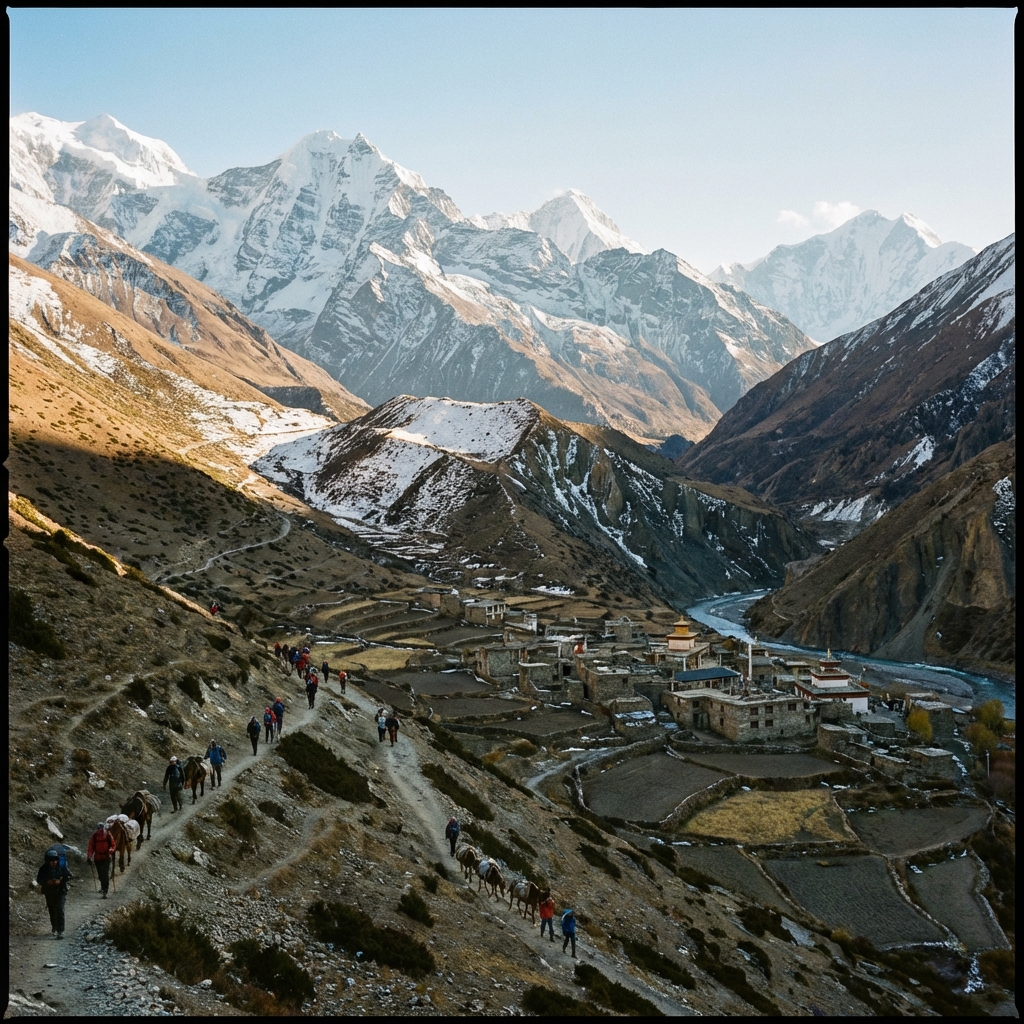
Eastern Nepal encompasses an arc of trekking destinations along the country's eastern border — Kanchenjunga bordering Sikkim, Makalu rising above the Barun Valley, the dramatic Arun River gorge cutting through the Himalayan range, and the sacred Pathibhara shrine in Taplejung district. Together they form a region that receives fewer trekkers in an entire year than Everest Base Camp receives in a single week. The trails are pristine, the cultures are authentic, the logistics are challenging, and the rewards are extraordinary.
The ethnic communities of eastern Nepal — Limbu, Rai, Sherpa, and various Tibeto-Burman groups — have maintained their traditions with a vitality rarely found in Nepal's more visited regions. The Limbu's Kirant Mundhum oral literature, the Rai's diverse languages and shamanic practices, the Sherpa's Tibetan Buddhist culture at high altitudes — these are living traditions encountered as daily reality, not as cultural performance staged for tourism dollars.
This overview covers all major eastern Nepal trekking destinations, cultural context, logistics, and the practical information needed to plan an expedition to Nepal's least explored corner.
Far eastern Nepal, bordering Sikkim (India) and Tibet
Kanchenjunga, Makalu, Arun Valley, Pathibhara
5-24 days depending on destination
5,700m (Makalu BC) | 5,143m (Kanchenjunga North BC)
Moderate to Very Strenuous depending on route
Apr-May (Spring), Oct-Nov (Autumn)
Varies by destination — RAP for Kanchenjunga; MBNP for Makalu
Taplejung (Kanchenjunga), Tumlingtar (Makalu), Bhadrapur
Limbu, Rai, Sherpa, Gurung, Tibetan Buddhist and Kirant traditions
Teahouses on main sections; tented camps required for high routes
$1,400-5,000+ depending on route and duration
Very Low to Extremely Low — Nepal's least visited major region
Where Is Eastern Nepal? Geography, Provinces and Districts
Eastern Nepal — also called north-east Nepal or simply the east of Nepal — is the country's far-eastern region, lying east of the Sun Koshi and Dudh Koshi watersheds and bordering the Indian state of Sikkim to the east and the Tibet Autonomous Region of China to the north. Most of the region falls within today's Koshi Province (formerly Province 1), with the southern lowland fringe in Madhesh Province. Under Nepal's earlier system it formed the Eastern Development Region (headquartered at Dhankuta), often described as the Kirata region after its indigenous Kirant peoples.
The region spans three distinct eco-zones across an elevation range from roughly 60m in the Terai (Kechana Kalan, Jhapa — Nepal's lowest point) to 8,586m at the summit of Kanchenjunga:
- Terai (lowlands): Hot subtropical plains and the region's commercial belt, including Biratnagar, the largest eastern city.
- Mid-hills: Temperate terraced farmland and the cultural heartland of the Limbu and Rai, including hill towns like Dhankuta, Ilam, and Taplejung.
- High Himalaya: The glaciated northern frontier holding Kanchenjunga and Makalu and their conservation areas.
Key Districts and Cities of Eastern Nepal
| Area | District(s) | Notable for |
|---|---|---|
| Kanchenjunga approaches | Taplejung | Trailhead for Kanchenjunga, Pathibhara shrine, Limbu culture |
| Makalu / Arun approaches | Sankhuwasabha | Tumlingtar, Khandbari, Num — gateways to Makalu Base Camp |
| Eastern hills | Dhankuta, Terhathum, Bhojpur, Khotang | Rai heartland, tea and terraced farming, Tinjure-Milke-Jaljale rhododendron belt |
| Tea country | Ilam | Nepal's tea capital, Kanyam estates, rolling green hills |
| Terai gateway | Jhapa, Morang, Sunsari | Bhadrapur and Biratnagar airports, road access from the plains |
The Tinjure-Milke-Jaljale area in the eastern hills holds 28 of Nepal's 31 rhododendron species — one reason spring is the region's biodiversity peak.
Eastern Nepal vs the trekking regions
"Eastern Nepal" describes the whole administrative and geographic east of the country, while the famous trekking destinations — Kanchenjunga, Makalu, the Arun Valley, and Pathibhara — sit in its northern, high-Himalaya districts (Taplejung and Sankhuwasabha). The sections below focus on those trekking destinations, the main reason international travellers head east.
Why Choose Eastern Nepal? The Compelling Case
Nepal's Last True Frontier
Eastern Nepal receives an estimated 1,500-2,500 trekkers per year across all its destinations combined — a fraction of the daily arrivals at Lukla airport for Everest Base Camp. This is not a minor distinction: it fundamentally changes the nature of the experience. Trails feel owned by the mountains, not by the trekking industry. Villages maintain their daily rhythm regardless of whether trekkers pass through. Teahouse meals are cooked by families, not by staff managing industrial-scale tourism operations.
Eastern Nepal is the right region for trekkers who:
- Have completed mainstream Nepal treks and seek something more authentic
- Value wilderness and solitude as primary trekking goals
- Are curious about eastern Nepal's extraordinary ethnic and cultural diversity
- Are willing to invest in more complex logistics for a genuinely different experience
- Want to support tourism development in Nepal's most underserved region
Extraordinary Ethnic Diversity
No other region of Nepal concentrates such cultural diversity in trekking-accessible terrain. A single extended eastern Nepal journey might move through Rai villages with a dozen distinct language groups, Limbu communities practicing pre-Hindu Kirant Mundhum traditions, Sherpa settlements showing clear Tibetan Buddhist heritage, and Gurung communities with their own distinct traditions — all within a two-week walking circuit.
This diversity is not superficial. The languages are mutually unintelligible. The religious practices are genuinely distinct. The oral literatures, folk music, agricultural calendars, and craft traditions each reflect thousands of years of separate development. Meeting these communities on their own terms, with the patience that a longer journey allows, is one of the deepest cultural experiences available to trekkers in Nepal.
Two 8,000-Metre Peaks in One Region
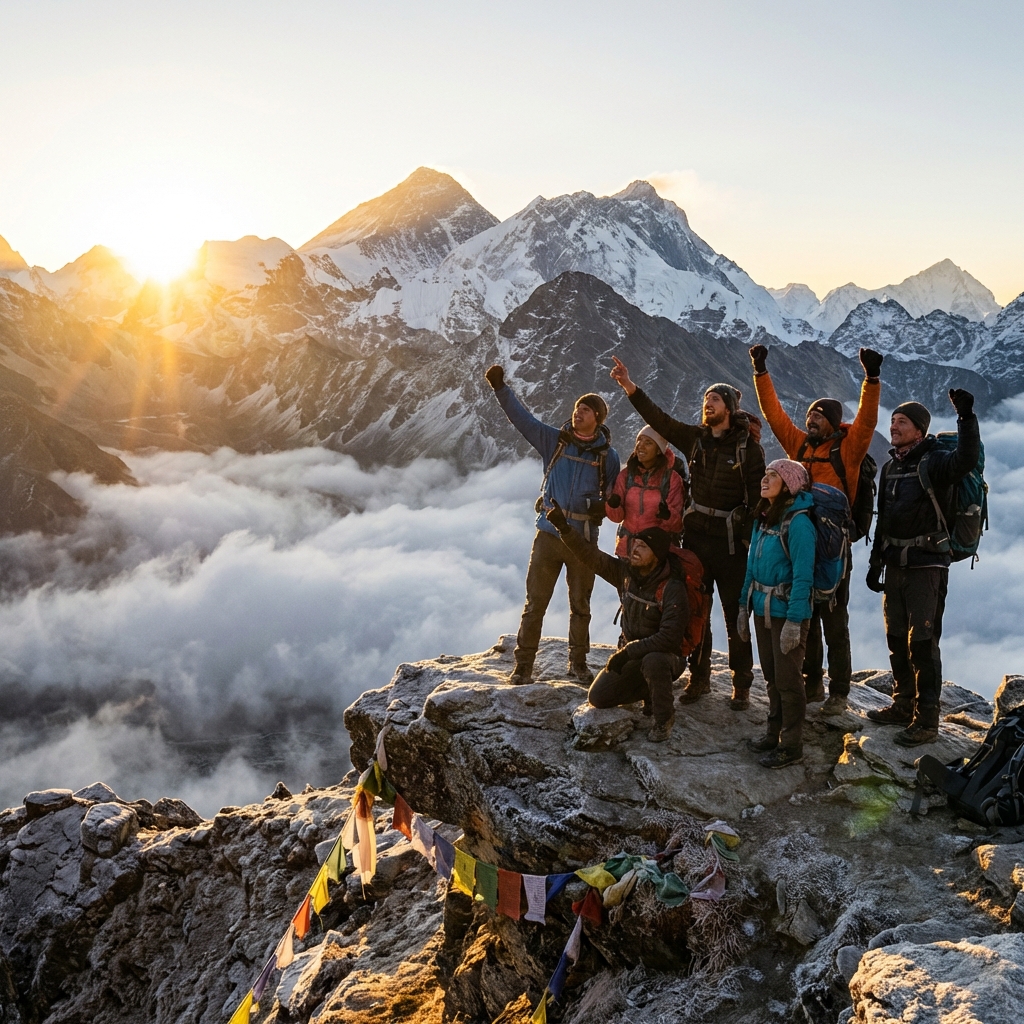
Eastern Nepal is home to two of the world's 14 eight-thousanders: Kanchenjunga (8,586m, third-highest) and Makalu (8,485m, fifth-highest). Both are accessible to trekkers without technical mountaineering skills. Both offer base camp experiences of extraordinary drama. Both are approached through terrain of ecological and cultural richness that rivals the mountain destination itself.
Only a handful of people in the world have trekked to the base camps of both mountains. Eastern Nepal offers that singular distinction to patient, well-prepared trekkers with time for a 5-6 week journey.
The Conservation Significance
Eastern Nepal's trekking regions are protected within two major conservation areas — Kanchenjunga Conservation Area and Makalu Barun National Park — that together form part of the Kangchenjunga-Makalu Landscape, a transboundary conservation zone recognized by scientists as one of the world's most biologically important mountain ecosystems. The Barun Valley contains species new to science discovered as recently as the 2000s. Kanchenjunga's forests shelter snow leopard populations whose survival depends partly on the low-intensity, conservation-positive tourism model that limited trekker numbers make possible.
Your visit to eastern Nepal contributes directly to making this conservation model economically viable for local communities.
The Tourism Gap — and Why It Matters
Eastern Nepal received less than 3% of Nepal's total trekker arrivals in recent years, despite containing two of the world's highest mountains and some of its most extraordinary cultural and ecological diversity. This imbalance creates economic pressure on communities in the region and removes the conservation argument for protecting wilderness areas. Every trekker who chooses eastern Nepal helps redress this imbalance — creating local employment, making conservation economically valuable, and building the case for continued protection of extraordinary landscapes.
Eastern Nepal Region Overview: Geography and Sub-Regions
Eastern Nepal's trekking region spans approximately 200 kilometres east to west along the Himalayan arc, from the Dudh Kosi watershed in the west to the Sikkim border in the east. The primary trekking destinations are organized around the major river systems that drain south from the high mountains.
Sub-Region 1: Kanchenjunga — Far Eastern Border
The Kanchenjunga Conservation Area occupies Nepal's far eastern corner, sharing a border with Sikkim (India) to the east. The region encompasses the approaches to the world's third-highest peak from both the north (Ghunsa Valley) and south (Yalung Valley).
Key Features:
- World's third-highest peak (8,586m) and four satellite 8,000m+ summits
- Restricted Area Permit required — minimum 2 trekkers + licensed guide
- Limbu and Rai cultural heartland in lower valleys
- Sherpa and Tibetan Buddhist culture at high altitudes
- Pristine wilderness with very few annual trekkers
- Combined north-south circuit is one of Nepal's greatest classic routes
Gateway: Taplejung (by air from Kathmandu, or by road via Bhadrapur)
Key Routes:
- Kanchenjunga North Base Camp — 16-18 days to Pangpema (5,143m)
- Kanchenjunga South Base Camp — 14-16 days to Oktang (4,730m)
- Kanchenjunga Circuit — 22-24 days combining both base camps
Full Region Guide: Kanchenjunga Region
Sub-Region 2: Makalu — The Wild Barun Valley
The Makalu Barun National Park protects the approaches to Nepal's fifth-highest peak, centered on the extraordinary Barun Valley — one of the world's most biologically diverse high-altitude ecosystems.
Key Features:
- World's fifth-highest peak (8,485m) in near-perfect pyramidal form
- No Restricted Area Permit required (MBNP permit only)
- Arun Valley approach through dramatic subtropical-to-alpine transition
- No teahouse infrastructure above Tashigaon — tented camps required
- Fewer than 600 trekkers per year — Nepal's least visited major base camp
- Over 300 orchid species, 440 bird species in the national park
Gateway: Tumlingtar (by air from Kathmandu)
Key Routes:
- Makalu Base Camp Trek — 18-22 days to 5,700m
- Lower Barun Valley Trek — 12-14 days to Tashigaon
Full Region Guide: Makalu Region
Sub-Region 3: Arun Valley — The Great River Corridor
The Arun River creates one of the world's deepest gorges as it cuts through the main Himalayan range — the river's headwaters are in Tibet, and it flows 5,000+ metres below the surrounding peaks. The valley itself is a trekking destination distinct from the base camp approaches, offering a journey through extraordinarily diverse landscapes and cultures without requiring high-altitude conditioning.
Key Features:
- One of the world's deepest river gorges (5,000+ metres below surrounding peaks)
- Rich cultural corridor with Rai, Limbu, and mixed Tibetan communities
- Subtropical to temperate ecological transition within 50km
- Gateway for both Makalu and Kanchenjunga approaches
- Quiet roads and trails with minimal tourist infrastructure
- Excellent birding (over 300 species recorded in the valley)
Gateway: Tumlingtar or Bhadrapur
Key Experiences:
- Walking the Arun Valley from Tumlingtar through Num and Khandbari
- Exploring Rai villages with traditional architecture and cultural practices
- Birdwatching in subtropical forest sections
- River crossing experiences on traditional suspension and log bridges
Sub-Region 4: Pathibhara and Taplejung Area
Pathibhara Devi (3,794m) is one of Nepal's most important Hindu pilgrimage sites — a goddess temple on a high ridge above Taplejung that draws hundreds of thousands of domestic pilgrims annually, yet remains almost unknown to international trekkers. The trek to Pathibhara and surrounding areas offers a unique window into Nepal's living pilgrimage traditions.
Key Features:
- Sacred Pathibhara Devi shrine at 3,794m — one of Nepal's most visited pilgrimage sites
- Well-developed trail infrastructure (for domestic pilgrims)
- Cultural experience of active Hindu and syncretic religious practice
- Panoramic views of the eastern Himalaya including Kanchenjunga
- Gateway to Kanchenjunga treks (route passes through Taplejung area)
- Accessible shorter duration (5-7 days from Taplejung)
Gateway: Taplejung
Key Route:
- Taplejung → Pathibhara → Return (4-5 days round trip)
- Can be combined with the start of the Kanchenjunga trek
Trek Comparison: Eastern Nepal's Major Routes
| Route | Duration | Max Altitude | Difficulty | Permits | Teahouses | Crowds |
|---|---|---|---|---|---|---|
| Kanchenjunga North BC | 16-18 days | 5,143m | Strenuous | RAP + KCAP ($40+) | To Ghunsa; tented above | Extremely Low |
| Kanchenjunga South BC | 14-16 days | 4,730m | Strenuous | RAP + KCAP ($40+) | To Tseram; tented above | Extremely Low |
| Kanchenjunga Circuit | 22-24 days | 5,143m | Very Strenuous | RAP + KCAP ($40+) | Partial; tented for upper sections | Extremely Low |
| Makalu Base Camp | 18-22 days | 5,700m | Very Strenuous | MBNP + TIMS ($50) | To Tashigaon only; tented above | Extremely Low |
| Arun Valley | 7-10 days | 2,000m | Easy-Moderate | TIMS only | Throughout | Very Low |
| Pathibhara Pilgrimage | 5-7 days | 3,794m | Moderate | TIMS | Throughout (pilgrimage infrastructure) | Low (international); Moderate (domestic) |
Quick decision guide for eastern Nepal:
- Maximum wilderness and altitude: Makalu Base Camp — Nepal's most remote mainstream base camp
- Best circuit trek: Kanchenjunga Circuit (North + South) — no backtracking, complete cultural traverse
- First eastern Nepal trek: Kanchenjunga North BC — best infrastructure for the region
- Cultural and biodiversity focus: Arun Valley — accessible without high-altitude commitment
- Spiritual and pilgrimage interest: Pathibhara — unique domestic pilgrimage culture, accessible duration
- Both 8,000m peaks: Plan a 5-6 week expedition combining Kanchenjunga and Makalu
Limbu and Rai Culture: The Heart of Eastern Nepal
Eastern Nepal is one of the world's most significant concentrations of indigenous Tibeto-Burman culture outside of Tibet. The Limbu and Rai peoples — collectively known as Kirant — occupy the eastern hills and represent some of Nepal's oldest continuously inhabited communities.
The Kirant Heritage
The Kirant peoples' presence in eastern Nepal predates written history. Ancient Hindu texts reference them as the indigenous inhabitants of the northeastern Himalayan foothills, and oral traditions place their cultural foundations in mythological time. They are among Nepal's designated Adivasi Janajati (indigenous nationality) groups and have maintained distinct cultural identities despite centuries of political pressure from successive Kathmandu-based states.
Shared Kirant Elements:
- Kirant Mundhum: A corpus of oral texts governing cosmology, ritual practice, ethics, and history — the foundational religious literature of both Limbu and Rai peoples
- Ancestral animism: Belief in forest spirits, ancestral shades, and sacred natural features requiring propitiation
- Communal ritual: Major life events (birth, death, marriage, agricultural transitions) marked by community-wide ceremonies conducted by specialist priests
- Clan organization: Descent systems regulating marriage, inheritance, and social obligation
The Limbu People
Approximately 400,000 Limbu live in Nepal, primarily in the eastern hills of Taplejung, Sankhuwasabha, Terhathum, and Dhankuta districts — the approaches to Kanchenjunga.
Limbu Cultural Distinctives:
- Sirijonga script: The Limbu language has its own indigenous script, one of very few Himalayan languages with this distinction
- Subba tradition: Traditional Limbu social organization based on the subba (clan chief) system
- Chhyang culture: Millet beer (chhyang) is central to Limbu hospitality and ritual — refusing it can cause offence
- Phedangba: Limbu shaman-priests who conduct Mundhum ceremonies, communicate with spirits, and manage ritual knowledge
- Sakela Ubhauli/Udhauli: Major festivals in spring and autumn involving communal dance (kelang) and ritual offerings
Encountering Limbu Culture on Trek: The Taplejung-Kanchenjunga approaches pass through the cultural heartland of the Limbu. Villages like Sekathum and Amjilossa retain traditional practices. If your timing coincides with Sakela Ubhauli (April-May) or Udhauli (October-November), you may encounter community-wide celebrations with traditional drumming, dance, and ritual.
The Rai People
The Rai are even more linguistically diverse than the Limbu — linguists recognize over a dozen distinct Rai languages, several with fewer than a thousand speakers. They inhabit the middle hills of Sankhuwasabha, Bhojpur, Khotang, and surrounding districts — the approaches to Makalu and the Arun Valley.
Rai Cultural Distinctives:
- Linguistic diversity: Bantawa, Chamling, Thulung, Yakkha, Wambule and many other Rai languages — a remarkable diversity within a small geographic area
- Bijuwa tradition: Rai shamanic practitioners (bijuwa) conduct healing ceremonies involving spirit communication and herbal medicine
- Deuda tradition: Folk poetry and singing tradition, often competitive, serving as social commentary and entertainment
- Agricultural calendar: Millet cultivation and terraced farming practices organized around ritual seasonal transitions
- Gurkha tradition: A large proportion of Nepal's Gurkha soldiers have historically come from Rai communities — creating a martial tradition and unique relationship with Britain and India
Encountering Rai Culture on Trek: The Arun Valley approach to Makalu passes through Rai communities with traditional terraced agriculture and village structures. Khandbari, Num, Sedua, and surrounding villages offer opportunities for genuine cultural interaction. Spring and autumn festival periods bring communities together for Sakela celebrations.
Buddhist and Tibetan Influence at Higher Altitude
Above approximately 3,000m throughout eastern Nepal, the cultural character shifts toward Tibetan Buddhist influence. Sherpa communities, with strong cultural and religious ties to Tibet, established themselves at higher altitudes generations ago and now form the backbone of the mountain guide and porter economy.
High-Altitude Buddhist Culture:
- Gompas (monasteries) in Ghunsa (Kanchenjunga) and at higher Makalu approach settlements
- Prayer flag lines marking trail junctions, high passes, and ridges
- Chortens (Buddhist stupas) at village entrances and trail junctions — always pass clockwise
- Mani walls with carved sacred mantras — pass on the left (keeping the wall to your right)
- Losar (Tibetan New Year, February) and Saga Dawa (May-June) are the major Buddhist festivals
Best Time to Visit Eastern Nepal
Eastern Nepal's climate is influenced by the Indian monsoon arriving from the south and east — the region receives somewhat more monsoon precipitation than central and western Nepal.
Spring (March-May): Optimal for Biodiversity
Why spring excels in eastern Nepal:
- Extraordinary rhododendron blooms covering entire hillsides — some of Nepal's finest displays
- Orchid season at peak in lower Arun and Barun Valley forests
- Wildlife at maximum activity — birds displaying, mammals visible at lower elevations
- Warming temperatures make tented high camps more manageable
- Kanchenjunga and Makalu approaches both clear of winter snow
Spring considerations:
- Pre-monsoon rain increases through May, with afternoon clouds common
- Leeches active below 2,500m after rain — bring leech socks and salt
- River levels rise from snowmelt in late April and May
- Some high passes can retain snow into early April
Best spring months: April (rhododendrons peak) and early May (warm, biodiversity high)
Autumn (October-November): Optimal for Mountain Views
Why autumn excels in eastern Nepal:
- Post-monsoon clarity delivers the finest mountain photography opportunities of the year
- Stable, predictable weather with reliable morning clearance
- Comfortable temperatures across all altitude zones
- Post-harvest golden landscapes in lower valleys
- Zero leech activity, manageable river crossings
Autumn considerations:
- November temperatures at high camp (4,500m+) drop below -20°C — quality gear essential
- Best to complete high sections before mid-November
- Less biological diversity (flowers finished) but superior mountain views
Best autumn months: October (optimal balance) and early November (excellent conditions, fewer people)
Monsoon and Winter
The June-August monsoon brings extreme rainfall to eastern Nepal — the region's eastern location means it often receives heavier monsoon precipitation than central Nepal. Landslides are common on access roads, trail erosion makes routes dangerous, and visibility is poor at altitude. Trekking is not recommended during monsoon.
December-February brings extreme cold at altitude, with high passes and upper valleys snowbound. The lower Arun Valley remains walkable but the major trekking destinations are inaccessible. Not recommended except for experienced winter mountaineers.
Access and Logistics: Getting to Eastern Nepal
Eastern Nepal's remoteness is real — it requires more planning and travel time than Everest or Annapurna regions. Understanding the logistics is essential for realistic planning.
Gateway Cities
Bhadrapur
- Domestic airport in the Terai lowlands of far eastern Nepal
- Connections to Kathmandu (1 hour, $120-160)
- Gateway for Ilam, Taplejung via road, and the broader eastern hill region
- Road from Bhadrapur: Taplejung (8-10 hours), Tumlingtar (6-8 hours)
Tumlingtar
- Small airport in the Arun Valley, gateway for Makalu approaches
- Connections to Kathmandu (40 minutes, $120-150)
- Weather-dependent — delays are common; allow buffer days in your itinerary
- Road to Khandbari (3-4 hours), Num (further road or 2-3 days walking)
Taplejung (Suketar)
- Small airport with direct Kathmandu connection (40 minutes, $150-200)
- Primary gateway for Kanchenjunga approaches
- Limited daily flights — book well in advance during peak season
- Road from Taplejung: Kanchenjunga trailheads accessible within 1-2 days
Road Access from Kathmandu
- Kathmandu to Taplejung: 18-22 hours (usually 2 days with overnight stop)
- Kathmandu to Khandbari (Makalu gateway): 15-18 hours
- Road access is an option but requires additional days in the itinerary
Permit Requirements by Destination
| Destination | Permit Required | Cost | Special Requirements |
|---|---|---|---|
| Kanchenjunga | RAP + KCAP + TIMS | $55-80+ | Min. 2 trekkers + licensed guide mandatory |
| Makalu | MBNP + TIMS | $40-50 | No guide mandate but strongly advised |
| Arun Valley | TIMS only | $20 | No special requirements |
| Pathibhara | TIMS | $20 | No special requirements |
Obtaining Restricted Area Permits (Kanchenjunga only): RAP must be obtained through a licensed trekking agency in Kathmandu. It cannot be obtained at the trailhead or in the field. Allow 1-3 working days in Kathmandu for processing. The requirement for a licensed guide is non-negotiable — solo trekking in the restricted area is not permitted.
Choosing an Agency for Eastern Nepal
Eastern Nepal's remoteness and logistical complexity means that agency selection is more consequential than for mainstream treks. A poorly organized Langtang trek is inconvenient; a poorly organized Makalu trek can be dangerous.
What to Verify Before Booking
1. Guide licensing and experience
- Confirm your guide holds a current Nepal Tourism Board (NTB) license
- Request specifically that your guide has previous eastern Nepal experience — ask how many times they have done the specific route
- For Makalu and Kanchenjunga high sections, your guide should have formal wilderness first aid training
2. Emergency planning
- Ask the agency for their specific emergency evacuation plan for the route you're doing
- Confirm they carry or can arrange satellite communication on remote sections
- Verify they know the helicopter landing zones on your specific route
3. Camping equipment for Makalu
- Request a complete list of camping equipment provided (tents, sleeping bags, cooking equipment, fuel)
- Confirm a cook is included for above-Tashigaon sections
- Ask about cold weather contingency (what happens if temperatures are extreme)
4. Porter welfare
- Confirm porters will be provided with appropriate footwear, clothing, and shelter for the specific altitude of the route
- Ask about porter insurance
- Verify maximum weight limits will be observed (25kg is the government maximum)
5. Cultural community connections
- Request that guides and porters be hired from local Limbu and Rai communities where possible
- Ask whether the agency has relationships with locally-owned teahouses
- Verify the agency has operated the route in the current season (seasonal route changes occur)
Pro Tip
Ask your prospective agency for the names of two or three recent clients who completed your specific route. Contact those clients directly. The honest feedback of someone who just returned from Makalu or Kanchenjunga is more valuable than any brochure description.
Sustainable Tourism in Eastern Nepal
The Economic Case for Eastern Nepal Tourism
Eastern Nepal is economically one of Nepal's most underserved regions. Many villages in the trekking approaches have limited access to markets, education, and healthcare. Tourism income — when it flows to local communities rather than Kathmandu-based intermediaries — can significantly improve living standards without requiring external development projects with their overhead and bureaucracy.
How your visit creates direct economic impact:
- Teahouse income goes directly to family owners who built and maintain the lodge
- Local guide and porter employment creates stable income in remote communities
- Permit fees contribute to conservation area management
- Purchase of local products (honey, hand-woven textiles, dried foods) supports household economies
- Your presence demonstrates the economic value of the conservation area to local communities
Conservation Support
The Kanchenjunga-Makalu Landscape is one of Asia's most important conservation zones. Its future depends partly on demonstrating to local communities that conservation is economically beneficial. Trekking tourism is one of the strongest arguments: forests with snow leopards attract trekkers; those trekkers generate income for communities; those communities then have economic reason to protect the forests.
Active conservation choices:
- Follow all Kanchenjunga Conservation Area and Makalu Barun National Park regulations
- Never purchase wildlife products (musk, furs, horns, feathers)
- Report poaching activity to your guide or park staff
- Pack out all non-biodegradable waste — leave the high routes cleaner than you found them
- Use kerosene or gas stoves above 3,500m; never build wood fires
Responsible Cultural Tourism
- Photography: Always request permission; many Kirant elders have traditional views about being photographed
- Sacred sites: Follow your guide's direction regarding access to sacred forests, springs, and ancestral sites — many are not open to outsiders
- Ceremonies: If you are fortunate enough to witness a Mundhum ceremony or other ritual, observe quietly and do not photograph without explicit permission
- Fair prices: Do not aggressively bargain on essential services — price negotiations that feel like game-playing to visitors are financially material to remote communities
What Treks Are in Eastern Nepal?
Eastern Nepal's major treks include the Kanchenjunga Base Camp circuit (18-24 days, restricted area), the Makalu Base Camp trek (18-22 days), the Arun Valley trek (7-10 days), and the Pathibhara pilgrimage trek (5-7 days). Kanchenjunga requires a restricted area permit; Makalu requires a national park permit. If you want to compare the region against other remote options, see how it stacks up against the Manaslu region and read our guide to the best off-the-beaten-path treks in Nepal.
How Do I Get to Eastern Nepal?
The primary access points are Bhadrapur (Jhapa) and Tumlingtar airports, both reached by domestic flights from Kathmandu (45-60 minutes). From Bhadrapur, travel overland to Taplejung for Kanchenjunga treks (1-2 days by jeep). From Tumlingtar, drive to Num village for Makalu treks (4-6 hours). Road conditions are rough and weather-dependent. Budget extra days for transport delays.
Frequently Asked Questions About Eastern Nepal
Related Routes and Guides
Kanchenjunga:
- Kanchenjunga Region Guide — Complete regional overview
- Kanchenjunga North Base Camp — Full route guide
- Kanchenjunga Circuit — Combined north and south
Makalu:
- Makalu Region Guide — Complete regional overview
- Makalu Base Camp Trek — Full route guide
Comparison Regions:
- Rolwaling Region — Similarly remote, between Everest and Langtang
- Dolpo Region Guide — Remote western Nepal counterpart
- Manaslu Region Guide — Remote high-pass circuit, more infrastructure than eastern Nepal
Practical Guides:
- Nepal Trekking Permits Explained — All permit requirements including Restricted Area Permits
- Best Time to Trek Nepal — Comprehensive seasonal guide
- Altitude Sickness Signs and Turnaround Rules — Essential safety reading
- Best Off-the-Beaten-Path Treks in Nepal — Where eastern Nepal fits
- Nepal Trekking Costs: Complete Guide — Budgeting for a remote trek
This eastern Nepal regional guide is maintained by the Nepal Trekking Team with input from verified local agencies, conservation area authorities, and experienced guides from Limbu and Rai communities. Last updated June 2026. For corrections or updates, contact our editorial team.
Special acknowledgment to the Limbu, Rai, and Sherpa communities of eastern Nepal whose cultural heritage, ecological knowledge, and extraordinary hospitality make this region worth the journey. Eastern Nepal remains Nepal's best-kept trekking secret — one worth sharing thoughtfully.


