Everest View Trek: The Short Way to See Mount Everest
The Everest View Trek (also called the Everest Panorama Trail) is a 5-7 day trek from Kathmandu that delivers a genuine, close-up view of Mount Everest from Syangboche and the Everest View Hotel ridge (3,880m) — without the altitude, time, or difficulty of the full Everest Base Camp trek. It is the most accessible way to see Everest in person.
| Route | Duration | Max Altitude | Difficulty | Permits | Teahouses | Crowds |
|---|---|---|---|---|---|---|
| Everest View Trek | 5-7 days | 3,880m | Easy-Moderate | $30-35 | Excellent (luxury options) | Moderate |
| Everest Base Camp | 12-16 days | 5,545m | Moderate-Challenging | $30-35 | Excellent | Very High |
| Pikey Peak Trek | 6-8 days | 4,065m | Easy-Moderate | TIMS only (NPR 2,000) | Basic | Very Low |
| Namche-Thame Loop | 5-7 days | 3,820m | Easy-Moderate | $30-35 | Good-Excellent | Low |
Not everyone has two weeks for Everest Base Camp. But everyone who visits Nepal deserves to see Everest — the highest mountain on earth, visible in person to anyone willing to reach Namche Bazaar and climb one more ridge.
The Everest View Trek is exactly what it sounds like: the most direct, most comfortable, and most time-efficient route to a genuine view of Mount Everest. In 5-7 days from Kathmandu — including the famous Lukla flight — you can stand at Syangboche (3,880m) or the Everest View Hotel ridge and look directly at Everest, Lhotse, Nuptse, and the entire western wall of the Khumbu Himalaya.
This isn't a compromise. The Everest View Hotel, perched on the ridge above Namche Bazaar, is one of the most dramatically situated luxury lodges in the world. The views from its terrace are the same views that EBC trekkers see from three times the altitude — just from a different angle. On a clear October morning, Everest's summit pyramid rises unmistakably above the ridgeline, 6,000 horizontal kilometers above you, close enough that you can distinguish the plume of wind-driven snow off the summit.
This guide covers the Everest View Trek in full — ideal for families, executives with tight schedules, older trekkers preferring moderate altitude, winter visitors (December-February are excellent months for clear views), and anyone who wants to see Everest without the full EBC expedition.
Route Snapshot
5-7 days from Kathmandu
3,880m (12,729 ft) at Everest View Hotel/Syangboche
40-55 km (25-34 miles)
Easy to Moderate
Year-round (avoid monsoon June-August)
Dec-Feb excellent for crystal-clear views
Khumbu, Everest Region
Lukla (via Kathmandu flight)
Sagarmatha National Park ($30), TIMS (NPR 2,000)
Good teahouses to luxury lodge options
$900-$3,500 (budget to luxury all-inclusive)
Popular Route Variants:
| Variant | Duration | Accommodation | Best For |
|---|---|---|---|
| Standard Trek | 5-6 days | Good teahouses | Most trekkers |
| Luxury Trek | 6-7 days | Everest View Hotel + Yak & Yeti Namche | Special occasion, comfort-focused |
| Family Trek | 7 days | Good lodges with extra rest days | Families with children |
| Winter Trek | 5-6 days | Standard lodges (some luxury options) | Clear views, minimal crowds |
| Extended + Tengboche | 7-8 days | Adds monastery visit to circuit | Cultural enhancement |
Why the Everest View Trek Works: The Case for "Less"
The direct comparison to Everest Base Camp is inevitable, so let's address it clearly.
What You See from 3,880m vs. 5,545m
The Everest View Hotel ridge sits at 3,880m. Kala Patthar, the famous EBC viewpoint, sits at 5,545m. The vertical difference is 1,665 meters — significant. But what you see of Everest is more similar than you might expect.
From Syangboche/Everest View Hotel (3,880m):
- Everest summit visible above the ridge, approximately 40km distance
- Full Lhotse-Nuptse-Everest massif visible as a connected panorama
- Ama Dablam dominates the foreground — widely considered the most beautiful mountain in view
- Clear weather gives excellent summit visibility, including Everest's distinctive plume
From Kala Patthar (5,545m):
- Everest much closer (~10km), the upper face dramatically detailed
- Khumbu Icefall, Western Cwm, and South Col visible
- Higher angle changes the perspective — you see more of the upper mountain
The EBC view is unquestionably more dramatic in terms of proximity. But the 3,880m view shows Everest as part of the Himalayan landscape — in context, surrounded by its satellite peaks, the way it looks in the most iconic photographs. Both are genuine, both are moving. One requires 5-6 days; the other requires 14-16.
Winter Views: December-February
Winter (December-February) offers the Everest View Trek's clearest skies of the year. The post-monsoon air has fully cleared, temperatures are cold but stable, and Everest is often visible with extraordinary detail. The Everest View Hotel and main Namche lodges remain open through winter. If you're considering this trek and have flexibility on timing, a December or January visit delivers views that rival October at a fraction of the crowds.
Prepare for cold: daytime temperatures at 3,880m in January reach 3-5°C; nights drop to -10°C or below.
The Everest View Hotel
The Everest View Hotel deserves its own section. Built in 1971 by a Japanese business consortium and designed specifically to provide trekkers a comfortable high-altitude experience, it remains one of Nepal's most uniquely situated accommodation options.
The hotel's claim to fame:
At 3,880m, the Everest View Hotel holds a Guinness World Record as the world's highest altitude hotel with full luxury facilities. It was built to be accessible to trekkers who couldn't commit to the full EBC journey — a concept that has proven prescient given the demand for shorter, more comfortable Himalayan experiences.
What to expect:
- Rooms: Heated, comfortable double rooms with attached bathrooms
- Dining: Full restaurant service with Japanese and Nepali cuisine (the Japanese influence from its founders persists)
- Terrace: The iconic panoramic terrace faces directly toward Everest — it is genuinely one of the world's most spectacular outdoor dining spaces
- Oxygen: Supplemental oxygen available in rooms and common areas (unusual for trekking lodges)
- Staff: Professional service in a remote mountain setting
Pricing:
Expect to pay $200-350 per night depending on season and room type. This is expensive by Nepal standards but extraordinary value for a luxury mountain experience at altitude with Everest visible from the terrace.
Alternative luxury option: The Yak & Yeti Hotel in Namche Bazaar provides similar comfort at lower altitude (3,440m) and lower cost, making a combination of Namche comfort and Syangboche day trip a viable luxury option.
Route Overview: Lukla to Syangboche
Standard Route Architecture
Day 1: Kathmandu → Lukla → Phakding (2,610m)
Day 2: Phakding → Namche Bazaar (3,440m)
Day 3: Namche acclimatization — Syangboche / Everest View Hotel
Day 4: Namche Bazaar — Optional Tengboche visit or rest
Day 5: Namche → Lukla (2,840m)
Day 6: Lukla → Kathmandu flight
Extended 7-day variant (recommended):
Day 1: Kathmandu → Lukla → Phakding (2,610m)
Day 2: Phakding → Namche Bazaar (3,440m)
Day 3: Namche acclimatization — Khumjung village
Day 4: Namche → Syangboche → Everest View Hotel (overnight if budget allows)
Day 5: Return to Namche → Optional Tengboche (3,860m) day trip
Day 6: Namche → Lukla (2,840m)
Day 7: Lukla → Kathmandu flight
Trail Terrain Summary
| Section | Distance | Elevation Change | Terrain | Challenge |
|---|---|---|---|---|
| Lukla to Phakding | 8-9 km | -230m | Valley trail, bridges | Easy |
| Phakding to Namche | 13-14 km | +830m net | Gorge trail, final steep climb | Moderate |
| Namche to Syangboche | 2-3 km | +440m | Steep hill climb above Namche | Moderate |
| Return Namche to Lukla | 20-22 km | -830m net | Same trail descending | Moderate |
Complete Itinerary: 6-Day Trek
Day 1: Kathmandu to Lukla to Phakding (2,610m)
Flight: Kathmandu to Lukla (Tenzing-Hillary Airport) — 30 minutes Trek: Lukla to Phakding — 2.5-3 hours Elevation change: -230m
The adventure begins at one of the world's most famous small airports. Lukla's Tenzing-Hillary Airport, at 2,840m, is the gateway to the Khumbu and one of the most scenically dramatic landings available on a commercial aircraft. Your flight from Kathmandu takes 30 minutes; the approach is over hills and then suddenly down into a short upward-sloping runway carved into the mountainside.
After organizing gear and permits, the trail descends gently from Lukla along the Dudh Koshi river to Phakding. This easy first afternoon eases you into the trekking rhythm: suspension bridges, pine forest, the sound of the glacial river below, and distant views of high peaks ahead.
Peak-Season Flights Depart from Ramechhap (Manthali), Not Kathmandu
During the busiest months — March, April, May, October, and November — Lukla flights are usually rerouted from Ramechhap (Manthali) airport instead of Kathmandu to ease air traffic. That means a roughly 4-5 hour pre-dawn drive (departing Kathmandu around midnight) to catch a short 20-minute flight to Lukla. In the off-season and winter, flights typically operate directly from Kathmandu. Confirm your departure airport with your agency, and always build 1-2 buffer days into your schedule for weather delays. See our Kathmandu to Lukla flights guide and Lukla flight delays and alternatives for full logistics.
First impressions of the Khumbu:
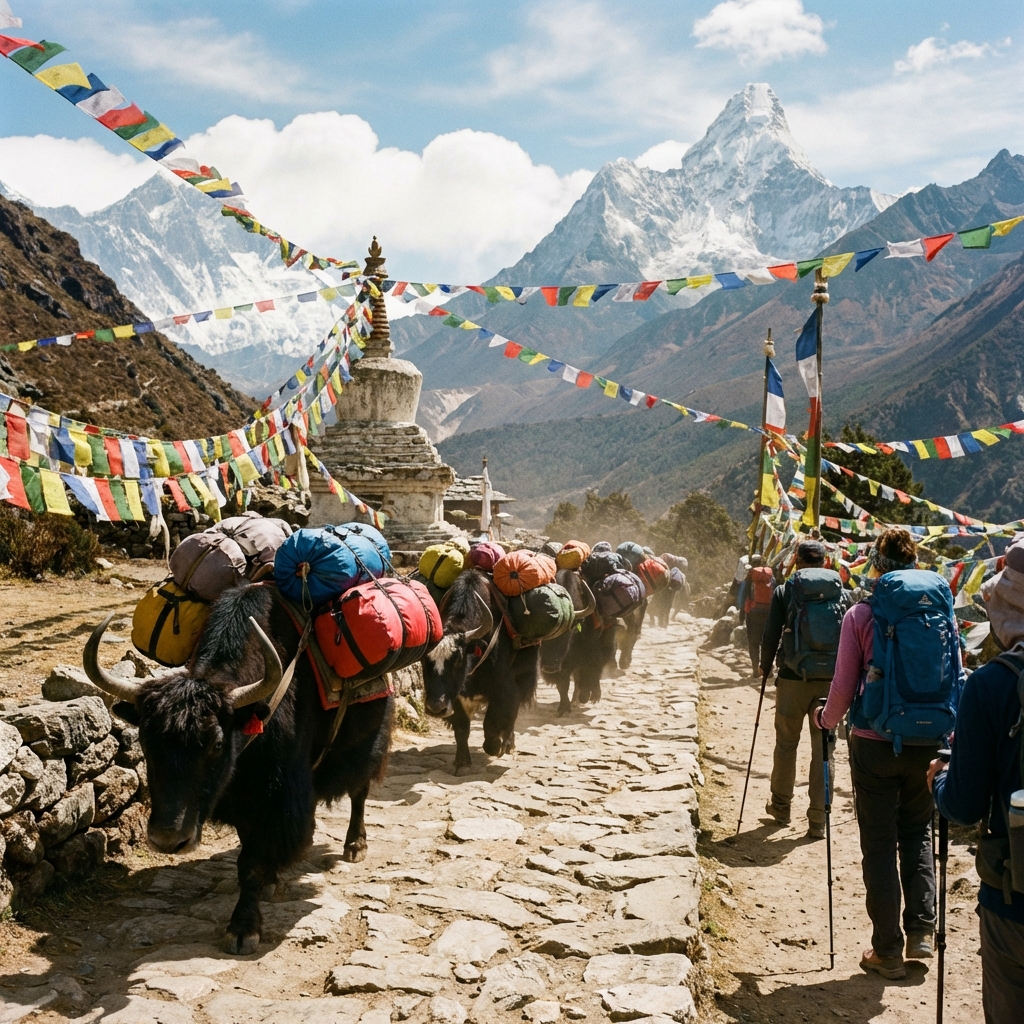
The Khumbu trail from Lukla is immediately distinctive. Stone-paved paths pass through villages with prayer wheels and mani walls; porters carry loads that seem impossible; the trail is busy in peak season with trekkers from every country imaginable. It doesn't feel remote — the infrastructure is well-developed — but it feels unmistakably Himalayan.
Information current as of January 2025.
Lukla
2,840m
Room: $12-20/night
Dal Bhat: $7-12
Organize any last-minute gear here. The ATM is unreliable — bring sufficient cash from Kathmandu. First night if afternoon flight delays until next morning.
Phakding
2,610m
Room: $10-15/night
Dal Bhat: $6-9
Good first-night option with comfortable lodges. Lower altitude than Lukla helps gentle acclimatization start.
Day 2: Phakding to Namche Bazaar (3,440m)
Trek duration: 5-6 hours Distance: 13-14 km Elevation gain: +830m (with several descents and re-ascents)
This stage ranks among Nepal's most iconic. The trail navigates the Dudh Koshi gorge via multiple suspension bridges — including the Hillary Bridge, one of the highest suspension bridges in the world — with mountain views improving dramatically with every kilometer.
The final approach to Namche Bazaar involves a steep 300m climb in the last hour. Your reward for cresting the ridge is one of Nepal's most dramatic first views: the great horseshoe of Namche, with the Kongde peaks rising behind and — if the clouds cooperate — the first glimpse of Everest framed between ridges to the north.
The first Everest sighting:
Many trekkers catch their first view of Everest from a viewpoint on the trail just below Namche, marked by a sign explaining what you're seeing. It's distant — Everest's black summit pyramid rising above Lhotse — but it's unmistakable. Take your time here. This is the moment you came for, and the full view from Syangboche will improve it still further.
Day 3: Namche Bazaar Acclimatization and Syangboche
Day activity: Namche exploration + Syangboche ascent (3,880m) Day hike elevation gain: +440m
This is the key day of the trek — your primary Everest view experience. After breakfast in Namche, follow the trail that climbs steeply above the town toward Syangboche airstrip and the Everest View Hotel.
The climb to Syangboche:
The trail from Namche to Syangboche gains 440 meters in approximately 2-3 hours. It's steep but well-maintained, climbing through rhododendron and pine forest before emerging on the open ridge where the airstrip and hotel sit.
The view from Syangboche:
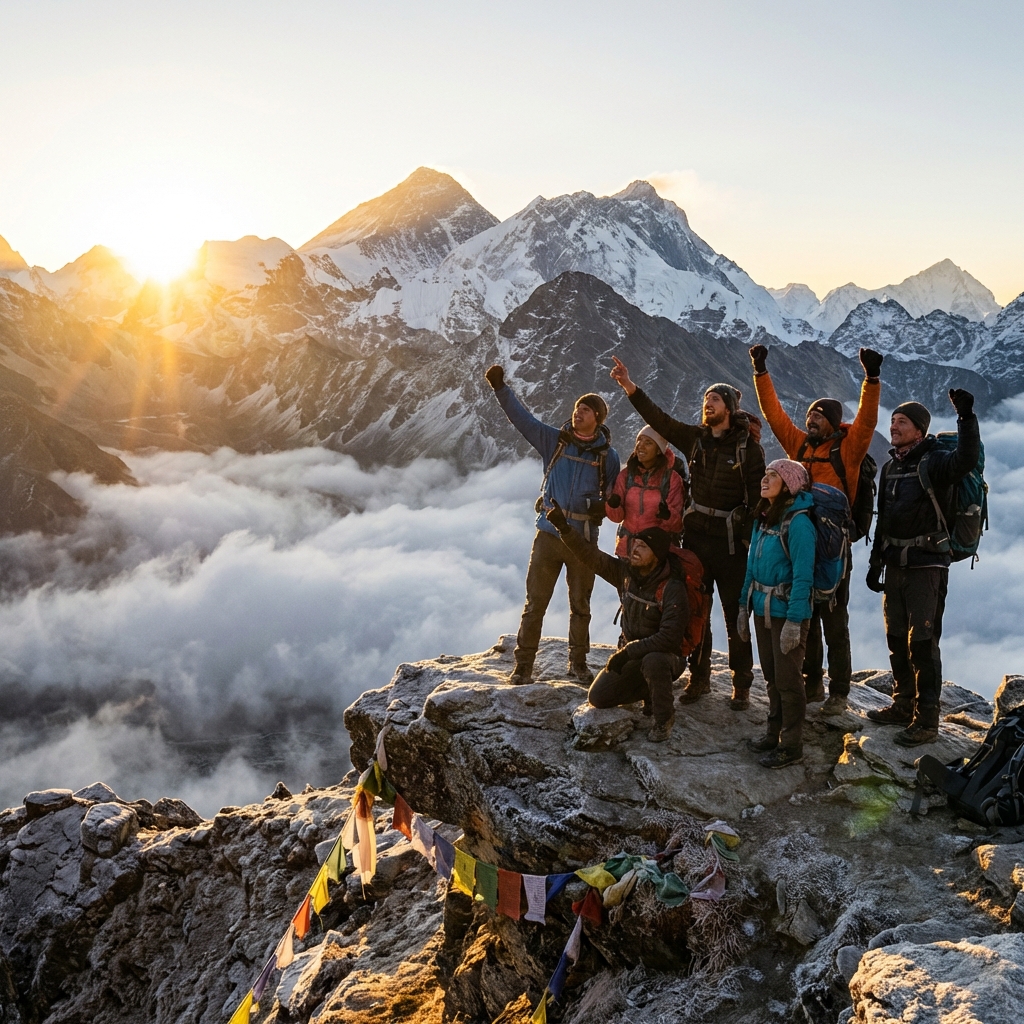
From the Syangboche ridge, the panorama opens in all directions. To the north, the Khumbu peaks fill the skyline: Everest's black summit rising above Lhotse's broad face, Nuptse's jagged ridge to the right, Ama Dablam's perfect pyramid to the east. To the south, the valley you climbed reveals itself fully. This is the moment.
The Everest View Hotel experience:
Even if not staying the night, stopping for tea or lunch at the Everest View Hotel (approximately $30-50 for lunch, teas extra) is worthwhile. The terrace delivers the hotel's famous panorama — and the Japanese-influenced menu at altitude is a genuine surprise.
Timing Your Syangboche Visit
Arrive at Syangboche by 9:00-10:00 AM for the best mountain visibility. Clouds typically build from the south in mid-afternoon, obscuring views by 2:00-3:00 PM on many days. The morning window — especially in October and autumn — can deliver views of exceptional clarity.
Plan to spend 2-3 hours at the viewpoint/hotel, then descend to Namche for the night.
Information current as of January 2025.
Namche Bazaar
3,440m
Room: $15-40/night (luxury to budget)
Dal Bhat: $8-15
The Khumbu's main hub and your base for this trek. Two nights here is optimal. Explore the Saturday market, the cultural museum, and the bakeries. Cash from ATM here — last reliable access.
Syangboche
3,880m
Room: $200-350/night (Everest View Hotel)
Dal Bhat: $25-45 (hotel restaurant)
The highest-altitude luxury hotel in the world. Day visitors welcome (buy lunch or tea). Overnight guests must book well in advance. Oxygen available in rooms.
Day 4: Optional Extension — Tengboche Monastery
Optional day trek: Namche → Tengboche (3,860m) and return (or overnight) Distance: 20-22 km round trip Duration: Full day
For trekkers with time and energy, Day 4 can extend the trek with a Tengboche Monastery visit — adding altitude experience and one of Nepal's most magnificent cultural sites.
The trail from Namche to Tengboche (3-4 hours each way) climbs to the monastery ridge with Ama Dablam rising dramatically behind the building. The monastery hosts daily prayers and is the most important Buddhist institution in the Khumbu.
Tengboche highlights:
- The monastery's massive prayer hall with ancient murals
- Daily prayer sessions (morning and afternoon)
- The iconic photography location: monastery with Ama Dablam behind
- Slightly higher altitude (3,860m) adds to acclimatization
- Further Everest views from the ridge — now closer and from a different angle
Practical note: If doing Tengboche, either return to Namche for the night or stay at Tengboche's lodges and return on Day 5. Do not push to Tengboche and back in one day if your fitness is moderate — it's a long day.
Khumjung and Khunde: The Panorama Trail Villages
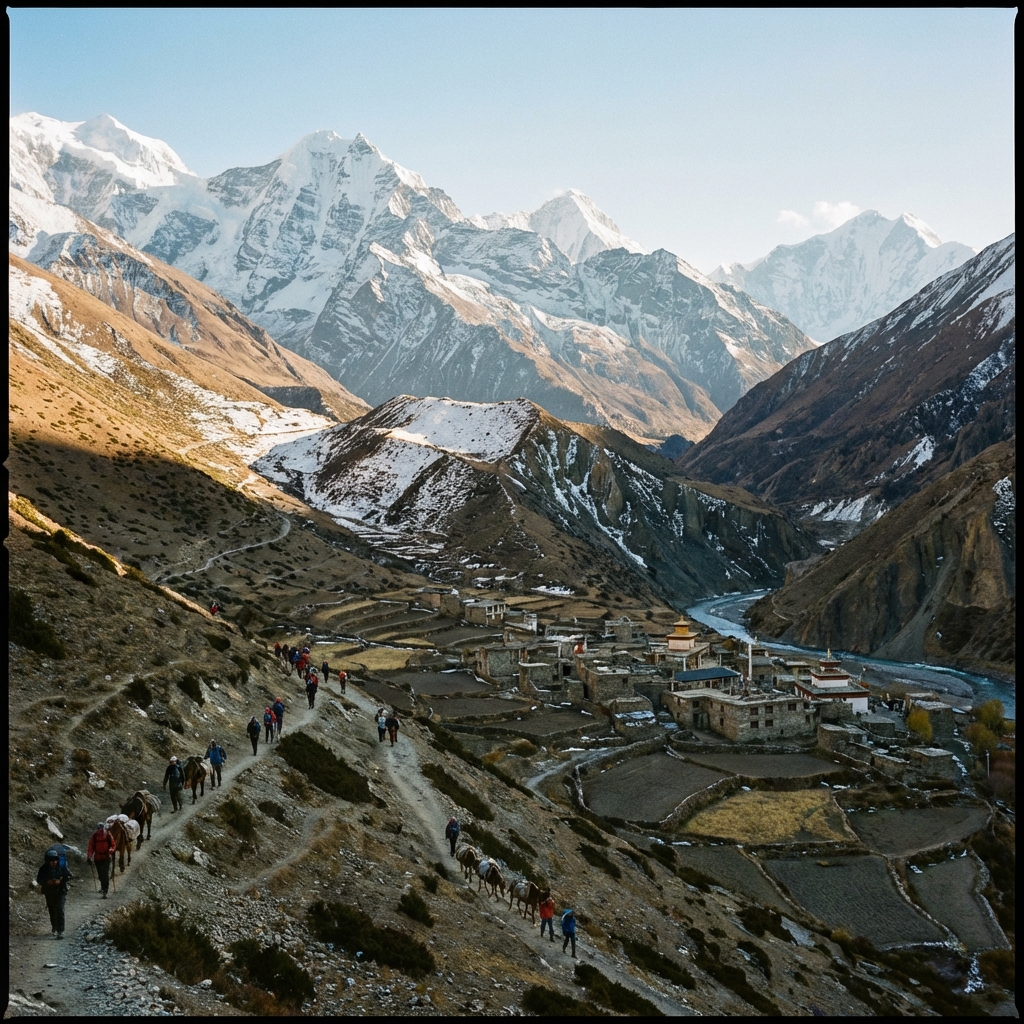
The classic Everest Panorama Trail variant of this trek loops above Namche to the Sherpa villages of Khumjung and Khunde — and this is what distinguishes the panorama route from a simple out-and-back. Khumjung (3,790m) sits in a sheltered bowl beneath the sacred peak of Khumbila, and it is one of the largest and most traditional Sherpa settlements in the Khumbu. Most Everest Base Camp itineraries skip it entirely, which is exactly why guides recommend it.
What to see in Khumjung and Khunde:
- Khumjung School — built by Sir Edmund Hillary in 1961, the first school in the Khumbu and a cornerstone of his lifelong support for the Sherpa community
- Khumjung Monastery — home to a claimed yeti scalp relic, a long-standing curiosity of the village
- Khunde Hospital — the Hillary-founded hospital that still serves the region's villages
- Everyday Sherpa life — potato and barley fields, stone-walled homes, yak herding, and a far quieter atmosphere than busy Namche
The walk from Namche to Khumjung climbs past the Syangboche airstrip and the famous Everest viewpoint, so you can combine your primary Everest view with the village visit in a single day. Adding Khumjung is the single best way to deepen the cultural side of the Everest View Trek without adding altitude.
Day 5: Namche Bazaar to Lukla (2,840m)
Trek duration: 5-6 hours Distance: 20-22 km Elevation loss: -830m net
The return to Lukla follows the same beautiful gorge trail in reverse. Going downhill is faster and easier, though the sustained descent tests knees. Trekking poles are recommended.
The descent offers the views you were climbing toward on Day 2 — now you walk through them rather than toward them. The suspension bridges feel different going across in the other direction. Arrive in Lukla by mid-afternoon.
Day 6: Lukla to Kathmandu
Flight: Lukla to Kathmandu — 30 minutes (morning departure)
Flights depart Lukla 6:00-10:00 AM before afternoon cloud builds. Arrive at the airstrip early and be prepared for potential weather delays (always build 1-2 buffer days in Kathmandu before international connections).
The return flight over the foothills and Kathmandu valley is your last view of the mountains — a final reminder of what you've experienced.
Difficulty Assessment
Easy to ModerateThe Everest View Trek is the most accessible major Khumbu trekking experience available.
What makes it accessible:
- Moderate max altitude: 3,880m at Syangboche keeps AMS risk minimal with proper acclimatization
- Two nights in Namche: Built-in acclimatization before reaching the viewpoint
- Shorter daily stages: 4-6 hours maximum per day
- Excellent infrastructure: The best lodge network in Nepal
- Clear, well-marked trail: No navigation uncertainty
Factors to prepare for:
- Phakding to Namche climb: The sustained final ascent to Namche is the hardest physical section
- Syangboche ascent: 440m above Namche is steep and at altitude
- Lukla flight logistics: Weather-dependent; adds uncertainty to planning
Who is this trek right for:
- Travelers with 7-10 day trips to Nepal who want genuine Everest views
- Families with children (10+) wanting high-altitude experience at moderate risk
- Older trekkers (60+) preferring not to push above 4,000m
- Executives or travelers with inflexible return schedules
- Those physically unable to commit to 14-16 day EBC
- First-time Himalayan trekkers wanting a taste before committing to longer routes
- Anyone who wants to experience the Khumbu in winter
Family Trekking Guide
The Everest View Trek is the best Everest region option for families.
Why it works for families:
| Factor | Everest View Trek | Everest Base Camp |
|---|---|---|
| Max altitude | 3,880m | 5,545m |
| AMS risk for children | Low | Moderate-High |
| Daily walking hours | 4-6 | 5-7 |
| Trek duration | 5-7 days | 14-16 days |
| Cost for family of 4 | $3,600-6,000 | $8,000-12,000 |
| Kid-appropriate | Yes (10+) | 13+ with experience |
Tips for family trekking:
- Add extra rest days (7 days total recommended for families)
- Hire porter to carry children's packs from Lukla
- Book lodges in advance for family rooms
- Bring familiar snacks from Kathmandu
- Build in flexible days for tired children
- Frame the trek as an adventure — map reading, journal keeping, wildlife spotting
- The Saturday market in Namche is a highlight for children
Best Time to Visit
| Month | High | Low | Conditions | Crowds | Notes |
|---|---|---|---|---|---|
| JanuaryBest | 6°C | -10°C | 10mm | Very Low | Exceptional winter clarity. Crystal clear Everest views. Cold but manageable with good gear. Very few trekkers — Namche and lodges quiet. |
| FebruaryBest | 8°C | -8°C | 15mm | Low | Excellent winter conditions. Views improving as season progresses. Still cold mornings at Syangboche. |
| MarchBest | 12°C | -4°C | 35mm | Moderate | Spring begins. Good visibility. Rhododendrons blooming on lower trail. Very good conditions. |
| AprilBest | 15°C | -1°C | 55mm | High | Peak spring season. Best comfort and good views. Namche busy but manageable. |
| MayBest | 17°C | 2°C | 85mm | Moderate-High | Late spring. Some pre-monsoon cloud building. Generally still good for this lower-altitude trek. |
| June | 17°C | 7°C | 175mm | Very Low | Monsoon. Cloud obscures mountains. Views poor. Not recommended. |
| July | 17°C | 9°C | 260mm | Very Low | Full monsoon. Avoid. |
| August | 16°C | 9°C | 250mm | Very Low | Monsoon continues. Poor visibility. |
| September | 14°C | 4°C | 125mm | Low | Monsoon clearing. Improving late month. Variable visibility. |
| OctoberBest | 12°C | -4°C | 25mm | Very High | Best autumn conditions. Crystal clear skies. Excellent Everest views. Namche busy but the Syangboche view is always there. |
| NovemberBest | 8°C | -7°C | 10mm | High | Excellent clarity. Cooler and quieter than October. Very strong choice. |
| DecemberBest | 5°C | -10°C | 5mm | Low | Winter clarity begins. Exceptional views. Cold but fully manageable with gear. Quiet lodges. Good Christmas/New Year option. |
A note on winter trekking: This trek is one of the few Himalayan options that is genuinely recommended for December-February. The maximum altitude (3,880m) is modest enough that winter cold is manageable with good gear, and the winter atmosphere delivers unmatched clarity for Everest views. If you're considering a winter Nepal trip, this is the short trek to choose.
Permits and Costs
Required Permits
| Permit | Cost | Notes |
|---|---|---|
| Sagarmatha National Park | $30 USD | Paid at park entrance before Namche |
| TIMS Card | NPR 2,000 (as of 2026) | Obtained in Kathmandu |
Cost Breakdown
Budget to Luxury Spectrum:
| Package Type | Price Range (USD) | Accommodation | Best For |
|---|---|---|---|
| Budget Trek | $900-$1,200 | Basic lodges, shared guide, all meals, Lukla flight | Cost-conscious trekkers |
| Standard Private | $1,200-$1,800 | Good lodges, private guide, all meals, Lukla flight | Most trekkers |
| Comfort Trek | $1,800-$2,500 | Best available lodges, experienced guide, Lukla flight | Those wanting more comfort |
| Luxury Trek | $2,500-$3,500+ | Everest View Hotel night, Yak & Yeti Namche, private guide | Special occasions, maximum comfort |
Fixed Costs:
- Kathmandu-Lukla return flight: $215-320 per person
- Sagarmatha National Park permit: $30
- Licensed guide: $25-$40 /day
- Porter (optional): $25-30/day
- Everest View Hotel overnight (optional): $200-350/night extra
Frequently Asked Questions
Related Routes and Planning Resources
Nearby Treks in Everest Region:
- Everest Base Camp Trek — The complete EBC journey
- Namche to Thame Loop — Cultural loop from Namche (5-7 days)
- Ama Dablam Base Camp Trek — Beautiful mountain at 4,570m (10-12 days)
- Pikey Peak Trek — Wider Everest panorama from lower Solu (6-8 days)
Essential Planning Guides:
- Everest/Khumbu Region Overview — Complete Khumbu planning guide
- Nepal Trekking Permits Explained — Permit details
- Altitude Sickness Prevention — Safety essentials
- Best Time to Trek Everest Region — Seasonal guide
- Everest View Short Trek Guide — Companion planning guide
- Tengboche Monastery Trek — The cultural extension
- Complete Nepal Trekking Packing List — What to pack
Ready to See Everest in Under a Week?
Plan your Everest View Trek with a verified local Khumbu agency. Get a tailored 5-7 day itinerary, transparent pricing, and luxury-lodge options matched to your dates.
Final Thoughts: Everest Doesn't Require Two Weeks
The mountain doesn't care how long you trekked to see it. Standing at the Syangboche ridge, looking at Everest's summit pyramid rising above the Khumbu peaks in the morning light, the experience is real and complete — regardless of whether you took five days to get there or fifteen.
The Everest View Trek exists because the Himalayas belong to everyone who makes a reasonable effort to reach them — not only those with two weeks, professional fitness, and high-altitude experience. Families, winter travelers, busy professionals, older trekkers, first-time visitors: all of these people deserve to stand somewhere and say "that is Everest, and I can see it."
The trek delivers. The mountain delivers. The lodges in Namche deliver (the bakeries, in particular, deliver beyond expectations).
Come for five days. Fly to Lukla. Walk to Namche. Climb one more ridge.
There it is.
This guide is maintained by the Nepal Trekking Team with input from Khumbu-based guides, the Everest View Hotel, and the Sagarmatha National Park conservation office. Last updated June 2026.


