
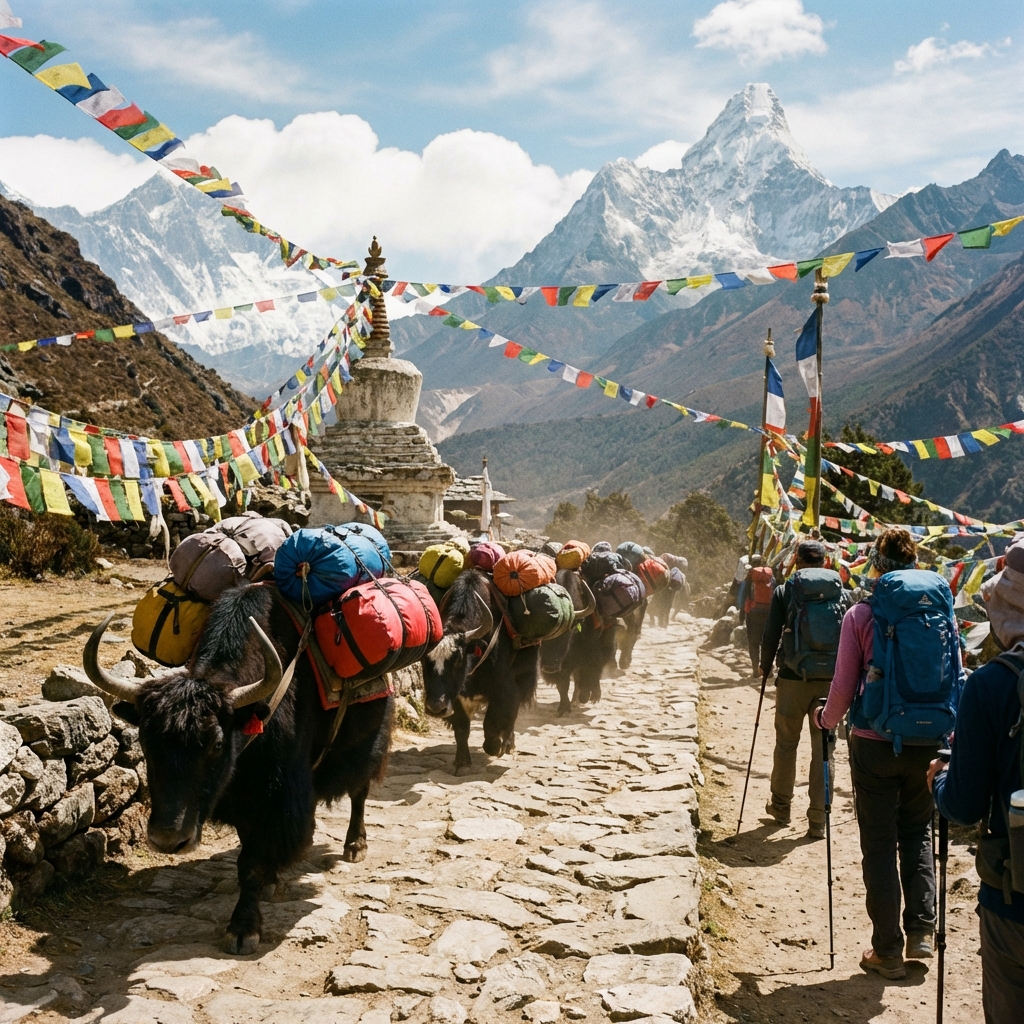
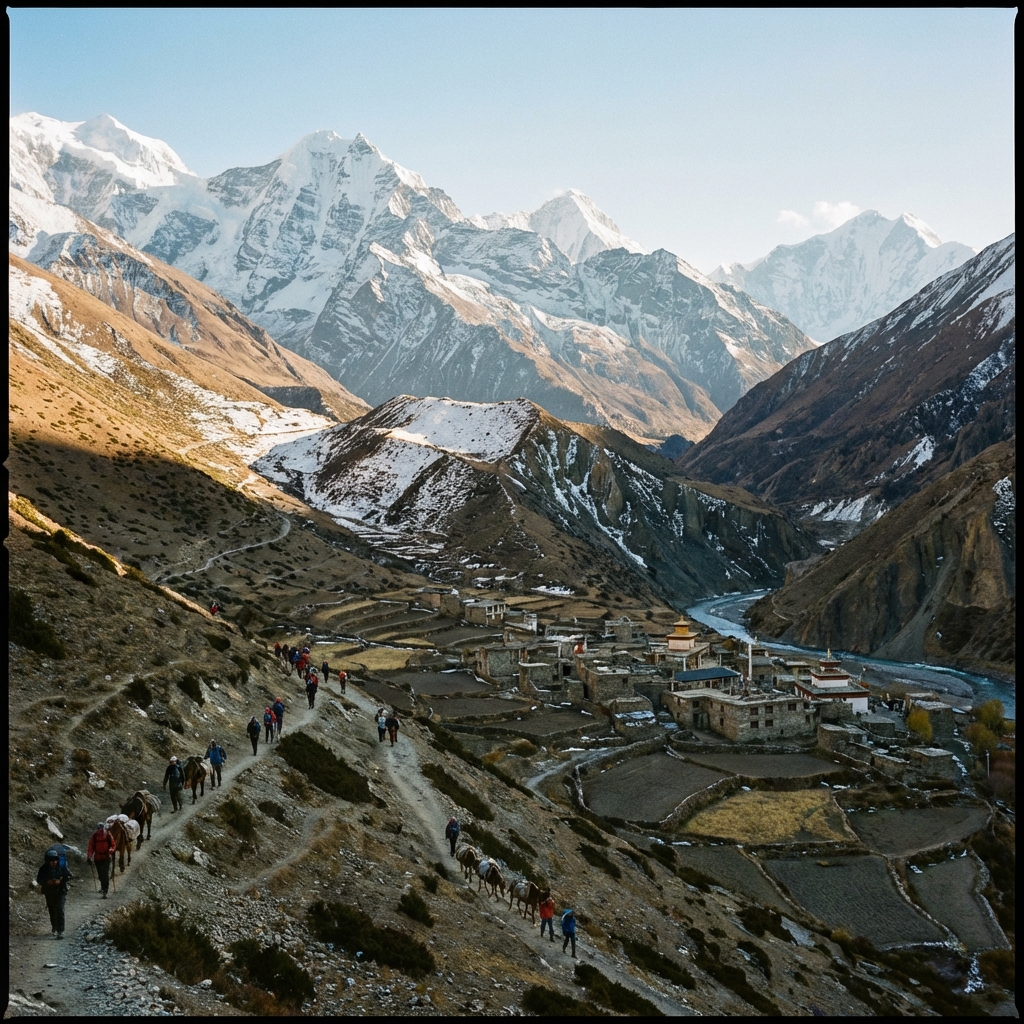
Two hours north of Kathmandu by road, the Ganesh Himal massif rises to 7,422m — yet the trekking routes beneath its peaks remain almost entirely unknown to foreign visitors. This is Nepal's hidden gem hiding in plain sight: a 10-14 day loop through the Tsum-adjacent hills that passes through traditional Tamang villages, crosses high mountain passes with sweeping views, and touches a sacred Himalayan lake without a single teahouse chain or permit queue. The Ganesh Himal trek offers what most people imagine when they think of Nepal trekking — and what the classic routes haven't reliably delivered for years.
The region sits between Langtang National Park to the east and the Manaslu Conservation Area to the west. Tamang communities have farmed and grazed yaks here for centuries, maintaining stone-built villages, prayer wheel corridors, and monasteries whose monks chant daily regardless of whether any foreigners are present. Most villages on this route have never had a trekking lodge — you stay with local families in homestays, sleep on the floor of a community building, or pitch a tent in a yak pasture. This rawness is precisely the point.
Why Trek Ganesh Himal
Cultural authenticity at scale. The Tamang people are Nepal's second-largest ethnic group, yet their homeland — the hills encircling Kathmandu from the north and east — is one of the least-trekked regions in the country. The Ganesh Himal route passes through villages like Gatlang, Somdang, and Tiru where traditional architecture, dress, and daily life have been preserved not as a tourist attraction but simply because tourism hasn't arrived yet. Stone houses with carved wooden windows, women in full traditional dress spinning wool, monks performing morning prayers in monasteries that predate Nepal's modern state — these are ordinary scenes here.
The Ruby Valley. The area around Shertung and Somdang is called the Ruby Valley for the gemstone deposits found in the surrounding hills. While commercial ruby extraction requires licensing and equipment, the valley itself is exceptionally beautiful — a wide glacial basin at around 3,200m ringed by forested ridges and overlooked by the Ganesh Himal peaks. The name alone draws a certain type of adventurous trekker.
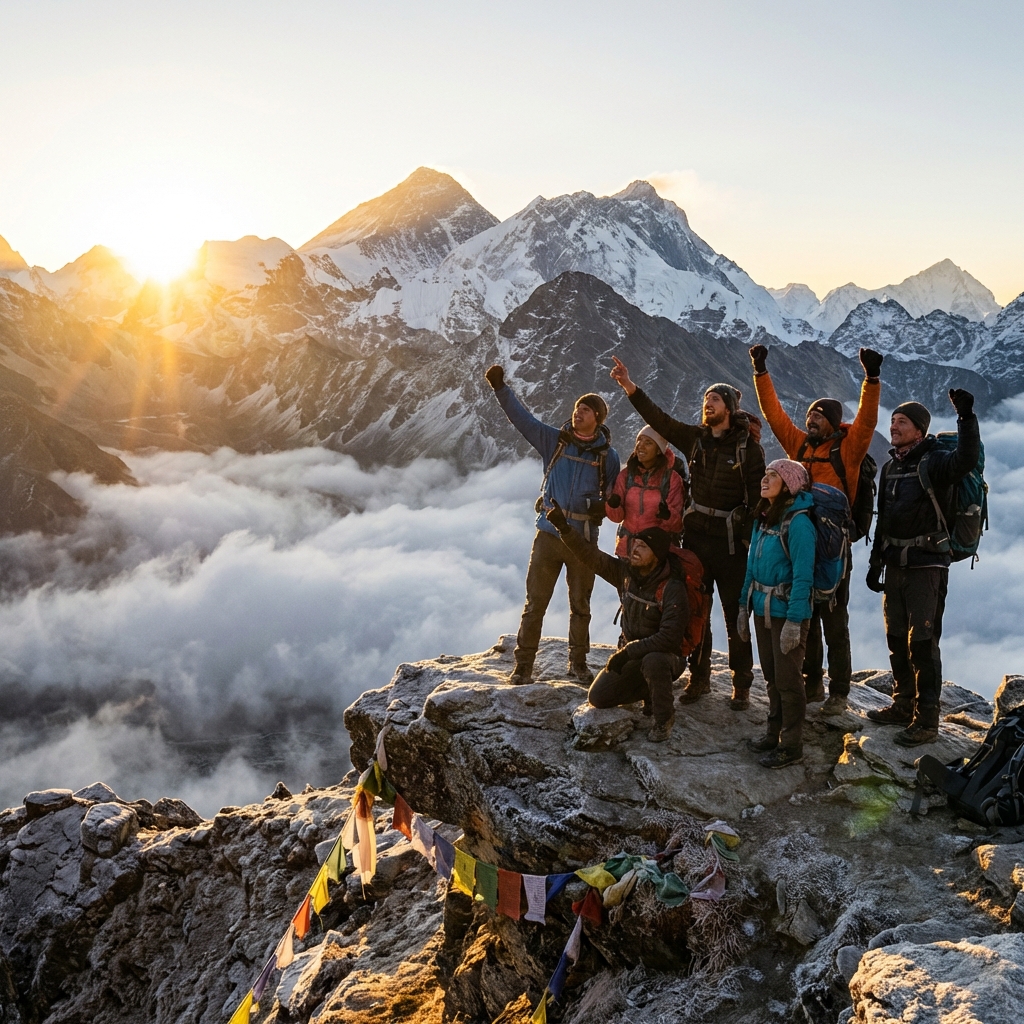
Panoramic views without crowds. Singla Pass (4,050m) and Pangsang Pass (3,842m) offer views that span from Dhaulagiri in the far west to the Everest massif in the east, with Langtang Lirung, Ganesh Himal I-IV, Manaslu, and Himalchuli in the foreground. You will share these views with local shepherds and, occasionally, a passing group of Nepali hikers. Foreign trekkers are exceptional enough that children in some villages will run to look.
Proximity to Kathmandu. Unlike Dolpo, Kanchenjunga, or even Manaslu, the Ganesh Himal region requires no domestic flight. The trailhead at Syabrubesi, Dhunche, or Khangjim is a 4-6 hour drive from Kathmandu on roads that are, if winding, entirely serviceable. This makes the trek doable on a two-week schedule including transit time.
Parvati Kunda sacred lake. At approximately 3,600m, Parvati Kunda is a glacially-formed lake considered sacred in both Hindu and local Tamang belief. The lake sits in a rhododendron forest that explodes with color in April and May. During the annual Janai Purnima festival (full moon in July-August), thousands of Hindu pilgrims walk to the lake for ritual bathing — a remarkable event, though outside trekking season.
10-14 days
4,400m (Singla Pass area / Ganesh Himal viewpoints)
Moderate to Hard
October-November, March-May
Langtang National Park Permit + TIMS
Homestays and basic guesthouses; camping for some variations
Strongly recommended — trails are unmarked in sections
Syabrubesi or Khangjim (4-6 hrs drive from Kathmandu)
$60-90/day with guide and basic homestay/teahouse
Route Overview
There is no single "official" Ganesh Himal trek route — the region lends itself to several variations of different lengths and difficulty levels. The most popular loop runs counterclockwise from Khangjim (the road end above Syabrubesi) through Gatlang, Singla Pass, Somdang (Ruby Valley), Parvati Kunda, and back via Tiru and Gatlang. A simpler variation starts and ends at Syabrubesi or Dhunche, connecting to the Tamang Heritage Trail for the return.
The route described below is the 12-day classic Ganesh Himal loop, starting from Khangjim and finishing at Syabrubesi — one of the most satisfying trek structures in the region.
Day-by-Day Itinerary (12-Day Classic Loop)
| Day | Route | Altitude | Trek Time | Notes |
|---|---|---|---|---|
| 1 | Kathmandu to Syabrubesi by bus or jeep | 1,460m | 6-8 hrs drive | Stay overnight in Syabrubesi |
| 2 | Syabrubesi / Khangjim to Gatlang | 2,238m | 4-5 hrs | Tamang village with great mountain views |
| 3 | Gatlang to Parvati Kunda Lake | 3,600m | 5-6 hrs | Steep climb, sacred lake, camping |
| 4 | Parvati Kunda to Somdang (Ruby Valley) | 3,244m | 5-6 hrs | Rhododendron forest, ridge crossing |
| 5 | Somdang to Ganesh Himal Base Camp / viewpoint | 4,000m+ | 4-5 hrs | Day hike option; high views of Ganesh Himal massif |
| 6 | Somdang to Tiru via Pemi | 2,980m | 5-6 hrs | Remote valley trail, few villages |
| 7 | Tiru to Pangsang Pass | 3,842m | 5-6 hrs | High pass with panoramic views |
| 8 | Pangsang Pass to Nubri / Lokpa area | 2,800m | 4-5 hrs | Descent into northern valleys |
| 9 | Rest day or exploration from Lokpa | 2,800m | Optional | Village visits, acclimatization |
| 10 | Lokpa to Singla Pass area | 4,050m | 5-6 hrs | Highest point of trek, tremendous views |
| 11 | Singla Pass to Gatlang | 2,238m | 4-5 hrs | Return to first Tamang village |
| 12 | Gatlang to Syabrubesi, drive to Kathmandu | 1,460m | 3-4 hrs trek + drive | Afternoon in Kathmandu |
Route Flexibility
The Ganesh Himal trek is best approached with flexibility built into the itinerary. Trail conditions, local accommodation availability, and weather can require route adjustments. An experienced local guide is essential not just for navigation but for negotiating homestays and community permission to camp in restricted areas. Build at least one buffer day into any plan.
Alternative Route: Ruby Valley Direct (10 Days)
A shorter, more focused variation enters directly via Khangjim, crosses to Somdang via Singla Pass, explores the Ruby Valley for 2-3 days, and returns via a different ridge. This is better suited to trekkers with limited time who want the core high-altitude experience without the full cultural loop.
Difficulty Assessment
The Ganesh Himal trek is rated Moderate to Hard, though specific conditions can push it firmly into the Hard category.
Trail quality: This is the most significant challenge for most trekkers. Unlike Everest or Annapurna routes where trails are wide, signposted, and paved in sections, Ganesh Himal trails are narrow livestock paths in many sections, overgrown in spots, and occasionally absent entirely where the route crosses open ridgelines. with a mandatory licensed guide, navigation requires a combination of local knowledge, GPS, and map-reading ability.
Altitude: The maximum altitude on the standard route is around 4,050m at Singla Pass and 3,842m at Pangsang Pass — lower than most of Nepal's iconic treks. Altitude sickness is less likely than on EBC or Manaslu, but the rapid ascent from Syabrubesi (1,460m) to Parvati Kunda (3,600m) in just two days means acclimatization deserves attention. The acclimatization day option in Somdang or Parvati Kunda area is well worth taking.
Daily elevation change: Many days involve 1,000m+ of ascent or descent. The trail between Gatlang (2,238m) and Parvati Kunda (3,600m) involves a net gain of 1,362m in a single day on a trail that is often steep and slippery in wet conditions. Trekkers should be comfortable with sustained uphill hiking for 5-6 hours.
Accommodation uncertainty: In established teahouse regions, you know where you will sleep each night. In the Ganesh Himal region, accommodation involves local families agreeing to host you, community halls that may or may not be open, or your own camping gear. Plan for the camping option — bring a tent even if you hope to use homestays — and your agency should arrange this in advance.
Who is this for:
- Trekkers with previous Nepal experience (at least one multi-day trek)
- Those comfortable with basic or primitive accommodation
- People specifically seeking cultural immersion over luxury
- Hikers with strong navigational skills if going independently (guide strongly advised otherwise)
No Formal Rescue Infrastructure
Unlike the Everest or Annapurna circuits, the Ganesh Himal region has no helicopter landing zones at most high-altitude points, limited mobile signal, and no rescue posts. Travel insurance with helicopter evacuation cover is essential. Carry a satellite communicator (Garmin inReach or similar) — this is not optional on remote variations of this route.
How to Get There
To Syabrubesi (most common start): Take a direct bus from Kathmandu's Machhapokhari (Ring Road area) bus park toward Syabrubesi. Journey time is approximately 7-8 hours on a good day (longer in monsoon or during road works). Private jeep hire from Kathmandu costs approximately NPR 10,000-14,000 ($75-105) one way and takes 5-6 hours.
To Khangjim: Khangjim is a road end approximately 45 minutes above Syabrubesi by jeep. Starting from Khangjim saves a day of trekking and is worth the additional vehicle cost if time is limited.
To Dhunche (alternative start): Dhunche, the headquarters of Langtang National Park, is a similar distance from Kathmandu. Starting from Dhunche and trekking via Gatlang works well as a start/end combination — finish by dropping back to Syabrubesi.
Return to Kathmandu: The trek typically ends back at Syabrubesi or Khangjim, with bus or jeep return to Kathmandu. On longer variations connecting to the Langtang Valley, the trek can finish at Dhunche or Langtang Village, with the same road options back.
Road Conditions Matter
The road to Syabrubesi was severely damaged in the 2015 earthquake and subsequent landslides. It has been rebuilt but remains subject to seasonal closure during heavy monsoon. Confirm road conditions with your agency before the drive, particularly in June-September. A 4WD vehicle is standard and appropriate.
Accommodation and Food
Gatlang is the best-developed village on the route with a handful of functioning guesthouses, clean rooms, and a basic menu. The village was part of a tourism development project and standards here are comparable to lower Annapurna circuit teahouses.
Somdang (Ruby Valley) has a few stone buildings that function as informal guesthouses or community lodges. Standards are extremely basic — shared facilities, local food only (dal bhat, potatoes, eggs). Confirm with your guide before relying on accommodation here; camping in Somdang is often the more reliable option.
Parvati Kunda area — camping only. There are no permanent structures suitable for trekkers at the lake. A flat campsite exists on the northern shore.
Other villages (Tiru, Pemi, Lokpa area) — homestays with local families. These are genuinely private homes where you eat what the family eats and sleep on a mat in the main room. Bring your own sleeping bag liner for hygiene. These homestays typically cost NPR 500-800 ($4-6) per person including dinner and breakfast.
Food throughout the route defaults to the Nepali trekking staple of dal bhat (lentil soup, rice, vegetable curry) with variations. Tamang hospitality is generous — families will often offer local raksi (millet alcohol) or butter tea. Above the teahouse zone, your guide or cook prepares meals from agency-supplied provisions.
Water: Available from springs and streams throughout the route. Treat all water with a filter or purification tablets. The water in the Ruby Valley is particularly clean but still requires treatment.
Permits and Cost Breakdown
Permits
| Permit | Cost (NPR) | Cost (USD) | Where to Get |
|---|---|---|---|
| Langtang National Park Permit | NPR 3,000 | ~$23 | Dhunche checkpoint or Kathmandu TAAN office |
| TIMS Card | NPR 2,000 | ~$15 | TAAN office, Kathmandu (Bhrikutimandap) |
Permit Validity
The Langtang National Park Permit covers the full Ganesh Himal region within the park boundaries. If your route extends into the Manaslu Conservation Area (some western variations do), an additional Manaslu Conservation Area Permit (NPR 3,000) is required. Confirm your specific route's permit requirements with your agency.
Daily Cost Estimates
| Expense | Budget | Mid-Range | Notes |
|---|---|---|---|
| Guide | $25-35/day | $40-50/day | Essential; local guide strongly preferred |
| Porter (if needed) | $18-25/day | - | 1 porter per 2 trekkers recommended |
| Accommodation (homestay/guesthouse) | NPR 500-800 ($4-6) | NPR 800-1,500 ($6-12) | Camping when homestays unavailable |
| Food | NPR 800-1,500/day ($6-12) | NPR 1,500-2,500/day ($12-19) | Dal bhat, eggs, local meals |
| Camping equipment (agency supplied) | Included in agency fee | - | If needed for upper sections |
| Permits | $38 total | $38 total | One-time cost |
| Transport to/from trailhead | $75-105 | $75-105 | Private jeep both ways |
| Total (12-day guided trip) | $700-900 | $1,100-1,400 |
This makes the Ganesh Himal trek one of the most affordable multi-day routes in Nepal. The absence of expensive teahouse infrastructure actually reduces costs when combined with homestay accommodation and local food.
Best Time to Go
October and November are the most reliable months for mountain views and stable trail conditions. Post-monsoon skies are clear across the entire region, and the views of Ganesh Himal, Manaslu, and Langtang from Singla and Pangsang passes are at their best. Daytime temperatures are comfortable for trekking (10-18°C at mid-altitude), though nights above 3,000m get cold (-5 to -10°C). Accommodation should be pre-arranged as the limited teahouse capacity fills during peak season.
March and April bring the rhododendron bloom, which is spectacular at mid-altitude on this route (2,500-3,500m). Rhododendron forests around Parvati Kunda are among the finest in the Langtang region. Visibility is generally good in March, becoming hazier with pre-monsoon haze in May. April is arguably the single best month for the combination of views, flowers, and comfortable temperatures.
May is acceptable but the trail becomes muddy above 3,000m and pre-monsoon clouds reduce visibility from the passes.
December to February: The route to Gatlang remains accessible year-round. Above Gatlang, snow closes the high passes (Singla, Pangsang) from December through February. Cold-weather trekkers can do a winter cultural loop at lower altitude, but the iconic high-pass views are unavailable.
June to September (monsoon): The lower sections of the route are feasible but leech-infested and slippery. The upper passes are dangerous in monsoon snow and cloud. This is not a recommended period except for the very lowest cultural walks from Syabrubesi to Gatlang.
Spring Rhododendron Timing
For the rhododendron bloom at its peak around Parvati Kunda, aim for the last week of March through the first two weeks of April. At 3,200-3,600m, peak bloom typically falls 2-3 weeks later than at lower altitudes. If you're visiting in April, plan to be at or above Parvati Kunda between April 5-20 for the best color.
Cultural Notes: Tamang People and Traditions
The Tamang are the predominant ethnic group of the hills north and east of Kathmandu. Tibetan in origin, Tamang communities have practiced Tibetan Buddhism for centuries while developing their own distinct language, music, and craft traditions. Several aspects of Tamang culture are particularly visible on this trek:
Architecture: Traditional Tamang houses are built from rough-cut stone with wooden frames and flat roofs used for drying grain and socializing. Villages cluster on south-facing ridges for warmth and sunlight. Mani walls (stone prayer walls inscribed with Om Mani Padme Hum) mark the entrance to most villages and must be passed on the left.
Monasteries: Tamang monasteries (gompas) belong to the Nyingma and Kagyu schools of Tibetan Buddhism. Gatlang's monastery is one of the oldest and best-preserved in the Langtang region. Visits are generally welcomed — remove shoes, move clockwise around the main hall, and do not photograph ritual objects without permission.
Festivals: If you trek during Losar (Tibetan New Year, usually February), you may encounter village celebrations with traditional dance, music, and communal feasting. Trekking during a local festival provides remarkable cultural access — and your guide can facilitate appropriate participation.
Music: Tamang selo (traditional Tamang music) is one of Nepal's most distinctive musical traditions. In villages, you may hear this music at weddings, festivals, or simply in the evening when families gather. Ask your guide to introduce you to local musicians if the opportunity arises.
Packing Essentials
Layer system clothing:
- Lightweight base layers (moisture-wicking)
- Insulating mid-layer (fleece or light down jacket)
- Waterproof outer layer (essential — afternoon rain is common in spring)
- Warm hat, gloves, and neck gaiter for pass crossings
Footwear:
- Waterproof trekking boots with good ankle support (trails are rough and wet in sections)
- Camp sandals or light shoes for evenings
Shelter:
- Tent (camping required for Parvati Kunda and some upper sections)
- Sleeping bag rated to -15°C for high camp comfort
- Sleeping bag liner (for homestay hygiene)
Navigation:
- GPS device or phone with OsmAnd loaded with Nepal topo maps — trails are unmarked
- Compass
- Paper map of Langtang/Ganesh Himal region
Other essentials:
- Water filter (Sawyer Squeeze or similar)
- Altitude medication (Diamox, consult your doctor)
- High-SPF sunscreen and lip balm
- Headlamp with spare batteries
- Cash in NPR (no ATMs on route; last ATM in Dhunche or Syabrubesi, reliability variable)
Tips and Recommendations
Hire a local guide, not a Kathmandu agency guide. A guide who grew up in the Gatlang area or has family connections in Somdang will open doors — literally and figuratively — that no outsider can. Local guides know which family will host trekkers, which monastery is having a puja, and which trail is closed due to a recent landslide. Ask your Kathmandu agency to assign a guide from the Rasuwa district specifically.
Learn basic Tamang phrases. Even a few words of Tamang — Namaste works across Nepal, but knowing Khamju (hello in Tamang), or expressing appreciation for a meal — creates genuine connection. Your guide can teach you a handful of phrases on the first day.
Bring small gifts appropriately. If staying in homestays, it is appropriate to bring a small quantity of sugar, tea, or rice as a contribution. Avoid giving sweets to children, which encourages problematic behaviors. Pencils and notebooks for school-age children are universally appreciated.
The Ruby Valley's rubies are not yours to take. While gemstone deposits exist in the Somdang area, collecting minerals from the national park or conservation area is illegal and culturally disrespectful. The area's name is evocative; leave the geology in place.
Build in a weather day. Cloud and rain can arrive unexpectedly in spring even in April. A trek with a built-in buffer day at Somdang or Gatlang allows you to wait out bad weather without missing the key passes.
Photography Ethics in Tamang Villages
Many Tamang villagers are comfortable being photographed, but always ask first through your guide. Older women in particular may decline — respect this. At monasteries, ask the monk in charge before photographing thangkas, statues, or ritual objects. A small donation to the monastery's incense fund (NPR 200-500) is appropriate when photographing. Do not photograph religious ceremonies without explicit permission from the officiant.
Frequently Asked Questions
How difficult is the Ganesh Himal trek?
The Ganesh Himal trek is rated Moderate to Hard. You will cross passes above 4,000m including Singla Pass and Pangsang Pass, trek 5-7 hours daily on rough trails, and stay in basic homestays or camp. Previous multi-day trekking experience is recommended, though the altitude is lower than major routes like Everest Base Camp or the Manaslu Circuit.
Do I need permits for the Ganesh Himal trek?
Yes, you need a Langtang National Park permit (NPR 3,000 / ~$23) and a TIMS card (NPR 2,000 / ~$15). Both can be obtained in Kathmandu before departure. No restricted area permit is required.
What is the best time to trek Ganesh Himal?
October and November offer the clearest skies and most comfortable temperatures. March through May is also excellent, with rhododendron blooms around Parvati Kunda in April. Avoid monsoon season (June-September) when trails are muddy and leeches are prevalent.
Can I do the Ganesh Himal trek without a guide?
While technically possible, a local guide from the Rasuwa district is strongly recommended. Trail markings are minimal, homestay arrangements require local contacts, and the route passes through villages where Tamang is the primary language. A guide transforms this from a difficult navigation exercise into a rich cultural experience.
Where do I stay on the Ganesh Himal trek?
Accommodation is primarily in community homestays and basic local guesthouses. In some upper sections near Parvati Kunda, camping is required. There are no commercial teahouse chains on this route. Bring a sleeping bag and sleeping bag liner for hygiene and warmth.
The Route
Interactive Route Map
Explore the trek on a topographic map. Tap a waypoint for elevation, accommodation, and day-by-day detail. Scroll to zoom.
Loading interactive map…


