| Route | Duration | Max Altitude | Difficulty | Permits | Teahouses | Crowds |
|---|---|---|---|---|---|---|
| Langtang-Gosainkunda Loop | 12-16 days | 4,610m | Challenging | $25-30 | Good | Low-Moderate |
| Langtang Valley Only | 8-10 days | 4,984m (Kyanjin Ri) | Moderate | $25-30 | Good | Moderate |
| Gosainkunda Only | 6-8 days | 4,380m (Gosainkunda Lake) | Moderate | $25-30 | Basic-Good | Low-Moderate |
| Annapurna Circuit | 14-21 days | 5,416m (Thorong La) | Challenging | $35-40 | Excellent | High |
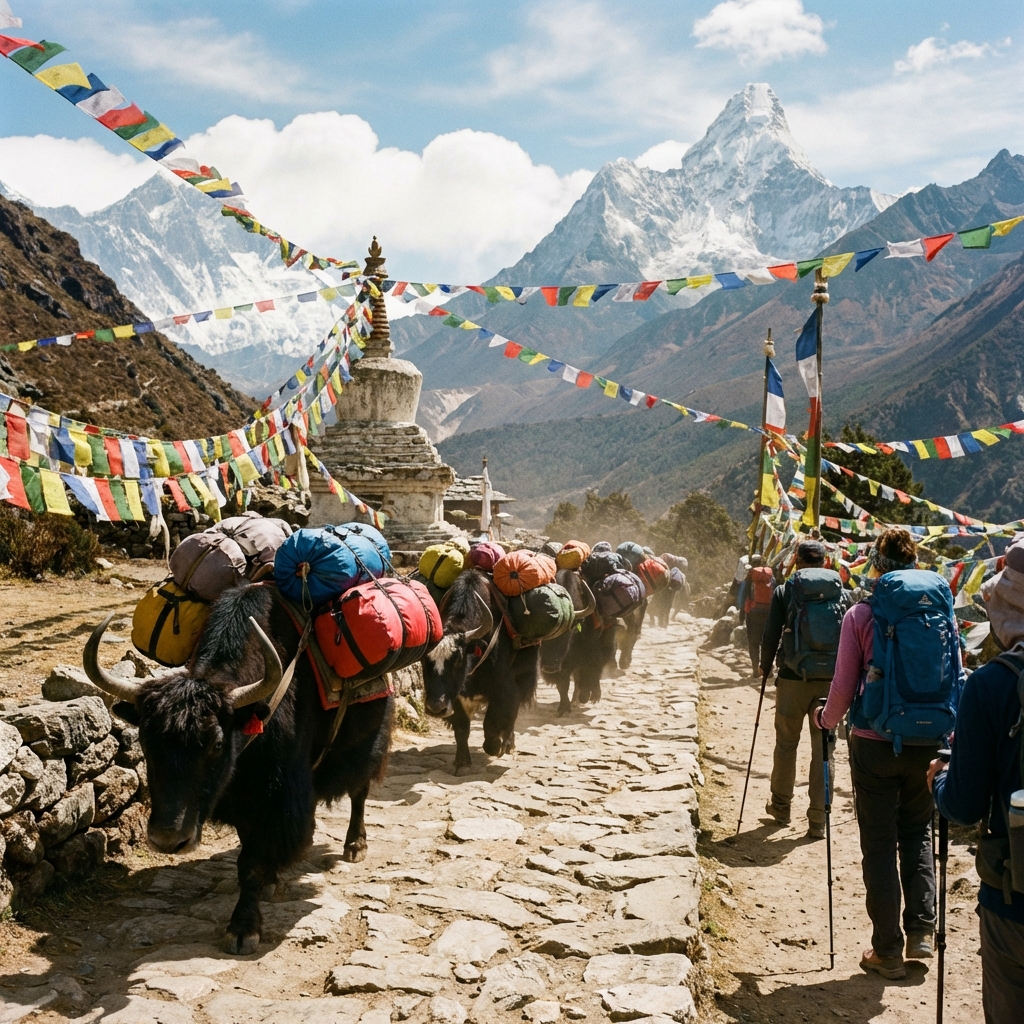
Nepal's most accessible major trek sits just 80 kilometers north of Kathmandu, yet the Langtang region delivers everything you travel to Nepal for: high passes, sacred lakes, ancient monasteries, diverse landscapes transitioning from subtropical river valleys through dense forest and rhododendron stands to alpine tundra — and throughout it all, Tamang culture that remains one of Nepal's most authentic.
The Langtang Gosainkunda Loop is the complete circuit that most visitors never complete, instead choosing either the Langtang Valley trek or the Gosainkunda trek separately. The loop connects them via the Laurebina La pass (4,610m), creating a 12-16 day journey of remarkable variety: you begin in the deep Langtang Valley carved by glacial forces and Tamang villages that survived the devastating 2015 earthquake and rebuilt, then cross the high ridge to the sacred lakes where Hindu and Buddhist pilgrims have worshipped for millennia, descending finally through Helambu's gentle terrain back toward Kathmandu.
This is Nepal trekking at its most complete.
Route Snapshot
12-16 days (11-18 days possible)
4,610m (15,125 ft) at Laurebina La
130-160 km (81-99 miles)
Challenging
Mar-May (Spring), Oct-Nov (Autumn)
Langtang National Park, Rasuwa/Nuwakot/Sindhupalchok Districts
Syabrubesi (via Kathmandu drive)
Sundarijal (Kathmandu) or Dhunche
Langtang National Park (~$25), TIMS (NPR 2,000)
Teahouse lodges throughout
$1,000-$2,200 (all-inclusive)
Popular Route Variants:
| Variant | Duration | Direction | Best For |
|---|---|---|---|
| Classic Loop | 12-14 days | Syabrubesi → Langtang → Gosainkunda → Sundarijal | Most trekkers |
| Reverse Loop | 12-14 days | Sundarijal → Gosainkunda → Langtang → Syabrubesi | Those wanting altitude early |
| Extended Loop | 14-16 days | Add Kyanjin Gompa side trips and rest days | Cultural depth, acclimatization focus |
| Langtang Only | 8-10 days | Syabrubesi → Kyanjin Gompa → return | Time-limited, or first visit |
| Gosainkunda Only | 6-8 days | Dhunche/Syabrubesi → Laurebina La → Sundarijal | Sacred lake pilgrimage focus |
The Three Trekking Zones
The Langtang Gosainkunda Loop passes through three distinct geographic and cultural zones, each with its own character.
Zone 1: Langtang Valley (Days 1-6)
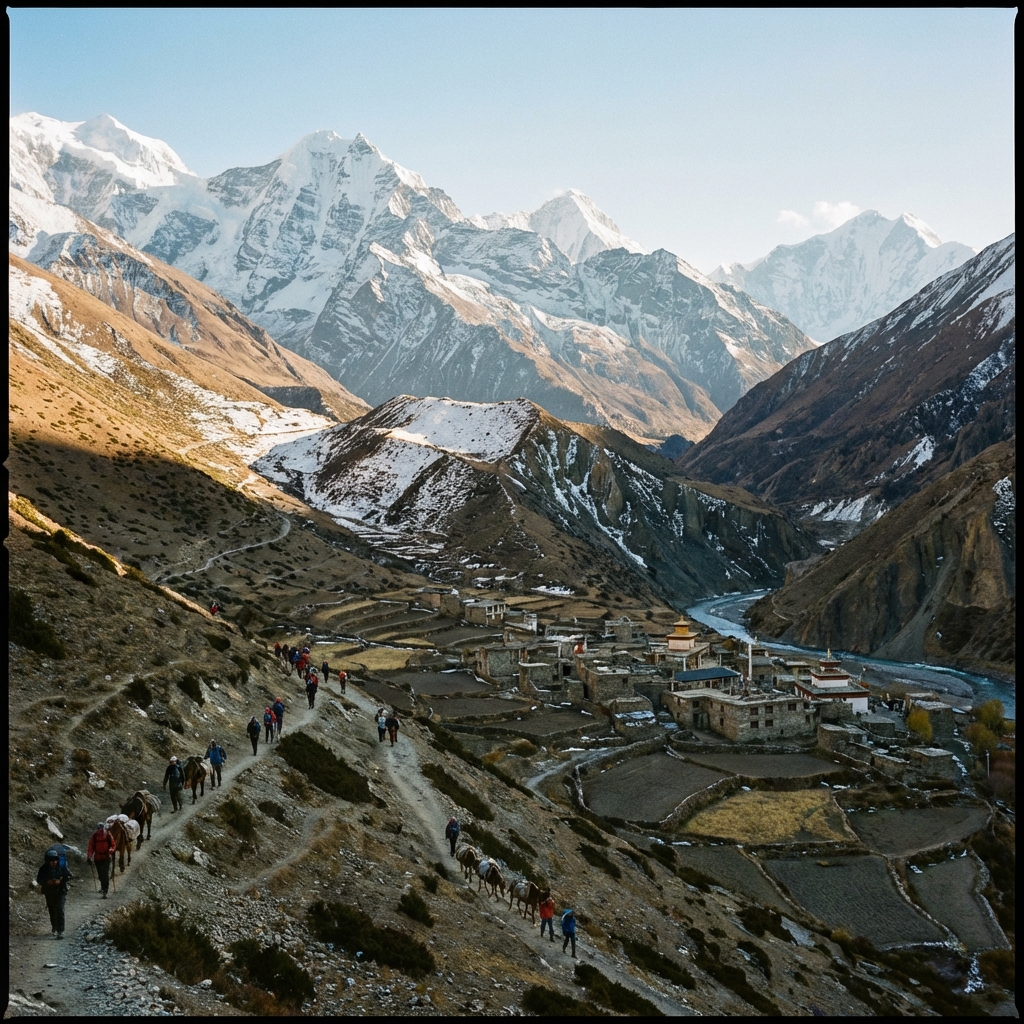
The Langtang Valley cuts deeply into the Himalayan massif, flanked by Langtang Lirung (7,227m) to the north and the high Gosainkunda ridge to the south. The valley is home to Tamang and Tibetan Buddhist communities with a cultural heritage closely related to Tibet — the language, architecture, food, and religious practice all bear strong Tibetan influence.
The 2015 Earthquake:
The April 2015 earthquake Langtang Village was devastated by the 2015 earthquake but has been fully rebuilt with earthquake-resistant structures on a site ~100m higher than the original village. Trails and teahouses are fully restored and safe for trekking Langtang village completely — a massive rockslide and avalanche triggered by the quake destroyed the settlement in minutes, killing approximately 350 people. The rebuilt Langtang village, constructed nearby on more stable ground, is modern but surrounded by the ruins of the old settlement, which have been preserved as a memorial.
Trekking in Langtang now carries a dimension of witness to survival and rebuilding. The communities you'll meet — Kyanjin, Lama Hotel, Ghora Tabela — have rebuilt their lives and their trekking infrastructure with remarkable resilience. Your visit is both a tourism activity and an act of support for communities that lost everything and chose to rebuild.
Zone 2: Laurebina La and the High Ridge (Days 7-9)
The crossing of the Laurebina La (4,610m) is the physical and emotional centerpiece of the loop. The pass connects the Langtang watershed with the Gosainkunda plateau, crossing a high ridge where the geology transitions abruptly from the glaciated Langtang peaks to the ancient volcanic landscape of the Gosainkunda plateau.
The pass crossing is the hardest day of the trek — a long, high ascent requiring an early alpine start and carrying emergency gear for weather changes. But from the top, the panorama spans both zones: north toward Langtang Lirung and the Tibetan plateau, south and west toward the Annapurna and Ganesh Himal ranges.
Zone 3: Gosainkunda and Helambu (Days 9-14)
The Gosainkunda plateau at 4,380m hosts a complex of sacred alpine lakes — Saraswati Kunda, Bhairab Kunda, and Gosainkunda itself — that have drawn Hindu and Buddhist pilgrims for as long as recorded Nepali history. The largest lake, Gosainkunda, is associated with Lord Shiva in Hindu tradition and is the center of the annual Janai Purnima festival (full moon in August) that draws tens of thousands of pilgrims.
The descent through Helambu — the southern flank of the Langtang range — passes through Sherpa and Tamang communities in a more domesticated, gentler landscape than the high valley to the north. The Helambu section is often dismissed as anticlimactic after the dramatic heights above, but it offers its own rewards: traditional villages, ancient monasteries, and a gradual return to lower altitude.
Route Overview: Syabrubesi to Sundarijal
Classic Loop Architecture
Day 1: Kathmandu → Syabrubesi (1,460m) by jeep (7-9 hours)
Day 2: Syabrubesi → Lama Hotel (2,470m)
Day 3: Lama Hotel → Langtang Village (3,430m)
Day 4: Langtang Village → Kyanjin Gompa (3,870m)
Day 5: Kyanjin Gompa — acclimatization day, Kyanjin Ri climb (4,773m)
Day 6: Kyanjin Gompa → Langtang Village (3,430m) return
Day 7: Langtang Village → Thulo Syabru (2,210m)
Day 8: Thulo Syabru → Shin Gompa/Chalangpati (3,460m)
Day 9: Shin Gompa → Gosainkunda Lakes (4,380m)
Day 10: Gosainkunda → Cross Laurebina La (4,610m) → Ghopte (3,430m)
Day 11: Ghopte → Tharepati (3,640m)
Day 12: Tharepati → Melamchi Pul Bazaar (870m)
Day 13: Melamchi Pul Bazaar → Sundarijal → Kathmandu
Trail Terrain Summary
| Section | Distance | Elevation Change | Terrain | Challenge |
|---|---|---|---|---|
| Syabrubesi to Kyanjin | 40-44 km | +2,410m | River valley, forest, open valley | Moderate |
| Kyanjin Ri (side trip) | 4-5 km | +903m | Rocky ridge, some scrambling | Challenging |
| Kyanjin to Thulo Syabru | 20-22 km | -1,660m | Forest descent | Moderate |
| Thulo Syabru to Gosainkunda | 14-16 km | +2,170m | Forest, open ridge | Challenging |
| Laurebina La crossing | 8-10 km | +230m/-950m | High exposed ridge | Very Challenging |
| Ghopte to Melamchi | 30-32 km | -2,770m | Forest, terraced fields | Moderate (knees) |
Complete Itinerary: 13-Day Trek
Day 1: Kathmandu to Syabrubesi (1,460m)
Drive: Kathmandu to Syabrubesi (7-9 hours via Trishuli and Dhunche) Road conditions: Paved to Dhunche, rough jeep track to Syabrubesi
The journey to Syabrubesi is part of the adventure. The road climbs from Kathmandu through the Trishuli valley, ascending to Dhunche (1,966m) — the Langtang National Park gate — before dropping to Syabrubesi in the Bhote Koshi valley. The drive passes through forested ridges, terraced farmland, and offers first views of the Ganesh Himal range.
Syabrubesi is a small town on the river junction where the Langtang Khola meets the Bhote Koshi. It has good lodges, a permit checkpoint, and serves as the starting point for both the Langtang Valley and the Gosaikunda routes.
Days 2-3: Syabrubesi to Kyanjin Gompa via Lama Hotel and Langtang Village
Day 2: Syabrubesi → Lama Hotel (5-6 hours, +1,010m) Day 3: Lama Hotel → Langtang Village → Kyanjin Gompa (5-6 hours, +1,400m total)
The valley approach climbs steeply from Syabrubesi through dense subtropical forest — rich in birds and orchids in spring — before opening gradually as altitude increases. Lama Hotel is the main first-night stop, offering a cluster of lodges in a forested clearing.
Day 3 continues the valley climb, passing through the rebuilt Langtang Village (a sobering and inspiring stop to reflect on the 2015 reconstruction) and continuing to Kyanjin Gompa — the highest lodge settlement in the valley, dominated by the great bulk of Langtang Lirung above it.
Langtang Village 2015 Earthquake Memorial
At Langtang village, take time to acknowledge the 2015 earthquake memorial. The site of the original village is marked and maintained. The rebuilt community a few hundred meters away is a testament to Tamang resilience. Speak with your guide about the event — many guides lost family members in Langtang, and the history is recent and personal.
Day 4-5: Kyanjin Gompa Base and Kyanjin Ri
Day 4: Rest and acclimatization in Kyanjin (3,870m) Day 5: Kyanjin Ri ascent (4,773m) and glacier exploration
Kyanjin Gompa is the trekking high point of the Langtang Valley — a cluster of lodges and a working monastery at the foot of the Langtang Glacier. The setting is extraordinary: high alpine terrain surrounded by peaks exceeding 6,000 and 7,000 meters.
The acclimatization day with a Kyanjin Ri ascent follows the golden rule: climb high, sleep low. The 903m gain to Kyanjin Ri's summit rewards with a 360-degree Himalayan panorama: Langtang Lirung, Langtang II, Dorje Lakpa, Shishapangma (across the Tibetan border), and on clear days, far into the Himalayan arc.
Information current as of January 2025.
Kyanjin Gompa
3,870m
Room: $12-20/night
Dal Bhat: $7-10
The valley's finest lodging and scenery. Buy local yak cheese — it's excellent. The monastery is active; visit respectfully. Kyanjin Ri climb is non-negotiable for the view.
Day 6-7: Kyanjin to Thulo Syabru
Day 6: Kyanjin → Langtang Village → Lama Hotel (5-6 hours, -1,400m) Day 7: Lama Hotel → Thulo Syabru (4-5 hours via Bamboo and Rimche, -260m net)
The return through the Langtang Valley is faster going downhill. Day 7 reaches Thulo Syabru (2,210m), a traditional village that serves as the junction between the valley route and the Gosainkunda trail. This is the point where the loop begins in earnest.
Days 8-9: The Climb to Gosainkunda
Day 8: Thulo Syabru → Shin Gompa (3,460m) (4-5 hours, +1,250m) Day 9: Shin Gompa → Gosainkunda Lakes (4,380m) (4-5 hours, +920m)
The ascent toward Gosainkunda climbs sharply from Thulo Syabru through forest and open grassland. Shin Gompa (also called Chandanbari) is a small settlement with a cheese factory (another local product worth purchasing) and simple lodges, at the altitude threshold where the rhododendron forest transitions to alpine scrub.
From Shin Gompa, the trail continues upward through increasingly open terrain to reach the Gosainkunda plateau. The first lake, Saraswati Kunda, appears below the main trail. Shortly after, the sacred Gosainkunda lake (4,380m) materializes — a deep blue alpine lake surrounded by rocky peaks, prayer flags strung across its northern shore.
The Sacred Lakes:
The Gosainkunda complex comprises over 100 glacial lakes, of which three are considered particularly sacred: Saraswati Kunda, Bhairab Kunda, and Gosainkunda itself. Hindu mythology holds that Lord Shiva created the lake by striking the ground with his trident after swallowing poison during the churning of the cosmic ocean — the lake's icy waters supposedly came from his throat to cool the poison's burn.
During Janai Purnima (July-August full moon), an estimated 10,000-20,000 Hindu and Buddhist pilgrims make the high-altitude journey to bathe in the sacred waters. The permanent population at the lake is essentially zero; during off-season your trekking group may be the only people at these extraordinary waters.
Sunset at Gosainkunda
The light at Gosainkunda at sunset, when the lake surface reflects the alpenglow and the surrounding peaks glow amber, is among the most atmospheric moments available in Nepali trekking. Arrange your Day 9 arrival to reach the lake by mid-afternoon so you can experience this before the temperature drops sharply after sunset.
Day 10: Laurebina La Pass Crossing (4,610m) to Ghopte (3,430m)
Trek duration: 6-7 hours Elevation: +230m to pass, -950m to Ghopte This is the crux day of the trek
The Laurebina La crossing is the most demanding day of the loop and should not be underestimated. Leave Gosainkunda no later than 6:00 AM to allow sufficient time for the pass crossing and descent in good weather.
The approach to the pass:
Above Gosainkunda, the trail climbs through increasingly rocky and exposed terrain. Several more small lakes appear as you ascend. The gradient steepens below the pass itself, which may hold snow even in autumn season. Trekking poles are essential; crampons should be carried in the shoulder seasons.
The Laurebina La:
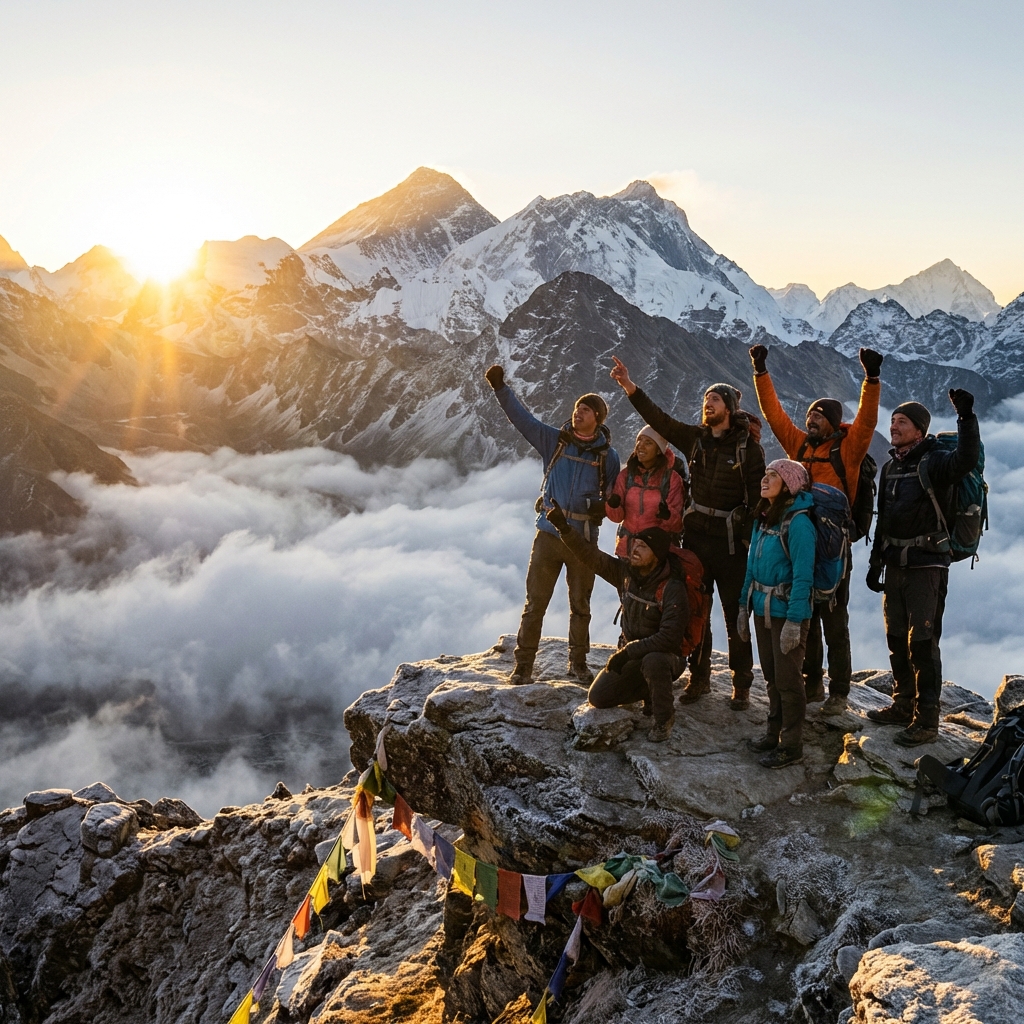
At 4,610m, the pass is the highest point of the entire circuit. The views are extensive: north toward the Langtang massif and the Tibetan plateau; south into the Helambu valleys and — on exceptional days — toward Kathmandu's haze on the horizon; west toward the Annapurna range; east toward the Rolwaling peaks.
The descent on the south side is steep, eroded, and significantly harder on knees than the ascent. Rocky switchbacks drop rapidly toward the treeline, where the trail enters rhododendron forest and becomes more forgiving. Ghopte, a simple teahouse stop in the forest, is 3-4 hours below the pass.
Weather contingency:
Do not cross Laurebina La in deteriorating weather or poor visibility. The pass is exposed and the trail is poorly marked in snow. If weather looks uncertain the morning of Day 10, wait — most weather systems clear by mid-morning in autumn. Ask your guide's assessment; they will have current conditions knowledge.
Gear for the Pass Crossing
The Laurebina La requires proper preparation even for non-mountaineers:
- Trekking poles: Mandatory for the descent
- Warm layers: Temperature at the pass can drop below -10°C
- Crampons or microspikes: Strongly recommended if any snow on the trail
- Wind/waterproof jacket: Exposure is significant at the top
- Packed lunch: The crossing is too long for a lunch stop in good weather
Start with a substantial breakfast and carry enough food and water for a full day.
Days 11-13: Helambu and Return to Kathmandu
Day 11: Ghopte → Tharepati (3,640m) (3-4 hours) Day 12: Tharepati → Melamchi Pul Bazaar (870m) via Tarke Ghyang (5-6 hours, -2,770m) Day 13: Melamchi Pul Bazaar → Sundarijal → Kathmandu (drive, 2-3 hours)
The final stages descend through Helambu, a region of Sherpa and Tamang villages on the southern slopes of the Langtang range. The terrain is gentler than anything you've walked for the past week — terraced fields, fruit trees, gradually warming temperatures.
Tarke Ghyang monastery on Day 12 is worth a stop: one of the largest and most traditional gompas in Helambu, it offers a cultural counterpoint to Kyanjin's monastery at the opposite end of the circuit.
From Sundarijal on the edge of the Shivapuri National Park, the road returns you to Kathmandu — the city's noise and heat registering freshly after two weeks in the mountains.
Difficulty Assessment
ChallengingThis is a genuinely challenging trek that should not be underestimated.
Challenge factors:
- Duration: 12-16 days of sustained trekking accumulates significant fatigue
- Altitude: Sleeping at Gosainkunda (4,380m) is the highest overnight point; Laurebina La (4,610m) is the high point
- Pass crossing: The Laurebina La requires significant physical effort and weather awareness
- Cumulative elevation: Total ascent over the circuit exceeds 5,000 meters
- Variable trail conditions: Some sections poorly maintained, especially on the Helambu descent
Why experienced trekkers handle this well:
- Gradual altitude gain: The circuit builds altitude slowly over multiple days
- No technical terrain: No rock climbing, roped sections, or glacial crossing
- Good infrastructure: Reliable lodges at all key stops
- Manageable daily distances: 10-18 km per day with clear objectives
Fitness requirements:
- Comfortable with 5-7 hours trekking per day on steep terrain
- Previous multi-day Himalayan experience strongly recommended
- Altitude experience above 3,500m helpful
- Excellent physical fitness essential for Laurebina La day
Best Time to Visit
| Month | High | Low | Conditions | Crowds | Notes |
|---|---|---|---|---|---|
| January | 5°C | -14°C | 20mm | Very Low | Gosainkunda and the pass will have significant snow. Experienced winter trekkers only with crampons and appropriate gear. |
| February | 8°C | -10°C | 30mm | Very Low | Improving but still cold at altitude. Snow possible on pass. |
| MarchBest | 13°C | -4°C | 45mm | Low-Moderate | Spring begins. Rhododendrons starting. Pass clearing of snow by late March. Good season. |
| AprilBest | 16°C | 0°C | 60mm | Moderate | Peak rhododendron bloom. Excellent conditions. Janai Purnima festival in lower valleys. |
| MayBest | 18°C | 4°C | 100mm | Moderate | Late spring. Some pre-monsoon afternoon clouds. Generally still good for the circuit. |
| June | 18°C | 8°C | 250mm | Very Low | Monsoon. Landslide risk on valley approaches. Avoid. |
| July | 18°C | 10°C | 380mm | Low (pilgrims) | Peak monsoon but Janai Purnima pilgrims flood the Gosainkunda trail. Pilgrimage possible; trekking circuit not recommended. |
| August | 17°C | 10°C | 360mm | Very Low | Monsoon continues. Trail damage possible from landslides. |
| September | 16°C | 5°C | 180mm | Low | Monsoon clearing late month. Improving conditions. Check trail conditions before committing. |
| OctoberBest | 14°C | -2°C | 25mm | Moderate-High | Best autumn season. Crystal clear skies. All lodges operational. Excellent conditions for the full circuit. |
| NovemberBest | 10°C | -6°C | 10mm | Moderate | Excellent visibility. Cooler. Possible early snow on pass late November. Strong second choice. |
| December | 6°C | -10°C | 10mm | Low | Cold at altitude. Pass may begin to hold snow. Most circuit lodges reduce service. Experienced only. |
Best seasons: October for maximum clarity; April for rhododendron spectacle and comfortable temperatures. The spring season has the advantage that the circuit direction (valley first, then high pass) provides natural altitude acclimatization before the Laurebina La crossing.
Tamang Culture: The Living Heritage of the Circuit
The Langtang circuit is one of Nepal's best opportunities to experience Tamang culture — one of the country's largest ethnic groups, with a rich tradition of Tibetan Buddhism, distinctive architecture, and food.
Tamang identity:
The Tamang people (estimated 5-7% of Nepal's population) occupy the ridges and valleys surrounding Kathmandu, from the Langtang range in the north to Helambu in the east and the Trisuli valley in the west. Their name possibly derives from "ta-mang" (horse traders in Tibetan), reflecting a historic role as traders between Tibet and the lowlands.
Cultural elements you'll encounter:
| Cultural Element | Where Seen | Details |
|---|---|---|
| Gompa (monasteries) | Kyanjin, Ghopte, Tarke Ghyang | Nyingma tradition, ancient murals |
| Mani walls | Throughout the valley | Long stone walls carved with Buddhist mantras |
| Prayer flags | Passes, ridgelines, gompa rooftops | Five-colored (blue, white, red, green, yellow) |
| Chortens (stupas) | Village entrances, trail junctions | Often centuries old |
| Yak products | Kyanjin and Shin Gompa | Cheese, butter, dried meat |
| Traditional dress | Older villagers, festival days | Distinctive Tamang shawls and headdresses |
| Raksi and chang | Lodge menus | Local millet spirits and fermented grain beer |
Permits and Costs
Required Permits
| Permit | Cost | Notes |
|---|---|---|
| Langtang National Park | ~$25 USD | Paid at park entrance in Dhunche or Syabrubesi |
| TIMS Card | NPR 2,000 (as of 2026) | Obtained in Kathmandu |
Cost Breakdown
| Package Type | Price Range (USD) | Includes |
|---|---|---|
| Budget Group | $1,000-$1,400 | Basic lodges, shared guide, bus/jeep transport, most meals |
| Standard Private | $1,400-$1,800 | Good lodges, private guide + porter, all meals, jeep transport |
| Comfortable Private | $1,800-$2,200 | Best available lodges, experienced guide, all services |
Fixed Costs:
- Kathmandu-Syabrubesi jeep: $50-80 per vehicle (seats 6-8)
- Langtang National Park permit: ~$25
- Licensed guide: $32-38/day
- Porter (optional but recommended): $25-30/day
Frequently Asked Questions
Is the Langtang-Gosainkunda loop doable without prior trekking experience?
Not recommended for first-time trekkers. The 12-16 day duration, Laurebina La pass crossing, and multiple nights above 3,500m require good physical condition and some understanding of altitude effects. Complete at least one shorter Himalayan trek (Annapurna region 5-7 days, Langtang Valley only 8-10 days) before attempting the full circuit.
How does the Laurebina La compare to other Himalayan passes?
At 4,610m, Laurebina La is challenging but significantly lower than the Thorong La on the Annapurna Circuit (5,416m) or the Three Passes on the Everest circuit (5,400-5,545m). It's a good introduction to high-pass trekking for those who haven't crossed a high pass before, though it should still be treated with respect and proper preparation.
Is the 2015 earthquake still affecting the trek?
The main Langtang Valley trail has been fully restored and all key lodges have been rebuilt. Langtang village itself serves as both a rebuilt community and a memorial to the earthquake. The trekking infrastructure is fully operational. Your visit directly supports the communities that rebuilt after losing everything.
Can I do the circuit as Gosainkunda first, then Langtang Valley?
Yes — the reverse direction (Sundarijal → Gosainkunda → Laurebina La → Langtang Valley → Syabrubesi) works well. Some trekkers prefer this because you encounter the high pass and altitude earlier in the trek when legs are fresh, though this means less acclimatization preparation for Gosainkunda. Your guide can advise based on your fitness and experience.
What's the best way to get to Syabrubesi from Kathmandu?
Shared or private jeep from Kathmandu takes 7-9 hours depending on road conditions and stops. A tourist bus runs in season (slower, cheaper). The drive via Trishuli and Dhunche is scenic but often dusty. Your trekking agency will arrange transport; book private jeep for more comfort and flexibility.
Related Routes and Planning Resources
Langtang Region Treks:
- Langtang Valley Trek — The valley section alone (8-10 days)
- Gosainkunda Trek — The sacred lake section alone (6-8 days)
- Tamang Heritage Trail — Cultural loop in lower Langtang (7-9 days)
- Helambu Trek — Gentle southern Langtang circuit (6-8 days)
Essential Planning Guides:
- Langtang Region Overview — Complete regional guide
- Nepal Trekking Permits Explained — Permit details
- Altitude Sickness Prevention — Critical safety guide
- Best Time to Trek Nepal — Comprehensive seasonal advice
Final Thoughts: Nepal's Most Complete Circuit
The Langtang Gosainkunda Loop earns its "challenging" rating, but delivers proportionate rewards. This is not a trek with a single spectacular objective — it's a journey through multiple landscapes, cultures, and altitudes that accumulates into something greater than any individual day.
You'll walk through earthquake-rebuilt Tamang villages and understand resilience in concrete terms. You'll stand at the Gosainkunda lakes before dawn with no one around except the wind and the water and whatever spiritual presence you bring to the encounter. You'll cross a high pass and understand, in your body rather than just your mind, what altitude means.
The loop begins and ends near Kathmandu but feels like a different Nepal — older, quieter, less visited, more honest about what mountain life actually requires. Come prepared, come curious, and stay the full two weeks.
This guide is maintained by the Nepal Trekking Team with input from Langtang-based guides, the Rasuwa District Tourism Office, and the Tamang Heritage Trail Committee. Last updated March 2026.


