
| Route | Duration | Max Altitude | Difficulty | Permits | Teahouses | Crowds |
|---|---|---|---|---|---|---|
| Mohare Danda | 4-5 days | 3,300m | Easy-Moderate | ACAP (~$30) | Community homestays | Very Low |
| Poon Hill (Ghorepani) | 4-5 days | 3,210m | Easy-Moderate | ACAP (~$30) | Excellent | Very High |
| Mardi Himal | 5-7 days | 4,500m | Moderate | ACAP (~$30) | Good | Low |
| Annapurna Base Camp | 10-12 days | 4,130m | Moderate | ACAP (~$30) | Excellent | High |
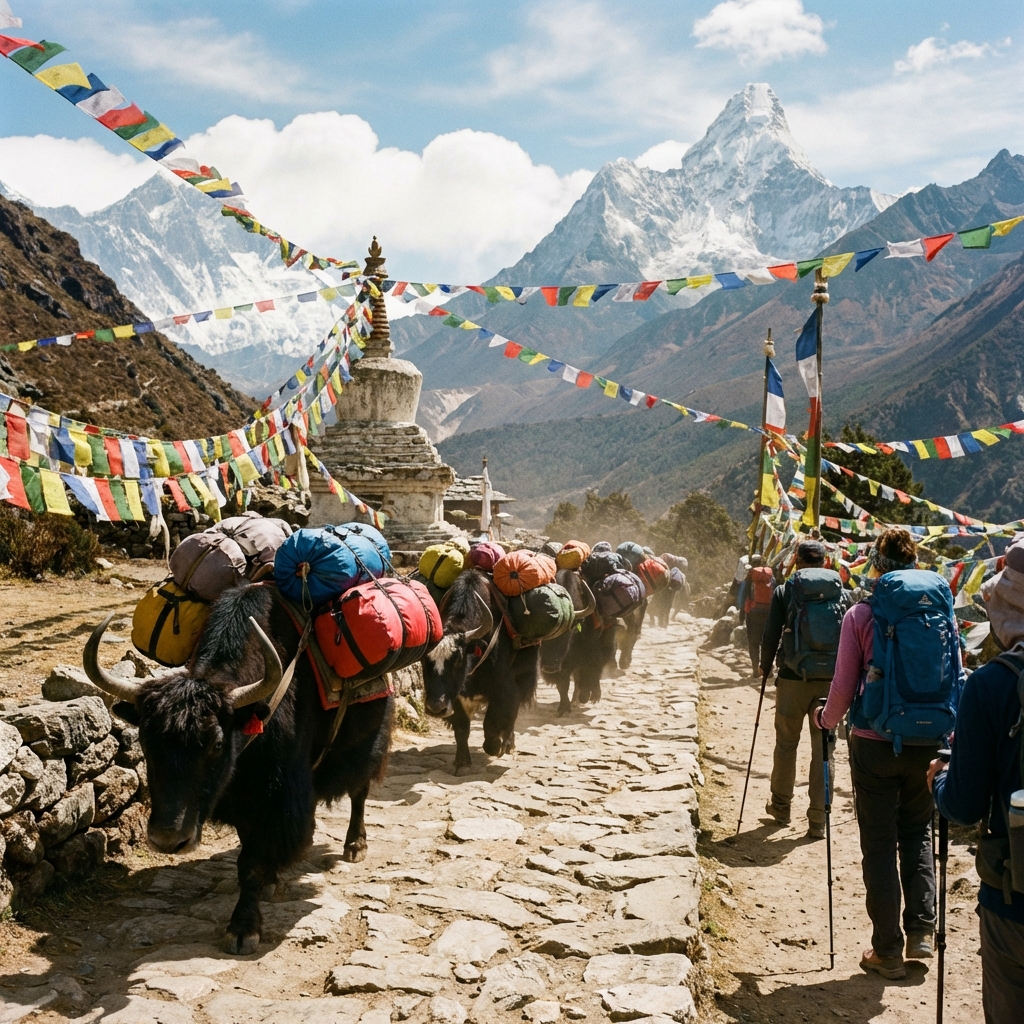
Most trekkers who reach the Annapurna region head immediately to Ghorepani and Poon Hill, drawn by reputation and the well-worn infrastructure of Nepal's busiest short trek. Mohare Danda sits just a ridge away — same panoramas, same altitude, a fraction of the crowds — and few people know it exists.
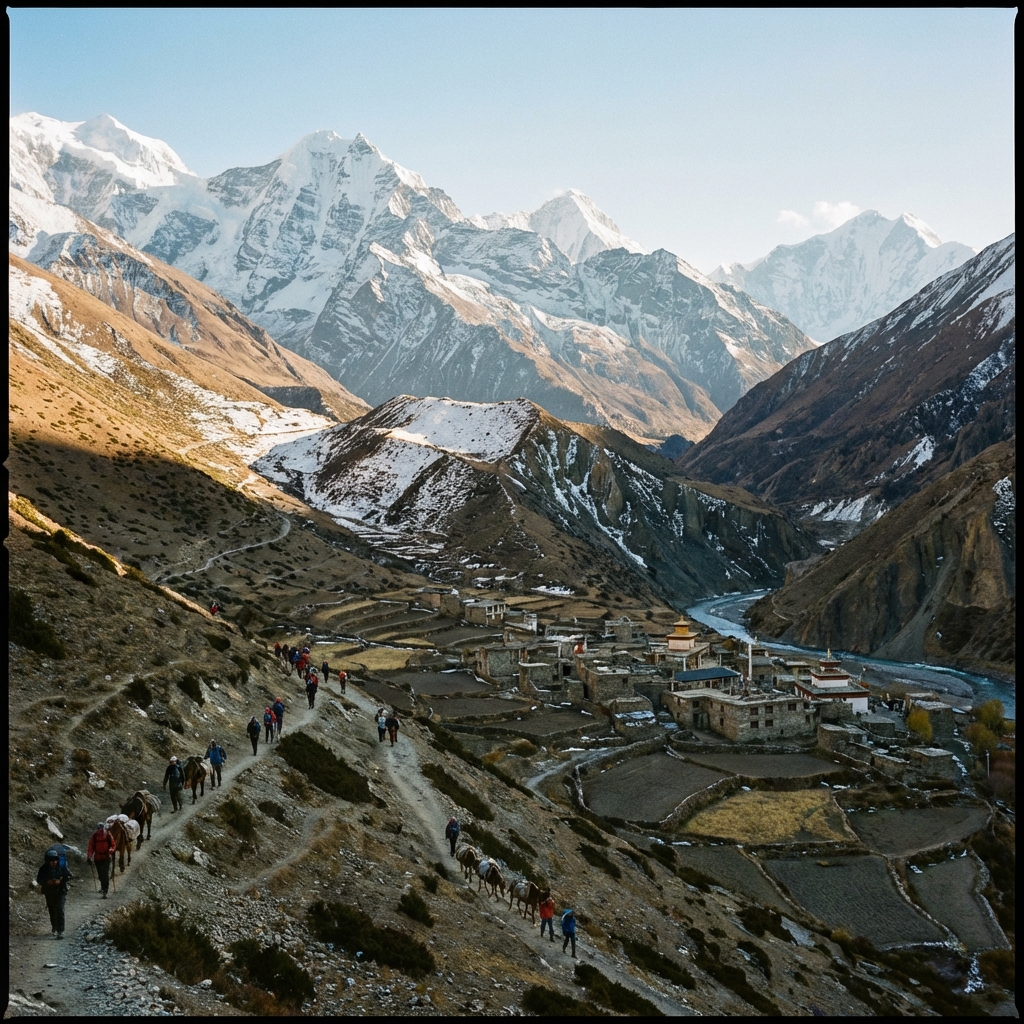
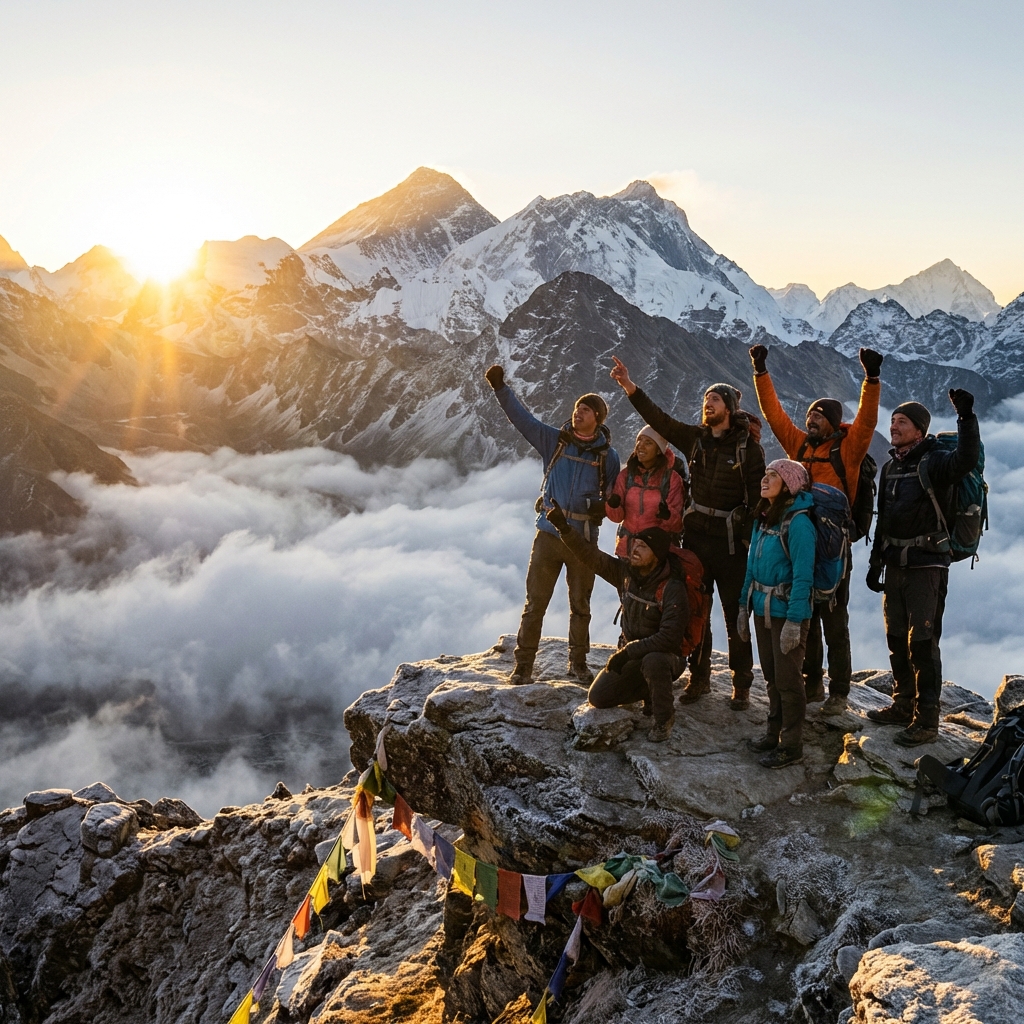
The Mohare Danda community trek routes through Gurung and Magar villages where tourism has arrived slowly enough that hospitality still feels personal. You stay in community-run homestays rather than commercial teahouses, share meals with local families, and wake before dawn to watch Dhaulagiri, Annapurna I through IV, Machhapuchhre, and Hiunchuli ignite in morning alpenglow from a viewpoint that regularly has fewer than a dozen trekkers on it.
This is one of Nepal's best-kept trekking secrets — short enough for a long weekend, accessible without technical skills, rewarding enough to satisfy seasoned Himalayan trekkers. This guide covers every detail to help you plan a perfect Mohare Danda adventure.
Route Snapshot
4-5 days (3-6 days possible)
3,300m (10,827 ft) at Mohare Danda
35-45 km (22-28 miles)
Easy to Moderate
Mar-May (Spring), Sep-Nov (Autumn)
Annapurna Conservation Area, Myagdi/Parbat District
Nayapul or Beni
Nayapul or Tatopani (loop option)
ACAP (~$30 USD)
Community homestays throughout
$400-$900 (all-inclusive)
Popular Route Variants:
| Variant | Duration | Route | Best For |
|---|---|---|---|
| Classic Out-and-Back | 4 days | Nayapul-Ghorepani-Mohare Danda-Ghorepani-Nayapul | First-timers, time-limited |
| Tadapani Loop | 5 days | Nayapul-Ghorepani-Mohare Danda-Tadapani-Ghandruk | Cultural immersion, circuit variety |
| Beni Approach | 5-6 days | Beni-Babiyachaur-Mohare Danda-Ghorepani-Nayapul | Fewer trekkers, wilder approach |
| Extended Community Route | 6 days | Add Nangi village, local school visits | NGO-supported community development |
The Mohare Danda Viewpoint: Sunrise Over the Annapurna Range
At 3,300 meters, Mohare Danda's ridgeline viewpoint delivers a panorama that rivals Poon Hill — the comparison is inevitable since they occupy adjacent ridges. What sets Mohare apart is the angle: you face the Annapurna massif and Dhaulagiri range from a slightly different perspective, and you share it with almost no one.
The Mountain Panorama
The Mohare Danda viewpoint commands an unobstructed 180-degree arc of Himalayan giants.
Mountains Visible from Mohare Danda:
| Peak | Height | Notes |
|---|---|---|
| Dhaulagiri I | 8,167m | Seventh highest, dramatic pyramid directly north |
| Annapurna I | 8,091m | Tenth highest, massive bulk to the northeast |
| Annapurna South | 7,219m | Prominent satellite, closer and distinct |
| Annapurna III | 7,555m | Elegant triangle above Manang |
| Annapurna IV | 7,525m | Often overlooked, distinctive peak |
| Machhapuchhre (Fishtail) | 6,993m | Iconic twin-peaked silhouette, unclimbed |
| Hiunchuli | 6,441m | Close and dramatic from this angle |
| Nilgiri | 7,061m | Three-peaked massif above Jomsom |
The inclusion of Dhaulagiri — the world's seventh highest mountain — gives Mohare Danda a panorama that Poon Hill cannot match. On clear mornings you can span from Dhaulagiri in the west to the Annapurna Sanctuary peaks in the east in a single unhurried gaze.
The Sunrise Experience
Mohare Danda's east-facing ridge catches the first light of day. The sequence unfolds over 30-45 minutes of steadily improving drama.
Sunrise Timeline:
| Time | Mountain Illumination | Photography Notes |
|---|---|---|
| 5:45 AM (Blue Hour) | Peaks silhouetted against pale eastern sky | Long exposures for mood |
| 6:00 AM (First Light) | Dhaulagiri summit catches first rays | Critical shooting window, act fast |
| 6:15 AM (Alpenglow) | Full range glows pink-orange | Maximum color, wide and telephoto both |
| 6:30 AM (Golden Hour) | Warm morning light across all peaks | Panoramas with full color depth |
| 7:00 AM (Full Light) | Clear daylight, shadows defining ridges | Detail work, documentation shots |
Sunrise Timing by Season
Spring (March-May): Sunrise approximately 5:45-6:00 AM. Leave homestay by 5:00 AM for the 30-minute walk to the viewpoint. Rhododendrons ablaze on the slopes below.
Autumn (September-November): Sunrise approximately 6:00-6:15 AM. Leave by 5:15 AM. Exceptional visibility post-monsoon, arguably the best light of the year.
Arrive 30 minutes before sunrise — the blue-hour silhouettes are often the most atmospheric photographs of the morning.
The Community Homestay System
What distinguishes Mohare Danda from virtually every other trek in Nepal is the accommodation. The Community Homestay Network, established with support from local NGOs and the Annapurna Conservation Area Project, places trekkers in local homes rather than commercial lodges.
How Community Homestays Work
Participating families open their homes to trekkers, providing a private or shared room (often the best room in the house), traditional Gurung or Magar meals, and an evening of genuine cultural exchange that no commercial teahouse can replicate.
Homestay Experience Highlights:
- Meals: Family-cooked food using locally grown ingredients — notably better quality than trail teahouses
- Cultural exchange: Evening conversations with hosts, often involving local song or storytelling
- Sustainability: Revenue goes directly to families, not outside business owners
- Authenticity: Experience domestic Himalayan life, not a trekking industry simulation
- Warmth: Literal and figurative — the family hearth, the welcome, the interest in you as a person
Practical homestay details:
- Rooms: Clean with basic beds and blankets; bring sleeping bag liner for comfort
- Bathrooms: Shared, generally clean; squat toilets standard
- Meals: Breakfast and dinner included in homestay fee; dal bhat, local vegetables, eggs
- Cost: Approximately NPR 2,000-2,500 per night including meals
Supporting the Community
The Mohare Danda Community Homestay Network was established partly in response to earthquake damage and to provide alternative income beyond subsistence farming. Your trekking fee directly supports:
- Family income for participating households
- Village infrastructure maintenance
- Local school funding in some cases
- Preservation of traditional culture and cuisine
Spending a night in these villages is one of the most direct forms of responsible travel in Nepal.
Route Overview: Nayapul to Mohare Danda
The most popular approach follows the first section of the classic Poon Hill route from Nayapul, then branches to Mohare Danda before or after Ghorepani.
Standard Route Architecture
Option A: Via Ghorepani (Most Common)
This joins the Poon Hill route to Ghorepani, then continues to Mohare Danda on the second day.
Day 1: Pokhara → Nayapul → Tikhedhunga (1,540m)
Day 2: Tikhedhunga → Ghorepani (2,860m)
Day 3: Ghorepani → Mohare Danda (3,300m) — sunrise, back to Ghorepani
Day 4: Ghorepani → Nayapul → Pokhara
Option B: Tadapani Loop
A more complete circuit that avoids retracing steps.
Day 1: Pokhara → Nayapul → Tikhedhunga (1,540m)
Day 2: Tikhedhunga → Ghorepani (2,860m)
Day 3: Ghorepani → Mohare Danda (3,300m) → Tadapani (2,630m)
Day 4: Tadapani → Ghandruk (1,940m) → Pokhara
Option C: Beni Approach (Quietest)
Approach from the western side via Beni for a wilder, less-traveled experience.
Day 1: Pokhara → Beni → Babiyachaur (1,500m)
Day 2: Babiyachaur → Mohare Danda (3,300m)
Day 3: Mohare Danda → Ghorepani (2,860m)
Day 4: Ghorepani → Nayapul → Pokhara
Trail Terrain Summary
| Section | Distance | Elevation Change | Trail Type | Challenge Level |
|---|---|---|---|---|
| Nayapul to Tikhedhunga | 6-8 km | +340m | River valley, village trails | Easy |
| Tikhedhunga to Ghorepani | 10-12 km | +1,320m | Stone steps, rhododendron forest | Moderate |
| Ghorepani to Mohare Danda | 8-10 km | +440m net | Ridge trail, community path | Moderate |
| Mohare Danda to Tadapani | 8-10 km | -670m | Forest descent | Moderate (knees) |
| Tadapani to Ghandruk | 5-6 km | -690m | Forest trail, stone path | Moderate |
Complete Itinerary: Standard 4-Day Trek
Day 1: Pokhara to Tikhedhunga (1,540m)
Drive: Pokhara to Nayapul (1.5-2 hours by bus or taxi) Trek: Nayapul to Tikhedhunga (3-4 hours) Elevation gain: +720m
Your trek begins at Nayapul on the Kali Gandaki river, reached by a 1.5-hour drive from Pokhara. The trail follows the Modi Khola upstream through Birethanti (where you'll register your ACAP permit at the checkpoint) and continues upward to the Gurung village of Tikhedhunga.
The terrain on this first day is easy to moderate — a warm-up for what comes tomorrow. You'll cross suspension bridges, walk through lower subtropical forest, and begin to see the scale of the mountains ahead. Tikhedhunga is a welcoming village where the famous stone staircase climb to Ulleri begins — but that's tomorrow's business.
Day 1 Highlights:
- Modi Khola river gorge scenery
- Birethanti's traditional Gurung architecture
- First views of the Annapurna South massif
Information current as of January 2025.
Birethanti
1,025m
Room: $10-15/night
Dal Bhat: $5-8
Last reliable money exchange point. Ensure your ACAP permit is purchased and validated here.
Tikhedhunga
1,540m
Room: $8-12/night
Dal Bhat: $5-7
Stone staircase village — the famous 3,000+ steps to Ulleri begin here. Rest well, the climb awaits.
Day 2: Tikhedhunga to Ghorepani (2,860m)
Trek duration: 5-6 hours Distance: 10-12 km Elevation gain: +1,320m
This is the character-building day. From Tikhedhunga, the trail climbs approximately 3,000 stone steps to reach Ulleri village at 2,070m — one of the most famous ascents in Nepali trekking. It's steep but manageable with a steady pace and regular rest stops.
Above Ulleri, the trail enters one of the finest rhododendron forests in Nepal. In spring (March-May), the bloom is extraordinary: crimson, pink, and white flowers canopy the trail for kilometers. Even outside bloom season, the ancient forest — some trees hundreds of years old — is magnificent.
Ghorepani appears at the top of the ridge, a busy trekking hub with dozens of lodges. It's the last commercial accommodation before Mohare Danda, so stock up on any provisions.
Day 2 Highlights:
- Ulleri stone staircase climb (challenging, but worth it)
- World-class rhododendron forest
- First Himalayan panorama views open above treeline
Pacing the Stone Staircase
The Tikhedhunga-Ulleri staircase climbs approximately 1,600 steps in 1.5-2 hours. Pace yourself: slow and steady beats fast and exhausted. Rest at the shade platforms (chautaras) built into the route. Accept that your legs will be burning — this is normal and temporary. The forest above Ulleri rewards your effort within an hour of the summit.
Day 3: Ghorepani to Mohare Danda (3,300m) — Sunrise and Return
Trek duration: 3-4 hours to Mohare Danda, 2-3 hours return Distance: 16-18 km round trip Elevation gain: +440m
The destination day. Wake well before dawn (typically 4:30-5:00 AM) and follow the trail from Ghorepani northeast to Mohare Danda. The trail is clear even in pre-dawn darkness with a headlamp, climbing steadily through rhododendron forest to the open ridge.
At Mohare Danda's viewpoint, you'll find the community homestay buildings and the cleared ridge where the sunrise unfolds. The panorama — Dhaulagiri to the west, Annapurna I through South to the northeast, Machhapuchhre filling the center — is as complete an Annapurna-area mountain view as exists.
Spend 2-3 hours on the ridge if the weather holds, then descend back to Ghorepani for a proper breakfast before deciding whether to continue the Tadapani loop or return toward Nayapul.
Alternative: Sleep at Mohare Danda
If you want to fully escape Ghorepani's commercial atmosphere, arrange a night at the community homestay on Mohare Danda ridge itself. Waking at the viewpoint, with the mountains visible from your window, is among the more extraordinary lodging experiences available in Nepal's short-trek circuit.
Information current as of January 2025.
Ghorepani
2,860m
Room: $10-20/night
Dal Bhat: $6-9
The Poon Hill hub — busy and fully commercial. Good services but expect crowds in peak season. Good base for Mohare Danda day trek.
Mohare Danda
3,300m
Room: NPR 2,000-2,500/night (meals included)
Dal Bhat: Included in homestay
The community homestay here is basic but authentic. Staying the night means waking to empty mountain views. Book in advance through the community network.
Day 4: Return to Pokhara
Trek to Nayapul: 4-5 hours via Ghorepani-Tikhedhunga OR Loop to Pokhara: Via Tadapani-Ghandruk-New Bridge (7-8 hours) Drive: Nayapul or New Bridge to Pokhara (1.5-2 hours)
The final day follows the same trail back to Nayapul, or completes the loop via Tadapani and Ghandruk — a beautiful Gurung village worth the extended walk. Either way, you'll be back in Pokhara by late afternoon.
Difficulty Assessment
Easy to ModerateMohare Danda is accessible to most reasonably fit adults without Himalayan trekking experience.
Factors that make it manageable:
- Low maximum altitude: 3,300m is below the AMS risk threshold for most people
- Short duration: 4-5 days doesn't accumulate extreme fatigue
- Well-established trail: Clear path, no navigation challenges
- Escape options: Can return to Pokhara from multiple points
- Lower sleeping altitudes: Ghorepani (2,860m) is the highest overnight point
Factors that add challenge:
- Ulleri stone staircase: Steep and long — genuinely hard on tired legs
- Cold predawn summit walk: Temperature at 3,300m before sunrise can reach -5°C
- Cumulative elevation: Total ascent over trek is 1,500-1,800m
Fitness requirements:
- Comfortable walking 4-6 hours on hilly terrain
- Capable of sustained uphill climbing for 2-3 hours
- No specific altitude experience required
Best Time to Visit: Month-by-Month Conditions
| Month | High | Low | Conditions | Crowds | Notes |
|---|---|---|---|---|---|
| January | 10°C | -4°C | 20mm | Very Low | Cold at altitude. Some trail icing possible. Very clear views but genuinely cold predawn. |
| February | 12°C | -2°C | 25mm | Low | Warming slightly. First early rhododendrons at lower elevations. |
| MarchBest | 16°C | 2°C | 40mm | Moderate | Spring begins. Lower rhododendrons bloom. Good visibility. |
| AprilBest | 18°C | 6°C | 60mm | Moderate-High | Peak rhododendron bloom — the entire forest is in flower. Best spring month. |
| MayBest | 20°C | 10°C | 100mm | Moderate | Late blooms. Warmer. Some afternoon clouds but morning clarity usually good. |
| June | 21°C | 14°C | 280mm | Very Low | Monsoon. Heavy rain, leeches, poor visibility. Avoid. |
| July | 21°C | 14°C | 380mm | Very Low | Peak monsoon. Not recommended. |
| August | 21°C | 14°C | 360mm | Very Low | Monsoon continues. Muddy trails, no mountain views. |
| September | 20°C | 10°C | 160mm | Low | Late monsoon clearing. Improving conditions in second half of month. |
| OctoberBest | 18°C | 4°C | 40mm | Moderate-High | Post-monsoon clarity. Best visibility. Comfortable temperatures. Top choice. |
| NovemberBest | 14°C | 0°C | 15mm | Moderate | Crystal clear. Cooler but stable. Fewer trekkers than October. |
| December | 11°C | -3°C | 10mm | Low | Cold predawn temperatures. Clear views. Possible icing on trail above 3,000m. |
Best Season: Spring for Rhododendrons, Autumn for Clarity
Spring (March-May): The Annapurna Conservation Area hosts one of Nepal's greatest rhododendron spectacles. The forest between Tikhedhunga and Ghorepani — and above toward Mohare Danda — blooms in waves of crimson and pink from March through May. April is the undisputed peak: every tree in the upper forest carries flowers. Combined with reliably clear morning views, spring is many trekkers' first choice.
Autumn (September-November): The post-monsoon atmosphere delivers Nepal's finest visibility. Mountains stand sharp and detailed against deep blue skies. Temperatures are comfortable for walking, and the forest shows autumn colors. October is the busiest month but Mohare Danda still sees a fraction of Poon Hill's crowds.
Permits and Costs
Permits Required
| Permit | Cost (USD) | Where to Get | Notes |
|---|---|---|---|
| ACAP | ~$30 | Pokhara ACAP office or Birethanti checkpoint | Annapurna Conservation Area Permit, mandatory |
| TIMS Card | NPR 2,000 (as of 2026) | TIMS office in Pokhara or Kathmandu | Mandatory for all foreign trekkers |
Cost Breakdown
Package Tour (Most Common):
| Package Type | Price Range (USD) | Includes |
|---|---|---|
| Budget Group | $400-$550 | Basic teahouses/homestays, shared guide, bus transport, most meals |
| Standard Private | $600-$800 | Good accommodation, private guide, all meals, taxi transport |
| Comfortable Private | $800-$1,000 | Best available lodges, private guide + porter, all meals |
Independent Trekking Daily Costs:
| Category | Budget | Mid-Range |
|---|---|---|
| Accommodation + meals | $20-30 (homestay) | $30-45 (lodge) |
| Snacks and drinks | $5-8 | $8-12 |
| Daily Total | $25-38 | $38-57 |
Frequently Asked Questions
Is Mohare Danda better than Poon Hill?
They offer virtually identical mountain panoramas from adjacent ridges. Mohare Danda is quieter (often dramatically so), more culturally authentic through the homestay system, and slightly higher. Poon Hill has better infrastructure and more fellow trekkers. Choose Mohare if you value authenticity and solitude; choose Poon Hill if you want more comfort and established facilities.
Do I need to book homestays in advance?
For busy spring and autumn periods, booking 1-2 weeks ahead is advisable through a Pokhara trekking agency that works with the community network. Outside peak season, walk-ins are generally possible but not guaranteed.
Is Mohare Danda accessible with a mandatory licensed guide?
The route via Ghorepani is well-marked and navigable independently. However, Nepal's 2023 regulation requires foreign trekkers to hire a licensed guide or porter-guide. Beyond the legal requirement, a guide enhances the cultural experience, particularly with community homestay introductions and interpretation.
Can I combine this with Poon Hill?
Easily. Stay in Ghorepani, visit Poon Hill one dawn and Mohare Danda the next. You'll get both panoramas and a valid comparison — and likely conclude that Mohare Danda's emptiness was the better experience.
What's the altitude sickness risk?
Very low. The 3,300m maximum altitude falls well below the threshold where AMS becomes common. Staying hydrated and ascending at a reasonable pace eliminates most risk.
Related Routes and Planning Resources
Nearby Treks in Annapurna Region:
- Poon Hill Trek — The classic adjacent viewpoint trek
- Mardi Himal Trek — Quieter Annapurna viewpoint, slightly longer
- Khopra Ridge Trek — Extended off-the-beaten-path Annapurna route
- Annapurna Base Camp Trek — The classic sanctuary trek
Essential Planning Guides:
- Annapurna Region Overview — Complete region guide
- Nepal Trekking Permits Explained — ACAP and TIMS details
- Best Time to Trek Annapurna Region — Seasonal planning
- Altitude Sickness Prevention — Safety guide
Final Thoughts: The Road Less Traveled to the Same View
The Annapurna region's most celebrated morning view has a secret sibling. While hundreds of trekkers shuffle in predawn darkness toward Poon Hill every morning in October, the ridge to the north is nearly empty. The mountains don't care which ridge you stand on — they're equally magnificent from both.
But Mohare Danda offers something Poon Hill cannot: the feeling that you found something. The community homestay where your host family serves dinner by firelight. The empty viewpoint where you watch Dhaulagiri catch the first light with no crowd around you. The genuine exchange with Gurung villagers for whom tourism is still a supplement to farming life, not the primary economy.
This is a short trek. Four or five days. But it delivers everything the Annapurna region promises — dramatic Himalayan panoramas, rhododendron forests, authentic village culture — without the commercial pressure that comes with popularity.
The mountains are right there. The trail is quiet. The homestay family is expecting you.
This guide is maintained by the Nepal Trekking Team with input from the Mohare Danda Community Homestay Network and Annapurna Conservation Area Project. Last updated March 2026.


