Every trekker who reaches Kyanjin Gompa faces a decision on their rest day: climb Kyanjin Ri or climb Tserko Ri. Both peaks rise dramatically above the 3,870-meter settlement, both deliver extraordinary mountain panoramas, and both test you at an altitude where your body is working harder than you might realize. Understanding the difference between them before you arrive -- and choosing the right one for your fitness and acclimatization level -- makes the difference between a triumphant summit morning and a miserable forced retreat.
Kyanjin Ri (4,773m) is the rocky ridge directly behind Kyanjin Gompa. The ascent is steep, requires some scrambling, and feels demanding at altitude, but it is manageable for most trekkers who have spent two nights above 3,400m. Tserko Ri (5,033m) is the higher, more distant summit to the northeast -- a full mountain-day commitment that requires genuine fitness, solid acclimatization, and the discipline to turn around if your body says no.
This guide gives you the detailed route descriptions, difficulty comparisons, summit view lists, timing advice, and safety protocols to make the best decision and execute it well.
4,773m (15,659 ft)
5,033m (16,513 ft)
903m from Kyanjin Gompa (3,870m)
1,163m from Kyanjin Gompa
3-5 hours round trip
6-9 hours round trip
5:30-6:00 AM recommended
Kyanjin Ri: Challenging / Tserko Ri: Very Challenging
March-May, September-November
Yes, especially for Tserko Ri
Why These Hikes Matter
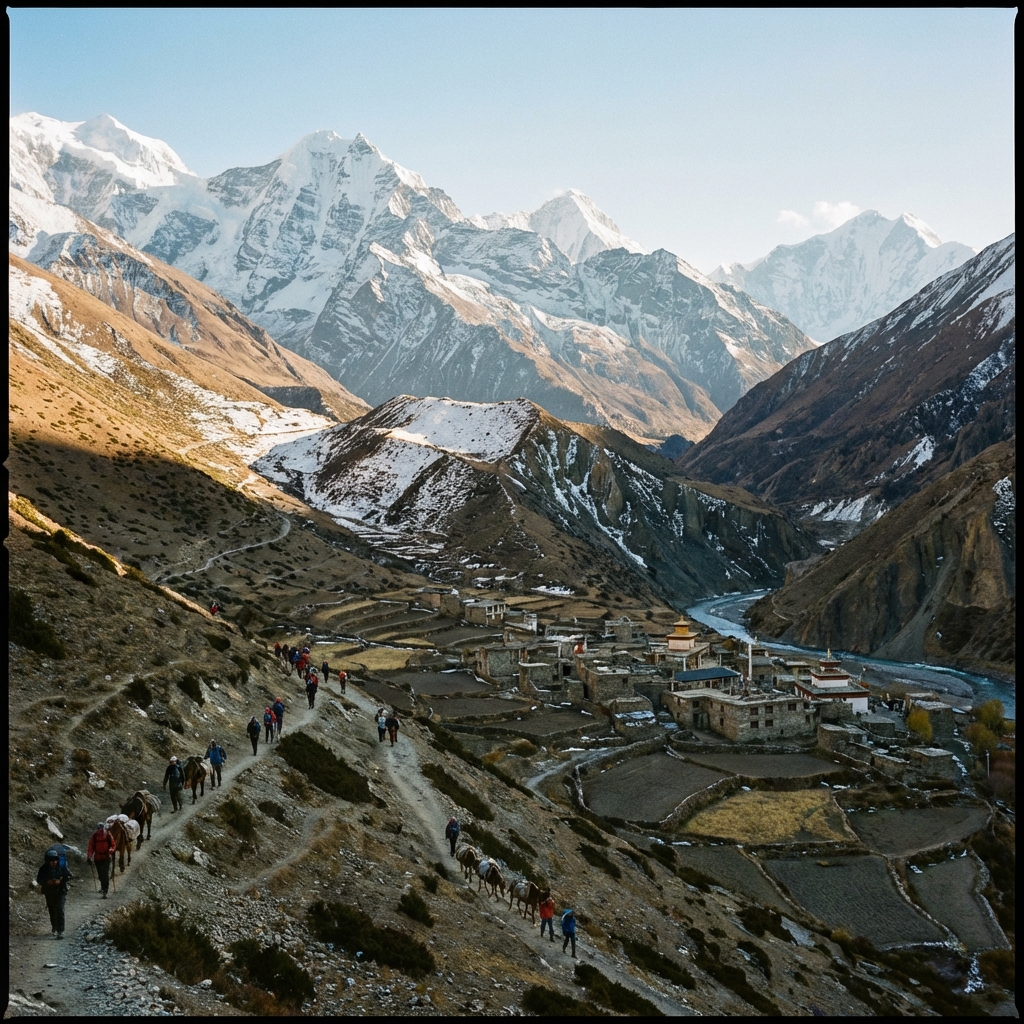
The Langtang Valley's two viewpoint peaks offer something you cannot get simply by trekking to Kyanjin Gompa and back: elevation. At Kyanjin Gompa, you are surrounded by mountains but positioned at valley level, looking up. From Kyanjin Ri or Tserko Ri, you are suddenly at the same altitude as the surrounding ridgelines, looking across at peaks rather than up at them. The perspective shift is dramatic.
Shishapangma (8,027m), a Tibetan 8,000-meter peak visible from Tserko Ri on clear days, is visible nowhere else on the standard Langtang Valley trek. The full extent of the Langtang Glacier, the rippled surface of the high snowfields, and the distant brown plateau of Tibet -- all of this only becomes visible when you climb above the valley floor.
For trekkers on the 7-day Langtang Valley itinerary, the summit day (Day 4 of the standard schedule) is often described as the emotional peak of the entire trek. Even if clouds build by midday and obscure the views on the descent, those morning hours above 4,500m are worth every step of the approach.
Kyanjin Ri (4,773m): Full Route Guide
Overview
Kyanjin Ri is the most popular day hike from Kyanjin Gompa and the right choice for the majority of Langtang Valley trekkers. It delivers outstanding views, tests you physically at altitude, and can be completed in a morning by most trekkers who have adequately rested and acclimatized.
Starting Out
Recommended departure time: 5:30-6:00 AM
Begin by walking east from the main lodge cluster, past the cheese factory and the monastery. The trail rises immediately behind the settlement, initially following a clear dirt path upward through short alpine grass and low-growing juniper scrub. In the very early morning, this section is dark, so bring your headlamp for the first 20-30 minutes.
First 30 minutes: Moderate gradient on a clear trail. The settlement lights are still visible below. Your main task is warming up your legs and finding a sustainable rhythm. Breathe steadily and go slower than you think necessary -- the altitude will make itself felt quickly.
The Middle Section (Hour 1-2)
As you gain elevation, the trail becomes steeper and the surface changes from dirt to loose rock interspersed with patches of scree. The path is still clear but requires more attention to foot placement. Trekking poles become invaluable here.
Key landmarks:
- At approximately 4,200m, you reach a false ridge that appears to be the summit from below but is not. This is a classic psychological challenge. Many trekkers reach this point and are discouraged to find more mountain above them. Keep going.
- Between 4,200m and 4,500m, the trail crosses a loose boulder field. Move carefully, test each large rock before weighting it, and avoid dislodging rocks onto other trekkers below.
- At 4,400-4,500m, some trekkers report the most intense altitude symptoms of the ascent -- the air is noticeably thinner and progress slows. This is normal. Slow down, take short rest breaks, and keep moving steadily.
Recognize Your Body's Signals
The combination of altitude and physical exertion on Kyanjin Ri makes it easy to ignore early warning signs. A mild headache during the ascent is normal and often improves as you warm up. A headache that worsens as you climb, or nausea combined with dizziness, is a warning to stop and assess. If you feel genuinely unwell at any point during the ascent, descend to Kyanjin Gompa. The mountain will be there tomorrow.
The Summit Section (Hour 2-3)
Above 4,500m, the character of the climb changes. The trail becomes less defined, crossing rocky terrain and occasional snow patches (in late autumn and winter). Some basic scrambling is required -- using hands on rocks to maintain balance and upward progress. This is non-technical scrambling that requires no special skills, but the exposure and altitude make it feel more significant than it would at sea level.
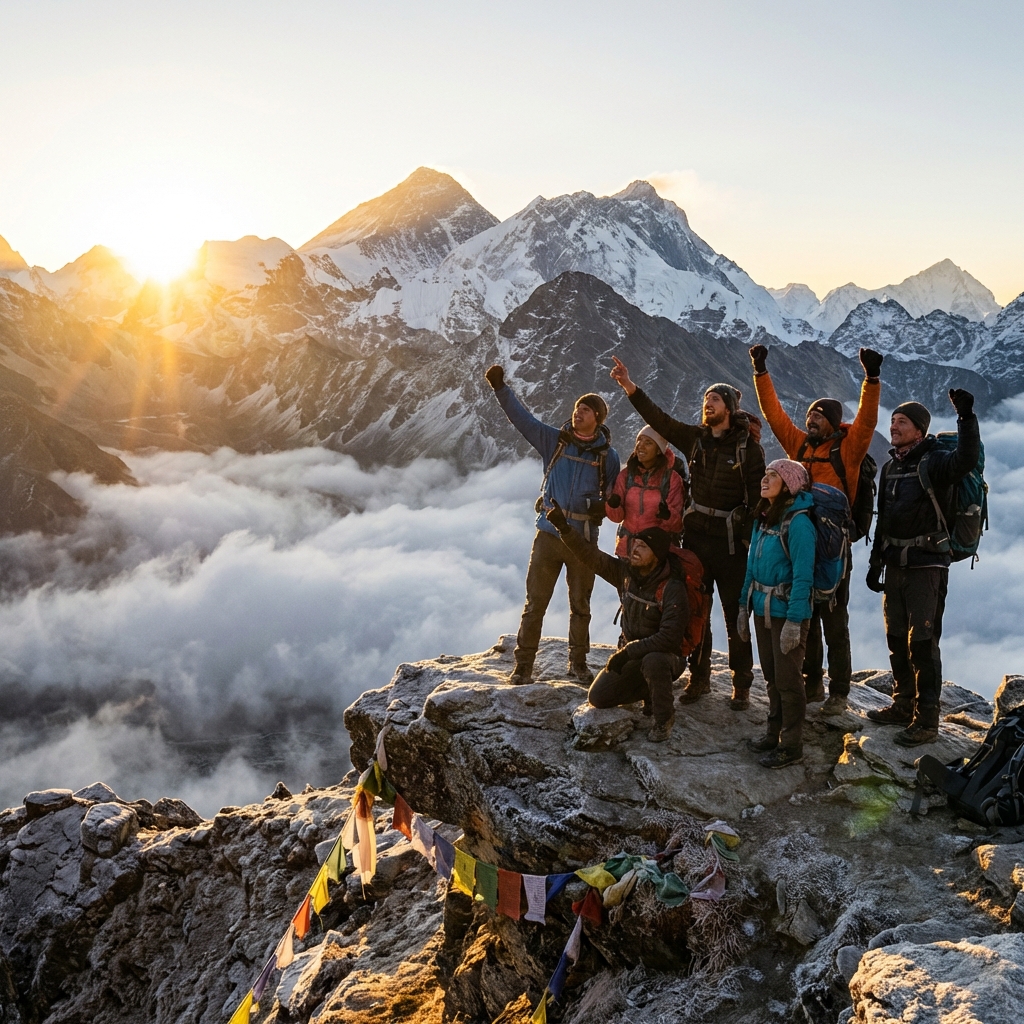
The final ridge: Kyanjin Ri's summit is not a sharp peak but a broad rocky ridge with several high points of similar altitude. The highest point is marked with prayer flags and small cairns. Most trekkers spend 15-30 minutes at the summit absorbing the view before beginning the descent.
Summit Views from Kyanjin Ri
The view from Kyanjin Ri is genuinely spectacular and encompasses the full sweep of the upper Langtang Valley:
| Direction | Peak / Feature | Altitude |
|---|---|---|
| North | Langtang Lirung (dominant peak) | 7,227m |
| North-Northeast | Langtang II | 6,571m |
| East | Dorje Lakpa | 6,966m |
| East-Northeast | Gangchempo (Fluted Peak) | 6,387m |
| West | Ganesh Himal range | up to 7,422m |
| Below (north) | Langtang Glacier snout and moraine | -- |
| Below (south) | Kyanjin Gompa settlement and valley floor | 3,870m |
| Far North | Tibetan plateau (brown, flat terrain beyond the peaks) | -- |
On exceptionally clear days in October, experienced observers report being able to identify Shishapangma (8,027m) on the Tibetan horizon from Kyanjin Ri, though this is more reliably visible from Tserko Ri.
Descent
The descent from Kyanjin Ri follows the same route as the ascent. Downhill progress is faster but requires more attention to footwork. Loose rocks and scree are more treacherous going down than up. Use your trekking poles actively, take small steps, and keep your weight slightly back to prevent forward slides on loose sections.
Most trekkers are back at Kyanjin Gompa within 1.5-2 hours of beginning the descent, arriving for a late breakfast (most lodges serve food until 10:00 AM).
Total time (including summit stop): 3-5 hours round trip
Kyanjin Ri Photography Window
The best photography on Kyanjin Ri is between 6:30 and 9:00 AM. During this window, the morning light hits Langtang Lirung at a low angle, creating dramatic shadows and golden illumination on the ice faces. By 9:30 AM, the light is higher and flatter. By 11:00 AM, clouds typically begin building and the views start to deteriorate. Plan your summit arrival for 7:30-8:30 AM for the best combination of light and visibility.
Tserko Ri (5,033m): Full Route Guide
Overview
Tserko Ri is a full mountain day from Kyanjin Gompa and should be treated as such. The extra 260 meters of altitude compared to Kyanjin Ri may sound modest, but the additional distance, terrain difficulty, and exposure time at high altitude make this a significantly harder undertaking. It is suitable for fit, experienced trekkers who have acclimatized properly -- ideally spending at least two nights at Kyanjin Gompa before attempting it.
The rewards are proportional to the effort. From Tserko Ri, you see everything visible from Kyanjin Ri and considerably more: Shishapangma on the Tibetan horizon, the full expanse of the Langtang Glacier system, and a more complete view of the high peaks to the east and west.
Starting Out
Recommended departure time: 5:00-5:30 AM (earlier than Kyanjin Ri)
The Tserko Ri trail begins differently from the Kyanjin Ri trail. Instead of heading east directly behind the settlement, follow the valley floor northeast from Kyanjin Gompa, initially following the same path as the Langshisha Kharka walk. After approximately 20-30 minutes, a cairn-marked junction indicates where the Tserko Ri trail diverges northward (left) from the valley floor path.
In early morning darkness, this junction can be difficult to spot. If you have not trekked this route before, hiring a local guide from your lodge the evening before is strongly recommended -- not only for navigation but also for safety management at altitude.
Hours 1-2: The Approach Through Yak Pasture
The initial section of the Tserko Ri ascent crosses open high-altitude meadows (kharkas). The gradient is more gradual than the direct Kyanjin Ri approach, but you cover more horizontal distance. Yak dung is a reliable trail marker in this section -- herders use this route frequently.
Altitude gain during Hours 1-2: From 3,870m to approximately 4,300m Terrain: Open grassland transitioning to rocky alpine ground Key hazard: Early morning cold can freeze any moisture on the trail. Watch for icy patches on rocky sections.
At approximately 4,200m, you gain your first clear views back toward Kyanjin Gompa, now looking small and distant below. From here, the altitude begins to feel meaningful. Your breathing is labored on any upward section, and rest stops become more frequent. This is normal and expected.
Hours 2-4: The Steep Push
Above 4,300m, the Tserko Ri trail becomes steep and the terrain transitions to loose rock and scree. This is where the hike separates itself from Kyanjin Ri in terms of physical demand. The gradient is relentless for 45-60 minutes, gaining approximately 400-500 meters over rocky, unstable ground.
Key landmarks:
- At 4,500m, a series of large cairns marks a short-lived level section. Rest here and assess how you feel before committing to the final push.
- Between 4,500m and 4,800m, the trail crosses increasingly broken terrain with large boulders interspersed with scree. Route-finding requires following painted rock markers or cairns.
- At 4,800m, the trail reaches a ridge that provides the first clear view north toward Tibet. This is a significant psychological milestone.
Turnaround Point Assessment at 4,500m
At the 4,500m rest point, make an honest assessment of your condition. You still have 500+ meters of climbing ahead, and the terrain becomes harder. If you have a persistent, worsening headache; if you feel nauseous; or if your coordination seems off, turn around here. Descent from 4,500m to Kyanjin Gompa takes only about 90 minutes. Descent from the summit takes 2.5-3 hours. Making the right call at 4,500m is not failure -- it is the decision that prevents serious illness.
Hours 4-5: The Summit Ridge
The final section from 4,800m to the Tserko Ri summit at 5,033m involves scrambling over large boulders on the summit ridge. This is the most technically challenging section, requiring use of hands for balance and upward progress. At this altitude, even simple physical tasks require significantly more effort than at sea level.
The summit is marked with prayer flags tied between boulders. In October, these flags are often frozen stiff and encrusted with ice crystals, adding to the otherworldly atmosphere of the high-altitude environment.
Summit zone: The summit ridge of Tserko Ri is exposed to wind from multiple directions. Even on calm days, there can be a significant chill factor above 5,000m. Put on your down jacket immediately upon reaching the top -- standing still at altitude in cold wind causes rapid heat loss.
Summit Views from Tserko Ri
Tserko Ri's views are among the finest achievable on a standard Nepal trekking itinerary, encompassing an extraordinary range of peaks and geographic features:
| Direction | Peak / Feature | Altitude | Notes |
|---|---|---|---|
| North | Langtang Lirung | 7,227m | Dramatically close and dominant |
| North | Langtang II | 6,571m | Adjacent to Lirung |
| Northeast | Dorje Lakpa | 6,966m | Impressive east-facing glaciers |
| Northeast | Gangchempo | 6,387m | "Fluted Peak" -- beautiful ice flutings |
| Far North | Shishapangma | 8,027m | Tibet; visible on clear days only |
| Far North | Tibetan plateau | -- | Brown, flat; stark contrast with Nepal's topography |
| Northwest | Ganesh Himal | 7,422m | Visible to the west |
| South | Langtang Valley floor | 3,870m | Full valley visible from Kyanjin Gompa to upper glacier |
| East-Southeast | Full Langtang Glacier | -- | Extent of glacier visible in full |
| Varies | Multiple unnamed 6,000m+ peaks | various | Icefalls and seracs visible on all sides |
Shishapangma visibility: The 8,027m Tibetan peak is visible from Tserko Ri on clear days between October and December and in clear spring conditions. It appears as a broad, flat-topped massif to the north-northwest, its summit plateau above the lower Tibetan foothills. Many trekkers do not realize what they are looking at until a guide or fellow trekker points it out -- the scale distortion at distance makes it appear less dramatic than it actually is.
Spending Time at the Tserko Ri Summit
Many trekkers rush to reach the summit of Tserko Ri and then immediately begin descending due to cold or concern about the descent. If your body is managing well and conditions are calm, spend at least 20-30 minutes at the summit. Eat something -- your body needs fuel for the descent. Drink water even if you don't feel thirsty (altitude masks thirst signals). Take photographs carefully, as smartphone touchscreens can be sluggish in the cold. And take a few minutes simply to look, to orient yourself in this extraordinary landscape above 5,000 meters.
Descent from Tserko Ri
The descent follows the ascent route. Allow 2.5-3 hours for the return to Kyanjin Gompa, taking time to move carefully on the steep and loose sections. Do not rush.
Post-descent: By the time you return to Kyanjin Gompa, you will likely be physically exhausted. Eat a substantial meal, drink 2-3 liters of water, and rest for the remainder of the day. Many trekkers who summit Tserko Ri find they have unusual fatigue and appetite suppression for the following day -- this is normal high-altitude recovery.
Comparing the Two Hikes
| Factor | Kyanjin Ri (4,773m) | Tserko Ri (5,033m) |
|---|---|---|
| Round trip distance | ~8km | ~14km |
| Elevation gain | 903m | 1,163m |
| Round trip time | 3-5 hours | 6-9 hours |
| Difficulty | Challenging | Very Challenging |
| Summit scrambling | Moderate | More extensive |
| AMS risk | Moderate | Higher |
| Views | Excellent | Spectacular |
| Shishapangma visible? | Occasionally | Yes, on clear days |
| Suitable for | Most acclimatized trekkers | Fit, experienced trekkers |
| Guide recommended? | Helpful | Strongly recommended |
| Best start time | 5:30-6:00 AM | 5:00-5:30 AM |
Decision Framework
Choose Kyanjin Ri if:
- This is your first time above 4,500m
- You have spent only one night at Kyanjin Gompa
- You had any AMS symptoms during the ascent to Kyanjin Gompa
- You are not confident about your fitness for a 6-9 hour mountain day
- You have a history of altitude sensitivity
- Conditions are uncertain (wind, cloud building early)
Choose Tserko Ri if:
- You have spent at least two nights at Kyanjin Gompa without AMS symptoms
- You are an experienced trekker comfortable with sustained effort at altitude
- You have had no altitude problems throughout the trek
- You want the complete Langtang panorama experience
- You have sufficient time (start by 5:30 AM at the absolute latest)
- Weather is forecast clear
Consider doing both on separate days if:
- You are spending three or more nights at Kyanjin Gompa
- Your fitness and acclimatization are strong
- You want the complete experience of the upper Langtang Valley viewpoints
The Sensible Compromise
If you are genuinely uncertain whether to attempt Tserko Ri, here is a practical approach: start toward Tserko Ri from Kyanjin Gompa. At the 4,500m rest point (approximately 2 hours in), evaluate honestly. If you feel strong and symptom-free, continue to Tserko Ri. If you feel off or the weather is deteriorating, turn slightly east and complete Kyanjin Ri instead -- you will be at roughly the right altitude to traverse to the Kyanjin Ri summit area. Your guide can help navigate this route switch.
Altitude Sickness and Safety
Both hikes carry altitude-related risks. The Langtang Valley route is designed with gradual acclimatization in mind, but the day hikes push you significantly above your sleeping altitude.
AMS Risk Profile
| Altitude Zone | AMS Risk | What to Watch For |
|---|---|---|
| Kyanjin Gompa (3,870m) | Low-Moderate | Mild headache, fatigue, disturbed sleep |
| Kyanjin Ri approach (4,000-4,500m) | Moderate | Worsening headache with exertion, nausea |
| Kyanjin Ri summit (4,773m) | Moderate-High | All above, plus dizziness, coordination issues |
| Tserko Ri approach (4,500-4,800m) | High | All above more intensely |
| Tserko Ri summit (5,033m) | High | All above; HACE/HAPE risk increases above 5,000m |
For a comprehensive guide to recognizing altitude sickness symptoms and knowing when to turn around, read our altitude sickness guide.
Turnaround Rules (Non-Negotiable)
Descend immediately if you experience any of the following:
- Headache that worsens despite rest and does not respond to ibuprofen
- Nausea or vomiting during the ascent
- Dizziness or loss of coordination (the "walk the line" test: can you walk heel-to-toe?)
- Extreme breathlessness disproportionate to your exertion level
- Confusion or unusual behavior (this may require your guide or companion to notice)
Do not negotiate with these symptoms. The descent from either summit to Kyanjin Gompa takes 1.5-3 hours, and conditions typically improve dramatically as you lose altitude. Helicopter evacuation from the Langtang Valley is possible but expensive ($3,000-5,000 USD) and weather-dependent.
Above 5,000m: HACE and HAPE Risk
At Tserko Ri's altitude of 5,033m, the risk of High Altitude Cerebral Edema (HACE) and High Altitude Pulmonary Edema (HAPE) -- both life-threatening -- becomes relevant. These conditions can develop rapidly and are not always preceded by classic AMS symptoms. HAPE signs include persistent cough, breathlessness at rest, and a crackling or gurgling sensation in the chest. HACE signs include severe headache, confusion, and inability to walk straight. Either condition requires immediate descent and emergency evacuation. Ascend to Tserko Ri only if you are fully acclimatized and feel completely well.
Practical Preparation
What to Bring
For both hikes, carry:
- Water: Minimum 1.5 liters; 2 liters recommended for Tserko Ri. Cold temperatures can make you less aware of thirst, but dehydration worsens AMS.
- High-energy food: Trail mix, energy gels, chocolate, nuts, and dried fruit for fuel and emergency warmth. Eat at rest breaks even if you don't feel hungry.
- Down jacket: Essential for the summit. Even in October, summit temperatures can be -10°C or colder with wind chill.
- Waterproof shell: Weather can change rapidly. Keep your rain jacket accessible, not buried in your pack.
- Warm hat and gloves: Extremities cool rapidly at altitude when you stop moving.
- Headlamp: For the pre-dawn start. Bring spare batteries -- cold temperatures drain batteries faster.
- Trekking poles: Highly recommended for both hikes. They provide crucial support on scree and steep descents.
- Sunscreen (SPF 50+) and sunglasses (UV400): UV radiation at 4,000-5,000m is intense. Snow reflection amplifies this.
- First aid kit: Ibuprofen for headaches, blister treatment, emergency space blanket, personal medications.
- Passport and permit: Keep permits accessible for any checkpoint encounters on the trail.
When to Go
Best months: October (clearest skies, best views), November (cold but clear), April (rhododendrons at lower elevations, reliable weather at summit level).
Avoid: July-September (monsoon; cloud completely obscures views and wet rock makes scrambling dangerous), late November and December (snow on upper sections of Tserko Ri, extreme cold).
Ideal conditions: No cloud at dawn, calm wind, temperature at Kyanjin Gompa above -5°C overnight. Ask your lodge owner for their read on the conditions the evening before you plan to ascend.
The Night Before Your Summit Attempt
The evening before your summit day is as important as the day itself. Eat a substantial, carbohydrate-rich dinner (dal bhat is ideal). Drink at least 1.5 liters of water with dinner and before bed. Go to bed early -- 8:00-9:00 PM. Set your alarm for 4:30-5:00 AM. If you wake in the night with a headache, drink water and take ibuprofen. If the headache persists until your alarm, consider postponing the hike. A well-rested, hydrated body performs dramatically better at altitude than a tired, dehydrated one.
Guided vs. Independent Ascent
Both peaks are regularly climbed by independent trekkers with a mandatory licensed guides. The trails are reasonably well-marked with cairns and paint markers, and on clear days in October, you may have the company of other trekkers to follow. However, hiring a local guide from your Kyanjin Gompa lodge is strongly recommended for Tserko Ri, for several reasons:
- Route-finding in poor visibility: Cloud can descend rapidly. A guide with local knowledge can navigate the descent safely in conditions where cairns become invisible.
- Safety monitoring: A guide can objectively assess whether you should continue or turn back -- something that can be difficult to judge yourself when you are invested in reaching the summit.
- Emergency assistance: If you become ill or injured, a guide can descend for help while you rest, or assist your descent.
- Local knowledge: Guides know which sections are most prone to icy conditions in which seasons, where the safest rest points are, and the best timing based on current weather patterns.
Guide fees for a day hike from Kyanjin Gompa: NPR 2,500-4,000 ($19-31) for a half-day (Kyanjin Ri), NPR 4,000-6,000 ($31-46) for a full day (Tserko Ri). Ask your lodge manager to recommend a reliable local guide the evening before.
- Langtang Valley 7-Day Itinerary
- Kyanjin Gompa Destination Guide
- Langtang Valley Route Overview
- Altitude Sickness: Signs & Turnaround Rules
- Langtang Valley Difficulty Assessment
- Langtang Region Complete Guide
- Best Trekking Agencies for Langtang Valley
- Best Time to Trek the Langtang Valley
- Hiring Guides and Porters in Nepal
- Essential Nepal Trekking Gear List