Langtang Valley Trek Cost 2026: Full Budget Breakdown
The Langtang Valley trek cost is $700-$2,500 per person in 2026. A budget independent trek runs $700-900, a mid-range guided trip $1,200-1,800, and a premium package $2,000-2,500 (7-10 days). Langtang is Nepal's best-value mountain trek because no domestic flight is required — a $10-15 bus replaces the $350-400 Lukla flight.
The Langtang Valley trek cost stays low precisely because of that no-flight trailhead access. A $10-15 bus ride from Kathmandu replaces the Lukla flight that dominates Everest region budgets, making the Langtang Valley accessible to trekkers who want serious Himalayan scenery without the serious Everest price tag.
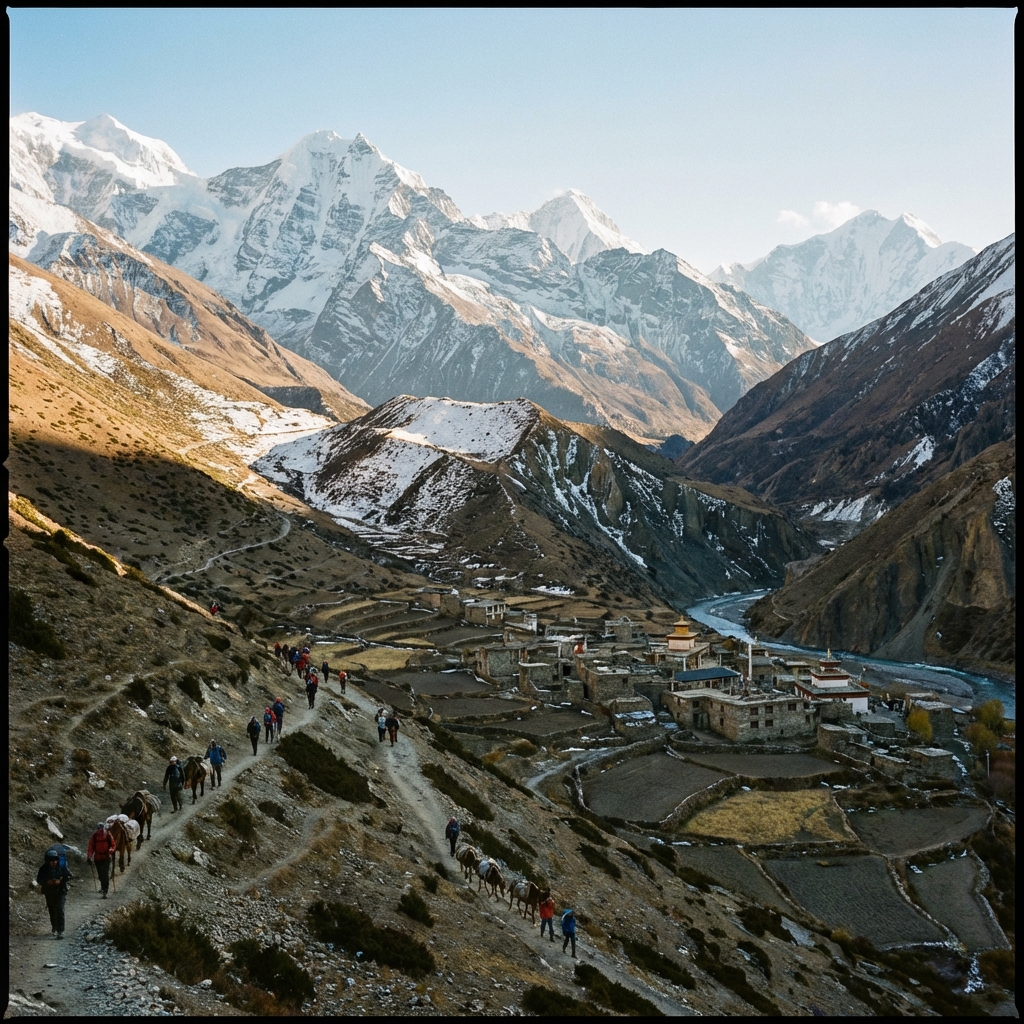
This is not a compromise destination. The Langtang Valley delivers glacier views, yak pastures, Tamang cultural villages, and an approach through dense rhododendron forest that rivals any trek in Nepal for raw natural beauty. What separates it from EBC or the Annapurna Circuit is proximity: Syabrubesi, the trailhead, is roughly 120km from Kathmandu — close enough to reach in 7-8 hours by bus, eliminating the most expensive single cost item on most Himalayan treks.
Langtang Village was devastated by the 2015 Gorkha earthquake, which triggered an avalanche that buried the settlement and killed many residents — including family members of guides who still work this route. The village has since been fully rebuilt with earthquake-resistant structures on a site roughly 100m higher than the original, and the trails and teahouses are fully restored and safe for trekking. Trekking here today contributes directly to a community that rebuilt with remarkable determination. The rebuilt teahouses are clean, the trails are well-maintained, and the valley has recovered its status as one of Nepal's signature trekking routes. Trekking Langtang is also, in a meaningful sense, an act of solidarity with a community that needed trekkers to return.
This guide provides verified 2026 pricing across every cost category, compares budget to premium tiers, identifies the hidden costs most planning guides miss, and offers proven money-saving strategies specific to this route. If you want the wider regional picture first, see our Langtang Valley trek route overview and the best time to trek Langtang Valley.
Quick Cost Summary
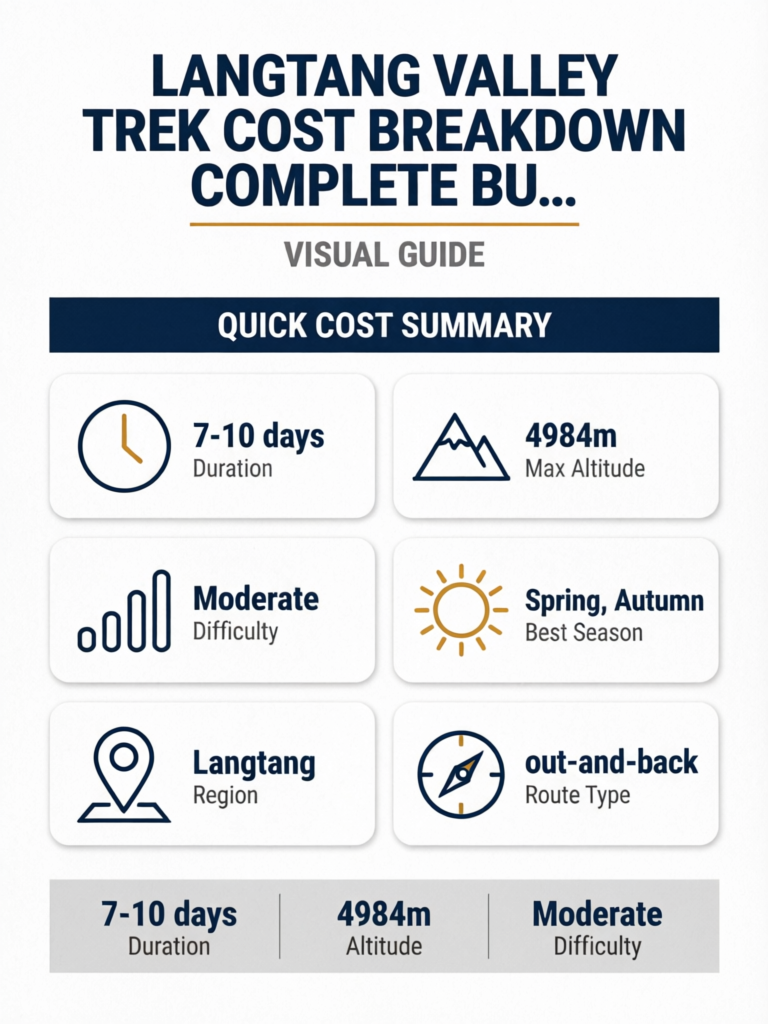
$700-900 (7-10 days)
$1,200-1,800 (7-10 days)
$2,000-2,500 (7-10 days)
$25-40 (budget) to $60-90 (premium)
$10-15 one way
~$50 total
$25-$35 /day
$3-8/night
$12-20/day
The No-Flight Advantage: $350-400 in Savings
Before breaking down individual costs, it is worth pausing on the single most important financial fact about the Langtang Valley trek: you do not need a domestic flight to reach the trailhead.
The Kathmandu–Syabrubesi bus takes 7-8 hours and costs NPR 1,200-2,000 ($10-15) for a tourist bus seat. Compare this to the mandatory Lukla round-trip flight for EBC, which costs $350-400 and is non-negotiable regardless of your budget. The Lukla flight alone accounts for 25-35% of a budget EBC trek cost. Remove it from the equation and Langtang suddenly becomes a completely different financial proposition.
| Cost Category | Langtang Valley | Everest Base Camp |
|---|---|---|
| Transport to trailhead | $10-15 (bus) | $350-400 (Lukla flight) |
| Permits | ~$50 | ~$50-60 |
| Duration (typical) | 7-10 days | 12-14 days |
| Budget guided total | $700-900 | $1,200-1,600 |
| Mountain scenery quality | Outstanding | Outstanding |
For trekkers on a genuine budget, Langtang is not a consolation prize — it is a structurally cheaper trek with equivalent mountain quality. That distinction matters. For a side-by-side breakdown, see our Langtang Valley vs Everest Base Camp comparison and the EBC trek cost breakdown.
Why Langtang Stays Affordable
Langtang's cost advantage is structural, not seasonal. The road from Kathmandu to Syabrubesi has been gradually improved since the 2015 earthquake, and several local agencies now run direct tourist buses from Kathmandu's Thamel district. No weather cancellations, no overbooked flights, no airport scrambles. The bus departs and arrives.
Guided Package Costs
Budget Package ($700-950)
Included:
- Tourist bus Kathmandu to Syabrubesi (shared, round trip)
- Langtang National Park permit and TIMS card
- Shared guide (2-4 trekkers per guide)
- 6-8 nights teahouse accommodation
- 3 meals daily (set menu, limited choice)
- Shared porter for group gear (optional, sometimes excluded)
Not included: Nepal visa ($50), international flights, travel insurance, personal expenses, tips, hot showers, WiFi, charging fees
Typical budget agencies: Smaller Kathmandu-based operators, newer companies, online platforms matching trekkers with local guides, direct hire through Syabrubesi guesthouses
Verify What Bus Transport Means
Some budget packages list "transport included" but mean only the Kathmandu–Syabrubesi leg, not the return. Confirm the package covers both directions. Also confirm whether the bus is tourist-class (direct, more comfortable seats) or local bus (slower, more stops, cheaper — but not necessarily a bad choice for the fit and patient).
Mid-Range Package ($1,200-1,800)
Included (everything in budget plus):
- Experienced private guide or small-group guide (2-3 trekkers)
- Individual porter for your main pack
- Better teahouse selection where available
- More menu flexibility (some western meals covered)
- 2 nights Kathmandu hotel (3-star, pre/post trek)
- Private vehicle from Kathmandu to Syabrubesi (faster, more comfortable than bus)
- Emergency communication plan
- More itinerary flexibility
Who it's for: First-time Nepal trekkers, those who prefer having expert local guidance, trekkers who want to focus on the experience rather than logistics
Premium Package ($2,000-2,500)
Included (everything above plus):
- Senior private guide with deep Langtang expertise
- Personal porter throughout
- Best available lodges at each camp (Kyanjin Gompa selection is limited — premium means cleanest and best-maintained)
- Full flexibility on daily schedule and optional summit attempts (Kyanjin Ri, Tsergo Ri)
- 4-star Kathmandu hotel (2-3 nights pre/post trek)
- Pre-departure detailed consultation
- Comprehensive agency backup support
The value proposition: Full guide attention, maximum flexibility, and the logistical assurance of a premium agency handling every detail. At Kyanjin Gompa, the "best available" distinction narrows — all lodges are relatively simple — but the guide quality and Kathmandu hotel make a real difference.
Independent Trekking Cost ($550-750)
Langtang is one of the more accessible Nepal treks logistically — the trail is well-marked, teahouses are plentiful through Kyanjin Gompa, and the route does not involve the complex permits of restricted areas. However, fully solo (unguided) trekking is no longer permitted under Nepal's mandatory licensed-guide rule, which began in April 2023 and remains in force in 2026. You can still trek "independently" in the budget sense — hiring your own guide directly and handling your own permits, food, and lodging — but you cannot legally trek without a licensed guide. Verify current policy before you plan.
| Category | Cost Range |
|---|---|
| Langtang NP Permit | $30 |
| TIMS Card | $10-20 |
| Bus Kathmandu–Syabrubesi–Kathmandu | $25-35 |
| Accommodation (7 nights on trail) | $25-55 |
| Food (8 trail days) | $100-180 |
| Hot showers (3-4) | $9-16 |
| Charging + WiFi | $15-25 |
| Snacks (buy in Kathmandu) | $15-25 |
| Kathmandu hotel (2 nights) | $25-60 |
| Contingency (10%) | $30-50 |
| TOTAL | $284-466 |
Add independent guide ($20-28/day × 7 days = $140-196 + $60-90 tip): Total $484-752
This aligns with the "budget independent" range of $700-900 once insurance ($90-120) and Nepal visa ($50) are factored in.
Pro Tip
Permits and Entry Fees: $50
Langtang has one of the simplest permit structures of any Nepal trekking region. Two permits are required — and both can be obtained at the entrance checkpoint at Dhunche or in Kathmandu.
Langtang National Park Permit
Cost: NPR 3,000 (~$22-24 USD) per person for foreign nationals Where to buy: Langtang National Park checkpoint at Dhunche, or DNPWC counter in Kathmandu (Babar Mahal) What it covers: Entry into Langtang National Park for the duration of your trek
SAARC Nationals Pay Less
Citizens of SAARC countries (India, Bangladesh, Sri Lanka, Pakistan, Bhutan, Maldives, Afghanistan) pay NPR 1,500 (~$11) for the Langtang National Park entry permit. Nepali nationals pay NPR 100. If you hold a SAARC passport, confirm this pricing directly at the checkpoint — some entry points charge the incorrect rate and a polite correction is usually sufficient.
TIMS Card (Trekkers' Information Management System)
Cost: NPR 2,000 ($15) for individual trekkers; NPR 1,000 ($7.50) for agency-booked trekkers
Where to buy: Nepal Tourism Board counters in Kathmandu (Bhrikutimandap) or Pokhara; also available at Dhunche
What it covers: Safety registration and tracking for your trek
Permit Summary Table
| Permit | Foreign National Cost | Where to Obtain |
|---|---|---|
| Langtang National Park | NPR 3,000 (~$22-24) | Dhunche checkpoint or Kathmandu DNPWC |
| TIMS Card | NPR 1,000-2,000 ($7.50-15) | NTB counter, Kathmandu or Pokhara |
| TOTAL | ~$30-39 USD | — |
For a detailed overview of all Nepal trekking permits, see our Nepal trekking permits explained guide and the dedicated Langtang National Park permit guide.
Nepal Arrival Visa: $30-$125
Before any Langtang Valley trek cost calculation, foreign trekkers (Indian citizens excepted) need a Nepal tourist visa, paid on arrival at Tribhuvan International Airport. Bring cash in USD and two passport photos. The tier you choose depends on trip length:
| Visa Type | Cost (per person) | Best For |
|---|---|---|
| 15-day tourist visa | $30 | A tight 7-10 day Langtang trip only |
| 30-day tourist visa | $50 | Most trekkers (trek + Kathmandu/Pokhara time) |
| 90-day tourist visa | $125 | Combined treks or extended Nepal travel |
Most Langtang trekkers take the 30-day visa ($50) — this is the figure used in the budget scenarios below. See our full Nepal visa guide for the application process.
Transportation: $25-80
Kathmandu to Syabrubesi
Tourist bus (recommended): NPR 1,200-2,000 ($10-15) per person one way. Several companies operate direct tourist buses from Thamel, departing early morning (6-7am) and arriving Syabrubesi in 7-8 hours depending on road conditions. Seats are bookable through hotels, trekking agencies, or directly at the bus park.
Local bus: NPR 600-900 ($5-7) per person. More stops, slower, less comfortable seating, but a genuinely authentic travel experience. Departs from Machha Pokhari bus park in Kathmandu. Journey may take 8-10 hours.
Private vehicle: NPR 12,000-20,000 ($90-150) for a jeep or car, split between passengers. If traveling in a group of 4-6, this becomes competitive with tourist bus pricing per person and significantly faster with door-to-door service.
Syabrubesi to Kathmandu (Return)
Same options as above at equivalent pricing. Bus tickets are bookable in Syabrubesi through your guesthouse or the bus company's local agent. Return tourist buses typically depart early morning (5-6am) to arrive in Kathmandu before dark.
Within the Trek: No Additional Transport Required
Once at Syabrubesi, the entire trek to Kyanjin Gompa and back is on foot. There is no need for jeep transport, local flights, or additional paid transport within the trekking route — another cost advantage over more complex Himalayan itineraries.
Total transport budget:
- Budget (tourist bus): $25-35 round trip
- Private vehicle: $40-80 per person (depending on group size)
Pro Tip
Accommodation: $3-8 Per Night
Langtang teahouses are basic but well-established. The earthquake-era damage has been largely rebuilt, and most lodges along the main route are clean and functional. Kyanjin Gompa — the main destination at the top of the valley — has more lodge options than any intermediate camp and is where most trekkers base themselves for acclimatization and day hikes.
Accommodation by Section
| Location | Altitude | Approximate Cost/Night |
|---|---|---|
| Syabrubesi | 1,462m | $4-10 (several options) |
| Lama Hotel | 2,380m | $3-6 |
| Langtang Village | 3,430m | $4-7 |
| Mundu | 3,543m | $4-6 |
| Kyanjin Gompa | 3,870m | $5-10 |
What to Expect
Rooms: Basic twin or double rooms with thin mattresses and blankets. Private rooms are standard (not dormitories) on this route. Bathrooms are typically shared and located outside the main lodge building.
Hot water: Available for washing at most lodges for a small fee (NPR 200-400 / $1.50-3 extra). Piped hot showers are available at Kyanjin Gompa lodges.
Heating: Dining rooms typically have a wood or yak-dung stove in the evenings. Bedrooms are unheated. A warm sleeping bag is essential above Langtang Village, especially from October onward.
The teahouse economy: Langtang lodges often charge minimal accommodation fees on the expectation that guests eat meals at the lodge restaurant. This is the standard teahouse model across Nepal. Staying at a lodge and eating elsewhere is technically allowed but considered poor form and may result in the accommodation charge being increased.
Post-Earthquake Rebuilding Quality
Langtang Village was almost entirely destroyed in the 2015 earthquake. The rebuilt village opened new teahouses from 2016 onward, meaning most accommodation here is newer than anywhere else on the route. The rebuilt lodges are generally clean and structurally sound — some of the best on the trek, counterintuitively, are in the rebuilt village rather than the older settlements lower down.
Food and Drinks: $12-20 Per Day
Langtang food costs are among the lowest of any major Nepal trekking route, partly because of the shorter supply chain from Kathmandu (compared to the long Everest yak-train or helicopter supply system) and partly because the valley's lower elevation keeps menu complexity manageable.
Typical Menu Prices by Altitude
| Item | Syabrubesi/Lama Hotel | Langtang Village | Kyanjin Gompa |
|---|---|---|---|
| Dal bhat | NPR 450-600 ($3.40-4.50) | NPR 550-700 ($4.20-5.30) | NPR 650-850 ($5-6.50) |
| Noodle soup | NPR 250-400 | NPR 350-500 | NPR 450-600 |
| Eggs + toast | NPR 300-450 | NPR 400-550 | NPR 500-650 |
| Fried rice | NPR 400-550 | NPR 500-650 | NPR 600-750 |
| Tea (per cup) | NPR 60-100 | NPR 80-120 | NPR 100-150 |
| Bottled water (1L) | NPR 100-150 | NPR 150-200 | NPR 200-250 |
Kyanjin Cheese: A Genuine Highlight
Kyanjin Gompa is home to a yak cheese factory that has operated since the 1950s. The local yak cheese is sold at the factory and at lodge restaurants — a slice of fresh yak cheese on crackers or in a sandwich is one of Langtang's distinctive food experiences. Budget NPR 200-400 ($1.50-3) for cheese snacks, well worth it as a genuine local product.
Daily Food Budget Breakdown
Budget (mostly dal bhat, local tea): $12-16/day Mid-range (mixed local/Western, coffee, snacks): $16-25/day Higher spending (full western meals, multiple coffees, desserts): $25-40/day
Total food for 8 trail days:
- Budget: $100-130
- Mid-range: $130-200
- Higher: $200-320
Pro Tip
Guide and Porter Costs
Why a Guide Adds Value on Langtang
Nepal introduced regulations in 2026 requiring guides for most trekking routes, making independent trekking less straightforward. Beyond compliance, a Langtang guide provides:
- Cultural context: Most Langtang guides are Tamang, with direct cultural knowledge of the villages, monasteries, and earthquake recovery story
- Acclimatization advice: The jump to Kyanjin Gompa (3,870m) and optional ascents to Kyanjin Ri (4,773m) or Tsergo Ri (4,984m) require careful pacing
- Emergency communication: Guides carry communication devices and know evacuation protocols
- Trail knowledge: Several trail sections between Lama Hotel and Langtang Village have multiple route options; a guide navigates these without hesitation
Guide Rates
| Guide Type | Daily Rate | Notes |
|---|---|---|
| Budget guide (agency hire) | $25-$35 /day | Less experience, possibly limited English |
| Standard certified guide | $23-27/day | NTB certified, solid English, trail experience |
| Experienced senior guide | $28-35/day | Multi-year Langtang experience, first-aid trained |
Guide cost for 7-day trek: $140-196 (guide wages) + $50-90 (tip) = $190-286 total
Porter Rates
| Porter Type | Daily Rate | Notes |
|---|---|---|
| Standard porter | $25-$35 /day | Carries up to 25kg |
| Porter-guide combined | $22-28/day | Can handle both roles; common on Langtang |
Porter cost for 7 days: $126-154 (wages) + $40-70 (tip) = $166-224 total
On a 7-day trek, two trekkers sharing one porter pay $83-112 per person — a reasonable expense for carrying your main backpack.
Consider the Porter-Guide Option on Langtang
On Langtang specifically, many trekkers use a combined porter-guide who carries a moderate load and provides guiding services. This is practical on a well-defined trail like Langtang where the guiding responsibilities are lighter than on a complex technical route. The combined rate ($22-28/day) is lower than hiring a dedicated guide plus a dedicated porter separately. Ask your agency whether this arrangement is appropriate for your pack weight and group size.
Equipment and Gear
What You Already Need (Essential)
If you are trekking in October-November or March-April, the following are non-negotiable:
- Warm sleeping bag (-10°C rated): Essential from Langtang Village upward. Nights at Kyanjin Gompa can drop to -10°C in October, colder in November
- Down jacket or equivalent: Essential above 2,500m in cool seasons
- Waterproof outer layer: Rain and snow are possible year-round
- Trekking boots (ankle support): The trail is well-made but rocky and steep in sections
- Trekking poles: Highly recommended for the descents between Kyanjin and Lama Hotel
Kathmandu Gear Rental Prices
Thamel (Kathmandu) has extensive gear rental markets. Quality varies widely — inspect carefully.
| Gear Item | Rental Cost/Day | Rental (7 days) | Notes |
|---|---|---|---|
| Sleeping bag (-10°C rated) | NPR 150-250 ($1.10-1.90) | NPR 1,050-1,750 ($8-13) | Check loft and zipper carefully |
| Down jacket (600-fill) | NPR 200-300 ($1.50-2.30) | NPR 1,400-2,100 ($10.50-16) | Check seams and baffles |
| Trekking poles (pair) | NPR 150-200 ($1.10-1.50) | NPR 1,050-1,400 ($8-10.50) | Recommended for Langtang descents |
| Trekking boots (mid-weight) | NPR 300-500 ($2.25-3.80) | NPR 2,100-3,500 ($16-26) | Fit test critical — try before paying |
| Rain jacket / poncho | NPR 100-200 ($0.75-1.50) | NPR 700-1,400 ($5.25-10.50) | Useful during shoulder season |
| Duffel bag (60L) | NPR 100-150 ($0.75-1.15) | NPR 700-1,050 ($5.25-8) | Needed if using a porter |
Total gear rental estimate (7 days, core items): NPR 4,000-7,000 ($30-53)
Gear Rental in Syabrubesi Is Limited
Unlike Pokhara or Kathmandu, Syabrubesi has almost no gear rental market. If you arrive at the trailhead without a sleeping bag or down jacket, your options are very limited. Rent or purchase everything before leaving Kathmandu — do not plan to resolve gear gaps at the trailhead.
Travel Insurance: $90-140
Travel insurance covering helicopter evacuation is non-negotiable for Langtang. The route reaches 4,984m on optional Tsergo Ri summit, and the main valley floor sits at 3,870m at Kyanjin Gompa. Altitude illness, falls, and weather emergencies can all require evacuation. A helicopter from Kyanjin Gompa to Kathmandu costs $2,500-5,000 without insurance.
Minimum Insurance Requirements for Langtang
- Altitude coverage: Minimum 5,000m (to cover Kyanjin Ri at 4,773m and Tsergo Ri at 4,984m)
- Helicopter evacuation: Essential — this is the primary rescue mechanism in the Langtang valley
- Medical treatment: Kathmandu hospital coverage
- Trip cancellation: Useful for weather or permit delays
Insurance Cost by Policy Type
| Policy Type | Approximate Cost (10-14 days) | Coverage Level |
|---|---|---|
| Budget backpacker policy | $60-80 | Trekking to 4,000m — may not cover Tsergo Ri |
| Standard adventure policy (World Nomads Explorer) | $95-130 | Trekking to 6,000m, full evacuation |
| Comprehensive travel + adventure | $120-180 | Full medical, evacuation, cancellation |
| Annual multi-trip adventure policy | $300-500/year | Best for repeat Nepal trekkers |
Recommended minimum budget: $95-130 for a standard 10-14 day Langtang trip.
Check Your Altitude Limit Carefully
The standard trek reaches 3,870m at Kyanjin Gompa. But if you plan to hike Kyanjin Ri (4,773m) or attempt Tsergo Ri (4,984m) — both common extensions — your policy must cover at least 5,000m. A policy capped at 4,500m leaves you uninsured on Tsergo Ri. Read the policy document in full, not just the summary page.
Hidden Costs
| Cost | Estimated Amount |
|---|---|
| Hot showers (4-5 total on trail) | $6-15 |
| WiFi (Kyanjin Gompa, some camps) | $8-15 total |
| Device charging | $8-15 total |
| Snacks (buy mostly in Kathmandu) | $15-30 |
| Nepal visa (on arrival) | $50 |
| Tips — guide | $50-90 |
| Tips — porter | $40-70 |
| Kathmandu hotel pre/post (2 nights) | $30-120 |
| Kyanjin Gompa cheese factory | $5-15 |
| Optional monastery entry donations | $3-8 |
| Contingency fund | $50-100 |
Hidden costs total: $265-528 depending on spending habits and hotel standard. These are the costs that catch trekkers off guard when comparing initial package quotes to final trip costs.
Cost Variation by Season
| Season | Months | Accommodation | Food | Guide Availability | Trail Conditions |
|---|---|---|---|---|---|
| Peak Spring | Late March – Early May | Full price ($5-10/night) | Full menu | High, book ahead | Good to excellent |
| Shoulder Spring | Early March, Late May | -10 to -15% | Standard | Good availability | Variable, some snow |
| Peak Autumn | October – Early Nov | Full price ($5-10/night) | Full menu | High, book ahead | Excellent |
| Shoulder Autumn | Late Sept, Mid-Late Nov | -10 to -15% | Reduced menu | Good availability | Good, colder |
| Winter | December – February | -20 to -30% | Very limited | Scarce | Snow above 3,000m |
| Monsoon | June – August | -20 to -30% | Minimal | Limited | Very wet, leeches |
The genuine savings window: Early March or late November. Teahouses are open, guides are available, and prices are 10-15% below peak. Trail conditions in early March can include snow above 3,500m — worth checking conditions in advance, but manageable with proper gear.
Sample 9-Day Daily Expense Log
This represents a mid-range independent trekker: hired private guide, eating well, staying comfortable.
| Day | Location | Accommodation | Food | Guide | Extras | Daily Total |
|---|---|---|---|---|---|---|
| Day 1 | Kathmandu (pre-trek) | $30 hotel | $20 | — | $15 gear/snacks | $65 |
| Day 2 | Kathmandu → Syabrubesi → Lama Hotel | $5 | $16 | $25 | $15 bus | $61 |
| Day 3 | Lama Hotel → Langtang Village | $6 | $18 | $25 | $4 hot shower | $53 |
| Day 4 | Langtang Village → Kyanjin Gompa | $8 | $22 | $25 | $5 WiFi, $3 charging | $63 |
| Day 5 | Kyanjin Gompa (acclimatize, Kyanjin Ri) | $8 | $25 | $25 | $8 cheese, $4 extras | $70 |
| Day 6 | Kyanjin Gompa (Tsergo Ri optional) | $8 | $25 | $25 | $3 charging | $61 |
| Day 7 | Kyanjin Gompa → Langtang Village | $6 | $20 | $25 | $3 hot shower | $54 |
| Day 8 | Langtang Village → Syabrubesi | $5 | $16 | $25 | $3 hot shower | $49 |
| Day 9 | Syabrubesi → Kathmandu (post-trek) | $35 hotel | $20 | — | $13 bus, $10 dinner | $78 |
Trail totals: Accommodation $46, Food $142, Guide $175, Extras $43 = $406 on trail Kathmandu days: $113 Permits: $50 Guide tip: $70 Total trail + Kathmandu: ~$639 without insurance/visa With insurance ($110) and visa ($50): ~$799
This aligns with the mid-budget range of $700-900 — the difference between trekkers will be food choices and Kathmandu hotel standard.
Sample Budget Scenarios
Budget Traveler: ~$750 Total
- Bus transport (round trip): $30
- Permits (NP + TIMS): $50
- Accommodation (7 trail nights): $40
- Food (8 trail days, mostly dal bhat): $115
- Independent guide (7 days × $22/day = $154 + $55 tip): $209
- Hot showers + charging + WiFi: $30
- Kathmandu hotel (2 nights, budget): $30
- Gear rental (basic): $35
- Insurance: $95
- Nepal visa: $50
- Contingency: $50
- TOTAL: ~$734
Mid-Range Trekker: ~$1,400 Total
- Agency mid-range package (includes transport, guide, permits, accommodation, meals): $1,100
- Insurance: $120
- Tips (guide + porter): $130
- Extras on trail (showers, WiFi, snacks): $60
- Kathmandu hotel upgrade (3-star): $80
- Contingency: $75
- TOTAL: ~$1,565 (add $50 visa = ~$1,615)
Premium Trekker: ~$2,200 Total
- Agency premium package: $1,800
- Insurance: $160
- Tips: $180
- Personal expenses + extras: $100
- TOTAL: ~$2,240
Langtang Trek Cost by Route Variant and Duration
The standard Langtang Valley trek (Syabrubesi to Kyanjin Gompa and back) is the cheapest way to experience the region, but the same trailhead serves several longer routes. Because the Langtang National Park permit and TIMS card are fixed costs regardless of length, extending your trek adds only daily on-trail expenses — making the longer variants strong value per day.
| Route Variant | Typical Duration | Guided Cost (per person) | Notes |
|---|---|---|---|
| Langtang Valley (standard) | 7-10 days | $700-2,500 | Same permits, no extra entry fees |
| Gosaikunda Lakes add-on | 6-7 days | $850-1,900 | Sacred alpine lakes, higher passes |
| Langtang + Gosaikunda combined | 11-13 days | $1,300-2,800 | Two highlights, one permit set |
| Langtang Helambu trek | 7-9 days | $900-2,000 | Needs an extra Shivapuri NP permit (~$5) |
| Langtang + Tamang Heritage | 12-14 days | $1,400-2,900 | Deepest Tamang culture, same permits |
The Helambu route is the one exception on permits: it passes through Shivapuri Nagarjun National Park, which requires a separate entry permit (about $5 for foreign nationals, $2 for SAARC). The Langtang Valley, Gosaikunda, and Tamang Heritage extensions all use the same Langtang National Park permit and TIMS card you already pay for.
For full route details, compare the Langtang Valley route, Gosainkunda route, Helambu route, and the Tamang Heritage Trail. Our Gosaikunda and Helambu trek guide and Tamang Heritage Trail guide cover the logistics in depth.
Money-Saving Tips
1. Take the tourist bus, not a private vehicle. The tourist bus from Kathmandu to Syabrubesi costs $10-15 per person versus $90-150 for a private jeep. The 7-8 hour journey is the same; the road is the same. Save the $80-130 per person difference for trail expenses.
2. Eat dal bhat for at least one meal per day. Dal bhat costs NPR 500-700 ($3.75-5.30) at Langtang teahouses and includes unlimited rice refills. Two trekkers eating dal bhat for lunch save $5-8 compared to ordering noodle soup or fried rice for the same meal.
3. Trek in shoulder season. Late March (post-peak spring) and late November (post-peak autumn) offer 10-15% lower teahouse prices with most services still running. The genuine crowds on Langtang are never overwhelming, but shoulder season ensures availability at preferred lodges.
4. Buy snacks in Kathmandu, not on the trail. A chocolate bar in Thamel costs NPR 60-100 ($0.45-0.75). The same bar at Kyanjin Gompa costs NPR 200-350 ($1.50-2.65). Buy a full supply of trail snacks — energy bars, nuts, dried fruit, electrolytes — in Kathmandu before departure.
5. Hire a combined porter-guide if your pack is moderate. Two trekkers sharing a combined porter-guide on a moderate-pack trek can each pay $11-14/day for logistics support (shared cost of $22-28/day for one person) rather than $43-57/day for separate guide and porter.
6. Get your TIMS card and NP permit yourself in Kathmandu. The NTB counter at Bhrikutimandap and the DNPWC office at Babar Mahal process permits in 30-60 minutes. Agency processing fees add NPR 500-1,000 ($4-8) per permit with no practical benefit for self-sufficient trekkers.
7. Stay in Kathmandu's less touristy neighborhoods. Thamel is convenient but overpriced for accommodation. Staying a 10-minute walk away in Paknajol or Lazimpat saves $10-25/night on equivalent hotel quality.
8. Carry a refillable water bottle with purification tablets. Bottled water at Kyanjin Gompa costs NPR 200-250 ($1.50-1.90) per liter. Iodine tablets (NPR 100 in Kathmandu) purify 50+ liters from stream sources along the trail. Savings over 7 trail days: NPR 2,000-3,000 ($15-22.50) and significant plastic waste reduction.
9. Trek in a pair to share a porter. A single porter carrying two trekkers' main packs costs each trekker roughly half the daily rate — $9-11/person/day versus $18-22/person/day solo. If you're traveling solo, ask your agency to match you with another trekker for porter sharing.
10. Extend your trek to get better value from sunk costs. The permits (NP + TIMS = $50) are fixed costs regardless of trek length. A 10-day trek costs only marginally more than a 7-day trek in on-trail expenses, but the fixed cost per day drops significantly. Kyanjin Ri (4,773m) and Tsergo Ri (4,984m) are both excellent extensions that add 1-2 days and enormous value per dollar.
The Earthquake Story: Why Trekking Here Matters
In April 2015, the Gorkha earthquake triggered an ice avalanche that buried most of Langtang village. Hundreds of residents and trekkers were killed in minutes. Many families of current Langtang guides lost relatives on that day. The entire tourism economy of the valley collapsed overnight.
The village rebuilt. Teahouses reopened. Guides returned to the trail. But the recovery was slow, and visitors took years to return in meaningful numbers. Today, trekking Langtang is an economic act as much as a travel one — your teahouse fees, guide wages, and food spending go directly to families who rebuilt on the site of what they lost.
This context does not change the cost math, but it does change the meaning of the expenditure. When your guide tells you about 2015 — and many will — the conversation is worth more than any summit view.
Consider the Tamang Heritage Trail Extension
The Tamang Heritage Trail loops through villages including Goljung, Gatlang, and Tatopani before connecting with the main Langtang route at Syabrubesi. It adds 2-3 days and approximately $80-150 to the total cost (extra accommodation and food, same permits). The trail passes through Tamang villages with authentic cultural exposure that the main Langtang route does not offer. For trekkers interested in culture as much as mountains, this extension offers exceptional value for the extra cost.
What's Worth Spending More On vs. Saving On
Worth Spending More On
A guide with Langtang earthquake history. Many Tamang guides who work this route lost family in 2015. Their understanding of the route, the communities, and the cultural context is unique. Pay for an experienced local guide over a generic certified guide from Kathmandu who has done the route twice.
Insurance at the correct altitude level. If you plan to do Tsergo Ri (4,984m), your policy must cover 5,000m minimum. The cost difference between 4,500m and 5,000m coverage is typically $15-25. The coverage gap is the difference between a covered evacuation and a $4,000+ personal expense.
An extra night at Kyanjin Gompa. The standard 7-day itinerary pushes through Kyanjin quickly. An extra night adds $8-20 in accommodation and $20-25 in food — roughly $30-45 total — for the chance to summit Kyanjin Ri or Tsergo Ri in good morning light. This is among the highest-value single spending decisions on any Nepal trek.
Snacks purchased in Kathmandu. A $15-20 investment in Kathmandu snacks (energy bars, nuts, chocolate) saves $30-40 on trail while ensuring you have the fuel you need for the upper sections. This one decision pays back more than 2:1.
Where You Can Safely Save
Accommodation upgrades on the main trail. Between Syabrubesi and Langtang Village, teahouses are uniformly basic. The "premium room" at most lodges has a marginally newer mattress. Save accommodation upgrade spending for Kyanjin Gompa, which has more selection variation, and for Kathmandu hotels post-trek.
WiFi above Langtang Village. Connectivity above Langtang Village is unreliable regardless of price. Pay for WiFi at Kyanjin Gompa only if you have specific communication needs; don't pay for connectivity you won't get.
Private vehicle from Kathmandu. The tourist bus is comfortable enough for most trekkers, and the $80-120 saving per person is substantial. Unless you are travelling with significant gear or have mobility constraints, the bus is the right call.
Common Budget Mistakes
Forgetting the bus costs both ways. Some trekkers budget $15 for the bus (one way) and are surprised by another $15 on return. Round trip is $25-35; budget accordingly.
Underestimating food costs at Kyanjin Gompa. Trekkers apply Syabrubesi menu prices to Kyanjin Gompa and underestimate by 30-50%. At 3,870m, dal bhat costs NPR 650-850 (not NPR 450-600), and a western breakfast costs NPR 500-700. Budget $22-30/day at Kyanjin, not $12-15.
Not budgeting for Kathmandu. Two nights in Kathmandu pre/post-trek adds $60-180 in hotel and restaurant costs. Many trekkers budget only for trail days and are surprised by Kathmandu spending.
Skipping tips. Guide and porter tips on a 7-day Langtang trek should total NPR 8,000-15,000 ($60-115). Arrive with this in small Nepali rupee notes. Guides who lose family in the 2015 earthquake and continue working this route as their livelihood deserve a genuine tip, not an afterthought.
Buying low-quality gear last minute. Arriving in Kathmandu without a sleeping bag and buying the cheapest option the night before departure from a Thamel street stall is a false economy. Quality sleeping bags for Langtang need to be rated for at least -10°C. Budget $40-60 for a reputable rental or invest in a purchase if you plan multiple Nepal treks.
FAQ
- Langtang Valley Trek Route Overview
- Langtang Valley 7-Day Itinerary
- Langtang Valley vs EBC Cost & Difficulty
- Budget Trekking in Nepal: Complete Guide
- Langtang National Park Permit Guide
- Best Time to Trek Langtang Valley
- Kyanjin Gompa Trek Guide
- Best Trekking Agencies for Langtang Valley
- What to Expect on Your First Nepal Trek
- Nepal Trekking Packing List