
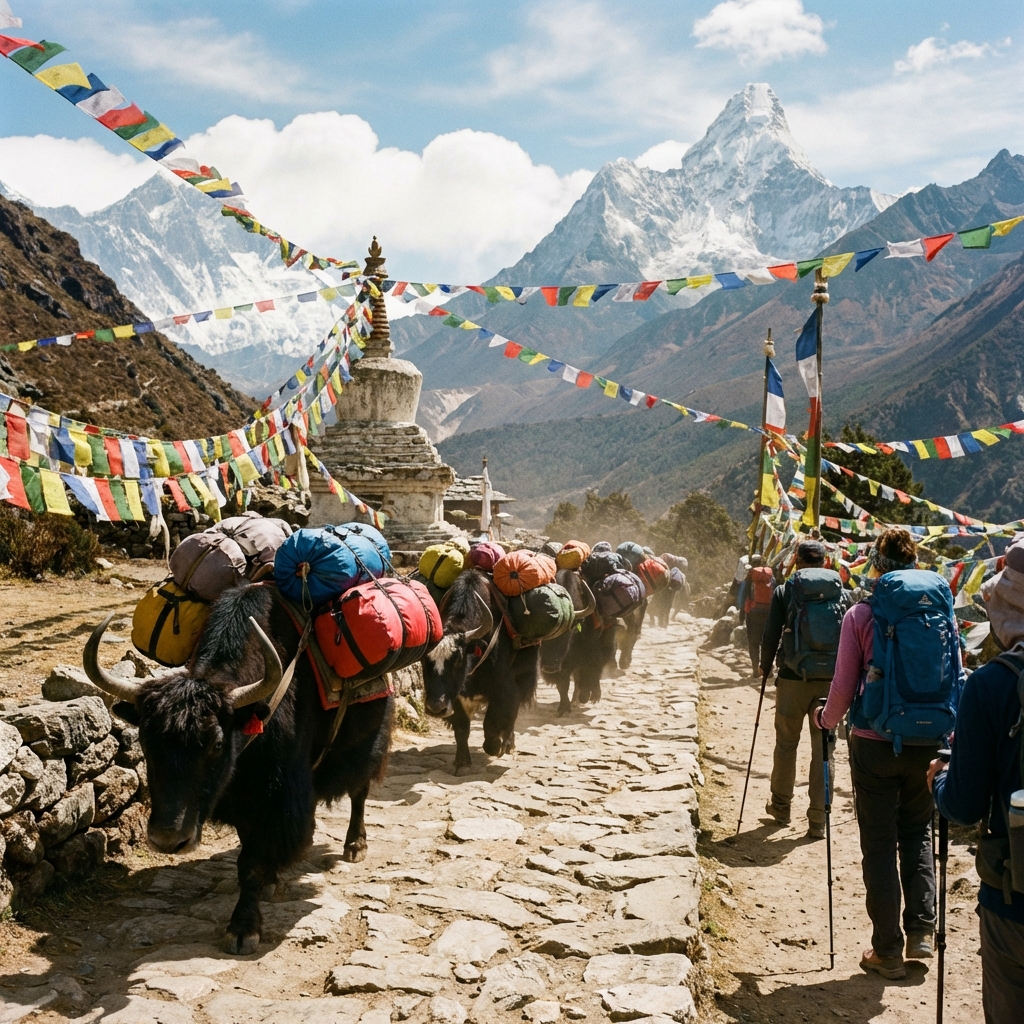
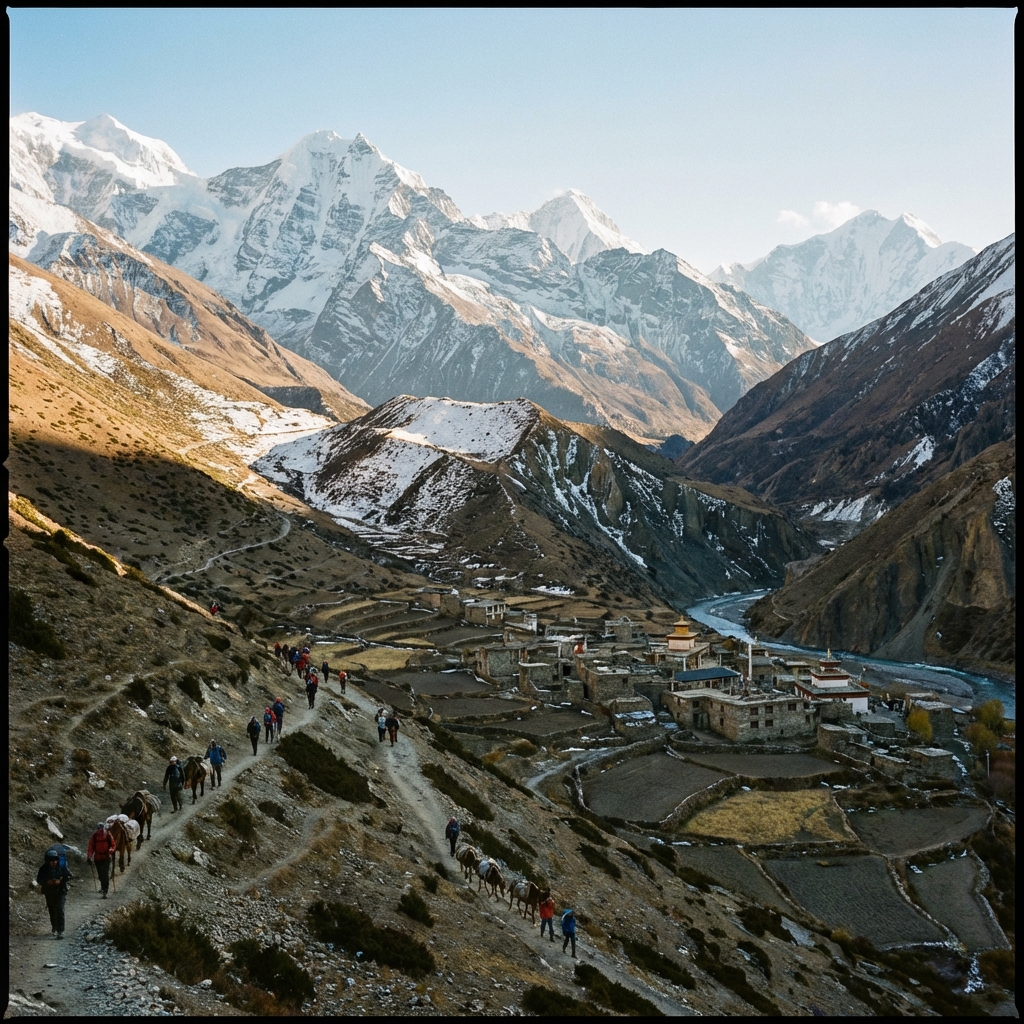
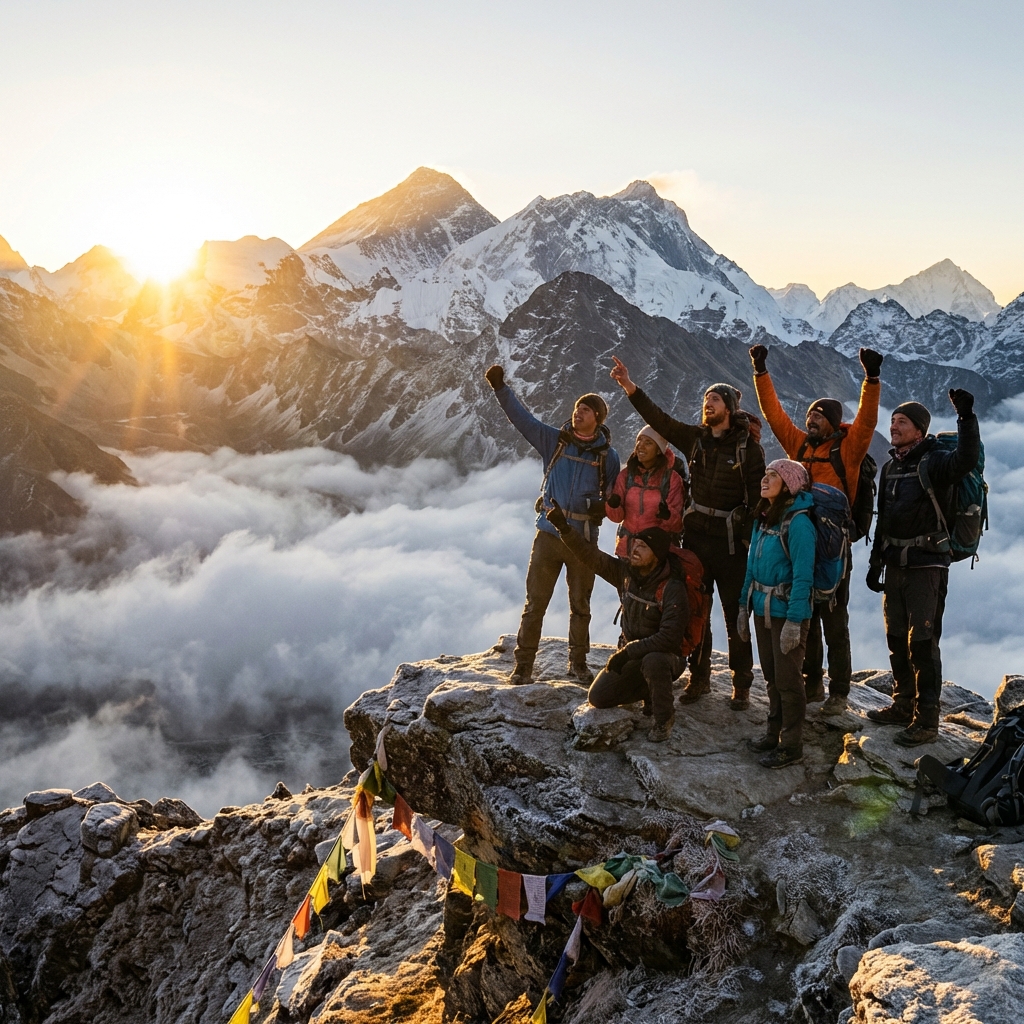
Gosaikunda is not simply a lake at the end of a trail -- it is the center of a sacred geography that spreads across a high alpine basin at 4,380 meters in Langtang National Park. The main lake is flanked by 107 smaller companion lakes, each with its own name, mythological significance, and pilgrimage tradition. Walking the circuit around this lake complex, crossing the Laurebina Pass (4,610m) to explore the high ridge, and visiting the surrounding bodies of water creates an experience that is equal parts trekking adventure and Hindu-Buddhist pilgrimage.
Lord Shiva mythology is embedded in every feature of this landscape. According to the Puranas, Shiva struck his trident into the mountainside after consuming the cosmic poison (halahala) during the churning of the ocean, releasing water to cool the burning sensation. The lakes that formed are considered supremely sacred, and the rock formation visible through the clear water of Gosaikunda is believed to be Shiva's lingam.
For modern trekkers, the circuit offers something that a simple out-and-back to Gosaikunda does not: a complete immersion in the lake basin, a crossing of the dramatic Laurebina Pass with its views into both the Gosaikunda basin and the Helambu region beyond, and the opportunity to visit multiple sacred lakes rather than just the most famous one. This guide covers the full circuit, the meaning of each lake, the best seasons to visit, and how to combine the loop with the broader Langtang region experience.
6-8 days (from Dhunche, with exploration days)
4,610m (Laurebina La pass)
4,380m (Gosaikunda)
Moderate to Challenging
October-November, March-May
Janai Purnima (July-August)
Langtang National Park Permit + TIMS
Dhunche (6-7 hours from Kathmandu by bus)
Tea houses at Dhunche, Sing Gompa, Gosaikunda
Dhunche (none on the trail above)
The Sacred Lake System
Before planning your itinerary, understanding the lake system you are trekking through helps make the circuit more meaningful. The "108 sacred lakes" associated with Gosaikunda are arranged in clusters across the high basin and surrounding ridges. In practice, most trekkers visit 5-8 of the most accessible and significant lakes.
The Main Lakes of the Circuit
Gosaikunda (4,380m) -- The largest and holiest lake. Approximately 250m wide and 450m long, with crystal-clear water that reveals the rock formation believed to be Shiva's trident-mark at its center. The lake sits in a broad depression with the Laurebina ridge rising to the west and rocky peaks to the north and east. A small Shiva temple stands at the lakeside, serving as the focal point for pilgrim worship.
Saraswati Kunda (4,100m) -- Named for the goddess of knowledge and arts, this lake is passed on the ascent from Sing Gompa, approximately 280 meters below Gosaikunda. It marks the entry into the sacred zone. Many pilgrims perform their first ritual at this lake before continuing upward.
Bhairav Kunda (4,200m) -- Named for Bhairava, the fierce manifestation of Shiva. Located between Saraswati Kunda and Gosaikunda, this dark-watered lake has a more austere atmosphere than the others. Its stillness and the dark rock surrounding it make it feel like a place of power.
Surya Kunda (4,350m) -- "Sun Lake," located to the east of the main Gosaikunda lake. Best visited in the morning when the rising sun catches the water surface. Less visited than the main lake, giving it a quieter, more meditative atmosphere.
Neel Kunda (4,380m) -- "Blue Lake," adjacent to Gosaikunda. The name reflects its characteristically deep blue coloring, which contrasts with the more greenish tones of the main lake. A short walk east from the main Gosaikunda shore.
Taudaha (or similar high-ridge lakes, ~4,500m+) -- Small unnamed and named lakes scattered across the ridge above the main basin, reached by hiking above the circuit and accessible to energetic trekkers who climb toward the Laurebina La.
The Number 108
The traditional count of "108 sacred lakes" at Gosaikunda is a number with deep significance in Hindu-Buddhist traditions -- 108 is considered an auspicious and complete number, appearing in prayer bead counts, yoga sequences, and sacred architecture across the subcontinent. The actual physical count of distinct water bodies in the Gosaikunda basin varies by season and definition, but the ritual significance of the number adds meaning to the entire landscape.
Religious Significance
Shiva and the Creation of Gosaikunda
The central myth of Gosaikunda concerns the churning of the cosmic ocean (Samudra Manthan), described in the Vishnu Purana. During the churning, a terrible poison (halahala) emerged that threatened to destroy the universe. Lord Shiva consumed the poison to save creation, but the burning sensation was unbearable. He wandered through the Himalayas, striking his trident into the earth to release water to cool himself. Where his trident struck the high alpine ground, the Gosaikunda lakes formed.
This mythology explains why the lakes are considered both powerful and sacred. They emerged from an act of divine self-sacrifice, and bathing in them is believed to wash away sins and confer blessings from Shiva.
Pilgrimage Traditions
Gosaikunda is approached by pilgrims from multiple directions and via multiple traditions. Hindu pilgrims make the ascent from Dhunche or Dunche-Gosainkunda. Tamang Buddhist communities from surrounding villages treat the lakes as sacred to Guru Rinpoche as well as Shiva, reflecting the syncretic religious practices of the Langtang region.
The sacred circuit (pradakshina) around Gosaikunda itself -- walking clockwise around the main lake and visiting the subsidiary lakes -- is performed by pilgrims as a meritorious religious act. For trekkers, following this same clockwise route adds a dimension of meaning to what might otherwise be a scenic stroll.
Walking the Circuit Clockwise
Walking clockwise (pradakshina) is the prescribed direction for circumambulating sacred sites in both Hindu and Tibetan Buddhist traditions. When you walk around Gosaikunda, follow the clockwise direction -- from the main temple, walking east along the north shore, continuing to the east end of the lake, then south along the east shore, across the south end, and back west to the temple. This complete circuit takes approximately 1.5-2 hours and passes all the main shoreline sacred spots.
Itinerary: The Full Gosaikunda Lakes Circuit
Standard Circuit: 7-8 Days from Dhunche
This itinerary begins in Dhunche (1,960m), ascends to Gosaikunda via Sing Gompa, explores the lake basin and crosses Laurebina La, then either returns to Dhunche via a different route or continues toward Helambu.
| Day | Route | Altitude | Hours | Notes |
|---|---|---|---|---|
| 1 | Kathmandu to Dhunche | 1,960m | 6-7h drive | Permit at park gate |
| 2 | Dhunche to Sing Gompa | 3,330m | 5-6h | Forest ascent; cheese factory |
| 3 | Sing Gompa to Gosaikunda | 4,380m | 5-6h | Sacred lake arrival; temple visit |
| 4 | Gosaikunda Lakes Exploration | 4,380m | 4-5h | Circuit of all main lakes |
| 5 | Gosaikunda to Laurebina La (4,610m), return to Gosaikunda | 4,380m | 4-5h | Pass crossing and return |
| 6 | Gosaikunda to Sing Gompa | 3,330m | 3-4h | Descent day |
| 7 | Sing Gompa to Dhunche | 1,960m | 4-5h | Final descent; bus to Kathmandu |
| 8 | Dhunche to Kathmandu (if needed) | 1,400m | 6-7h drive | Return journey |
Alternative Day 5: Instead of returning to Gosaikunda after crossing Laurebina La, continue the descent to Ghopte (3,440m) on the Helambu side, converting the circuit into a one-way traverse. See our Gosaikunda to Helambu guide for details.
Compact 5-Day Circuit (for Fit Trekkers)
| Day | Route | Altitude | Hours |
|---|---|---|---|
| 1 | Kathmandu to Dhunche, begin walking to Sing Gompa | 3,330m | Drive + 5-6h walk |
| 2 | Sing Gompa to Gosaikunda | 4,380m | 5-6h |
| 3 | Gosaikunda Lakes Circuit + Laurebina La day hike | 4,610m | 6-7h |
| 4 | Gosaikunda to Dhunche | 1,960m | 7-8h descent |
| 5 | Dhunche to Kathmandu | 1,400m | 6-7h drive |
Rapid Ascent Risk on 5-Day Version
The 5-day circuit compresses significant altitude gain into fewer days. Going from Kathmandu (1,400m) to Gosaikunda (4,380m) in just 2 trekking days is aggressive. Only attempt this compact schedule if you have recently been acclimatized at altitude (e.g., you just completed another highland trek). For most trekkers, the 7-day schedule is strongly recommended.
The Laurebina La Pass
What Is Laurebina La?
Laurebina La (4,610m) is the high pass on the ridge above Gosaikunda that separates the Gosaikunda basin from the Helambu valley system to the southeast. "La" means "pass" in Tibetan-influenced Nepali -- you will find this suffix throughout high mountain passes in Nepal and Tibet.
The pass is the highest point of the Gosaikunda Lakes Circuit and the key geographical feature that transforms a simple out-and-back lake visit into a true mountain traverse.
The Ascent
From the main Gosaikunda lakeside (4,380m), the trail to Laurebina La climbs a steady 230 meters to the pass at 4,610m. The ascent takes approximately 1-1.5 hours. The trail is well-marked with cairns but can be obscured by snow in late autumn and winter. In spring conditions, ice on the approach can make trekking poles and gaiters valuable.
At the pass: The view from Laurebina La is exceptional. To the northwest, you look back over the entire Gosaikunda lake basin, with the lakes shining like blue-silver mirrors in the alpine terrain. To the southeast, the Helambu valley system drops away steeply, with forested ridges and the distant lowlands of the Kathmandu Valley visible on the clearest days.
The Descent (Helambu Side)
The descent from Laurebina La toward Helambu is steep and requires significant care. In the first 200-300 meters below the pass, the trail drops sharply over rocky terrain that becomes treacherous when wet or icy. This is the most technically demanding section of the entire Gosaikunda Lakes Circuit, and the section most responsible for trekking accidents in this area.
Safety measures for the descent:
- Take your time -- speed is your enemy on this section
- Plant trekking poles firmly before each step
- Face into the slope on the steepest sections, descending with three points of contact
- If icy, use crampons or microspikes (carry these in winter/early spring)
- Hire a guide who knows the trail if you are unsure
Dangerous Descent in Poor Conditions
The Laurebina La descent has been the site of serious trekking accidents, particularly in wet or icy conditions. Several trekkers have slipped and fallen on this section in recent years. Do not attempt the descent in fog, heavy rain, or when significant snow or ice is present on the trail without a local guide who knows the route. If conditions are uncertain, return from the pass to Gosaikunda and do not cross.
Summit at Laurebina La
For circuit trekkers who are returning to Gosaikunda rather than continuing to Helambu, the Laurebina La is worth a 30-minute stay. Bring a snack and water, find a sheltered spot on the lee side of the wind, and take in the views in both directions. On clear days, you can see the Helambu region spreading south toward the Kathmandu Valley -- a view that helps you understand the scale of the landscape you are trekking through.
Janai Purnima: The Festival Season
The Festival
Janai Purnima -- the "Sacred Thread Festival" -- falls on the full moon of the Nepali month of Shrawan (typically late July or August). It is one of Nepal's most important Hindu festivals, observed by millions of Nepalis across the country. At Gosaikunda, it becomes one of the most extraordinary religious gatherings in the Himalayan world.
During Janai Purnima, tens of thousands of Hindu pilgrims make the climb to Gosaikunda to bathe in the sacred waters at dawn. The trails are crowded with pilgrims of all ages, many walking barefoot over rocky trails, many carrying offerings of flowers, coconuts, and incense. The atmosphere around the lake is charged with devotion, chanting, and the smell of smoke from fires and incense.
The Meaning of the Festival
Janai Purnima celebrates the changing of the "janai" -- the sacred thread worn by high-caste Hindu men across the chest. On this day, Brahmin and Chhetri men receive a new thread from a priest, symbolizing spiritual renewal. Bathing in Gosaikunda on this day is believed to purify the soul and confer merit equivalent to visiting all other sacred sites in Nepal.
For the Tamang Buddhist communities of the Langtang region, the same full moon is celebrated as Raksha Bandhan and also has connections to Guru Rinpoche's subjugation of the lake demons. The religious blending at Gosaikunda -- Hindu pilgrims and Buddhist Tamang worshippers side by side -- is a striking reflection of Nepal's syncretic spiritual culture.
Planning for Janai Purnima
If you want to witness Janai Purnima at Gosaikunda, be aware that this falls during the monsoon season:
| Factor | Consideration |
|---|---|
| Trail conditions | Wet, muddy, and potentially hazardous due to rain |
| Leeches | Present below approximately 3,000m on the forest sections |
| Mountain views | Almost certainly obscured by monsoon cloud |
| Crowds | Extremely crowded at the lake and on the approach trails |
| Accommodation | Must be booked months in advance; consider camping |
| Experience quality | The human spectacle compensates for the weather challenges |
Practical tips for Janai Purnima:
- Book lodges in Dhunche and Sing Gompa at least 3 months ahead
- Arrive at Gosaikunda 2-3 days before the full moon to secure lakeside space
- Bring a tent as backup accommodation
- Carry leech socks and waterproof gear for the forest approach
- Accept that this is a cultural pilgrimage experience, not a mountain views trek
- The ritual bathing begins at dawn -- be at the lake by 5:00 AM
Timing Around the Festival
You don't have to be at Gosaikunda on the exact full moon night to experience the festival atmosphere. Arriving 4-5 days before the festival allows you to see the build-up of pilgrims, find accommodation more easily, and trek in somewhat less crowded conditions. The lake atmosphere is increasingly charged in the days leading up to the full moon, and the descent crowds ease quickly after the festival day.
Lake-by-Lake Exploration Guide
Day 4: The Lake Circuit (Full Day Activity)
Your exploration day at Gosaikunda should begin before sunrise and proceed in the prescribed clockwise direction. Here is a detailed guide to the full circuit:
6:00 AM -- Sunrise at the Main Lake Position yourself on the east or south shore of Gosaikunda before dawn. As the sun rises over the eastern ridgeline, it illuminates the surface of the lake progressively, first turning it silver, then gold, then the deep blue that characterizes high-altitude glacial lakes in full daylight. The first light on the surrounding peaks -- typically at 6:15-6:30 AM in October -- is the finest photography moment.
7:00 AM -- The Temple Walk clockwise along the north shore to the small Shiva temple. This stone structure contains a natural rock formation that devotees worship as a lingam (a symbolic representation of Shiva). The temple is tended by a caretaker during trekking season and continuously during the pilgrimage season. Leave your shoes outside and make a small offering if you wish to enter.
8:00 AM -- Neel Kunda and Surya Kunda Continue clockwise to the eastern end of Gosaikunda and the adjacent Neel Kunda. The short walk between these two lakes passes over flat rocky ground with views back toward the main lake. Continue south to Surya Kunda, the "Sun Lake," which is best visited in morning light.
9:30 AM -- Bhairav Kunda Descend slightly southwest to Bhairav Kunda. The change in atmosphere between this darker lake and the larger, brighter Gosaikunda is notable. The surrounding rock is more imposing, and the lake surface, when still, has an intensity to it that many visitors find striking.
10:30 AM -- Upper Ridge Hike (Optional) Fit trekkers can continue above the lake basin toward the Laurebina La (or at least partway up) for views across the entire circuit. This adds 2-3 hours to the day but provides the most complete perspective of the lake system.
12:00 PM -- Return to Main Lake and Lunch Back at your lodge for a rest and meal. The afternoon is typically cloudier, making morning the optimal exploration time.
Afternoon -- Saraswati Kunda Visit Walk back down the trail toward Sing Gompa approximately 280m to visit Saraswati Kunda (4,100m). This lake has a different character from the higher lakes -- slightly lower in altitude, with vegetation closer to the shoreline and a more accessible feel.
Combining with Other Langtang Treks
The Gosaikunda Lakes Circuit fits naturally into a broader Langtang region itinerary in several ways:
Option 1: Langtang Valley + Gosaikunda Circuit (12-14 days)
The finest comprehensive introduction to the Langtang region. Trek the Langtang Valley first (reaching Kyanjin Gompa at 3,870m for excellent acclimatization), return to Syabrubesi, drive to Dhunche, then complete the Gosaikunda circuit.
Advantage: The Langtang acclimatization makes the Gosaikunda ascent significantly easier and safer.
Option 2: Gosaikunda Circuit + Helambu Traverse (10-12 days)
Complete the circuit up to Laurebina La, then instead of returning to Gosaikunda, continue the descent into Helambu. This creates a one-way traverse ending near Kathmandu. Full details in our Gosaikunda to Helambu guide.
Option 3: Tamang Heritage Trail + Gosaikunda (12-15 days)
Start with the cultural immersion of the Tamang Heritage Trail, return to Syabrubesi, drive to Dhunche, and complete the Gosaikunda circuit. This pairs the cultural richness of the Tamang villages with the spiritual grandeur of the sacred lakes.
Connecting from Langtang Valley
The connection from the Langtang Valley to Gosaikunda is logistically simple: from Syabrubesi, take a local jeep or bus to Dhunche (approximately 1-2 hours, $5-10). From Dhunche, the Gosaikunda trail begins immediately. No additional permits are required as both areas fall within Langtang National Park and your existing permit covers entry.
Permits, Costs, and Logistics
Required Permits
| Permit | Cost (Foreigners) | Where to Obtain |
|---|---|---|
| Langtang National Park Entry | NPR 3,000 (~$23) | Dhunche checkpoint or Kathmandu |
| TIMS Card | NPR 2,000 (~$15) | Nepal Tourism Board, Kathmandu |
| Total | ~$38 |
Cost Breakdown: 7-Day Gosaikunda Circuit
| Expense | Budget | Mid-Range | Notes |
|---|---|---|---|
| Transport (KTM-Dhunche return) | $12-20 (bus) | $80-120 (private jeep) | Per vehicle/person |
| Permits | $38 | $38 | Same for all |
| Accommodation (6 nights) | $25-48 | $48-100 | $4-8/night at lodges |
| Meals (7 days) | $70-120 | $120-180 | $10-18/day |
| Guide (optional, 7 days) | $0 | $175-245 | $25-35/day |
| Contingency | $30-50 | $50-80 | Tips, snacks, extras |
| Total | $175-276 | $511-763 | Per person |
Getting to Dhunche
Local buses from Kathmandu's Machhapokhari bus park depart daily at 6:30-7:30 AM for Dhunche (NPR 600-800, 6-7 hours). Tourist buses and shared jeeps offer more comfortable alternatives. Private jeeps ($100-140 for the vehicle) take 5-6 hours and can accommodate 4-6 passengers.
The road to Dhunche is paved but winding through landslide-prone terrain. Check road conditions during and immediately after monsoon season.
Seasonal Guide
Autumn (October-November): Optimal
The finest season for the Gosaikunda circuit. Clear skies, stable conditions, comfortable temperatures, and the best mountain views. October is the single best month. November brings colder nights at the lake (below -15°C) but remains clear and beautiful with significantly fewer trekkers.
Spring (March-May): Excellent Alternative
Rhododendron forests between Dhunche and Sing Gompa bloom spectacularly from mid-March through April. The circuit is equally rewarding in spring with warmer daytime temperatures and reliable morning clarity. May can see increasing pre-monsoon cloud and haze.
Winter (December-February): For Experienced Trekkers
Possible but demanding. Snow above 3,500m can close or seriously complicate the Laurebina La crossing. Temperatures at Gosaikunda drop to -20°C or colder at night. Only experienced winter trekkers with proper equipment and a local guide should attempt the circuit in winter.
Monsoon (June-September): Pilgrimage Season
Janai Purnima typically falls in late July or August, making this the pilgrimage season. Trail conditions are challenging -- wet, muddy, and leech-prone below 3,000m -- but the festival atmosphere is incomparable. Mountain views are largely obscured by cloud.
- Gosaikunda Trek Guide (Classic Route)
- Gosaikunda to Helambu Trek (Full Traverse)
- Langtang Region Complete Guide
- Helambu Trek Guide
- Langtang Valley 7-Day Itinerary
- Tamang Heritage Trail Guide
- Altitude Sickness: Signs & Turnaround Rules
- Best Time to Trek in Nepal
- Nepal Trekking Permits Explained
- Cultural Immersion Treks in Nepal
Ready to Trek the Gosaikunda Circuit?
What Is the Best Time to Visit Gosaikunda Lakes?
The best trekking season for the Gosaikunda Lakes Circuit is October-November (autumn) for clear skies and stable weather, or March-May (spring) for rhododendron blooms and warmer temperatures. The most culturally significant time is the Janai Purnima festival in July-August, when tens of thousands of Hindu pilgrims make the ascent -- but monsoon weather makes trekking conditions wet and challenging.
Frequently Asked Questions
How many lakes are there at Gosaikunda?
The traditional count is 108 sacred lakes, though the actual number of distinct water bodies varies by season and definition. Most trekkers visit 5-8 of the most accessible and significant lakes, including Gosaikunda, Saraswati Kunda, Bhairav Kunda, and Surya Kunda.
Is the Gosaikunda Lakes Circuit suitable for beginners?
The circuit is rated Moderate to Challenging. The altitude (up to 4,610m at Laurebina La) is the main difficulty. Beginners with good fitness who acclimatize properly can complete it, but prior trekking experience at altitude is helpful. Consider the Helambu trek as a gentler alternative.
Can I swim or bathe in Gosaikunda Lake?
The lakes are sacred to Hindu pilgrims, and ritual bathing occurs during Janai Purnima. General swimming is culturally inappropriate outside the pilgrimage context. The water temperature is also extremely cold year-round.
How do I get to the Gosaikunda trailhead?
Take a bus or private jeep from Kathmandu to Dhunche (6-7 hours). See our jeep transport guide for details on vehicle options and costs.
Can I combine Gosaikunda with the Langtang Valley trek?
Yes. A combined Langtang Valley and Gosaikunda trek takes 12-16 days and is one of the best value multi-week treks in Nepal, requiring no domestic flights.