
Beyul Hidden Valley: A Cultural Guide to Tsum
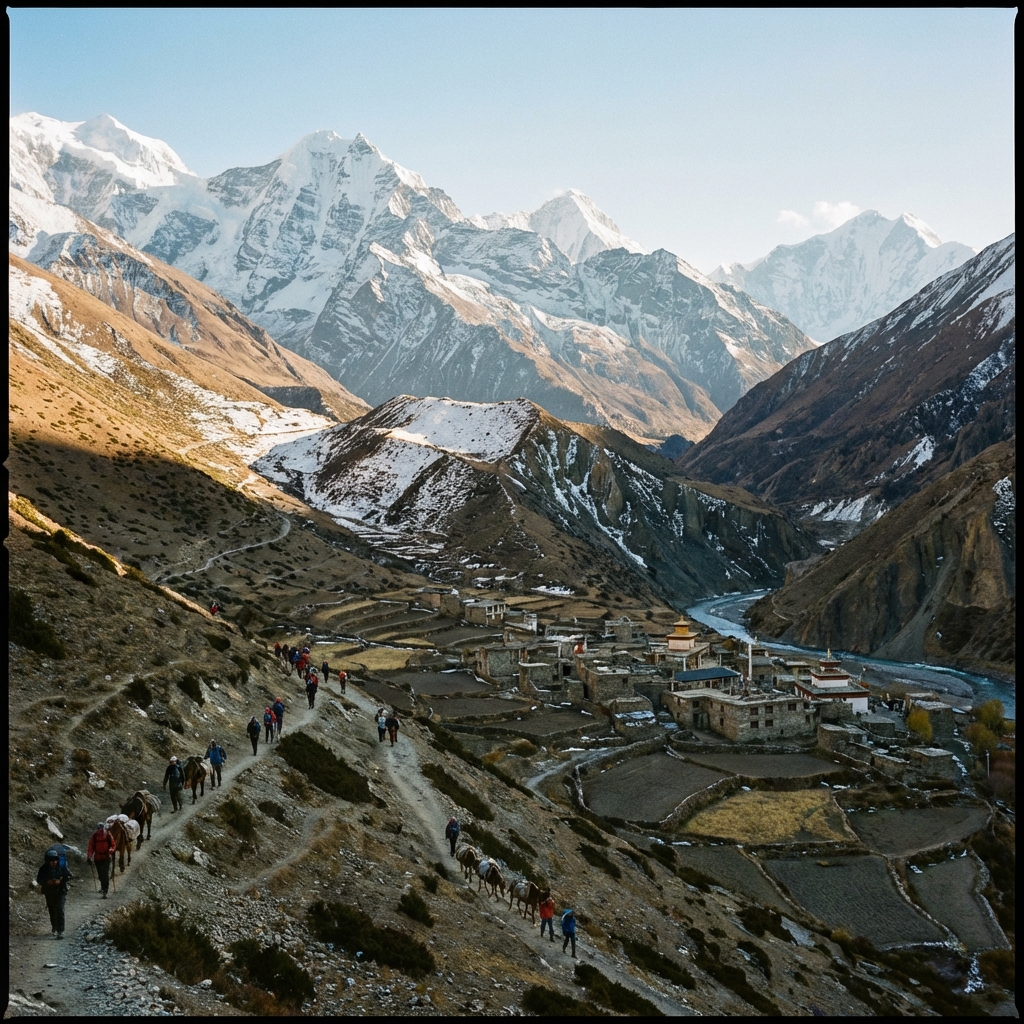
A beyul hidden valley is a sacred refuge in Tibetan Buddhist cosmology — a sanctuary blessed by Guru Rinpoche in the 8th century and concealed until a time of great need. Tsum Valley, in northern Gorkha district, is Nepal's most intact beyul hidden valley: a living spiritual landscape where non-violence is sacred law, monasteries cling to cliffs, and the Tibetan calendar still governs daily life.
In Tibetan Buddhist cosmology, a beyul is a hidden sacred valley — a refuge blessed by Guru Rinpoche in the 8th century, concealed from the world until a time of great need. Tsum Valley in northern Gorkha district is one of these rare beyul, and trekking here is not simply visiting a remote mountain destination. It is entering a living spiritual landscape where the sacred and the everyday are inseparable.
The valley's Tibetan name, Kyimolung, translates as "the valley of happiness." For centuries its geographic isolation — accessible only through narrow gorges and over passes exceeding 5,000 meters — preserved a community that practices Tibetan Buddhism with a purity and consistency that has largely vanished elsewhere. The Chinese occupation of Tibet destroyed thousands of monasteries and disrupted the monastic lineages that Tsum Valley communities have maintained intact. When you walk the mani walls of Chhekampar or sit in the prayer hall of Mu Gompa, you are experiencing a living tradition that Tibet itself can no longer fully offer.
This guide focuses specifically on the cultural dimension of a Tsum Valley trek — what the beyul concept means in practice, what you will encounter at each significant monastery, the daily rhythms and customs of Tsumba life, and how to engage with this culture in a way that deepens rather than disrupts it. For practical logistics, permits, and day-by-day itinerary details, see our complete Tsum Valley Trek Guide.
Beyul (Tibetan sacred hidden valley)
Tibetan Buddhism (Nyingma school)
Tsumba (Tibetan-origin)
Tsumba dialect (Tibetan family)
Mu Gompa, Rachen Gompa, Dephyudonma, Milarepa Gompa
Beyul non-violence ethic (no killing of any living being)
Tibetan chuba (robe) with distinctive striped apron
Restricted to foreigners until 2008
Under 2,000 (one of Nepal's least-visited valleys)
Losar (Feb/Mar), harvest festivals (Oct/Nov)
Understanding the Beyul: Tsum as Sacred Refuge
What Makes Tsum a Beyul Hidden Valley?
A beyul hidden valley differs from an ordinary trekking area in four concrete ways:
- Divine designation: It was identified and consecrated by Guru Rinpoche (Padmasambhava) as a refuge for Buddhist practice during dark times.
- Sacred geography: Specific mountains, springs, and rocks carry spiritual significance, mapped in revealed treasure texts (terma).
- Non-violence as law: Killing any living being is prohibited valley-wide — not as polite custom, but as binding spiritual compact.
- Living tradition: The community still navigates daily life by the beyul's sacred map, from grazing decisions to planting dates.
The valley's Tibetan name, Kyimolung, means "the valley of happiness," while the word "Tsum" itself is often glossed locally as "vivid." Geographic isolation — reachable only through narrow gorges and over passes above 5,000m — preserved this beyul hidden valley almost untouched until it opened to trekking in 2008. It remains one of the best off-beaten-path treks in Nepal for exactly this reason.
The Padmasambhava Prophecy
According to Nyingma Buddhist tradition, Guru Rinpoche — Padmasambhava — traversed the Himalayas in the 8th century, identifying certain valleys as beyul: hidden lands of spiritual power that would serve as refuges during times of great suffering and darkness. He left spiritual "treasure texts" (terma) concealed in these valleys, to be discovered by future spiritually qualified masters (tertons) when the time was right.
Tsum Valley's status as a beyul is documented in terma discovered by the Nyingma master Rinchen Barwa in the 15th century. These texts describe the valley's spiritual geography — which mountains are sacred, which springs have healing properties, which rocks contain hidden blessings — in terms that the Tsumba people continue to navigate daily life by.
This is not mythology in the abstract sense. It is operational cosmology. When a Tsumba farmer chooses where to graze yaks, she is partly navigating a spiritual map. When a monk at Mu Gompa performs his morning prayers, he is participating in a practice that maintains the valley's sacred status and, by extension, protects it and its inhabitants.
Non-Violence as Sacred Law
The most immediately noticeable consequence of the beyul designation is the absolute prohibition on taking life within the valley. This means no hunting, no trapping, no fishing — but it extends further. Tsumba residents traditionally will not kill insects, relocate rather than exterminate rodents, and carefully remove worms from paths after rain to prevent them from being trodden on.
For visitors, this ethic is communicated explicitly: you should not kill any living creature during your time in the valley. This is not merely polite local custom; from the Tsumba perspective, killing within the beyul creates negative spiritual consequences for the entire valley and its inhabitants. Killing insects is genuinely offensive, not a trivial matter.
The Non-Violence Ethic in Practice
If your guide or a local resident asks you to carefully pick up and relocate an insect rather than brushing it away, they are not being overly precious. They are asking you to honor the valley's sacred compact. Trekkers who demonstrate respect for this ethic — including removing insects from paths and releasing rather than killing mosquitoes at night — are received with noticeably greater warmth and openness by Tsumba residents.
The Valley's Long Isolation
Tsum Valley remained almost entirely closed to outsiders until 2008, when Nepal's government opened it to trekking with a restricted area permit. This was not accidental — the community itself had historically discouraged outside contact, partly to preserve the valley's sacred character and partly because contact with the outside world had repeatedly brought disruption.
Even today, the permit requirements (minimum two trekkers, mandatory guide, restricted area permit costing $25-35 per person per week) keep visitor numbers low. This is by design. The local communities were consulted about trekking development and chose a model of controlled access over mass tourism — a choice that has preserved the cultural depth that makes Tsum so extraordinary.
The Monasteries of Tsum Valley
Mu Gompa (3,700m) — The Nunnery at the World's Edge
Mu Gompa is the spiritual crown of Tsum Valley and one of the most remote monastic institutions in Nepal. Perched at 3,700m in a dramatic high-altitude amphitheater near the Tibetan border, the nunnery is home to approximately 80-100 Nyingma Buddhist nuns who have chosen to dedicate their lives to practice in this extreme setting.
The monastery complex encompasses several structures: the main prayer hall, individual nun's quarters, a meditation retreat building, and sacred stone structures marking the site's spiritual geography. The main prayer hall contains ancient Tibetan thangka paintings, ritual implements, and a central shrine with butter lamp offerings that are refreshed daily regardless of weather.
What to observe at Mu Gompa:
The nuns' daily schedule is built around multiple prayer sessions: morning prayers before dawn, a midday session, and evening prayers. If you time your visit to arrive during a prayer session, you may be permitted to sit quietly at the back of the hall and observe. The collective chanting of Tibetan mantras, accompanied by ritual horns (dungchen) and cymbals in this isolated high-altitude setting, is one of the most profound cultural experiences available to trekkers anywhere in Nepal.
The monastery's collection of sacred texts — hand-copied sutras on traditional Tibetan paper, stored in the monastery's archive — represents centuries of scholarship preserved at the edge of the inhabited world.
Practical notes for visiting Mu Gompa:
Most trekkers visit as a day trip from Nile (3,360m), taking 2.5-3 hours uphill each way. Start before 8 AM to arrive before clouds build and obscure the mountain views. Bring a small offering — a kata (white ceremonial scarf), packaged food items, or a cash donation in NPR. Remove shoes before entering any building, do not photograph without permission, and if you are given butter tea by the nuns, accept it graciously with both hands even if only taking a small sip.
Spending a Night at Mu Gompa
A small number of trekkers arrange to spend a night at Mu Gompa rather than visiting as a day trip. This requires advance arrangement through your agency and is not possible for large groups, but for small groups (1-2 people), sleeping at the nunnery provides an extraordinary experience — evening prayers, the silence of the high-altitude night, and dawn prayers at the monastery before the trail crowds (such as they are) arrive. Confirm availability and make a generous donation.
Rachen Gompa — The Cliff Monastery of Nile
Rachen Gompa is set dramatically against a sheer cliff face above the village of Nile, and it is arguably the most photogenic monastery in the entire Manaslu region. The monastery complex appears to grow directly from the rock, its whitewashed walls and crimson window frames contrasting with the grey stone cliff behind.
Rachen Gompa is also a nunnery, housing approximately 40-60 nuns. It belongs to the Nyingma school and shares a lineage connection with Mu Gompa. The monastery was historically significant as a retreat center — the caves in the cliff face above the main structure were used by meditators seeking extended solitary retreat.
Cultural significance: The cliff monastery typology — sacred spaces built where the human and the numinous landscape literally meet — is characteristic of Nyingma practice. The choice of location is never arbitrary: these cliffs have specific spiritual significance in the sacred geography of the beyul, marking sites where Guru Rinpoche or other masters are said to have practiced meditation.
What to look for at Rachen Gompa:
- The original cave hermitages visible in the cliff face (some still in use for retreat)
- The monastery's collection of old thangka paintings, some dating to the 17th century
- The view down the valley from the monastery terrace, which provides a commanding view of the Tsum Valley floor
- The prayer wheels that flank the entry path, each inscribed with Om Mani Padme Hum
Dephyudonma Gompa — The Cave Monastery
Dephyudonma (also written as Depyud Ling or Tephun Gompa) is a smaller, more intimate monastery situated near the upper village of Nile, partially built into a natural cave in the hillside. Unlike the larger nunneries, Dephyudonma is a monks' monastery and houses a handful of monks who maintain a contemplative schedule with minimal contact with the outside world.
The cave origin of the monastery is significant. In Tibetan Buddhist practice, natural caves are considered spiritually charged spaces — they already carry the energy of the Earth and require less human construction to become sacred. Meditating in a cave is considered especially powerful in the tradition.
Visiting Dephyudonma: Your guide can arrange a respectful visit. The monastery is small and the monks may or may not be in residence (some spend extended periods on individual retreat). If you encounter monks at prayer, observe from the entrance rather than entering unless invited. The monastery's sacred objects, including ancient butter lamp holders and ritual instruments, are not for touching.
Milarepa Gompa — Chhekampar
Located in the village of Chhekampar (2,850m), the Milarepa Gompa is named after the 11th-century Tibetan yogi Milarepa, one of the most beloved figures in the entire Tibetan Buddhist tradition. Milarepa's life story — from black magician to realized master through the guidance of his teacher Marpa — is one of the great spiritual narratives of Asia.
According to Tsumba oral tradition, Milarepa meditated in a cave near this site during his years of solitary practice. A natural cave formation near the monastery is identified as Milarepa's meditation cave, and it continues to be used as a pilgrimage site and retreat location by practitioners from across Nepal and Tibet.
Why the Milarepa connection matters: Unlike many sacred sites that derive significance from abstract scriptural references, Milarepa is a historical figure (ca. 1052-1135 CE) whose biography is extensively documented. The physical sites associated with him carry genuine historical weight, and Tsumba residents feel a direct connection to his lineage through the monastery's unbroken practice tradition.
Understanding the Nyingma School
All of Tsum Valley's principal monasteries belong to the Nyingma school of Tibetan Buddhism, the oldest of Tibet's four main schools. Nyingma practice emphasizes dzogchen (natural great perfection), a teaching on the innate awakened nature of mind, and maintains a rich tradition of revealed treasure texts (terma). The red-hat monasteries you see in Tsum are Nyingma institutions; if you encounter the yellow hats of the Gelug school (the Dalai Lama's tradition), you have crossed into a different cultural territory.
Tsumba Culture and Daily Life
The Tsumba People
The Tsumba are an ethnic group of Tibetan origin who have inhabited the Tsum Valley for centuries. Culturally and linguistically, they are far closer to Tibetan communities than to the Hindu hill peoples of Nepal's lowlands. Their language, while related to Tibetan, is a distinct dialect that Tibetan speakers from Lhasa would not easily understand.
The Tsumba community numbers approximately 5,000-7,000 people distributed across a dozen villages from the lower valley near Lokpa to the highest settlements near Mu Gompa. The population has historically been stable or slowly declining due to outmigration for education and economic opportunity in Kathmandu and India. However, the opening to trekking in 2008 has created new economic incentives that have slowed outmigration from some communities.
Polyandry: A Living Custom
One of the most discussed aspects of Tsumba culture is the practice of fraternal polyandry — a marriage arrangement in which a woman has multiple husbands who are brothers. This custom, also historically practiced in parts of Tibet, Ladakh, and among some Sherpa communities, has largely disappeared from Nepal except in remote communities like Tsum Valley.
The rationale in Tsumba culture is primarily economic: polyandry prevents the subdivision of land and livestock between brothers, keeping family holdings intact. In a landscape where agricultural land is extremely limited and yak herds represent capital, preventing fragmentation is a survival strategy.
How trekkers should handle this topic: Be respectful and curious rather than judgmental. If invited to discuss the topic with community members, listen more than you speak. Tsumba families are not curiosities to be dissected for Western sensibilities; they are operating within a social system that has sustained their community for centuries in a very challenging environment.
Traditional Dress
Tsumba traditional dress is Tibetan in origin and still worn by many older residents and for all formal and religious occasions:
Women's dress:
- Chuba: A long robe-like dress worn over a blouse, typically made of heavy wool or cotton in dark colors (deep maroon, dark blue, black). The chuba is wrapped and secured at the waist with a sash.
- Pangden: A striped apron worn over the chuba that indicates a woman's married status. The color and pattern of the pangden can signal regional identity and social status.
- Hair: Traditionally worn in multiple braids adorned with turquoise, coral, and amber beads. A headdress called perak is worn for formal occasions.
Men's dress:
- Similar chuba robes, typically lighter colored for daily wear
- Traditional boots with distinctive upturned toes (now often replaced by rubber boots for daily farm work)
- Prayer beads (mala) are carried by most adult men
Younger Tsumba residents increasingly wear Western clothing for daily tasks while maintaining traditional dress for religious and ceremonial occasions. Respecting this by dressing modestly yourself signals awareness of local norms.
Gifts and Cultural Exchange
If you want to give something to Tsumba people you meet on the trail, avoid giving candy or money to children (this encourages begging and disrupts family dynamics). Instead, bring a few good-quality pens, notebooks, or small educational items that have practical value. For adults, sharing photographs from your camera and leaving a printed copy (possible in some lodges with portable printers) is often deeply appreciated. Ask a family's permission before photographing, and show them the result immediately.
Agricultural Practices and the Farming Calendar
Tsum Valley farming is shaped by altitude, climate, and the beyul's spiritual calendar. The primary crops are:
- Barley (neh): The staple crop, grown at all elevations up to about 3,500m. Roasted and ground into tsampa flour, barley forms the dietary foundation of Tsumba life. The harvest season in October coincides with post-monsoon trekking season, and you may witness communal harvest activities.
- Buckwheat: Grown at slightly lower altitudes, used for flour and noodles
- Potatoes: The most reliable high-altitude food crop, grown extensively in the mid-valley
- Mustard: Both for oil and as a winter vegetable
Planting and harvest dates are determined partly by altitude and weather, and partly by the Tibetan lunar calendar and monastic consultation. Certain days are considered auspicious for beginning agricultural work; others are avoided. This integration of religious and agricultural calendars is a living expression of how the beyul concept permeates daily life.
Yak herding is the other pillar of the Tsumba economy. Yak herds graze on high summer pastures (above 4,000m) from June to September, then are brought down to lower valley grazing areas for winter. The yaks provide milk (for butter and cheese), wool, leather, and meat — though the meat use is carefully managed given the beyul's non-violence ethic, with animal slaughter typically conducted by non-Tsumba butchers from outside the valley.
Festivals and the Religious Calendar
The Tsumba religious year is organized around the Tibetan lunar calendar, with major celebrations at each monastery anchoring the agricultural and social calendar.
Losar (Tibetan New Year): Celebrated in February or March (dates vary by year). Losar in Tsum Valley is a multi-day celebration involving monastery ceremonies, masked dances (cham), community feasting, and rituals designed to drive out negative forces from the preceding year. If you can arrange your trek to coincide with Losar celebrations, it is transformative — contact your agency months in advance, as this requires special timing and local coordination.
Summer monastery festivals: Each monastery holds its own annual cham festival, typically in late summer or early autumn. These masked dance performances enact cosmological dramas and are attended by the entire community. The dates follow the Tibetan lunar calendar and vary annually.
Saka Dawa: Marking the birth, enlightenment, and passing of the Buddha (around May/June, the fourth Tibetan lunar month), Saka Dawa is among the most sacred observances. Merit-making, fasting, and circumambulation of monasteries and mani walls intensify during this period.
Dhachyang and Faning: Tsum communities also keep distinctive local festivals — Dhachyang (a horse-racing and community celebration) and Faning — that are not found in the same form elsewhere in Nepal. Dates follow the Tibetan lunar calendar and local monastic consultation, so confirm timing with a local guide.
Harvest celebrations: October brings communal harvest work and associated celebrations in most villages. This is the most accessible festival period for trekkers, as it coincides with peak trekking season. For a wider view of how these dates fall across the year, see our Nepal festivals and trekking calendar.
Respecting Festival Periods
During major festivals, some trail sections may be closed to allow communities to conduct ceremonies without outsider observation. Follow your guide's instructions immediately and without question regarding access restrictions during festival periods. Attempting to observe ceremonies you have not been invited to, or trying to photograph restricted events, is a serious violation of community trust that can harm future trekkers' relationships with Tsumba residents.
Mani Walls, Prayer Flags, and Sacred Landscape
Mani Walls
Tsum Valley is famous among trekkers for its extraordinary mani walls — long stone structures built from thousands of individual stones, each carved with Buddhist prayers (most commonly Om Mani Padme Hum, the mantra of Chenrezig, the bodhisattva of compassion). The mani wall at Chhokang Paro, estimated at over 150 meters in length, is one of the longest in Nepal.
These walls are not simply decorative. Each carved stone represents a prayer — a spiritual activity by the carver, accumulating merit for the carver and, through the wall's ongoing presence, generating benefit for all beings who pass. The wall itself functions as a perpetual prayer: wind, rain, and the movement of beings around it activate its spiritual content continuously.
The clockwise rule: Always walk clockwise around mani walls, chortens, and prayer wheels, keeping the sacred object on your right side. This rule applies without exception. Observe it even when the trail makes the clockwise route slightly longer or less convenient. Walking counter-clockwise — as some trekkers do from ignorance — is genuinely offensive to Tsumba residents and violates the spiritual integrity of the object.
Prayer Flags (Lungta)
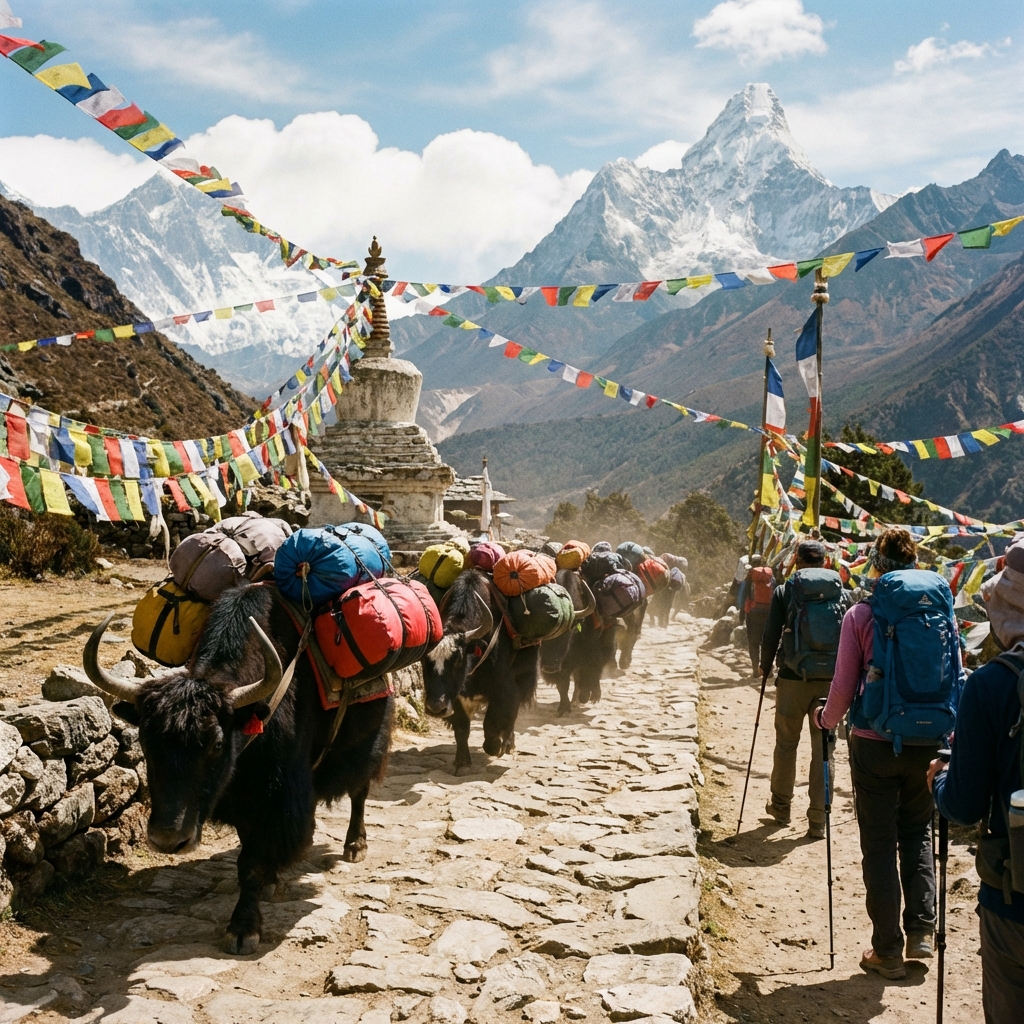
The Tibetan term lungta means "wind horse" — the idea that prayers carried on the wind reach all beings simultaneously, benefiting all of existence rather than just the person praying. Prayer flags in Tsum Valley are strung across high ridges, between buildings, over river gorges, and at passes, their faded colors testament to years or decades of exposure.
The five colors represent five elements: blue (sky), white (wind), red (fire), green (water), yellow (earth). Flags are renewed at auspicious times in the Tibetan calendar, typically at Losar and at the beginning of new seasons.
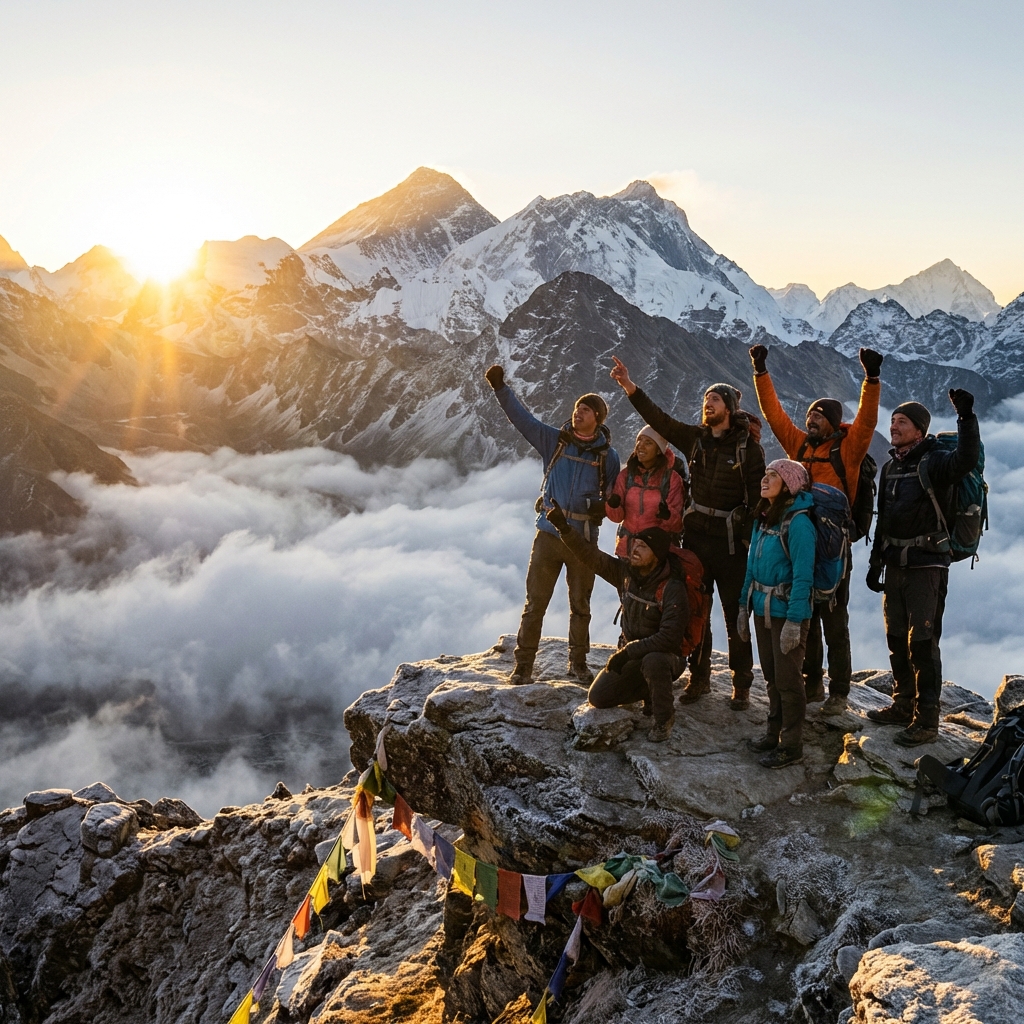
Photography note: Prayer flags make extraordinary photographic subjects, particularly against backgrounds of snow peaks. But flags strung across private property or monastery courtyards belong to specific households or monastic communities. Ask permission before arranging yourself in positions that involve closely interacting with privately owned flags.
Chortens and Sacred Geography
Chortens (Tibetan: stupa; Nepali: stupa) are dome-shaped structures that house sacred objects — relics, texts, or consecrated materials — and function as three-dimensional mandalas. Tsum Valley has hundreds of chortens, from large gateway chortens marking village entrances to small stone structures marking sacred points on the landscape.
The placement of chortens, like the placement of monasteries, follows the beyul's sacred map. Certain locations in the valley are identified as points of concentrated spiritual energy — intersections of geographic and invisible forces — and chortens are constructed there to mark and amplify these sites.
Reading the Landscape as Tsumba Do
To deepen your cultural experience, try to see the landscape as Tsumba residents do — not as scenery, but as sacred geography. Specific peaks are the abodes of protective deities (yul lha). Certain springs and rivers are considered alive with spiritual presence. Rock formations are sites of past miracles or meditations. Ask your guide to share what they know about the sacred significance of specific features you encounter. A Tsumba-born guide will have this knowledge; a Kathmandu-based guide may not.
Cultural Protocols for Visitors
At Monasteries
Following correct behavior at monasteries is essential for both respectful cultural engagement and for maintaining the positive relationship between Tsumba monastic communities and visiting trekkers.
Entering:
- Remove shoes before stepping over any threshold into a prayer hall or monk's/nun's quarters
- Move silently and slowly; this is a place of meditation and prayer
- Walk clockwise inside monastery compounds and prayer halls
- Never step over or on any object placed on the ground (books, ritual objects, clothing)
- Never point your feet toward the altar, sacred images, or any religious figure
Photography:
- Ask permission before photographing, both of the space and of people within it
- Flash photography is prohibited everywhere in Tsum Valley monasteries (murals are ancient and fragile; the shock of flash is disorienting to meditators)
- If permission is granted for photography, work quickly and unobtrusively; do not set up tripods or lighting equipment
- Never photograph an ongoing ceremony unless explicitly invited to document it
Donations:
- Leave a small donation at the monastery altar or donation box. Any amount is appropriate; the act of giving matters more than the sum.
- If offered butter tea, accept it even if you plan to drink only a small sip. Refusing offered tea is impolite.
- Katas (white scarves) are an appropriate offering and are sold in Kathmandu for this purpose (NPR 50-200 each)
In Villages
Greetings: Learn the Tsumba greeting "Tashi Delek" (བཀྲ་ཤིས་བདེ་ལེགས) — it means "May all auspicious signs be fulfilled" and is the equivalent of "blessings" or "hello" in this context. The response is the same. Using even this minimal Tibetan phrase is received with genuine delight.
Entering homes: If invited into a Tsumba home — which may happen in the context of homestay accommodation or cultural visits arranged through your agency — remove shoes at the door. Do not go beyond the areas you are invited into. Kitchen areas may be considered semi-sacred in traditional homes.
Photography of people: Always ask before photographing. Many older Tsumba residents, particularly nuns and elderly women, are uncomfortable being photographed for religious reasons (the image captures something of the person's essence). If you receive a hesitant or non-committal response, the answer is no.
The Best Cultural Engagement
The single most effective way to engage authentically with Tsumba culture is to slow down and stop trying to consume it efficiently. Sit at a mani wall for twenty minutes and watch what passes. Linger at a monastery and accept whatever comes — tea, conversation, the opportunity to observe prayer. The Tsumba are not shy with visitors who demonstrate patience and genuine respect; they are reserved with those who treat their valley as a checklist to tick off.
Responsible Cultural Tourism in Tsum Valley
The Commodification Risk
Tsum Valley's cultural depth is its greatest attraction and its greatest vulnerability. The more trekkers seek "authentic cultural experiences," the more pressure exists to commodify those experiences — to stage ceremonies for visitors, to produce cultural artifacts as souvenirs, to perform rather than live tradition.
As a visitor, you can resist this pressure by:
- Not requesting demonstrations or performances of cultural practices outside their natural context
- Buying practical items (locally woven textiles, butter tea, handmade tools) rather than ritual objects
- Engaging with culture on its own terms rather than demanding it conform to your schedule or photographic needs
Economic Benefits and Their Distribution
The approximately $25-35 weekly restricted area permit fee, combined with lodge and guide fees, represents a meaningful income for the Tsum Valley communities. However, the distribution is uneven: lodges in Nile and Chhekampar that happen to lie on the main trail route capture most of the tourism income, while more remote villages see little benefit.
If your itinerary allows, include a night in a village that is less frequently visited — Ripchet, Lar, or one of the smaller settlements in the lower valley. The economic impact of one trekking group choosing an off-trail village lodge is disproportionately large for that community.
Wildlife and the Beyul's Living Sanctuary
Because killing is forbidden across this beyul hidden valley, Tsum sustains a richer wildlife population than most trekking regions in Nepal — the non-violence ethic functions as an informal conservation regime that predates the formal Manaslu Conservation Area. As you trek, watch for:
- Blue sheep (bharal): Herds graze the high slopes above the upper villages, often visible near Mu Gompa and Nile.
- Himalayan thar: Sure-footed wild goats that cling to the steep cliffs flanking the gorges.
- Red panda: Elusive and rare, sheltering in the rhododendron and oak forests of the lower valley near Lokpa and Chumling.
- Langurs and Himalayan birds: Common in the forested lower trail sections, along with pheasants and raptors.
This abundance is part of what makes Tsum culturally distinct: the wildlife is not separate from the sacred landscape but protected by it. Local oral tradition is also rich with accounts of the Yeti — many Tsumba families recount sightings or encounters, and these stories form part of the valley's mythic geography rather than a tourist gimmick.
Relics of the Lost Tsum Kingdom
Tsum Valley was once a semi-independent kingdom, and its long isolation left religious and archaeological remains largely undisturbed. Ancient mani stones, ruined fortifications, and old chortens scattered through the valley mark this history. The most striking concentration is the great mani wall near Chhokang Paro, but smaller carved-stone sites, weathered prayer cairns, and the cave hermitages above Rachen Gompa all belong to this same layered heritage. Treat every carved stone and ruin as sacred — removing or moving even a single mani stone is a serious offense within the beyul.
Connecting Tsum Valley to the Broader Manaslu Trek
Tsum Valley is most commonly visited as an extension of the Manaslu Circuit, branching north from the main circuit trail near the village of Lokpa. For trekkers combining both routes, the cultural immersion of Tsum Valley provides important context for the Tibetan Buddhist culture visible throughout the upper Manaslu circuit.
The sacred geography, monastic traditions, and social customs you encounter in Tsum are continuous with what you see in Samagaon and Samdo — but Tsum Valley, with its lower trekker numbers and fully intact beyul status, offers a more concentrated and less disturbed version of the same cultural world.
Frequently Asked Questions
- Tsum Valley Trek Guide: Complete Planning Guide
- Monastery Etiquette for Nepal Trekking
- Prayer Flags, Mani Walls and Buddhist Symbols
- Manaslu Circuit + Tsum Valley Combined Trek
- Manaslu Conservation Area Guide
- Manaslu Circuit 14-Day Itinerary
- Manaslu Circuit Route Guide
- Upper Mustang Cultural Trek
- Best Off-Beaten-Path Treks in Nepal
- Best Cultural Treks in Nepal
- Tsum Valley Route Guide
- Manaslu Region Overview
- Hiring Guides and Porters in Nepal