Manaslu Circuit with Tsum Valley Trek: 20-25 Day Guide
The Manaslu Circuit with Tsum Valley trek is a 20-25 day combined route that pairs the full Manaslu Circuit and its 5,160m Larkya La pass with a 5-7 day cultural detour into the sacred Tsum Valley. Expect to budget $2,000-4,500 per person, carry two restricted area permits, and trek with a mandatory licensed guide in a minimum group of two.
The combined Manaslu Circuit and Tsum Valley trek is widely regarded by experienced trekkers as one of the finest extended mountain journeys in Asia. In 20-25 days, you traverse the complete circuit around the world's eighth-highest mountain, cross the 5,160m Larkya La pass, and take a cultural detour into one of Nepal's last beyul — a hidden sacred valley where Tibetan Buddhist life continues largely as it has for centuries, barely touched by the modern world.
This combination works so well because the two routes complement each other perfectly. The Manaslu Circuit delivers high-altitude drama: spectacular gorge sections, dramatic mountain scenery, and the physical challenge of the high pass. Tsum Valley provides cultural depth: ancient monasteries, sacred landscape, and authentic human connection in communities that few outsiders have ever visited. Together, they form a trek that is both physically rewarding and culturally transformative.
The key decision point is the Tsum Valley branch: the detour diverges from the main Manaslu Circuit trail near Chumling village, and you must decide whether to enter Tsum before or after completing the main circuit. This guide explains both options, provides a complete 22-day recommended itinerary, breaks down the additional costs and permits required, and gives you the practical information needed to plan this ambitious journey.
20-25 days trekking (22-27 days including travel)
Approximately 250-280 km
5,160m (Larkya La Pass)
Strenuous — requires good fitness and acclimatization
MCAP + RAP (Manaslu) + RAP (Tsum) + TIMS
Mandatory (restricted area, both sections)
2 trekkers
October-November (autumn), March-May (spring)
$2,000-4,500 (guided, all-inclusive)
Soti Khola (7-8 hrs drive from Kathmandu)
Why Combine These Two Routes?
The Acclimatization Argument
There is a compelling logistical reason to combine Tsum Valley with the Manaslu Circuit beyond the obvious appeal of adding cultural depth. Tsum Valley diverges from the main circuit trail at approximately 1,860m and reaches a maximum altitude of 3,700m at Mu Gompa. The gradual 5-7 day ascent through Tsum Valley provides an excellent acclimatization foundation for the demands of the upper Manaslu Circuit and, ultimately, the Larkya La crossing at 5,160m.
Trekkers who take the Tsum Valley detour before ascending the main upper circuit routinely report fewer altitude symptoms above Samagaon and a more comfortable Larkya La crossing compared to trekkers who follow the direct main circuit route. The additional 5-7 days at moderate altitude (2,500-3,700m) gives the body time to produce more red blood cells and adapt to reduced oxygen availability.
The Cultural Argument
The Manaslu Circuit is exceptional by any measure, but it is primarily a landscape trek. The cultural villages along the main circuit — Namrung, Lho, Samagaon, Samdo — are fascinating, and the Tibetan Buddhist influences are visible and interesting. But the communities along the main circuit see several thousand trekkers per year, and the cultural exchange has inevitably become somewhat formulaic.
Tsum Valley, with under 2,000 visitors annually, offers a genuinely different quality of cultural encounter. You will sit in monastery prayer halls where trekkers are a genuine novelty rather than a familiar sight. You will stay in homestays where the family is curious about you as a person rather than processing you as a recurring revenue stream. The Tsum Valley communities' decision to remain a restricted area with controlled access has preserved something that cannot be found on the main circuit.
Why Few Trekkers Do Both
Fewer than 30% of Manaslu Circuit trekkers add the Tsum Valley extension, despite its extraordinary rewards. The main barriers are time (5-7 additional days), additional permit cost, and the return-to-trail-and-continue logistical complexity. For trekkers who can manage the time and budget, this combination represents one of Nepal's best-kept trekking secrets.
The Route Structure
The Divergence Point: Lokpa/Chumling Junction
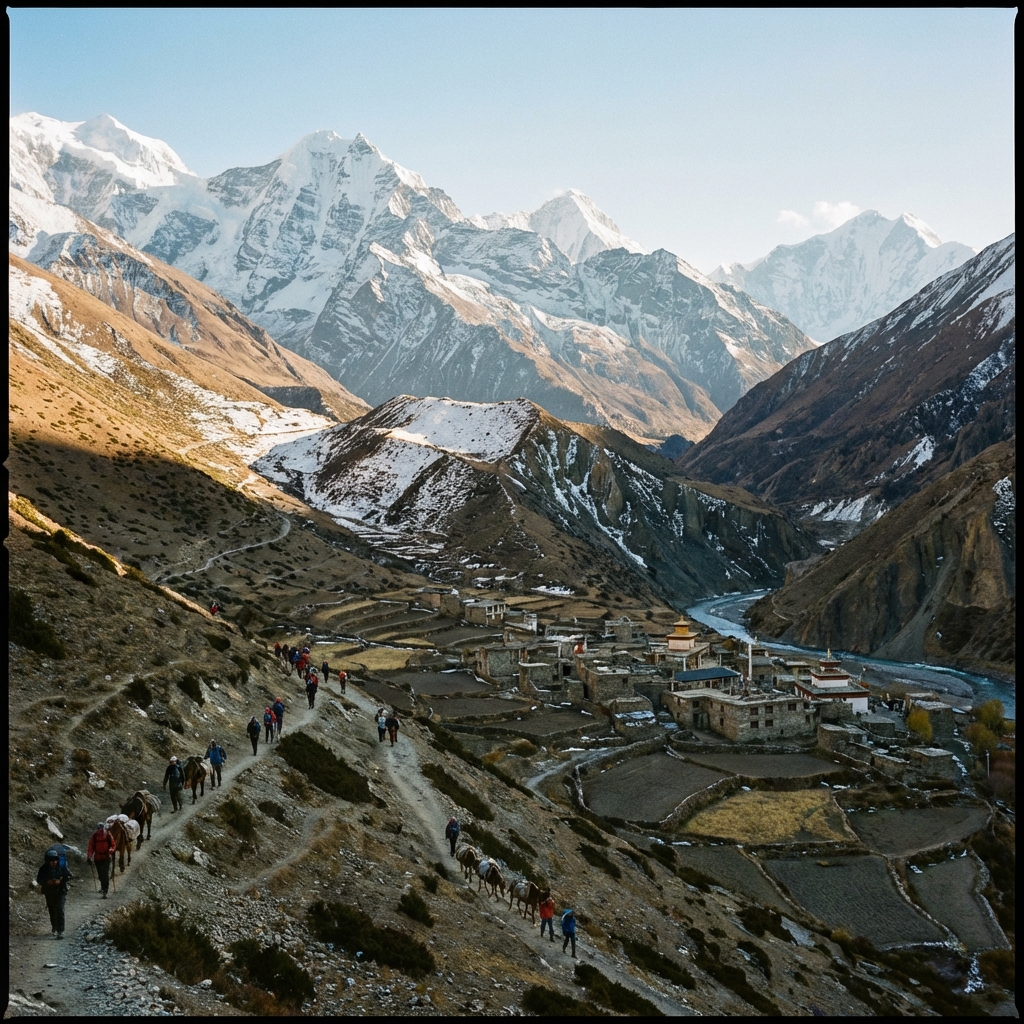
The Tsum Valley trail branches north from the main Manaslu Circuit trail at Lokpa village (1,860m), approximately 4-5 days of walking from the Soti Khola trailhead. At this junction, the main circuit trail continues northwest up the Budhi Gandaki toward Namrung, Lho, and Samagaon. The Tsum Valley trail heads north up a separate side valley toward Chhekampar, Nile, and the monastery regions.
The junction itself is well-marked, and your guide will handle navigation. The important decision is which order you enter Tsum Valley:
Option A: Enter Tsum Valley before the main upper circuit
- Days 1-4: Soti Khola to Lokpa via lower Budhi Gandaki
- Days 5-10: Tsum Valley exploration (Lokpa → Chhekampar → Nile → Mu Gompa → Chhokang Paro → return to Lokpa)
- Days 11-22: Rejoin main circuit at Lokpa, continue to Namrung, Samagaon, Larkya La, and exit
Option B: Complete main circuit first, then enter Tsum Valley on return
- This is rarely done because it requires a very long return detour. Most logistics favor Option A.
The recommendation: Option A is strongly preferred and what the itinerary in this guide follows. Entering Tsum Valley on the way up means you arrive at the Larkya La better acclimatized and with more energy reserves. Tsum Valley is also most rewarding when you first enter the high-altitude landscape; coming back down to it after the dramatic high circuit can feel anticlimactic.
Return Route Options
After crossing the Larkya La and descending to Dharapani, you have several exit options:
- Standard exit: Dharapani to Besisahar, drive to Kathmandu (most common)
- Pokhara connection: Dharapani via Annapurna Circuit to Pokhara (adds 3-5 days)
- Helicopter exit: Charter flight from Samagaon or Bimthang (expensive but fast; useful if schedule compressed)
The Complete 22-Day Itinerary
Reference Altitudes
| Location | Altitude |
|---|---|
| Soti Khola (trailhead) | 730m |
| Machha Khola | 930m |
| Jagat (checkpoint) | 1,340m |
| Lokpa / Tsum junction | 1,860m |
| Chhekampar (Tsum Valley) | 2,850m |
| Nile (Tsum Valley) | 3,360m |
| Mu Gompa (Tsum Valley max) | 3,700m |
| Namrung (main circuit) | 2,630m |
| Lho | 3,180m |
| Samagaon (acclimatization) | 3,530m |
| Samdo | 3,860m |
| Dharamsala (Larkya Phedi) | 4,460m |
| Larkya La Pass | 5,160m |
| Bimthang | 3,590m |
| Dharapani (exit) | 1,860m |
Day-by-Day Schedule
| Day | Route | Altitude | Walking Hours | Notes |
|---|---|---|---|---|
| 1 | Kathmandu → Soti Khola (drive) | 730m | Drive 7-8 hrs | Rough road after Arughat |
| 2 | Soti Khola → Machha Khola | 930m | 6-7 hrs | Subtropical valley, suspension bridges |
| 3 | Machha Khola → Jagat | 1,340m | 6-7 hrs | MCAP checkpoint entry; possible hot springs |
| 4 | Jagat → Lokpa | 1,860m | 5-6 hrs | Gorge section; Tsum branch junction |
| 5 | Lokpa → Chhekampar (Tsum Valley entry) | 2,850m | 6-7 hrs | Cross into Tsum restricted area |
| 6 | Chhekampar exploration + Milarepa Gompa | 2,850m | 3-4 hrs | Acclimatization day; monastery visit |
| 7 | Chhekampar → Nile | 3,360m | 4-5 hrs | Rachen Gompa cliff monastery |
| 8 | Nile → Mu Gompa → back to Nile | 3,700m | 6-7 hrs | Day trip; earliest start recommended |
| 9 | Nile → Chhokang Paro | 3,010m | 4-5 hrs | Longest mani wall; twin villages |
| 10 | Chhokang Paro exploration | 3,010m | 3-4 hrs | Village cultural day; optional walks |
| 11 | Chhokang Paro → Lokpa | 1,860m | 6-7 hrs | Retrace to main circuit junction |
| 12 | Lokpa → Namrung | 2,630m | 5-6 hrs | Rejoin Manaslu Circuit; Tibetan villages |
| 13 | Namrung → Samagaon via Lho | 3,530m | 6-7 hrs | First Manaslu views; best on circuit |
| 14 | REST DAY — Samagaon | 3,530m | Optional hike to Manaslu BC (4,400m) | Mandatory acclimatization |
| 15 | Samagaon → Samdo | 3,860m | 4-5 hrs | High valley; Tibet border area |
| 16 | REST DAY — Samdo | 3,860m | Hike to 4,500m viewpoint | Critical pre-pass acclimatization |
| 17 | Samdo → Dharamsala (Larkya Phedi) | 4,460m | 4-5 hrs | Pass base camp; early dinner and bed |
| 18 | LARKYA LA PASS DAY: Dharamsala → Larkya La → Bimthang | 5,160m peak | 8-10 hrs | 3-4 AM start mandatory |
| 19 | Bimthang → Tilije | 2,300m | 5-6 hrs | Descent through forest; warm up |
| 20 | Tilije → Dharapani | 1,860m | 4-5 hrs | Annapurna Circuit junction |
| 21 | Dharapani → Besisahar | 760m | 5-6 hrs + drive | Trek end; drive begins |
| 22 | Drive Besisahar → Kathmandu | 1,400m | 7-8 hrs drive | Trek complete |
The Best Place to Add an Extra Day
If you have flexibility in your schedule, add an extra rest day in Samagaon (Day 14) or Samdo (Day 16) rather than rushing the acclimatization schedule. The Larkya La at 5,160m is the crux of the entire trek — arriving at the pass day well-rested and properly acclimatized is worth far more than saving a day. Trekkers who spend adequate time acclimatizing above 3,500m consistently report more comfortable Larkya La crossings.
The Tsum Valley Section in Detail (Days 4-11)
Day 4-5: Entering Tsum Valley
The divergence from the main Manaslu trail happens at Lokpa village. Your restricted area permit for Tsum Valley is checked at this junction — ranger posts here are consistently staffed, and attempting to enter without the Tsum Valley RAP is a serious permit violation.
The trail into Tsum Valley follows the Tsum Khola (river) north through increasingly narrow canyon terrain. The vegetation changes noticeably as you enter — the valley has a slightly different microclimate than the main Budhi Gandaki, and you may notice more birdsong and denser forest cover. The first sign that you are entering somewhere different is often the mani walls: they begin at the valley entrance and continue, sometimes stretching 50-100 meters, all the way to the highest villages.
Chhekampar at 2,850m is the first significant Tsum settlement and a natural first night after entering the valley. The Milarepa Gompa here sets the cultural tone for what follows. See our Tsum Valley cultural exploration guide for complete information on what you will encounter at each monastery.
Days 6-10: The Heart of Tsum Valley
The core cultural days of your combined trek fall in this section. The sequence Chhekampar → Nile → Mu Gompa day trip → Chhokang Paro allows you to see all of Tsum Valley's major cultural sites with appropriate time at each.
The Rachen Gompa cliff monastery above Nile is one of the most visually extraordinary monasteries in Nepal — built against a sheer cliff face, it appears to emerge from the rock itself. The photography opportunities here are unmatched anywhere on either the Tsum Valley or Manaslu circuit trails.
Mu Gompa (3,700m) is the altitude crown of your Tsum Valley section and deserves a full early-start day trip. The nunnery's 80-100 residents maintain one of the most active contemplative communities in the entire Himalaya. If your timing aligns with a morning prayer session, you may be permitted to observe from the back of the hall.
Chhokang Paro is the cultural immersion highlight for many trekkers — a twin village with the valley's longest mani wall, a very old monastery, and residents whose lifestyle has been least affected by outside contact. The homestay options here are excellent; consider staying with a local family rather than in a lodge to deepen your cultural engagement.
Photography Ethics in Tsum Valley
Tsum Valley's visual richness makes it irresistible for photographers. But the quality of your photographs will improve dramatically if you prioritize relationship-building over image extraction. Spend time with people before asking to photograph them. Learn the "Tashi Delek" greeting. Sit in a monastery without your camera first, then ask permission. This approach consistently yields more meaningful photographs than arrival-and-shoot tactics.
Day 11: Returning to the Main Circuit
The return from Chhokang Paro to Lokpa retraces the valley approach in a single long day (6-7 hours, 850m descent). This day is straightforward physically — descending to 1,860m after spending several days at 2,500-3,700m — but emotionally it can feel like a transition. Many trekkers describe leaving Tsum Valley as one of the more reluctant moments of the entire trek.
Arriving back at Lokpa, you rejoin the Manaslu Circuit mainstream and begin the long climb toward the high circuit. Your body at this point is significantly better acclimatized than it was when you left Lokpa eight days earlier.
Permits for the Combined Trek
The combined Manaslu Circuit and Tsum Valley trek requires all the permits for the standard Manaslu Circuit plus additional restricted area permits specifically for the Tsum Valley section.
Complete Permit Requirements
| Permit | Cost | Coverage |
|---|---|---|
| Manaslu Conservation Area Permit (MCAP) | NPR 3,000/week (~$23) | Entire conservation area — both routes |
| Manaslu Restricted Area Permit (RAP) | $35/week (Oct-Nov), $25/week (other months) | Upper Manaslu Circuit (Chumling to Larkya La) |
| Tsum Valley Restricted Area Permit (RAP) | $35/week (Oct-Nov), $25/week (other months) | Tsum Valley specifically |
| TIMS Card | ~$20 | Whole trek |
Total permit cost (22-day trek, peak season, two weeks each permit):
- MCAP: NPR 6,000 (~$46) for two weeks
- Manaslu RAP: $70 for two weeks
- Tsum Valley RAP: $70 for two weeks
- TIMS: $20
- Total: approximately $206 per person in permits alone
Note: The Tsum Valley RAP is a separate document from the Manaslu RAP. Ensure your agency specifically mentions and prices both restricted area permits in their quote.
Two Separate Restricted Area Permits
A common budget-planning mistake is assuming the Manaslu restricted area permit covers Tsum Valley automatically. It does not. Tsum Valley has its own designated restricted area permit. If you arrive at the Lokpa checkpoint without a Tsum Valley-specific RAP, you will be turned away regardless of what other permits you carry. Verify explicitly with your agency that both permits are in their service.
Permit Processing Timeline
All permits for the combined trek must be arranged in Kathmandu before departure. Standard processing takes 3-5 business days. Your agency handles the application; you need to provide:
- Passport copy with valid Nepal visa
- 2-4 passport-sized photographs
- Confirmed departure date and itinerary
Plan to arrive in Kathmandu at least 3 working days before your trek start date to allow time for permit processing without rushing.
Costs for the Combined Trek
The combined Manaslu + Tsum Valley trek costs more than the standard Manaslu Circuit due to the additional days and permits. Here is a realistic breakdown:
Cost Breakdown (Per Person)
| Category | Budget | Mid-Range | Comfortable |
|---|---|---|---|
| Agency fee (guide, permits admin, transport) | $900-1,200 | $1,400-2,000 | $2,200-3,200 |
| All permits (see above) | $200-210 | $200-210 | $200-210 |
| Meals and accommodation (22 days) | Included | Included | Included |
| Porter (optional but recommended) | $350-450 | $350-450 | Included |
| Tips (guide + porter, 22 days) | $150-250 | $250-400 | $400-600 |
| Travel insurance with helicopter evac | $100-180 | $100-180 | $100-180 |
| Emergency reserve | $200 | $200 | $200 |
| Approximate total | $2,000-2,700 | $2,800-3,700 | $3,500-4,500+ |
Agency Fee Comparison
The wide range in agency fees reflects real differences in service quality:
- Budget agencies ($900-1,200): Usually solo guides covering the combined route, basic lodge arrangements, no frills
- Mid-range agencies ($1,400-2,000): Experienced guides with Tsum Valley cultural knowledge, pre-booked lodges in key locations, better support
- Premium agencies ($2,200+): Highly experienced local guides (ideally Tsumba-speaking for the Tsum section), best available accommodation, larger support team
For a trek of this length and complexity, mid-range or above is strongly recommended. The difference between a guide who knows Tsum Valley culturally and one who is simply navigating unfamiliar territory is the difference between cultural immersion and cultural tourism.
Look for Local Tsum Valley Expertise
When evaluating agencies for the combined trek, ask specifically about their Tsum Valley experience. The best arrangements involve a guide from a Manaslu region village who speaks the Tsumba dialect, has personal relationships with monastery communities, and can facilitate meaningful cultural exchanges that a Kathmandu-based guide simply cannot. Ask agencies if they have local network connections for the Tsum Valley section specifically.
Fitness Requirements for the Combined Trek
The combined trek is more demanding than either route alone, not because of increased peak altitude (Larkya La at 5,160m is the maximum regardless), but because of the extended duration and cumulative physical demands of 22 days of daily trekking.
Physical Benchmarks
Before booking this trek, you should be able to:
- Walk 5-7 hours per day on hilly terrain for 5-7 consecutive days without significant fatigue
- Carry a daypack of 8-12 kg comfortably at altitude
- Manage moderate altitude (above 3,000m) without history of severe altitude sickness
- Remain physically active for a 22-day period without rest days causing significant deconditioning
Previous trekking experience: Highly recommended. Trekkers with no multi-day Himalayan experience will find the combined route a steep learning curve. At minimum, complete a moderate Nepal trek (Langtang, Poon Hill, or similar) before attempting this combination.
Training Recommendations
For the combined trek, begin structured training 3-4 months before departure:
Cardiovascular base: Run, cycle, or hike 4-5 days per week. Work up to 2-3 hour aerobic sessions over the final 6-8 weeks. Focus on sustained effort rather than speed.
Leg and core strength: Squats, lunges, step-ups, and core stability work. The Larkya La descent (1,570m down) is particularly demanding on knees and hip flexors. Eccentric quad strength (downhill capacity) is important.
Multi-day simulation: Do at least one 3-4 day hiking trip in the 8 weeks before your trek, carrying weight similar to your planned daypack load.
Altitude preparation: If possible, do one pre-acclimatization trip to moderate altitude (2,500-4,000m) in the months before. Climbing a high peak in your home region, even at modest altitude, activates physiological adaptation.
The Extended Duration Factor
Twenty-two days of continuous trekking wears on the body in ways that shorter treks do not. Knees, hips, and shoulders accumulate micro-injuries. Sleep quality at altitude is poor for many trekkers. Appetite often diminishes in the second week. Budget for rest days and do not be surprised if your pace slows noticeably in the final quarter of the trek. This is normal and does not indicate poor fitness — it is the body managing an extended physical project.
Season Planning for the Combined Trek
Autumn (October-November): Recommended
The post-monsoon autumn season offers the clearest skies, the most stable weather, and the best trail conditions for both the Manaslu Circuit's high passes and Tsum Valley's cultural sites. October is particularly ideal:
- Mountain visibility: Exceptional throughout October and most of November
- Temperature range: 10-20°C daytime in valleys; -5 to 5°C overnight above 3,000m; very cold at Larkya La and Dharamsala
- Trail conditions: Dry and stable on main circuit; Tsum Valley trails are excellent
- Festival timing: Harvest festivals in Tsum Valley villages occur in late October/early November
November caution: Late November sees Larkya La snowfall becoming more likely. Schedule your pass crossing before November 20th if possible; after that date, snow risk increases significantly. For autumn 2026 departures, aim to start in early-to-mid October to lock in the most stable Larkya La window.
Spring (March-May): Alternative
Spring offers rhododendron blooms in the forested sections (spectacular in March-April), warmer temperatures in the lower valleys, and generally good weather. Disadvantages include occasional afternoon cloud buildup and pre-monsoon haze at lower elevations.
- Rhododendron blooms: best in late March and April in the lower Budhi Gandaki gorge sections
- Larkya La snow: March crossings may encounter significant snow; April and May are more reliably clear
- Tsum Valley: Spring is an excellent alternative season with comfortable temperatures at monastery elevations
Seasons to Avoid
Monsoon (June-August): The lower Budhi Gandaki gorge sections flood, trails become dangerously slippery, and landslide risk is very high. Not recommended.
Winter (December-February): Larkya La is effectively closed by snow in most years from late November to early March. The upper Manaslu circuit lodges close, and temperatures at Dharamsala can reach -25°C at night. Expert winter mountaineers attempt Larkya La in winter conditions, but recreational trekkers should not.
The Losar Exception: If you can organize a winter trek specifically to witness Losar (Tibetan New Year) in Tsum Valley during February or March, the lower valley sections (Lokpa to Chhokang Paro) are accessible even in winter conditions, and experiencing Losar in a beyul community is extraordinary. You would not attempt the Larkya La section but could do Tsum Valley as a standalone trek in this season.
Logistics: Booking and Preparation
Finding the Right Agency
The combined Manaslu + Tsum Valley trek requires an agency with genuine experience on both routes. Key questions to ask prospective agencies:
- How many combined Manaslu + Tsum Valley treks have you operated in the past 2 years?
- Do you have guides specifically familiar with Tsum Valley cultural sites and monastery communities?
- Are both the Manaslu RAP and Tsum Valley RAP explicitly included in your price?
- How do you handle the Lokpa junction logistics — is there a specific checkpoint procedure your guide follows?
- What are your porter welfare standards for a 22-day trek (wages, equipment, insurance)?
Booking Timeline for the Combined Trek
The combined trek requires more lead time than standard Nepal treks. Book 3-5 months in advance for autumn season (September-November bookings). This allows your agency time to arrange both sets of restricted area permits, pre-book lodges in Tsum Valley (limited capacity at key stops like Nile and Chhokang Paro), and organize a guide team with genuine Tsum Valley experience. Last-minute bookings in peak season often result in generic guides who lack the cultural depth the Tsum Valley section deserves.
What to Pack
The combined trek's 22-day duration and altitude range from 730m to 5,160m creates packing challenges. Key considerations:
Sleeping bag: Rated to -15°C or lower. Dharamsala at 4,460m on the night before Larkya La is brutally cold; a warm sleeping bag is not a luxury here.
Layering system: You will experience temperatures ranging from 30°C+ in the subtropical lower valley sections to well below freezing at the pass. A 5-layer system (base layer, mid layer, fleece, down jacket, outer shell) provides the range needed.
Trekking poles: Essential. The Larkya La descent is steep and potentially icy; poles are protective for knees. The Budhi Gandaki gorge sections also have exposed trail edges where poles provide balance.
Cash: No ATMs anywhere on the route after Arughat. Carry NPR 40,000-60,000 (approximately $300-450) for a 22-day trek's incidental expenses: hot showers, snacks, monastery donations, Wi-Fi where available, and emergency reserve.
Respect items for Tsum Valley: Kata scarves (available in Kathmandu, NPR 50-200 each), small packaged food items suitable as monastery offerings, any small educational gifts for village children (coordinated through your guide)
Accommodation and Food on the Combined Trek
Both the Manaslu Circuit and Tsum Valley sections are teahouse treks — you sleep in family-run lodges and eat in their dining rooms rather than camping. The standard differs noticeably between the two sections, which matters for planning your 22 days.
What the Lodges Are Like
Main Manaslu Circuit (Soti Khola to Dharapani): Teahouses here are well-established and improving each season. Lower-valley lodges (Soti Khola, Machha Khola, Jagat) often offer attached bathrooms and reliable electricity. From Namrung upward, rooms are simpler — twin beds, shared squat toilets, and thin walls — but the food is hearty and lodge owners are used to international trekkers.
Tsum Valley (Lokpa to Mu Gompa): Accommodation is more rustic. Expect basic twin rooms, shared facilities, and limited or no heating. The trade-off is authenticity: in villages like Chhokang Paro, staying with a local family in a homestay is one of the most rewarding parts of the whole combined trek. Lodge capacity is genuinely limited at Nile and Mu Gompa, which is why advance booking through your agency matters in peak season.
Food and Meals
Meals on both sections follow the standard Nepal trekking menu, with dal bhat (lentils, rice, vegetables, often with free refills) the reliable energy staple. Other dependable options include Tibetan thukpa (noodle soup), momos (dumplings), fried rice, potatoes, and porridge or eggs for breakfast. In Tsum Valley, try the local butter tea (po cha) for an authentic warm-up at monastery elevations.
Eat Where You Sleep
On both sections, lodges expect you to take dinner and breakfast where you stay overnight — room rates stay low (sometimes nominal) on the understanding that you eat in. Stick to vegetarian and freshly cooked dishes the higher you go: meat is carried in unrefrigerated and dal bhat is always cooked fresh. Budget roughly $25-35 per day for meals across the trek, rising at higher villages where everything is portered in.
Wildlife and Biodiversity
The combined trek crosses the Manaslu Conservation Area and brushes the Annapurna Conservation Area on the Dharapani exit, so you pass through some of Nepal's richest protected habitat. The forests of the lower Budhi Gandaki and Tsum Valley shelter the elusive red panda and Himalayan musk deer, while higher, more open country above Samagaon and Samdo is home to blue sheep (bharal), Himalayan tahr, and — very rarely sighted — the snow leopard that preys on them.
Birdlife is excellent throughout: the Himalayan monal (Nepal's national bird), blood pheasant, lammergeier, and Himalayan griffon are all possible. Tsum Valley's quieter trails and denser forest cover often produce better wildlife encounters than the busier main circuit. For a fuller picture of what you may see, read our guide to wildlife across Nepal's trekking regions.
The Larkya La: Planning the Pass Day
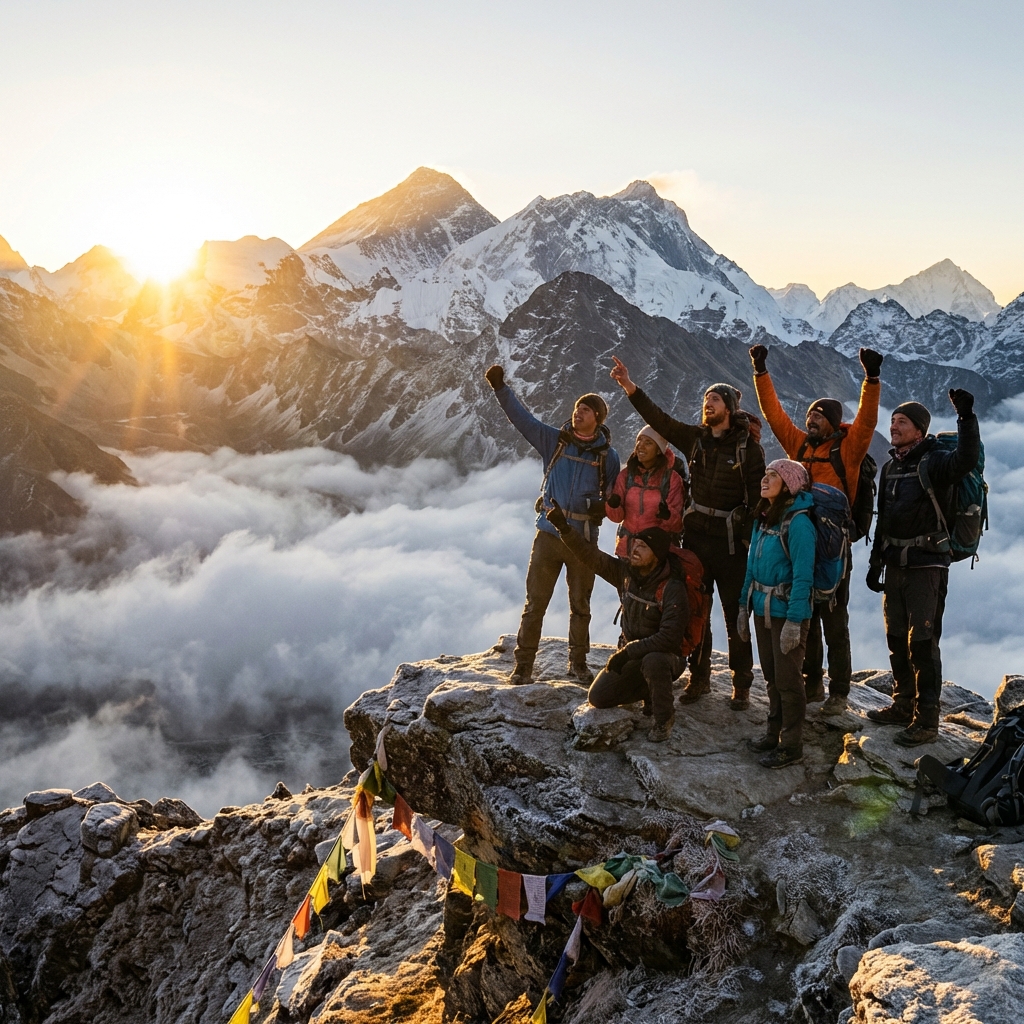
The Larkya La at 5,160m is the physical and psychological climax of the combined trek. After 17 days of walking and significant altitude gain, the pass represents the circuit's completion and the transition from the Manaslu watershed to the Marsyangdi River valley.
For complete Larkya La pass day logistics — departure time (3-5 AM is standard), what to carry, weather assessment, turnaround criteria, and the descent to Bimthang — see our dedicated Larkya La Pass Guide and our Manaslu Circuit 14-Day Itinerary.
Why the Tsum Valley Acclimatization Matters Here
The 7-8 days you spend in Tsum Valley (reaching 3,700m at Mu Gompa on Day 8) are directly relevant to your Larkya La success. By the time you begin the ascent from Samagaon toward the pass, your body has already spent significant time at 2,500-3,700m, building the red blood cell response that determines altitude tolerance.
Compared to trekkers who take the direct main circuit route (reaching Samagaon on Day 6 without the Tsum detour), combined trek trekkers typically arrive at Samagaon with:
- Better overall acclimatization
- Less acute mountain sickness incidence
- More energy reserves due to a more gradual ascent profile
- A more measured psychological relationship with the altitude (no rushing to "get to the high stuff")
Pass Day Success Statistics
Anecdotal data from Manaslu trekking agencies suggests that trekkers doing the combined Manaslu + Tsum Valley route have higher Larkya La pass completion rates than those on the standard circuit-only route. While no formal study exists, the acclimatization benefit of the Tsum Valley extension appears to meaningfully improve pass success. This alone makes a strong practical argument for the combined route even before accounting for Tsum Valley's cultural richness.
Comparing the Options: Manaslu Circuit Only vs. Combined
| Factor | Manaslu Circuit Only (14 days) | Combined with Tsum Valley (22 days) |
|---|---|---|
| Total duration | 14 trekking days | 20-22 trekking days |
| Maximum altitude | 5,160m | 5,160m |
| Cultural depth | High (main circuit villages) | Extraordinary (includes beyul community) |
| Total permit cost | ~$120/person | ~$200/person |
| Agency cost | $800-1,800 | $1,200-3,200 |
| Larkya La acclimatization | Good (2 rest days planned) | Excellent (adds 7 days at 2,500-3,700m) |
| Visitor numbers at key sites | 2,000-4,000/year (circuit) | Under 2,000/year (Tsum) |
| Wildlife encounter potential | Good (blue sheep, Himalayan birds) | Good + Tsum Valley additions |
| Recommendation | Great for trekkers with 3 weeks | Better for trekkers with 4+ weeks |
Frequently Asked Questions
How many extra days does the Tsum Valley add to the Manaslu Circuit?
The Tsum Valley extension adds 5-7 days to the standard 14-day Manaslu Circuit, making the total trip 20-25 trekking days plus travel days.
Do I need a separate permit for Tsum Valley?
Yes. Tsum Valley has its own Restricted Area Permit in addition to the Manaslu RAP and MCAP. Your agency handles all permits together during the booking process.
Is the Tsum Valley detour worth the extra time and cost?
For trekkers interested in Tibetan Buddhist culture, the answer is overwhelmingly yes. Tsum Valley offers a quality of cultural encounter that the main Manaslu Circuit cannot match, and the additional acclimatization improves your Larkya La crossing success rate.
Can I do Tsum Valley without the main Manaslu Circuit?
Yes. A standalone Tsum Valley trek of 7-10 days is possible, entering and exiting via Lokpa without crossing the Larkya La. This is a good option for trekkers focused on cultural experience rather than high-altitude pass crossing.
- Manaslu Circuit 14-Day Itinerary
- Tsum Valley Trek Guide
- Tsum Valley Cultural Exploration
- Manaslu Circuit Route Guide
- Larkya La Pass Guide
- Manaslu Conservation Area Guide
- Nepal Trekking Permits Explained
- Best Trekking Agencies for Manaslu Circuit
- Altitude Sickness Prevention
- Nepal Trekking Packing List
- Manaslu Circuit Cost Breakdown