Upper Mustang Trek Cost 2026
The Upper Mustang trek cost is $1,550 to $3,500+ per person for a 12-16 day guided package, depending on whether you book budget, mid-range, or premium. Unlike most Nepal treks, the single biggest expense is not a flight, a guide, or accommodation — it is the permit. The $500 USD restricted area permit (valid 10 days) is the most expensive trekking permit in Nepal, and the first cost to understand before you plan your Upper Mustang trek.
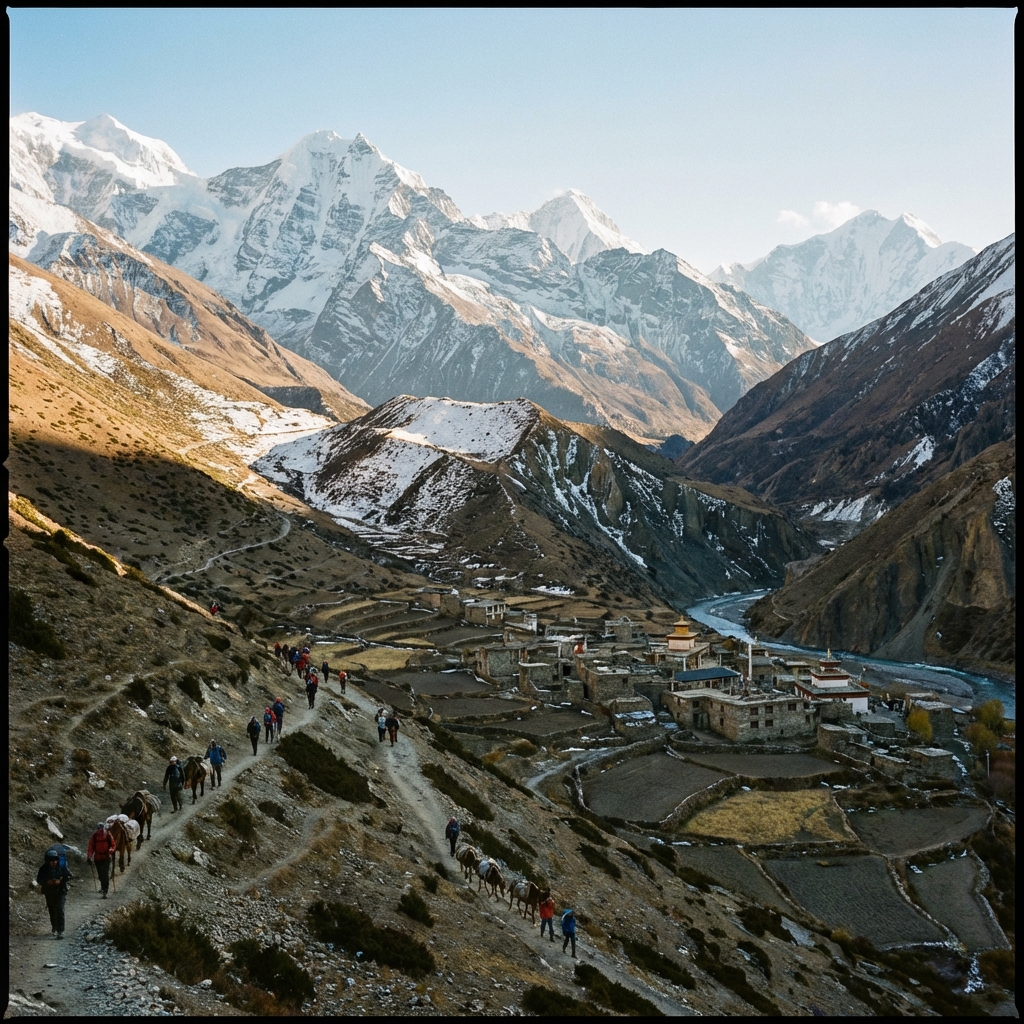
Upper Mustang — the ancient Kingdom of Lo — sits behind the Himalayan rain shadow in the high desert country north of Jomsom, bordering Tibet. Its medieval walled capital of Lo Manthang contains 15th-century monasteries, cave dwellings carved into rust-colored cliffs, and a living Tibetan Buddhist culture that has survived largely intact for centuries. Accessing this extraordinary region requires not only a substantial permit fee but also a mandatory booking through a registered trekking agency, a minimum group size of two trekkers, and a licensed guide throughout. There is no independent trekking option in Upper Mustang — the restricted area regulations are enforced at multiple checkpoints, and the geography of the Kali Gandaki canyon ensures there is no way to bypass them.
This guide breaks down every cost component in full, explains why Upper Mustang is structured differently from other Nepal treks, compares it to other restricted area treks (particularly Manaslu), and gives you the tools to build an accurate budget across budget, mid-range, and premium spending levels. For the day-by-day route, see our Upper Mustang trek itinerary and the full Upper Mustang route overview. For cultural highlights, read the Upper Mustang cultural trek guide.
Upper Mustang Cannot Be Trekked Independently
Unlike most Nepal treks where independent trekking with a mandatory licensed guide is no longer permitted (mandatory guide rule since April 2023) (and increasingly restricted but still practiced), Upper Mustang is categorically different. The restricted area permit can only be obtained through a government-registered trekking agency. You cannot apply individually. All trekkers must be accompanied by a licensed guide throughout. This is not a guideline — it is enforced at checkpoints. Factor mandatory agency and guide costs into your budget from the start.
Quick Cost Summary
$1,550-2,000 (12-16 days)
$2,200-2,800 (12-16 days)
$2,800-3,500+ (12-16 days)
$500 (first 10 days) + $50/extra day
$530-540 per person
$120-160 round trip
Included in package pricing
$25-$35 /day
$5-12/night
$15-25/day
Understanding Upper Mustang's Cost Structure
Upper Mustang is unlike any other Nepal trek in its cost structure. On a standard Nepal trek, the guide/porter combination is the largest variable expense and permits are a modest fixed cost. On Upper Mustang, the geometry is reversed: the permit is the dominant fixed cost (USD 50/day per person), and everything else — agency fees, guide, transport, accommodation, food — is built around that immovable baseline.
| Trek | Duration | Max Altitude | Difficulty | Best For | Cost |
|---|---|---|---|---|---|
| Budget Package | 12-13 days | 3,840m (Lo Manthang) | Moderate | Value-focused trekkers comfortable with basic teahouses | $1,550-2,000 |
| Mid-Range Package | 14-15 days | 3,840m (Lo Manthang) | Moderate | First-timers wanting solid guide quality and flexibility | $2,200-2,800 |
| Premium Package | 15-16 days | 3,840m (Lo Manthang) | Moderate | Comfort-focused, cultural depth, best guide expertise | $2,800-3,500+ |
Why Upper Mustang Costs More Than Other "Moderate" Treks
Three structural factors drive the elevated cost compared to unrestricted treks of similar physical difficulty:
1. The $500 restricted area permit. This is paid per person, per 10-day block, regardless of how efficiently you trek. It is non-refundable if you cut the trek short. It is payable in USD at the Department of Immigration in Kathmandu. No exceptions, no discounts.
2. Mandatory agency involvement. You cannot arrange Upper Mustang through casual guide hire in Jomsom or Kagbeni. A TAAN-registered agency must handle permits, itinerary approval, and guide provision. Agency overhead adds to the per-person cost.
3. Flight to Jomsom (strongly recommended). The overland route from Pokhara to Jomsom via jeep takes 1-2 days each way on rough mountain roads. Most trekkers fly (Pokhara–Jomsom, $120-160 round trip) and save 2-4 days of overland travel. Unlike EBC's Lukla flight, the Jomsom flight is technically optional but practically chosen by the vast majority of Upper Mustang trekkers.
The $500 Permit: The Elephant in the Room
The Upper Mustang restricted area permit costs $500 USD per person for the first 10 days (an effective $50/day), with each additional day costing $50. This is Nepal's most expensive trekking permit — more than ten times the cost of the Langtang National Park permit ($22-24) and significantly more than the Manaslu Circuit restricted area permit ($100 for the full circuit).
Why Is the Upper Mustang Permit Cost So High?
The price was deliberately set high when Upper Mustang first opened to tourism in 1992. The philosophy: low visitor volume, high economic contribution per visitor. The permit fee structure ensures:
- Cultural preservation: Revenue funds restoration of Lo Manthang's 15th-century monasteries (Jampa Lhakhang, Thubchen Gompa, Choede Monastery)
- Community development: Schools, health posts, and infrastructure in remote Mustang villages
- Visitor management: Limited numbers protect the fragile Trans-Himalayan ecosystem and the living culture of the Lo people
- Geopolitical control: The Tibet border proximity requires government oversight of who enters the region
Permit Fee Comparison: Upper Mustang vs. Other Restricted Areas
| Trek | Restricted Area Permit Cost | Duration Covered |
|---|---|---|
| Upper Mustang | $500 USD | First 10 days |
| Manaslu Circuit | ~$100 USD | Full circuit (~18 days) |
| Dolpo (Lower) | ~$30/week | Per week |
| Dolpo (Upper) | ~$50/week | Per week |
| Kanchenjunga | ~$20/week | Per week |
Upper Mustang's permit is roughly 5x the cost of Manaslu and 25x the cost of Kanchenjunga per week. This is a deliberate policy decision, not an oversight.
Permit Fee Structure May Change in 2026
The $500/10-day rate has been stable for several years, but reports from late 2025 indicate Nepal may be considering a shift to a simplified daily flat-rate structure (potentially $50-60/day). No official change has been confirmed as of February 2026. Always verify current rates with your agency and the Department of Immigration before finalizing your budget — a fee restructuring could take effect with limited advance notice. For the latest verified information, see our Upper Mustang Permit Guide.
Permit Duration Planning: Getting Maximum Value from $500
The permit is valid for 10 days in the restricted area. Most standard Upper Mustang itineraries use 10-12 days total (including transit days at Jomsom and Kagbeni). Here is how to think about permit efficiency:
- 10-day permit, 10-day restricted area time: $50/day effective rate — the baseline
- 10-day permit, 8-day restricted area time: $62.50/day effective rate — less efficient
- 12-day permit (add 2 extra days at $50/day = $600 total): $50/day — still $50/day, but gives flexibility for weather days, Lo Manthang exploration, or side trips to Chhoser sky caves and Yara/Luri Gompa
Pro Tip
Complete Permit Breakdown: $530-540 Per Person
Three permits are required for Upper Mustang. Your agency handles all three but you pay for all three.
| Permit | Cost (Foreign National) | Where Obtained |
|---|---|---|
| Restricted Area Permit (10 days) | $500 USD | Department of Immigration, Kathmandu only |
| Annapurna Conservation Area Permit (ACAP) | NPR 3,000 (~$22-24 USD) | NTB counter, Kathmandu or Pokhara |
| TIMS Card | NPR 1,000-2,000 ($7.50-15 USD) | NTB counter, Kathmandu or Pokhara |
| Total Permits | ~$530-540 USD | — |
Additional day cost (if permit extended beyond 10 days): $50/day per person.
For SAARC nationals (India, Bangladesh, Sri Lanka, Pakistan, Bhutan, Maldives, Afghanistan): the restricted area permit costs $250 for 10 days ($25/extra day). ACAP and TIMS costs are the same as other foreign nationals.
Mustang Trip Cost for Nepali Citizens
Nepali nationals do not pay the $500 restricted area permit at all. Upper Mustang's high restricted-area fee applies only to foreign and SAARC trekkers — Nepali citizens enter the restricted area with a national ID and a nominal local entry/registration charge (typically a few hundred rupees), and pay only the standard domestic ACAP rate of NPR 100. In practice, a Nepali trekker's permit cost is under NPR 1,000 (roughly $7-8) versus $530+ for a foreign trekker, so the entire budget calculation changes.
For a Nepali doing Upper Mustang independently of an agency package, the realistic total trip cost is NPR 35,000-60,000 per person (around $260-450) for a 10-14 day trip — covering domestic transport (Kathmandu-Pokhara-Jomsom bus/jeep), teahouse accommodation at NPR 600-1,000/night, food at NPR 1,500-2,500/day, and local jeep legs inside Mustang. Note that even Nepali trekkers technically still require a licensed guide and the restricted-area entry process for the zone north of Kagbeni; confirm the current Nepali registration procedure with the ACAP office in Jomsom or the Department of Immigration before travel, as enforcement and the exact local fee can change.
For a full guide to the permit application process, required documents, and checkpoint locations, see our Upper Mustang Permit Guide.
Guided Package Costs (Agency-Mandatory)
Because Upper Mustang requires agency booking, package pricing is the standard commercial model. There is no meaningful "independent" cost category here — all trekkers go through agencies. The question is which agency tier you choose and what is included.
Budget Agency Package: $1,550-2,000
What's typically included:
- Restricted area permit ($500), ACAP, and TIMS arranged and paid through agency
- Jomsom flight (Pokhara–Jomsom–Pokhara) or jeep transport
- Licensed guide throughout
- Porter (sometimes shared, sometimes 1 porter per 2 trekkers)
- Teahouse accommodation (basic, shared bathroom)
- 3 meals daily (set menu)
- Required agency permits and logistics
What's typically NOT included:
- Nepal visa ($50)
- International flights
- Travel insurance
- Kathmandu hotel (pre/post trek)
- Personal expenses (hot showers, WiFi, charging)
- Snacks, drinks, desserts
- Tips for guide and porter ($150-250 recommended)
- Any extension beyond 10 days in restricted area ($50/extra day)
- Emergency evacuation costs beyond insurance
Scrutinize Budget Package Inclusions Carefully
On a standard Annapurna trek, a budget agency cutting corners loses you a hot shower or a restaurant choice. On Upper Mustang, the stakes are higher. A cheap agency that includes the permit fee in the quoted price but applies minimal guide quality, provides no porter, and books the cheapest available Jomsom accommodation creates a very different experience from a reputable budget operator. Budget package pricing should include the full $500 permit — if an agency quote seems very low (under $1,300), confirm whether the permit is included or listed separately.
Mid-Range Agency Package: $2,200-2,800
Included (everything in budget plus):
- Experienced, English-fluent guide with deep Mustang cultural knowledge
- Individual porter for each trekker (or shared for two)
- Better teahouse selection (some private bathrooms, better food quality)
- More flexibility on daily schedule
- 2-3 nights Kathmandu hotel (3-star)
- Private vehicle or comfortable shared transport within Pokhara/Kathmandu
- Pre-departure consultation and detailed itinerary planning
- Agency emergency support line
Who it's for: First-time trekkers to Upper Mustang, those for whom the cultural experience is as important as the physical journey, travelers who want proper guide depth (monastery explanations, historical context, village introductions)
Premium Agency Package: $2,800-3,500+
Included (everything above plus):
- Senior guide with 5+ years Upper Mustang experience and deep Lo Manthang cultural knowledge
- Personal porter throughout
- Best available teahouse accommodation (Lo Manthang has limited options — "best" means cleanest and most comfortable within constrained supply)
- Flexible itinerary with time for Chhoser sky caves, Yara Luri Gompa, and side valleys
- 4-star Kathmandu hotel (3-4 nights)
- Jeep upgrade for Pokhara–Jomsom overland (premium overland option)
- Comprehensive pre-departure planning with detailed cultural briefings
- Potential for exclusive small-group departures (2-4 trekkers maximum)
The value proposition at premium: Upper Mustang's cultural wealth is unlocked by guide quality. The monasteries, sky caves, and royal palace of Lo Manthang can be walked past in two days or deeply explored over five. A premium guide makes the difference between a scenic trek and a genuine cultural immersion. For a destination where the $500 permit already commits you to a significant investment, the incremental cost of a senior guide is often the best per-dollar decision on the entire trip.
Pro Tip
Independent Trekking: NOT Possible
Upper Mustang is one of a small number of Nepal trekking routes where independent trekking is not an option. The restricted area permit system categorically requires:
- A government-registered trekking agency to submit the application
- A minimum group size of two trekkers (solo travelers must be paired with another)
- A licensed guide accompanying the group throughout
The Kagbeni checkpoint at the entrance to the restricted area is staffed and enforced. The canyon geography of the Kali Gandaki means there is no alternate route. Attempting to enter the restricted area without a permit results in fines, forced return, and potential banning from future Nepal travel.
This is not a restriction that can be worked around — plan and budget accordingly.
Transportation: $120-280
Flight to Jomsom (Recommended): $120-160 Round Trip
The Pokhara–Jomsom flight is operated by multiple domestic carriers (Tara Air, Summit Air, Sita Air) and takes approximately 25 minutes. Flights depart early morning (typically 6-7am) because afternoon winds in the Kali Gandaki gorge make the approach dangerous. The round-trip cost is $120-160 per person.
Why the flight is strongly recommended:
- Saves 2-4 days of overland travel each direction
- The jeep route from Beni to Jomsom via Tatopani is rough and slow (8-12 hours each way)
- Those saved days can be invested in the restricted area itself (meaning better permit efficiency)
- The flight itself is spectacular, crossing directly over the Dhaulagiri-Annapurna massif
Flight reliability: Jomsom flights are weather-dependent. Afternoon winds frequently cancel flights, which is why all departures are morning. During spring and autumn, delays of 1-2 days are possible during poor weather windows. Budget a buffer day in Pokhara for flight contingencies.
Jeep/Overland Option: $40-80 Each Way
The overland route (Pokhara → Beni → Tatopani → Ghasa → Lete → Marpha → Jomsom) by jeep costs $40-80 per person each way depending on group size. The road is rough — it follows a partially completed highway corridor and involves river crossings — but it is passable for most of the year. Total overland time: 8-12 hours each direction.
Choose overland if: You have extra time, want to see more of the Kali Gandaki valley, are concerned about flight weather delays, or have a very tight overall budget.
Choose the flight if: You have limited total trip days, prefer certainty of arrival, or want to maximize time in the restricted area itself.
Pokhara to Kathmandu: ~$20-25 (Tourist Bus) or $150-200 (Flight)
Most Upper Mustang trekkers fly Kathmandu–Pokhara at the start (45 minutes, ~$70-90 one way) and either fly or take the tourist bus back. Tourist bus is 6-7 hours for $15-20. Flying both ways adds $140-180 to the total cost but saves a full day of travel.
Transport Cost Summary
| Transport Leg | Budget Option | Mid/Premium Option |
|---|---|---|
| Kathmandu–Pokhara | Tourist bus $10-$25 (tourist bus $15, VIP $20-25) | Flight $70-90 |
| Pokhara–Jomsom | Flight $60-80 one way | Flight $60-80 (same) |
| Within Mustang (local jeep days) | $5-15/day as needed | Included in package |
| Jomsom–Pokhara | Flight $60-80 one way | Flight $60-80 (same) |
| Pokhara–Kathmandu | Tourist bus $15-20 | Flight $70-90 |
| Total transport | $155-235 | $260-340 |
Accommodation: $5-12 Per Night
Upper Mustang teahouses are more rustic than those in the Everest or Annapurna regions. The remoteness limits supply chains, and Lo Manthang's accommodation is constrained by the walled city's historic urban fabric — there are a limited number of lodges within and immediately outside the city walls.
Accommodation by Location
| Location | Altitude | Cost/Night | Notes |
|---|---|---|---|
| Kagbeni | 2,810m | $6-12 | Gateway to restricted area; several decent options |
| Chele | 3,050m | $5-8 | Small selection |
| Samar | 3,660m | $5-8 | Fewer options than Kagbeni |
| Syangboche | 3,800m | $4-7 | Very limited lodges |
| Ghami | 3,520m | $5-8 | Improving post-2015 rebuild |
| Tsarang | 3,900m | $5-9 | One of the better teahouse selections en route |
| Lo Manthang | 3,840m | $7-15 | Best accommodation on route; limited options |
What to Expect
The teahouse model in Upper Mustang follows the same pattern as elsewhere in Nepal: basic twin rooms with thin mattresses and blankets, shared bathrooms (mostly outdoor or in a separate block), and dining rooms heated by a central stove in the evenings. "Premium" rooms in Lo Manthang may have an attached bathroom and slightly better mattresses — but the difference from a "budget" room is modest given the remote supply constraints.
The key accommodation reality in Upper Mustang is scarcity above Kagbeni. Between Chele and Lo Manthang, the number of lodges at each stop is small (often 3-5 options), and during peak season (October, April) they fill quickly. Your agency books ahead — this is one reason agency involvement adds genuine value beyond just permit logistics.
Lo Manthang Accommodation Is Limited by the City Itself
Lo Manthang's walled city has strict construction controls that prevent new development within the historic walls. Lodges operate in repurposed traditional buildings and in a small cluster outside the main gate. This means the accommodation market cannot expand to meet demand the way Namche Bazaar or Manang can. Early booking through your agency is essential for October or April trekking dates.
Food and Drinks: $15-25 Per Day
Upper Mustang's food costs are higher than most Nepal trekking routes because of the supply chain challenge. Everything consumed above Kagbeni either comes up the trail by donkey caravan or is produced locally (yak products, barley, potatoes, apples). The higher supply cost is passed to trekkers.
Menu Prices by Section
| Item | Kagbeni/Lower Section | Mid-Route (Ghami/Tsarang) | Lo Manthang |
|---|---|---|---|
| Dal bhat | NPR 600-750 ($4.50-5.70) | NPR 700-900 ($5.30-6.80) | NPR 800-1,100 ($6-8.30) |
| Noodle soup / Thukpa | NPR 400-550 | NPR 500-650 | NPR 600-800 |
| Eggs + bread | NPR 400-500 | NPR 500-650 | NPR 600-750 |
| Fried rice | NPR 500-650 | NPR 600-750 | NPR 700-900 |
| Tea (per cup) | NPR 80-120 | NPR 100-150 | NPR 120-180 |
| Tongba/chang (local millet beer) | NPR 200-350 | NPR 250-400 | NPR 300-500 |
| Bottled water (1L) | NPR 150-200 | NPR 200-300 | NPR 250-350 |
Lo Manthang's Food Scene
Lo Manthang has several restaurants beyond standard teahouse menus. The city's position as the cultural center of Upper Mustang means a few dining options have developed that serve slightly more varied menus — including Tibetan momos, tsampa (roasted barley flour), butter tea, and buckwheat dishes that reflect the Tibetan dietary heritage of the Lo people. Budget NPR 1,200-1,800 ($9-13.50) per day for meals in Lo Manthang if eating restaurant-style rather than teahouse set menu.
Apples and Local Products
The Mustang valley is famous for its apples — the town of Marpha, just south of Jomsom, produces excellent apple brandy (locally called apple rakshi). Kagbeni and several villages along the route sell fresh apples and dried fruit. Budget NPR 200-500 ($1.50-3.80) for local snacks, apple products, and the occasional glass of the excellent local apple wine.
Daily food budget:
- Budget (dal bhat focus, local tea): $15-20/day
- Mid-range (mixed menu, coffee, snacks): $20-30/day
- Higher (full menu, restaurant meals in Lo Manthang, alcohol): $30-45/day
Total food for 12-14 trail days:
- Budget: $180-280
- Mid-range: $240-420
- Higher: $360-630
Pro Tip
Guide and Porter Costs (Both Mandatory)
Guide
A licensed guide is legally required throughout the Upper Mustang restricted area. This is not merely a Nepal-wide 2026 regulation — it is a specific condition of the restricted area permit itself, dating back to the opening of the area to tourism in 1992.
| Guide Type | Daily Rate | Notes |
|---|---|---|
| Budget guide (agency standard) | $25-28/day | Meets minimum requirements; may be less Mustang-specific |
| Experienced regional guide | $28-32/day | 3+ Upper Mustang treks, cultural knowledge |
| Senior Mustang specialist | $32-38/day | Deep Lo Manthang expertise, possibly Lo native |
Guide cost for 12-day trek: $300-456 (wages) + $80-120 (tip) = $380-576 total per guide
For a group of two trekkers, this cost is shared — each pays $190-288 in guide wages and tips. For a solo trekker who has been paired with one other, the guide cost remains the same but your share is effectively halved if the agency pairs you with another trekker's booking.
Porter
Porters are not legally required but are practically universal on Upper Mustang — the trek involves carrying gear for 12-16 days in remote terrain, and the daily stages are long enough that carrying a heavy pack significantly impacts the quality of the experience.
| Porter Type | Daily Rate | Notes |
|---|---|---|
| Standard porter | $20-25/day | Carries up to 25kg |
| Experienced porter | $22-27/day | Route knowledge, reliable |
Porter cost for 12 days: $240-324 (wages) + $60-100 (tip) = $300-424 total per porter
For two trekkers sharing one porter: $150-212 per person.
The Guide Quality Gap Is Wide on Upper Mustang
Upper Mustang is complex enough — culturally, historically, and logistically — that guide quality makes an unusually large difference. A guide who knows the name and history of every monastery along the route, who can introduce you to local monks, who understands the significance of the Tiji Festival and the political history of the Lo kingdom, transforms the trek. A guide doing Upper Mustang for the second time will point at a monastery and say "very old." Pay for the right guide — the additional cost ($30-50 over the entire trek) is the highest-value upgrade available.
Agency Fees and What They Cover
Because agency involvement is mandatory, understanding what agency fees cover — and what they do not — prevents budget surprises.
Agencies typically build their profit margin into the package price rather than charging a separate "agency fee" line item. The effective agency margin on Upper Mustang packages (above direct costs of permit, guide wages, teahouse accommodation, and transport) is typically 15-25% for budget operators and 25-40% for premium agencies.
What the agency margin pays for:
- Permit logistics: Submitting applications at the Department of Immigration, handling documentation, collecting permits
- Booking teahouses in advance: Critical during peak season when Lo Manthang's limited lodges fill early
- Guide and porter employment management: Salary, insurance, equipment for staff
- Emergency support: Ability to coordinate evacuation, communicate with authorities, arrange medical assistance
- Administrative overhead: Office costs, TAAN membership, government compliance
For most Upper Mustang trekkers, the mandatory agency involvement is ultimately a good thing — the permit complexity, advance booking requirements, and remote destination logistics benefit from professional management. The key is choosing an agency that uses this margin to provide genuine value rather than using the mandatory booking requirement as a reason to deliver minimal service. To compare verified local operators, see our guide to the best trekking agencies for Upper Mustang and the questions to ask trekking agencies before you book.
Travel Insurance: $100-180
Upper Mustang requires travel insurance covering helicopter evacuation. The trek's maximum altitude is approximately 3,840m at Lo Manthang, but passes and side trips can reach 4,000-4,500m. Medical emergencies at any elevation in this remote region require helicopter evacuation to Pokhara or Kathmandu.
Note on altitude: Upper Mustang's relatively modest maximum elevation (3,840m at Lo Manthang) means most policies covering 4,000m+ are appropriate. However, the remote location and distance from emergency services makes helicopter evacuation particularly important here — a road evacuation from Lo Manthang can take 1-2 days.
| Policy Type | Approximate Cost (14-18 days) | Coverage Level |
|---|---|---|
| Standard adventure policy (World Nomads Explorer) | $100-150 | Trekking to 6,000m, full evacuation |
| Comprehensive travel + adventure (AIG, Allianz) | $140-200 | Full medical, evacuation, cancellation |
| Annual multi-trip adventure policy | $300-500/year | Best for repeat Nepal trekkers |
Recommended minimum budget: $100-150 for a solo trekker on a 14-18 day Upper Mustang trip.
Pro Tip
Hidden and Easily-Forgotten Costs
| Cost | Estimated Amount |
|---|---|
| Nepal visa (on arrival) | $50 |
| Hot showers (6-8 total on trail) | $12-24 |
| WiFi (very limited; Kagbeni most reliable) | $10-20 total |
| Device charging | $12-20 total |
| Snacks (buy in Kathmandu or Pokhara) | $20-40 |
| Jomsom accommodation (1-2 nights) | $10-30 |
| Pokhara hotel (2-3 nights) | $30-150 |
| Kathmandu hotel (2-3 nights) | $40-200 |
| Tips — guide (12 days) | $80-130 |
| Tips — porter (12 days) | $60-100 |
| Monastery entry fees / donations in Lo Manthang | $15-30 |
| Royal palace entry (Lo Manthang) | $5-10 |
| Local crafts / souvenirs in Lo Manthang | $0-200 |
| Pokhara–Jomsom flight change fees (weather delays) | $0-50 |
| Additional permit days ($50/day if staying longer) | $0-200 |
| Contingency fund | $100-150 |
Hidden costs total: $444-1,174 — a wide range that reflects how differently trekkers handle Kathmandu/Pokhara hotel standards, souvenir spending, and weather contingencies.
Lo Manthang Monastery Fees Are Not Optional
The monasteries of Lo Manthang are living religious institutions that welcome trekkers but charge entry fees to support their ongoing restoration and operation. Jampa Lhakhang, Thubchen Gompa, and Choede Monastery each charge NPR 500-1,000 ($3.75-7.50) per visitor. If you visit all three plus the royal palace, budget NPR 2,500-4,000 ($19-30) for entry fees. These are not negotiable and are not included in any package pricing — they are paid directly at each monastery.
Sample 14-Day Daily Expense Log
This represents a mid-range trekker: agency package with experienced guide, comfortable teahouses, eating well, spending time in Lo Manthang.
| Day | Location | Accommodation | Food | Extras | Daily Total |
|---|---|---|---|---|---|
| Day 1 | Kathmandu (permits, preparation) | $50 hotel | $20 | $15 permit admin | $85 |
| Day 2 | Kathmandu → Pokhara → Jomsom (fly) | $20 Jomsom | $18 | $80 flight, $5 Pokhara taxi | $123 |
| Day 3 | Jomsom → Kagbeni → Chele | $7 | $20 | $3 hot shower | $30 |
| Day 4 | Chele → Samar → Syangboche | $6 | $22 | $3 charging | $31 |
| Day 5 | Syangboche → Ghami | $6 | $22 | $4 WiFi, $3 extras | $35 |
| Day 6 | Ghami → Tsarang | $8 | $25 | $4 hot shower, $3 charging | $40 |
| Day 7 | Tsarang → Lo Manthang | $12 | $28 | $5 extras | $45 |
| Day 8 | Lo Manthang (monastery day) | $12 | $30 | $25 monastery/palace fees, $5 guide tip restaurant | $72 |
| Day 9 | Lo Manthang (Chhoser day trip optional) | $12 | $30 | $10 craft shopping, $3 extras | $55 |
| Day 10 | Lo Manthang → Tsarang | $8 | $25 | $3 hot shower | $36 |
| Day 11 | Tsarang → Ghami → Samar | $6 | $22 | $3 charging | $31 |
| Day 12 | Samar → Chele → Kagbeni | $8 | $20 | $4 WiFi | $32 |
| Day 13 | Kagbeni → Jomsom | $12 | $20 | $5 apple products | $37 |
| Day 14 | Jomsom → Pokhara (fly) → Kathmandu bus | $40 Pokhara hotel | $25 | $80 flight, $18 Pokhara–KTM bus | $163 |
Trail totals (Days 3-13): Accommodation $97, Food $264, Extras $45 = $406 on trail Gateway days (Kathmandu + Pokhara/Jomsom): $371 Permits: $540 (restricted area $500 + ACAP $22 + TIMS $15 — often in package) Guide wages (12 days × $28): $336 Guide tip: $100 Porter wages (12 days × $22): $264 Porter tip: $75 Total before insurance and visa: ~$2,092 With insurance ($130) and visa ($50): ~$2,272
This aligns with the lower end of the mid-range band ($2,200-2,800) — typically the permits and guide/porter are bundled in a package, reducing the apparent line items but not the total.
Upper Mustang vs. Manaslu Circuit: Restricted Area Cost Comparison
Trekkers interested in restricted area Nepal trekking often compare Upper Mustang and the Manaslu Circuit. They are dramatically different in cost structure:
| Factor | Upper Mustang | Manaslu Circuit |
|---|---|---|
| Restricted Area Permit | $500 (10 days) | ~$100 (full circuit) |
| ACAP / Conservation Permit | $22 (ACAP) | ~$30 (MCAP) |
| Maximum Altitude | 3,840m (Lo Manthang) | 5,160m (Larkya La) |
| Physical Difficulty | Moderate | Moderate-Strenuous |
| Trek Duration | 12-16 days | 16-20 days |
| Cultural Focus | Very high (Tibetan kingdom) | Moderate (Gurung villages) |
| Budget Total | $1,550-2,000 | $1,000-1,500 |
| Agency Required | Yes (mandatory) | Yes (mandatory) |
| Crowd Level | Very low | Low-Moderate |
Key difference: Manaslu's restricted area permit costs roughly 20% of Upper Mustang's for a similar type of experience (remote, culturally rich, restricted access). If budget is the primary constraint, Manaslu delivers comparable cultural depth and greater physical challenge at significantly lower permit cost. Upper Mustang's unique value proposition is the specific Tibetan kingdom culture of Lo Manthang — if that specific experience is what you are seeking, no other trek replicates it.
Money-Saving Tips
1. Travel in monsoon season (June-August). Upper Mustang lies in the Himalayan rain shadow and receives minimal monsoon rainfall — it is one of the few treks in Nepal that works well during June-August. Demand for permits drops sharply in monsoon, and while some agencies reduce operations, those that continue sometimes offer discounted rates. Permit fees remain the same, but agency package pricing can be 10-20% lower.
2. Join a group departure. Solo travelers and pairs often pay a per-person premium because agency costs (guide, logistics) are divided among fewer trekkers. Joining a scheduled group departure (8-12 trekkers) can reduce per-person agency costs by $150-300 compared to a private departure. Ask agencies about upcoming group departures in your preferred season.
3. Book the standard 10-day permit (not extra days) unless your itinerary genuinely needs more. The base permit covers most standard itineraries. Only add extra permit days if your itinerary explicitly requires time beyond Day 10 in the restricted area — extra days cost $50 each and compound quickly.
4. Choose the jeep to Jomsom instead of flying one direction. Flying both ways costs $120-160 round trip. Taking the jeep one direction (Pokhara–Jomsom) and flying the other (Jomsom–Pokhara) costs $60-80 for the flight plus $40-60 for the jeep — saving $20-60 while adding one overland experience.
5. Buy snacks in Kathmandu or Pokhara, not at the trailhead. Above Kagbeni, imported snack items cost 3-5x Pokhara prices. A $20 investment in Pokhara snacks (energy bars, chocolate, nuts, dried fruit) saves $40-80 in upper valley spending.
6. Eat dal bhat and local food in Lo Manthang. Tsampa porridge, butter tea, and local barley dishes are authentically Tibetan, genuinely delicious, and cost NPR 400-700 ($3-5.30) less per meal than Western-style cooking at the same lodges. The local food is also the more culturally interesting choice.
7. Extend the permit to add the Chhoser sky caves instead of booking a separate trip. The Chhoser sky caves (Mustang Cave) are one of the most extraordinary archaeological sites in the Himalaya — ancient Tibetan cliff dwellings dating back 3,000+ years. Adding a day trip from Lo Manthang requires one extra permit day ($50) and costs $5-15 in guide time (your guide's regular daily rate). This is far cheaper than returning separately.
8. Use SAARC passport pricing if applicable. Indian, Sri Lankan, Bangladeshi, Pakistani, and other SAARC trekkers pay $250 (not $500) for the restricted area permit. At 50% of the standard rate, this is the largest single cost reduction available and changes the budget math significantly. SAARC trekkers can realistically complete Upper Mustang for $1,000-1,500 total.
Common Budget Mistakes
Assuming the permit is included when it might not be. Some agencies quote a base package price (guide, accommodation, food, transport) without the $500 restricted area permit, which is then listed as a "recommended extra" or "government fee." Read every package quote carefully and confirm in writing whether the restricted area permit, ACAP, and TIMS are included in the quoted price.
Not budgeting for Kathmandu and Pokhara. Upper Mustang trekkers typically spend 2-3 days in Kathmandu for permit processing and 1-2 days in Pokhara before flying to Jomsom. That is 4-5 additional days of hotel and restaurant costs. Budget $50-100/day for Kathmandu/Pokhara spending on top of the trek package price.
Forgetting monastery and palace entry fees. First-time Upper Mustang trekkers frequently underestimate the cost of visiting Lo Manthang's monasteries. At NPR 500-1,000 ($3.75-7.50) per site, visiting four major sites adds $15-30 per person — a small amount in the context of the overall budget but surprising if not anticipated.
Not planning for Jomsom flight weather delays. Morning winds and cloud in the Kali Gandaki can cancel flights for 1-2 days without notice. Budget for one extra night in Jomsom or Pokhara ($15-40) and have a contingency plan for your onward travel. This is especially relevant at the end of the trek when flight delays affect Kathmandu connections.
Underestimating the guide and porter tip at this cost level. When a trekker has invested $1,550-2,500 in a trek, short-changing the guide and porter on tips is disproportionate. A guide who manages your $500 permit, navigates checkpoints, provides cultural interpretation for 12-14 days, and ensures your safety in a remote area deserves NPR 8,000-15,000 ($60-115) in tips minimum.
Buying cheap trekking gear for a premium-permit destination. Spending $500 on a permit and then cutting gear costs by skipping proper cold-weather clothing is a false economy. Lo Manthang nights reach -5°C to -12°C in October and November. A quality down jacket and sleeping bag are non-negotiable investments.
Is Upper Mustang Worth the Cost?
The honest answer is: it depends what you are going for.
Upper Mustang is not the most physically demanding Nepal trek. At 3,840m, it does not approach the altitudes of EBC (5,364m), Manaslu's Larkya La (5,160m), or Annapurna Base Camp (4,130m). It does not have the dramatic high-pass crossings of the Three Passes or the Nar-Phu valley. The physical experience is moderate.
What Upper Mustang offers that no other Nepal trek replicates is the experience of entering a preserved medieval Tibetan kingdom. Lo Manthang's walled city is one of the last places on Earth where 15th-century Tibetan urban architecture, religious practice, and cultural traditions survive largely intact and in active use. The monasteries are not museums — they are functioning religious institutions with resident monks. The festivals are not performances — they are genuine community religious events. The people of Lo Manthang are not trekking supports — they are the inheritors of a 600-year political and cultural identity.
Whether that experience justifies the premium over other Nepal treks is a personal question. For many trekkers who complete it, Upper Mustang becomes their defining Nepal experience — not because of mountain views (which are spectacular but not technically superior to ABC or EBC) but because of what the Kingdom of Lo represents and preserves.
If cultural depth, historical weight, and genuine remoteness are your priorities, the $500 permit and the elevated total cost are well spent. If spectacular mountain scenery in a physically challenging context is the priority, other Nepal treks deliver comparable views for a fraction of the permit cost.
FAQ
- Upper Mustang Permit Guide 2026
- Budget Trekking in Nepal: Complete Guide
- Nepal Trekking Permits Explained
- Lo Manthang Exploration Guide
- Upper Mustang Cultural Trek Guide
- Nepal Trekking Seasons Overview
- Annapurna Circuit Cost Breakdown
- Manaslu Circuit Trek Route
- Best Time to Trek Nepal
- Nepal Trekking Packing List
- Jomsom Muktinath Route Overview
- What to Expect on Your First Nepal Trek